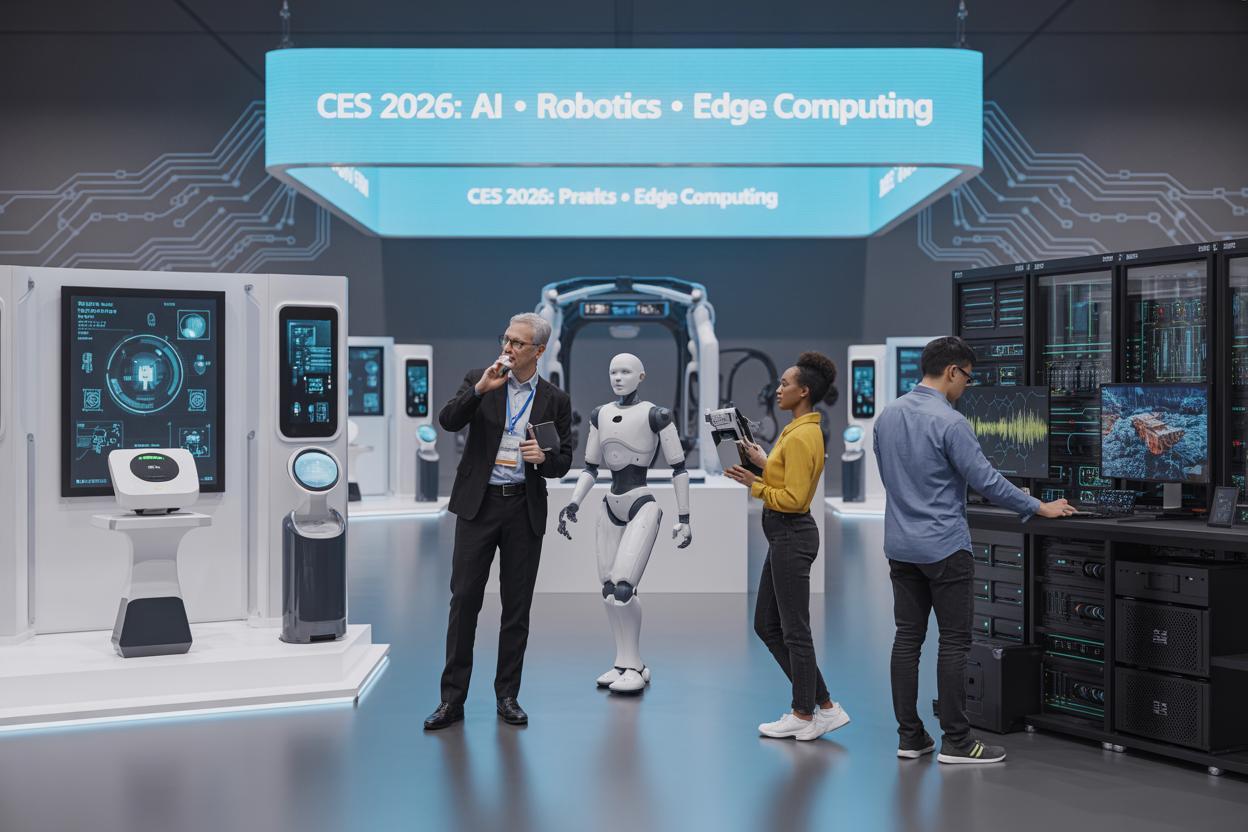
CES 2026 is shaping up to be the most transformative technology showcase yet, with AI breakthroughs consumer technology, robotics revolution home business applications, and edge computing real-time solutions taking center stage. Tech executives, business leaders, and early adopters will find these emerging trends reshaping everything from daily routines to enterprise operations.
This year’s Consumer Electronics Show predictions point to three game-changing developments that will define the next decade. First, we’ll explore how artificial intelligence trends 2026 are moving beyond chatbots to create truly intelligent devices that anticipate your needs. Second, smart robotics applications are finally delivering on decades of promises, bringing automation that actually works in real homes and offices. Finally, edge AI computing is enabling instant responses and privacy-first solutions that don’t rely on cloud connectivity.
The technology ecosystem convergence happening at CES 2026 isn’t just about flashy demos—it’s about technology transformation opportunities that will create new markets and disrupt existing ones. Get ready to see how these innovations connect to form something bigger than the sum of their parts.
AI Breakthroughs Transforming Consumer Technology
Next-Generation Voice Assistants with Contextual Understanding
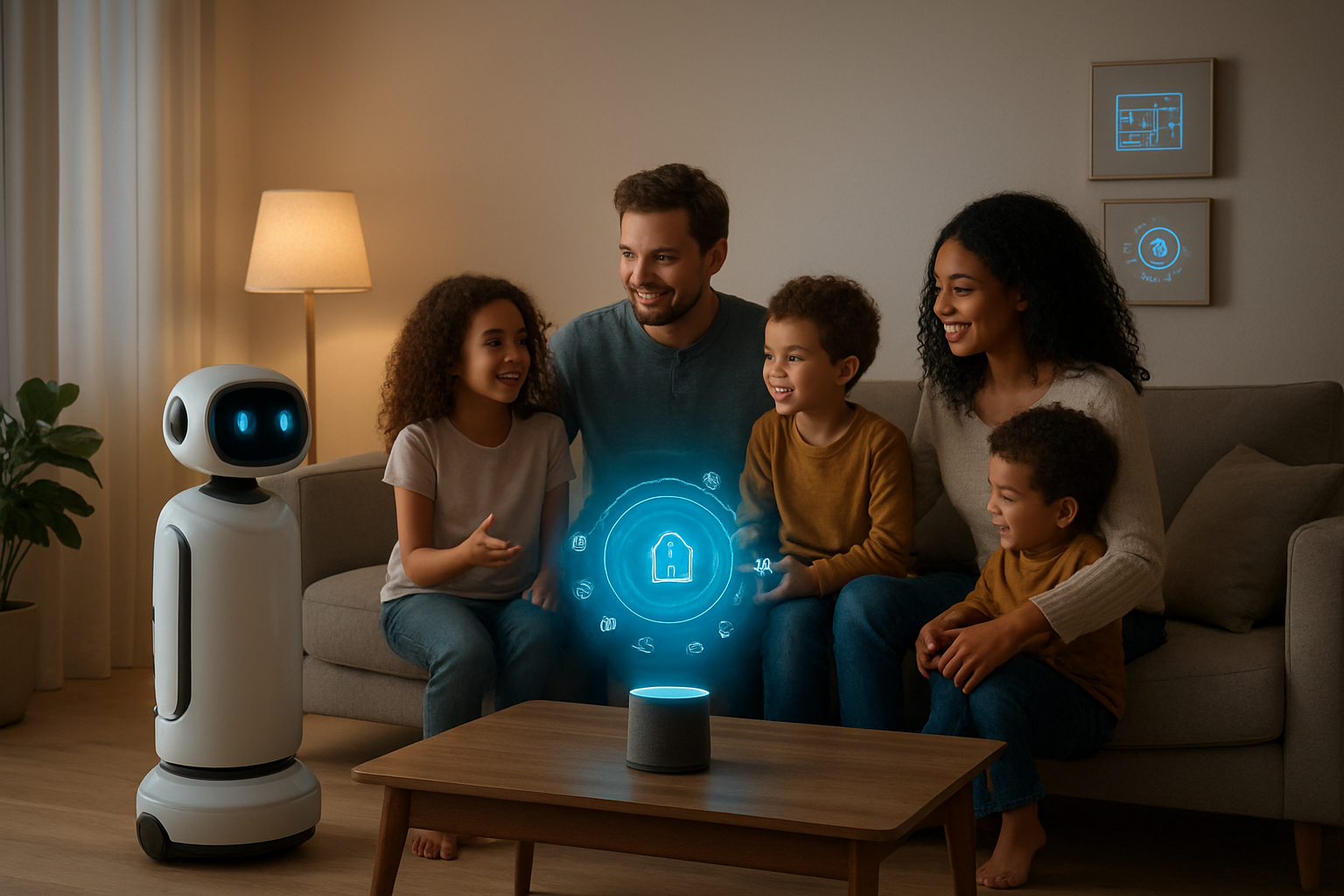
Voice assistants are getting a major upgrade that makes Siri and Alexa look primitive. The AI breakthroughs consumer technology showcased at CES 2026 reveal voice interfaces that actually understand context, emotion, and nuance. These systems remember your previous conversations and pick up on subtle cues like tone of voice to deliver responses that feel genuinely human.
Companies are demonstrating assistants that can follow complex, multi-step conversations without losing track. You can start a question about weekend plans, get interrupted by a phone call, then return twenty minutes later with “What were we talking about?” and get a coherent response. They understand pronouns, references, and implied meanings that would confuse current systems.
The breakthrough lies in advanced natural language processing that considers your personal history, current context, and emotional state. These assistants learn your communication style and adapt their responses accordingly. Some prototypes even detect stress levels through voice analysis and adjust their helpfulness accordingly.
AI-Powered Smart Home Ecosystems That Learn Your Preferences
Smart homes are evolving from programmable devices to intelligent environments that anticipate your needs. The latest systems don’t just respond to commands – they observe patterns, learn preferences, and make proactive adjustments without any input from you.
These AI-driven ecosystems track subtle behavioral cues to create personalized experiences. Your home learns that you prefer warmer lighting during stressful days, cooler temperatures when working from home, and specific music playlists based on your daily schedule. The system connects data from multiple sources: your calendar, weather forecasts, sleep patterns, and even your mood indicators from wearable devices.
Privacy-focused implementations process this data locally using edge computing real-time solutions, ensuring your personal information never leaves your home network. The AI creates detailed preference profiles while maintaining complete data security.
Key capabilities include:
- Automatic climate control based on occupancy patterns
- Lighting adjustments that support circadian rhythms
- Energy optimization during peak usage hours
- Predictive maintenance alerts for appliances
- Security adaptations based on routine changes
Personal AI Companions Revolutionizing Digital Interaction
Digital companions are moving beyond chatbots to become sophisticated AI entities with persistent memories and evolving personalities. These artificial intelligence trends 2026 point toward companions that develop genuine relationships with users over time, offering emotional support, intellectual stimulation, and practical assistance.
Unlike current AI assistants that reset with each conversation, these companions maintain continuous relationships. They remember your goals, celebrate your achievements, and provide encouragement during challenging periods. Some prototypes demonstrate empathy by recognizing emotional states and responding with appropriate support.
The technology uses advanced personality modeling to create distinct, consistent characters that feel authentic rather than robotic. These companions can engage in creative collaborations, help with problem-solving, and even serve as practice partners for social interactions.
Applications span from elderly care companions that provide social interaction and health monitoring to educational tutors that adapt their teaching methods to individual learning styles. Professional versions assist with creative work, serving as brainstorming partners or research assistants with specialized knowledge.
Machine Learning Integration in Everyday Consumer Devices
Machine learning is becoming invisible infrastructure in consumer electronics show predictions, embedded directly into everyday devices rather than requiring cloud connectivity. Smartphones, headphones, cameras, and household appliances now include dedicated AI chips that enable real-time learning and adaptation.
Cameras automatically optimize settings based on shooting conditions and personal style preferences learned from your photo history. Headphones adapt audio profiles to your hearing characteristics and environmental conditions. Fitness trackers provide personalized coaching based on your specific goals, limitations, and progress patterns.
Kitchen appliances showcase impressive AI integration, with ovens that recognize food types and adjust cooking parameters automatically, refrigerators that track consumption patterns and suggest recipes, and coffee makers that perfect your morning brew based on sleep quality data.
| Device Category | AI Enhancement | User Benefit |
|---|---|---|
| Smartphones | Predictive app loading | Faster performance |
| Headphones | Adaptive noise cancellation | Personalized audio |
| Cameras | Style learning | Better photos automatically |
| Fitness devices | Personalized coaching | Improved health outcomes |
| Kitchen appliances | Recipe optimization | Better cooking results |
These integrations work seamlessly without user configuration, learning and improving through regular use while maintaining privacy through local processing.
Robotics Revolution in Home and Business Applications
Advanced Home Automation Robots for Daily Tasks
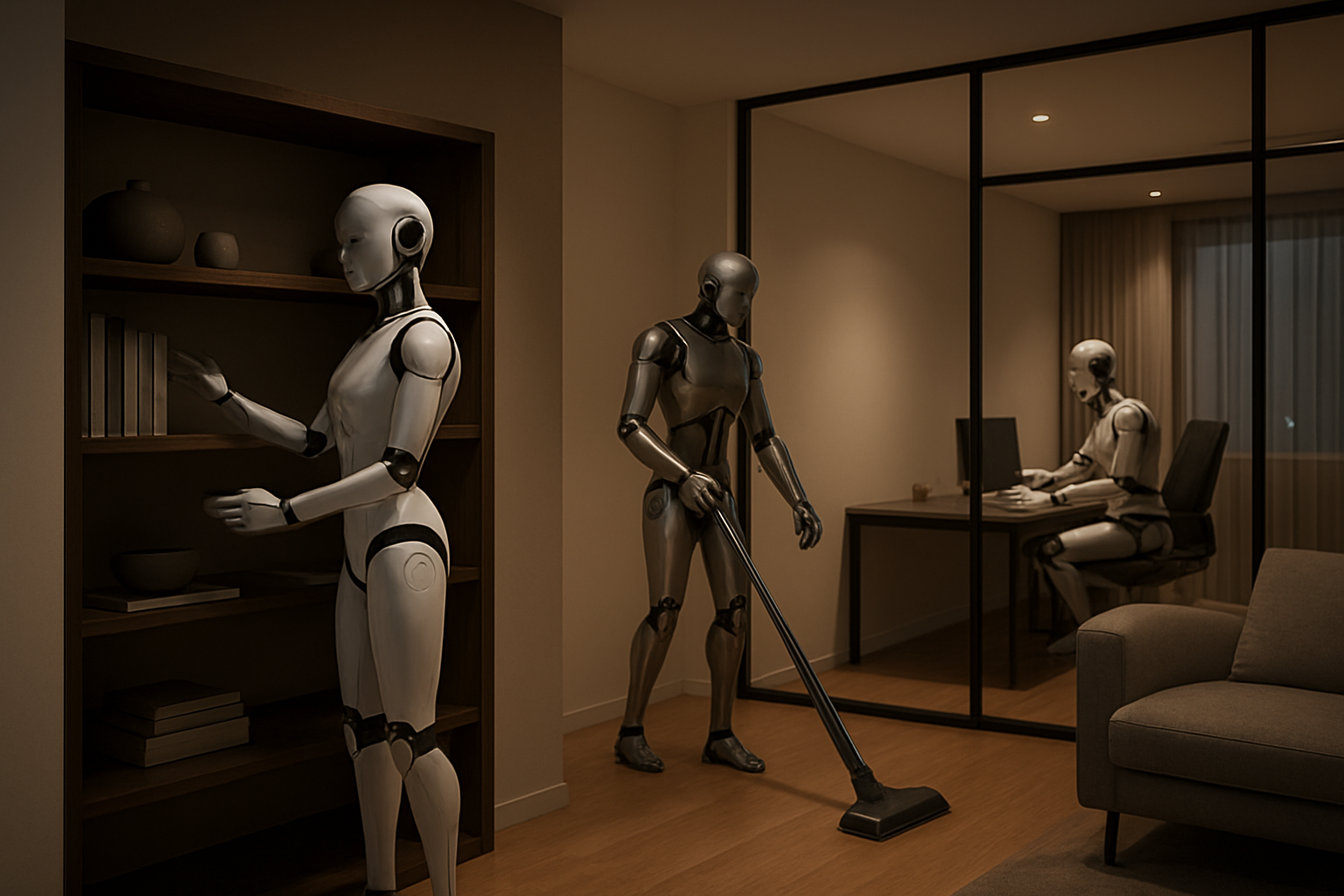
The robotics revolution home business applications showcased at CES 2026 demonstrate how household robots are moving beyond simple vacuum cleaners to become comprehensive lifestyle assistants. Modern home automation robots now handle complex multi-room navigation, learning family routines and preferences to anticipate needs before they arise.
These smart robotics applications include advanced cleaning systems that can identify different floor types, adjust suction power automatically, and even handle delicate surfaces like hardwood and Persian rugs with specialized attachments. Kitchen assistant robots prepare meals based on dietary restrictions, manage grocery inventories, and coordinate with smart appliances to optimize cooking times and energy consumption.
Personal care robots designed for elderly assistance represent a massive growth sector, offering medication reminders, fall detection, and emergency response capabilities. These systems integrate seamlessly with existing smart home ecosystems, creating comprehensive care networks that keep families connected across distances.
Security and maintenance robots patrol properties, inspect HVAC systems, and monitor for potential issues like water leaks or electrical problems. Their ability to work continuously without fatigue makes them ideal for preventive maintenance tasks that homeowners often overlook.
Service Robots Enhancing Customer Experience in Retail
Retail environments are experiencing dramatic transformation through service robotics, with CES 2026 highlighting breakthrough applications that redefine customer interactions. Advanced AI-powered robots now serve as personal shopping assistants, using computer vision to analyze customer preferences and suggest products based on previous purchases and current trends.
These robots excel at inventory management, automatically tracking stock levels, identifying misplaced items, and alerting staff to restocking needs in real-time. Their sophisticated sensors can detect when shelves need replenishment before customers notice empty spaces, maintaining optimal shopping experiences.
Customer service robots handle routine inquiries, process returns, and provide detailed product information in multiple languages. They’re equipped with natural language processing capabilities that allow for conversational interactions, making customers feel heard and understood rather than talking to a machine.
Queue management systems use mobile robots to distribute information, collect customer feedback, and even provide entertainment during wait times. Some retail robots offer promotional sampling, interactive product demonstrations, and personalized discount codes based on customer behavior patterns.
Restaurant service robots have evolved to handle complex order modifications, dietary restrictions, and payment processing while maintaining warm, personalized interactions that rival human servers.
Collaborative Robots Improving Workplace Productivity
Collaborative robots, or cobots, are revolutionizing workplace dynamics by working alongside humans rather than replacing them. CES 2026 showcased cobots designed with advanced safety features that allow them to operate in close proximity to workers without protective barriers, fundamentally changing manufacturing and office environments.
In manufacturing settings, these robots handle precision assembly tasks, quality control inspections, and material handling while adapting to human work patterns and speeds. They learn from human demonstrations, picking up new skills through simple programming interfaces that don’t require specialized robotics knowledge.
Office environments benefit from cobots that manage repetitive tasks like document sorting, data entry verification, and supply chain coordination. These systems integrate with existing business software, creating seamless workflows that amplify human capabilities rather than competing with them.
Healthcare cobots assist with patient care, medication distribution, and equipment sterilization while maintaining the human touch that patients need. They handle administrative tasks that free up medical professionals to focus on direct patient interaction and complex decision-making.
The latest cobots feature adaptive learning algorithms that continuously improve performance based on workplace feedback, making them increasingly valuable team members that grow more efficient over time. Their modular designs allow for easy reconfiguration as business needs evolve, providing long-term value for organizations investing in automation technology.
Edge Computing Enabling Real-Time Smart Solutions

Ultra-Fast Processing for Autonomous Vehicle Networks
Autonomous vehicles demand split-second decision-making that cloud computing simply can’t deliver. Edge computing real-time solutions at CES 2026 showcase processors mounted directly within vehicle networks, cutting response times from hundreds of milliseconds to mere microseconds. This dramatic speed boost means vehicles can instantly react to sudden obstacles, weather changes, or emergency situations without waiting for data to travel to distant servers.
Vehicle-to-vehicle communication networks now operate through localized edge nodes positioned along highways and in urban centers. These nodes process traffic patterns, road conditions, and safety alerts locally, creating a mesh network where cars share critical information instantly. The result transforms driving safety, enabling coordinated lane changes, synchronized traffic light timing, and collision avoidance systems that work faster than human reflexes.
Local Data Processing Reducing Cloud Dependency
Edge AI computing revolutionizes how devices handle information by bringing processing power directly to the source. Smart appliances, security cameras, and IoT sensors now analyze data locally rather than sending everything to remote cloud servers. This shift dramatically reduces bandwidth costs, eliminates internet connectivity dependencies, and ensures devices continue functioning even during network outages.
Manufacturing facilities benefit enormously from this local processing capability. Assembly line robots equipped with edge processors can detect quality issues, adjust production parameters, and coordinate with other machines in real-time. The technology eliminates the latency and reliability concerns that plagued cloud-dependent industrial systems, creating more resilient and efficient production environments.
Enhanced Privacy Protection Through Distributed Computing
Distributed edge computing keeps sensitive personal data where it belongs – close to users rather than stored on distant servers. Smart home devices process voice commands, facial recognition, and behavioral patterns locally, ensuring private information never leaves the household network. This approach addresses growing consumer concerns about data privacy while maintaining the convenience of AI-powered features.
Healthcare applications particularly benefit from this privacy-focused approach. Medical devices can analyze patient data, detect anomalies, and provide treatment recommendations without transmitting sensitive health information across networks. Hospitals deploy edge computing nodes that enable real-time patient monitoring while maintaining strict HIPAA compliance and protecting against data breaches.
Seamless IoT Device Coordination and Response
IoT device coordination reaches new levels of sophistication through edge computing networks that manage thousands of connected devices simultaneously. Smart buildings now operate as unified systems where lighting, HVAC, security, and elevator systems communicate through local edge processors rather than individual cloud connections. This coordination creates more responsive environments that adapt instantly to occupancy changes, weather conditions, and energy demands.
Agricultural IoT networks demonstrate the power of coordinated edge computing through precision farming systems. Soil sensors, irrigation controllers, and crop monitoring drones work together through local processing hubs that analyze environmental conditions and automatically adjust watering schedules, nutrient delivery, and pest control measures. Farmers gain real-time insights and automated responses that optimize crop yields while conserving resources.
Real-Time Analytics for Smart City Infrastructure
Smart city infrastructure leverages edge computing to process massive amounts of urban data instantly rather than sending everything to centralized systems. Traffic management systems analyze vehicle flow patterns, pedestrian movements, and parking availability through neighborhood-level edge nodes, enabling dynamic traffic light timing and route optimization that adapts to current conditions rather than predetermined schedules.
Energy grid management transforms through distributed edge analytics that monitor power consumption, renewable energy generation, and grid stability at the neighborhood level. These systems detect and respond to power fluctuations, equipment failures, and demand spikes within seconds, preventing blackouts and optimizing energy distribution. Water management systems similarly benefit from edge processing that monitors pipe conditions, water quality, and consumption patterns to prevent leaks and ensure safe drinking water delivery throughout urban areas.
Industry Convergence Creating New Technology Ecosystems
AI-Robotics Fusion for Intelligent Automation Solutions
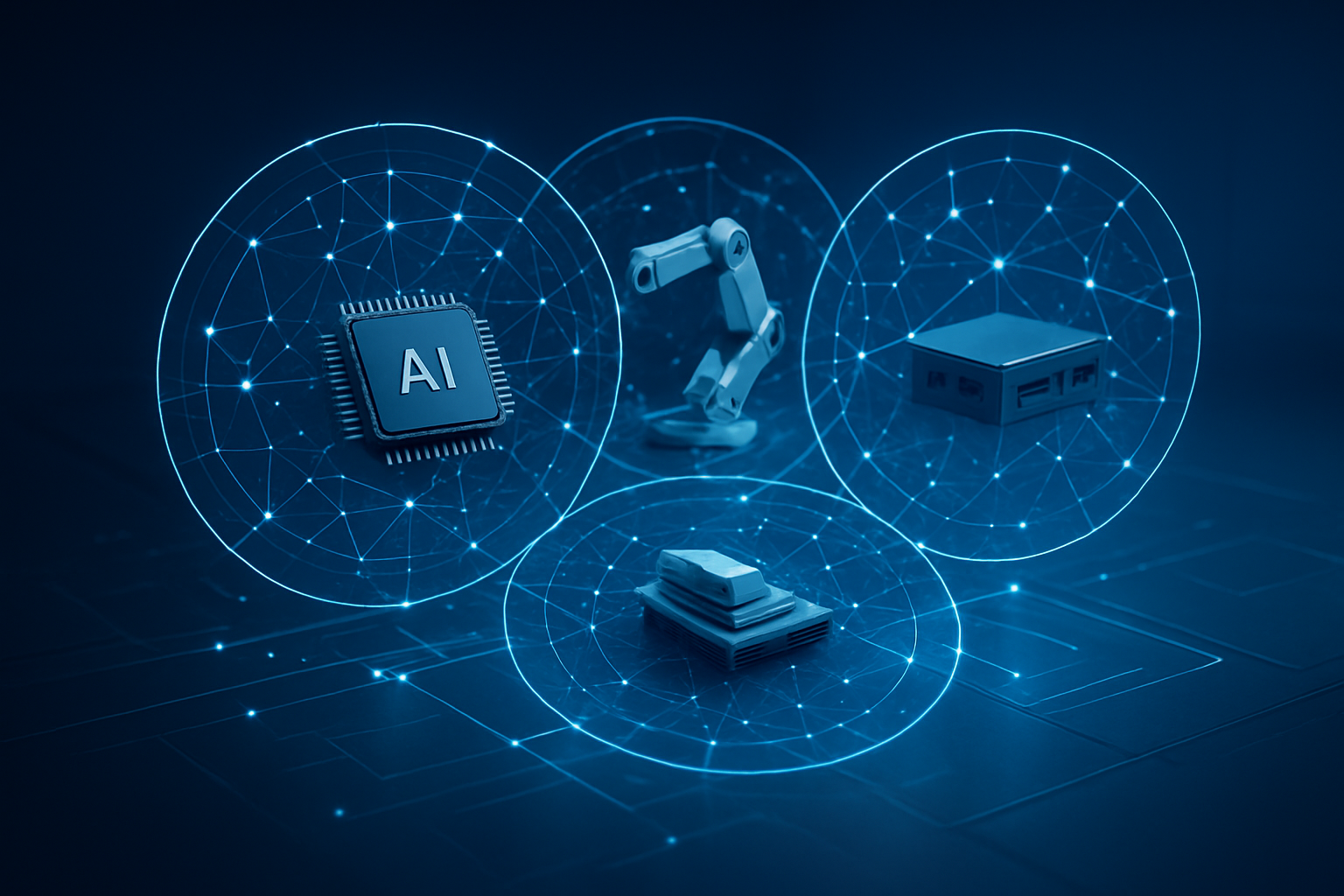
The marriage of artificial intelligence and robotics at CES 2026 represents a seismic shift from traditional automation to truly intelligent systems. Leading manufacturers are showcasing collaborative robots that learn from human behavior patterns, adapting their responses in real-time to create seamless human-machine partnerships. Boston Dynamics, ABB, and emerging startups demonstrated humanoid assistants capable of understanding context, emotion, and environmental changes without extensive programming.
These AI-powered robots excel in complex scenarios where traditional automation fails. Healthcare robots now diagnose patient conditions while providing physical assistance, combining computer vision, natural language processing, and advanced sensors. Manufacturing environments benefit from robots that predict maintenance needs, optimize production workflows, and collaborate safely alongside human workers without safety barriers.
The breakthrough lies in neural network integration directly into robotic control systems. This eliminates the latency between decision-making and action, creating responsive machines that feel almost intuitive. Home robotics showcased at the event includes personal assistants that manage entire smart home ecosystems while learning family preferences and schedules.
Edge Computing Powering Real-Time Robotic Decision Making
Edge computing transforms robotic capabilities by processing data locally rather than relying on cloud connectivity. CES 2026 demonstrated robots equipped with powerful edge processors that make split-second decisions without internet dependency. This advancement proves critical for autonomous vehicles, industrial robots, and security systems where millisecond responses determine safety and efficiency.
NVIDIA, Intel, and Qualcomm unveiled specialized edge AI chips designed specifically for robotic applications. These processors handle complex machine learning algorithms while consuming minimal power, enabling smaller, more agile robots with enterprise-level intelligence. Autonomous delivery drones showcase this technology by navigating urban environments, avoiding obstacles, and adapting routes without constant server communication.
The edge computing revolution eliminates bandwidth limitations and privacy concerns associated with cloud-based robotics. Medical robots perform surgeries with AI assistance while keeping sensitive patient data local. Warehouse automation systems coordinate thousands of robots simultaneously without network congestion, dramatically improving operational efficiency.
Manufacturing demonstrations revealed predictive maintenance robots that analyze equipment health using edge-processed vibration, thermal, and acoustic data. These systems identify potential failures hours before they occur, reducing downtime and preventing costly breakdowns.
Integrated Platforms Connecting Multiple Smart Technologies
Technology ecosystem convergence at CES 2026 showcases platforms that seamlessly integrate AI, robotics, IoT devices, and edge computing into unified solutions. Major tech companies unveiled comprehensive ecosystems where smartphones control robotic assistants, smart home devices share data with autonomous vehicles, and wearable technology coordinates with industrial automation systems.
Amazon’s Alexa, Google Assistant, and emerging platforms now orchestrate complex multi-device interactions. Voice commands trigger robotic cleaning while adjusting smart lighting and preparing coffee machines based on calendar schedules and weather conditions. These platforms learn user preferences across all connected devices, creating personalized experiences that anticipate needs.
Enterprise solutions demonstrate remarkable integration capabilities. Smart factories combine AI-driven quality control systems with robotic assembly lines and predictive maintenance platforms. Supply chain management integrates autonomous vehicles, warehouse robots, and inventory tracking systems into single dashboards that optimize operations across multiple facilities.
| Integration Platform | Key Features | Primary Applications |
|---|---|---|
| Smart Home Ecosystems | Voice control, automated scheduling, energy optimization | Residential automation, security systems |
| Industrial IoT Platforms | Predictive maintenance, quality control, supply chain optimization | Manufacturing, logistics, healthcare |
| Autonomous Vehicle Networks | Traffic coordination, route optimization, fleet management | Transportation, delivery services |
Healthcare platforms showcase the most compelling convergence examples. Patient monitoring systems integrate wearable devices, robotic assistants, and AI diagnostic tools into comprehensive care networks. Elderly care facilities deploy robots that monitor vital signs, provide medication reminders, and alert healthcare providers while maintaining constant communication with family members through smart home systems.
Market Impact and Business Transformation Opportunities
New Revenue Streams from AI-Enhanced Products
Companies showcasing at CES 2026 are discovering that AI integration creates multiple pathways to monetization beyond traditional hardware sales. Subscription-based AI services are becoming the new gold standard, with smart appliances offering premium features like predictive maintenance, personalized optimization, and continuous learning capabilities for monthly fees.
The artificial intelligence trends 2026 reveal that manufacturers are bundling AI coaching services with fitness equipment, offering nutritional guidance with smart kitchen appliances, and providing energy optimization consulting through intelligent home systems. These value-added services transform one-time purchases into recurring revenue streams that often exceed the initial product cost over its lifetime.
Data monetization represents another significant opportunity, as AI-enhanced products generate valuable user insights that can be anonymized and sold to market research firms, urban planners, and other businesses. Smart home ecosystems create particularly rich data sets about consumer behavior patterns, energy usage, and lifestyle preferences.
B2B applications are proving especially lucrative, with AI-powered analytics platforms helping retailers optimize inventory, restaurants predict demand, and manufacturers reduce waste. Companies that traditionally sold hardware are now positioning themselves as technology service providers, commanding higher margins and building stronger customer relationships through ongoing AI-driven insights and recommendations.
Reduced Operational Costs Through Automated Systems
The robotics revolution home business applications demonstrated at CES 2026 showcase dramatic cost reduction potential across industries. Manufacturing companies are reporting 40-60% decreases in labor costs through intelligent automation that handles quality control, assembly, and packaging with minimal human oversight.
Smart robotics applications are transforming service industries as well. Hotels are deploying autonomous cleaning robots that work overnight, reducing housekeeping staff requirements while maintaining higher cleanliness standards. Retail stores are using inventory robots that automatically track stock levels, identify misplaced items, and generate restocking orders without human intervention.
Edge computing real-time solutions enable these cost reductions by processing data locally, eliminating expensive cloud computing fees and reducing bandwidth costs. Smart buildings equipped with edge AI systems automatically adjust lighting, heating, and cooling based on occupancy patterns, typically reducing energy costs by 25-35%.
| Cost Reduction Area | Average Savings | Implementation Timeline |
|---|---|---|
| Labor Automation | 40-60% | 6-12 months |
| Energy Management | 25-35% | 3-6 months |
| Inventory Management | 20-30% | 4-8 months |
| Quality Control | 30-45% | 8-15 months |
Predictive maintenance systems powered by AI sensors prevent equipment failures before they occur, avoiding costly downtime and emergency repairs. Companies report maintenance cost reductions of 20-40% while extending equipment lifespan significantly.
Competitive Advantages from Early Technology Adoption
Organizations that embrace the technology transformation opportunities emerging from CES 2026 are establishing substantial competitive moats. Early adopters of edge AI computing gain first-mover advantages in customer experience optimization, operational efficiency, and market positioning.
Customer experience becomes a key differentiator when companies deploy AI systems that remember preferences, anticipate needs, and provide personalized interactions at scale. Restaurants using AI-powered ordering systems can suggest meals based on dietary restrictions, previous orders, and current inventory, creating loyalty that’s difficult for competitors to match.
Technology ecosystem convergence allows early adopters to create integrated solutions that become increasingly valuable as more components connect. Smart city initiatives that start with traffic management can expand to include parking optimization, emergency response coordination, and environmental monitoring, creating comprehensive platforms that new entrants cannot easily replicate.
Speed to market accelerates when companies build AI capabilities internally rather than waiting for third-party solutions. Organizations developing custom machine learning models gain deeper insights into their specific challenges and opportunities, creating proprietary advantages that persist even as general AI tools become commoditized.
The network effects of early adoption compound over time. Companies that establish AI-driven customer relationships collect more data, which improves their algorithms, which attracts more customers, creating a virtuous cycle that becomes increasingly difficult for competitors to break. This data advantage translates into better product recommendations, more accurate demand forecasting, and superior operational optimization.
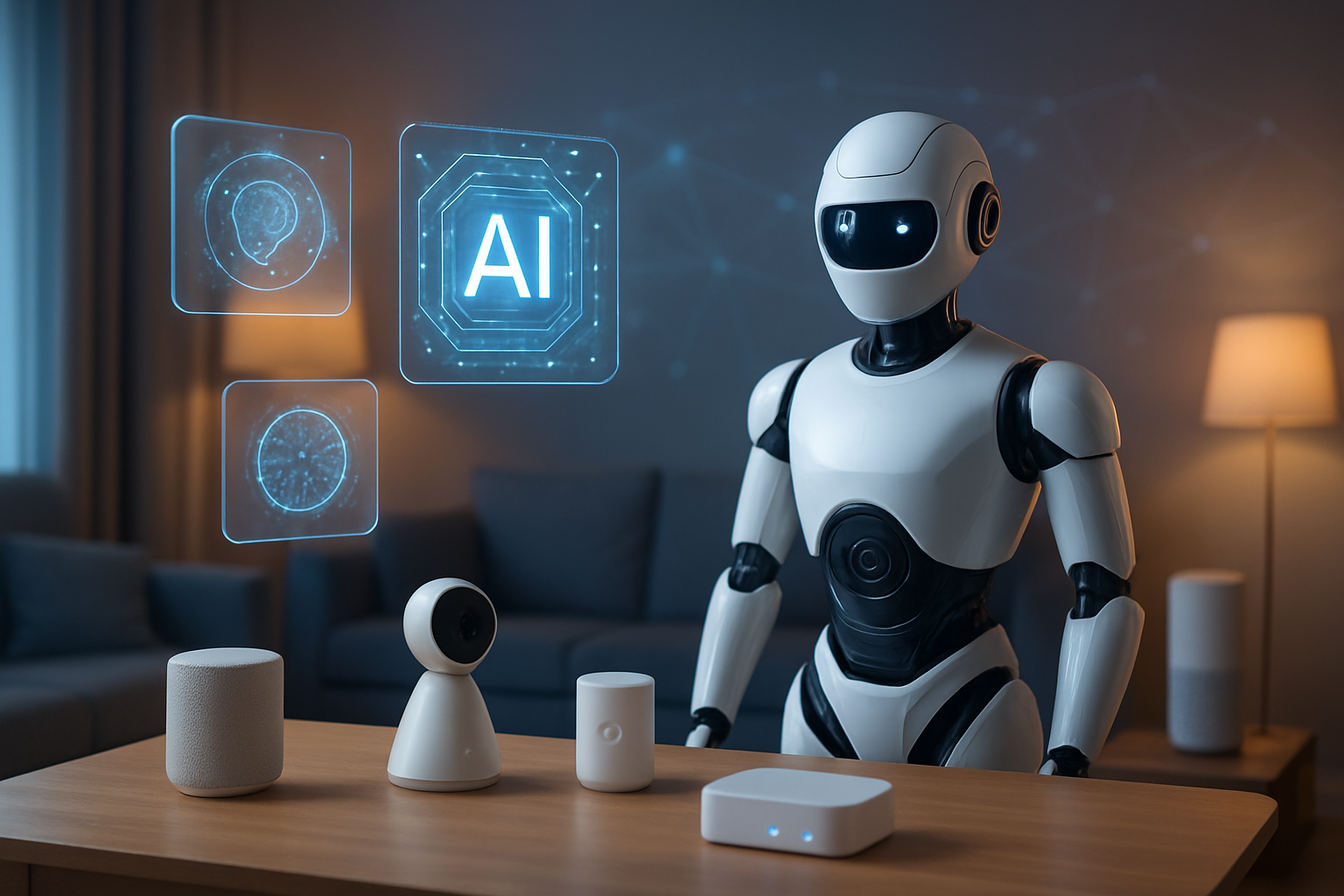
The technology landscape is shifting faster than ever, and CES 2026 has shown us exactly where we’re heading. AI isn’t just getting smarter – it’s becoming the invisible force that makes our devices actually understand what we need. Meanwhile, robots are stepping out of factories and into our living rooms and offices, handling everything from household chores to complex business tasks. Edge computing is the unsung hero here, making sure all this smart tech responds instantly without waiting for cloud servers to catch up.
What makes this moment special is how these technologies are working together instead of competing. When AI, robotics, and edge computing combine forces, they create possibilities we couldn’t imagine just a few years ago. Companies that recognize this convergence and act on it now will shape the next decade of innovation. The question isn’t whether this tech revolution will happen – it’s already here. The real question is whether you’re ready to be part of it.