Terraform Bitbucket Pipelines streamline your Infrastructure as Code automation by connecting your Terraform configurations directly to your source control workflow. This guide is perfect for DevOps engineers, cloud architects, and development teams who want to automate their infrastructure deployment without the manual overhead of running Terraform commands locally.
Managing cloud infrastructure manually gets messy fast. You’ll learn how to set up automated infrastructure deployment that runs every time you push code changes, keeping your environments consistent and your team productive.
We’ll walk through configuring Bitbucket Terraform integration from scratch, including how to structure your repository and handle sensitive variables securely. You’ll also discover how to implement a robust Terraform plan apply workflow that gives you confidence before making infrastructure changes. Finally, we’ll cover Infrastructure automation best practices like state management, approval processes, and handling different environments through your Terraform CI/CD pipeline.
Setting Up Your Terraform and Bitbucket Environment

Installing and configuring Terraform CLI
Getting Terraform up and running on your local machine is your first step toward building a robust Infrastructure as Code automation pipeline. Download the latest version from HashiCorp’s official website and extract the binary to a directory in your system’s PATH. On Windows, you can place it in C:\Windows\System32 or create a dedicated tools folder. Mac users can use Homebrew with brew install terraform, while Linux users can download the binary directly or use their package manager.
After installation, verify everything works by running terraform --version in your terminal. You’ll want to configure your cloud provider credentials next. For AWS, set up your access keys using aws configure or environment variables. Azure users should authenticate with az login, and Google Cloud users need to set the GOOGLE_APPLICATION_CREDENTIALS environment variable pointing to their service account key file.
Create a simple test configuration to ensure your setup works correctly:
terraform {
  required_version = ">= 1.0"
  required_providers {
    aws = {
      source  = "hashicorp/aws"
      version = "~> 5.0"
    }
  }
}
Creating your Bitbucket repository structure
A well-organized repository structure makes your Terraform Bitbucket Pipelines more maintainable and easier to navigate. Start by creating a new repository in Bitbucket and clone it to your local machine. Your folder structure should separate environments, modules, and pipeline configurations clearly.
Here’s a recommended structure:
terraform-infrastructure/
├── environments/
│   ├── dev/
│   ├── staging/
│   └── prod/
├── modules/
│   ├── networking/
│   ├── compute/
│   └── storage/
├── pipelines/
│   └── bitbucket-pipelines.yml
├── scripts/
└── .gitignore
The environments folder contains environment-specific configurations, while modules holds reusable Terraform components. Keep your pipeline configuration in the root as bitbucket-pipelines.yml. Create a comprehensive .gitignore file that excludes .terraform/ directories, *.tfstate files, and *.tfvars files containing sensitive data.
Each environment folder should have its own main.tf, variables.tf, and terraform.tfvars files. This separation allows you to deploy the same infrastructure with different configurations across environments without code duplication.
Configuring service accounts and permissions
Setting up proper service accounts and permissions is critical for secure Terraform CI/CD pipeline operations. Your Bitbucket Pipelines need sufficient permissions to create, modify, and destroy cloud resources while following the principle of least privilege.
For AWS deployments, create a dedicated IAM user or role specifically for your pipeline. Attach policies that grant only the permissions needed for your infrastructure resources. Avoid using the AdministratorAccess policy in production environments. Instead, create custom policies based on your specific resource requirements:
{
  "Version": "2012-10-17",
  "Statement": [
    {
      "Effect": "Allow",
      "Action": [
        "ec2:*",
        "s3:*",
        "iam:ListRoles",
        "iam:PassRole"
      ],
      "Resource": "*"
    }
  ]
}
Store these credentials securely in Bitbucket’s repository variables or workspace variables. Navigate to your repository settings and add AWS_ACCESS_KEY_ID and AWS_SECRET_ACCESS_KEY as secured environment variables. These will be available to your pipeline during execution without exposing sensitive information in your code.
Azure users should create a service principal with appropriate role assignments, while Google Cloud users need a service account with the necessary IAM roles. Always enable audit logging to track what actions your automated pipelines perform.
Setting up remote state management with cloud storage
Remote state management prevents conflicts when multiple team members work on the same infrastructure and ensures your state files remain secure and accessible to your Bitbucket Terraform integration. Never store Terraform state files in your Git repository, as they contain sensitive information about your infrastructure.
For AWS, create an S3 bucket dedicated to storing Terraform state files. Enable versioning and server-side encryption on this bucket. You’ll also want to create a DynamoDB table for state locking to prevent concurrent modifications:
terraform {
  backend "s3" {
    bucket         = "your-terraform-state-bucket"
    key            = "environments/dev/terraform.tfstate"
    region         = "us-west-2"
    dynamodb_table = "terraform-state-locks"
    encrypt        = true
  }
}
Azure users should configure an Azure Storage Account with a blob container for state storage. Google Cloud users can use Google Cloud Storage buckets with appropriate IAM permissions.
Configure different state file paths for each environment to maintain isolation. Use descriptive naming conventions like environments/{env}/terraform.tfstate to make state management clear and organized.
Remember to initialize your backend configuration before running your first pipeline. Run terraform init locally for each environment to verify your backend configuration works correctly. Your pipeline will handle subsequent initialization automatically, but this initial setup ensures everything connects properly.
Building Your First Terraform Infrastructure Code

Writing modular Terraform configurations
Creating modular Terraform configurations forms the backbone of maintainable Infrastructure as Code automation. Rather than cramming all resources into a single monolithic file, breaking your infrastructure into logical, reusable components makes your Terraform pipeline configuration much more manageable.
Start by identifying distinct infrastructure layers like networking, security, compute, and storage. Each layer should live in its own module with clear inputs and outputs. For example, your VPC module might accept CIDR blocks as variables and output subnet IDs that your compute module can reference.
Modules should follow the single responsibility principle – each module handles one specific infrastructure concern. Your load balancer module shouldn’t also manage database configurations. This separation makes testing easier and reduces the blast radius when changes occur during your automated infrastructure deployment.
Organizing resources with proper file structure
A well-organized file structure prevents chaos as your Terraform Bitbucket Pipelines grow more complex. The standard convention includes:
main.tf– Primary resource definitionsvariables.tf– Input variable declarationsoutputs.tf– Output value definitionsversions.tf– Provider and Terraform version constraintsterraform.tfvars– Variable value assignments
For larger projects, group related resources into separate files like networking.tf, security.tf, or compute.tf. Your directory structure might look like:
terraform/
├── modules/
│   ├── vpc/
│   ├── ec2/
│   └── rds/
├── environments/
│   ├── dev/
│   ├── staging/
│   └── prod/
└── shared/
    └── common-variables.tf
This structure supports environment-specific configurations while maintaining shared module definitions. Your Bitbucket Terraform integration can easily navigate this hierarchy during pipeline execution.
Implementing variable management and validation
Proper variable management prevents configuration drift and catches errors before deployment. Define variables with appropriate types, descriptions, and default values where sensible. Always include validation rules for critical parameters.
variable "instance_type" {
  description = "EC2 instance type"
  type        = string
  default     = "t3.micro"

  validation {
    condition = contains([
      "t3.micro", "t3.small", "t3.medium"
    ], var.instance_type)
    error_message = "Instance type must be t3.micro, t3.small, or t3.medium."
  }
}
Sensitive variables require special handling in your Terraform CI/CD pipeline. Store secrets in Bitbucket repository variables or external secret management services. Never hardcode credentials or API keys in your Terraform files.
Use variable precedence strategically – environment variables can override terraform.tfvars files, which override variable defaults. This flexibility allows the same code to deploy different configurations across environments.
Creating reusable modules for common infrastructure patterns
Reusable modules accelerate development and ensure consistency across your cloud infrastructure automation. Common patterns include web application stacks, database clusters, and monitoring setups.
Design modules with sensible defaults but allow customization through variables. Your web application module might default to deploying two instances behind a load balancer but accept a variable to scale up for production environments.
Version your modules using Git tags or a module registry. This approach enables your Infrastructure automation best practices to include controlled rollouts of infrastructure changes. Teams can pin to specific module versions while testing newer releases in development environments.
Document your modules thoroughly – include examples showing how to use them and describe all input variables and outputs. Good documentation reduces onboarding time and prevents misconfigurations that could break your Terraform plan apply workflow.
Module outputs should expose the minimum necessary information for other modules to consume. Don’t output internal resource attributes that other components don’t need – this reduces coupling and makes refactoring easier.
Configuring Bitbucket Pipelines for Terraform Automation
Creating the bitbucket-pipelines.yml configuration file
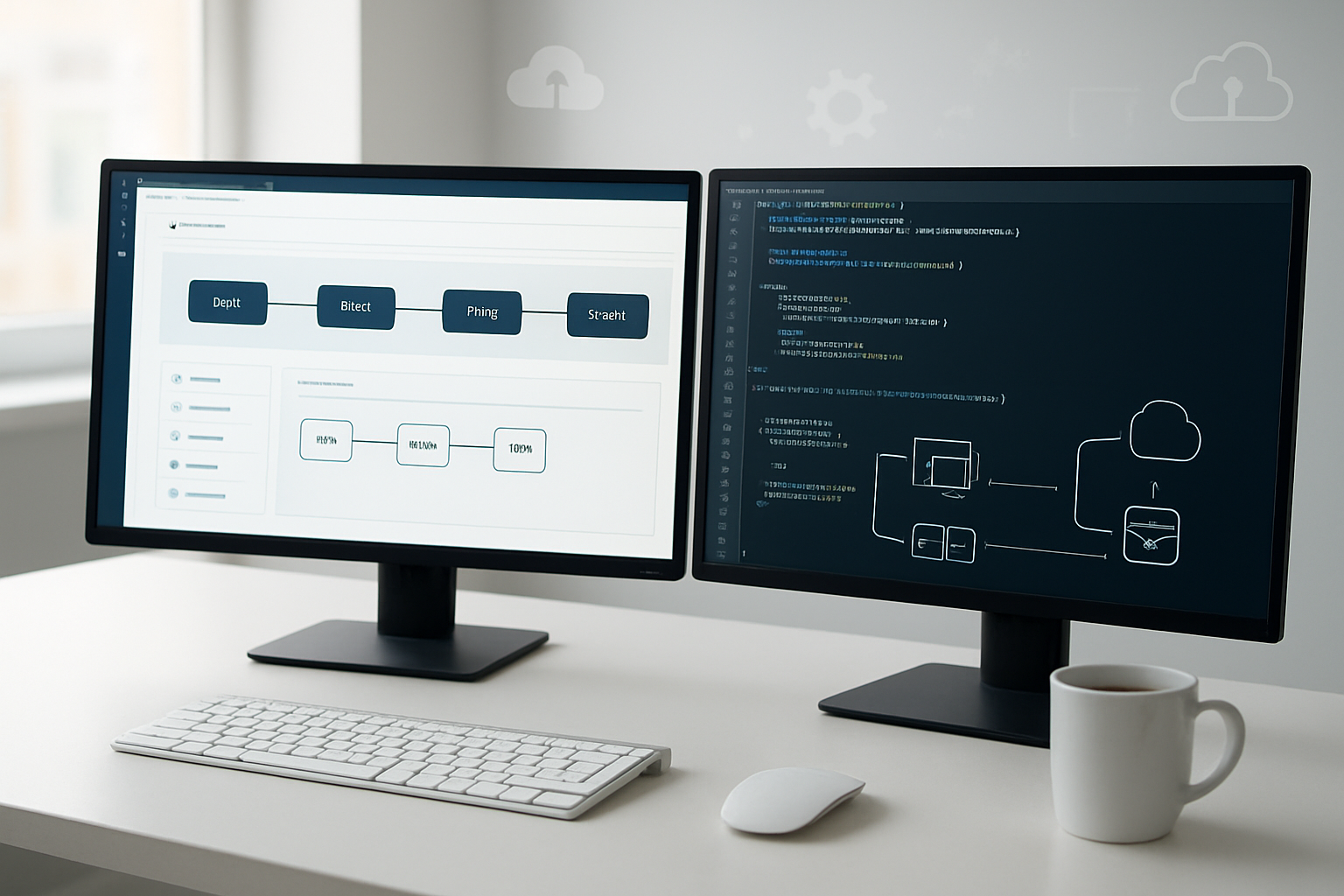
The backbone of Terraform Bitbucket Pipelines automation starts with a properly configured bitbucket-pipelines.yml file in your repository’s root directory. This YAML file defines how your Terraform CI/CD pipeline executes across different stages and environments.
Start with a basic structure that includes separate steps for validation, planning, and deployment:
image: hashicorp/terraform:light

pipelines:
  default:
    - step:
        name: Terraform Validate
        script:
          - terraform --version
          - terraform init
          - terraform validate
        services:
          - docker
Your Terraform pipeline configuration should include multiple Docker containers depending on your infrastructure provider. For AWS deployments, combine the HashiCorp Terraform image with AWS CLI capabilities. Many teams use custom Docker images that bundle Terraform, cloud provider CLIs, and additional tools like jq for JSON processing.
The pipeline structure becomes more sophisticated when you add conditional execution based on branch patterns. Configure different behaviors for feature branches, develop, and main branches to ensure proper Infrastructure as Code automation workflows.
pipelines:
  branches:
    main:
      - step:
          name: Terraform Plan & Apply
          deployment: production
          script:
            - terraform init
            - terraform plan -out=tfplan
            - terraform apply tfplan
    develop:
      - step:
          name: Terraform Plan Only
          script:
            - terraform init
            - terraform plan
Setting up pipeline variables and secrets management
Effective Bitbucket Terraform integration requires careful management of sensitive credentials and configuration values. Bitbucket provides repository variables and deployment variables to handle different types of configuration data securely.
Repository variables work well for non-sensitive configuration like AWS regions, resource prefixes, or Terraform backend configurations. Access these through the Bitbucket web interface under Repository Settings > Repository variables. These variables become available as environment variables in your pipeline steps.
For sensitive data like AWS access keys, API tokens, or database passwords, use secured repository variables or deployment variables. Secured variables appear masked in pipeline logs, protecting sensitive information from accidental exposure.
- step:
    name: Configure Terraform Backend
    script:
      - export TF_VAR_region=$AWS_DEFAULT_REGION
      - export TF_VAR_environment=$BITBUCKET_DEPLOYMENT_ENVIRONMENT
      - terraform init -backend-config="bucket=$TERRAFORM_STATE_BUCKET"
Deployment variables provide environment-specific configuration management. Create different variable sets for staging, production, and development environments. This approach allows the same Terraform pipeline configuration to deploy different infrastructure setups based on the target environment.
Consider using external secret management solutions like AWS Secrets Manager or HashiCorp Vault for highly sensitive credentials. Your pipeline can retrieve secrets dynamically during execution, reducing the number of long-lived credentials stored in Bitbucket.
Configuring deployment environments and branch strategies
Deployment environments in Bitbucket Pipelines create controlled gates for infrastructure changes. Configure environments that match your infrastructure promotion strategy – typically development, staging, and production environments with appropriate access controls.
Branch strategies determine how code changes flow through your automated infrastructure deployment pipeline. A common pattern uses feature branches for development, a develop branch for integration testing, and main/master for production deployments.
pipelines:
  branches:
    feature/*:
      - step:
          name: Terraform Validate & Plan
          script:
            - terraform init
            - terraform plan -var-file="dev.tfvars"
    develop:
      - step:
          name: Deploy to Staging
          deployment: staging
          script:
            - terraform init
            - terraform apply -var-file="staging.tfvars" -auto-approve
    main:
      - step:
          name: Deploy to Production
          deployment: production
          trigger: manual
          script:
            - terraform init
            - terraform apply -var-file="production.tfvars" -auto-approve
Manual triggers provide additional safety for production deployments. Even with automated Terraform plan apply workflow processes, human approval gates prevent accidental infrastructure changes in critical environments. Configure deployment permissions to restrict who can trigger production deployments.
Environment-specific variable files (dev.tfvars, staging.tfvars, production.tfvars) allow the same Terraform configuration to create different infrastructure sizes and configurations. This approach supports consistent Infrastructure automation best practices across all environments while accommodating different resource requirements.
Branch protection rules complement your pipeline configuration by preventing direct pushes to important branches and requiring pull request reviews before infrastructure changes merge into main deployment branches.
Implementing Terraform Plan and Apply Workflows

Automating terraform plan for pull request validation
Pull request validation forms the backbone of a solid Terraform CI/CD pipeline in Bitbucket. When developers create pull requests containing infrastructure changes, your pipeline should automatically trigger a terraform plan command to preview what changes will be made to your infrastructure. This automated validation catches potential issues before they reach production environments.
Configure your bitbucket-pipelines.yml to trigger on pull request events:
pipelines:
  pull-requests:
    '**':
      - step:
          name: Terraform Plan
          image: hashicorp/terraform:latest
          script:
            - terraform init
            - terraform plan -out=tfplan
            - terraform show -json tfplan > plan.json
The plan output should be automatically posted as a comment on the pull request, giving reviewers clear visibility into infrastructure changes. This transparency helps teams understand the impact of proposed changes and makes code reviews more effective. Consider using tools like terraform-pr-commenter to format plan outputs in an easy-to-read format within Bitbucket comments.
Setting up approval gates for production deployments
Production environments require stricter controls than development or staging environments. Approval gates ensure that infrastructure changes go through proper review processes before reaching critical systems. Bitbucket Pipelines supports deployment gates through manual triggers and branch restrictions.
Create a dedicated pipeline step for production deployments:
- step:
    name: Production Deploy - Approval Required
    deployment: production
    trigger: manual
    script:
      - terraform init
      - terraform apply -auto-approve tfplan
Set up branch protection rules in your Bitbucket repository settings to require:
- Minimum number of approvers (typically 2+ for production)
- Approval from specific team members with infrastructure expertise
- Successful completion of all automated tests and security scans
- No outstanding merge conflicts or failing status checks
You can also implement time-based approval windows, restricting production deployments to specific hours or days when your team is available to monitor and respond to issues.
Implementing automated terraform apply on merge
Once pull requests pass validation and receive proper approvals, the next step is automating the actual infrastructure deployment. Automated terraform apply on merge reduces manual overhead while maintaining consistency across deployments.
Configure your pipeline to trigger apply commands when changes merge to your main branch:
pipelines:
  branches:
    main:
      - step:
          name: Terraform Apply
          deployment: production
          script:
            - terraform init
            - terraform plan -out=tfplan
            - terraform apply -auto-approve tfplan
Store your Terraform state files in remote backends like AWS S3 or Terraform Cloud to ensure state consistency across pipeline runs. Enable state locking to prevent concurrent modifications that could corrupt your infrastructure state.
Consider implementing progressive deployment strategies where changes roll out to development environments first, then staging, and finally production. This approach catches environment-specific issues early and reduces the blast radius of potential problems.
Configuring rollback procedures and disaster recovery
Infrastructure deployments sometimes fail or cause unexpected issues. Having robust rollback procedures and disaster recovery plans keeps your systems resilient and minimizes downtime during incidents.
Implement automated rollback triggers in your Bitbucket pipeline:
- step:
    name: Rollback on Failure
    condition:
      changesetValidation: false
    script:
      - terraform init
      - terraform apply -auto-approve previous-known-good-plan
Create versioned infrastructure snapshots by tagging your Terraform configurations and storing multiple state file versions. This approach allows you to quickly revert to previous working configurations when issues arise.
Set up monitoring and alerting to detect infrastructure problems early. Integrate health checks into your pipeline that verify critical services are functioning after deployments complete. If health checks fail, trigger automatic rollback procedures to restore service quickly.
Document your disaster recovery procedures and regularly test them through chaos engineering exercises. Your team should be comfortable executing rollback procedures under pressure, and automation should handle as much of the process as possible to reduce human error during incidents.
Consider implementing blue-green deployment strategies for critical infrastructure components, maintaining parallel environments that allow for instant switching between versions when problems occur.
Advanced Pipeline Features and Best Practices

Implementing parallel deployments across multiple environments
Deploying Terraform configurations across multiple environments simultaneously can dramatically reduce deployment time and streamline your Infrastructure as Code automation workflow. Bitbucket Pipelines supports parallel execution through matrix builds and conditional deployments, allowing you to deploy to development, staging, and production environments concurrently.
To set up parallel deployments, configure your bitbucket-pipelines.yml with multiple deployment steps that run simultaneously:
pipelines:
  branches:
    main:
      - parallel:
          - step:
              name: Deploy to Dev
              deployment: development
              script:
                - terraform workspace select dev
                - terraform apply -auto-approve
          - step:
              name: Deploy to Staging
              deployment: staging
              script:
                - terraform workspace select staging
                - terraform apply -auto-approve
Use Terraform workspaces to manage environment-specific configurations while maintaining a single codebase. This approach ensures consistency across environments while allowing for environment-specific variables through workspace-scoped variable files.
Consider implementing deployment gates between environments. While dev and staging can run in parallel, production deployments should typically wait for successful validation in lower environments. Use Bitbucket’s deployment environment settings to require manual approval for production deployments.
Setting up monitoring and alerting for pipeline failures
Robust monitoring and alerting systems are essential for maintaining reliable Terraform Bitbucket Pipelines. Pipeline failures can indicate infrastructure issues, configuration errors, or security problems that require immediate attention.
Configure Bitbucket webhook notifications to integrate with your existing monitoring tools like Slack, Microsoft Teams, or PagerDuty. Set up notifications for:
- Pipeline failures and successes
- Terraform plan changes requiring review
- Deployment status updates
- Security scan failures
Create custom monitoring scripts that check for specific failure patterns in your Terraform CI/CD pipeline logs. These scripts can parse Bitbucket API responses to identify recurring issues like authentication failures, resource conflicts, or provider API rate limits.
Implement health checks for your deployed infrastructure by adding validation steps to your pipeline. After applying Terraform configurations, run automated tests to verify that resources are properly configured and accessible. This proactive approach catches deployment issues before they impact users.
Set up dashboards using tools like Grafana or Datadog to visualize pipeline metrics including success rates, deployment frequency, and mean time to recovery. These metrics help identify trends and optimize your automated infrastructure deployment process.
Optimizing pipeline performance with caching strategies
Pipeline performance optimization significantly impacts developer productivity and deployment speed. Bitbucket Pipelines offers several caching mechanisms that can drastically reduce execution time for Terraform operations.
Enable Terraform provider caching by storing downloaded providers in the pipeline cache:
definitions:
  caches:
    terraform: ~/.terraform.d/plugin-cache

pipelines:
  default:
    - step:
        name: Terraform Plan
        caches:
          - terraform
        script:
          - terraform init
          - terraform plan
Cache Terraform state files and modules to avoid repeated downloads. Use Bitbucket’s built-in caching for common dependencies like Docker images and package managers. For large infrastructure codebases, consider implementing custom caching strategies for Terraform modules and provider binaries.
Optimize Docker image usage by creating lightweight, purpose-built images for Terraform operations. Include pre-installed Terraform versions and commonly used providers to reduce initialization time. Layer caching in Docker builds can further improve performance when building custom pipeline images.
Implement parallel execution for independent Terraform operations. If your infrastructure code includes multiple, unrelated resource groups, split them into separate pipeline steps that can run concurrently.
Integrating security scanning and compliance checks
Security scanning and compliance checks should be integral parts of your Terraform pipeline configuration. Automated security scanning identifies potential vulnerabilities and compliance violations before infrastructure deployment.
Integrate tools like Checkov, tfsec, or Terraform Sentinel for policy-as-code enforcement. These tools scan Terraform configurations for security best practices and compliance requirements:
- step:
    name: Security Scan
    script:
      - pip install checkov
      - checkov -f main.tf --framework terraform
Implement custom compliance checks using Open Policy Agent (OPA) or AWS Config rules. These tools evaluate infrastructure configurations against your organization’s specific security and compliance requirements.
Add secret scanning to prevent hardcoded credentials in Terraform files. Tools like GitLeaks or TruffleHog can identify accidentally committed secrets, API keys, and passwords in your Infrastructure as Code automation workflow.
Create approval workflows for high-risk changes identified during security scanning. Use Bitbucket’s deployment environment permissions to require security team approval for changes that modify network security groups, IAM policies, or encryption configurations.
Managing infrastructure drift detection and remediation
Infrastructure drift occurs when actual infrastructure state diverges from Terraform configuration. Regular drift detection and automated remediation help maintain infrastructure consistency and prevent configuration drift issues.
Implement scheduled pipeline runs that compare actual infrastructure state with Terraform configuration. Use terraform plan -detailed-exitcode to detect drift and generate reports:
pipelines:
  custom:
    drift-detection:
      - step:
          name: Detect Infrastructure Drift
          script:
            - terraform plan -detailed-exitcode -out=drift.tfplan
            - terraform show -json drift.tfplan > drift-report.json
Set up automated drift remediation for approved changes. When drift is detected, evaluate whether changes should be imported into Terraform state or reverted to match the configuration. Low-risk changes like tag modifications can be automatically remediated, while high-risk changes require manual review.
Configure drift detection alerts that notify infrastructure teams when significant drift is detected. Include information about affected resources, drift severity, and recommended remediation actions in alert messages.
Maintain drift detection logs and metrics to identify patterns in infrastructure changes. This data helps improve change management processes and identifies resources that frequently drift from their intended configuration.
Use Terraform refresh operations cautiously in automated pipelines, as they can mask legitimate infrastructure drift. Instead, implement explicit drift detection workflows that clearly distinguish between intentional and unintentional infrastructure changes.
Setting up Terraform with Bitbucket Pipelines transforms how you manage your infrastructure. You’ve learned how to create a solid foundation by configuring your environment, writing clean Terraform code, and building reliable CI/CD workflows. The combination of automated planning and applying changes through pipelines eliminates manual errors and gives your team consistent, repeatable deployments.
Start small with a simple infrastructure project and gradually add more advanced features as you get comfortable with the workflow. Your future self will thank you for investing time in proper pipeline configuration and following best practices from the beginning. The automated infrastructure management you’ve set up today will save countless hours down the road and make your deployments much more reliable.