

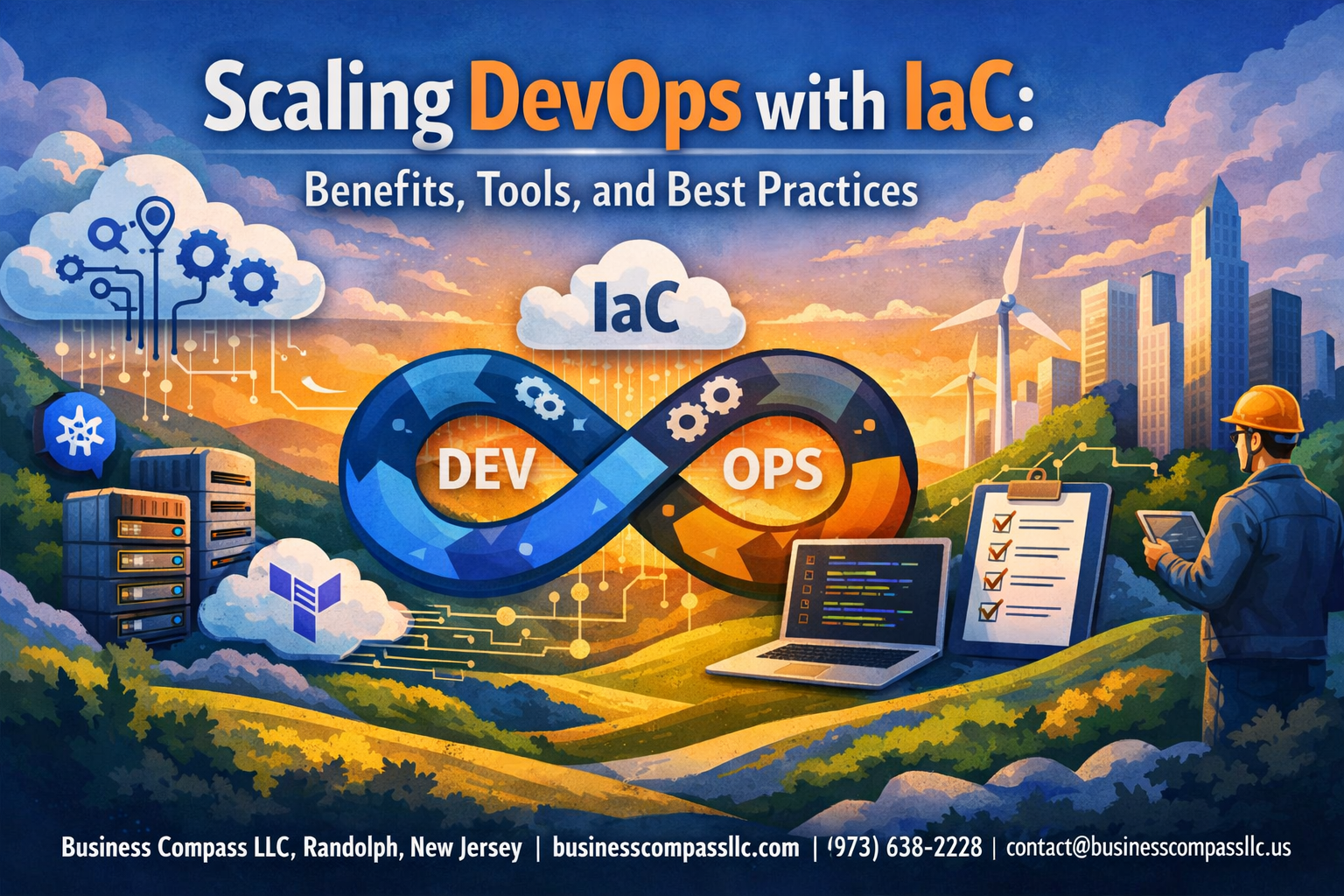
Growing DevOps teams hit scaling roadblocks fast. Manual infrastructure management becomes a bottleneck that slows deployments and increases errors. Infrastructure as Code DevOps solves this by automating infrastructure provisioning and management through code.
This guide is for DevOps engineers, platform teams, and engineering leaders who want to scale their operations without losing speed or reliability. You’ll learn how IaC scaling best practices can transform your workflow from reactive firefighting to proactive infrastructure management.
We’ll explore the strategic Infrastructure as Code benefits that drive measurable business outcomes, including faster deployment cycles and reduced operational overhead. You’ll also discover essential DevOps automation tools that top-performing teams use to manage infrastructure at scale. Finally, we’ll cover proven implementation strategies that help you avoid common pitfalls and build robust Infrastructure automation strategies that grow with your organization.
Understanding Infrastructure as Code for DevOps Teams

Defining IaC and Its Core Principles
Infrastructure as Code (IaC) represents a fundamental shift in how DevOps teams manage and provision infrastructure resources. At its core, IaC treats infrastructure components like servers, networks, and storage as software artifacts that can be versioned, tested, and deployed through code. The key principles include declarative configuration, version control, repeatability, and immutability. Teams define their desired infrastructure state using configuration files written in domain-specific languages, enabling consistent deployments across environments.
How IaC Transforms Traditional Infrastructure Management
Traditional infrastructure management relies heavily on manual processes, documentation, and human intervention for provisioning and configuration tasks. IaC fundamentally changes this approach by automating infrastructure deployment through code-based definitions. This transformation eliminates configuration drift, reduces human error, and enables rapid scaling of infrastructure resources. DevOps teams can now treat infrastructure changes like application code changes, applying the same rigorous testing, review, and deployment processes that ensure reliability and consistency.
Key Differences Between Manual and Automated Infrastructure Deployment
Manual infrastructure deployment involves time-consuming processes where system administrators manually configure servers, install software, and set up networking components. This approach creates bottlenecks, introduces inconsistencies, and makes disaster recovery complex. Automated infrastructure deployment through IaC tools enables rapid provisioning, consistent configurations, and self-documenting infrastructure. Teams can spin up identical environments in minutes rather than days, roll back changes instantly, and maintain complete audit trails of all infrastructure modifications.
Strategic Benefits of Implementing IaC in DevOps Workflows

Accelerated Development Cycles and Faster Time-to-Market
Infrastructure as Code DevOps implementation dramatically speeds up development workflows by automating environment provisioning. Teams can spin up identical development, testing, and production environments in minutes rather than weeks. This automation eliminates manual configuration bottlenecks and allows developers to focus on building features instead of managing infrastructure. The streamlined deployment process means faster releases and quicker response to market demands.
Enhanced Consistency and Reduced Configuration Drift
IaC scaling best practices ensure every environment follows identical specifications through version-controlled templates. Configuration drift becomes a thing of the past when infrastructure definitions are managed as code. Teams can track changes, roll back problematic deployments, and maintain standardized setups across all environments. This consistency reduces debugging time and eliminates the “it works on my machine” problem that plagues traditional infrastructure management.
Improved Cost Management and Resource Optimization
DevOps automation tools integrated with IaC provide detailed visibility into resource usage and spending patterns. Teams can automatically scale resources based on demand, shut down unused environments, and optimize instance sizes through code-driven policies. This Infrastructure automation strategy typically reduces cloud costs by 20-40% while improving resource utilization. Budget controls and automated alerts prevent unexpected expenses from spiraling out of control.
Strengthened Security Through Standardized Configurations
Infrastructure as Code benefits include built-in security compliance through standardized templates and automated security controls. Security policies become enforceable code rather than documentation that gets ignored or forgotten. Vulnerability scanning, access controls, and encryption settings are consistently applied across all environments. This approach reduces security gaps and ensures compliance requirements are met automatically during every deployment.
Essential IaC Tools for Scaling DevOps Operations
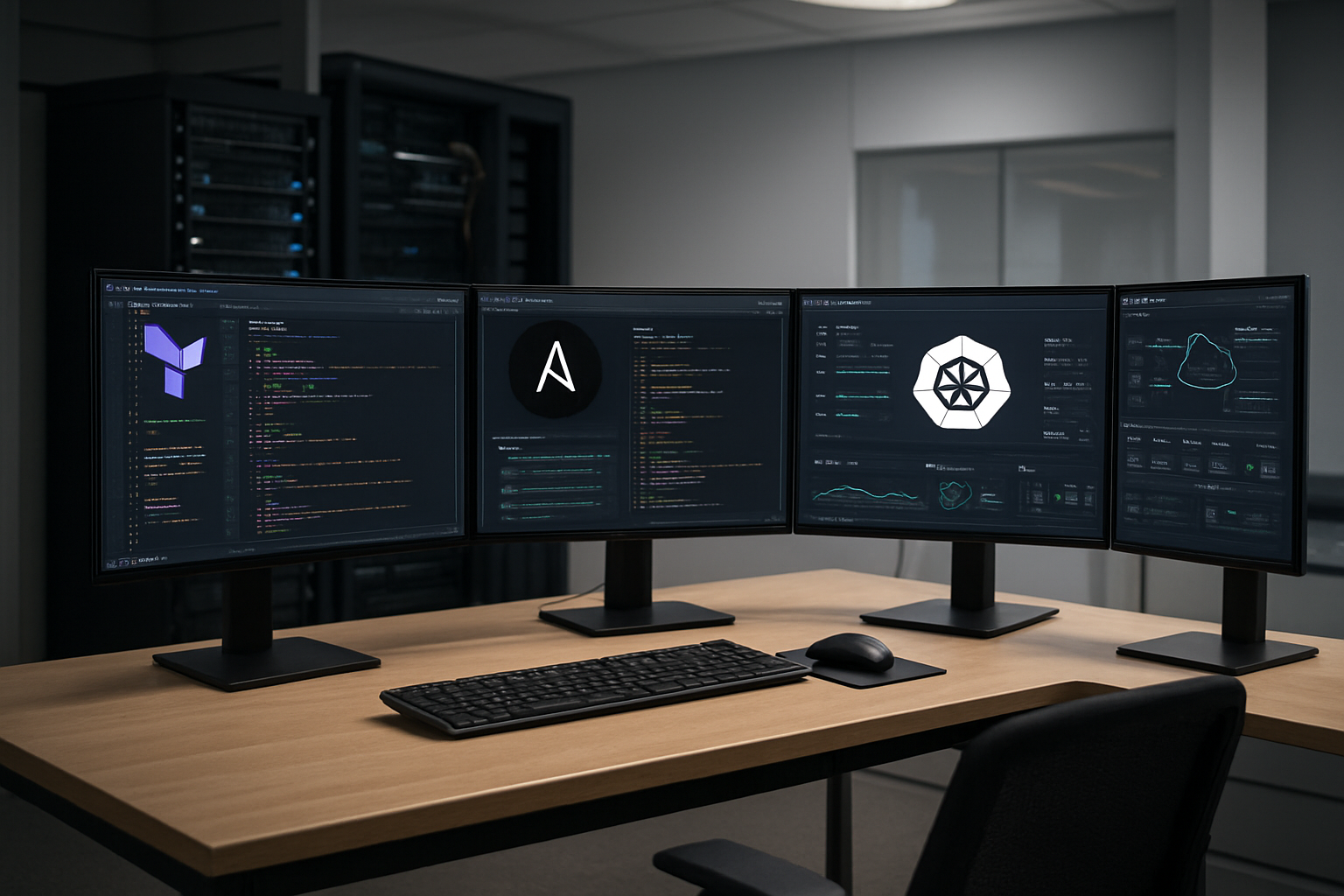
Terraform for Multi-Cloud Infrastructure Management
Terraform stands as the go-to Infrastructure as Code tool for organizations scaling across multiple cloud providers. Its declarative syntax and provider-agnostic approach enable DevOps teams to manage AWS, Azure, GCP, and on-premises resources through a single workflow.
The tool’s state management capabilities track infrastructure changes, preventing configuration drift while enabling collaborative DevOps automation. Teams can version control their infrastructure definitions, apply consistent policies across environments, and achieve reproducible deployments that scale seamlessly with growing operational demands.
AWS CloudFormation for Native AWS Deployments
CloudFormation provides deep integration with AWS services, making it the natural choice for teams committed to the AWS ecosystem. Its template-driven approach supports JSON and YAML formats, enabling Infrastructure as Code practices with native AWS resource definitions and built-in rollback capabilities.
The service excels at managing complex AWS architectures through nested stacks and cross-stack references. DevOps teams benefit from automatic dependency resolution, detailed change sets for impact analysis, and seamless integration with AWS security and compliance services for enterprise-grade infrastructure management.
Ansible for Configuration Management and Orchestration
Ansible bridges the gap between infrastructure provisioning and application deployment through its agentless architecture and simple YAML playbooks. This DevOps automation tool excels at configuration management, application deployment, and orchestrating complex multi-tier environments across diverse infrastructure platforms.
Its push-based model eliminates the need for agents on target systems, reducing overhead while maintaining security. Teams can automate everything from server configuration to application rollouts, creating comprehensive Infrastructure as Code workflows that integrate smoothly with existing DevOps toolchains and CI/CD pipelines.
Kubernetes and Helm for Container Infrastructure
Kubernetes revolutionizes infrastructure management by treating containerized applications as declarative resources. Combined with Helm’s package management capabilities, teams can define, version, and deploy complex microservices architectures using Infrastructure as Code principles for container orchestration.
Helm charts encapsulate Kubernetes manifests into reusable templates, enabling consistent deployments across development, staging, and production environments. This approach supports advanced deployment strategies like blue-green and canary releases while providing the scalability and resilience required for modern DevOps operations.
Pulumi for Developer-Friendly Infrastructure Programming
Pulumi breaks traditional barriers by enabling Infrastructure as Code through familiar programming languages like Python, TypeScript, and Go. This developer-centric approach allows teams to leverage existing programming skills, IDE features, and testing frameworks for infrastructure development.
The platform combines the expressiveness of general-purpose languages with cloud-native resource management, supporting complex logic, loops, and conditionals that traditional declarative tools struggle with. DevOps teams gain access to rich ecosystems of libraries while maintaining the benefits of version control, code reviews, and automated testing for infrastructure changes.
Proven Best Practices for Successful IaC Implementation

Version Control Strategies for Infrastructure Code
Treating infrastructure code with the same discipline as application code forms the foundation of successful IaC scaling best practices. Git-based workflows with feature branches enable teams to review infrastructure changes before deployment, preventing costly mistakes in production environments. Implementing semantic versioning for infrastructure modules allows teams to track changes systematically and roll back when needed. Pull request workflows create checkpoints where senior engineers can review complex infrastructure modifications, ensuring consistency across environments.
Branching strategies like GitFlow or trunk-based development help teams manage infrastructure releases alongside application deployments. Environment-specific configuration files stored separately from core infrastructure code prevent accidental cross-environment contamination. This separation enables teams to promote identical infrastructure patterns across development, staging, and production while maintaining environment-specific variables securely.
Modular Design Patterns for Reusable Infrastructure Components
Building reusable infrastructure modules accelerates DevOps automation tools adoption and reduces duplication across projects. Well-designed modules encapsulate specific infrastructure patterns—like web server clusters or database configurations—making them portable across different applications and teams. Input variables and output values create clear interfaces that allow modules to communicate without tight coupling.
Module registries serve as central repositories where teams can discover and share proven infrastructure patterns. Version pinning ensures stability while allowing gradual adoption of module updates. This modular approach transforms infrastructure management from repetitive manual tasks into assembling pre-tested, reliable building blocks that scale efficiently.
Testing and Validation Frameworks for Infrastructure Changes
Automated testing catches infrastructure errors before they reach production, making IaC implementation guide strategies more reliable. Unit tests validate individual resource configurations, while integration tests verify that infrastructure components work together correctly. Policy-as-code frameworks like Open Policy Agent enforce security and compliance rules automatically during the deployment pipeline.
Synthetic monitoring and infrastructure validation tools continuously verify that deployed infrastructure meets expected specifications. Dry-run capabilities in most IaC tools allow teams to preview changes before execution, reducing deployment anxiety. Combining these testing approaches creates multiple safety nets that catch different types of issues, from syntax errors to security misconfigurations.
Overcoming Common IaC Scaling Challenges

Managing State Files and Avoiding Conflicts in Team Environments
State file conflicts create major headaches for DevOps teams scaling IaC operations. When multiple developers work on the same infrastructure, concurrent modifications can corrupt state files and lead to resource inconsistencies. Remote state backends like AWS S3 or Terraform Cloud solve this problem by centralizing state management and implementing locking mechanisms. Teams should establish clear workflows for state file access, use branch protection rules, and implement automated state backups to prevent data loss during Infrastructure as Code DevOps operations.
Implementing Proper Access Controls and Security Governance
Security governance becomes complex as IaC scaling best practices require balancing access with operational efficiency. Role-based access controls (RBAC) should align with the principle of least privilege, giving team members only the permissions they need for their specific responsibilities. Implement policy-as-code frameworks like Open Policy Agent to enforce security standards automatically. Secret management tools such as HashiCorp Vault or AWS Secrets Manager protect sensitive credentials, while audit logging tracks all infrastructure changes for compliance requirements.
Monitoring and Troubleshooting Infrastructure Deployments
Deployment visibility is critical when Infrastructure as Code challenges multiply across environments. Real-time monitoring tools like Datadog or CloudWatch help teams track deployment progress and catch failures early. Set up automated alerts for failed deployments and resource drift detection. Implement structured logging with correlation IDs to trace issues across distributed systems. Create runbooks for common failure scenarios and establish escalation procedures. Regular deployment health checks and rollback strategies minimize downtime when DevOps automation tools encounter unexpected issues.
Handling Legacy System Integration and Migration Strategies
Legacy systems present unique challenges for DevOps workflow optimization initiatives. Start with a comprehensive inventory of existing infrastructure, documenting dependencies and interconnections. Use the strangler fig pattern to gradually replace legacy components while maintaining system functionality. Implement blue-green deployments or canary releases to reduce migration risks. Create abstraction layers that allow legacy systems to coexist with modern Infrastructure automation strategies. Plan for data migration early and establish testing environments that mirror production complexity to validate integration points before full deployment.

Infrastructure as Code has become the backbone of modern DevOps operations, offering teams the ability to manage their infrastructure with the same precision and reliability they apply to application code. The strategic benefits are clear: faster deployments, reduced human error, better consistency across environments, and significant cost savings. When combined with the right tools like Terraform, Ansible, or AWS CloudFormation, teams can automate complex infrastructure tasks and scale their operations without drowning in manual work.
Success with IaC doesn’t happen overnight, but following proven practices like version control, modular design, and proper testing can make the difference between a smooth implementation and a chaotic mess. The challenges are real – from managing state files to handling dependencies – but they’re entirely manageable with the right approach. Start small, pick one tool that fits your team’s needs, and gradually expand your IaC adoption. Your future self will thank you when you’re deploying infrastructure changes in minutes instead of hours, and your entire team can sleep better knowing your environments are consistent and reliable.