Physical AI Explained: How LLM-Powered Robots Are Entering the Workforce
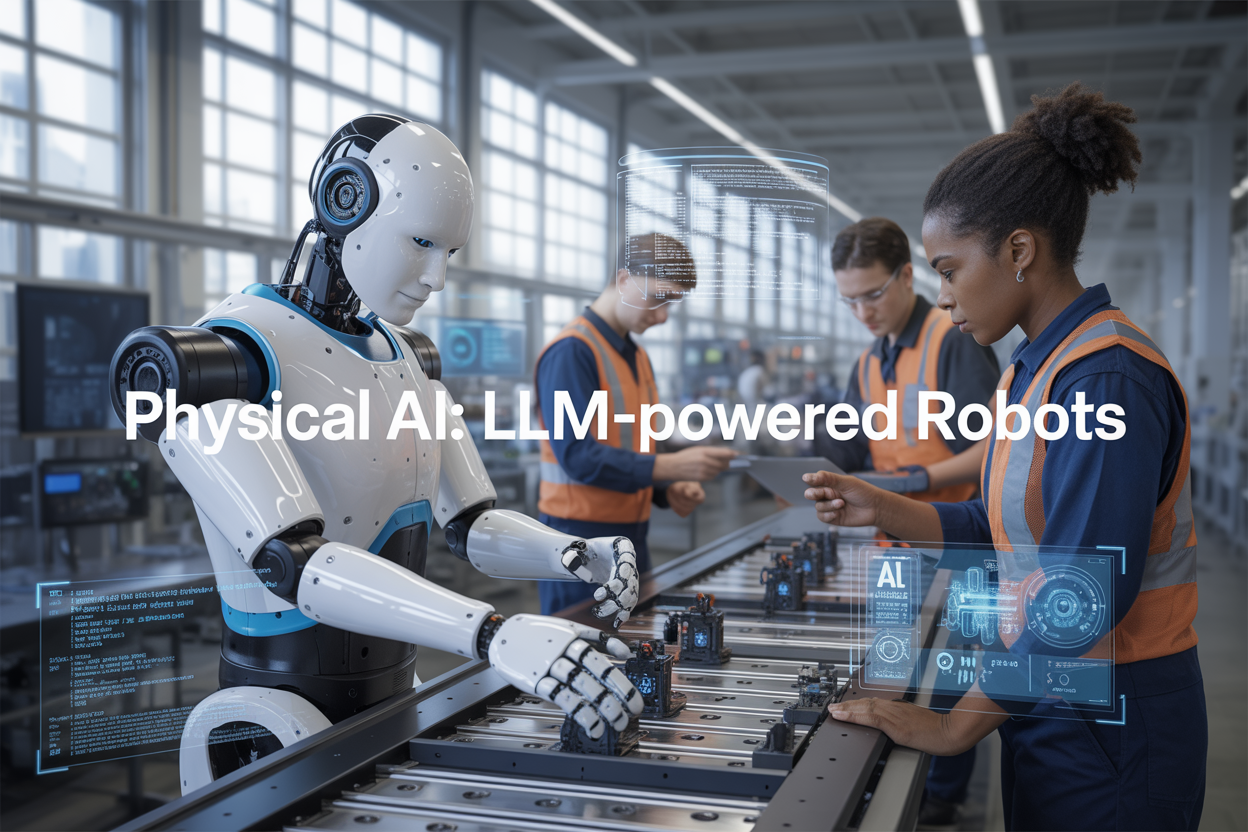
Physical AI represents the next major shift in workplace automation, where robots powered by large language models can understand, reason, and interact with their environment like never before. This breakthrough technology combines the conversational intelligence of ChatGPT-style AI with robotic hardware that can actually move, manipulate objects, and work alongside humans in real-world settings.
This guide is designed for business leaders, technology professionals, and anyone curious about how AI robots in workplace environments will reshape industries and job markets. You’ll discover what makes these intelligent robotics applications different from traditional automation and why companies are racing to adopt them.
We’ll explore how LLM-powered robots actually work and what makes them smarter than previous generations of industrial machines. You’ll also see real examples of automated workforce solutions already transforming manufacturing, logistics, and service industries. Finally, we’ll examine the practical benefits these systems bring to productivity and efficiency, plus the challenges companies face when implementing human-robot collaboration workplace strategies.
The robotic workforce automation revolution isn’t coming—it’s already here, and understanding physical artificial intelligence technology now will help you prepare for tomorrow’s workplace.
Understanding Physical AI and Its Revolutionary Impact
Defining Physical AI and its distinction from traditional robotics
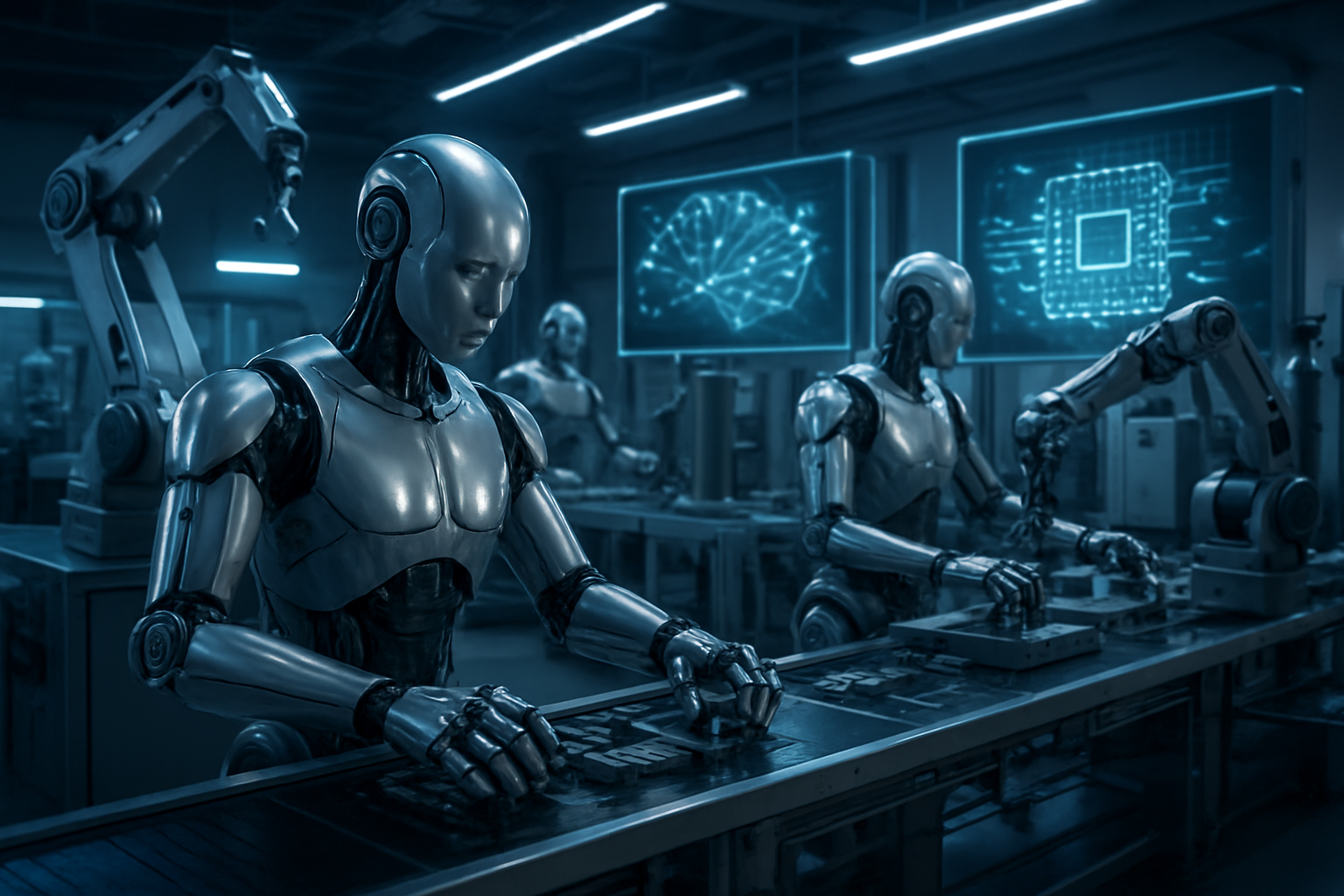
Physical artificial intelligence represents a groundbreaking evolution in robotics technology that combines advanced AI reasoning with real-world manipulation capabilities. Unlike traditional robots that follow pre-programmed instructions and rigid decision trees, Physical AI systems can understand, interpret, and respond to complex environments using natural language processing and contextual understanding.
Traditional robotics relies heavily on sensors, actuators, and carefully coded algorithms that dictate specific movements and responses. These systems excel at repetitive tasks but struggle with unexpected situations or nuanced decision-making. Physical AI breaks this limitation by integrating large language models that can process information, make judgments, and adapt to changing circumstances in real-time.
The key difference lies in cognitive flexibility. Where conventional robots might halt operations when encountering an unexpected obstacle, Physical AI systems can analyze the situation, consider multiple solutions, and choose the most appropriate response based on learned patterns and contextual understanding. This cognitive leap transforms robots from simple task executors into intelligent collaborators capable of working alongside humans in dynamic environments.
How large language models bridge the gap between digital intelligence and physical action
Large language model robotics creates an unprecedented connection between digital reasoning and physical execution. LLM-powered robots can interpret verbal instructions, written commands, and visual cues, then translate these inputs into precise physical actions. This bridge eliminates the traditional barrier between human communication and robotic operation.
The integration works through sophisticated processing layers where language models analyze incoming information, determine intent, and generate appropriate motor commands. For example, when a human says “please move that box to the storage area,” the AI system processes the language, identifies the object, maps the destination, and coordinates the physical movements required to complete the task.
This capability extends beyond simple command execution. These systems can engage in problem-solving conversations, ask clarifying questions, and provide status updates in natural language. The bidirectional communication creates a more intuitive working relationship between humans and machines, reducing the learning curve typically associated with robotic systems.
Key advantages over conventional automation systems
AI robots in workplace settings offer several compelling advantages over traditional automation. The most significant benefit is adaptability – these systems can handle variations in tasks, environments, and requirements without extensive reprogramming. This flexibility dramatically reduces deployment costs and implementation timeframes.
Traditional automation excels in controlled environments with consistent variables, but Physical AI thrives in unpredictable settings. Manufacturing floors, warehouses, and service environments constantly present new challenges that would require expensive modifications to conventional systems. Physical AI adapts naturally, learning from each interaction and improving performance over time.
| Feature | Traditional Automation | Physical AI Systems |
|---|---|---|
| Setup Time | Weeks to months | Days to weeks |
| Adaptability | Limited, requires reprogramming | High, learns continuously |
| Communication | Technical interfaces only | Natural language interaction |
| Problem Solving | Pre-defined responses | Creative problem-solving |
| Training Requirements | Extensive technical training | Minimal, intuitive interaction |
Cost efficiency emerges as another major advantage. While initial investments in Physical AI may be higher, the reduced need for specialized programming, maintenance, and operator training creates significant long-term savings. These systems can also perform multiple types of tasks, eliminating the need for separate specialized equipment for different functions.
Human-robot collaboration workplace scenarios benefit enormously from Physical AI’s ability to understand context and intent. Rather than requiring safety barriers and isolated work zones, these intelligent systems can work directly alongside human workers, responding appropriately to verbal cues, gestures, and changing priorities. This collaborative approach maximizes productivity while maintaining safety standards.
The Technology Behind LLM-Powered Robotics

Integration of natural language processing with robotic systems
Physical AI robots work by combining powerful large language models with mechanical systems, creating machines that understand human language and translate it into physical actions. This integration allows workers to communicate with robots using everyday speech rather than complex programming languages. When a warehouse employee says “move those boxes to aisle three,” the LLM-powered robot processes the natural language, identifies the objects, determines the destination, and executes the task autonomously.
The breakthrough lies in how these systems bridge the gap between digital understanding and physical execution. Traditional robots required specific commands and predetermined paths. Now, LLM-powered robotics can interpret context, handle ambiguous instructions, and even ask clarifying questions when needed. This natural communication makes robotic workforce automation more accessible to workers without technical training.
Real-time decision making and adaptive learning capabilities
Modern physical artificial intelligence technology operates through continuous learning loops that enable robots to make split-second decisions based on changing conditions. These systems analyze thousands of variables simultaneously, from environmental factors to task priorities, adjusting their behavior without human intervention.
The adaptive learning component sets these robots apart from their predecessors. Each interaction teaches the system something new about its environment and tasks. A robot working alongside humans learns individual preferences, workflow patterns, and optimal timing for different activities. This creates increasingly efficient human-robot collaboration workplace dynamics where machines become better partners over time.
Key adaptive capabilities include:
- Dynamic task prioritization based on real-time workflow demands
- Error recognition and correction without stopping operations
- Preference learning from human coworker interactions
- Environmental adaptation to changing workplace conditions
Computer vision and sensor fusion for enhanced environmental awareness
AI-powered industrial robots depend on sophisticated sensory systems that far exceed human perception capabilities. Computer vision systems process visual data at incredible speeds, identifying objects, reading text, detecting obstacles, and monitoring safety conditions simultaneously. These visual systems work alongside multiple sensor types to create comprehensive environmental maps.
Sensor fusion technology combines data from cameras, lidar, ultrasonic sensors, force sensors, and gyroscopes into a unified understanding of the robot’s surroundings. This multi-layered approach prevents the limitations that single-sensor systems face. When camera vision becomes compromised by lighting conditions, ultrasonic sensors maintain distance awareness. When handling delicate materials, force sensors provide tactile feedback that prevents damage.
| Sensor Type | Primary Function | Workplace Application |
|---|---|---|
| RGB Cameras | Object identification, text reading | Quality control, inventory management |
| Depth Cameras | 3D spatial mapping | Navigation, collision avoidance |
| Force Sensors | Tactile feedback | Delicate handling, assembly work |
| Lidar | Precise distance measurement | Autonomous navigation, mapping |
Machine learning algorithms that enable autonomous task execution
The core of intelligent robotics applications lies in sophisticated algorithms that enable robots to perform complex tasks without step-by-step programming. These machine learning systems analyze patterns in successful task completions, building knowledge bases that inform future actions. Unlike traditional automation, these robots can handle variations in their tasks and adapt to unexpected situations.
Reinforcement learning algorithms allow robots to improve through trial and error, similar to how humans learn new skills. Computer vision algorithms enable object recognition and manipulation planning, while predictive algorithms anticipate potential problems before they occur. Path planning algorithms calculate optimal routes through dynamic environments, adjusting in real-time as conditions change.
The autonomous execution process involves multiple algorithm layers working together:
- Perception algorithms interpret sensor data
- Planning algorithms determine optimal action sequences
- Control algorithms manage precise movement execution
- Safety algorithms monitor for hazards and compliance issues
These automated workforce solutions represent a fundamental shift from programmed automation to truly intelligent systems that can reason, adapt, and collaborate effectively in complex workplace environments.
Current Applications Transforming Industries
Manufacturing and Assembly Line Optimization
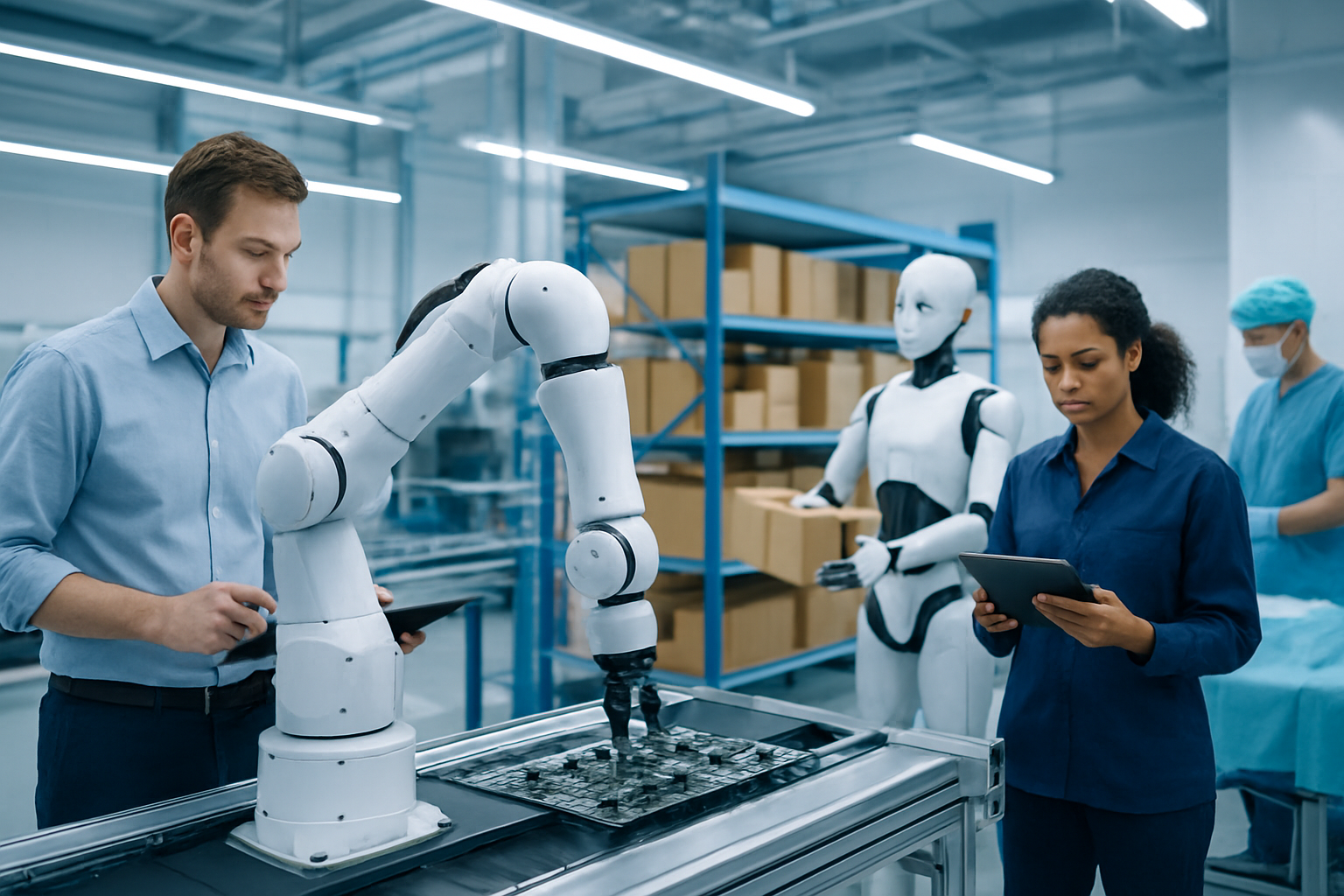
Physical AI robots are reshaping manufacturing floors worldwide, bringing unprecedented precision and adaptability to production lines. Unlike traditional industrial robots that follow rigid programming, LLM-powered robots can understand complex verbal instructions, adapt to design changes in real-time, and collaborate seamlessly with human workers.
Major automotive manufacturers like BMW and Tesla are deploying AI robots in workplace environments where they handle intricate assembly tasks, quality control inspections, and material handling. These robots can interpret visual cues, understand spoken commands, and make intelligent decisions about part placement and tool selection.
The key advantage lies in their ability to learn from demonstrations rather than requiring extensive reprogramming. A human operator can show the robot how to handle a new component, and the AI system learns the process through observation and natural language feedback.
| Traditional Robots | LLM-Powered Physical AI |
|---|---|
| Pre-programmed tasks | Dynamic learning capability |
| Fixed routines | Adaptive responses |
| Limited flexibility | Context-aware decision making |
| Separate programming required | Natural language instruction |
Healthcare Assistance and Patient Care Support
Physical artificial intelligence technology is revolutionizing patient care through robots that combine mobility, dexterity, and conversational abilities. These systems assist nurses with routine tasks, help patients with mobility challenges, and provide companionship in care facilities.
Hospitals are deploying AI-powered robots for:
- Medication delivery and inventory management
- Patient monitoring and vital sign collection
- Physical therapy assistance and rehabilitation exercises
- Disinfection and cleaning protocols
- Emergency response coordination
The robots understand medical terminology, can communicate with patients in multiple languages, and adapt their behavior based on individual patient needs. They work alongside healthcare professionals, handling routine tasks while medical staff focus on complex care decisions.
Logistics and Warehouse Automation Solutions
Amazon, FedEx, and other logistics giants are implementing robotic workforce automation systems that go beyond simple package sorting. These intelligent robotics applications can navigate complex warehouse environments, understand inventory requirements through natural language, and coordinate with human workers without predetermined scripts.
Modern warehouse robots equipped with large language models can:
- Process verbal pickup and delivery instructions
- Adapt to changing inventory layouts
- Communicate status updates in plain English
- Handle unexpected situations with problem-solving capabilities
- Coordinate multi-robot operations through natural communication
The robots reduce order fulfillment times by 40-60% while maintaining accuracy rates above 99.5%. They work continuously alongside human employees, creating a hybrid workforce that maximizes efficiency.
Service Industry Deployment in Hospitality and Retail
Hotels and restaurants are embracing AI-powered industrial robots for customer service roles that require both physical capabilities and social interaction. These robots serve as concierges, room service assistants, and customer support representatives.
In retail environments, LLM-powered robots help customers locate products, answer detailed questions about inventory, and provide personalized shopping recommendations. They understand natural conversation patterns and can handle complex customer requests that traditional chatbots cannot manage.
Popular applications include:
- Hotel check-in and luggage assistance
- Restaurant order taking and food delivery
- Retail inventory management and customer guidance
- Event setup and crowd management
- Cleaning and maintenance coordination
Construction and Maintenance Operations
Construction sites are integrating automated workforce solutions that can interpret blueprints, understand safety protocols, and perform precision tasks in challenging environments. These robots handle dangerous operations, work in extreme conditions, and maintain consistent quality standards.
Human-robot collaboration workplace scenarios in construction involve robots that can:
- Lay bricks and perform masonry work with millimeter precision
- Handle heavy lifting and material transport
- Conduct safety inspections and hazard identification
- Perform welding and assembly tasks in hard-to-reach areas
- Coordinate with human supervisors through voice commands
Maintenance robots equipped with language models can diagnose equipment problems, order replacement parts through verbal communication, and guide human technicians through complex repair procedures. They reduce downtime by 30-50% and improve workplace safety by handling hazardous maintenance tasks.
Workplace Benefits and Productivity Gains
Reduced Human Error and Increased Operational Efficiency
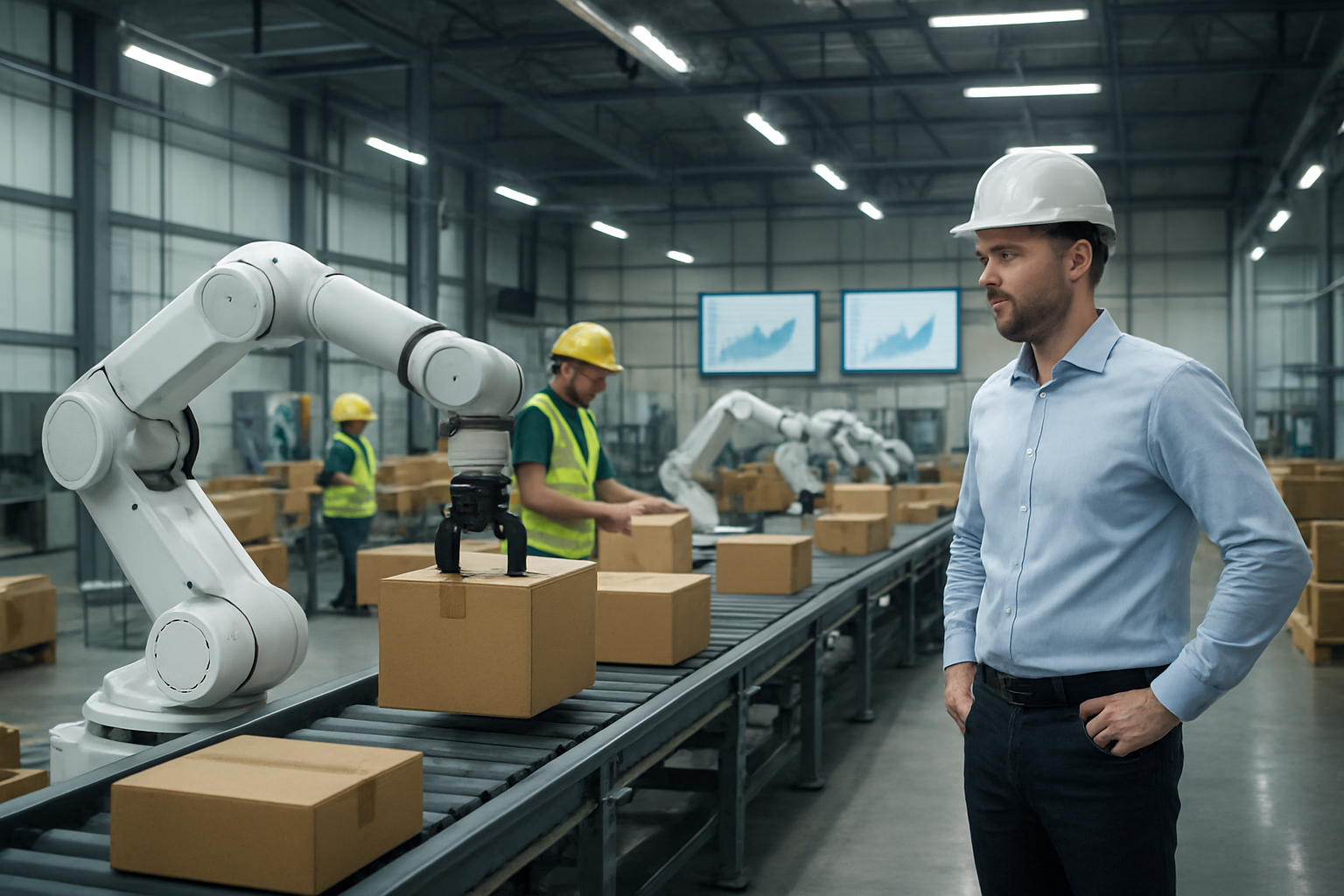
Physical AI robots powered by large language models bring unprecedented accuracy to workplace tasks. Unlike human workers who experience fatigue, distraction, or occasional lapses in judgment, AI-powered industrial robots maintain consistent precision throughout their operations. These systems process multiple data streams simultaneously, making split-second decisions based on comprehensive environmental analysis rather than limited human perception.
Manufacturing environments showcase this benefit dramatically. Traditional assembly lines rely on human workers to identify defects, measure tolerances, and execute precise movements. LLM-powered robots can detect microscopic flaws that escape human vision, maintain exact specifications across thousands of repetitive actions, and adapt their approach when they encounter unexpected variations in materials or components.
Quality control processes see remarkable improvements when robotic workforce automation takes over inspection duties. These systems don’t have “off days” or struggle with monotonous tasks that typically lead to decreased human attention. The result is dramatically lower defect rates, reduced waste, and higher customer satisfaction across industries ranging from electronics to pharmaceuticals.
24/7 Availability and Consistent Performance Standards
Round-the-clock operations become genuinely feasible with LLM-powered robots. While human workers require breaks, sleep, and shift changes that create natural interruptions in productivity, AI robots in workplace settings maintain steady output regardless of time or day. This continuous availability transforms how businesses approach production schedules and customer service delivery.
Performance consistency stands as another major advantage. Human performance naturally fluctuates based on energy levels, mood, external stress, and countless other factors. Physical artificial intelligence technology eliminates these variables entirely. A robot performing inventory management tasks at 3 AM demonstrates the same efficiency and accuracy as one working during peak afternoon hours.
This reliability proves especially valuable in critical industries where consistency matters most. Healthcare facilities use these systems for medication dispensing, logistics companies deploy them for package sorting, and food processing plants rely on them for sanitation protocols that never vary in thoroughness.
Cost Savings Through Automated Repetitive Tasks
Labor cost reduction represents one of the most immediate benefits organizations experience with automated workforce solutions. While the initial investment in physical AI technology requires significant capital, the long-term savings compound rapidly. Businesses eliminate ongoing expenses related to wages, benefits, training, sick leave, and worker compensation claims for positions handled by intelligent robotics applications.
Repetitive tasks that previously required multiple human workers can often be managed by a single robotic system. Warehouse operations see dramatic efficiency gains when AI-powered robots handle picking, packing, and sorting duties that once required large teams. These systems work faster than human counterparts while maintaining perfect accuracy in order fulfillment.
Training costs disappear entirely once robotic systems are programmed and deployed. Human workers require extensive onboarding, ongoing skill development, and periodic retraining as processes evolve. Physical AI systems receive software updates that instantly improve their capabilities across entire fleets, making knowledge transfer instantaneous and universal.
The financial impact extends beyond direct labor savings. Reduced error rates mean fewer product returns, less rework, and decreased material waste. Insurance premiums often decrease when workplace hazards are minimized through automation, and compliance costs shrink when robotic systems maintain perfect adherence to safety protocols and regulatory requirements.
Challenges and Limitations in Implementation
Safety Concerns and Regulatory Compliance Requirements
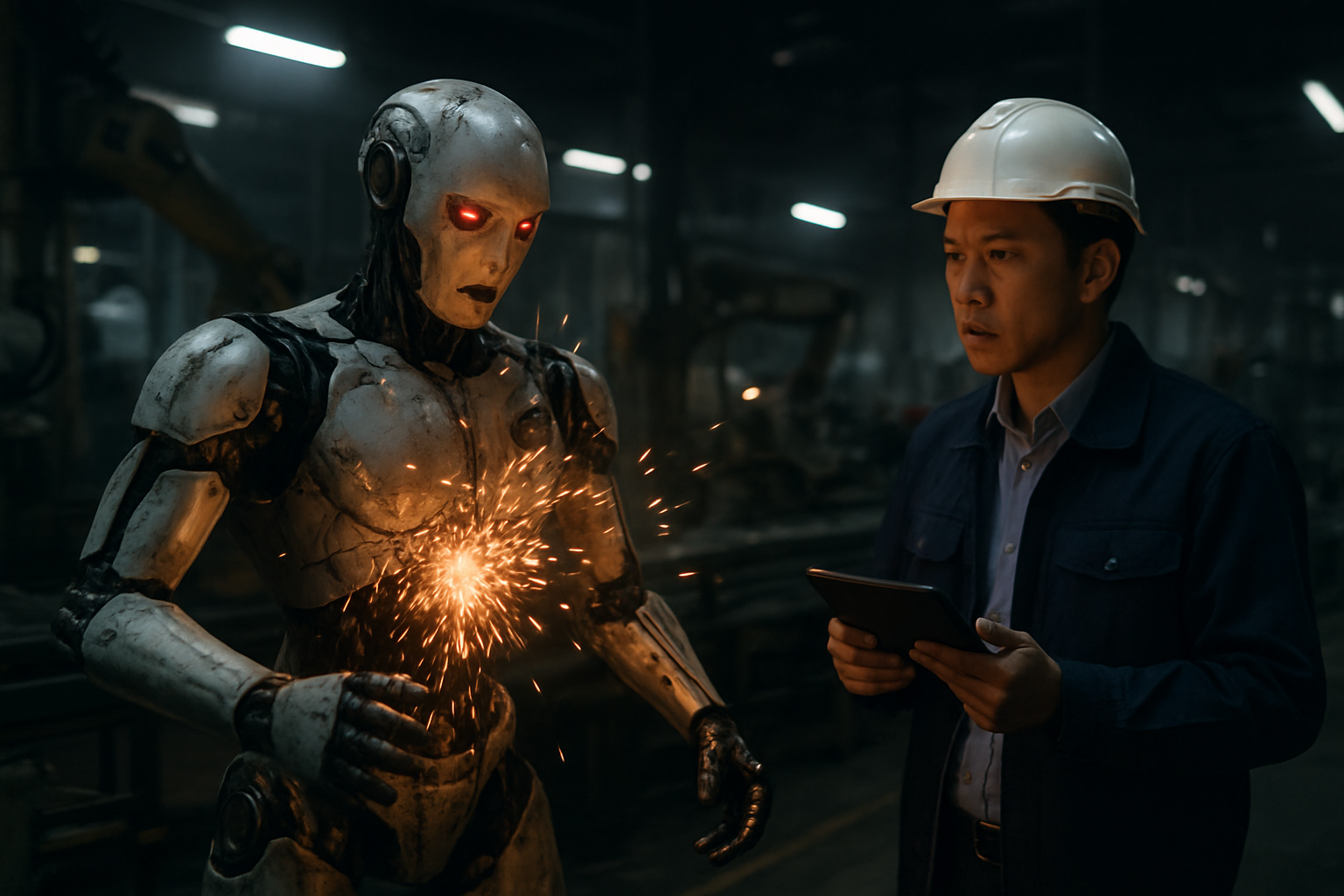
Physical AI systems operating in workplaces face complex safety challenges that go beyond traditional industrial automation. LLM-powered robots must navigate unpredictable human behavior while making real-time decisions that could impact worker safety. Unlike conventional robots that follow predetermined paths, these AI-powered systems can interpret natural language commands and adapt their behavior, creating new risk scenarios that existing safety protocols don’t address.
Regulatory frameworks are struggling to keep pace with AI robotics technology. Current workplace safety standards were designed for traditional automation, not for robots that can learn, adapt, and make autonomous decisions based on language models. Companies implementing physical artificial intelligence technology must navigate a patchwork of regulations from OSHA, FDA, and other agencies that may not directly address AI-specific risks.
The liability question becomes particularly complex when an LLM-powered robot causes harm. Who bears responsibility – the manufacturer, the company deploying the system, or the AI model developer? This uncertainty creates legal risks that many organizations aren’t prepared to handle.
Technical Limitations and Reliability Issues
Current AI robots in workplace environments face significant technical hurdles that limit their widespread adoption. Large language model robotics systems can struggle with real-world variability that doesn’t exist in their training data. A robot trained to handle “boxes” might fail when encountering packages with unusual shapes, damaged surfaces, or unexpected weights.
Reliability remains a critical concern for automated workforce solutions. LLM-powered robots can exhibit unpredictable behavior when faced with edge cases or ambiguous instructions. A simple command like “clean the area” might be interpreted differently depending on context, leading to inconsistent performance or even dangerous actions.
The integration of language processing with physical actions creates latency issues. While humans can instantly understand and react, AI systems need processing time to interpret commands, plan actions, and execute tasks. This delay can create bottlenecks in fast-paced work environments where split-second decisions matter.
Integration Complexities with Existing Systems
Implementing intelligent robotics applications within established workflows presents significant technical challenges. Most workplaces run on legacy systems that weren’t designed to communicate with AI-powered robots. Companies often discover that their existing warehouse management systems, inventory tracking, or production scheduling software can’t easily interface with new robotic workforce automation.
The data integration challenge is particularly complex. Physical AI systems need access to real-time information about inventory levels, production schedules, and safety protocols. However, this data often lives in siloed systems that use different formats, protocols, and security measures. Creating seamless data flow between these systems and AI robots requires substantial IT infrastructure changes.
Staff training represents another integration hurdle. Workers must learn new ways of communicating with and working alongside AI-powered industrial robots. This includes understanding how to give clear commands, recognizing when robots need assistance, and knowing when to intervene if something goes wrong.
Initial Investment Costs and ROI Considerations
The upfront costs for implementing human-robot collaboration workplace solutions can be staggering. Beyond the robots themselves, companies must invest in supporting infrastructure, software licenses, safety systems, and extensive staff training. A single sophisticated LLM-powered robot can cost hundreds of thousands of dollars, not including installation and customization.
ROI calculations become complex because the benefits of physical artificial intelligence technology often extend beyond simple labor cost savings. These systems can work continuously, reduce errors, and provide valuable data insights. However, quantifying these benefits and comparing them to traditional automation solutions requires sophisticated financial modeling.
The technology’s rapid evolution creates additional financial risks. Companies worry that their substantial investments might become obsolete as newer, more capable systems emerge. This uncertainty makes it difficult to justify large capital expenditures, especially for smaller businesses that can’t absorb potential losses from early adoption of unproven technology.
Future Workforce Evolution and Human-Robot Collaboration

Emerging job roles in robot management and maintenance
The rise of Physical AI and LLM-powered robots creates entirely new career paths that didn’t exist five years ago. Robot fleet managers now oversee dozens of AI-powered machines across manufacturing floors, coordinating their schedules and optimizing workflows. These professionals combine traditional operations management with deep understanding of AI behavior patterns and machine learning capabilities.
Robotics technicians specializing in LLM systems represent another growing field. Unlike traditional maintenance workers who focus purely on mechanical repairs, these specialists troubleshoot complex AI decision-making processes, update language models, and fine-tune robotic responses to workplace scenarios. They work closely with data scientists to analyze robot performance metrics and identify areas for improvement.
Human-robot interaction designers shape how AI robots communicate and collaborate with human workers. These roles blend psychology, user experience design, and robotics engineering to create seamless workplace integration. They develop training protocols, design intuitive interfaces, and establish safety protocols for human-robot collaboration workplace environments.
Quality assurance specialists for robotic systems ensure AI robots maintain consistent performance standards while adapting to changing workplace conditions. They develop testing frameworks, monitor automated workforce solutions, and validate that robots respond appropriately to unexpected situations.
Skills retraining programs for displaced workers
Manufacturing companies and technology firms increasingly invest in comprehensive retraining initiatives that transform traditional workers into robot supervisors and collaborators. These programs typically span 6-12 months, focusing on digital literacy, basic programming concepts, and understanding AI decision-making processes.
Hands-on training centers simulate real workplace scenarios where employees learn to work alongside intelligent robotics applications. Workers practice giving voice commands to LLM-powered robots, interpreting robot status displays, and responding to various automated alerts. Many programs partner with vocational schools and community colleges to provide certifications in emerging robotics fields.
Government-sponsored initiatives offer financial support for workers transitioning from roles threatened by automation. These programs recognize that successful workforce transformation requires both technical training and career counseling. Participants learn not just how to operate new technology, but how to leverage their existing experience in novel ways.
Cross-training becomes essential as job boundaries blur between human and robotic responsibilities. Warehouse workers learn inventory management software, assembly line operators master quality control systems, and maintenance staff develop troubleshooting skills for AI-powered industrial robots.
Enhanced human capabilities through collaborative robotics
Physical AI amplifies human strengths rather than simply replacing workers. In precision manufacturing, robots handle repetitive measurements and calculations while humans make complex judgment calls about product quality and process improvements. This partnership allows human workers to focus on creative problem-solving and strategic thinking.
Healthcare workers experience significant capability enhancement through robotic assistance. Nurses work with AI-powered robots that monitor patient vital signs, deliver medications, and maintain detailed health records. This collaboration frees healthcare professionals to spend more time on patient interaction and complex care decisions.
Construction sites showcase remarkable examples of human-robot collaboration where workers guide AI robots through complex tasks requiring both precision and adaptability. Humans provide contextual knowledge about site conditions while robots execute physically demanding work with consistent accuracy. The result increases both safety and productivity.
Collaborative robotics transforms cognitive work as well as physical tasks. Office workers partner with AI systems that analyze data patterns, generate reports, and manage scheduling, while humans handle relationship building, strategic planning, and creative initiatives. This symbiosis creates more fulfilling work experiences where technology handles routine tasks and humans engage in meaningful problem-solving.
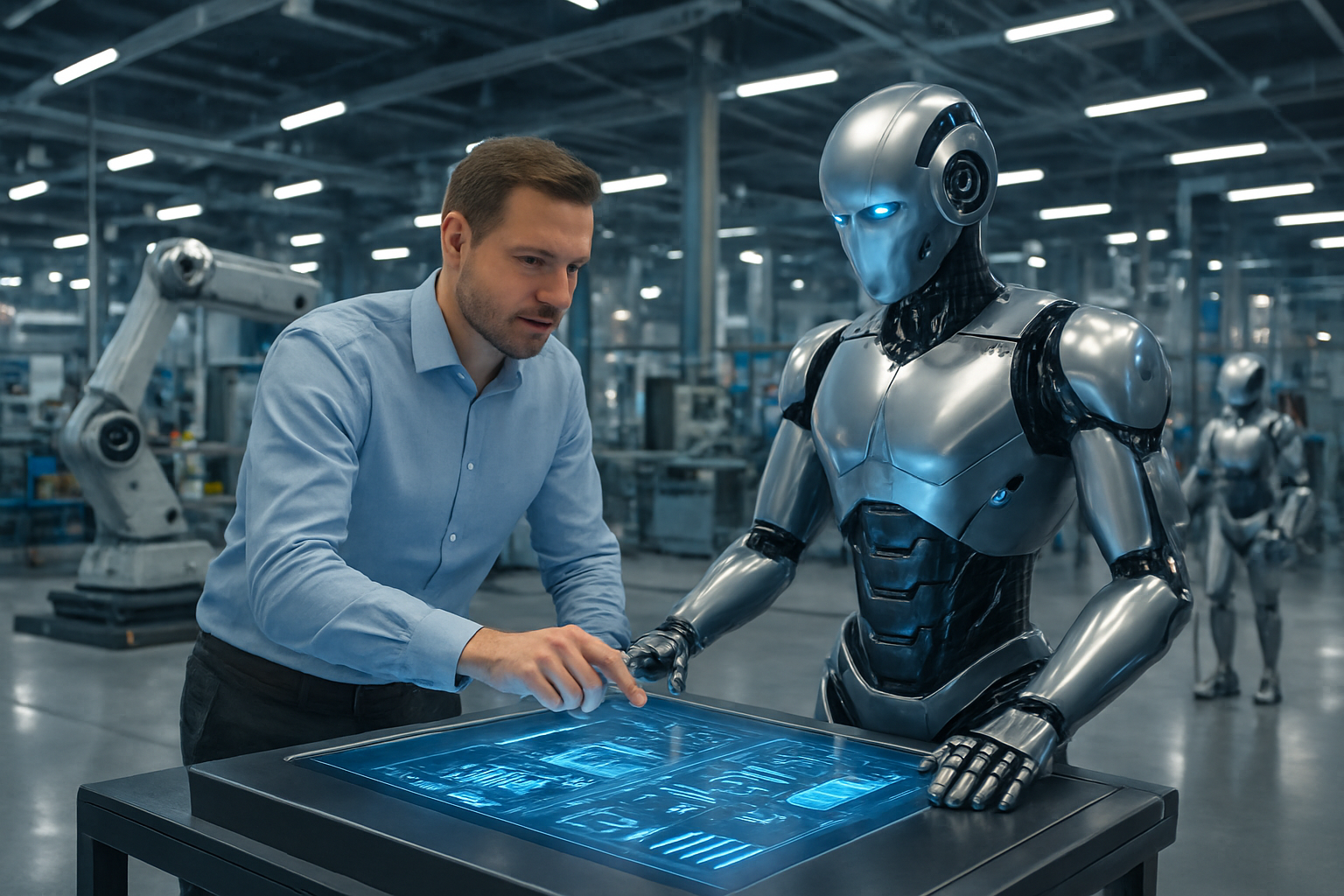
LLM-powered robots are rapidly changing how we think about work and productivity. These physical AI systems are already making their mark in warehouses, manufacturing plants, and service industries by combining advanced language understanding with real-world actions. While the technology promises significant benefits like improved efficiency and reduced workplace injuries, companies still face hurdles around cost, technical complexity, and employee adaptation.
The future workforce won’t be about humans versus robots – it’s about humans working alongside intelligent machines that can understand, learn, and adapt. If your organization is considering physical AI integration, start by identifying specific tasks that could benefit from automation while investing in employee training programs. The companies that embrace this technology thoughtfully, with a focus on enhancing human capabilities rather than replacing them entirely, will likely lead their industries in the years ahead.