Your Vultr infrastructure has served you well, but you’re ready to scale beyond what a smaller cloud provider can offer. This comprehensive Vultr to AWS migration guide walks developers, startups, and growing businesses through the complete transition process—from initial planning to long-term optimization.
Who This Guide Is For:
- Development teams outgrowing Vultr’s service limitations
- Startups preparing for rapid scaling and enterprise features
- IT professionals managing cloud infrastructure migration projects
- Business owners seeking better cost optimization and global reach
We’ll cover the essential migration planning and assessment phase, including how to evaluate your current infrastructure and map dependencies. You’ll also learn AWS service selection and architecture design strategies that align with your specific workload requirements. Finally, we’ll dive into post-migration optimization techniques that can reduce your cloud costs by 20-40% while improving performance and reliability.
Ready to make the switch? Let’s break down exactly how to migrate from Vultr to Amazon Web Services without the headaches.
Understanding When to Make the Migration Switch

Cost Analysis Comparison Between Vultr and AWS Pricing Models
The pricing structures between Vultr and AWS represent fundamentally different approaches to cloud computing costs. Vultr operates on a straightforward hourly billing model with fixed pricing tiers, making it easy to predict monthly expenses. A standard 8GB RAM, 4 vCPU instance on Vultr costs around $48 per month, regardless of actual usage patterns.
AWS pricing follows a more complex but potentially cost-effective model that rewards optimization. The same comparable configuration using EC2 t3.large instances costs approximately $53 monthly at on-demand rates, but Reserved Instances can reduce this to $34 monthly with a one-year commitment. AWS also offers Spot Instances that can slash costs by up to 90% for fault-tolerant workloads.
| Service Type | Vultr Monthly Cost | AWS On-Demand | AWS Reserved (1yr) | AWS Spot |
|---|---|---|---|---|
| 8GB RAM, 4 vCPU | $48 | $53 | $34 | $5-15 |
| Load Balancer | $12 | $16 | N/A | N/A |
| Block Storage (100GB) | $10 | $10 | N/A | N/A |
The real cost differences emerge at scale. While Vultr’s simplicity works for smaller deployments, AWS provides cost optimization tools like Cost Explorer, budgets, and automated scaling that can significantly reduce expenses for growing businesses. Companies spending $500+ monthly often find AWS more economical when properly optimized.
Performance Bottlenecks That Signal Need for Enterprise-Grade Infrastructure
Network performance limitations often become the first indicator that your Vultr infrastructure has reached its ceiling. Vultr’s network speeds, while adequate for most applications, can struggle with high-throughput requirements or global traffic distribution. Users frequently report inconsistent bandwidth during peak hours and limited network optimization options.
Storage I/O performance presents another critical bottleneck. Vultr’s block storage delivers solid performance for standard workloads, but applications requiring high IOPS or consistent low-latency storage operations hit walls quickly. Database-heavy applications, real-time analytics, and media processing workflows often suffer from these limitations.
CPU and memory constraints become apparent when applications need burst capacity or specialized compute resources. Vultr’s fixed instance sizes work well for predictable workloads, but seasonal traffic spikes or processing-intensive tasks can overwhelm available resources. The lack of auto-scaling capabilities means manual intervention during traffic surges, leading to either over-provisioning costs or performance degradation.
Geographic distribution challenges surface as businesses expand globally. Vultr’s limited data center locations can result in high latency for international users. Applications serving global audiences often experience slow response times and poor user experiences in regions distant from Vultr’s infrastructure.
Scalability Limitations Hindering Business Growth
Auto-scaling represents the most significant scalability gap between Vultr and AWS. Vultr requires manual server provisioning and configuration, creating operational bottlenecks during traffic spikes. This manual process can take 15-30 minutes, during which your application may struggle under load or become completely unavailable.
Load balancing capabilities on Vultr remain basic compared to AWS’s Application Load Balancer and Network Load Balancer offerings. Vultr’s load balancers lack advanced features like content-based routing, SSL termination options, and health check customization. These limitations become critical as application architectures grow more complex.
Database scaling presents another major constraint. Vultr offers basic managed databases, but lacks the sophisticated scaling options available through Amazon RDS, Aurora, or DynamoDB. Applications requiring read replicas, multi-region deployments, or automatic failover capabilities quickly outgrow Vultr’s database offerings.
Container orchestration and microservices deployment face significant hurdles on Vultr. While you can manually set up Kubernetes clusters, the operational overhead is substantial. AWS EKS, Fargate, and Lambda provide managed container services that eliminate infrastructure management complexities and enable rapid scaling.
Feature Gaps That AWS Fills for Advanced Cloud Operations
Content delivery and caching represent major functional gaps in Vultr’s service portfolio. CloudFront’s global CDN network dramatically improves application performance worldwide, while Vultr lacks native CDN capabilities. This limitation forces businesses to integrate third-party CDN providers, adding complexity and costs.
Identity and access management becomes increasingly complex on Vultr as teams grow. AWS IAM provides granular permission controls, role-based access, and integration with corporate identity providers. Vultr’s basic user management system cannot match the security and compliance requirements of enterprise environments.
Monitoring and observability tools on Vultr remain limited to basic metrics. CloudWatch, X-Ray, and AWS Systems Manager provide comprehensive monitoring, distributed tracing, and automated remediation capabilities that are essential for complex applications. The lack of native monitoring tools on Vultr often requires expensive third-party solutions.
Disaster recovery and backup automation capabilities differ dramatically between platforms. AWS offers automated backup services, cross-region replication, and sophisticated disaster recovery orchestration. Vultr’s backup options remain manual and limited, creating potential data loss risks for mission-critical applications.
Serverless computing options are completely absent from Vultr’s service lineup. AWS Lambda enables event-driven architectures and cost-effective processing for irregular workloads. This architectural pattern becomes crucial for modern applications handling webhook processing, image transformation, and scheduled tasks without maintaining dedicated servers.
Pre-Migration Planning and Assessment

Comprehensive Infrastructure Audit and Dependency Mapping
Before diving into your Vultr to AWS migration, you need to map out everything you currently have running. Start by documenting every server, database, load balancer, and networking component in your existing setup. Create a detailed inventory that includes server specifications, operating systems, installed software, and current resource usage patterns.
Your dependency mapping should trace how applications communicate with each other. Document which services talk to which databases, how your frontend connects to backend APIs, and where external integrations fit into the picture. This step often reveals hidden connections that could break during migration if overlooked.
Pay special attention to IP address dependencies, SSL certificates, DNS configurations, and any hardcoded connection strings. Many migrations stumble because teams forget about these seemingly small details. Use tools like network monitoring software or application performance monitoring to get a complete picture of your current traffic flows.
Document your current backup procedures, monitoring setup, and security configurations. Note any compliance requirements your applications must meet, as these will influence your AWS architecture design. Create a comprehensive spreadsheet or use infrastructure documentation tools to keep everything organized and accessible to your migration team.
Data Backup Strategies and Rollback Planning
Your data represents the most critical asset in any cloud migration planning effort. Create multiple backup layers before starting your AWS migration strategy. Begin with full database dumps, file system backups, and configuration snapshots of all your Vultr instances.
Test your backups by actually restoring them to separate test environments. Many teams discover their backup procedures have gaps only when they need to use them. Schedule these backup validations well before your migration timeline begins.
Design a detailed rollback plan that covers different failure scenarios. What happens if the migration fails halfway through? How quickly can you restore services to Vultr if AWS performance doesn’t meet expectations? Your rollback strategy should include specific timeframes for each decision point and clear criteria for when to abort the migration.
Consider implementing database replication between Vultr and AWS during the transition period. This approach gives you a safety net and allows for easier testing of your new AWS environment with real data. Document every step of your rollback procedures and assign specific team members to execute each part.
Timeline Development with Minimal Downtime Windows
Smart timing can make the difference between a smooth migration and a disaster. Analyze your traffic patterns to identify the lowest-usage periods for your applications. Most businesses find late nights, weekends, or specific seasonal periods work best for major infrastructure changes.
Break your migration into phases rather than attempting everything at once. Start with non-critical services or development environments to test your processes. Move production databases and core applications during your identified low-traffic windows. This phased approach reduces risk and gives your team practice with the migration procedures.
Build buffer time into every stage of your timeline. Migrations almost always take longer than expected due to unexpected compatibility issues or data transfer speeds. Plan for each major component to take 50% longer than your initial estimate.
Coordinate with your stakeholders about planned maintenance windows. Give customers advance notice about potential service interruptions and have communication plans ready for different scenarios. Create specific escalation procedures if migration tasks run longer than expected, including clear decision points for when to pause and rollback versus pushing forward to completion.
Your timeline should include post-migration monitoring periods where your team stays available to address any issues that emerge after the switch to AWS.
AWS Service Selection and Architecture Design

Choosing optimal AWS services to replace Vultr infrastructure
When planning your Vultr to AWS migration, selecting the right AWS services becomes critical for maintaining performance while gaining new capabilities. Start by mapping your current Vultr resources to AWS equivalents. Vultr compute instances typically translate well to Amazon EC2, but you’ll want to analyze your workload patterns to choose the right instance families.
For compute-intensive applications, consider EC2 C5 or C6i instances. Memory-optimized workloads benefit from R5 or R6i instances, while general-purpose applications run efficiently on T3, T4g, or M5 instances. The AWS Graviton2-based instances often provide better price-performance ratios compared to traditional x86 options.
Storage migration requires careful consideration. Replace Vultr block storage with Amazon EBS, choosing between gp3 for general use, io2 for high IOPS requirements, or st1 for throughput-optimized workloads. For file storage needs, Amazon EFS provides scalable network file systems that multiple instances can access simultaneously.
Database workloads deserve special attention during AWS migration strategy planning. While you can migrate to EC2-hosted databases, managed services like Amazon RDS, Aurora, or DynamoDB often provide better performance, automatic backups, and reduced operational overhead. Aurora Serverless v2 particularly shines for variable workloads, automatically scaling based on demand.
Don’t overlook networking services. Replace Vultr’s networking with Amazon VPC, which offers more sophisticated routing, security groups, and connectivity options. AWS Direct Connect can provide dedicated network connections for hybrid architectures.
Designing cost-effective architecture for improved performance
Building cost-effective architecture on AWS requires understanding pricing models and leveraging AWS-specific features that weren’t available on Vultr. Start with Reserved Instances or Savings Plans for predictable workloads – these can reduce costs by up to 75% compared to On-Demand pricing.
Implement a multi-tiered storage strategy to optimize costs. Use Amazon S3 Intelligent-Tiering for data with unknown access patterns, automatically moving objects between access tiers. Cold data should migrate to S3 Glacier or Glacier Deep Archive for long-term retention at fraction of standard storage costs.
Design your architecture with AWS regions and availability zones in mind. Distributing workloads across multiple AZs provides better resilience than single-location Vultr deployments while maintaining low latency. Use CloudFront CDN to cache content globally, reducing both latency and data transfer costs.
Consider serverless architectures where appropriate. AWS Lambda can handle event-driven workloads more cost-effectively than always-running servers. API Gateway combined with Lambda creates scalable APIs that only charge for actual usage. This approach works particularly well for microservices architectures and periodic processing tasks.
Containerization with Amazon ECS or EKS can improve resource utilization compared to traditional VM-based deployments. Spot Instances for fault-tolerant workloads can reduce costs by up to 90%, making them perfect for batch processing, development environments, or stateless applications.
Implementing security best practices from day one
Security represents one of the biggest advantages in your AWS migration strategy. AWS provides enterprise-grade security tools that surpass typical Vultr offerings. Start with AWS Identity and Access Management (IAM) to implement least-privilege access controls. Create specific roles for different services and users rather than using root credentials.
Enable AWS CloudTrail immediately to log all API calls and user activities. This creates an audit trail that’s essential for compliance and security monitoring. Combine CloudTrail with Amazon GuardDuty for intelligent threat detection using machine learning to identify suspicious activities.
Implement encryption everywhere. Use AWS KMS for key management, ensuring data encryption at rest for EBS volumes, S3 buckets, and RDS databases. Enable encryption in transit using SSL/TLS certificates managed through AWS Certificate Manager. This comprehensive encryption approach provides security levels typically requiring significant manual configuration on other platforms.
Network security becomes more sophisticated with AWS Security Groups and Network ACLs. Security Groups act as virtual firewalls for your instances, while NACLs provide subnet-level protection. Design your VPC with private subnets for backend services, keeping only necessary services in public subnets behind load balancers.
AWS Config helps maintain security compliance by monitoring resource configurations and automatically flagging deviations from security policies. Combine this with AWS Systems Manager for patch management and configuration compliance across your infrastructure.
Planning for auto-scaling and load balancing
Auto-scaling capabilities represent a major upgrade from typical Vultr setups. AWS Auto Scaling Groups automatically adjust capacity based on demand, ensuring optimal performance during traffic spikes while minimizing costs during low usage periods. Configure scaling policies based on CPU utilization, memory usage, or custom CloudWatch metrics specific to your application.
Application Load Balancers distribute traffic across multiple instances while providing advanced routing capabilities. Use path-based routing to direct different URL patterns to appropriate services, or implement host-based routing for multi-tenant applications. ALBs integrate seamlessly with Auto Scaling Groups, automatically adding new instances to the load balancer rotation.
For global applications, AWS Global Load Balancer improves performance by routing users to the nearest healthy endpoint. This geographic load balancing wasn’t easily achievable with Vultr’s infrastructure and can significantly improve user experience for international customers.
Implement predictive scaling for workloads with known patterns. AWS can analyze historical data to anticipate demand and pre-scale resources before traffic increases. This proactive approach prevents performance degradation during expected peak periods.
Target tracking scaling policies simplify auto-scaling configuration by automatically adjusting capacity to maintain target metrics like average CPU utilization or request count per instance. This approach reduces manual tuning while ensuring consistent performance across varying load conditions.
Database auto-scaling with Amazon Aurora provides read replica scaling and Aurora Serverless v2 offers compute scaling for unpredictable workloads. These managed scaling capabilities reduce operational overhead while ensuring database performance matches application demands.
Step-by-Step Migration Execution
Database migration strategies with zero data loss
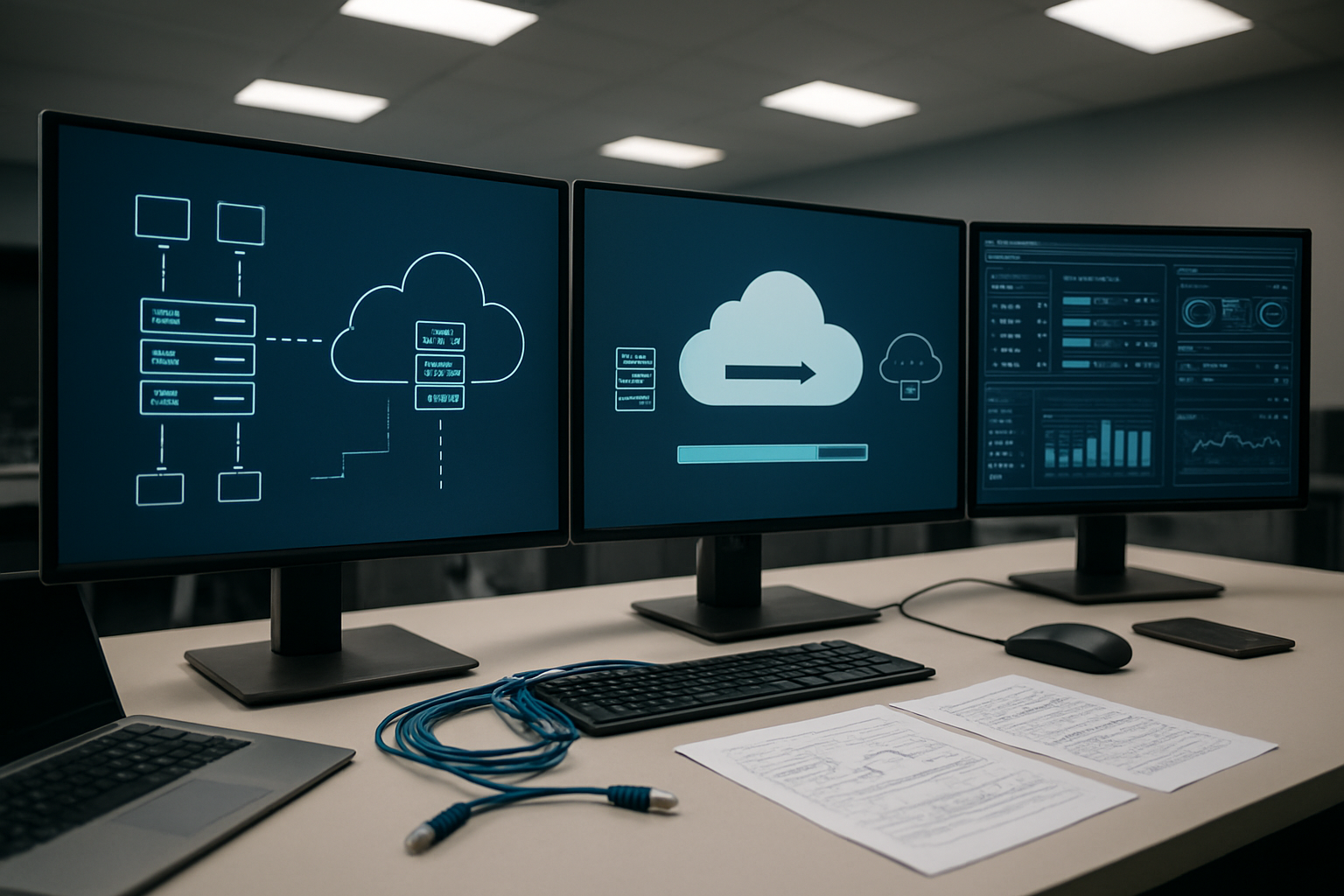
Database migration represents the most critical phase of your Vultr to AWS migration journey. The key is choosing the right approach based on your database type, size, and downtime tolerance.
AWS Database Migration Service (DMS) provides the most reliable path for minimal downtime migrations. Set up a replication instance that continuously syncs data from your Vultr database to AWS RDS or EC2-hosted databases. This approach works exceptionally well for MySQL, PostgreSQL, and SQL Server databases, maintaining real-time synchronization until you’re ready to cut over.
For smaller databases under 100GB, dump and restore methods offer simplicity. Create compressed database dumps during low-traffic periods, transfer them to AWS using secure transfer methods, and restore on your target AWS database instance. This approach works perfectly for development environments or applications that can tolerate brief downtime.
Hybrid synchronization strategies combine both approaches. Start with an initial bulk transfer, then use continuous replication to catch up with changes. This method significantly reduces the final cutover time to mere minutes.
Always implement binary logging and point-in-time recovery before starting migration. Create multiple backup checkpoints throughout the process, and test your rollback procedures thoroughly. Consider using AWS Database Migration Service’s validation features to verify data integrity continuously during the migration process.
Application deployment and configuration management
Moving applications from Vultr to AWS requires careful orchestration of deployment processes and configuration management. The goal is seamless application functionality with minimal disruption to user experience.
Containerization with Docker simplifies application portability between cloud providers. Package your applications into Docker containers on Vultr, then deploy them on AWS using Amazon ECS or EKS. This approach eliminates environment-specific dependencies and ensures consistent behavior across platforms.
Infrastructure as Code (IaC) using AWS CloudFormation or Terraform streamlines the deployment process. Define your entire AWS infrastructure in code templates, making deployments repeatable and version-controlled. This approach reduces manual configuration errors and speeds up the migration timeline.
Blue-green deployment strategies minimize risk during application migration. Deploy your application stack on AWS (green environment) while maintaining the Vultr deployment (blue environment). Run parallel testing and gradually shift traffic between environments using load balancers.
Configuration management requires special attention when moving between cloud providers. Use AWS Systems Manager Parameter Store or AWS Secrets Manager to centralize configuration data and secrets. Update application connection strings, API endpoints, and environment variables to reflect AWS resources.
Monitoring and logging integration should be established before migration completion. Configure AWS CloudWatch, AWS X-Ray, and application-specific monitoring tools to match your existing observability setup from Vultr.
DNS switching and traffic redirection techniques
Strategic DNS management ensures smooth traffic transition during your AWS migration strategy. The approach you choose directly impacts user experience and potential downtime.
TTL reduction strategy prepares for quick DNS changes. Lower your DNS Time-To-Live values to 300 seconds (5 minutes) at least 24-48 hours before migration. This change ensures DNS resolvers worldwide refresh records quickly when you switch to AWS endpoints.
Weighted routing policies enable gradual traffic shifting. AWS Route 53 supports percentage-based traffic distribution, allowing you to send 10% of traffic to AWS initially, then gradually increase to 100% as you gain confidence in the new infrastructure.
Health checks and failover mechanisms provide safety nets during migration. Configure Route 53 health checks on both Vultr and AWS endpoints. If issues arise with AWS services, traffic automatically fails back to Vultr until problems are resolved.
CNAME and A record strategies depend on your domain setup. For subdomains, CNAME records pointing to AWS load balancers offer flexibility. For apex domains, use A records or Route 53 alias records pointing to AWS resources like CloudFront distributions or Application Load Balancers.
Content Delivery Network (CDN) migration requires coordination with DNS changes. If using a CDN, update origin server configurations to point to AWS resources. Consider AWS CloudFront as a replacement for existing CDN solutions to simplify the migration process.
Testing procedures to ensure functionality integrity
Comprehensive testing validates that your migrated applications perform correctly on AWS infrastructure. A systematic testing approach prevents production issues and builds confidence in the migration process.
Pre-migration testing environments mirror your production setup. Create staging environments on AWS that replicate your Vultr configuration. Test application functionality, database connections, and third-party integrations before touching production systems.
Load testing with realistic traffic patterns reveals performance characteristics under AWS infrastructure. Use tools like Apache JMeter or AWS Load Testing solution to simulate production traffic volumes. Compare response times, throughput, and resource utilization between Vultr and AWS environments.
Database integrity verification ensures no data corruption during migration. Implement checksums, row counts, and data sampling comparisons between source and target databases. Run application-specific data validation scripts that verify business logic still functions correctly with migrated data.
End-to-end functional testing covers complete user workflows. Test user registration, payment processing, file uploads, and other critical business processes. Include mobile applications, web interfaces, and API endpoints in your testing scope.
Security and compliance validation confirms your AWS setup meets requirements. Run vulnerability scans, verify encryption at rest and in transit, and test access controls. Ensure compliance frameworks like SOC 2 or GDPR requirements remain satisfied after migration.
Performance benchmarking establishes baseline metrics for ongoing optimization. Document response times, database query performance, and system resource usage. These metrics become crucial for post-migration optimization and future capacity planning decisions.
Post-Migration Optimization and Cost Management

Performance monitoring and fine-tuning AWS resources
Monitoring becomes your best friend after completing your Vultr to AWS migration. AWS CloudWatch stands out as the primary tool for tracking resource performance, offering detailed metrics on CPU usage, memory consumption, network traffic, and storage I/O. Set up custom dashboards that display the metrics most relevant to your specific workloads.
Start by establishing baseline performance metrics from your previous Vultr setup. Compare these against your new AWS environment to identify any performance gaps or improvements. Pay close attention to application response times, database query performance, and overall system throughput.
Auto Scaling groups deserve special attention during this phase. Configure scaling policies based on actual usage patterns rather than estimated requirements. Test these policies under various load conditions to ensure they respond appropriately without causing unnecessary costs from over-provisioning.
Right-sizing instances remains an ongoing process. AWS Compute Optimizer analyzes your usage patterns and recommends instance types that better match your workload characteristics. Don’t hesitate to experiment with different instance families – what worked on Vultr might not be optimal for AWS’s diverse offerings.
Network performance monitoring helps identify bottlenecks between services. Use VPC Flow Logs to understand traffic patterns and optimize security group rules accordingly. Consider implementing AWS X-Ray for distributed tracing if you’re running microservices architectures.
Implementing cost optimization strategies and budget alerts
Cost management transforms from reactive to proactive with proper AWS tools implementation. Start by setting up AWS Budgets with multiple alert thresholds – typically at 50%, 75%, and 90% of your monthly budget. Configure these alerts to notify different team members based on spending levels.
Reserved Instances offer significant savings for predictable workloads. Analyze your usage patterns over the first month post-migration to identify stable workloads that benefit from 1-year or 3-year reservations. Savings Plans provide more flexibility while still delivering substantial cost reductions.
Implement tagging strategies consistently across all resources. Tags enable detailed cost allocation reports and help identify which projects or departments drive spending. Create mandatory tags for environment (production, staging, development), project codes, and owner information.
AWS Cost Explorer becomes invaluable for identifying spending trends and anomalies. Set up regular reviews of your top spending services and look for unexpected spikes that might indicate resource waste or security issues.
Storage optimization presents immediate savings opportunities. Configure S3 lifecycle policies to automatically move infrequently accessed data to cheaper storage classes. Review EBS volumes for over-provisioned storage and consider switching to gp3 volumes for better price-performance ratios.
Spot Instances work well for development environments and batch processing workloads. Gradually introduce spot instances where application fault tolerance allows, potentially reducing compute costs by up to 90%.
Leveraging AWS native tools for enhanced operational efficiency
AWS Systems Manager streamlines daily operational tasks that previously required manual intervention on Vultr. Patch Manager automates OS updates across your fleet, while Session Manager eliminates the need for direct SSH access and improves security posture.
Infrastructure as Code becomes essential for maintaining consistency across environments. AWS CloudFormation or CDK enables version-controlled infrastructure changes and simplifies replicating environments for testing or disaster recovery scenarios.
AWS Config continuously monitors resource configurations against compliance rules. Set up rules for security best practices like ensuring S3 buckets aren’t publicly readable or security groups don’t allow unrestricted access.
CloudTrail logging captures all API calls across your AWS account, providing audit trails that were harder to implement on Vultr. This logging proves invaluable for security investigations and compliance requirements.
AWS Well-Architected Tool provides ongoing architecture reviews against AWS best practices. Regular assessments help identify optimization opportunities and potential reliability issues before they impact operations.
Automation through Lambda functions eliminates repetitive tasks. Common use cases include automated backup verification, log cleanup, and resource scheduling for development environments. These automations reduce operational overhead while improving consistency.
Service integration becomes seamless with native AWS tools. CloudWatch Events (EventBridge) creates event-driven architectures that respond automatically to infrastructure changes, reducing manual intervention requirements significantly.

Making the jump from Vultr to AWS might seem overwhelming at first, but breaking it down into clear steps makes the whole process much more manageable. The key is really about timing it right, planning everything out carefully, picking the right AWS services for your needs, executing the move methodically, and then fine-tuning everything once you’re settled in. Each phase builds on the last one, so taking your time with the planning and assessment stages will save you headaches later on.
If you’re thinking about making this move, start by honestly evaluating whether AWS’s advanced features and scalability options align with where your business is heading. Don’t rush into migration just because everyone else seems to be doing it. Take the time to map out your current setup, understand your costs, and create a solid plan before you flip any switches. The effort you put in upfront will pay off with a smoother transition and better long-term results for your applications and bottom line.