


AI applications need a bridge to connect with real-world data and services, and that’s exactly what MCP Server Architecture delivers through the Model Context Protocol. This technical guide is designed for AI developers, software engineers, and technical architects who want to understand how modern AI apps integrate with external systems and data sources.
The Model Context Protocol creates a standardized framework that lets AI applications communicate with servers, databases, APIs, and other external resources without custom integration work for each connection. Instead of building point-to-point connections, MCP server implementation provides a unified approach to AI world connectivity that scales across different platforms and use cases.
We’ll explore the core components of MCP Server Architecture and show you how the context protocol framework actually works under the hood. You’ll learn practical implementation strategies for building reliable MCP servers that handle real-world data flows, plus see concrete examples of how companies are using this AI application architecture to power everything from customer service bots to data analysis tools.
Understanding MCP Server Architecture Fundamentals
Core components that power AI application connectivity
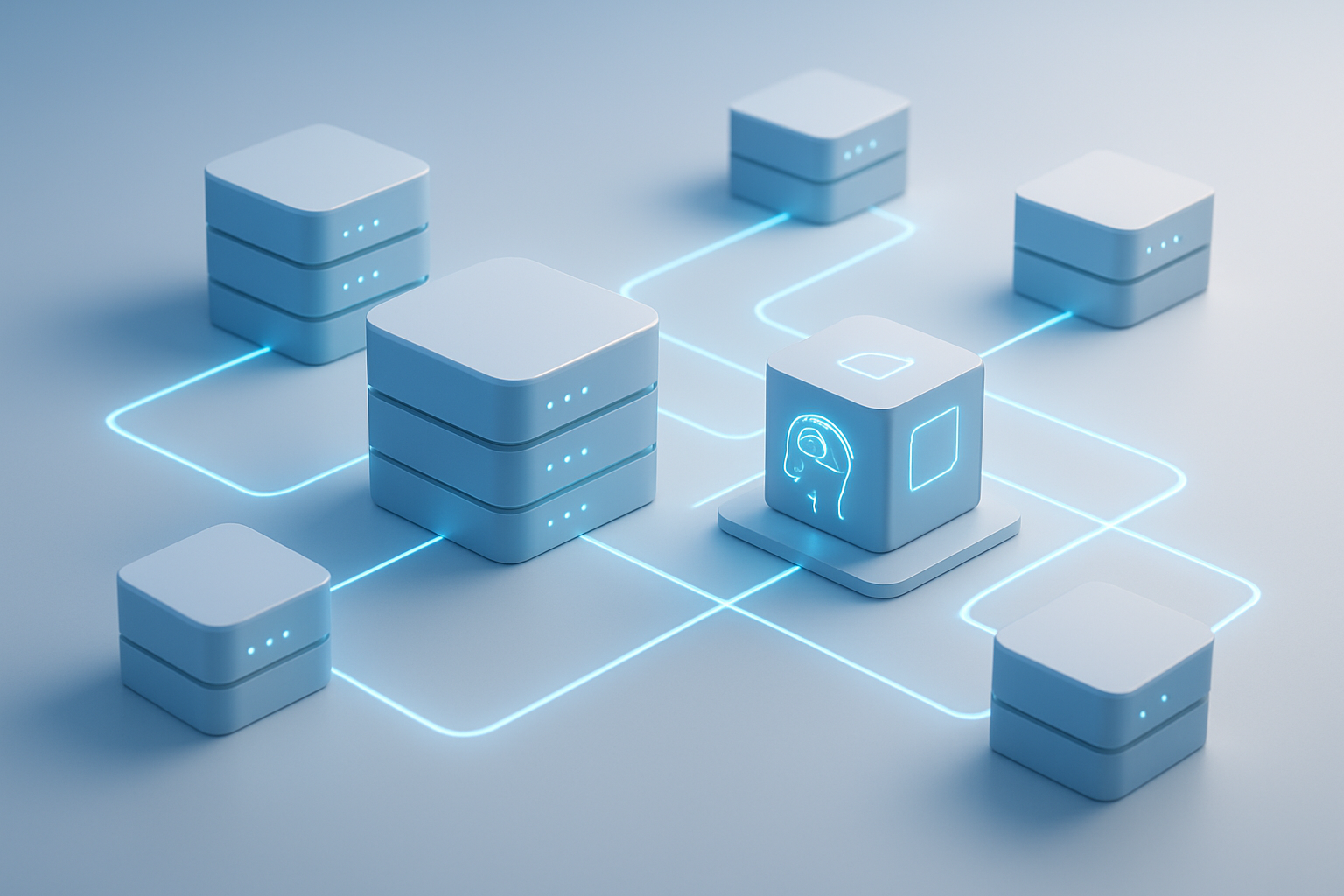
The MCP Server Architecture operates on a three-tier foundation that bridges AI applications with external systems. At its heart sits the MCP server instance, which acts as the primary orchestration layer managing all incoming requests and outgoing responses. This server component handles authentication, request routing, and maintains persistent connections with various AI clients.
The protocol handler serves as the communication backbone, implementing standardized message formats and ensuring data integrity across all exchanges. This component translates between different data formats, manages session states, and enforces security protocols that protect sensitive information during transmission.
Resource managers form the third critical component, providing abstracted access to external APIs, databases, and services. These managers encapsulate complex integration logic, allowing AI applications to interact with diverse systems through unified interfaces. Each resource manager specializes in specific data types or service categories, creating a modular architecture that scales efficiently.
Protocol design principles for seamless data exchange
Model Context Protocol follows four fundamental design principles that guarantee reliable AI world connectivity. Stateless communication ensures each request contains complete context information, eliminating dependencies on previous interactions and enabling horizontal scaling across multiple server instances.
Bidirectional messaging allows both AI applications and external systems to initiate conversations, supporting real-time updates and event-driven architectures. This approach enables AI apps to receive notifications when external data changes, keeping context information current without constant polling.
The protocol embraces content-agnostic design, supporting structured data, unstructured text, binary files, and multimedia content through unified message envelopes. This flexibility allows AI applications to work with diverse information sources without requiring protocol modifications.
Graceful degradation principles ensure the system continues operating even when individual components fail. The protocol includes fallback mechanisms, retry logic, and circuit breakers that maintain service availability during partial system outages.
Technical specifications that ensure reliable communication
MCP server implementation relies on WebSocket connections for primary communication channels, providing low-latency, full-duplex communication between AI applications and external resources. The protocol specification defines message schemas using JSON-RPC 2.0, ensuring consistent request-response patterns across all implementations.
Authentication mechanisms support multiple strategies including API keys, OAuth 2.0, and certificate-based authentication. The specification requires TLS encryption for all connections, with support for mutual TLS authentication in high-security environments.
| Specification Area | Requirements | Benefits |
|---|---|---|
| Message Format | JSON-RPC 2.0 | Standardized parsing |
| Transport Layer | WebSocket/HTTP | Low latency communication |
| Authentication | Multi-method support | Flexible security models |
| Encryption | TLS 1.3 minimum | Data protection |
Error handling follows standardized HTTP status codes extended with MCP-specific error categories. The specification defines timeout values, retry mechanisms, and backoff strategies that prevent system overload during high-traffic periods.
Benefits of standardized connection frameworks
Standardized MCP server implementation dramatically reduces development time for AI application creators. Developers can focus on core AI logic instead of building custom integration code for each external service. This standardization creates reusable connection patterns that work across different AI platforms and frameworks.
The framework enables ecosystem interoperability, allowing AI applications built by different teams to share resources and data sources seamlessly. This sharing capability accelerates AI development cycles and reduces duplicate integration efforts across organizations.
Maintenance overhead drops significantly when using standardized frameworks. Updates to external APIs require changes only to specific resource managers rather than modifications throughout the entire AI application codebase. This modularity reduces testing requirements and deployment risks.
Performance optimization becomes systematic through standardized connection pooling, caching strategies, and load balancing algorithms built into the MCP framework. These optimizations benefit all connected AI applications automatically, improving response times and resource utilization across the entire system.
How Model Context Protocol Enables AI-World Integration
Breaking down data silos between AI systems and external sources
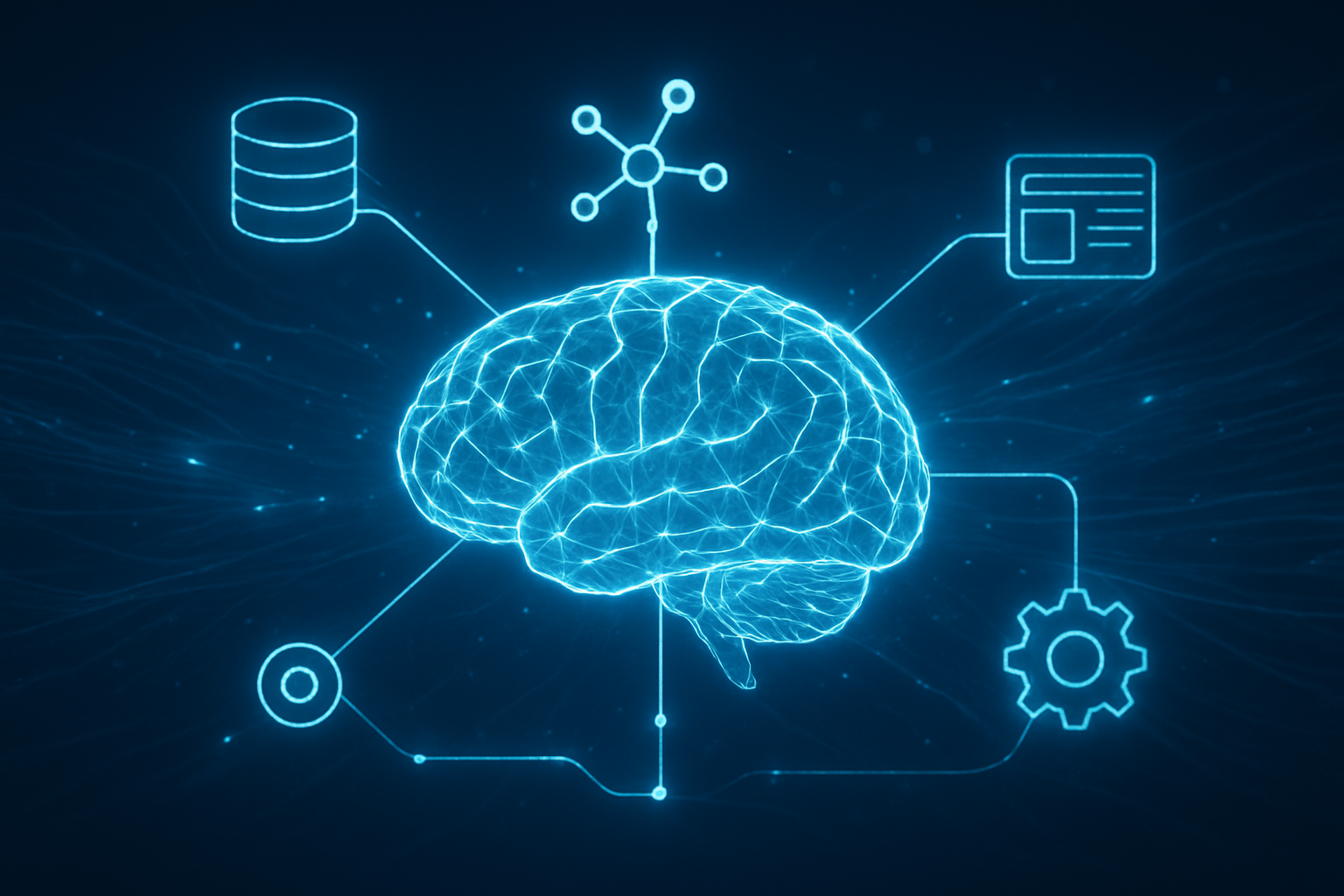
Traditional AI applications often operate in isolation, cut off from the dynamic data streams that could supercharge their capabilities. The Model Context Protocol changes this by creating standardized bridges between AI systems and external data sources. Instead of manually coding countless custom integrations, MCP server architecture provides a unified framework that breaks through these barriers.
Think of MCP as a universal translator for data sources. Whether your AI needs to access customer databases, real-time market feeds, or internal documentation systems, the protocol handles the heavy lifting of data formatting and transmission. This means your AI applications can tap into previously inaccessible information pools without requiring specialized connectors for each data type.
The beauty of this approach lies in its simplicity. Developers can connect their AI apps to multiple data sources through a single, consistent interface. This dramatically reduces development time and eliminates the maintenance headache of managing dozens of different API connections. Your AI context protocol framework becomes the central hub that orchestrates all these connections seamlessly.
Real-time information access for enhanced AI decision-making
Speed matters in AI decision-making, and MCP server implementation delivers data at the pace your applications demand. Unlike batch processing systems that provide stale information, the protocol enables streaming data connections that keep your AI applications current with live information.
This real-time capability transforms how AI systems operate. Instead of making decisions based on yesterday’s data, your applications can access current inventory levels, live market conditions, or real-time user interactions. The context protocol framework ensures that data flows continuously without overwhelming your system resources.
Performance optimization becomes crucial when handling live data streams. MCP servers implement intelligent caching mechanisms and data prioritization to ensure critical information reaches your AI apps first. This selective data streaming prevents information overload while maintaining the responsiveness your applications need for effective decision-making.
Secure authentication methods for trusted connections
Security isn’t optional when connecting AI systems to sensitive data sources. MCP server architecture implements multiple layers of authentication and authorization to protect both your AI applications and the external systems they access. The protocol supports industry-standard security protocols including OAuth 2.0, JWT tokens, and API key management.
Connection security goes beyond simple password protection. The protocol implements certificate-based authentication, encrypted data transmission, and regular credential rotation to maintain secure channels. Your AI world connectivity remains protected against unauthorized access while maintaining the flexibility to connect to diverse data sources.
| Security Feature | Implementation | Benefit |
|---|---|---|
| Certificate Authentication | X.509 certificates | Mutual trust verification |
| Token-based Access | JWT/OAuth 2.0 | Granular permission control |
| Encrypted Channels | TLS 1.3 | Data protection in transit |
| Credential Rotation | Automated refresh | Reduced exposure risk |
Scalability features that grow with your AI applications
Your AI application architecture needs to handle growing data volumes and user demands without breaking down. MCP development patterns include built-in scalability features that adapt to changing requirements automatically. Load balancing distributes connection requests across multiple server instances, preventing bottlenecks during peak usage periods.
The protocol’s modular design allows you to scale different components independently. Need more database connections but fewer API calls? You can adjust resource allocation accordingly. This granular scaling approach optimizes resource usage while maintaining consistent performance across all connected systems.
Horizontal scaling becomes straightforward with MCP’s distributed architecture. Adding new server instances requires minimal configuration changes, and the protocol automatically discovers and integrates new resources into the existing network. This elastic scaling ensures your server-side AI integration can handle sudden traffic spikes or gradual growth without manual intervention.
Connection pooling and resource management features prevent common scaling problems like connection exhaustion or memory leaks. The protocol monitors resource usage patterns and adjusts allocation dynamically, keeping your AI app integration running smoothly regardless of demand fluctuations.
Building Robust MCP Server Implementations
Essential infrastructure requirements for optimal performance
Building a solid MCP server implementation starts with getting the infrastructure right. Your server needs enough computational resources to handle real-time AI requests without breaking a sweat. Think about CPU cores that can manage multiple threads simultaneously, plus RAM that won’t bottleneck when processing large context windows or complex data transformations.
Storage plays a huge role too. Fast SSD storage keeps your MCP server implementation responsive, especially when dealing with frequent read/write operations for context caching. Network bandwidth matters just as much – your AI app integration depends on low-latency connections to external services and data sources.
Container orchestration becomes essential as your system scales. Docker containers provide isolation and consistency across development and production environments. Kubernetes adds another layer of reliability with automatic scaling, health checks, and rolling deployments that keep your Model Context Protocol services running smoothly.
Monitoring infrastructure shouldn’t be an afterthought. Set up comprehensive logging, metrics collection, and alerting systems that give you visibility into performance bottlenecks before they impact your AI applications. Tools like Prometheus, Grafana, and centralized logging platforms help track everything from response times to resource utilization patterns.
Best practices for handling multiple concurrent connections
Managing concurrent connections in your MCP Server Architecture requires smart connection pooling strategies. Instead of creating new connections for every request, maintain a pool of reusable connections that can be shared across multiple AI requests. This approach dramatically reduces overhead and improves response times.
Implement asynchronous processing patterns that prevent blocking operations from stalling your entire server. Node.js with its event loop or Python’s asyncio framework excel at handling thousands of simultaneous connections without creating resource bottlenecks. Your context protocol framework should leverage these patterns to maintain responsiveness under load.
Rate limiting protects your server from being overwhelmed by aggressive clients or unexpected traffic spikes. Implement both per-client and global rate limits that align with your infrastructure capabilities. Redis-based rate limiting provides distributed rate limiting across multiple server instances.
| Connection Strategy | Use Case | Performance Impact |
|---|---|---|
| Connection Pooling | High-frequency requests | Low latency, reduced overhead |
| Async Processing | I/O-heavy operations | Better resource utilization |
| Load Balancing | Multi-server deployments | Improved scalability |
| Circuit Breakers | External service calls | Prevents cascade failures |
Session management becomes critical when dealing with stateful AI interactions. Design your server-side AI integration to handle session persistence efficiently, whether through in-memory stores for short-lived sessions or distributed caches for longer conversations.
Error handling strategies that maintain system reliability
Robust error handling separates production-ready MCP development patterns from proof-of-concept implementations. Start with graceful degradation strategies that keep your AI application architecture functional even when individual components fail. If your vector database goes down, your system should fall back to simpler retrieval methods rather than crashing entirely.
Implement circuit breaker patterns for external service dependencies. When an API endpoint starts failing, the circuit breaker temporarily stops sending requests to that service, preventing cascade failures that could bring down your entire Model Context Protocol implementation. After a cool-down period, it gradually reintroduces traffic to test if the service has recovered.
Structured error responses help clients handle failures intelligently. Instead of generic error messages, provide specific error codes, retry guidance, and alternative action suggestions. Your AI world connectivity depends on clients being able to recover from temporary failures automatically.
{
  "error": {
    "code": "CONTEXT_RETRIEVAL_TIMEOUT",
    "message": "Context retrieval exceeded timeout threshold",
    "retry_after": 30,
    "suggested_action": "reduce_context_window"
  }
}
Dead letter queues capture failed requests for later analysis and potential reprocessing. This pattern prevents data loss during system outages and provides valuable debugging information for improving your MCP technical guide implementation. Message queues like RabbitMQ or Apache Kafka offer built-in dead letter queue functionality that integrates seamlessly with most server architectures.
Health check endpoints provide external monitoring systems with real-time status information about your MCP server’s components. These endpoints should test critical dependencies like databases, external APIs, and internal services to give an accurate picture of system health. Implement both shallow health checks for basic availability and deep health checks that validate end-to-end functionality.
Real-World Applications and Use Cases

Enterprise data integration scenarios that drive business value
Modern enterprises face the challenge of connecting AI applications to vast data ecosystems spanning multiple departments, legacy systems, and cloud platforms. MCP Server Architecture transforms this complexity into streamlined data flows that unlock real business value.
Financial institutions leverage MCP server implementation to create unified customer profiles by connecting CRM systems, transaction databases, and regulatory compliance platforms. A major investment bank reduced data retrieval times by 75% while ensuring real-time fraud detection across all customer touchpoints. The AI app integration allows risk assessment models to access cross-departmental data instantly, improving decision-making speed without compromising security protocols.
Retail organizations use the context protocol framework to sync inventory management systems with customer behavior analytics and supply chain data. One global retailer implemented MCP servers to connect point-of-sale systems, warehouse management, and predictive analytics platforms, resulting in 30% reduction in stockouts and improved customer satisfaction scores.
Manufacturing companies deploy MCP technical solutions to integrate production line sensors with quality control databases and maintenance scheduling systems. This server-side AI integration enables predictive maintenance algorithms to access historical performance data, reducing unplanned downtime by up to 40%.
Healthcare systems benefit from MCP development patterns that securely connect patient management systems with diagnostic imaging platforms and treatment outcome databases, enabling AI-powered diagnostic assistance while maintaining HIPAA compliance.
IoT device connectivity for smart automation systems
The proliferation of IoT devices creates opportunities for intelligent automation, but traditional connection methods often struggle with scale and real-time responsiveness. MCP Server Architecture provides the backbone for robust IoT ecosystems that adapt and learn from device interactions.
Smart building management systems use AI world connectivity through MCP servers to orchestrate thousands of sensors, actuators, and control systems. Office complexes deploy these solutions to optimize energy consumption by connecting HVAC sensors with occupancy detectors and weather data feeds. The AI application architecture processes real-time inputs from temperature sensors, air quality monitors, and lighting systems to automatically adjust building conditions while reducing energy costs by 25-35%.
Industrial automation benefits significantly from MCP server implementations that connect production equipment with quality sensors and environmental monitoring systems. Pharmaceutical manufacturing facilities use these integrations to maintain precise environmental controls while tracking batch quality metrics across multiple production lines. The context protocol framework ensures that AI algorithms can access sensor data instantaneously, enabling immediate adjustments that prevent costly production failures.
Smart city infrastructure relies on MCP servers to connect traffic sensors, environmental monitoring stations, and emergency response systems. Traffic management AI applications process data from thousands of intersection cameras, vehicle detection sensors, and weather stations to optimize signal timing and reduce congestion by up to 20% during peak hours.
Agricultural operations deploy IoT connectivity through MCP architectures to link soil moisture sensors, weather stations, and irrigation control systems, enabling precision farming techniques that increase crop yields while conserving water resources.
API gateway functionality for microservices architectures
Microservices architectures require sophisticated coordination between dozens or hundreds of independent services, and MCP Server Architecture serves as an intelligent gateway that enhances traditional API management with AI-driven capabilities.
E-commerce platforms leverage MCP server implementation to create dynamic API routing that adapts based on real-time performance metrics and user behavior patterns. Instead of static load balancing, AI algorithms analyze response times, error rates, and user session data to route requests to optimal service instances. This intelligent routing reduces average response times by 40% while improving system reliability.
Financial trading platforms use the AI app integration capabilities of MCP servers to coordinate market data feeds, risk calculation services, and order execution systems. The context protocol framework enables trading algorithms to access real-time market data while ensuring that risk management services receive immediate updates about position changes. This coordination prevents unauthorized trades and maintains regulatory compliance across all market conditions.
Software-as-a-Service providers implement MCP development patterns to create self-healing microservices architectures. When service performance degrades, AI algorithms automatically reroute traffic, scale resources, and notify development teams about potential issues. The server-side AI integration monitors service health metrics continuously, identifying problems before they impact user experience.
Cloud-native applications benefit from MCP technical implementations that provide intelligent service discovery and dynamic configuration management. Development teams can deploy new service versions with confidence, knowing that AI algorithms will gradually shift traffic based on performance metrics and error rates.
Database synchronization for consistent information flow
Data consistency across distributed database systems remains one of the most challenging aspects of modern application architecture. MCP Server Architecture addresses these challenges by providing intelligent synchronization capabilities that go beyond traditional replication methods.
Global companies use AI world connectivity through MCP servers to maintain consistency across geographically distributed databases while optimizing for local performance requirements. Customer data updates in one region propagate intelligently to other locations based on access patterns and business rules. The AI application architecture predicts which data subsets need immediate synchronization versus those that can use eventual consistency models.
Multi-tenant SaaS applications leverage MCP server implementations to maintain data isolation while enabling cross-tenant analytics and reporting. The context protocol framework ensures that customer data remains secure while allowing AI algorithms to identify usage patterns and optimization opportunities across the entire platform.
Content management systems use MCP development patterns to synchronize media files, metadata, and user-generated content across content delivery networks and backup systems. Publishing platforms can update articles simultaneously across multiple regions while ensuring that images, videos, and interactive elements remain perfectly synchronized.
Research institutions benefit from database synchronization capabilities that connect experimental data repositories with analysis platforms and collaboration tools. Scientific datasets can be shared securely between institutions while maintaining data lineage and version control across all participating organizations.
Third-party service integration capabilities
The modern software ecosystem relies heavily on third-party services for payment processing, communication, analytics, and specialized functionality. MCP Server Architecture provides robust integration capabilities that transform these external dependencies into reliable, intelligent components of larger systems.
Payment processing integrations through MCP servers enable e-commerce platforms to dynamically route transactions based on success rates, fees, and geographic requirements. AI algorithms analyze historical transaction data to predict optimal payment providers for specific customer profiles, reducing failed transactions by up to 15% while minimizing processing costs.
Communication platforms leverage the server-side AI integration capabilities to coordinate email, SMS, and push notification services based on user preferences and engagement patterns. Marketing automation systems use MCP technical implementations to deliver personalized messages through optimal channels at precisely the right times, improving engagement rates significantly.
Social media management tools benefit from MCP server implementations that connect multiple platform APIs while providing unified analytics and content scheduling capabilities. Brand managers can coordinate campaigns across Facebook, Twitter, LinkedIn, and Instagram through a single interface while AI algorithms optimize posting schedules and content variations for maximum engagement.
Business intelligence platforms use the AI app integration features to combine data from CRM systems, marketing automation tools, and customer support platforms. The context protocol framework enables complex analytics workflows that provide comprehensive customer journey insights and predictive revenue forecasting.
Implementation Strategies and Technical Considerations

Step-by-step deployment guidelines for development teams
Getting your MCP server implementation up and running requires careful planning and systematic execution. Start by setting up your development environment with proper version control and isolated testing spaces. Create separate environments for development, staging, and production to prevent conflicts and enable safe testing of your AI app integration features.
Begin with a minimal MCP server configuration that handles basic Model Context Protocol connections. Deploy authentication mechanisms first, followed by core routing logic. Test each component individually before integrating them into your complete MCP server architecture. Use containerization technologies like Docker to ensure consistent deployments across different environments.
Establish clear deployment pipelines using CI/CD tools. Your pipeline should include automated testing for MCP technical guide compliance, dependency management, and rollback procedures. Document every step of your deployment process so team members can reproduce builds reliably.
Create health check endpoints that verify your server’s ability to handle context protocol framework requests. These endpoints should test database connections, external API availability, and memory usage patterns. Schedule regular automated deployments during low-traffic windows to minimize disruption to active AI application architecture implementations.
Performance optimization techniques for high-traffic environments
High-traffic MCP server environments demand strategic optimization approaches that go beyond basic server tuning. Implement connection pooling to manage database interactions efficiently, preventing resource exhaustion during peak usage periods. Configure your MCP development patterns to use asynchronous processing wherever possible, allowing your server to handle multiple context protocol requests simultaneously without blocking operations.
Cache frequently accessed data using Redis or similar in-memory storage solutions. Design your caching strategy around common AI world connectivity patterns, storing processed context data that multiple AI applications might request. Set appropriate cache expiration times based on data sensitivity and update frequency.
| Optimization Area | Technique | Expected Impact |
|---|---|---|
| Database Queries | Connection pooling, query optimization | 40-60% faster response times |
| Memory Usage | Garbage collection tuning, object pooling | 30% reduction in memory footprint |
| Network I/O | Request batching, compression | 25-50% bandwidth savings |
| CPU Processing | Async operations, load balancing | 35% improvement in throughput |
Scale horizontally by deploying multiple MCP server instances behind a load balancer. Design your server-side AI integration architecture to be stateless, enabling seamless scaling without session management complexities. Monitor resource utilization patterns to identify bottlenecks before they impact user experience.
Security protocols that protect sensitive data transfers
Security must be built into every layer of your MCP server implementation from the ground up. Start with TLS encryption for all data transfers, using strong cipher suites and current certificates. Never transmit context data over unencrypted connections, even in development environments.
Implement token-based authentication with proper expiration policies. Use JSON Web Tokens (JWT) with short lifespans and refresh mechanisms to balance security with user experience. Store sensitive authentication data in secure vaults rather than configuration files or environment variables.
Apply input validation at multiple levels – network, application, and data storage. Sanitize all incoming context protocol framework requests to prevent injection attacks. Use parameterized queries for database operations and validate data types before processing.
Set up rate limiting to prevent abuse and DDoS attacks. Configure different rate limits for authenticated vs anonymous users, with stricter limits for resource-intensive operations. Log all security events for forensic analysis and compliance requirements.
Encrypt sensitive data at rest using industry-standard algorithms. Rotate encryption keys regularly and maintain secure key management practices. Implement data anonymization techniques for logs and analytics to protect user privacy while maintaining system visibility.
Monitoring and logging solutions for system visibility
Comprehensive monitoring gives you the visibility needed to maintain reliable AI app integration services. Deploy distributed tracing to track requests across your entire MCP server architecture stack. Use correlation IDs to follow individual requests through multiple system components, making debugging much easier when issues arise.
Set up metrics collection for key performance indicators like response times, error rates, and resource consumption. Create dashboards that show real-time system health and historical trends. Configure alerts for critical thresholds, but avoid alert fatigue by setting sensible baseline values.
Implement structured logging using JSON format for easier parsing and analysis. Include contextual information like user IDs, request types, and processing times in your log entries. Use different log levels (DEBUG, INFO, WARN, ERROR) appropriately to control log volume while capturing important events.
Deploy log aggregation systems that can handle the volume generated by busy MCP technical guide implementations. Tools like ELK Stack (Elasticsearch, Logstash, Kibana) or similar solutions provide powerful search and visualization capabilities for troubleshooting complex issues.
Monitor external dependencies and third-party services that your AI application architecture relies on. Track their availability and response times to identify when problems originate outside your direct control. Create runbooks for common failure scenarios to enable quick resolution during outages.

The Model Context Protocol represents a game-changing approach to how AI applications interact with external systems and data sources. By establishing a standardized framework for MCP server architecture, developers can now build more reliable connections between AI models and the real world, opening up countless possibilities for practical AI implementations across industries.
The key to success with MCP servers lies in understanding the fundamentals while focusing on robust implementation strategies that prioritize scalability and security. As AI continues to evolve and become more integrated into our daily workflows, having a solid grasp of MCP architecture will become essential for any developer working with AI applications. Start exploring MCP server implementations today, and you’ll be well-positioned to create the next generation of AI-powered solutions that truly connect with the world around us.