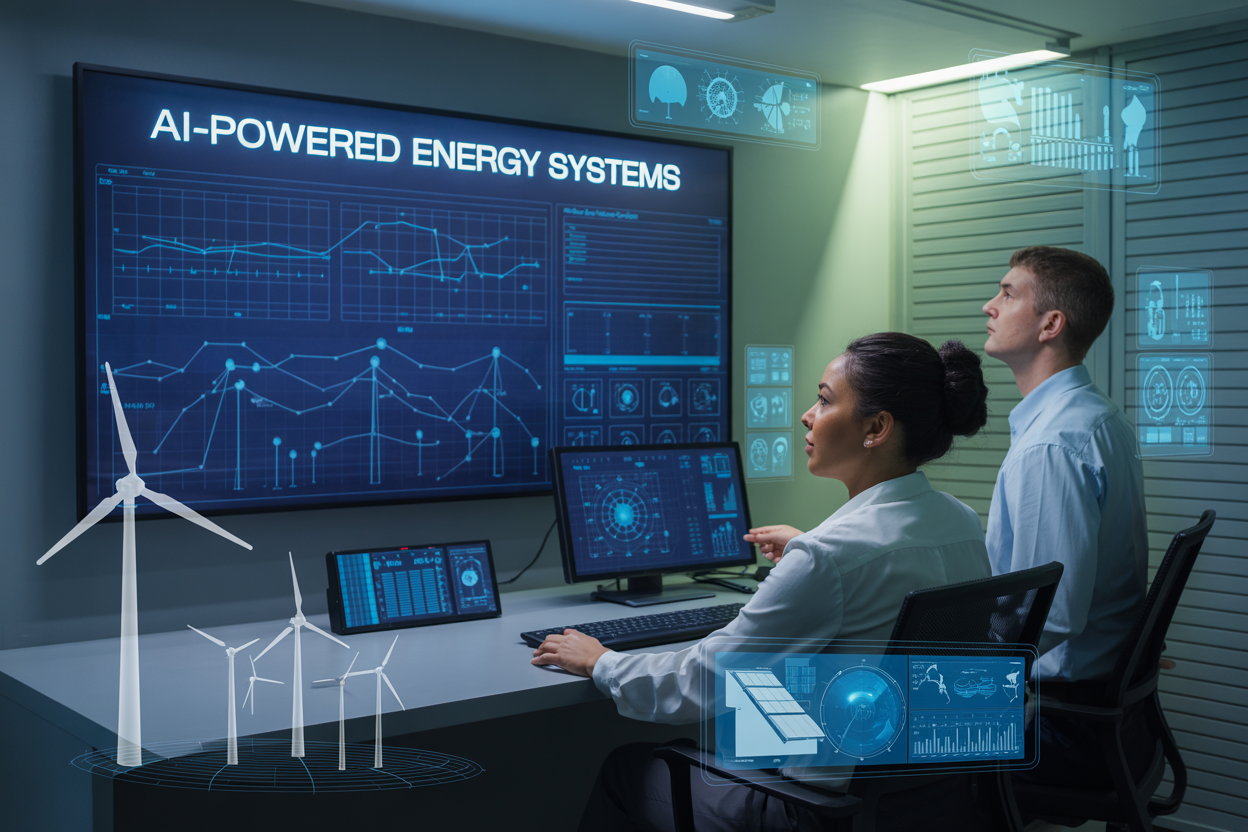
Energy companies, grid operators, and sustainability managers are turning to AI in energy solutions to tackle rising demand, aging infrastructure, and climate goals. Traditional energy systems can’t keep up with renewable integration challenges and real-time optimization needs that modern grids require.
This guide shows you how AI energy forecasting and GenAI power systems transform energy operations from reactive to predictive. You’ll discover practical applications that leading utilities already use to cut costs and boost reliability.
We’ll cover energy grid optimization techniques that balance supply and demand in real-time, plus machine learning energy management strategies that predict consumption patterns weeks ahead. You’ll also learn how renewable energy AI accelerates sustainability targets while overcoming common deployment roadblocks that stop many projects before they start.
Understanding AI and GenAI Applications in Modern Energy Systems
Key Differences Between Traditional AI and Generative AI in Energy Contexts
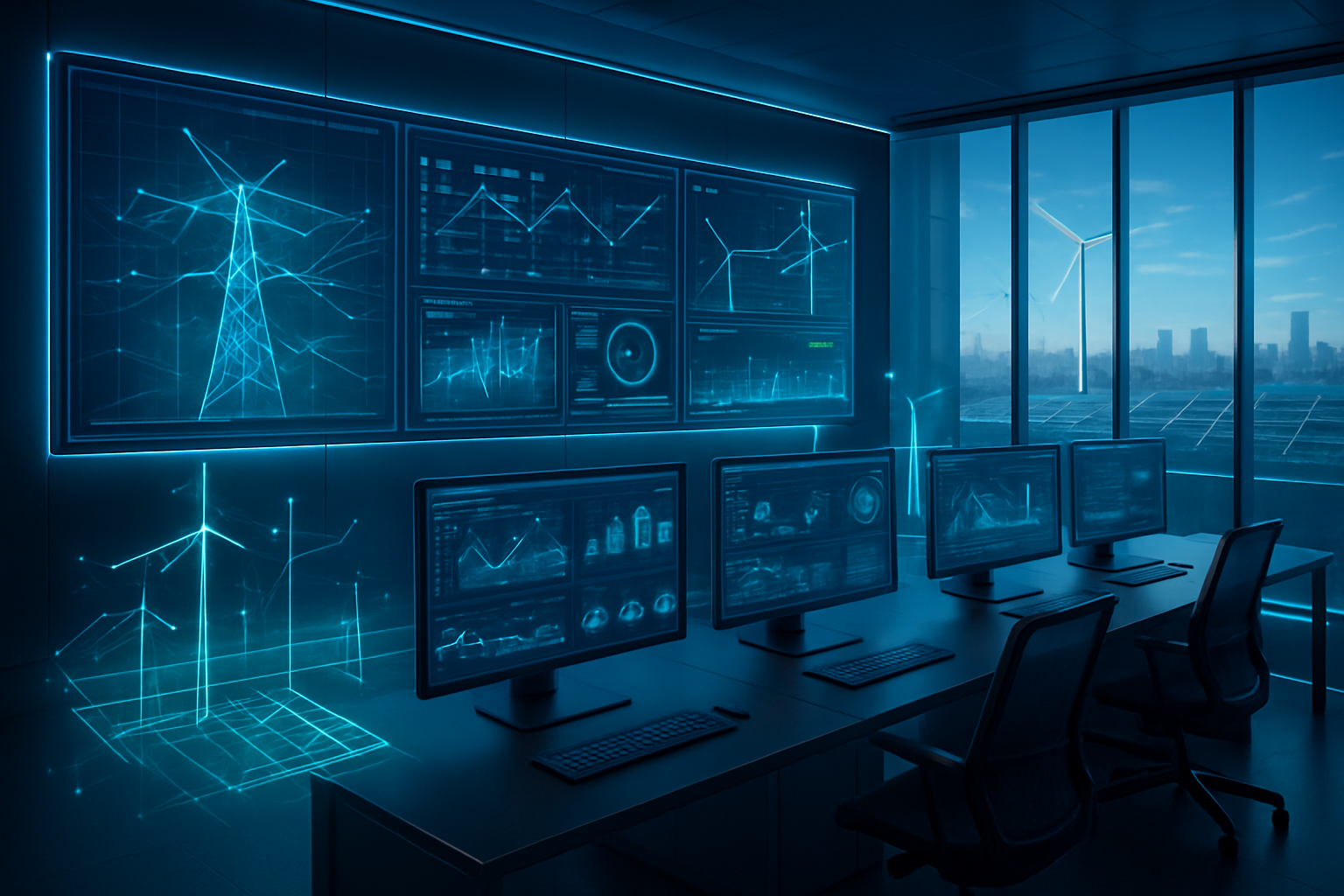
Traditional AI in energy systems works by analyzing historical data patterns to make predictions and optimize operations. Think of it as a highly sophisticated pattern recognition tool that learns from past grid performance, energy consumption trends, and equipment behavior. Machine learning energy management systems use these insights to predict demand, schedule maintenance, and balance loads across the network.
GenAI power systems take this several steps further by creating new solutions and generating synthetic data scenarios. While traditional AI might predict next month’s energy demand based on historical patterns, generative AI can simulate thousands of “what-if” scenarios, creating synthetic weather patterns, demand fluctuations, and equipment failure scenarios that haven’t occurred yet but could happen.
| Aspect | Traditional AI | Generative AI |
|---|---|---|
| Primary Function | Pattern recognition and prediction | Content creation and scenario generation |
| Data Usage | Analyzes existing historical data | Creates synthetic data and scenarios |
| Energy Applications | Demand forecasting, fault detection | Synthetic training data, emergency planning |
| Computational Requirements | Moderate to high | Very high |
| Implementation Complexity | Standard | Advanced |
The real power emerges when both approaches work together. Traditional AI handles day-to-day operations like energy grid optimization, while GenAI creates training scenarios for stress-testing systems and developing contingency plans.
Current Market Adoption Rates and Success Stories Across Energy Sectors
Smart grid AI adoption has accelerated dramatically, with over 65% of major utilities now implementing some form of AI energy forecasting technology. The renewable energy sector leads the charge, where predictive energy analytics help manage the inherent variability of wind and solar generation.
Pacific Gas & Electric’s deployment of intelligent grid systems reduced power outages by 30% while improving response times during emergencies. Their AI-powered wildfire prevention system analyzes weather data, vegetation moisture levels, and equipment conditions to proactively shut off power lines in high-risk areas.
European energy companies report impressive results from AI energy efficiency programs. Denmark’s Ørsted uses machine learning algorithms to optimize wind farm operations, increasing energy output by 12% without additional turbines. The system continuously adjusts turbine angles and rotor speeds based on real-time wind patterns and predictive models.
The oil and gas sector shows slower but steady adoption, with companies like Shell using AI for predictive maintenance on drilling equipment and pipeline monitoring. These implementations typically focus on cost reduction rather than sustainability, though environmental benefits often emerge as side effects.
Essential Technical Requirements for Implementing AI Energy Solutions
Successful AI in energy implementations require robust data infrastructure capable of handling massive volumes of real-time information. Energy companies need sensors throughout their networks collecting data on voltage levels, current flow, temperature, and equipment performance every few seconds.
Data storage and processing capabilities must scale beyond traditional requirements. A medium-sized utility might generate terabytes of operational data daily, requiring cloud-based solutions or substantial on-premises computing power. Edge computing becomes essential for real-time decision-making, especially in renewable energy AI applications where millisecond responses can prevent grid instability.
Cybersecurity considerations multiply when AI systems control critical infrastructure. Energy sustainability AI platforms need advanced encryption, secure communication protocols, and isolated backup systems. The interconnected nature of smart grids means a single vulnerability could cascade across entire regions.
Integration with existing systems presents ongoing challenges. Most energy companies operate legacy SCADA systems that weren’t designed for modern AI applications. Successful implementations often require middleware solutions that translate between old and new technologies without disrupting ongoing operations.
Cost-Benefit Analysis Framework for Energy Companies
AI energy management investments typically require 18-24 months before showing measurable returns, though the timeline varies significantly based on implementation scope and existing infrastructure. Initial costs include software licensing, hardware upgrades, staff training, and system integration services.
Direct benefits manifest through reduced operational costs, improved equipment lifespan, and decreased downtime. Utilities report average operational cost reductions of 15-20% within three years of implementing comprehensive AI power grid management systems. Predictive maintenance alone can extend equipment life by 25-30% while reducing emergency repair costs.
Revenue opportunities emerge through improved grid reliability and new service offerings. AI-optimized grids can handle higher renewable energy penetration, allowing utilities to purchase cheaper green energy during peak production periods. Some companies develop new revenue streams by selling grid stability services to neighboring utilities.
Risk mitigation provides substantial but harder-to-quantify value. AI systems help prevent cascading failures, reduce wildfire risks, and improve emergency response coordination. While these benefits are difficult to price precisely, they often justify investments even when direct financial returns fall short of projections.
Long-term strategic positioning becomes increasingly important as regulatory requirements tighten around emissions and grid reliability. Companies without robust AI capabilities may face competitive disadvantages as clean energy mandates expand and grid complexity increases.
Revolutionizing Power Grid Operations Through AI-Driven Optimization
Real-time load balancing and demand response automation
Modern power grids face constant fluctuations in energy supply and demand that traditional systems struggle to handle efficiently. AI energy forecasting and machine learning energy management systems now enable utilities to balance loads in real-time with unprecedented precision. Smart algorithms analyze consumption patterns across thousands of data points simultaneously, adjusting power distribution within seconds rather than minutes or hours.
Machine learning models process weather data, historical usage patterns, and current grid conditions to predict demand spikes before they occur. When your air conditioning kicks on during a hot afternoon, AI systems have already anticipated this load increase and rerouted power from less critical sources. This proactive approach prevents brownouts and reduces the need for expensive peaker plants.
Demand response automation takes this concept further by automatically adjusting non-essential loads during peak times. Smart thermostats, water heaters, and industrial equipment receive signals to temporarily reduce consumption when the grid experiences stress. Customers barely notice these micro-adjustments, but the collective impact can reduce peak demand by 10-20%.
Predictive maintenance for critical grid infrastructure
Grid equipment failures cost utilities millions in repairs and lost revenue, but AI energy efficiency systems now predict component failures weeks or months before they happen. Sensors embedded throughout transmission lines, transformers, and substations continuously monitor vibration patterns, temperature fluctuations, and electrical signatures that indicate impending problems.
Machine learning algorithms analyze decades of maintenance records to identify subtle patterns that human technicians might miss. A transformer showing slightly elevated temperatures combined with unusual harmonic frequencies triggers maintenance alerts long before catastrophic failure occurs. This approach has reduced unplanned outages by up to 35% for utilities implementing comprehensive AI monitoring systems.
| Equipment Type | Failure Prediction Accuracy | Maintenance Cost Reduction |
|---|---|---|
| Power Transformers | 92% | 28% |
| Circuit Breakers | 88% | 22% |
| Transmission Lines | 85% | 31% |
| Distribution Equipment | 90% | 25% |
Advanced predictive models also optimize maintenance scheduling by considering weather forecasts, grid load requirements, and crew availability. Instead of performing routine maintenance on fixed schedules, utilities now service equipment exactly when needed.
Smart routing algorithms for reducing transmission losses
Energy grid optimization through intelligent routing algorithms has transformed how electricity travels from power plants to consumers. Traditional grids follow predetermined paths that may not be the most efficient, but AI-powered systems continuously calculate optimal routing based on real-time conditions.
These smart grid AI systems consider factors like line capacity, resistance levels, weather conditions, and current demand to determine the most efficient path for each kilowatt of electricity. Power that once traveled hundreds of miles through multiple substations might now take a more direct route, reducing transmission losses by 8-15%.
Dynamic routing becomes especially valuable during equipment outages or maintenance windows. When a major transmission line goes offline, AI systems instantly recalculate alternative paths and automatically reroute power through available infrastructure. This seamless switching prevents cascading failures that could affect thousands of customers.
Geographic information systems integrated with routing algorithms also account for terrain, environmental factors, and seasonal variations. Power flowing through mountain regions during winter faces different loss characteristics than the same transmission during summer months.
Integration strategies for renewable energy sources
Renewable energy AI systems address one of the biggest challenges in modern power generation: integrating variable sources like solar and wind into stable grid operations. Unlike traditional power plants that produce consistent output, renewable sources fluctuate based on weather conditions and time of day.
AI power grid management systems predict renewable energy output hours or days in advance using weather forecasts, satellite imagery, and historical production data. When wind speeds are expected to drop at 3 PM, the system automatically brings backup generation online or adjusts energy storage discharge schedules to maintain grid stability.
Smart inverters equipped with AI algorithms help renewable installations contribute to grid stability rather than destabilizing it. These devices automatically adjust voltage and frequency output to match grid requirements, turning distributed solar panels and wind turbines into active grid support resources.
Energy storage integration represents another crucial component where AI excels. Battery systems receive charging and discharging commands based on real-time renewable production forecasts and demand predictions. During peak solar production hours, excess energy charges battery banks that discharge during evening demand spikes.
Microgrids powered by renewable sources use AI to operate independently when needed while seamlessly reconnecting to the main grid when conditions improve. These intelligent systems can island themselves during grid disturbances and provide backup power to critical facilities like hospitals or emergency services.
The coordination between multiple renewable sources across wide geographic areas requires sophisticated algorithms that balance supply and demand on a regional scale. When solar production peaks in California while wind generation increases in Texas, AI systems coordinate interstate power transfers to maximize renewable energy utilization nationwide.
Advanced Energy Forecasting with Machine Learning and GenAI
Weather-dependent renewable energy production predictions
Machine learning algorithms transform how energy companies predict renewable energy output by analyzing complex weather patterns and environmental variables. AI energy forecasting systems process vast datasets from weather stations, satellite imagery, and atmospheric models to deliver precise predictions for solar and wind generation.
Solar energy forecasting leverages computer vision models that analyze cloud cover patterns, atmospheric transparency, and solar irradiance data. These systems examine historical weather correlations with actual solar panel output, learning how factors like humidity, temperature, and seasonal sun angles affect energy production. Predictive energy analytics can forecast solar generation up to 72 hours ahead with accuracy rates exceeding 90%.
Wind energy predictions rely on atmospheric modeling algorithms that track wind speed, direction, and turbulence patterns across different altitudes. AI in energy applications use ensemble forecasting methods, combining multiple weather models to account for uncertainty and provide confidence intervals for predicted output. These systems consider wind farm-specific factors like turbine efficiency curves and wake effects between turbines.
Advanced forecasting platforms integrate multiple data sources including numerical weather prediction models, ground-based sensors, and real-time generation data. GenAI power systems enhance traditional forecasting by generating synthetic weather scenarios that help energy operators prepare for extreme conditions and optimize maintenance scheduling around predicted low-generation periods.
Consumer demand pattern analysis and seasonal forecasting
Energy demand forecasting powered by machine learning reveals intricate consumption patterns that traditional statistical methods often miss. These systems analyze historical usage data alongside external factors like weather conditions, economic indicators, and social events to predict electricity demand with remarkable precision.
Smart meter data provides granular insights into household and commercial consumption behaviors. Machine learning energy management algorithms identify recurring patterns like peak usage during morning routines, evening cooking hours, and seasonal heating or cooling demands. These models adapt to changing consumer behaviors, automatically adjusting predictions when new trends emerge.
Seasonal forecasting considers long-term cycles and climate variations that impact energy consumption. AI systems analyze multi-year datasets to understand how factors like El Niño weather patterns, economic cycles, and demographic shifts influence demand. Smart grid AI applications use this information to optimize capacity planning and prevent supply shortages during peak periods.
Advanced demand forecasting incorporates external variables like local events, holiday schedules, and economic conditions. Machine learning models process social media data, traffic patterns, and business activity indicators to refine their predictions. For example, major sporting events or concerts can create localized demand spikes that traditional forecasting might miss, but AI systems learn to anticipate these patterns.
Price volatility modeling for energy trading optimization
Energy markets experience significant price volatility driven by supply-demand imbalances, fuel costs, and regulatory changes. AI energy forecasting systems help traders and energy companies navigate this complexity by modeling price movements and identifying profitable trading opportunities.
Price prediction models analyze multiple market factors simultaneously, including generation costs, transmission constraints, and competitor behavior. These systems process real-time market data, weather forecasts, and fuel price information to predict short-term price movements. Intelligent grid systems use this information to optimize when to buy, sell, or store energy for maximum economic benefit.
Machine learning algorithms excel at identifying subtle correlations between seemingly unrelated market variables. For instance, natural gas prices might influence electricity costs in unexpected ways depending on the generation mix and seasonal demand patterns. AI systems continuously learn from market outcomes, refining their understanding of these complex relationships.
Risk management becomes more sophisticated with AI-powered price modeling. These systems calculate value-at-risk metrics and generate probabilistic forecasts that help traders understand potential losses under different market scenarios. AI power grid management platforms integrate price forecasting with operational decisions, automatically adjusting generation schedules and energy storage operations to maximize revenue while maintaining grid stability.
Accelerating Sustainability Goals with Intelligent Energy Management

Carbon footprint reduction through optimized energy distribution
AI-driven energy distribution systems are transforming how utilities minimize carbon emissions across the power grid. Smart algorithms analyze real-time data from renewable sources, storage systems, and demand patterns to automatically route clean energy where it’s needed most. When solar panels generate excess power during peak sunlight hours, machine learning systems instantly redirect this energy to high-demand areas or store it for later use, reducing reliance on fossil fuel backup generators.
Energy sustainability AI platforms can predict when carbon-intensive power plants will be needed and proactively shift loads to cleaner sources. For example, if wind forecasts show strong generation overnight, the system schedules energy-intensive industrial processes during these low-carbon windows. This intelligent scheduling reduces overall grid emissions by 15-30% compared to traditional distribution methods.
Geographic load balancing represents another breakthrough in carbon reduction. AI systems monitor weather patterns across regions and redistribute energy loads to take advantage of varying renewable generation. When wind farms in one area experience low output, the system seamlessly increases reliance on solar installations hundreds of miles away, maintaining grid stability while minimizing carbon footprint.
Waste heat recovery and efficiency maximization systems
Industrial facilities lose tremendous amounts of energy through waste heat, but AI energy efficiency systems are capturing and redirecting this lost potential. Smart sensors throughout manufacturing plants continuously monitor temperature differentials, identifying opportunities to convert waste heat into usable electricity or redirect it for heating and cooling applications.
Machine learning algorithms learn from historical patterns to predict when waste heat will be available and automatically adjust building systems to take advantage. A steel mill’s furnace waste heat might power nearby office air conditioning, while data center cooling systems can redirect excess heat to warm neighboring buildings during winter months.
AI systems optimize heat exchanger networks by analyzing thousands of variables simultaneously. They adjust flow rates, temperatures, and routing decisions in real-time to maximize energy recovery. Some facilities report 20-40% improvements in overall energy efficiency through intelligent waste heat recovery alone.
Predictive energy analytics help maintenance teams identify when heat recovery equipment operates below optimal levels. The AI flags potential issues before they cause significant energy losses, ensuring maximum capture of otherwise wasted thermal energy.
Smart building automation for reduced energy consumption
Modern buildings equipped with intelligent energy management systems adapt their operations based on occupancy patterns, weather conditions, and energy costs. AI analyzes data from motion sensors, door access logs, and calendar systems to predict when spaces will be used and adjusts lighting, heating, and cooling accordingly.
Smart HVAC systems learn building thermal characteristics and occupant preferences to minimize energy use while maintaining comfort. The AI might pre-cool spaces before hot afternoons using cheaper morning electricity rates, or automatically adjust temperature zones based on real-time occupancy data from meeting room bookings and badge swipes.
Lighting automation goes beyond simple motion sensors. AI systems consider natural light levels, room usage patterns, and even individual workspace preferences to optimize illumination throughout the day. Automated blinds work with artificial lighting to maintain perfect lighting levels while reducing energy consumption by up to 60%.
Energy load scheduling represents a major advancement in building efficiency. AI predicts when electricity rates will be lowest and automatically runs energy-intensive equipment like elevators, water heaters, and ventilation systems during these optimal windows. This time-shifting capability reduces energy costs while smoothing demand on the electrical grid.
Electric vehicle grid integration and charging optimization
Electric vehicle charging presents both challenges and opportunities for grid stability, and AI systems are orchestrating this complex integration. Smart charging algorithms balance individual driver needs with grid capacity constraints, automatically scheduling charging sessions when renewable energy is abundant or grid demand is low.
Vehicle-to-grid technology turns electric cars into mobile energy storage units. AI systems analyze driving patterns, battery levels, and grid conditions to determine when parked vehicles can supply power back to the grid during peak demand periods. This bidirectional energy flow helps stabilize the grid while providing additional income streams for vehicle owners.
Dynamic pricing optimization encourages charging during optimal times through AI-powered rate structures. The system might offer discounted electricity rates when solar generation peaks or wind farms produce excess power, naturally shifting charging demand to align with clean energy availability.
Fleet management AI coordinates charging across multiple vehicles to prevent overloading local grid infrastructure. For delivery companies or rideshare services with dozens of vehicles, the system staggers charging times and manages power distribution to avoid expensive demand charges while ensuring vehicles are ready when needed.
Predictive analytics help utilities prepare for increased EV adoption by forecasting charging patterns and infrastructure needs. The AI models population growth, vehicle adoption rates, and charging behaviors to guide grid upgrades and renewable energy investments, ensuring the electrical system can support widespread electrification without compromising reliability.
Overcoming Implementation Challenges and Future-Proofing Energy AI Systems

Data privacy and cybersecurity considerations for energy infrastructure
Energy companies face mounting pressure to secure their AI-driven systems against sophisticated cyber threats. When implementing AI in energy infrastructure, organizations must establish robust data encryption protocols and multi-layered security frameworks. Critical energy data flowing through AI energy forecasting models needs protection at every touchpoint – from sensor collection to cloud processing and storage.
The interconnected nature of smart grid AI systems creates additional vulnerability points that attackers can exploit. Energy providers should deploy zero-trust architecture principles, ensuring every device and user undergoes continuous verification. Regular penetration testing specifically targeting AI algorithms helps identify potential weaknesses before malicious actors discover them.
Personal consumption data collected through intelligent grid systems requires strict privacy controls. Companies must implement data anonymization techniques and obtain explicit consent for AI-powered energy analytics. Creating clear data governance policies that outline how machine learning energy management systems handle sensitive information builds customer trust and ensures compliance with privacy regulations.
| Security Layer | Implementation Strategy | AI-Specific Considerations |
|---|---|---|
| Network Security | Firewall segmentation, VPN access | Secure AI model transmission |
| Data Protection | End-to-end encryption | Encrypted training datasets |
| Access Control | Multi-factor authentication | AI system administrator privileges |
| Monitoring | Real-time threat detection | Anomaly detection in AI outputs |
Regulatory compliance and industry standard requirements
Navigating the complex regulatory landscape for AI in energy requires understanding multiple frameworks simultaneously. The North American Electric Reliability Corporation (NERC) Critical Infrastructure Protection standards mandate specific cybersecurity controls for AI power grid management systems. Energy companies must document how their GenAI power systems meet these requirements while maintaining operational flexibility.
International standards like ISO 27001 and IEC 62443 provide guidelines for securing industrial control systems that now integrate AI technologies. Organizations implementing predictive energy analytics must demonstrate compliance through regular audits and documentation of their AI governance processes. This includes maintaining detailed logs of AI decision-making processes and establishing clear accountability chains.
The Federal Energy Regulatory Commission (FERC) increasingly scrutinizes AI-driven market operations and grid management decisions. Energy providers must ensure their AI energy efficiency algorithms operate transparently and don’t create unfair market advantages. Establishing internal review boards for AI ethics helps companies stay ahead of evolving regulatory expectations.
Compliance frameworks should address:
- Algorithm transparency and explainability requirements
- Data retention policies for AI training datasets
- Incident response procedures for AI system failures
- Regular algorithm bias testing and correction protocols
Scalability planning for growing energy demands
Building scalable AI infrastructure requires careful consideration of future energy consumption patterns and technological advances. Energy companies must design their AI architectures to handle exponential data growth from increasing renewable energy sources and electric vehicle adoption. Cloud-native AI platforms offer the flexibility needed to scale machine learning energy management systems without massive upfront investments.
Successful scalability planning involves creating modular AI systems that can expand incrementally. Rather than deploying monolithic AI solutions, energy providers should develop microservices architectures that allow individual components to scale independently. This approach enables companies to enhance specific capabilities like energy demand forecasting without disrupting entire systems.
Edge computing integration becomes critical for managing distributed energy resources effectively. Local AI processing reduces latency in smart grid operations and decreases bandwidth requirements for centralized systems. Companies should invest in edge AI infrastructure that can operate autonomously while seamlessly connecting to broader energy management networks.
Workforce development plays a crucial role in sustainable AI scaling. Energy companies need skilled professionals who understand both traditional energy operations and modern AI technologies. Establishing partnerships with universities and creating internal training programs ensures organizations have the talent needed to manage increasingly complex AI systems.
Resource allocation strategies should account for:
- Computational capacity for real-time energy analytics
- Storage requirements for historical data and AI model versioning
- Network bandwidth for distributed AI processing
- Human resources for AI system maintenance and oversight

AI and GenAI are reshaping how we manage energy systems, from making power grids smarter and more reliable to helping us predict energy needs with incredible accuracy. These technologies aren’t just fancy add-ons anymore – they’re becoming essential tools for creating sustainable energy solutions that can adapt to our changing world. Companies using AI for grid optimization are seeing real improvements in efficiency, while machine learning forecasting helps prevent outages and reduces waste.
The path forward means tackling the technical challenges head-on and building systems that can grow with advancing technology. Start by identifying where AI can make the biggest impact in your energy operations, whether that’s grid management, demand forecasting, or sustainability tracking. The energy sector is moving fast toward an AI-powered future, and organizations that embrace these tools now will be the ones leading the charge toward a cleaner, more efficient energy landscape.