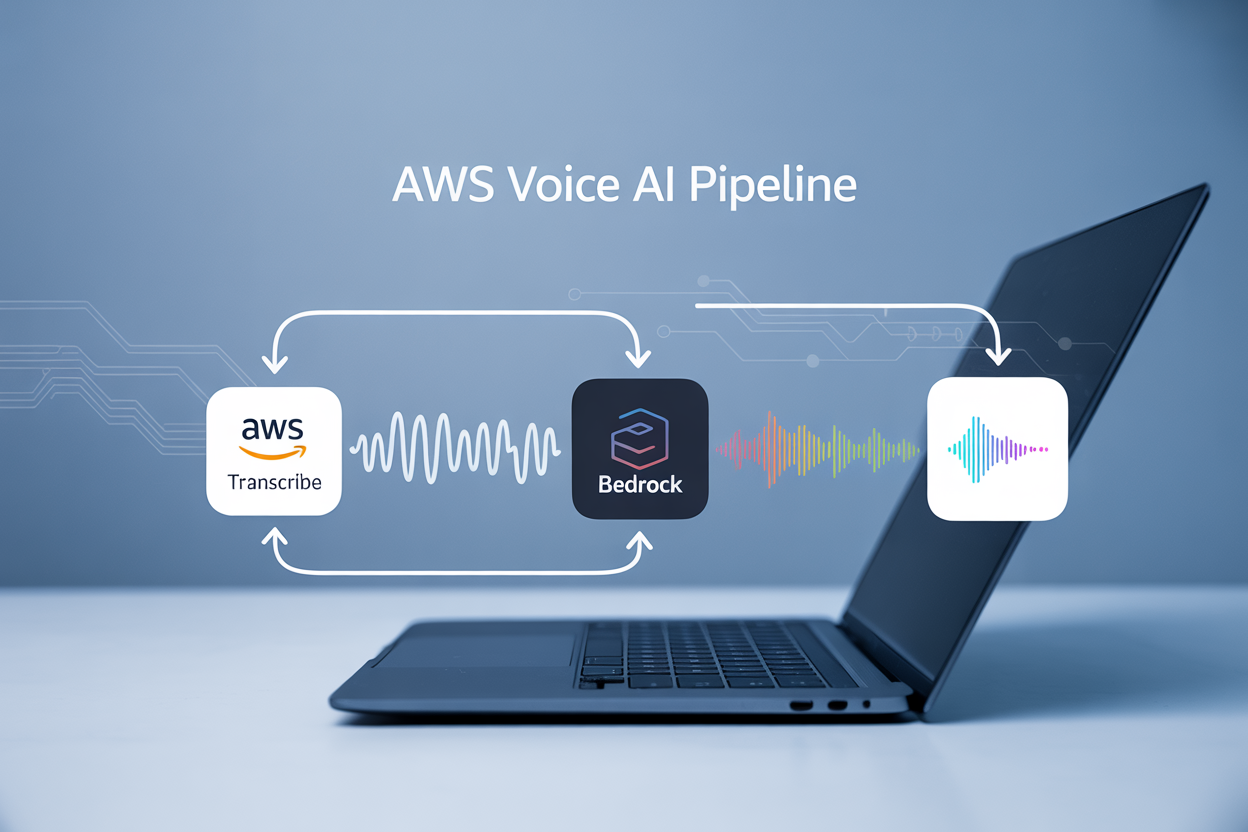
AWS Transcribe, Amazon Bedrock, and Amazon Polly create a powerful voice AI pipeline that transforms how businesses handle speech processing. This guide is for developers, solution architects, and tech leaders who want to build comprehensive voice AI applications using AWS services.
These three AWS AI services work together seamlessly: Transcribe converts speech to text, Bedrock adds intelligent processing and analysis, and Polly generates natural-sounding voice responses. When combined, they enable everything from smart customer service bots to real-time language translation systems.
We’ll explore how AWS Transcribe handles speech-to-text conversion with impressive accuracy across multiple languages and audio formats. You’ll also discover how Amazon Bedrock enhances your voice AI integration by processing transcribed text through large language models for sentiment analysis, content summarization, and intelligent responses. Finally, we’ll show you how Amazon Polly transforms processed text back into natural speech, completing your voice AI applications with lifelike audio output.
Understanding AWS Voice AI Services

AWS Transcribe converts speech to text with high accuracy
AWS Transcribe stands as Amazon’s premier speech-to-text AWS solution, designed to convert audio into accurate, readable text with impressive precision. This service handles multiple audio formats and supports over 100 languages, making it perfect for global applications. The technology behind AWS Transcribe uses advanced machine learning models that continuously improve through exposure to diverse speech patterns and accents.
The service excels at real-time streaming transcription and batch processing of pre-recorded audio files. Key features include:
- Custom vocabulary support for industry-specific terminology
- Speaker identification to distinguish between multiple voices
- Automatic punctuation and formatting for professional outputs
- Confidence scores for each transcribed word or phrase
- Content filtering to remove sensitive information automatically
AWS voice AI services like Transcribe prove particularly valuable in call center analytics, meeting transcription, and accessibility applications. The service integrates seamlessly with other AWS tools, allowing businesses to build comprehensive voice processing pipelines without managing complex infrastructure.
Amazon Bedrock provides foundation models for AI processing
Amazon Bedrock serves as the intelligent processing layer that bridges raw transcribed text with meaningful insights and responses. This fully managed service provides access to high-performing foundation models from leading AI companies, including Anthropic’s Claude, Amazon’s Titan, and Meta’s Llama models.
Bedrock transforms simple text into sophisticated AI-powered responses through:
- Natural language understanding that grasps context and intent
- Content generation for creating human-like responses
- Sentiment analysis to understand emotional tone
- Language translation capabilities across multiple languages
- Summarization features for condensing lengthy conversations
The platform’s serverless architecture means developers can focus on building applications rather than managing model infrastructure. Amazon Bedrock scales automatically based on demand and offers fine-tuning capabilities to customize models for specific use cases. This flexibility makes it an ideal component in AWS AI services combination workflows.
Amazon Polly transforms text into natural-sounding speech
Amazon Polly completes the voice AI loop by converting processed text back into lifelike speech. This AWS text-to-speech service uses deep learning technologies to synthesize speech that sounds remarkably human, offering both standard and neural voices across dozens of languages.
Polly’s advanced features include:
- Neural Text-to-Speech (NTTS) for ultra-realistic voice output
- Speech Synthesis Markup Language (SSML) support for precise control
- Breath sounds and pauses that mimic natural speech patterns
- Custom lexicons for proper pronunciation of specialized terms
- Voice customization options to match brand requirements
The service supports real-time streaming for interactive applications and batch synthesis for pre-recorded content. Amazon voice recognition workflows benefit greatly when Polly provides the final audio output, creating truly conversational AI experiences.
Integration capabilities create seamless voice workflows
The real magic happens when these three services work together in voice AI integration scenarios. Each service connects through standard APIs and AWS SDKs, enabling developers to create sophisticated voice applications with minimal complexity.
Common integration patterns include:
- Call center automation where Transcribe captures customer speech, Bedrock processes intent, and Polly responds naturally
- Voice assistants that listen, understand, and speak back intelligently
- Content accessibility solutions that convert audio to text and back to speech
- Language learning applications with pronunciation feedback and conversation practice
Voice AI applications AWS built with these integrated services can handle complex workflows like multi-turn conversations, context retention across sessions, and personalized responses based on user history. The services share common security models, monitoring tools, and billing structures, simplifying management for development teams.
This integrated approach reduces development time significantly compared to building custom solutions or combining services from multiple vendors.
Building Speech-to-Text Solutions with AWS Transcribe
Real-time transcription for live conversations and meetings
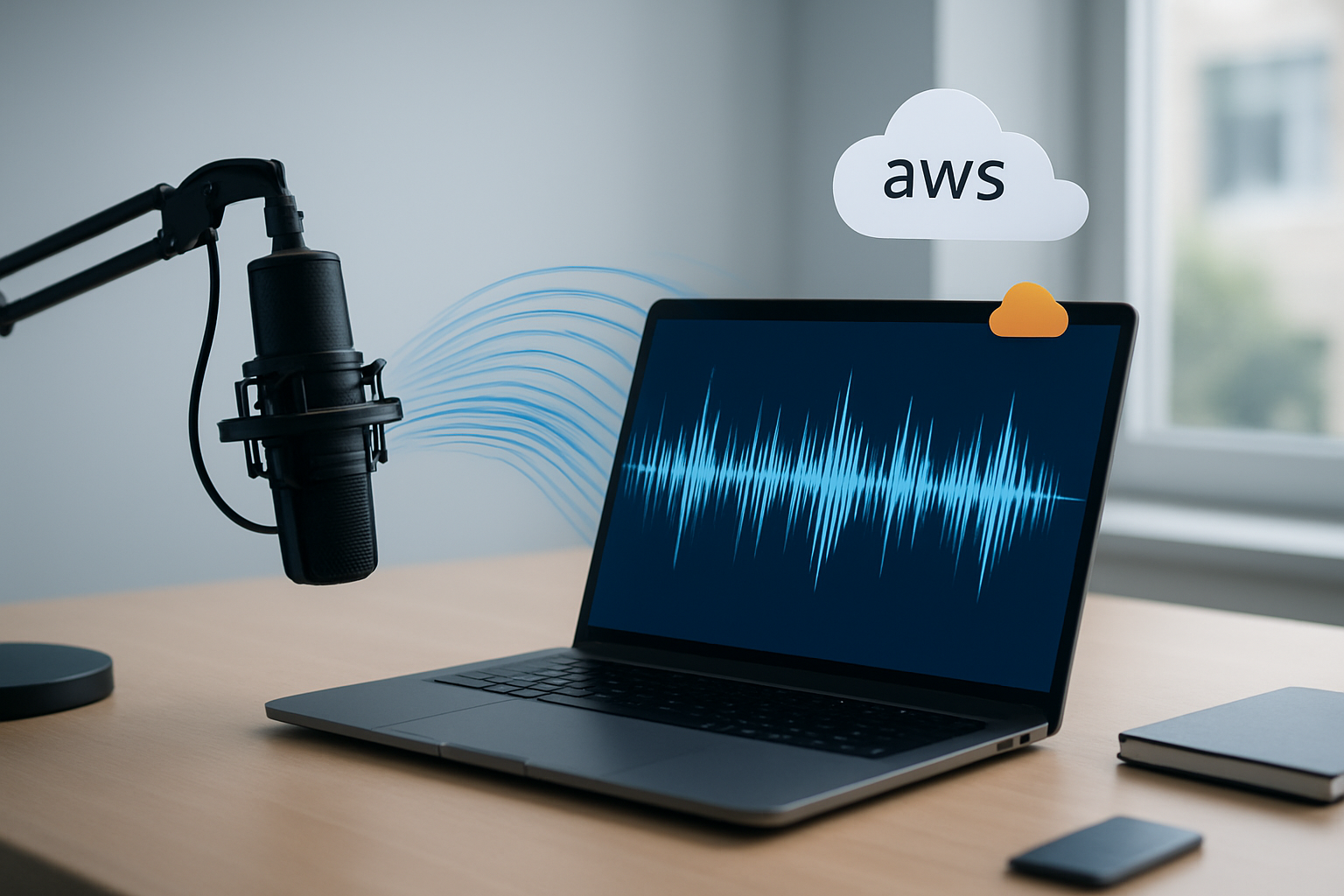
AWS Transcribe streaming capabilities transform spoken words into text instantly, making it perfect for live events, webinars, and virtual meetings. The service processes audio streams as they happen, delivering transcripts with minimal delay – typically just a few seconds behind the actual speech.
Setting up real-time transcription involves establishing a WebSocket connection to AWS Transcribe. Your application streams audio chunks continuously while receiving transcribed text in real-time. The service handles various audio formats and can process multiple speakers simultaneously, making it ideal for conference calls where participants join from different devices.
Key features for live transcription:
- Low latency processing (2-3 second delays)
- Support for multiple audio formats (PCM, FLAC, MP3)
- Automatic punctuation and capitalization
- Confidence scores for each transcribed segment
- Multiple language support with automatic detection
The streaming API works exceptionally well for customer service applications, where agents need instant access to conversation transcripts. Call centers use this feature to provide real-time coaching and compliance monitoring without disrupting ongoing conversations.
Batch processing for recorded audio files and podcasts
Batch processing with AWS Transcribe handles larger audio files efficiently, making it the go-to solution for podcasts, recorded interviews, and archived content. Unlike streaming transcription, batch jobs can process hours of audio content without maintaining persistent connections.
Upload your audio files to Amazon S3, then create transcription jobs that reference these files. AWS Transcribe supports files up to 4 hours long and 2GB in size, covering most podcast episodes and recorded meetings. The service automatically detects audio characteristics like sample rates and formats, simplifying the setup process.
Batch processing advantages:
- Higher accuracy rates compared to real-time transcription
- Support for longer audio files
- More comprehensive formatting options
- Integration with other AWS services like Lambda for automation
- Cost-effective for large volumes of content
Content creators particularly benefit from batch processing when generating subtitles for video content or creating searchable transcripts for podcast archives. The asynchronous nature means you can process multiple files simultaneously without worrying about connection timeouts.
Custom vocabulary support for industry-specific terminology
Custom vocabularies solve the challenge of industry jargon and specialized terminology that standard speech recognition might miss. AWS Transcribe allows you to create vocabulary lists that improve accuracy for specific words, phrases, and acronyms common in your domain.
Building custom vocabularies involves creating lists of terms with their phonetic pronunciations and alternative spellings. Medical practices might include drug names and medical procedures, while legal firms could add case law terminology and legal concepts. The service learns these terms and prioritizes them during transcription.
Custom vocabulary implementation:
- Text-based vocabulary files with up to 50,000 entries
- Phonetic pronunciation guides for complex terms
- Multiple vocabulary tables for different use cases
- Regular updates to maintain accuracy
- Integration with existing transcription workflows
Financial institutions use custom vocabularies to accurately transcribe trading conversations, compliance calls, and client meetings where precise terminology is critical. The vocabulary feature reduces manual correction time and improves overall transcript quality.
Speaker identification and timestamp features
Speaker identification (diarization) separates different voices in multi-speaker conversations, assigning unique speaker labels to each transcript segment. This feature proves invaluable for meeting notes, interviews, and group discussions where knowing who said what matters.
AWS Transcribe can identify up to 10 different speakers in a single audio stream, automatically switching labels as the conversation flows. The service doesn’t identify specific individuals by name but creates consistent speaker labels throughout the transcript. Combine this with timestamp information to create detailed conversation logs.
Speaker identification capabilities:
- Automatic speaker change detection
- Consistent speaker labeling throughout long conversations
- Word-level timestamps for precise timing
- Integration with custom vocabularies
- Support for overlapping speech scenarios
Timestamp features provide precise timing information down to individual words, enabling applications to create interactive transcripts where users can jump to specific moments in the audio. This functionality transforms static transcripts into dynamic, searchable resources that enhance user experience and content accessibility.
Enhancing Voice AI with Amazon Bedrock

Natural Language Understanding Improves Transcription Context
Amazon Bedrock transforms raw transcription from AWS Transcribe into meaningful, contextual understanding. While Transcribe converts speech to text with impressive accuracy, Bedrock adds the intelligence layer that interprets what speakers actually mean. This combination creates a powerful voice AI system that goes beyond simple word recognition.
When users speak naturally, they often use incomplete sentences, industry jargon, or implicit references. Bedrock’s large language models excel at filling these gaps by analyzing conversation flow and applying contextual knowledge. For instance, if someone says “schedule that meeting we discussed yesterday,” Bedrock can infer the specific meeting context from previous conversation history and user patterns.
The integration works seamlessly through API calls that pass transcribed text to Bedrock models. These models then:
- Resolve ambiguous pronouns and references
- Expand abbreviations and technical terms
- Identify speaker intent beyond literal words
- Connect fragmented speech patterns into coherent thoughts
- Apply domain-specific knowledge for specialized industries
This enhanced understanding dramatically improves downstream processing accuracy. Customer service applications can better route calls, voice assistants provide more relevant responses, and meeting transcription tools capture actual decisions rather than just spoken words.
Content Generation Creates Intelligent Responses from Voice Input
Amazon Bedrock excels at generating contextually appropriate responses after processing voice input through AWS Transcribe. This capability transforms voice AI applications from passive listening tools into interactive, intelligent systems that can engage in meaningful dialogue with users.
The content generation process begins when Bedrock receives transcribed speech and applies its language models to craft responses that match the conversation’s tone, complexity, and purpose. For business applications, this means voice assistants can generate professional emails from verbal dictation, create meeting summaries from recorded conversations, or produce detailed reports from spoken data.
Key content generation capabilities include:
- Dynamic response crafting: Bedrock analyzes speaker intent and generates responses that directly address user needs
- Multi-format output: Convert voice input into emails, reports, chat messages, or structured documents
- Tone matching: Maintain consistency with the speaker’s communication style and formality level
- Real-time adaptation: Adjust responses based on ongoing conversation context and user feedback
Voice-activated content creation becomes particularly powerful in scenarios like dictating complex documents, where Bedrock can structure rambling speech into organized paragraphs with proper formatting. The system handles interruptions, corrections, and additions naturally, creating polished final content from conversational input.
This integration enables applications like voice-powered customer service systems that generate personalized follow-up communications, or educational platforms that convert lecture recordings into structured study materials.
Sentiment Analysis Extracts Emotional Insights from Speech
Amazon Bedrock brings sophisticated emotional intelligence to voice AI systems by analyzing sentiment patterns in transcribed speech from AWS Transcribe. This emotional layer adds crucial context that pure transcription misses, enabling applications to respond appropriately to user emotional states and needs.
Bedrock’s sentiment analysis goes beyond simple positive/negative classifications. The models detect subtle emotional nuances like frustration building over time, excitement about specific topics, or confidence levels in spoken responses. This granular emotional understanding helps voice AI applications make better decisions about response timing, tone, and content.
Practical applications of sentiment-enhanced voice AI include:
- Customer service optimization: Identify frustrated callers early and route them to specialized agents or priority queues
- Training and coaching: Analyze sales call recordings to identify confidence patterns and successful emotional approaches
- Healthcare monitoring: Track patient emotional states during therapy sessions or medical consultations
- Market research: Extract genuine emotional reactions to products or services from focus group recordings
The sentiment analysis process enriches voice AI workflows by providing emotional metadata alongside transcribed text. Applications can then use this information to trigger specific responses – like offering additional help when detecting confusion, or celebrating with users when identifying excitement and satisfaction.
Bedrock’s models also track sentiment changes throughout conversations, identifying emotional triggers and response patterns. This temporal analysis helps voice AI systems learn optimal interaction strategies for different emotional contexts, creating more empathetic and effective user experiences.
Creating Natural Voice Output with Amazon Polly

Multiple voice options and language support
Amazon Polly offers an impressive collection of over 60 voices across 30+ languages, giving developers remarkable flexibility in creating voice AI applications. Each voice brings unique characteristics, from regional accents to gender variations, allowing you to match the perfect voice to your specific audience and use case.
The service includes both standard and neural voices across major languages like English, Spanish, French, German, Japanese, and Portuguese. Regional variations add another layer of customization – you can choose between American, British, or Australian English voices, or select from different Spanish dialects depending on your target market.
When building AWS voice AI services, this extensive voice library becomes particularly valuable for global applications. E-commerce platforms can offer localized shopping experiences, while educational apps can deliver content in students’ native languages. The variety ensures your voice AI feels natural and relatable to users worldwide.
SSML markup customizes pronunciation and speech patterns
Speech Synthesis Markup Language (SSML) transforms Amazon Polly from a basic AWS text-to-speech service into a sophisticated voice customization tool. This markup language lets you control virtually every aspect of speech output, from pronunciation to emotional tone.
You can adjust speaking rates for different sections of text, add strategic pauses for emphasis, and modify pitch to convey different emotions. SSML also handles challenging pronunciations – technical terms, brand names, or foreign words can be phonetically spelled out to ensure accurate delivery.
The markup supports advanced features like:
- Volume adjustments for specific words or phrases
- Emphasis tags to stress important information
- Break elements to insert natural pauses
- Prosody controls for pitch, rate, and volume modifications
- Audio file insertion for sound effects or music
These capabilities make Polly particularly powerful when integrated with Amazon Bedrock, where generated content can include SSML tags for optimal voice delivery.
Neural voices deliver human-like audio quality
Neural voices represent Amazon Polly’s cutting-edge technology, using deep learning models to produce remarkably natural-sounding speech. These voices eliminate the robotic quality traditionally associated with text-to-speech systems, delivering audio that closely mimics human conversation patterns.
The neural engine processes context better than standard voices, understanding sentence structure and meaning to apply appropriate intonation. This results in more engaging voice interactions that feel conversational rather than mechanical.
Neural voices excel in applications requiring extended listening periods, such as audiobook narration or lengthy educational content. The natural flow reduces listener fatigue and improves comprehension rates compared to traditional synthetic voices.
Real-time streaming enables instant voice responses
Amazon Polly’s real-time streaming capability transforms voice AI applications by eliminating delays between text input and audio output. Instead of waiting for complete audio file generation, streaming delivers speech as it’s synthesized, creating immediate voice responses.
This feature becomes essential when combining AWS Transcribe, Amazon Bedrock, and Amazon Polly for interactive voice AI systems. Users can speak to your application, receive AI-generated responses through Bedrock, and hear those responses almost instantly through Polly’s streaming output.
Streaming works particularly well for:
- Interactive voice assistants and chatbots
- Live customer service applications
- Real-time translation services
- Dynamic content reading systems
The low-latency streaming ensures smooth voice AI integration, maintaining natural conversation flow that keeps users engaged throughout their interaction.
Practical Voice AI Applications and Use Cases

Customer service automation with intelligent voice bots
AWS voice AI services create powerful customer service automation that handles complex interactions naturally. When customers call support lines, AWS Transcribe converts their speech into text, capturing every word with impressive accuracy even through background noise or different accents. This text flows to Amazon Bedrock, which understands context, intent, and sentiment to generate appropriate responses that feel genuinely human.
The magic happens when Amazon Polly delivers these responses in natural-sounding voices. Customers can’t tell they’re talking to an AI system because the conversation flows smoothly, with proper intonation and emotional context. These AWS AI services combination handles common queries like account balance checks, appointment scheduling, and troubleshooting steps without human intervention.
Companies see dramatic cost savings while improving customer satisfaction. The system works 24/7, handles multiple languages, and escalates complex issues to human agents with full conversation context. Banks use this setup for account inquiries, healthcare providers manage appointment bookings, and e-commerce platforms resolve shipping questions automatically.
Content creation workflows for podcasts and audiobooks
Content creators leverage AWS voice AI services to transform written material into professional audio content efficiently. Writers upload manuscripts or scripts, and Amazon Polly generates high-quality narration using neural voices that sound remarkably human. The voice AI integration supports multiple languages, accents, and speaking styles.
Podcast producers use AWS Transcribe to convert interviews into searchable text for show notes and blog posts. Amazon Bedrock then analyzes these transcriptions to create compelling episode summaries, suggest related topics, and even generate social media content automatically.
The workflow scales beautifully for audiobook production. Publishers process entire novels through this system, creating professional narration at a fraction of traditional costs. Voice consistency across chapters remains perfect, and producers can adjust pacing, emphasis, and tone as needed.
Independent creators benefit enormously from this technology. Bloggers convert articles into podcast episodes, authors create audiobook versions of their work, and educators develop audio learning materials without expensive studio time or voice talent.
Accessibility solutions for hearing and vision impaired users
AWS voice AI applications break down communication barriers for users with disabilities. Real-time speech-to-text AWS services make conversations, meetings, and media accessible to deaf and hard-of-hearing individuals. AWS Transcribe processes live audio streams, displaying captions with remarkable accuracy and speed.
For visually impaired users, Amazon Polly reads digital content aloud with natural-sounding voices. Websites, emails, documents, and mobile apps become fully accessible when integrated with these AWS AI services combination. Screen readers powered by Polly deliver information in clear, expressive speech that doesn’t sound robotic.
Amazon Bedrock enhances accessibility by simplifying complex text, translating content into different languages, and providing context-aware descriptions of images and visual elements. This creates truly inclusive digital experiences.
Educational institutions use these tools to support students with learning differences. Libraries implement voice-controlled systems for navigation and information retrieval. Government agencies ensure their digital services comply with accessibility requirements while providing superior user experiences.
Meeting transcription and summary generation
Business meetings become more productive with automated transcription and intelligent summarization. AWS Transcribe captures every word spoken during video conferences, phone calls, and in-person meetings. The system identifies different speakers, handles overlapping conversations, and maintains accuracy even in challenging acoustic environments.
Amazon Bedrock processes these transcriptions to extract key decisions, action items, and important topics discussed. Meeting summaries highlight who committed to what tasks and when deadlines were set. Participants receive actionable follow-up documentation without manual note-taking.
The voice AI integration connects with popular conferencing platforms like Zoom, Teams, and WebEx. Legal firms use this for depositions and client meetings, consulting companies document strategy sessions, and remote teams stay aligned across time zones.
Privacy and security features ensure sensitive discussions remain protected. Companies can deploy these solutions within their own AWS environments, maintaining complete control over confidential information while benefiting from advanced AI capabilities.
Voice-controlled applications and smart assistants
Modern applications integrate AWS voice AI services to create intuitive voice interfaces that users love. Mobile apps accept voice commands for navigation, search, and data entry. AWS Transcribe converts speech to text with low latency, enabling real-time interactions that feel natural and responsive.
Amazon Bedrock powers the intelligence behind these voice interactions. Apps understand complex requests, maintain conversation context, and provide helpful responses. Users can ask follow-up questions, change their minds mid-conversation, and receive personalized assistance.
Amazon Polly delivers responses in voices that match the application’s personality and brand. Fitness apps use encouraging tones, meditation apps employ calming voices, and productivity tools sound professional and efficient.
Smart home applications benefit greatly from this voice AI applications AWS approach. Homeowners control lighting, temperature, and security systems using natural language commands. The system learns preferences over time, suggesting optimizations and proactively managing home environments.
Healthcare applications use voice interfaces for medication reminders, symptom tracking, and appointment scheduling. Elderly patients find voice interaction more accessible than complex touchscreen interfaces, improving medication compliance and health outcomes.
Implementation Best Practices and Cost Optimization

Choosing Appropriate Service Tiers for Your Volume Needs
AWS voice AI services offer various pricing models that can make or break your project’s budget. For AWS Transcribe, you’ll typically pay per minute of processed audio, but batch processing jobs cost significantly less than real-time streaming. If your application can handle slight delays, batch processing saves serious money.
Amazon Bedrock pricing varies by model and usage patterns. Foundation models charge differently – some by input/output tokens, others by request volume. Claude and Titan models have different rate structures, so match your model choice to your specific use case rather than going with the most powerful option by default.
Amazon Polly charges per character converted to speech, with standard voices costing less than neural voices. Neural voices sound more natural but cost about 16 times more than standard ones. For high-volume applications, standard voices often provide acceptable quality at a fraction of the cost.
Consider these volume-based strategies:
- Implement caching for frequently requested text-to-speech conversions
- Use Reserved Capacity for predictable, high-volume workloads
- Set up CloudWatch alarms to monitor usage spikes
- Choose regions strategically based on data transfer costs
Data Security and Compliance Considerations for Voice Processing
Voice data contains highly sensitive personal information that requires careful handling. AWS voice AI services process audio files and text content that might include personal identifiers, health information, or confidential business discussions.
Enable encryption at rest and in transit for all voice processing workflows. AWS Transcribe automatically encrypts transcription jobs, but you should also encrypt your S3 buckets storing audio files using KMS keys. Amazon Bedrock encrypts all model interactions by default, while Amazon Polly requires you to configure encryption for stored audio outputs.
For compliance requirements like HIPAA, GDPR, or SOC 2:
- Use AWS services within compliant regions
- Implement proper data retention policies
- Configure audit logging through CloudTrail
- Set up VPC endpoints to keep traffic within AWS networks
- Apply least-privilege IAM policies for service access
Data residency becomes critical when processing voice data across different geographic regions. Configure your AWS voice AI services to process and store data within specific geographic boundaries to meet local regulations.
Performance Optimization Techniques for Faster Response Times
Response time directly impacts user experience in voice AI applications. Each service in your pipeline adds latency, so optimization requires a holistic approach across AWS Transcribe, Amazon Bedrock, and Amazon Polly.
For AWS Transcribe optimization:
- Use streaming transcription for real-time applications
- Choose appropriate language models based on your audio characteristics
- Implement custom vocabularies for domain-specific terminology
- Process shorter audio segments to reduce processing time
Amazon Bedrock performance depends heavily on model selection and prompt engineering. Smaller models like Claude Instant respond faster than full Claude models. Structure your prompts efficiently – shorter, well-crafted prompts reduce processing time and token consumption.
Amazon Polly optimization involves:
- Choosing standard voices over neural voices when speed matters more than quality
- Breaking long texts into smaller chunks for parallel processing
- Using SSML tags strategically rather than processing entire documents
- Caching frequently used audio outputs in S3 or CloudFront
Architecture-level optimizations make significant differences:
- Deploy services in the same AWS region to minimize network latency
- Use Lambda functions with provisioned concurrency for consistent response times
- Implement asynchronous processing where real-time responses aren’t necessary
- Set up API Gateway caching for repeated requests
- Use CloudFront for global distribution of generated audio content
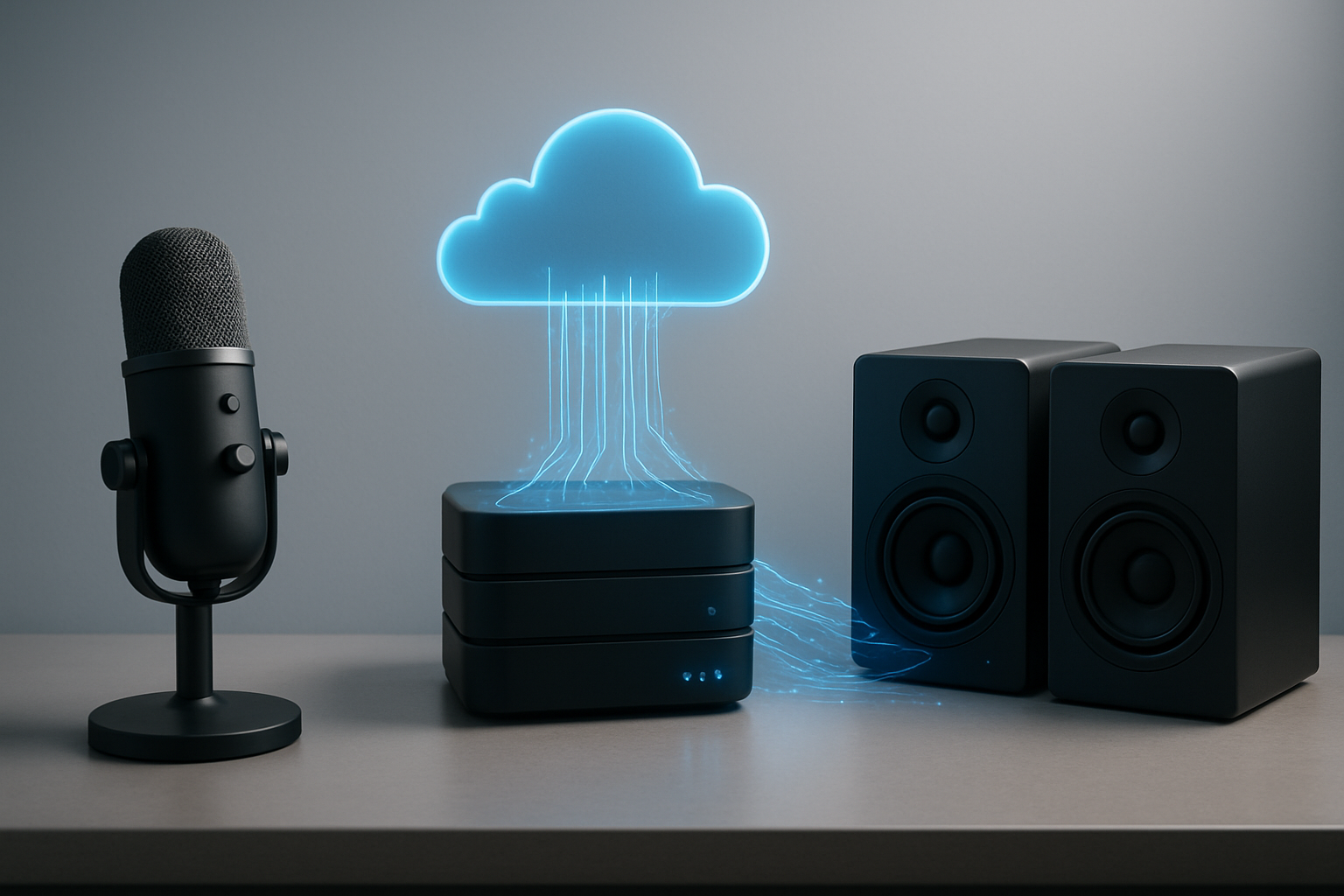
AWS has created a powerful trio of voice AI services that work seamlessly together to transform how businesses handle speech and audio content. Transcribe converts spoken words into accurate text, Bedrock adds intelligent processing and natural language understanding, while Polly brings everything full circle by generating lifelike speech from text. This combination opens up endless possibilities for customer service automation, content creation, accessibility features, and interactive voice applications.
The real magic happens when you connect these services strategically and follow proven implementation practices. Start small with a pilot project to understand costs and performance, then scale based on your specific needs. Focus on optimizing your audio quality, choosing the right language models, and implementing proper error handling to get the best results. With these AWS tools working together, you can build sophisticated voice AI solutions that feel natural and deliver real value to your users.