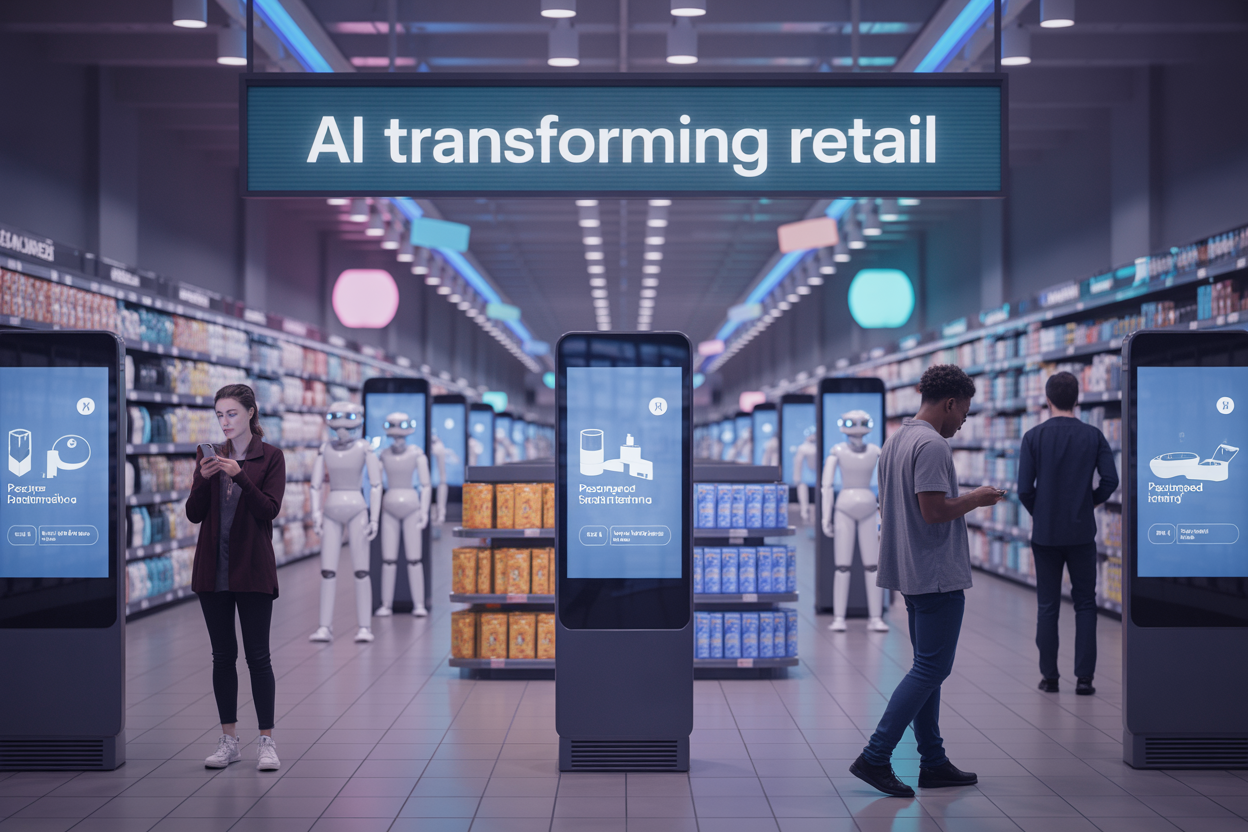
Artificial intelligence is reshaping how retailers connect with customers and run their businesses. AI in retail and generative AI retail transformation are no longer future concepts—they’re happening right now, delivering real results for companies ready to embrace change.
This guide is for retail executives, business owners, marketing teams, and operations managers who want to understand how AI can drive growth and efficiency in their organizations. You’ll discover practical applications that are already working for leading retailers worldwide.
We’ll explore three game-changing areas where AI is making the biggest impact. First, you’ll learn how AI-powered personalization creates unique shopping experiences that boost customer loyalty and sales. Next, we’ll dive into intelligent pricing strategies that help retailers stay competitive while maximizing profits. Finally, we’ll examine how AI supply chain management cuts costs and keeps products flowing smoothly from warehouse to customer.
These aren’t just tech buzzwords—they’re proven strategies that smart retailers use to stay ahead of the competition and meet rising customer expectations.
AI-Powered Personalization Revolution in Retail
Dynamic Customer Profiling and Behavioral Analysis
AI in retail has revolutionized how retailers understand their customers by creating incredibly detailed profiles that go far beyond basic demographic data. Modern AI-powered personalization systems track every click, scroll, purchase, and even hesitation pattern to build comprehensive customer personas that update in real-time.
Machine learning algorithms analyze purchasing history, browsing behavior, seasonal trends, and social media interactions to identify patterns that human analysts would miss. These systems can predict when a customer is likely to make a purchase, what products they’ll be interested in next, and even their preferred shopping times and channels.
The technology captures micro-behaviors like how long someone spends looking at specific product images, which reviews they read, and what search terms they use. This granular data helps retailers understand the emotional drivers behind purchasing decisions, not just the transactional ones.
Advanced behavioral analysis can segment customers into hundreds of micro-categories based on their shopping personality, lifestyle preferences, and decision-making patterns. Some customers are impulse buyers who respond to flash sales, while others are research-heavy shoppers who need detailed product comparisons and reviews before purchasing.
Real-Time Product Recommendations That Drive Sales
AI retail automation has transformed product recommendations from simple “customers who bought this also bought that” suggestions into sophisticated, context-aware systems that adapt to each customer’s current mindset and situation.
These intelligent recommendation engines consider multiple factors simultaneously: current browsing session behavior, time of day, weather conditions, recent purchases, upcoming events in the customer’s calendar, and even their location. A customer browsing outdoor gear on a Friday afternoon might receive different recommendations than the same person shopping on a rainy Tuesday evening.
The technology analyzes inventory levels, profit margins, and promotional campaigns to balance customer satisfaction with business objectives. This means recommendations aren’t just relevant to customers but also strategically beneficial for retailers.
Machine learning retail applications have enabled real-time A/B testing of recommendation algorithms, allowing systems to continuously improve their accuracy. Some retailers report recommendation conversion rates improving by 300-400% when moving from traditional collaborative filtering to AI-powered systems.
Visual recommendation technology can analyze product images to suggest items with similar colors, patterns, or styles, even across different product categories. A customer looking at a blue floral dress might see recommendations for blue accessories or floral home decor items.
Customized Shopping Experiences Across All Channels
AI-powered personalization creates seamless, consistent experiences whether customers shop online, through mobile apps, or in physical stores. The technology maintains a unified customer profile that follows shoppers across all touchpoints, ensuring their preferences and history inform every interaction.
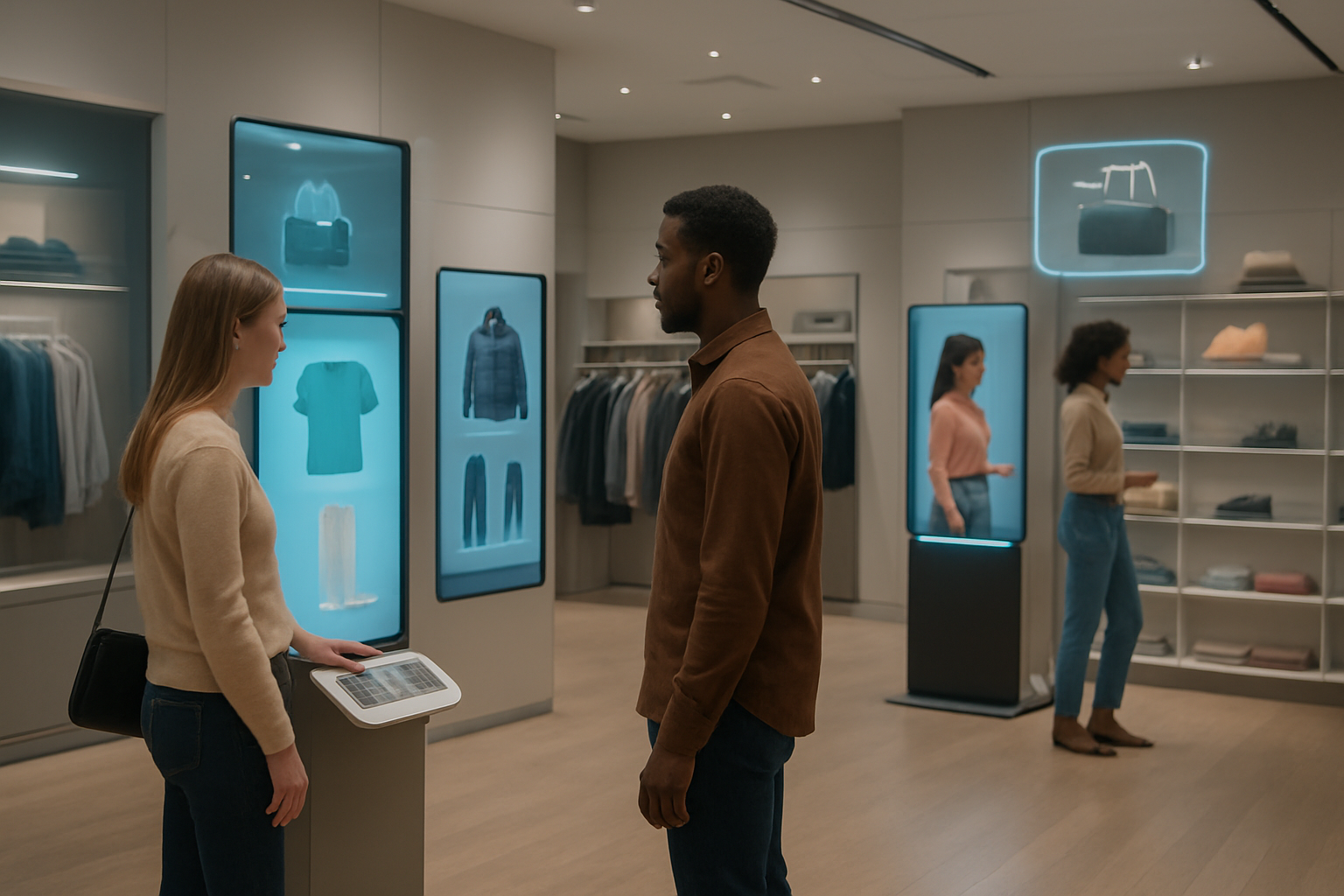
In-store experiences benefit from AI through smart mirrors that recognize returning customers and display personalized outfit suggestions, or mobile apps that guide customers to products they’ve previously viewed online. Digital price tags can show personalized pricing or highlight items on a customer’s wishlist when they’re nearby.
Online experiences adapt in real-time based on customer behavior patterns. The website layout, featured products, color schemes, and even content tone can adjust to match individual preferences. Some retailers use AI to determine whether a customer prefers detailed product descriptions or visual-heavy presentations.
Mobile experiences leverage location data, push notification timing, and app usage patterns to deliver relevant content at the perfect moments. AI determines when customers are most likely to engage with notifications and what type of content will drive action.
Cross-channel inventory management powered by AI ensures that personalized recommendations remain accurate across all platforms, preventing the frustration of finding an item online that’s unavailable in-store or vice versa.
Predictive Customer Journey Mapping
AI supply chain management principles extend to customer journey optimization, where predictive analytics anticipate customer needs and pain points before they occur. These systems map complex customer pathways that span weeks or months, identifying key decision points and potential obstacles.
Predictive models analyze historical data from millions of customer interactions to forecast future behavior patterns. This enables retailers to proactively address common issues like cart abandonment by triggering personalized interventions at exactly the right moment.
The technology identifies customers who are likely to churn and automatically deploys retention strategies tailored to their specific situation. High-value customers might receive exclusive offers, while price-sensitive customers get discount codes.
Journey mapping AI recognizes when customers are in research mode versus ready-to-buy mode, adjusting the marketing approach accordingly. Research-phase customers receive educational content and detailed product information, while ready-to-buy customers see streamlined checkout processes and limited-time incentives.
Advanced systems predict seasonal shopping patterns, life events, and changing preferences to position relevant products and services ahead of customer need. This proactive approach transforms retailers from reactive order-takers into trusted advisors who anticipate and fulfill customer needs seamlessly.
Generative AI Transforms Customer Engagement
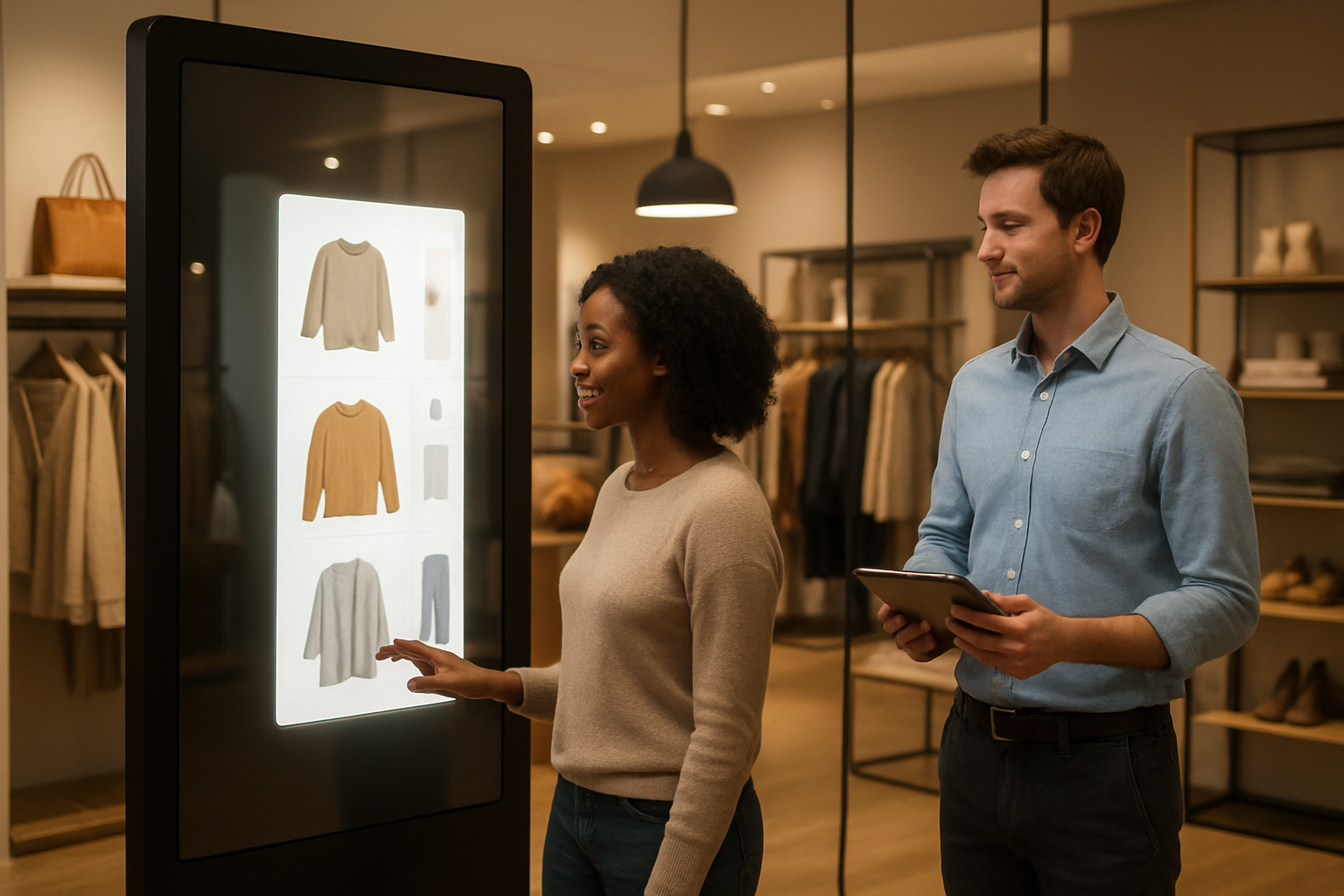
AI-Generated Product Descriptions and Marketing Content
Generative AI retail transformation has revolutionized how brands create compelling product descriptions and marketing materials. Instead of manually crafting descriptions for thousands of products, retailers now use AI to generate unique, engaging content that speaks directly to different customer segments. A fashion retailer can create multiple versions of the same dress description – one emphasizing comfort for busy moms, another highlighting style for fashion-forward millennials, and a third focusing on versatility for professionals.
This technology goes beyond simple template filling. Advanced generative AI analyzes product attributes, customer reviews, and market trends to create descriptions that resonate with specific audiences. The AI considers seasonal trends, cultural nuances, and even regional preferences when crafting content. A winter coat might be described as “perfect for morning commutes” in urban markets while emphasizing “outdoor adventure ready” features for suburban customers.
Social media content creation has become significantly more efficient through AI-powered tools. Brands can generate hundreds of post variations, testing different tones, hashtags, and calls-to-action to optimize engagement rates. The AI learns from performance data, continuously improving its output to match what drives actual conversions and brand awareness.
Personalized Email Campaigns at Scale
Email personalization has evolved far beyond inserting a customer’s first name into subject lines. Modern generative AI creates entirely customized email experiences based on individual shopping behaviors, preferences, and lifecycle stages. The system analyzes purchase history, browsing patterns, and engagement metrics to craft messages that feel personally written for each recipient.
Product recommendations within emails are now contextually intelligent. Instead of showing generic “you might like” suggestions, AI generates recommendations based on upcoming events in a customer’s life, weather patterns in their location, and seasonal buying behaviors. A customer who bought running shoes last spring will receive different summer gear suggestions than someone who purchased dress shoes during the same period.
Subject line optimization happens automatically through continuous A/B testing across millions of variations. The AI generates multiple subject line options, tests them with small audience segments, and automatically deploys the highest-performing versions to larger groups. This process happens in real-time, adapting to changing customer preferences and market conditions.
Dynamic content blocks adjust based on individual customer data. One email template can display completely different products, offers, and messaging depending on who opens it. A loyal customer might see exclusive early access offers, while a price-sensitive shopper receives discount-focused content.
Virtual Shopping Assistants and Chatbots
AI-driven customer service through sophisticated chatbots has transformed how customers discover and purchase products online. These virtual assistants understand natural language, context, and shopping intent, providing guidance that rivals human sales associates. Customers can describe what they’re looking for in their own words, and the AI translates those descriptions into relevant product matches.
Visual search capabilities allow customers to upload photos and receive similar product recommendations. Someone can snap a picture of a friend’s outfit or a home decor item they admire, and the AI identifies comparable products available for purchase. This bridges the gap between inspiration and acquisition, reducing the friction in the customer journey.
Conversational commerce has become more sophisticated, with chatbots handling complex queries about sizing, compatibility, and styling. The AI accesses product databases, inventory levels, and customer data to provide accurate, helpful responses. When a customer asks about finding a dress for a wedding, the bot considers their size, style preferences, budget range, and even the season of the event.
Integration with augmented reality features allows virtual assistants to help customers visualize products in their own spaces or on their bodies. Furniture chatbots can show how a sofa looks in a customer’s living room, while fashion assistants help customers see how different outfits coordinate with their existing wardrobe pieces.
These AI-powered tools operate 24/7, handling multiple customer conversations simultaneously while maintaining personalized, helpful interactions. They escalate complex issues to human representatives when needed, ensuring customers always receive appropriate support levels for their specific needs.
Intelligent Pricing Strategies Boost Profitability
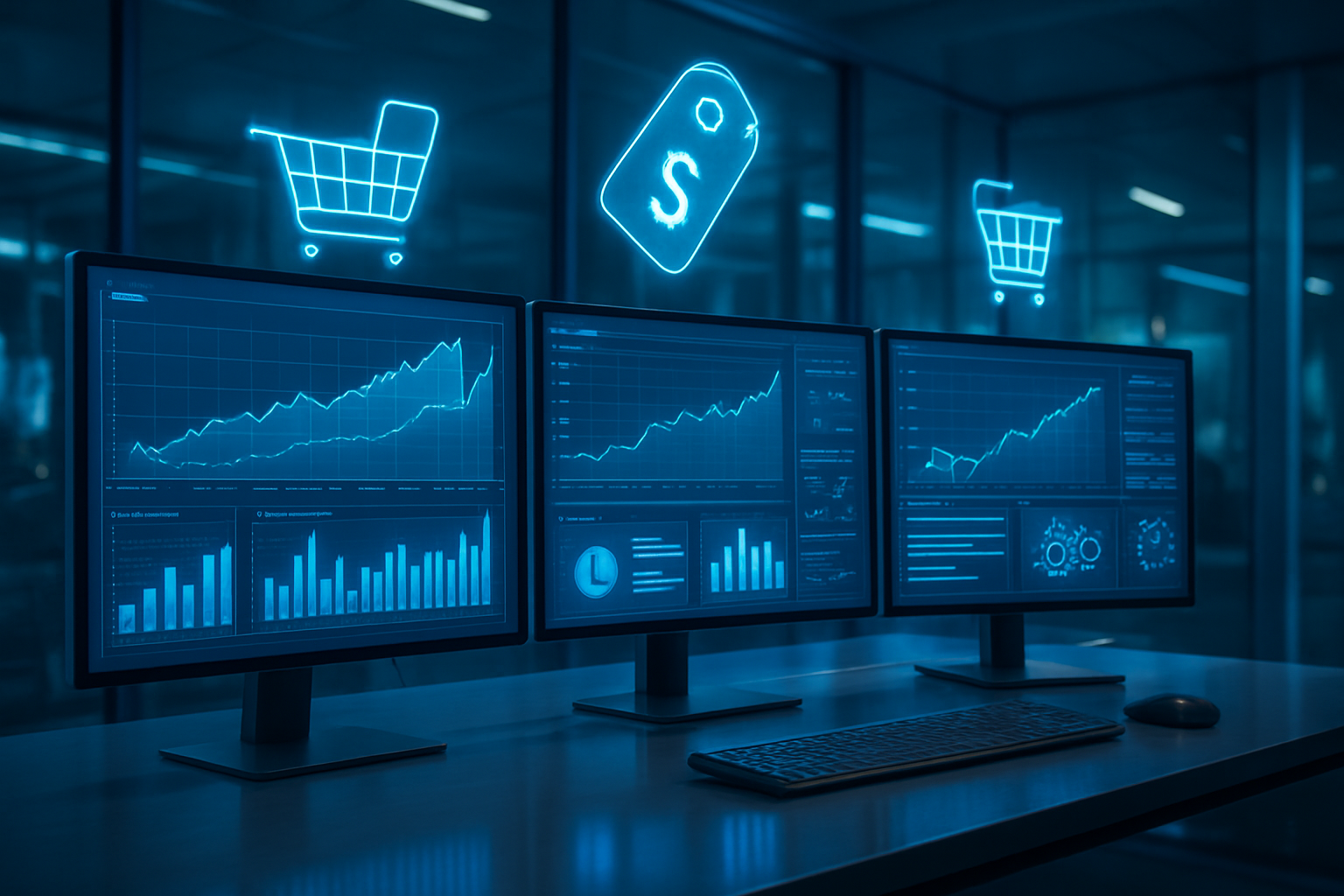
Dynamic Pricing Based on Market Demand and Competition
AI-powered dynamic pricing has revolutionized how retailers set prices by analyzing real-time market conditions, customer behavior, and competitive landscapes. Unlike traditional static pricing models, intelligent pricing strategies use machine learning algorithms to continuously adjust prices based on demand fluctuations, inventory levels, and market trends.
Retailers like Amazon and Walmart use sophisticated AI systems that process millions of data points every second. These systems consider factors such as:
- Real-time inventory levels
- Historical sales patterns
- Seasonal demand variations
- Customer browsing behavior
- External market conditions
The technology enables retailers to maximize revenue during peak demand periods while maintaining competitive pricing during slower sales cycles. Airlines and hotels have perfected this approach, but retail companies are now applying similar strategies to everything from electronics to fashion items.
Competitor Price Monitoring and Automated Adjustments
Modern AI retail automation systems continuously track competitor pricing across multiple channels, providing retailers with instant market intelligence. These systems scan thousands of competitor websites, marketplaces, and physical store locations to gather comprehensive pricing data.
Machine learning retail applications analyze this competitive data to identify pricing opportunities and threats. The technology can:
| Feature | Benefit |
|---|---|
| Real-time monitoring | Instant price adjustments |
| Multi-channel tracking | Comprehensive market view |
| Automated responses | Reduced manual workload |
| Trend analysis | Predictive pricing insights |
Smart retailers use these insights to automatically adjust their prices within predefined parameters, ensuring they remain competitive without sacrificing profitability. The system can respond to competitor price changes within minutes, giving businesses a significant advantage in fast-moving markets.
Customer Willingness-to-Pay Analysis
AI in retail has transformed how businesses understand customer price sensitivity through advanced willingness-to-pay analysis. This approach uses customer data, purchase history, and behavioral patterns to determine optimal price points for different customer segments.
The AI algorithms analyze:
- Previous purchase patterns
- Product browsing duration
- Cart abandonment rates
- Price comparison behavior
- Customer demographics and preferences
This granular understanding allows retailers to implement personalized pricing strategies where appropriate, offering targeted promotions to price-sensitive customers while maintaining premium pricing for less price-conscious segments. The technology helps retailers avoid leaving money on the table while ensuring they don’t price themselves out of competitive markets.
Promotional Pricing Optimization
Intelligent pricing strategies extend beyond regular pricing to optimize promotional campaigns and discount strategies. AI systems analyze the effectiveness of different promotional approaches, determining the optimal discount levels, timing, and duration for maximum impact.
The technology evaluates promotional performance across multiple dimensions:
- Customer acquisition vs. retention impact
- Short-term revenue vs. long-term customer value
- Category cannibalization effects
- Inventory clearance efficiency
AI-driven promotional optimization helps retailers avoid the common trap of training customers to only buy during sales events. Instead, the system creates strategic promotional calendars that drive sales while maintaining healthy profit margins and customer expectations.
Smart Supply Chain Management Reduces Costs
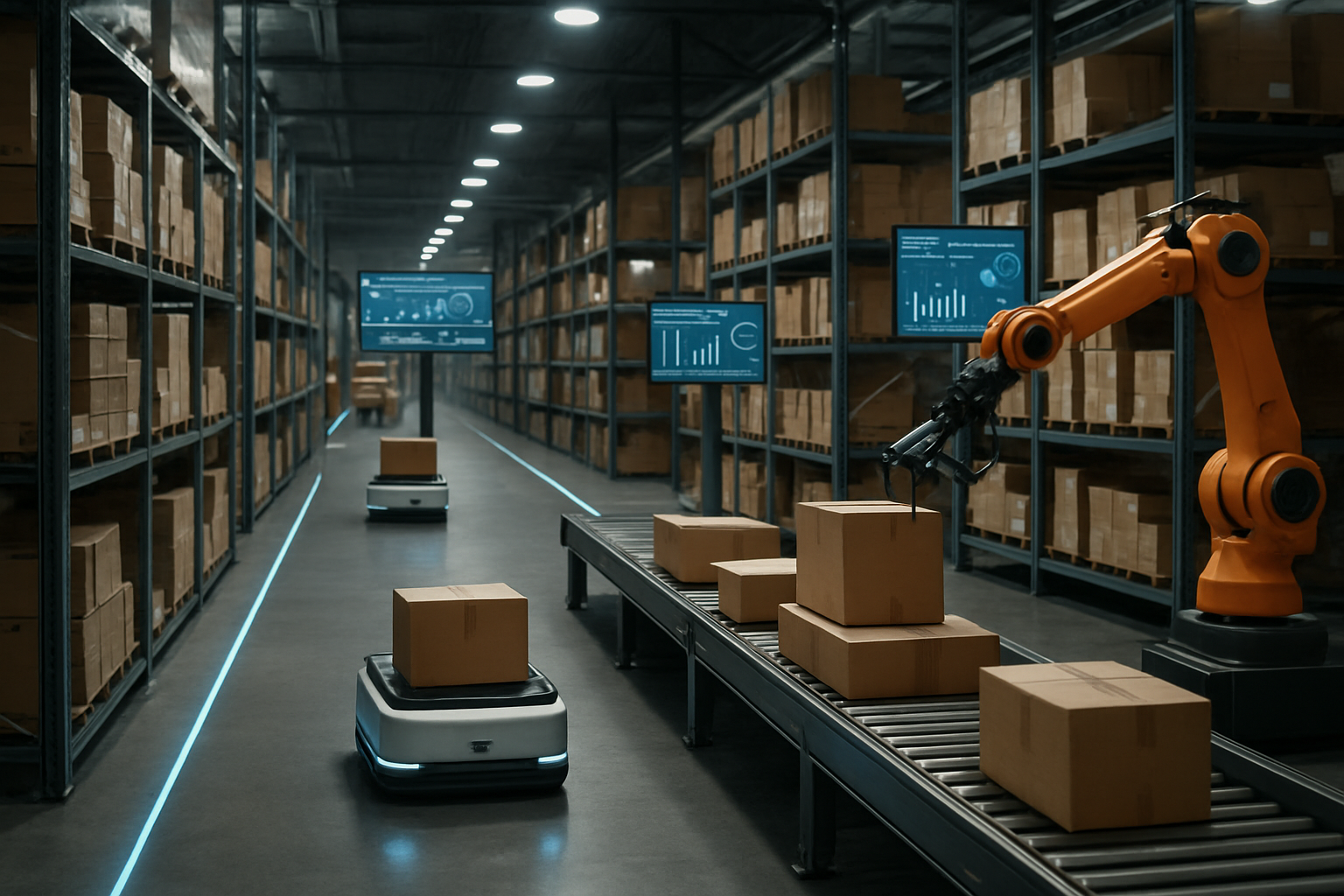
Demand Forecasting with Machine Learning Accuracy
Machine learning algorithms are revolutionizing how retailers predict customer demand with unprecedented precision. Traditional forecasting methods relied heavily on historical sales data and seasonal trends, but AI supply chain management now incorporates dozens of variables including weather patterns, social media sentiment, economic indicators, and even local events. These sophisticated models can predict demand fluctuations weeks or months in advance, allowing retailers to adjust their inventory strategies proactively.
Advanced neural networks analyze purchasing patterns at granular levels, identifying subtle correlations that human analysts might miss. For instance, the algorithm might discover that rain in a specific region increases online sales of certain products by 15%, or that particular social media trends drive demand spikes for specific items. This level of accuracy reduces both stockouts and overstock situations, directly impacting profitability.
Real-time data integration enables continuous model refinement. When actual sales data comes in, machine learning systems automatically adjust their predictions, becoming more accurate over time. Some retailers report forecast accuracy improvements of 20-30% after implementing AI-powered demand forecasting systems.
Inventory Optimization and Automated Reordering
Intelligent inventory management systems take the guesswork out of stock replenishment by continuously monitoring inventory levels, sales velocity, and supplier lead times. These systems automatically generate purchase orders when stock levels reach predetermined thresholds, but they go far beyond simple reorder points by considering dozens of dynamic factors.
Smart algorithms analyze seasonality patterns, promotional calendars, and supplier performance metrics to optimize order quantities and timing. The system might delay an order by a few days to take advantage of volume discounts or expedite shipments when demand surge indicators appear. This dynamic approach prevents both costly stockouts and excessive inventory carrying costs.
Automated reordering systems also consider supplier reliability scores, alternative sourcing options, and transportation costs. When a primary supplier experiences delays, the system can automatically shift orders to backup suppliers or adjust order quantities to maintain service levels while minimizing costs.
Supplier Performance Analytics and Risk Assessment
AI-driven supplier analytics transform vendor relationships from reactive partnerships to proactive strategic alliances. Machine learning algorithms continuously evaluate supplier performance across multiple dimensions including delivery timeliness, quality scores, pricing competitiveness, and financial stability. This comprehensive assessment creates supplier scorecards that guide procurement decisions and relationship management strategies.
Risk assessment capabilities help retailers identify potential supply chain disruptions before they occur. Natural language processing analyzes news feeds, financial reports, and social media mentions to detect early warning signs of supplier distress. Geographic risk models factor in political stability, weather patterns, and infrastructure reliability to assess regional supply chain vulnerabilities.
Predictive analytics can forecast supplier performance trends, enabling proactive contract negotiations and relationship adjustments. When the system identifies declining performance metrics or increasing risk factors, it automatically alerts procurement teams and suggests alternative sourcing strategies.
Logistics Route Optimization and Delivery Predictions
Route optimization algorithms consider real-time traffic conditions, weather forecasts, vehicle capacity, driver schedules, and delivery time windows to create the most efficient delivery routes. These systems continuously recalculate routes as conditions change, ensuring optimal performance throughout the day. GPS tracking and telematics data provide real-time feedback that improves future route planning accuracy.
Delivery prediction models give customers accurate arrival windows while optimizing fleet utilization. Machine learning analyzes historical delivery data, traffic patterns, and external factors to predict delivery times with remarkable accuracy. Some retailers achieve delivery time predictions within 15-minute windows, significantly improving customer satisfaction.
Dynamic routing capabilities allow for last-minute order additions and route modifications without compromising overall efficiency. When urgent orders come in, the system evaluates all possible routing adjustments and selects the option that minimizes overall delivery costs while maintaining service commitments.
Warehouse Automation and Robot Integration
Modern warehouses integrate AI-powered robots with human workers to create highly efficient fulfillment operations. Autonomous mobile robots navigate warehouse floors using computer vision and machine learning, transporting inventory and picked orders without human intervention. These systems learn warehouse layouts and optimize their movements over time, avoiding obstacles and coordinating with other robots and human workers.
Picking optimization algorithms analyze order patterns to determine optimal inventory placement within the warehouse. Fast-moving items are positioned closer to packing stations, while seasonal products are dynamically relocated based on demand forecasts. This intelligent placement reduces travel time for both human pickers and robotic systems.
AI-driven workforce management systems analyze order volumes, seasonal patterns, and operational metrics to optimize staffing levels and task assignments. The system can predict busy periods and recommend staffing adjustments, while also identifying training opportunities and performance improvement areas for warehouse teams.
Enhanced Customer Service Through AI Innovation
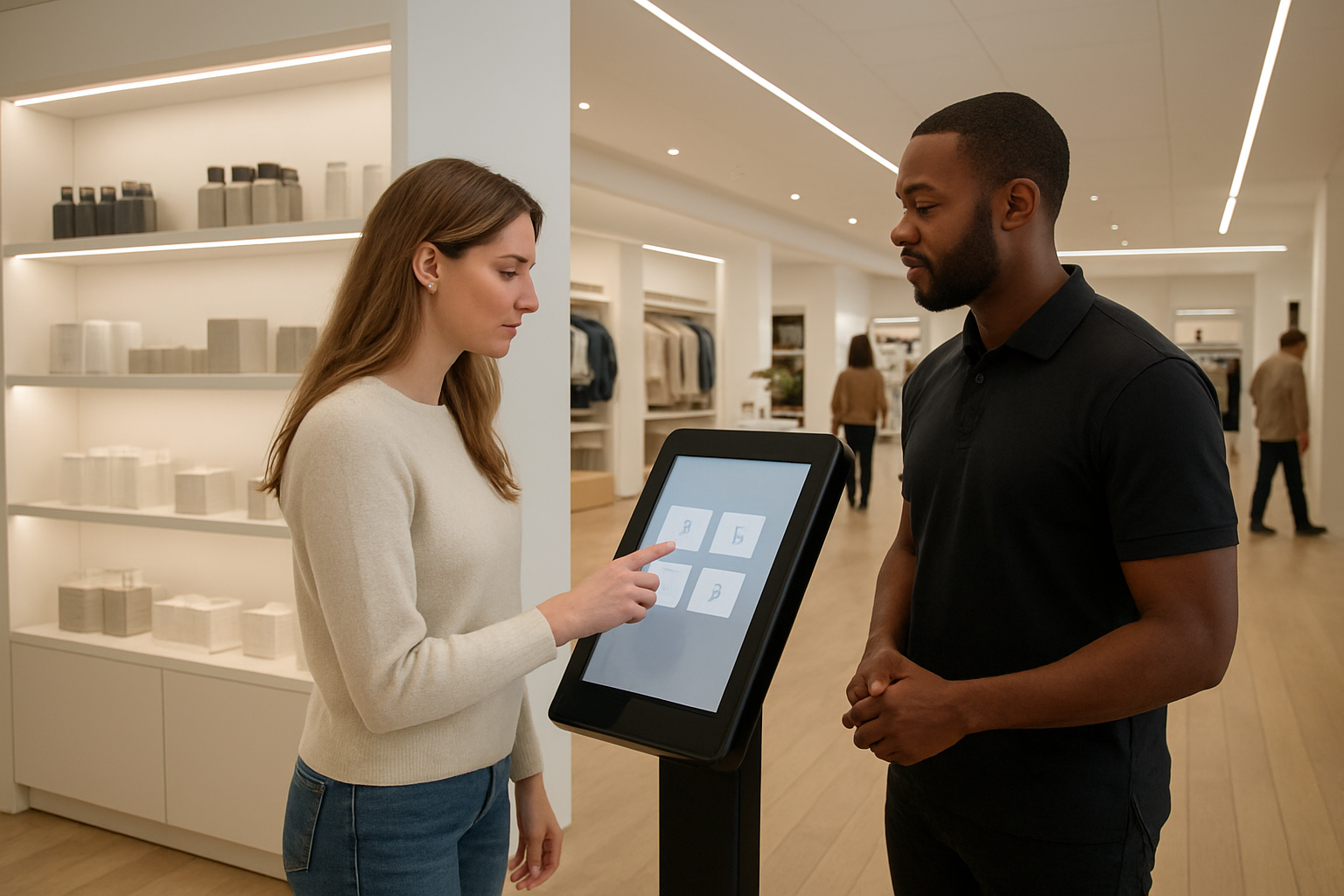
24/7 Support with Intelligent Chatbots
AI-driven customer service has revolutionized how retailers handle customer inquiries around the clock. Modern chatbots powered by natural language processing can handle thousands of simultaneous conversations, resolving up to 80% of routine customer questions without human intervention. These intelligent systems understand context, remember conversation history, and even detect emotional cues to provide empathetic responses.
Retailers like H&M and Sephora have deployed sophisticated chatbots that help customers track orders, process returns, and recommend products based on previous purchases. The technology goes beyond simple FAQ responses – advanced chatbots can process complex requests like “I need to exchange the blue dress I bought last week for a size medium in red.”
Key benefits of intelligent chatbots include:
- Instant response times regardless of time zones
- Consistent service quality across all interactions
- Multilingual support for global customer bases
- Seamless escalation to human agents when needed
- Cost reduction of up to 60% compared to traditional call centers
Visual Search and Image Recognition Technology
Visual search technology transforms how customers discover products by allowing them to upload photos and find similar items instantly. Pinterest Lens and Google Lens have paved the way, but retailers are now integrating this technology directly into their apps and websites.
ASOS customers can photograph any outfit they see and receive suggestions for similar clothing pieces available in their inventory. Target’s visual search feature helps customers find home decor items by simply snapping a picture of a room or specific furniture piece they admire.
Advanced image recognition capabilities:
| Feature | Application | Customer Benefit |
|---|---|---|
| Style matching | Find similar clothing styles | Discover new products effortlessly |
| Color detection | Match exact color preferences | Precise product searches |
| Brand identification | Locate specific brand items | Brand-conscious shopping |
| Size estimation | Visual size comparison | Better fit predictions |
The technology analyzes visual elements like patterns, textures, and colors to deliver highly accurate search results, reducing the time customers spend browsing irrelevant products.
Voice Commerce and Smart Assistant Integration
Voice commerce through Amazon Alexa, Google Assistant, and Apple’s Siri has created new shopping channels for retailers. Customers can reorder household essentials, check product availability, and even make complex purchases using voice commands alone.
Walmart’s voice ordering system allows customers to add groceries to their cart by simply saying “Hey Google, talk to Walmart” followed by their shopping list. Starbucks enables customers to place their usual order through voice commands, with the system remembering preferences and customizing orders accordingly.
Smart assistant integration features:
- Voice-activated reordering of frequently purchased items
- Real-time inventory checks through voice queries
- Personalized product recommendations based on purchase history
- Integration with loyalty programs and promotional offers
- Hands-free shopping for busy consumers
Voice commerce particularly benefits customers with mobility challenges and busy parents who need hands-free shopping options. The technology continues expanding as smart speakers become more prevalent in households, creating opportunities for retailers to capture micro-moments when customers think of products they need.
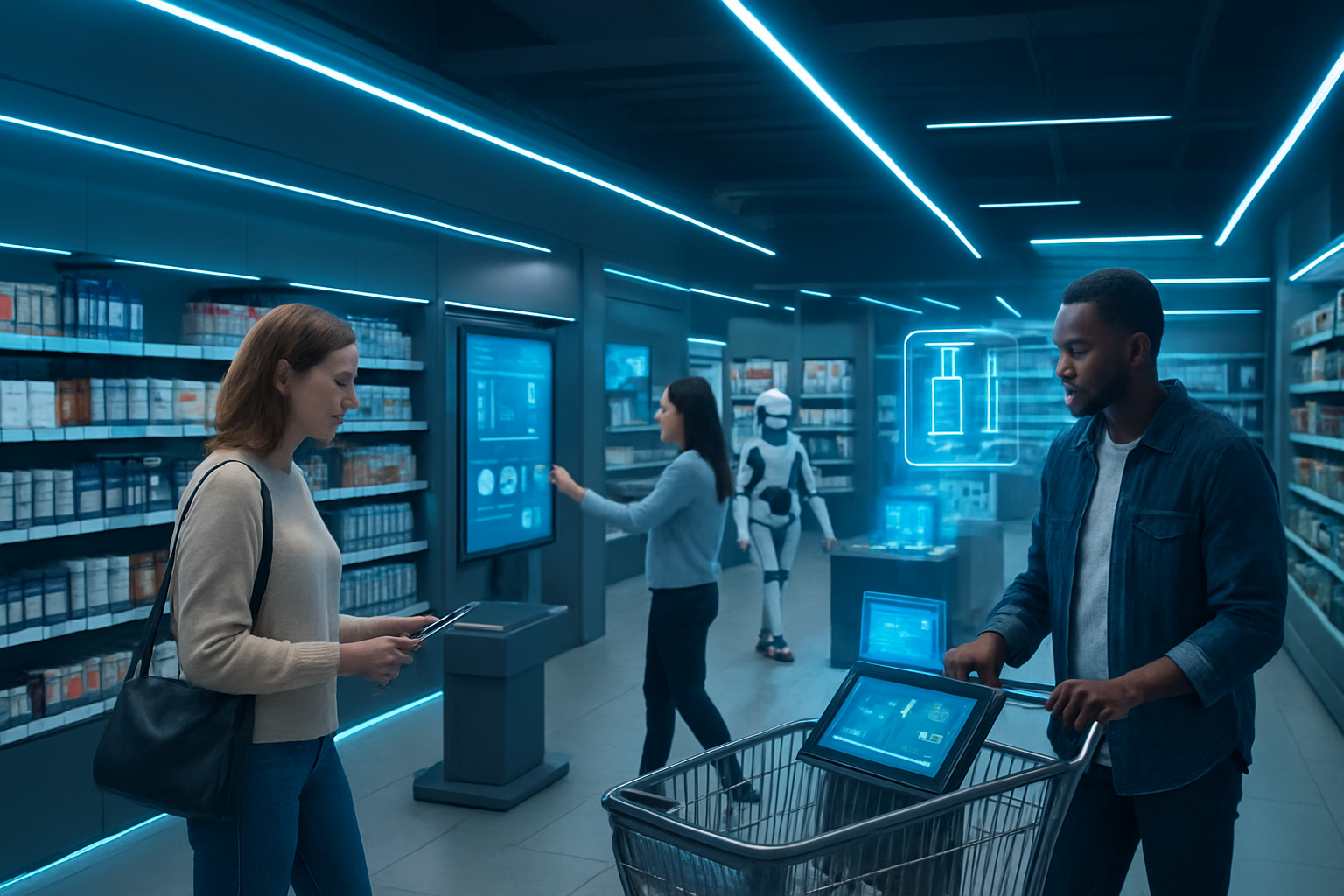
AI is completely changing how retailers operate today. From creating personalized shopping experiences that actually understand what customers want, to using smart pricing that maximizes profits while staying competitive, these technologies are delivering real results. Supply chains are becoming more efficient with predictive analytics, customer service is reaching new levels through AI-powered assistance, and generative AI is creating content and product recommendations that feel genuinely tailored to each shopper.
The retailers who are embracing these AI tools now are the ones who will stay ahead of the competition. If you’re in retail, it’s time to start exploring how these technologies can work for your business. Start small with one area that needs improvement – maybe customer service chatbots or basic personalization features – and build from there. The future of retail is already here, and AI is the key to unlocking growth, efficiency, and customer satisfaction.