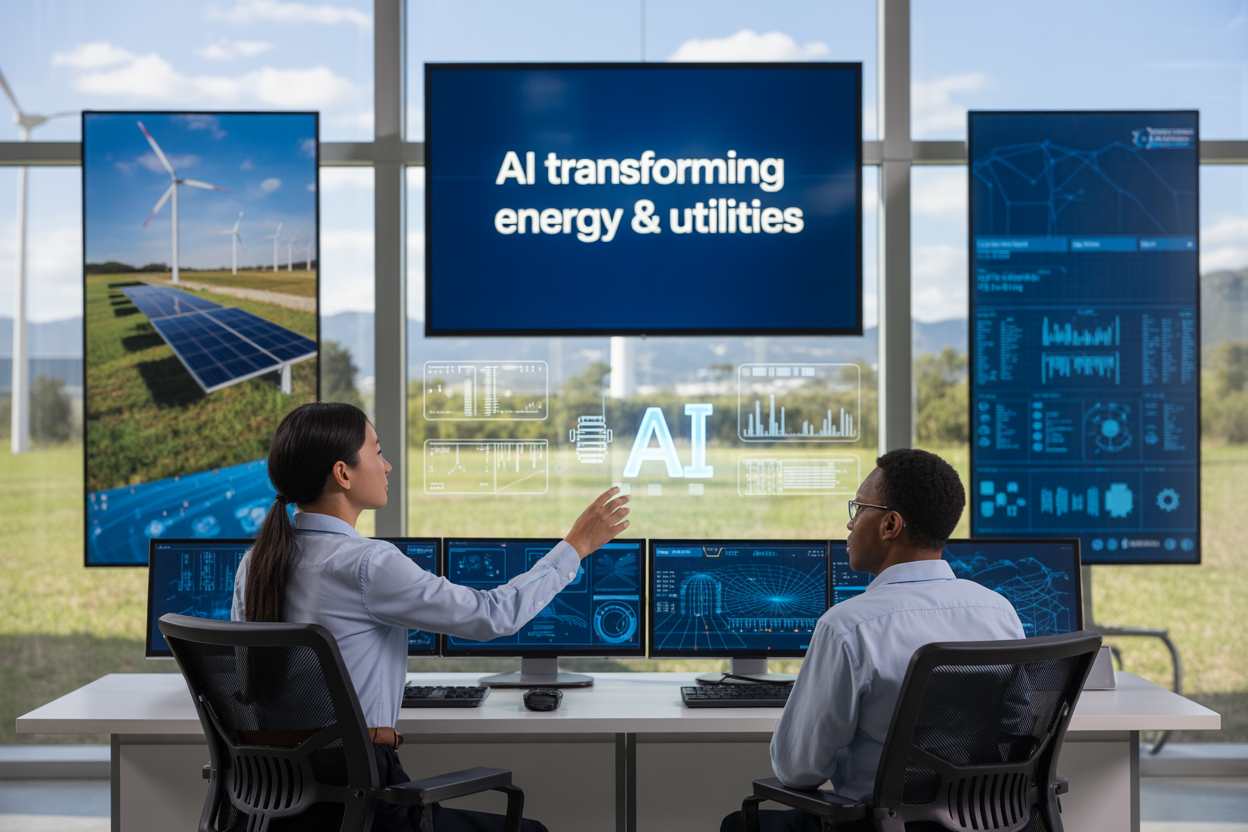
The energy sector is experiencing a massive shift as AI in energy sector applications and generative AI utilities reshape how power companies operate. Energy professionals, utility managers, and industry leaders are discovering that artificial intelligence isn’t just a buzzword—it’s becoming essential for staying competitive and meeting growing demands.
This guide is designed for energy executives, grid operators, and utility professionals who want to understand how AI can solve real problems in their organizations. You’ll get practical insights into current applications and future possibilities without the technical jargon.
We’ll explore how smart grid optimization is making power distribution more reliable and efficient than ever before. You’ll also discover how AI energy production is changing the game for renewable energy integration and predictive maintenance. Finally, we’ll look at how these technologies are improving customer service and helping companies meet strict environmental regulations while cutting operational costs.
Understanding AI and Generative AI in Energy Sector Context
Defining Traditional AI vs Generative AI Technologies
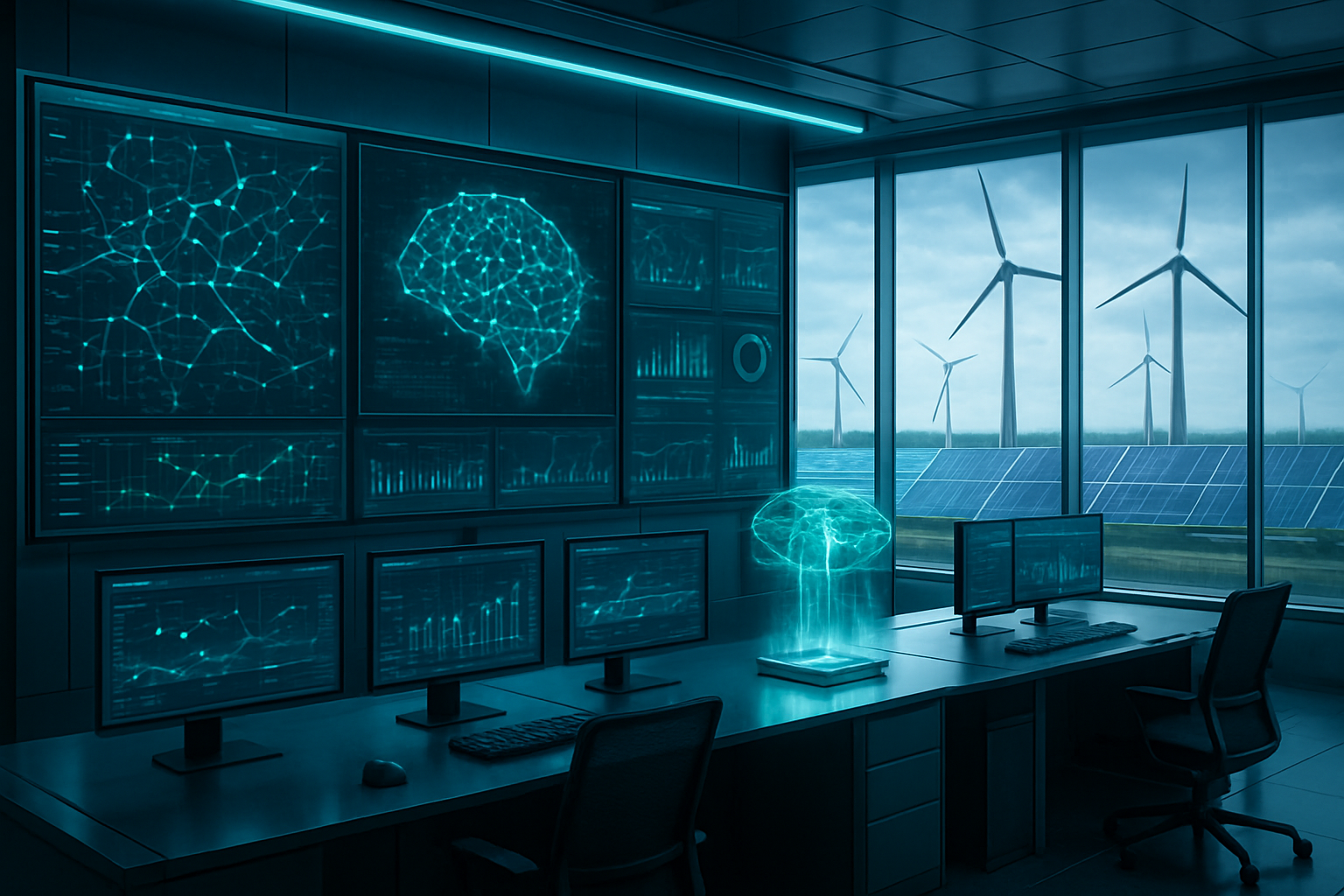
AI in energy sector applications fall into two distinct categories that serve different purposes across utility operations. Traditional AI focuses on pattern recognition, prediction, and optimization using historical data. These systems excel at analyzing massive datasets to identify trends, predict equipment failures, and optimize energy distribution. Machine learning algorithms power predictive maintenance programs, demand forecasting models, and fault detection systems that have become standard in modern utility operations.
Generative AI utilities represent a newer frontier, creating original content, solutions, and insights rather than simply analyzing existing data. These systems can generate synthetic weather patterns for better renewable energy forecasting, create virtual scenarios for grid stress testing, and develop customized energy efficiency recommendations for individual customers. Large language models help automate technical documentation, generate regulatory reports, and create personalized customer communications at scale.
| Traditional AI | Generative AI |
|---|---|
| Analyzes existing data patterns | Creates new data and solutions |
| Predictive maintenance | Synthetic scenario generation |
| Demand forecasting | Content creation and documentation |
| Equipment optimization | Personalized recommendations |
| Anomaly detection | Virtual testing environments |
The combination of both technologies creates powerful synergies. Traditional AI provides the analytical foundation while generative AI builds creative solutions on top of those insights, enabling utilities to move beyond reactive management toward proactive innovation.
Current State of Digital Transformation in Energy and Utilities
Energy sector digital transformation has accelerated dramatically over the past decade, driven by aging infrastructure, regulatory pressures, and increasing customer expectations. Most utilities now operate hybrid environments combining legacy SCADA systems with modern IoT sensors, cloud computing platforms, and advanced analytics capabilities.
Smart meters have reached widespread deployment across developed markets, generating unprecedented volumes of granular consumption data. This foundation enables real-time demand response programs, dynamic pricing models, and personalized energy management services. Grid modernization projects integrate distributed energy resources, battery storage systems, and electric vehicle charging networks into traditional centralized infrastructure.
Current implementation levels vary significantly across utility segments:
- Transmission operators: Advanced grid management systems, real-time monitoring, predictive analytics
- Distribution utilities: Smart meter deployment, outage management, asset health monitoring
- Retail energy providers: Customer portals, usage analytics, billing automation
- Renewable generators: Weather forecasting, performance optimization, grid integration
The regulatory landscape increasingly supports digital innovation through performance-based rate structures, data sharing requirements, and cybersecurity standards. Utilities face mounting pressure to demonstrate measurable improvements in reliability, efficiency, and customer satisfaction while managing growing complexity from renewable integration and electrification trends.
Key Drivers Behind AI Adoption in the Industry
Artificial intelligence power grid implementation stems from several converging pressures reshaping the energy landscape. Grid complexity has increased exponentially as renewable energy sources introduce intermittency challenges that traditional forecasting methods struggle to address. Weather-dependent generation requires sophisticated prediction models that can process multiple data streams simultaneously.
Customer expectations have shifted dramatically toward digital-first experiences similar to other industries. Utilities must provide real-time usage insights, proactive service notifications, and personalized energy recommendations while maintaining competitive pricing. Traditional customer service models cannot scale to meet these demands without significant automation.
Regulatory compliance requirements grow more stringent each year, covering environmental reporting, safety standards, and reliability metrics. Manual compliance processes consume enormous resources while increasing audit risks. AI systems automate data collection, analysis, and reporting while ensuring consistent accuracy across regulatory frameworks.
Economic pressures drive efficiency improvements across all utility operations. Aging infrastructure requires strategic replacement planning based on condition assessments rather than simple age-based schedules. Machine learning energy efficiency algorithms optimize maintenance timing, extend asset lifecycles, and reduce operational costs while improving service reliability.
Competitive dynamics intensify as distributed energy resources, electric vehicles, and energy storage reshape traditional utility business models. Companies that leverage AI capabilities gain significant advantages in grid management, customer retention, and new service development compared to peers relying on conventional approaches.
Optimizing Grid Operations Through AI Intelligence

Smart Grid Management and Real-Time Load Balancing
AI in energy sector applications have transformed traditional power grids into intelligent networks that adapt to changing demands in real-time. Modern smart grids use machine learning algorithms to analyze consumption patterns across thousands of connection points simultaneously, predicting energy needs hours or even days ahead. These systems process data from smart meters, weather forecasts, and historical usage patterns to automatically adjust power generation and distribution.
The technology excels at managing peak demand periods when air conditioning usage spikes during hot afternoons or when electric vehicle charging creates unexpected load increases. Advanced algorithms can instantly redirect power from areas with surplus capacity to regions experiencing high demand, preventing brownouts and maintaining grid stability. Some utilities report up to 15% reduction in energy waste through these smart grid optimization techniques.
Real-time load balancing also enables better integration of renewable energy sources. When solar panels generate excess power during sunny periods, AI systems automatically store surplus energy or redirect it to areas where demand is highest, maximizing the use of clean energy sources.
Predictive Maintenance for Critical Infrastructure
Artificial intelligence power grid maintenance has shifted from reactive repairs to proactive prevention. Machine learning models analyze vibration patterns, temperature fluctuations, and electrical signatures from transformers, power lines, and substations to identify equipment that’s likely to fail before problems occur.
These systems continuously monitor thousands of sensors embedded throughout the electrical infrastructure. When an algorithm detects unusual patterns – such as a transformer running slightly hotter than normal or a power line experiencing abnormal voltage fluctuations – maintenance teams receive automated alerts with specific recommendations for inspection or repair.
Predictive maintenance delivers significant cost savings. Planned repairs cost far less than emergency fixes, especially when equipment failure triggers widespread outages. Some energy companies have reduced unplanned downtime by 30-50% through AI-driven maintenance scheduling. The technology also extends equipment lifespan by catching minor issues before they escalate into major failures.
Enhanced Power Distribution Efficiency
Distribution networks benefit enormously from AI optimization that continuously adjusts power routing based on real-time conditions. These systems monitor voltage levels, current flow, and transformer loading across the entire network, making split-second decisions about the most efficient power delivery paths.
Machine learning energy efficiency algorithms identify bottlenecks in the distribution system where power losses occur due to resistance in transmission lines or inefficient routing. By analyzing millions of data points every second, AI can automatically switch power flows to alternative paths that minimize losses and reduce strain on overloaded equipment.
Advanced distribution management systems also coordinate with distributed energy resources like rooftop solar installations and battery storage systems. When neighborhood solar panels generate excess power, AI systems can automatically feed that energy back into the grid where it’s needed most, creating a dynamic, self-optimizing network that adapts to changing conditions throughout the day.
Automated Outage Detection and Response Systems
Traditional outage detection relied on customer calls to report power losses. Modern AI systems identify outages within seconds through sensor networks and smart meter communications that constantly ping the control center. When meters stop responding or sensors detect voltage drops, algorithms immediately pinpoint the affected area and likely cause.
These systems go beyond simple detection – they provide automated response recommendations. AI analyzes the outage pattern, weather conditions, and equipment status to suggest whether the problem stems from a blown fuse, damaged power line, or equipment failure. Some systems can automatically reroute power around damaged sections, restoring service to unaffected areas while crews work on repairs.
Automated outage response also improves customer communication. AI systems can send targeted notifications to affected customers with estimated repair times based on the identified problem type and crew availability. This reduces call center volume and keeps customers informed throughout the restoration process.
Revolutionizing Energy Production with Generative AI
Renewable Energy Forecasting and Optimization
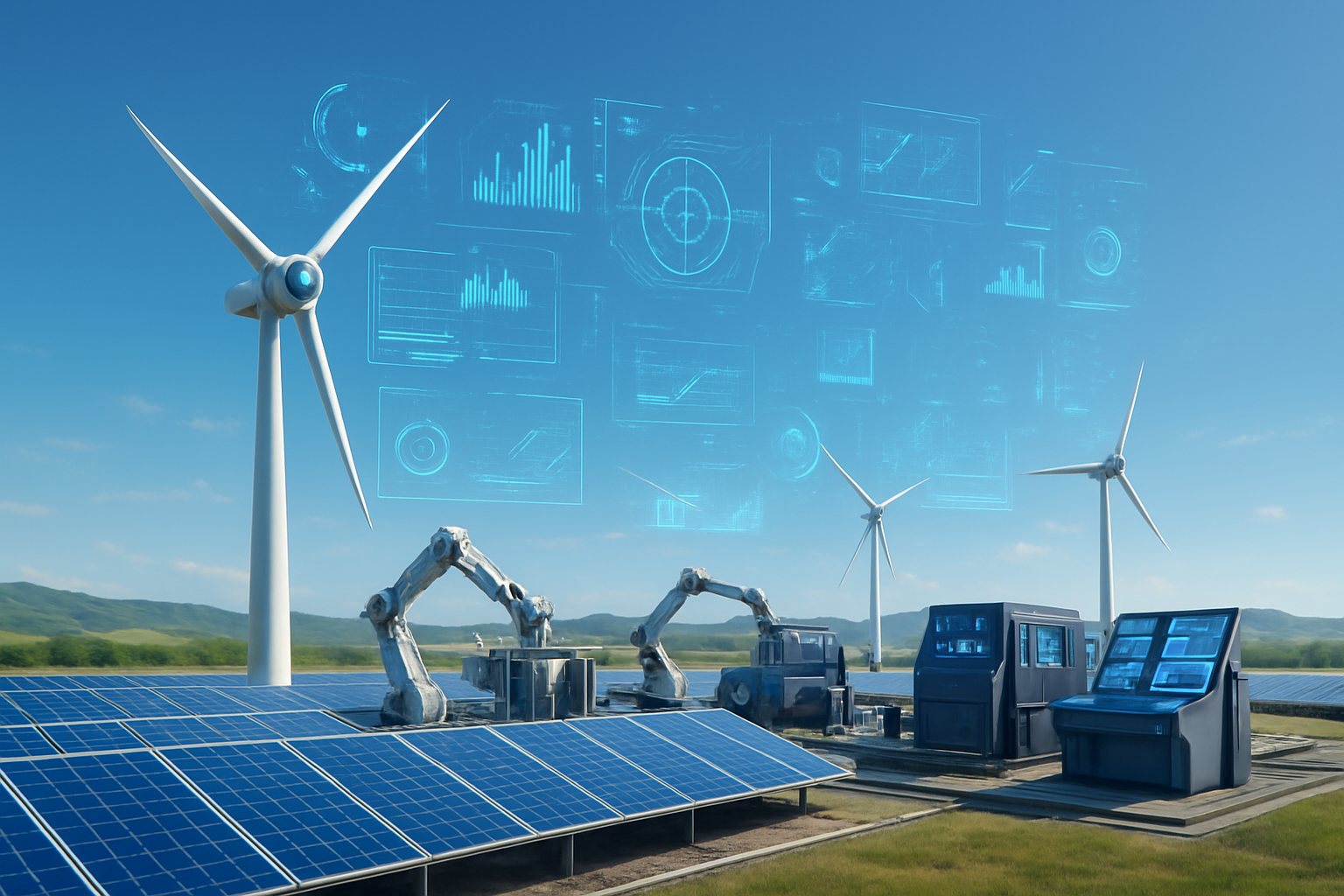
Generative AI renewable energy systems are transforming how utilities predict and manage renewable power generation. Traditional forecasting methods often struggle with the inherent unpredictability of wind and solar resources, but generative AI models can analyze vast datasets including weather patterns, satellite imagery, and historical generation data to create highly accurate predictions.
These AI systems excel at processing complex meteorological data, atmospheric conditions, and seasonal variations to generate precise forecasts up to several days ahead. Machine learning algorithms continuously learn from new data, adapting to changing climate patterns and improving prediction accuracy over time. This enhanced forecasting capability allows utilities to better plan energy dispatch, reduce reliance on backup fossil fuel plants, and optimize maintenance schedules.
Advanced generative models can also simulate thousands of potential weather scenarios, helping operators understand the range of possible outcomes and prepare contingency plans. This scenario modeling proves invaluable for long-term planning and investment decisions, enabling utilities to optimize renewable portfolio management and reduce operational risks.
AI-Driven Wind and Solar Farm Performance Enhancement
AI energy production systems are revolutionizing how renewable facilities operate and maintain peak performance. Smart sensors throughout wind and solar installations collect real-time data on equipment performance, environmental conditions, and energy output, feeding this information into sophisticated AI algorithms.
For wind farms, generative AI optimizes turbine positioning and blade angle adjustments based on wind patterns, terrain effects, and wake interference from neighboring turbines. These systems can predict optimal operating parameters for each individual turbine, maximizing energy capture while minimizing mechanical stress and wear.
Solar installations benefit from AI-powered tracking systems that predict cloud movements and adjust panel positioning accordingly. Generative AI models analyze dust accumulation patterns, temperature variations, and shading effects to determine optimal cleaning schedules and identify underperforming panels before they significantly impact overall output.
Predictive maintenance algorithms analyze vibration patterns, temperature readings, and performance metrics to identify potential equipment failures weeks or months in advance. This proactive approach reduces unexpected downtime, extends equipment lifespan, and significantly lowers maintenance costs.
Intelligent Energy Storage Solutions
Energy storage systems powered by generative AI are becoming sophisticated energy managers that optimize charging and discharging cycles based on multiple variables. These intelligent systems analyze electricity pricing, demand forecasts, renewable generation predictions, and grid stability requirements to determine optimal storage strategies.
Battery management systems use AI algorithms to monitor cell health, predict degradation patterns, and optimize charging protocols to extend battery life. Generative models can simulate thousands of charge-discharge scenarios to identify the most efficient operating parameters for different battery chemistries and applications.
Grid-scale storage facilities leverage AI to provide multiple services simultaneously, including frequency regulation, voltage support, and energy arbitrage. These systems can rapidly switch between different operational modes based on real-time grid conditions and market signals.
Advanced AI models also coordinate multiple distributed storage assets, creating virtual power plants that can respond to grid needs more effectively than individual installations. This coordination enables utilities to defer expensive grid infrastructure upgrades while improving overall system reliability and resilience.
Transforming Customer Experience and Service Delivery

Personalized Energy Usage Recommendations
Modern AI utility customer service platforms analyze vast amounts of consumption data to create highly personalized energy recommendations for each household. These systems examine usage patterns, seasonal variations, appliance efficiency metrics, and even weather forecasts to suggest optimal energy-saving strategies. Smart algorithms identify peak consumption periods and recommend schedule adjustments that can reduce monthly bills by 15-30% without sacrificing comfort.
The technology goes beyond simple usage reports by considering individual lifestyle factors such as work schedules, family size, and personal preferences. For instance, the AI might suggest running dishwashers during off-peak hours or recommend smart thermostat settings that align with when families are typically home. Machine learning energy efficiency models continuously adapt these recommendations based on actual results, becoming more accurate and valuable over time.
Energy providers now offer mobile apps that deliver real-time insights about appliance-specific consumption, comparing current usage against similar households and providing actionable steps for improvement. These personalized approaches have proven particularly effective in engaging younger customers who expect digital-first experiences from their utility providers.
Automated Customer Support and Billing Optimization
AI-powered chatbots and virtual assistants have completely transformed how utilities handle customer inquiries, resolving up to 80% of common issues without human intervention. These systems understand natural language queries about billing discrepancies, service outages, payment options, and account management tasks. Advanced conversational AI can even handle complex scenarios like setting up payment plans or explaining time-of-use billing structures.
Billing optimization algorithms analyze consumption patterns to identify irregular usage that might indicate equipment problems or billing errors before customers notice issues. The system automatically flags unusual spikes in consumption and can proactively reach out to customers with explanations or maintenance recommendations. This proactive approach reduces complaint volumes and builds trust between utilities and their customers.
Smart billing systems also optimize payment reminders and collection strategies based on individual customer behavior patterns. The AI determines the most effective communication channels and timing for each customer, whether that’s email, text messages, or phone calls, significantly improving collection rates while maintaining positive customer relationships.
Dynamic Pricing Models Based on AI Analytics
Real-time AI analytics enable utilities to implement sophisticated dynamic pricing models that reflect actual grid conditions and demand fluctuations throughout the day. These systems analyze factors including renewable energy availability, grid capacity, weather conditions, and regional demand patterns to set prices that encourage consumption during optimal periods.
Dynamic pricing benefits both utilities and customers by smoothing demand peaks and encouraging energy use when renewable sources are most abundant. Customers receive pricing signals through smartphone apps and smart home devices, allowing them to shift energy-intensive activities like laundry or electric vehicle charging to lower-cost periods. This market-based approach can reduce overall system costs by 10-20% while providing savings opportunities for engaged customers.
The AI systems continuously learn from customer responses to price signals, refining pricing algorithms to balance grid stability with customer satisfaction. Advanced models can even predict how different customer segments will respond to various pricing structures, enabling utilities to design tariff plans that drive desired behaviors while maintaining revenue stability.
Smart Home Integration and Energy Management
AI energy production systems now seamlessly integrate with smart home platforms to create comprehensive energy management ecosystems. These systems coordinate between solar panels, battery storage, electric vehicle charging, smart appliances, and HVAC systems to optimize energy flows throughout the home. The AI considers factors like weather forecasts, electricity rates, family schedules, and grid conditions to make split-second decisions about energy allocation.
Smart home integration enables features like automatic load shifting, where the system delays or advances appliance operations based on energy availability and pricing. For example, the AI might pre-cool a home before peak pricing periods or schedule water heater operation during solar peak production hours. These automated adjustments happen transparently, maintaining comfort while maximizing economic and environmental benefits.
The technology extends to electric vehicle integration, where AI algorithms coordinate charging schedules with home energy systems and grid conditions. Smart charging can even enable vehicle-to-home power flows during outages or peak pricing periods, turning electric vehicles into mobile energy storage assets that benefit both homeowners and the broader grid stability.
Advancing Safety and Environmental Compliance
AI-Powered Risk Assessment and Hazard Prevention
Artificial intelligence transforms how energy companies identify and prevent potential hazards before they escalate into costly accidents. Machine learning algorithms continuously analyze thousands of data points from sensors, equipment logs, and environmental conditions to spot patterns that human operators might miss. These AI systems can predict equipment failures up to 30 days in advance, allowing maintenance teams to address issues during planned downtime rather than emergency situations.
AI in energy sector applications include:
- Drone inspections equipped with computer vision for power line assessment
- Predictive analytics for transformer and turbine failure detection
- Real-time monitoring of pipeline integrity using IoT sensors
- Weather pattern analysis for storm preparation and grid hardening
Advanced AI models examine historical incident data combined with current operational parameters to calculate risk scores for different assets. When risk levels exceed predetermined thresholds, the system automatically alerts personnel and can even initiate protective protocols like rerouting power or shutting down equipment remotely.
Environmental Impact Monitoring and Reporting
AI environmental compliance energy solutions provide unprecedented visibility into environmental performance across utility operations. Satellite imagery combined with ground-based sensors feeds AI algorithms that track emissions, water usage, and wildlife impact in real-time. These systems automatically generate compliance reports, reducing manual effort while improving accuracy.
Smart monitoring networks detect environmental anomalies instantly. If a coal plant’s emissions spike unexpectedly or a hydroelectric facility shows unusual water temperature changes, AI systems flag these events immediately. The technology also tracks carbon emissions across the entire energy production chain, from fuel extraction through transmission losses.
| Environmental Metric | AI Monitoring Capability | Compliance Benefit |
|---|---|---|
| Air Quality | Real-time emissions tracking | Automated EPA reporting |
| Water Resources | Temperature/quality sensors | Stream health compliance |
| Wildlife Protection | Migration pattern analysis | Habitat impact mitigation |
| Noise Pollution | Acoustic monitoring | Community noise ordinances |
Regulatory Compliance Automation
Energy companies face complex regulatory landscapes with hundreds of requirements across federal, state, and local jurisdictions. AI streamlines compliance management by automatically tracking regulatory changes, mapping them to relevant operations, and ensuring documentation meets evolving standards.
Natural language processing algorithms scan regulatory updates daily, identifying changes that affect specific facilities or processes. The system creates compliance checklists, schedules required inspections, and maintains audit trails automatically. When regulators request documentation, AI can instantly compile relevant records from years of operational data.
Artificial intelligence power grid compliance includes:
- Automatic generation of NERC reliability reports
- Real-time tracking of renewable energy certificate requirements
- Streamlined environmental permit renewals
- Continuous monitoring of safety standard adherence
Carbon Footprint Reduction Through Intelligent Systems
Intelligent systems optimize energy operations to minimize carbon emissions while maintaining reliable service. Machine learning energy efficiency algorithms analyze consumption patterns, weather forecasts, and grid demand to determine the cleanest energy mix available at any given moment. This dynamic optimization can reduce carbon emissions by 15-25% compared to traditional dispatch methods.
AI coordinates renewable energy resources with storage systems and conventional generation to maximize clean energy utilization. When wind or solar production peaks, intelligent systems automatically adjust other generation sources and redirect excess power to charging stations or industrial processes that can shift their energy usage.
Smart carbon management platforms track emissions across the entire utility ecosystem, from generation through customer usage. These systems identify opportunities for carbon reduction, such as:
- Optimal timing for maintenance to avoid high-emission backup generation
- Strategic placement of renewable energy projects
- Customer demand response programs during high-carbon periods
- Integration of electric vehicle charging with clean energy availability
The technology also enables carbon offset verification and trading through blockchain-based tracking systems that ensure environmental credits represent genuine emission reductions.
Overcoming Implementation Challenges and Future Opportunities

Data Security and Privacy Considerations
The energy sector handles massive amounts of sensitive data, from customer consumption patterns to critical infrastructure information. When implementing AI in energy sector operations, utilities must build robust cybersecurity frameworks that protect against both traditional cyber threats and AI-specific vulnerabilities.
Utility companies face unique challenges securing their AI systems because these platforms often require real-time data access across distributed networks. Smart grid optimization systems, for example, continuously collect and analyze data from thousands of meters, sensors, and control devices. A single breach could expose customer privacy information or, worse, provide unauthorized access to critical infrastructure controls.
Leading utilities address these concerns by implementing zero-trust security models where every data request gets verified, regardless of its source. They’re also using federated learning approaches that allow AI models to train on distributed datasets without centralizing sensitive information. Some companies have adopted differential privacy techniques that add mathematical noise to datasets while preserving analytical value.
The regulatory landscape adds another layer of complexity. Energy companies must comply with sector-specific regulations like NERC CIP standards while also meeting general data protection requirements such as GDPR or CCPA. Many organizations find success by appointing dedicated AI governance teams that work closely with both cybersecurity and compliance departments.
Infrastructure Investment Requirements
Implementing generative AI utilities requires substantial upfront investments in both hardware and software infrastructure. Most legacy utility systems weren’t designed to handle the computational demands of modern AI algorithms, creating a significant modernization challenge.
Edge computing infrastructure represents one of the largest investment areas. Real-time AI energy production optimization requires processing power close to generation sources rather than relying on distant cloud servers. This means utilities need to install specialized hardware at substations, power plants, and distribution points.
Cloud infrastructure costs also scale quickly. Training large generative AI models for renewable energy forecasting or equipment maintenance can cost hundreds of thousands of dollars per model. Running these systems in production adds ongoing operational expenses that many utilities struggle to budget for.
The integration challenge often proves more expensive than the technology itself. Connecting AI systems with existing SCADA networks, customer information systems, and grid management platforms requires extensive custom development work. Many utilities discover they need to replace or upgrade multiple legacy systems before AI implementation becomes feasible.
Smart financing approaches help utilities manage these costs. Some organizations partner with technology vendors through performance-based contracts where payments tie to measurable improvements in efficiency or reliability. Others leverage federal and state incentive programs that support energy sector digital transformation initiatives.
Workforce Training and Skill Development Needs
The artificial intelligence power grid revolution demands new skills that most energy professionals haven’t developed yet. Utilities face a dual challenge: training existing employees while recruiting new talent in a competitive tech job market.
Traditional utility workers excel at understanding electrical systems and grid operations, but they often lack experience with machine learning energy efficiency concepts or data science methodologies. Successful training programs bridge this gap by connecting AI applications to familiar operational scenarios rather than teaching abstract technical concepts.
Hands-on learning works better than classroom-style instruction for utility professionals. Companies like Exelon and Duke Energy have created simulation environments where technicians can experiment with AI tools in safe, controlled settings. These programs teach employees how to interpret AI recommendations, understand model limitations, and make informed decisions when human oversight is required.
Middle management faces particularly challenging skill requirements. Supervisors need enough technical understanding to evaluate AI project proposals and performance metrics, but they also must learn how to manage teams that blend traditional utility expertise with data science capabilities.
Partnerships with universities and community colleges provide scalable training solutions. Many utilities now sponsor AI-focused energy management programs or provide internship opportunities that create talent pipelines. Some organizations offer tuition reimbursement for employees pursuing relevant certifications in data analytics, cybersecurity, or AI system management.
Cross-functional teams accelerate learning by pairing experienced utility professionals with AI specialists. This approach ensures that AI implementations remain grounded in operational reality while building internal expertise over time.

Artificial intelligence is reshaping every corner of the energy and utilities industry, from smart grids that predict and prevent outages to generative AI systems that optimize production schedules and create personalized customer experiences. Companies embracing these technologies are seeing real benefits: reduced operational costs, improved safety records, better environmental compliance, and happier customers who get faster, more accurate service.
The transformation isn’t happening overnight, and yes, there are hurdles to clear – from data security concerns to workforce training needs. But the companies that start investing in AI solutions now will be the ones leading the pack tomorrow. If you’re in the energy sector, the question isn’t whether AI will change your business, but how quickly you can adapt to stay competitive. Start small, focus on areas where you can see immediate impact, and build from there.