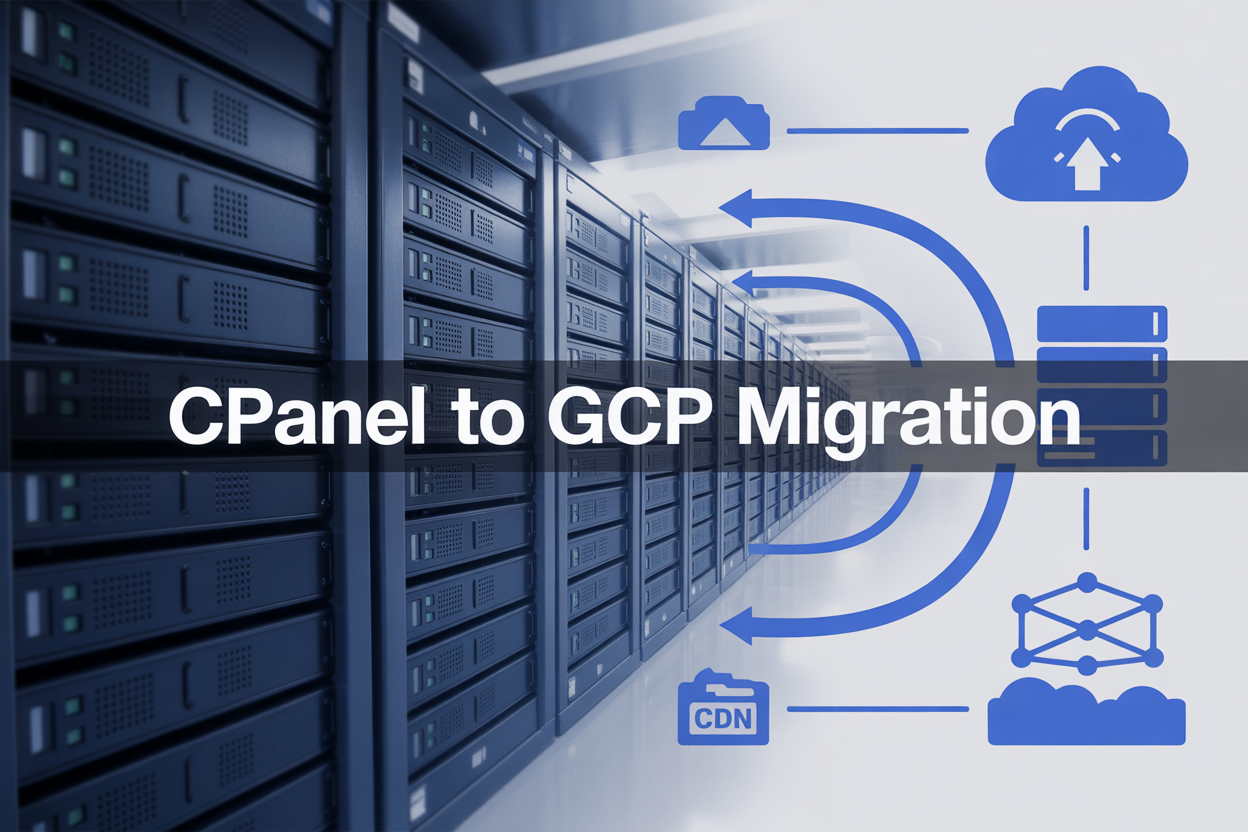
Moving from traditional cPanel hosting to Google Cloud Platform opens up new possibilities for scalability, performance, and cost control. This comprehensive guide walks web developers, system administrators, and hosting providers through the complete cPanel to GCP migration process, helping you modernize your web hosting infrastructure with enterprise-grade cloud services.
Who This Guide Is For:
Web hosting providers looking to expand their service offerings, developers managing multiple client websites, and businesses outgrowing shared hosting limitations will find practical, step-by-step instructions for migrating to Google Cloud Platform web hosting.
What You’ll Learn:
We’ll cover the essential migration planning phase, including how to assess your current hosting environment and prepare for the transition. You’ll discover how to set up Compute Engine web hosting as your new server foundation, configure Cloud Storage file migration for static assets, and implement Cloud CDN content delivery to boost your website’s global performance. The guide also addresses critical aspects like database migration, DNS configuration, and performance testing to ensure your GCP hosting modernization delivers the results you expect.
Ready to transform your hosting infrastructure? Let’s dive into making your cPanel alternative hosting migration smooth and successful.
Understanding the Migration Journey from cPanel to GCP

Key limitations of traditional cPanel hosting environments
Traditional cPanel hosting often feels restrictive when your website starts growing beyond basic needs. Shared hosting environments create performance bottlenecks where your site competes with dozens of other websites for the same server resources. This setup frequently leads to unexpected slowdowns during traffic spikes or when neighboring sites consume excessive resources.
The control panel interface, while user-friendly for beginners, locks you into specific software versions and configurations. You can’t easily customize server settings, install specialized applications, or optimize performance for your unique requirements. Most cPanel providers offer limited scalability options, forcing you to migrate to entirely different hosting tiers when your needs expand.
Security becomes another concern as you share server space with unknown websites. A security breach affecting one site can potentially impact others on the same server. Additionally, backup and disaster recovery options are typically basic, offering limited customization for business-critical applications.
Benefits of Google Cloud Platform for modern web applications
cPanel to GCP migration unlocks enterprise-grade infrastructure that scales with your business needs. Google Cloud Platform provides virtually unlimited computing resources, allowing your applications to handle traffic surges without manual intervention. The pay-as-you-use pricing model means you only spend money on resources your website actually consumes.
Google Cloud Platform web hosting delivers superior performance through its global network infrastructure. Your content gets distributed across multiple data centers worldwide, reducing latency for users regardless of their geographic location. This global reach becomes especially valuable for businesses targeting international markets.
The platform offers advanced security features including DDoS protection, SSL certificate management, and integrated monitoring tools. These enterprise-level security measures protect your applications without requiring specialized expertise to configure and maintain.
Development teams benefit from integrated DevOps tools, automated deployment pipelines, and seamless integration with popular development frameworks. Version control, staging environments, and rollback capabilities become standard features rather than expensive add-ons.
Essential GCP services for hosting migration
Compute Engine serves as the foundation for your GCP website migration, providing virtual machines that can be configured to match your exact requirements. Unlike shared hosting limitations, you control the operating system, software stack, and resource allocation. Auto-scaling groups ensure your applications handle traffic variations automatically.
Cloud Storage replaces traditional file hosting with highly durable, globally accessible storage. Static assets like images, videos, and downloadable files benefit from automatic redundancy and fast retrieval times. This service integrates seamlessly with content delivery networks for optimal performance.
Cloud CDN accelerates content delivery by caching your website assets across Google’s global edge locations. Users experience faster page loads as content gets served from the nearest geographic location. This content delivery optimization significantly improves user experience and search engine rankings.
Cloud SQL provides managed database services that eliminate the maintenance overhead of traditional database hosting. Automated backups, security patches, and performance optimization happen behind the scenes while you focus on your applications.
Load Balancer distributes incoming traffic across multiple server instances, ensuring high availability and preventing single points of failure. This redundancy becomes crucial for business-critical applications that can’t afford downtime.
Cost comparison and ROI expectations
cPanel hosting migration to GCP often results in better cost efficiency, especially for growing websites. Traditional hosting plans force you to pay for fixed resources whether you use them or not. Google Cloud’s granular pricing lets you optimize costs by scaling resources up or down based on actual demand.
Small websites might see slightly higher initial costs due to the learning curve and setup complexity. However, medium to large sites typically achieve 20-40% cost savings within the first year. These savings increase as your traffic grows because traditional hosting requires expensive tier upgrades while GCP scales incrementally.
Performance improvements directly impact revenue through better user experience and search engine rankings. Faster page load times reduce bounce rates and increase conversion rates. Studies show that every second of page load improvement can increase conversions by 7-10%.
The GCP hosting modernization process eliminates many hidden costs associated with traditional hosting. You no longer pay for unused server capacity, expensive backup solutions, or premium security features. Advanced monitoring and optimization tools help identify cost optimization opportunities that weren’t visible in traditional hosting environments.
Reduced maintenance overhead frees up technical resources for revenue-generating activities instead of server management tasks. This operational efficiency often provides the highest return on investment for businesses transitioning from cPanel environments.
Pre-Migration Planning and Assessment

Auditing your current cPanel hosted applications and databases
Start by creating a comprehensive inventory of everything running on your current cPanel hosting setup. Document all websites, subdomains, and applications you’re currently hosting. Take screenshots of your cPanel dashboard and note down which PHP versions, databases, and server configurations each application requires.
Check your File Manager to identify all directories and their sizes. Pay special attention to resource-heavy applications like WordPress installations, custom PHP applications, or e-commerce platforms. Document any cron jobs you’ve set up through cPanel, as these will need recreation in your GCP environment.
Create a detailed database inventory including MySQL databases, user accounts, and their associated permissions. Export database schemas to understand relationships and dependencies. Note any special database configurations or custom settings that might affect your cPanel to GCP migration.
Review your email accounts, forwarders, and autoresponders. While GCP doesn’t provide email hosting directly, you’ll need alternative solutions like Google Workspace or third-party email providers.
Identifying dependencies and third-party integrations
Map out all external services connected to your current hosting setup. This includes payment gateways, APIs, CDN services, monitoring tools, and backup solutions. Many of these integrations will require configuration updates when you migrate to Google Cloud Platform web hosting.
Check for hardcoded server paths in your applications that reference the current cPanel directory structure. These absolute paths will break during migration and need updating to work with Compute Engine’s file system.
Document any SSL certificates, both free cPanel AutoSSL and purchased certificates. Note expiration dates and renewal processes, as you’ll need to implement SSL differently on GCP.
Review DNS settings for any subdomain pointing to specific cPanel features like webmail or file managers. These services won’t exist in your new GCP environment without proper alternatives.
Setting up your GCP account and project structure
Create your Google Cloud Platform account and enable billing. Organize your migration using a well-structured project hierarchy. Consider creating separate projects for development, staging, and production environments to maintain clean separation during your GCP website migration.
Enable essential APIs including Compute Engine, Cloud Storage, Cloud CDN, Cloud SQL, and Cloud DNS. Set up proper IAM roles and permissions for team members who’ll be involved in the migration process.
Configure billing alerts to monitor costs during migration. GCP’s pricing model differs significantly from traditional cPanel hosting, so establish cost controls early.
Create service accounts for automated tasks and application-level access. This preparation streamlines the migration process and improves security compared to traditional shared hosting environments.
Choosing the right GCP regions for optimal performance
Select primary and secondary regions based on your user base location. If most visitors come from North America, consider regions like us-central1 or us-east1. For global audiences, evaluate multi-region strategies.
Test latency from your current user locations to different GCP regions using tools like gcping.com. Choose regions that minimize latency while considering compliance requirements for data residency.
Factor in service availability when selecting regions. Not all GCP services are available in every region, so verify that Compute Engine web hosting, Cloud Storage, and Cloud CDN support your chosen locations.
Consider disaster recovery requirements early. Plan for cross-region backups and failover scenarios that weren’t possible with traditional cPanel hosting setups.
Creating a detailed migration timeline and rollback plan
Develop a phased migration approach starting with non-critical applications or staging environments. Plan for gradual traffic migration using DNS TTL adjustments rather than immediate cutover.
Schedule migration activities during low-traffic periods to minimize user impact. Factor in DNS propagation times, which can take 24-48 hours globally.
Create detailed rollback procedures for each migration phase. Document exact steps to revert DNS changes, restore database connections, and redirect traffic back to cPanel hosting if issues arise.
Establish clear success criteria for each migration phase. Define performance benchmarks, uptime requirements, and functionality tests that must pass before proceeding to the next stage of your cPanel hosting migration.
Prepare communication plans for stakeholders and end users. Include maintenance windows, expected downtimes, and contact information for support during the migration process.
Setting Up Compute Engine for Web Hosting
Selecting appropriate VM instances for your workload requirements
Choosing the right Compute Engine instance for your cPanel to GCP migration directly impacts both performance and costs. Start by analyzing your current hosting resource usage – CPU utilization, RAM consumption, and traffic patterns from your cPanel environment. This baseline helps determine the optimal machine type for your Google Cloud Platform web hosting setup.
For small to medium websites migrating from shared cPanel hosting, e2-medium or e2-standard-2 instances typically provide excellent performance. These general-purpose machines offer 2-4 vCPUs with 4-8 GB RAM, perfect for most WordPress sites, small e-commerce platforms, or business websites. High-traffic applications require n2-standard-4 or larger instances with dedicated CPU resources.
Consider your application’s memory requirements carefully. Database-heavy sites benefit from n2-highmem instances that provide more RAM per vCPU. For CPU-intensive applications like image processing or complex calculations, c2-standard instances deliver superior computational performance.
Geographic location matters for your GCP website migration. Deploy instances in regions closest to your primary user base to minimize latency. Google Cloud’s global infrastructure allows you to start in one region and expand globally as needed.
Budget optimization comes through right-sizing your instances. Start with smaller machines and scale up based on actual usage patterns. Google’s sustained use discounts automatically reduce costs for long-running instances, making Compute Engine web hosting more economical than traditional hosting over time.
Configuring operating systems and web server environments
Ubuntu 20.04 LTS or CentOS 8 provide stable foundations for most web applications during your cPanel hosting migration. These distributions offer extensive package repositories and long-term support, reducing maintenance overhead compared to your previous cPanel environment.
Install your preferred web server stack early in the migration process. Apache HTTP Server closely mirrors cPanel’s default configuration, making the transition smoother for existing applications. Nginx offers superior performance for static content and acts as an excellent reverse proxy for dynamic applications.
Configure PHP-FPM for optimal performance with either web server. Unlike cPanel’s traditional mod_php setup, PHP-FPM provides better resource isolation and performance scaling. Install multiple PHP versions if your applications require different runtime environments – a flexibility often limited in shared cPanel hosting.
Database configuration requires special attention during GCP hosting modernization. Install MySQL 8.0 or PostgreSQL directly on your Compute Engine instance, or connect to Cloud SQL for managed database services. Cloud SQL eliminates database maintenance tasks while providing automatic backups and high availability.
Security hardening goes beyond cPanel’s basic protections. Disable root login, configure fail2ban for brute-force protection, and implement regular security updates through unattended-upgrades. Create dedicated service accounts for web applications rather than running everything under a single user account.
Implementing auto-scaling and load balancing capabilities
Managed Instance Groups transform your single server setup into a scalable infrastructure that grows with demand. Create an instance template based on your configured web server, then deploy it across multiple zones for high availability. This approach far exceeds cPanel’s single-server limitations.
Configure HTTP(S) Load Balancing to distribute traffic across your instance group. Google’s global load balancer automatically routes users to the nearest healthy instance, improving response times worldwide. SSL termination at the load balancer level simplifies certificate management compared to individual server configurations.
Set up auto-scaling policies based on CPU utilization, memory usage, or custom metrics. Start conservative with scaling thresholds – scale out when CPU exceeds 70% for 3 minutes, scale in when it drops below 30% for 10 minutes. Fine-tune these parameters based on your application’s behavior patterns.
Health checks ensure traffic only reaches functioning instances. Configure HTTP health checks that verify both web server responsiveness and application availability. Unhealthy instances are automatically removed from load balancing rotation and replaced with fresh instances.
Preemptible instances can reduce costs by up to 80% for fault-tolerant workloads. Mix regular and preemptible instances in your managed instance group, ensuring enough regular instances to handle baseline traffic while using preemptible instances for peak loads.
Establishing secure SSH access and firewall rules
SSH key-based authentication replaces password access for enhanced security. Generate ED25519 key pairs locally and add public keys to your Compute Engine metadata. Disable password authentication entirely and configure SSH to use non-standard ports to reduce automated attack attempts.
Google Cloud Firewall provides network-level protection superior to basic cPanel firewalls. Create specific rules for your web hosting needs – allow HTTP (port 80) and HTTPS (port 443) from all sources, restrict SSH (port 22) to your office IP addresses or VPN endpoints, and block all other inbound traffic by default.
Implement network tags to apply firewall rules to specific instance groups. Tag your web servers as “webserver” and database instances as “database”, then create targeted rules. Web servers receive HTTP/HTTPS traffic, while database servers only accept connections from web server tags on port 3306 (MySQL) or 5432 (PostgreSQL).
Cloud IAP (Identity-Aware Proxy) adds an extra security layer for administrative access. Enable IAP for SSH connections to eliminate direct internet exposure of your management ports. Users authenticate through Google accounts before accessing instances, providing audit trails and centralized access control.
VPC firewall logs help monitor and troubleshoot network security. Enable logging for deny rules to identify potential threats or misconfigurations. Regular log analysis reveals patterns that help refine your security posture beyond what traditional cPanel environments typically provide.
Consider Cloud Armor for application-layer protection against DDoS attacks and malicious traffic. This service integrates with your load balancer to filter requests before they reach your instances, providing enterprise-grade protection that scales automatically with your traffic volume.
Migrating Files and Static Assets to Cloud Storage
Transferring Website Files from cPanel to Cloud Storage Buckets
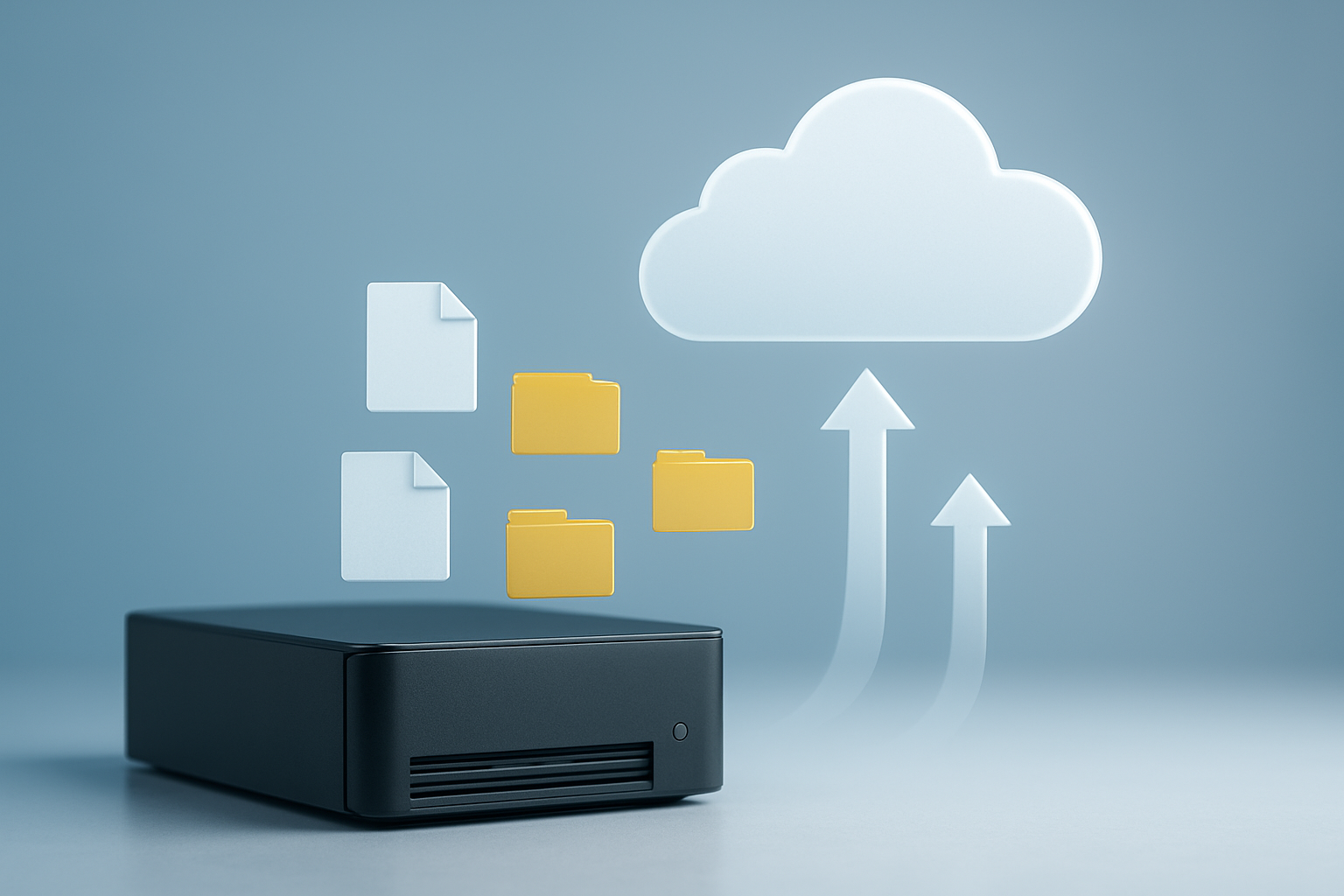
Moving your website files from cPanel to Google Cloud Storage requires a systematic approach to ensure nothing gets lost in the process. Start by downloading all your website files from your current cPanel hosting through the File Manager or FTP client. This includes your HTML files, CSS stylesheets, JavaScript, images, and any other static content.
Create dedicated Cloud Storage buckets for different types of content. Set up one primary bucket for your main website assets and consider separate buckets for media files, backups, and logs. Use the gsutil command-line tool for efficient bulk transfers, especially when dealing with large file volumes. The command gsutil -m cp -r /local/path gs://your-bucket-name/ will recursively copy all files while maintaining directory structure.
For cPanel to GCP migration projects, pay special attention to file permissions and ownership during transfer. Some files might have specific requirements that need to be replicated in the cloud environment.
Organizing Bucket Structure for Optimal Performance and Security
Smart bucket organization directly impacts both performance and security. Structure your buckets based on content type, access frequency, and geographic requirements. Create folders within buckets using logical naming conventions like /assets/css/, /assets/js/, and /media/images/.
Implement regional bucket placement to minimize latency. Place buckets in regions closest to your primary user base. For global audiences, consider multi-regional buckets for frequently accessed content and regional buckets for less critical assets.
Separate public and private content into different buckets. Keep sensitive configuration files, database backups, and private documents in restricted buckets, while placing publicly accessible assets like images and stylesheets in buckets configured for web serving.
Setting Up Proper Access Controls and Permissions
Cloud Storage file migration success depends heavily on correct access controls. Configure bucket-level permissions using Identity and Access Management (IAM) policies rather than legacy Access Control Lists (ACLs) for better security management.
Set up service accounts with minimal required permissions for your applications. Create specific roles for different access patterns:
- Storage Object Viewer for read-only access to public assets
- Storage Object Admin for applications that need to upload or modify files
- Storage Admin for administrative tasks and backup operations
Enable uniform bucket-level access to simplify permission management and improve security consistency. This prevents object-level ACLs from overriding bucket policies, reducing potential security gaps.
Configure CORS (Cross-Origin Resource Sharing) settings if your website serves assets to external domains. This allows your GCP website migration to function properly when content is accessed from different origins.
Implementing Lifecycle Policies for Cost Optimization
Lifecycle policies automate cost management by moving or deleting objects based on age, access patterns, or other criteria. Set up rules to transition older files to cheaper storage classes automatically.
Configure policies to move files to Nearline storage after 30 days of inactivity, and to Coldline or Archive storage for long-term retention. For example, move log files older than 90 days to Nearline storage and delete them after one year if they’re not needed for compliance.
Set up deletion rules for temporary files, cache data, and outdated backups. Create policies that automatically remove files with specific prefixes or in designated folders after predetermined periods.
Monitor storage class transitions to ensure policies align with actual usage patterns. Use Cloud Storage analytics to identify frequently accessed files that shouldn’t be moved to cheaper storage classes, and rarely accessed files that can be moved sooner than initially planned.
Accelerating Content Delivery with Cloud CDN

Configuring Cloud CDN for Global Content Distribution
Setting up Cloud CDN transforms your GCP hosting performance by distributing content across Google’s global network. After completing your cPanel to GCP migration, Cloud CDN becomes essential for delivering fast, reliable content to users worldwide. The configuration process begins with enabling the Cloud CDN service and creating load balancer configurations that serve as origin servers for your cached content.
Start by creating an HTTP(S) load balancer that connects to your Compute Engine instances. This load balancer acts as the entry point for Cloud CDN, which then caches and distributes your content across Google’s edge locations. The setup involves defining backend services that point to your web servers, creating URL maps for routing traffic, and configuring forwarding rules that direct requests to the appropriate resources.
Cloud CDN integrates seamlessly with Cloud Storage buckets, making it perfect for serving static assets like images, CSS files, and JavaScript libraries. When you connect Cloud CDN to your storage buckets, Google automatically optimizes content delivery by serving files from the nearest edge location to your users. This setup dramatically reduces latency compared to traditional cPanel hosting configurations.
Optimizing Cache Settings for Different Content Types
Different content types require specific caching strategies to maximize performance and minimize costs. Cloud CDN allows granular control over cache behaviors, letting you define TTL (Time to Live) values based on file types, directories, or specific URL patterns.
For static assets like images, CSS, and JavaScript files, set longer cache durations (24-48 hours or more) since these files rarely change. Dynamic content such as HTML pages should have shorter cache times (5-15 minutes) to ensure users receive fresh content while still benefiting from caching. Use cache-control headers to override default behaviors when needed.
Cloud CDN supports advanced caching features including:
- Custom cache keys based on query parameters
- Cache invalidation for immediate content updates
- Signed URLs for controlling access to cached content
- Negative caching for handling 404 errors efficiently
Configure cache modes appropriately: “CACHE_ALL_STATIC” works well for most websites migrated from cPanel, automatically caching common static file types. For more control, use “USE_ORIGIN_HEADERS” to respect cache-control headers set by your Compute Engine applications.
Setting Up SSL Certificates for Secure Content Delivery
Securing your Cloud CDN setup requires proper SSL certificate configuration to ensure encrypted content delivery across all edge locations. Google Cloud offers multiple certificate options to replace the SSL certificates you used with your cPanel hosting setup.
Google-managed SSL certificates provide the simplest solution for most GCP hosting modernization projects. These certificates automatically renew and work seamlessly with Cloud CDN. Create managed certificates through the Google Cloud Console by specifying your domain names, then attach them to your HTTPS load balancer configuration.
For organizations requiring specific certificate authorities or wildcard certificates, upload custom SSL certificates to Google Cloud Certificate Manager. This approach gives you complete control over certificate management while maintaining the performance benefits of global content distribution.
The SSL certificate configuration must align with your DNS management strategy. Ensure your domain points to the load balancer IP address, and verify that all certificate domain names match your actual website domains. Cloud CDN automatically serves HTTPS content from all edge locations once certificates are properly configured, providing end-to-end encryption for your migrated website.
Test your SSL setup using tools like SSL Labs to verify proper configuration and security grades across different geographical locations served by Cloud CDN edge nodes.
Database Migration and Configuration

Migrating MySQL databases to Cloud SQL
Moving your MySQL databases from cPanel hosting to Google Cloud SQL marks a critical step in your cPanel to GCP migration journey. Cloud SQL offers a fully managed MySQL service that eliminates the manual database administration tasks you’re used to with traditional cPanel hosting.
Start by creating a MySQL instance in Cloud SQL through the Google Cloud Console. Choose the appropriate MySQL version that matches your current cPanel database – most cPanel installations run MySQL 5.7 or 8.0. Select your instance configuration based on your current database size and traffic patterns. You can always scale up later if needed.
Export your existing databases using phpMyAdmin or command-line tools available in cPanel. Create SQL dump files for each database, ensuring you capture both structure and data. For larger databases, consider using mysqldump with compression to reduce file sizes and transfer times.
Import your data into Cloud SQL using the Google Cloud Console import feature or the gcloud command-line tool. Test the import process with a smaller, non-critical database first to verify your migration workflow. Pay special attention to character encoding settings and timezone configurations to avoid data corruption or unexpected behavior.
Optimizing database performance and scaling options
Cloud SQL provides several performance optimization features that surpass traditional cPanel hosting capabilities. Enable automatic storage increases to prevent downtime when your database grows beyond current capacity. This feature automatically expands storage when utilization reaches 90%.
Configure read replicas for read-heavy applications to distribute database load effectively. Read replicas work particularly well for WordPress sites and e-commerce platforms that generate more read queries than write operations. Position replicas in different regions if you serve a global audience.
Adjust your instance’s CPU and memory allocation based on performance monitoring data. Unlike fixed cPanel hosting plans, Cloud SQL allows you to scale resources up or down as needed. Monitor key metrics like CPU utilization, memory usage, and connection counts through Google Cloud Monitoring.
Enable query insights to identify slow-performing queries that might impact your migrated applications. This feature provides detailed analytics about query performance, helping you optimize database interactions that worked fine on cPanel but struggle with cloud-scale traffic.
Implementing automated backups and disaster recovery
Cloud SQL’s automated backup system offers significant improvements over typical cPanel backup solutions. Enable automatic backups with a retention period that meets your business requirements – you can store backups for up to 365 days. Schedule backups during low-traffic periods to minimize performance impact.
Configure point-in-time recovery to restore your database to any specific moment within your backup retention window. This feature proves invaluable when you need to recover from data corruption or accidental deletions without losing recent changes.
Set up cross-region backups for critical databases to protect against regional outages. Store backup copies in a different geographic region from your primary database instance. This approach provides additional protection beyond what most cPanel hosting providers offer.
Create and test your disaster recovery procedures before going live. Document the exact steps needed to restore your database from backups, including connection string updates and application configuration changes. Practice these procedures with test data to ensure smooth execution during actual emergencies.
Testing database connectivity and application compatibility
Verify that your migrated applications can connect to Cloud SQL instances using the appropriate connection methods. Cloud SQL supports both public IP connections with SSL certificates and private IP connections through VPC networks. Choose the connection method that aligns with your security requirements.
Update your application configuration files with new database connection parameters. Replace localhost references from your cPanel setup with Cloud SQL instance connection names. Update usernames, passwords, and SSL certificate paths as needed for your new cloud environment.
Test all database-dependent functionality thoroughly, including user authentication, content management, e-commerce transactions, and any custom database interactions. Pay special attention to timezone handling, as Cloud SQL instances might use different default settings than your previous cPanel MySQL installation.
Run performance benchmarks comparing your new Cloud SQL setup against your previous cPanel database performance. Use tools like MySQL Workbench or custom application monitoring to measure query response times, connection establishment speed, and overall database throughput. Address any performance degradation before switching production traffic to your new GCP hosting environment.
DNS Management and Domain Configuration
Transferring DNS records from cPanel to Cloud DNS
Moving your DNS records from cPanel to Google Cloud DNS requires careful mapping and validation to avoid service disruptions. Start by exporting your existing DNS zone file from cPanel’s DNS Zone Editor, which contains all your current A, AAAA, CNAME, MX, TXT, and SRV records.
Create a new managed zone in Cloud DNS that matches your domain name exactly. Import your DNS records systematically, paying close attention to:
- A records pointing to your web server’s IP address
- MX records for email delivery
- CNAME records for subdomains and aliases
- TXT records for SPF, DKIM, and domain verification
- SRV records for specific services
Google Cloud DNS uses a different TTL (Time To Live) structure than most cPanel configurations. Consider reducing TTL values to 300 seconds before migration to speed up propagation when switching nameservers.
Validate each record type using dig commands or online DNS lookup tools to confirm proper configuration before proceeding to nameserver changes.
Updating domain nameservers and propagation monitoring
The nameserver update marks the critical transition point in your cPanel to GCP migration. Replace your current nameservers with Google Cloud DNS nameservers, which follow the format ns-cloud-x1.googledomains.com.
Domain registrar interfaces vary, but the process typically involves:
- Logging into your domain registrar’s control panel
- Locating the nameserver or DNS management section
- Replacing existing nameservers with Google Cloud DNS nameservers
- Saving changes and noting the timestamp
DNS propagation takes 24-48 hours globally, though changes often appear within 2-4 hours. Monitor propagation using tools like whatsmydns.net or dig commands from different geographical locations. Track specific record types separately, as A records might propagate faster than MX records.
Create monitoring alerts in Google Cloud Console to track query patterns and identify any unusual spikes that might indicate configuration issues.
Implementing health checks and failover mechanisms
Google Cloud DNS supports advanced traffic management through health checks and failover routing policies. These features provide automatic failover capabilities that weren’t available in traditional cPanel hosting setups.
Configure HTTP/HTTPS health checks that monitor your Compute Engine instances every 30 seconds. Set up routing policies that automatically redirect traffic to backup servers if primary instances become unavailable.
Key health check configurations include:
- Check interval: 30-60 seconds for web applications
- Timeout: 5-10 seconds per check
- Healthy threshold: 2 consecutive successful checks
- Unhealthy threshold: 3 consecutive failed checks
Implement geo-based routing to direct users to the nearest healthy server location, improving both performance and redundancy. Create separate resource record sets for different regions, each with its own health check configuration.
Test failover scenarios by temporarily stopping services and verifying that traffic redirects properly to backup resources. Document your failover procedures and recovery time objectives to ensure your team can respond quickly to outages.
Testing and Performance Optimization

Conducting comprehensive functionality testing
After completing your cPanel to GCP migration, thorough testing becomes your safety net. Start by creating a comprehensive checklist covering every aspect of your website’s functionality. Test all forms, login systems, payment gateways, and interactive features to ensure they work seamlessly on your new Google Cloud Platform setup.
Run automated testing tools like Selenium or Cypress to simulate user interactions across different browsers and devices. This catches compatibility issues that manual testing might miss. Pay special attention to database connections, file uploads, and any third-party integrations that were configured during your GCP hosting modernization process.
Don’t forget to test your backup and recovery procedures. Create test scenarios that simulate server failures or data corruption to verify your disaster recovery plans work as expected. This step is especially critical when migrating from the familiar cPanel environment to Google Cloud Platform web hosting architecture.
Performance benchmarking against previous cPanel setup
Performance comparison gives you concrete data about your migration success. Use tools like GTmetrix, PageSpeed Insights, and WebPageTest to measure loading times, Core Web Vitals, and overall user experience metrics before and after your cPanel to GCP migration.
Set up load testing with tools like Apache Bench or LoadRunner to simulate high traffic scenarios. Compare how your new Compute Engine setup handles concurrent users versus your previous cPanel hosting environment. Document response times, throughput, and resource utilization under various load conditions.
Monitor key performance indicators including:
- Page load times across different geographic locations
- Database query performance and connection pooling efficiency
- CDN hit rates and cache effectiveness
- SSL handshake times and security overhead
- Mobile performance metrics and responsive design behavior
Create baseline measurements from your old setup and track improvements over time. This data proves the value of your GCP website migration to stakeholders and helps identify areas needing optimization.
Monitoring and alerting configuration with Cloud Monitoring
Cloud Monitoring transforms your reactive troubleshooting approach into proactive system management. Configure custom dashboards that display critical metrics specific to your migrated website infrastructure. Set up alerts for CPU usage, memory consumption, disk space, and network traffic patterns.
Create uptime checks that monitor your website availability from multiple global locations. These synthetic tests catch outages before users report them. Configure notification channels through email, SMS, or Slack to ensure the right team members receive alerts promptly.
Establish alerting policies for:
- HTTP error rates exceeding normal thresholds
- Database connection failures or slow query performance
- SSL certificate expiration warnings
- Unusual traffic spikes that might indicate security issues
- Resource utilization approaching capacity limits
Use Cloud Monitoring’s integration with other GCP services to track Cloud Storage access patterns, Cloud CDN performance metrics, and Compute Engine health checks. This comprehensive monitoring approach gives you complete visibility into your modernized hosting infrastructure.
Fine-tuning resource allocation and cost optimization
Right-sizing your GCP resources prevents overspending while maintaining optimal performance. Analyze usage patterns from your first month post-migration to identify opportunities for cost savings. Use Google Cloud’s recommender service to get automated suggestions for instance types, disk sizes, and network configurations.
Implement auto-scaling policies for your Compute Engine instances based on actual traffic patterns rather than peak capacity estimates. This approach reduces costs during low-traffic periods while ensuring adequate resources during busy times. Configure preemptible instances for non-critical workloads like batch processing or development environments.
Review your Cloud Storage bucket configurations and lifecycle policies. Move infrequently accessed files to cheaper storage classes like Nearline or Coldline. Set up automatic deletion rules for temporary files and old backups that no longer serve a purpose.
Optimize your Cloud CDN settings by analyzing cache hit rates and adjusting TTL values. Properly configured caching reduces origin server load and bandwidth costs while improving user experience. Regular cost analysis sessions help identify spending trends and optimization opportunities that emerge as your GCP hosting setup matures.

Making the switch from cPanel to Google Cloud Platform transforms your hosting setup into a modern, scalable infrastructure. You’ve seen how Compute Engine replaces traditional servers, Cloud Storage handles your files more efficiently, and Cloud CDN speeds up content delivery worldwide. The migration process covers everything from initial planning to database transfers and DNS configuration, giving you a complete roadmap for modernizing your web hosting.
Your website deserves the performance boost and flexibility that comes with cloud hosting. Start planning your migration today by assessing your current setup and identifying which components will benefit most from the switch. The initial effort pays off with better site speed, improved reliability, and the ability to scale resources as your business grows.