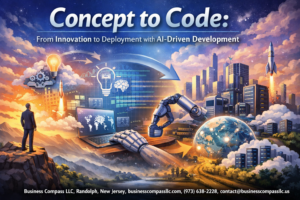
Software development has hit warp speed. Today’s teams ship products faster than ever before, thanks to game-changing tools and methods that have completely transformed how we build software. Modern software engineering isn’t just about writing better code anymore—it’s about getting from idea to live product in record time while maintaining quality and scalability.
This guide is for software developers, engineering managers, startup founders, and tech leaders who want to stay ahead of the curve. If you’re tired of slow development cycles or curious about the latest tools that could revolutionize your workflow, you’re in the right place.
We’ll explore how accelerating development cycles through modern methodologies like agile development methodologies and DevOps automation can cut your time-to-market in half. You’ll discover why cloud-native development and rapid software development practices are becoming non-negotiable for competitive teams. Plus, we’ll dive into the world of AI-powered development tools, low-code platforms, and no-code development solutions that are democratizing software creation and letting non-technical team members contribute directly to the software development lifecycle.
Get ready to rethink everything you know about building software in 2024.
Accelerating Development Cycles Through Modern Methodologies

Streamlining workflow processes with agile and DevOps integration
The marriage of agile development methodologies and DevOps automation has revolutionized how teams approach software delivery. Traditional waterfall approaches often created months-long delays between concept and deployment, but modern software engineering practices compress these timelines dramatically.
Agile frameworks break complex projects into manageable sprints, typically lasting 1-2 weeks. This approach allows teams to deliver working software incrementally while gathering continuous feedback from stakeholders. When combined with DevOps practices, these short development cycles become even more powerful through automated infrastructure management and seamless deployment pipelines.
Cross-functional teams now operate with unprecedented efficiency by eliminating handoffs between development, testing, and operations. Developers work closely with operations engineers from day one, ensuring that code is designed with deployment and maintenance in mind. This collaboration reduces the friction that traditionally slowed down software releases.
Eliminating bottlenecks through continuous integration and deployment
Continuous integration (CI) transforms how teams handle code changes by automatically building and testing every commit. Instead of waiting for large code merges that often break existing functionality, developers integrate their work multiple times daily. This practice catches bugs early when they’re cheaper and easier to fix.
Continuous deployment takes this concept further by automatically pushing tested code to production environments. What once required manual coordination between multiple teams now happens seamlessly through automated pipelines. These systems can deploy software updates dozens of times per day without human intervention.
The rapid software development lifecycle benefits tremendously from automated deployment strategies:
- Blue-green deployments allow teams to switch between production environments instantly
- Canary releases gradually roll out changes to small user groups before full deployment
- Feature flags enable teams to deploy code without immediately exposing new functionality
- Automated rollbacks quickly revert problematic releases without manual intervention
Reducing time-to-market with automated testing frameworks
Manual testing creates significant bottlenecks in software development lifecycle processes. Teams that rely on human testers to validate every change face weeks of delays between code completion and production deployment. Automated testing frameworks eliminate these delays by running comprehensive test suites in minutes rather than days.
Modern testing pyramids prioritize fast, reliable unit tests that validate individual code components. Integration tests ensure different system parts work together correctly, while end-to-end tests simulate real user interactions. This layered approach catches different types of bugs at appropriate stages without slowing down the development process.
Quality assurance teams now focus on creating robust test automation rather than manually clicking through applications. This shift allows them to provide faster feedback to developers while ensuring higher code quality. Automated tests run continuously in the background, giving teams confidence that new changes don’t break existing functionality.
Test-driven development practices push this automation even further by requiring tests before code implementation. This approach ensures comprehensive coverage while guiding developers toward cleaner, more maintainable code architectures.
Leveraging Cloud-Native Technologies for Rapid Prototyping

Deploying Scalable Infrastructure in Minutes Instead of Months
Gone are the days when setting up development infrastructure meant weeks of procurement processes and hardware configuration. Cloud-native development has completely transformed how teams approach infrastructure deployment, turning what once took months into a matter of minutes. Modern software engineering teams can now spin up entire environments with just a few clicks or lines of code.
Platform services like AWS, Google Cloud, and Azure offer infrastructure-as-code solutions that allow developers to define their entire tech stack in configuration files. These declarative approaches mean teams can version control their infrastructure alongside their application code, creating reproducible environments that eliminate the classic “it works on my machine” problem.
The speed gains are remarkable. What previously required hardware procurement, network configuration, and manual server setup can now be accomplished through automated provisioning scripts. Teams can experiment with different architectural patterns, test scaling scenarios, and prototype new features without the overhead of traditional infrastructure management.
Utilizing Containerization for Consistent Development Environments
Docker and container technologies have revolutionized how development teams create and maintain consistent environments across different stages of the software development lifecycle. Containers package applications with all their dependencies, ensuring that code behaves identically whether running on a developer’s laptop, staging server, or production cluster.
This consistency dramatically reduces debugging time and eliminates environment-specific bugs that plague traditional development workflows. Developers can quickly share entire application stacks with teammates, making onboarding new team members faster and more reliable.
Container orchestration platforms like Kubernetes take this concept even further by managing application deployment, scaling, and networking automatically. Teams can define their desired application state, and the orchestration platform handles the complex task of maintaining that state across distributed infrastructure.
Implementing Microservices Architecture for Faster Feature Delivery
Microservices architecture breaks down monolithic applications into smaller, independent services that can be developed, deployed, and scaled separately. This approach enables teams to work on different features simultaneously without stepping on each other’s toes, significantly accelerating development cycles.
Each microservice owns its data and business logic, allowing teams to choose the best technology stack for specific problems. One service might use a graph database for social features while another uses a time-series database for analytics, optimizing performance without forcing architectural compromises across the entire application.
Cloud-native development platforms provide the networking, service discovery, and load balancing infrastructure needed to make microservices practical. Service meshes handle inter-service communication, security, and observability, freeing developers to focus on business logic rather than distributed systems complexity.
The deployment advantages are substantial. Teams can push updates to individual services without affecting the entire application, reducing deployment risks and enabling more frequent releases. This granular approach to deployment supports rapid prototyping and faster iteration cycles.
Accessing On-Demand Computing Resources for Instant Scaling
Cloud platforms provide elastic computing resources that scale automatically based on demand, eliminating the need to provision for peak capacity upfront. Development teams can start with minimal resources and scale up as needed, paying only for what they actually use.
Serverless computing takes this concept to its logical conclusion, running code without managing servers at all. Functions-as-a-service platforms execute code in response to events, automatically handling scaling, availability, and resource management. This approach is particularly powerful for rapid prototyping, as developers can test ideas without any infrastructure overhead.
Auto-scaling groups and load balancers ensure applications remain responsive under varying load conditions. Teams can configure scaling policies that add or remove resources based on metrics like CPU utilization, request rates, or custom business metrics. This automation prevents both over-provisioning waste and under-provisioning performance issues.
The financial benefits are equally compelling. Pay-as-you-go pricing models mean development teams can experiment with resource-intensive prototypes without major upfront investments, making it easier to validate ideas before committing to full development.
AI-Powered Development Tools Transforming Code Creation

Generating Boilerplate Code Automatically with Intelligent Assistants
AI-powered development tools have revolutionized how developers approach repetitive coding tasks. GitHub Copilot, Amazon CodeWhisperer, and similar AI assistants now write entire functions, classes, and modules based on simple comments or partial code snippets. These intelligent systems analyze millions of code repositories to understand patterns and best practices, then generate contextually relevant code that follows established conventions.
Developers describe their intent in natural language comments, and the AI instantly produces working code complete with proper error handling, documentation, and type annotations. For instance, typing “create a REST API endpoint for user authentication” can generate a complete function with input validation, security checks, and response formatting. This automation eliminates hours of mundane coding work, letting developers focus on architectural decisions and complex problem-solving.
The quality of generated code continues improving as these models learn from vast codebases across different programming languages and frameworks. They understand project context, existing code style, and even suggest appropriate libraries and dependencies. Some tools integrate directly into IDEs, providing real-time suggestions that feel like pair programming with an expert developer.
Detecting Bugs and Vulnerabilities Before They Reach Production
Modern AI-powered development tools excel at identifying potential issues before code deployment. Static analysis tools enhanced with machine learning capabilities scan codebases for security vulnerabilities, performance bottlenecks, and logic errors that traditional linters might miss. These systems understand complex code relationships and data flow patterns that create subtle bugs.
Advanced tools like Snyk, Veracode, and DeepCode analyze code in real-time, flagging suspicious patterns like SQL injection vulnerabilities, memory leaks, and race conditions. They provide detailed explanations of potential risks along with specific remediation suggestions. Machine learning models trained on thousands of known vulnerabilities can spot similar patterns in new code, even when the exact implementation differs.
The proactive nature of these tools transforms software quality assurance. Instead of discovering bugs during testing or worse, in production, developers catch issues during the coding phase. This shift-left approach reduces debugging time significantly and prevents costly security breaches. Many tools integrate seamlessly with CI/CD pipelines, automatically blocking deployments when critical vulnerabilities are detected.
Optimizing Code Performance Through Machine Learning Algorithms
AI-driven performance optimization tools analyze running applications to identify bottlenecks and suggest improvements. These systems monitor CPU usage, memory allocation, database queries, and network requests to build comprehensive performance profiles. Machine learning algorithms then recommend specific code changes, architectural adjustments, or infrastructure modifications to boost performance.
Tools like Intel VTune Profiler and Google’s AutoML Tables examine application behavior across different workloads and user scenarios. They identify inefficient algorithms, unnecessary database calls, and resource-intensive operations that slow down applications. The AI can suggest alternative approaches, like switching from recursive to iterative implementations or recommending more efficient data structures.
Some platforms automatically refactor code for better performance, rewriting database queries for optimal execution plans or restructuring loops for better cache utilization. These optimizations often achieve performance improvements of 20-50% without requiring deep expertise in performance tuning. The continuous learning aspect means these tools get better at optimization as they process more applications and observe the results of their suggestions.
Low-Code and No-Code Platforms Democratizing Software Development

Empowering Business Users to Build Applications Without Technical Expertise
Business professionals can now create functional applications using drag-and-drop interfaces and visual workflows, completely bypassing traditional coding requirements. Modern low-code platforms provide intuitive design environments where marketing teams build customer portals, HR departments create employee onboarding systems, and operations managers develop inventory tracking solutions. These platforms include pre-built templates, automated database connections, and smart form builders that guide users through application creation step-by-step.
The transformation happens when domain experts who understand business processes become the builders themselves. A sales manager knows exactly what features would improve lead tracking, while a finance professional understands the nuances of expense reporting workflows. Low-code development puts creation power directly into their hands, eliminating lengthy requirement documentation and reducing miscommunication between business stakeholders and development teams.
Reducing Development Costs by Up to 80% Through Visual Programming
Visual programming interfaces slash development expenses by eliminating the need for specialized coding expertise and lengthy development cycles. Organizations report significant cost reductions when comparing traditional software development projects with low-code alternatives. A typical custom application that might cost $150,000 and take six months with conventional development can often be built for under $30,000 in just a few weeks using no-code development platforms.
Resource allocation becomes dramatically more efficient when business users handle routine application development internally. Companies avoid external consultant fees, reduce IT department workloads, and minimize project management overhead. The visual nature of these platforms also reduces debugging time and testing phases, as users can immediately see how changes affect application behavior.
| Development Approach | Average Cost | Timeline | Resource Requirements |
|---|---|---|---|
| Traditional Coding | $100,000-$500,000 | 3-12 months | Senior developers, architects, testers |
| Low-Code Platforms | $20,000-$100,000 | 2-8 weeks | Business analysts, citizen developers |
| No-Code Solutions | $5,000-$50,000 | 1-4 weeks | End users, process owners |
Accelerating Proof-of-Concept Delivery from Weeks to Days
Rapid software development reaches new heights when teams can validate ideas within days rather than months. Low-code platforms enable instant prototyping where stakeholders can test concepts, gather feedback, and iterate solutions in real-time. A marketing team can build and deploy a lead generation application on Monday morning and have actual user feedback by Wednesday afternoon.
Speed becomes a competitive advantage when organizations can quickly test multiple approaches to solving business problems. Rather than committing significant resources to a single solution, teams can create several proof-of-concepts simultaneously, compare their effectiveness, and invest fully in the most promising options. This rapid experimentation cycle reduces risk and increases innovation success rates.
The shortened feedback loop creates better end products because users interact with working prototypes rather than abstract requirements documents. Stakeholders can click through actual interfaces, test workflows, and identify improvement opportunities before substantial development resources are invested.
Bridging the Gap Between Business Requirements and Technical Implementation
Communication barriers between business teams and technical departments dissolve when stakeholders can directly manipulate visual representations of their requirements. Traditional requirement gathering often loses critical nuances in translation, but low-code platforms allow business users to demonstrate exactly what they need by building functional examples themselves.
Complex business logic becomes accessible through visual rule builders and workflow designers that mirror how people naturally think about processes. A loan approval workflow that might require pages of technical specifications can be created by simply connecting decision points and approval steps in a visual interface. Business users can see immediately whether their logic translates correctly into working software.
The collaborative nature of modern software engineering benefits tremendously when technical teams can focus on complex integrations and infrastructure while business users handle application logic and user interface design. This division of labor maximizes everyone’s strengths and creates more robust solutions that truly meet business needs.
Real-Time Collaboration Tools Breaking Down Development Silos

Synchronizing team efforts across distributed development environments
Geographic boundaries have become invisible in modern software engineering, with development teams scattered across continents yet working as cohesively as if they shared the same office space. Real-time collaboration tools have transformed how distributed teams synchronize their efforts, creating seamless workflows that bridge time zones and cultural differences.
Platforms like Slack, Microsoft Teams, and Discord have evolved beyond simple messaging to become command centers for development activities. These tools integrate directly with development environments, allowing team members to receive instant notifications about code commits, build failures, and deployment updates. When a developer in San Francisco pushes code at the end of their day, their colleagues in Berlin can immediately see the changes and continue the work seamlessly.
Modern collaboration platforms offer shared workspaces where developers can co-edit code in real-time, similar to Google Docs but specifically designed for programming languages. Tools like Visual Studio Live Share and CodeSandbox enable multiple developers to work on the same codebase simultaneously, with changes appearing instantly across all connected sessions. This capability eliminates the traditional back-and-forth of email exchanges and reduces the friction typically associated with remote collaboration.
Screen sharing and virtual pair programming sessions have become standard practices, allowing senior developers to mentor junior team members regardless of physical location. These interactions maintain the knowledge transfer that traditionally happened through casual conversations and over-the-shoulder guidance in physical offices.
Implementing instant code reviews and feedback loops
Code reviews have transformed from lengthy, bureaucratic processes into dynamic, conversational experiences that happen in real-time. Modern platforms like GitHub, GitLab, and Bitbucket have revolutionized how developers give and receive feedback on their code, turning what was once a bottleneck into an accelerator of development speed.
Pull requests now support threaded conversations directly within the code interface, allowing reviewers to comment on specific lines and developers to respond immediately. This granular feedback system creates a learning environment where best practices spread naturally throughout the team. Automated code analysis tools integrate with these platforms, providing instant feedback on code quality, security vulnerabilities, and performance issues before human reviewers even see the changes.
The integration of AI-powered development tools into code review processes has added another layer of intelligence. These systems can detect patterns, suggest improvements, and even predict potential bugs based on historical data from the codebase. When combined with real-time collaboration tools, teams can address issues as they arise rather than waiting for formal review cycles.
Continuous integration pipelines now trigger automatically with every code change, providing immediate feedback on whether new code breaks existing functionality. This instant validation loop means developers know within minutes whether their changes are ready for production, dramatically reducing the time between writing code and deploying it.
Maintaining version control transparency for all stakeholders
Version control has evolved beyond a technical necessity for developers to become a communication tool that keeps entire organizations informed about project progress. Modern version control systems provide stakeholders with unprecedented visibility into development activities without requiring deep technical knowledge.
Git-based platforms now offer visual dashboards that translate complex branching strategies into understandable progress indicators. Project managers can see at a glance which features are in development, which are ready for testing, and which have been deployed to production. These visual representations make it easy for non-technical stakeholders to understand project status without needing to interpret raw commit messages or diff files.
Automated release notes generated from commit messages and pull request descriptions keep everyone informed about what changes are being made and why. These tools can automatically categorize changes as bug fixes, new features, or performance improvements, making it easy for different audiences to focus on the information most relevant to them.
Branch protection rules and automated workflows ensure that critical processes remain consistent while still allowing for rapid development. Teams can enforce code review requirements, automated testing, and approval processes without slowing down the overall development cycle. This transparency builds trust between development teams and other business units, as everyone can see that proper procedures are being followed even at high development speeds.

The software development landscape has undergone a dramatic transformation, driven by methodologies that prioritize speed without sacrificing quality. From cloud-native technologies that enable instant prototyping to AI-powered tools that write code alongside developers, the traditional barriers between idea and implementation continue to dissolve. Low-code and no-code platforms have opened the doors for non-technical professionals to build functional applications, while real-time collaboration tools have eliminated the isolation that once plagued development teams.
These innovations represent more than just technological progress—they signal a fundamental shift in how we approach software creation. The future belongs to teams that embrace these tools and adapt their workflows to match the pace of modern business demands. Start experimenting with one or two of these technologies in your next project, and watch how quickly you can turn concepts into working software that makes a real difference.