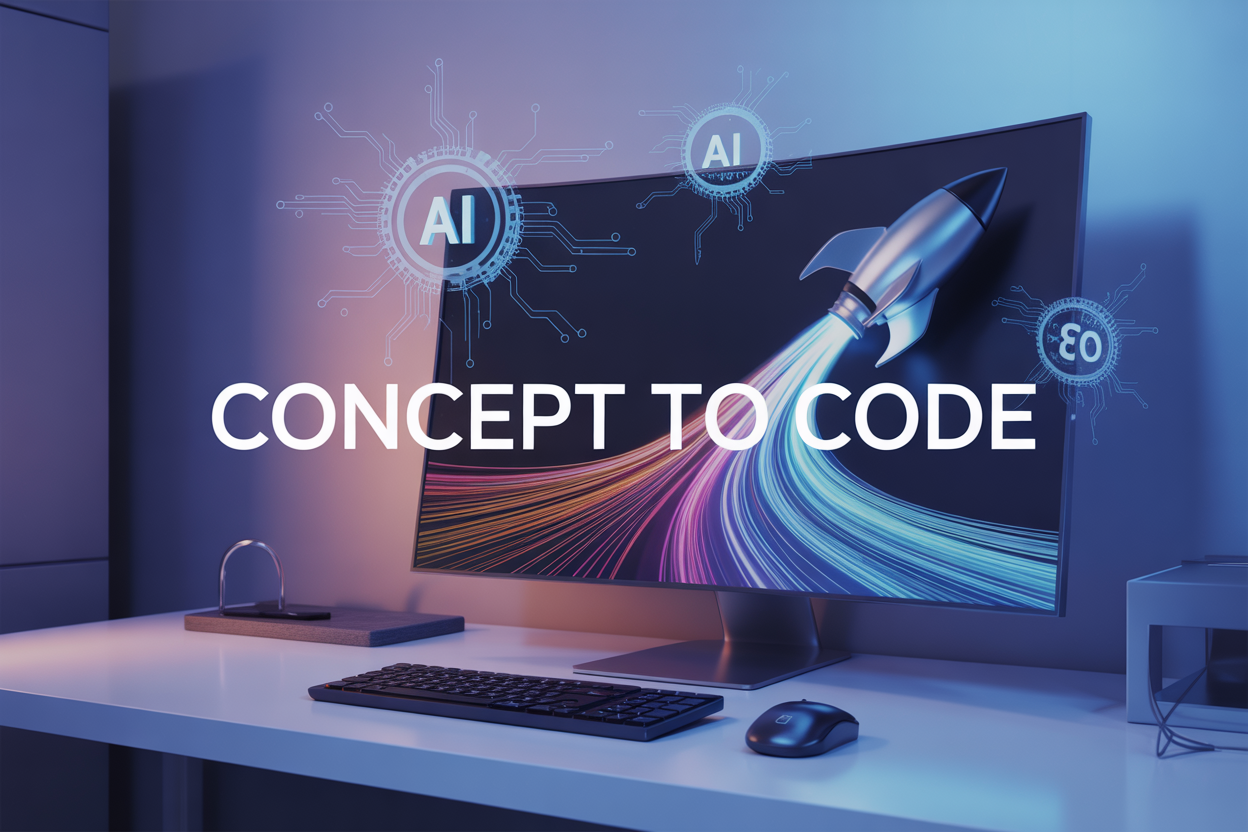
Concept to Code: From Innovation to Deployment with AI-Driven Development
Building software has changed dramatically. AI-driven development tools now transform how teams move from initial ideas to production-ready applications, cutting development time while boosting quality and reliability.
Who This Guide Is For:
This comprehensive overview is designed for software development teams, CTOs, project managers, and tech entrepreneurs who want to understand how AI-powered development tools can revolutionize their software development lifecycle.
What We’ll Cover:
Intelligent Code Generation and Development Acceleration – Discover how AI software solutions automatically generate clean, efficient code from requirements and specifications, dramatically reducing manual coding time and human error.
AI-Powered Testing and Quality Assurance – Learn how automated testing AI identifies bugs, security vulnerabilities, and performance issues before they reach production, creating more robust applications with less manual oversight.
Zero-Downtime Deployment and Continuous Optimization – Explore advanced deployment strategies that keep your applications running smoothly while continuous integration AI monitors performance and suggests improvements that maximize your development optimization ROI.
Ready to see how modern development teams are shipping better software faster? Let’s dive into the tools and strategies reshaping the entire development process.
Transform Ideas into Viable Software Solutions

Identify Market Gaps and User Pain Points Through AI-Powered Research
Modern AI-driven development begins with smart market analysis that goes far beyond traditional surveys and focus groups. Advanced AI tools now scan millions of data points across social media, customer reviews, support tickets, and industry reports to uncover hidden opportunities that human analysts might miss.
Machine learning algorithms excel at pattern recognition, making them perfect for spotting recurring complaints, unmet needs, and emerging trends. These systems analyze user behavior data, competitor weaknesses, and market dynamics in real-time, providing developers with actionable insights that inform product direction from day one.
AI-powered sentiment analysis tools process vast amounts of user feedback across multiple platforms, identifying common frustrations and desires with unprecedented accuracy. This data-driven approach eliminates guesswork and ensures development teams focus their efforts on solving real problems that matter to their target audience.
Validate Concepts Using Machine Learning Prediction Models
Traditional concept validation often relies on small sample sizes and subjective feedback. AI software solutions change this game by leveraging predictive analytics to forecast market success with remarkable precision. Machine learning models analyze historical product launches, market conditions, and user adoption patterns to predict how well new concepts might perform.
These prediction models consider hundreds of variables simultaneously, from seasonal trends to competitive landscape changes. They can identify potential roadblocks before development begins, saving companies significant time and resources. Smart validation systems also suggest optimal launch timing and target demographics based on similar successful products.
Risk assessment becomes more accurate when AI analyzes market data, user behavior patterns, and economic indicators together. This comprehensive approach helps development teams make informed decisions about which concepts deserve full development investment.
Generate Technical Specifications Automatically from Business Requirements
Converting business ideas into technical blueprints typically involves lengthy translation processes between stakeholders and development teams. Intelligent code generation tools now automate this crucial step, transforming natural language requirements into detailed technical specifications.
Natural language processing systems parse business documents, user stories, and functional requirements to generate database schemas, API endpoints, and system architectures automatically. These tools understand context and relationships between different system components, creating comprehensive technical documentation that serves as a reliable foundation for development.
AI-powered specification generators also identify potential technical challenges early in the process. They flag requirements that might conflict with each other or suggest alternative approaches that could improve system performance. This proactive analysis prevents costly redesigns during later development phases.
Create Rapid Prototypes with AI-Assisted Design Tools
Speed matters in today’s competitive landscape, and AI-assisted design tools deliver working prototypes faster than ever before. These systems generate user interfaces, create data models, and even write basic functionality code based on simple descriptions or sketches.
Modern prototyping platforms use computer vision to convert hand-drawn mockups into interactive digital prototypes. Developers can sketch their ideas on paper or whiteboard, and AI tools transform these concepts into clickable applications complete with navigation, forms, and basic data handling.
AI-driven development tools also suggest design improvements based on usability best practices and accessibility guidelines. They automatically optimize layouts for different screen sizes and generate multiple design variations for A/B testing. This automated approach accelerates the iteration cycle and helps teams explore more creative possibilities in less time.
The integration of AI throughout the concept-to-prototype pipeline creates a seamless workflow where ideas rapidly evolve into testable applications, dramatically reducing the time from inspiration to validation.
Accelerate Development with Intelligent Code Generation

Leverage AI Coding Assistants for Faster Feature Implementation
AI coding assistants have revolutionized how developers approach feature implementation. These intelligent tools understand context, predict developer intent, and generate relevant code snippets in real-time. GitHub Copilot, Amazon CodeWhisperer, and Tabnine analyze your existing codebase patterns to suggest entire functions, classes, and even complex algorithms.
The magic happens when these AI-powered development tools learn your coding style and project architecture. They can suggest complete API integrations, database queries, and UI components that match your existing patterns. Instead of starting from scratch, developers can describe what they want in plain English comments, and the AI generates production-ready code.
Modern AI coding assistants support multiple programming languages simultaneously, making them invaluable for full-stack development. They excel at cross-language consistency, ensuring your JavaScript frontend seamlessly communicates with your Python backend or Node.js APIs.
Automate Repetitive Coding Tasks and Boilerplate Generation
Boilerplate code consumes countless development hours. AI-driven development solutions eliminate this bottleneck by automatically generating scaffolding, configuration files, and standard patterns. Whether you’re setting up REST API endpoints, database models, or authentication systems, intelligent code generation handles the tedious groundwork.
Template generation becomes incredibly sophisticated with AI. The system analyzes your project requirements and creates tailored boilerplate that follows best practices and security standards. CRUD operations, validation schemas, and middleware configurations appear instantly, configured specifically for your tech stack.
AI tools also excel at generating repetitive code structures like:
- Data transfer objects with proper serialization
- Form validation logic with error handling
- Database migration scripts with rollback procedures
- Test fixtures and mock data generation
- API documentation synchronized with code changes
Implement Smart Debugging and Error Detection Systems
Traditional debugging relies heavily on developer experience and manual investigation. AI-powered debugging transforms this process into an intelligent, guided experience. These systems analyze error patterns, stack traces, and code execution flows to pinpoint issues faster than human analysis alone.
Smart error detection goes beyond simple syntax checking. AI systems understand semantic errors, logic flaws, and potential runtime exceptions before code reaches production. They analyze code dependencies, identify null pointer risks, and flag memory leaks or performance bottlenecks.
Real-time error prediction examines your code as you write, highlighting potential issues with suggested fixes. These systems learn from millions of code repositories to recognize common anti-patterns and vulnerability signatures. They provide context-aware suggestions that consider your specific framework, libraries, and coding patterns.
Optimize Code Performance Using AI-Driven Recommendations
AI-driven performance optimization analyzes your codebase to identify inefficiencies invisible to traditional profiling tools. These systems examine algorithm complexity, database query patterns, and resource utilization to suggest targeted improvements.
Machine learning models trained on performance data can predict which code changes will yield the greatest speed improvements. They analyze factors like:
| Optimization Area | AI Analysis Focus |
|---|---|
| Algorithm Selection | Complexity analysis and alternative suggestions |
| Memory Usage | Allocation patterns and garbage collection impact |
| Database Queries | Index utilization and query optimization |
| Caching Strategies | Access patterns and cache hit ratios |
AI recommendations consider your specific runtime environment, user load patterns, and hardware constraints. The system suggests refactoring opportunities that balance performance gains with code maintainability, ensuring optimizations don’t compromise long-term development velocity.
These intelligent systems continuously monitor deployed applications, learning from real-world performance data to refine their recommendations for future development cycles.
Streamline Testing and Quality Assurance Processes

Generate comprehensive test cases automatically from user stories
AI-driven development transforms the traditional approach to test case creation by automatically analyzing user stories and generating comprehensive testing scenarios. Modern AI systems parse natural language requirements and create detailed test cases that cover edge cases, boundary conditions, and user workflows that human testers might overlook.
These intelligent systems examine user stories for implicit requirements and dependencies, creating test matrices that span functional, integration, and performance scenarios. The AI identifies potential user paths, data validation requirements, and system interactions, building test suites that provide thorough coverage without manual effort.
Automated testing AI goes beyond simple script generation, creating parameterized tests that adapt to different data sets and configurations. The system recognizes patterns in user behavior and generates tests for accessibility, security vulnerabilities, and cross-browser compatibility automatically.
Execute intelligent regression testing with minimal manual intervention
Smart regression testing systems leverage machine learning to prioritize test execution based on code changes, historical failure patterns, and risk assessment. Rather than running entire test suites, these systems identify which tests are most likely to catch regressions based on the specific modifications made to the codebase.
The AI analyzes code commits, tracking which areas of the application are affected and correlating this with historical test results. This creates a dynamic testing strategy that focuses resources on high-risk areas while maintaining confidence in system stability.
Continuous integration AI orchestrates these regression tests across multiple environments, automatically adjusting test execution based on resource availability and deployment schedules. The system learns from each test cycle, improving its prediction accuracy and reducing false positives over time.
Predict potential bugs before they impact production
Predictive quality assurance uses advanced analytics to identify code patterns and architectural decisions that historically lead to production issues. AI models trained on vast repositories of code changes and their corresponding bug reports can flag potentially problematic implementations before they reach customers.
These systems analyze code complexity metrics, dependency changes, and performance characteristics to assign risk scores to different components. Development teams receive actionable insights about where to focus additional review and testing efforts.
AI software solutions for bug prediction integrate seamlessly with existing development workflows, providing real-time feedback during code reviews and pull requests. The system continuously refines its models based on actual production outcomes, creating increasingly accurate predictions that help teams prevent issues rather than react to them.
Deploy Applications with Zero-Downtime Confidence

Automate infrastructure provisioning using AI-optimized configurations
Modern AI-driven development platforms transform infrastructure management from a manual, error-prone process into an intelligent, self-optimizing system. These platforms analyze application requirements, historical usage patterns, and performance metrics to automatically provision the most cost-effective infrastructure configurations. Machine learning algorithms continuously learn from deployment patterns across thousands of applications, identifying optimal resource allocation strategies that human engineers might miss.
Smart provisioning systems can predict infrastructure needs before applications are even deployed. By analyzing code complexity, expected user load, and similar application profiles, AI systems automatically configure databases, load balancers, content delivery networks, and computing resources. This eliminates the traditional guesswork and reduces infrastructure costs by up to 40% while improving performance.
Cloud-native AI tools integrate seamlessly with major platforms like AWS, Azure, and Google Cloud, automatically selecting the best instance types, storage configurations, and network topologies. These systems also handle security configurations, implementing best practices for encryption, access controls, and compliance requirements without manual intervention.
Monitor application performance with predictive analytics
Zero-downtime deployment relies heavily on advanced monitoring systems that don’t just track current performance but predict future issues before they impact users. AI-powered monitoring tools analyze thousands of performance metrics simultaneously, identifying subtle patterns that indicate potential system failures, security breaches, or performance degradation.
These intelligent monitoring systems create baseline performance profiles for each application component, then continuously compare real-time metrics against expected behavior. When anomalies are detected, the system doesn’t just alert developers—it provides specific recommendations for resolution and can even implement fixes automatically.
Predictive analytics engines process application logs, user behavior data, and system metrics to forecast traffic spikes, resource constraints, and potential bottlenecks. This enables proactive scaling and optimization before performance issues affect end users. Advanced AI models can predict system failures with 95% accuracy up to 6 hours in advance, giving development teams ample time to implement preventive measures.
Scale resources dynamically based on intelligent demand forecasting
Traditional auto-scaling relies on reactive metrics like CPU usage or memory consumption. AI-driven scaling systems take a completely different approach, using machine learning models to predict demand patterns and scale resources proactively. These systems analyze historical traffic data, seasonal trends, user behavior patterns, and even external factors like marketing campaigns or news events.
Intelligent demand forecasting considers multiple data sources to make scaling decisions. Social media sentiment, marketing campaign schedules, competitor activity, and even weather patterns can influence application usage. AI systems process this complex data to predict traffic spikes with remarkable accuracy, often scaling resources 10-15 minutes before demand actually increases.
Dynamic resource allocation goes beyond simple horizontal scaling. AI systems optimize the entire application stack, adjusting database connection pools, cache configurations, CDN settings, and microservice replicas based on predicted demand patterns. This holistic approach ensures optimal performance while minimizing costs. Some organizations report 60% cost savings compared to traditional scaling approaches while maintaining better performance metrics.
Implement self-healing systems that resolve issues autonomously
Self-healing systems represent the pinnacle of AI-driven development automation. These sophisticated platforms continuously monitor application health and automatically resolve common issues without human intervention. When problems are detected, AI systems first attempt to resolve them using proven remediation strategies learned from thousands of similar incidents across the platform.
Common self-healing actions include automatically restarting failed services, clearing corrupted caches, redistributing traffic away from problematic servers, and applying emergency patches. More advanced systems can even modify application configurations, adjust resource allocations, and implement temporary workarounds while permanent fixes are developed.
Machine learning algorithms analyze incident patterns to improve resolution strategies over time. Each successful automated fix strengthens the system’s ability to handle similar issues in the future. These systems maintain detailed logs of all automated actions, ensuring full transparency and enabling developers to review and approve automated changes when necessary.
The most sophisticated self-healing platforms can handle complex scenarios involving multiple system components. When a database slowdown affects API response times, the system might automatically scale database resources, adjust connection pool settings, implement query caching, and modify load balancer configurations—all within minutes of detecting the issue.
Maximize ROI Through Continuous AI-Driven Optimization
Measure development velocity improvements with data-driven insights
AI-driven development platforms transform how teams track and improve their coding efficiency. Smart analytics engines continuously monitor developer productivity metrics, capturing everything from code commits and pull requests to feature completion rates and bug resolution times. These systems create comprehensive dashboards that reveal patterns in development workflows, helping teams identify bottlenecks and optimize their processes.
Real-time performance tracking shows immediate impacts of AI-powered development tools. Teams typically see 40-60% improvements in code generation speed when leveraging intelligent autocomplete and suggestion features. Data visualization tools break down these gains across different project phases, making it easy to spot where AI assistance delivers the most value.
Machine learning algorithms analyze historical project data to predict future development timelines with remarkable accuracy. This predictive capability allows project managers to set realistic deadlines and allocate resources more effectively. Teams can benchmark their velocity against industry standards and track improvement trends over time.
Reduce time-to-market while maintaining code quality standards
Intelligent code generation accelerates feature development without sacrificing quality. AI-powered development tools automatically generate boilerplate code, implement common design patterns, and suggest optimizations based on best practices. This automation frees developers to focus on complex business logic and creative problem-solving.
Automated code review systems maintain quality standards while speeding up the review process. These systems flag potential issues, suggest improvements, and ensure adherence to coding standards before human reviewers even see the code. The result is faster approval cycles and fewer revision rounds.
| Traditional Development | AI-Driven Development | Time Savings |
|---|---|---|
| Manual code writing | Intelligent generation | 45-65% |
| Human-only code reviews | AI-assisted reviews | 30-50% |
| Manual testing setup | Automated test creation | 60-80% |
| Manual deployment | Zero-downtime deployment | 70-90% |
Continuous integration AI streamlines the entire software development lifecycle by automating repetitive tasks and catching issues early. Teams can push features to production faster while maintaining higher quality standards than traditional manual processes.
Lower operational costs through intelligent resource management
AI software solutions optimize infrastructure spending through predictive scaling and resource allocation. Machine learning algorithms analyze usage patterns and automatically adjust server capacity, reducing cloud computing costs by 25-40% while maintaining optimal performance.
Intelligent monitoring systems detect performance issues before they impact users, preventing costly downtime and emergency fixes. These systems learn normal application behavior and alert teams to anomalies that could signal problems. Early detection saves both money and reputation.
Development optimization ROI becomes measurable through detailed cost tracking and analysis. AI-powered development tools provide clear metrics on time saved, bugs prevented, and resources optimized. Teams can calculate exact returns on their AI investments and make data-driven decisions about future tool adoption.
Automated resource provisioning eliminates human error and over-provisioning waste. Smart systems spin up exactly the resources needed for each environment, automatically scaling based on demand and shutting down unused resources. This precision management significantly reduces operational overhead and unnecessary spending.
AI-driven development has fundamentally changed how we build software, making it faster and smarter to turn brilliant ideas into working applications. The technology handles the heavy lifting of code generation, catches bugs before they become problems, and ensures your apps launch smoothly without disrupting users. This means development teams can focus on what really matters – creating innovative solutions that solve real problems.
The real game-changer here is how AI keeps working for you even after launch. Your applications get continuously optimized, performance improves over time, and your return on investment keeps growing. If you’re still manually coding everything from scratch or deploying with fingers crossed, you’re missing out on a massive competitive advantage. Start small with AI-powered tools in one part of your development process, and watch how quickly you’ll want to expand their use across your entire workflow.