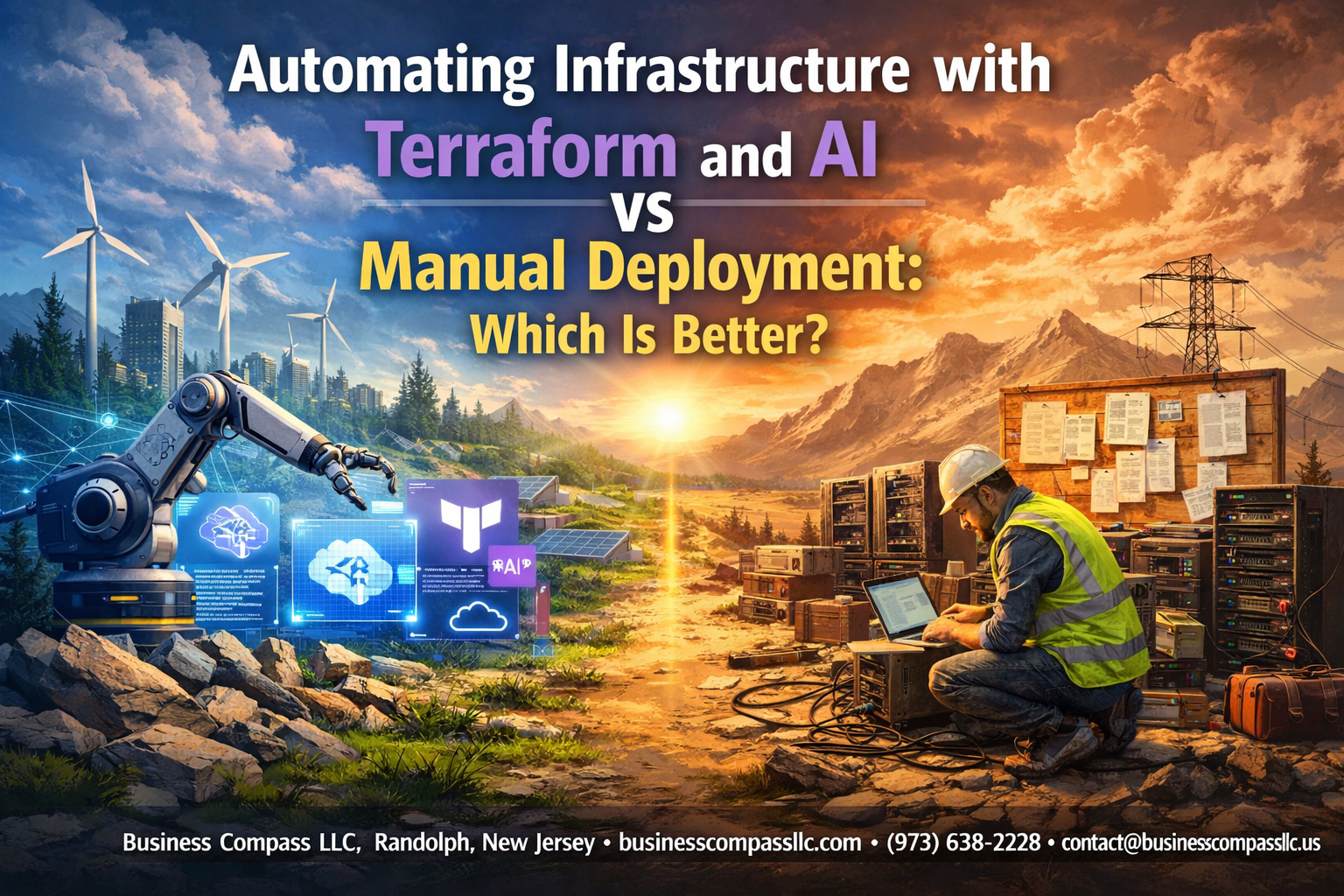
Choosing between terraform infrastructure automation and manual deployment methods can make or break your development team’s productivity and budget. This guide is written for DevOps engineers, cloud architects, and IT managers who need to make informed decisions about their infrastructure deployment strategies.
Manual processes that once took hours can now be completed in minutes with the right automation tools. But switching from manual vs automated deployment isn’t just about speed – it impacts your costs, security, and ability to scale your operations.
We’ll break down the speed and efficiency differences between terraform vs manual deployment, showing you real-world scenarios where each approach shines. You’ll also get a detailed cost implications and ROI assessment that covers both upfront investments and long-term savings. Finally, we’ll explore AI enhanced DevOps capabilities and how modern terraform scalability benefits are changing the game for infrastructure automation best practices.
Understanding Terraform for Infrastructure Automation
Core Benefits of Infrastructure as Code
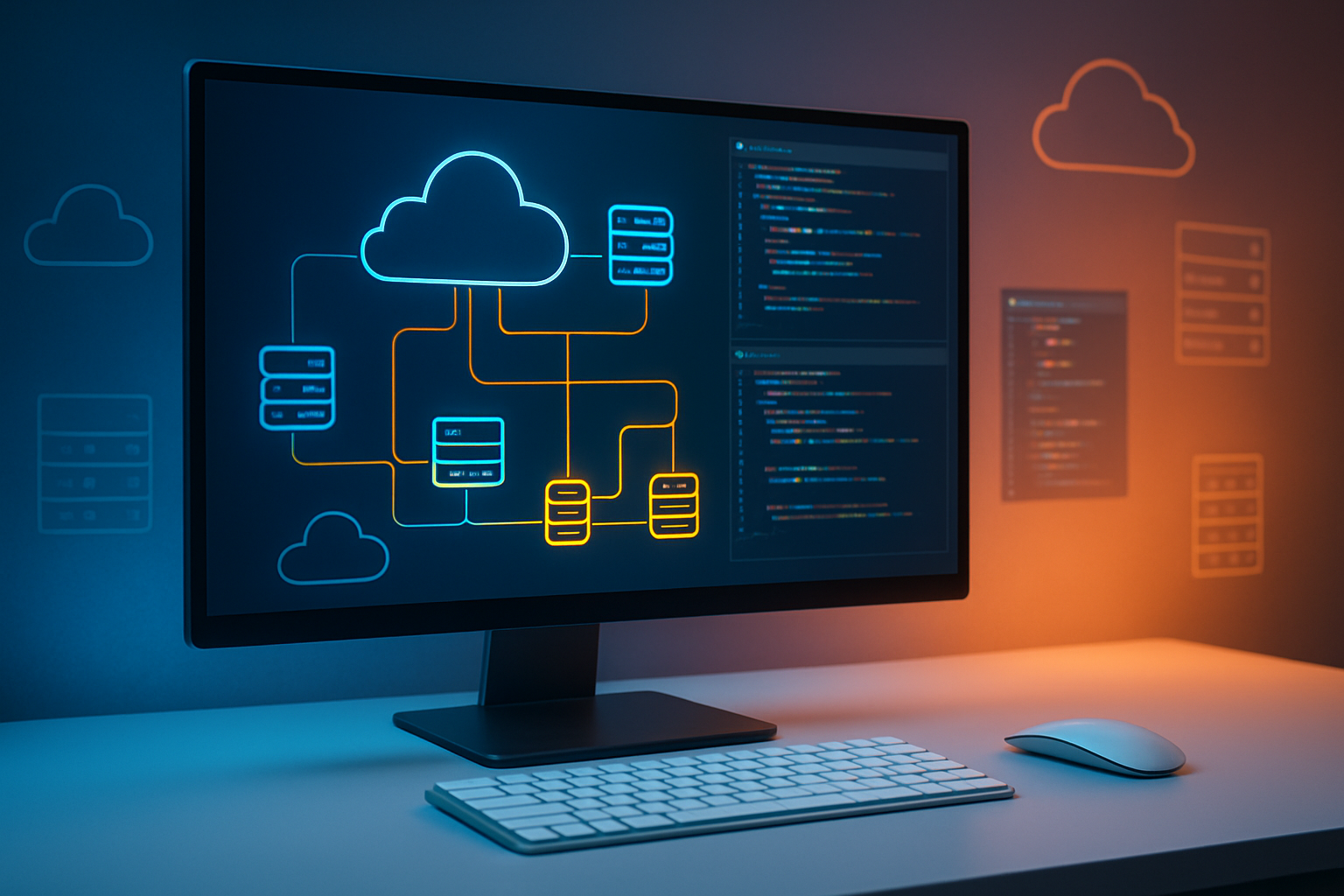
Terraform infrastructure automation transforms how teams manage cloud resources by treating infrastructure like software code. This approach eliminates configuration drift, ensures consistent environments across development and production, and enables teams to track every infrastructure change through version control systems.
Terraform’s Declarative Approach to Resource Management
Unlike imperative scripts that define step-by-step processes, Terraform uses a declarative model where you describe your desired infrastructure state. The platform automatically determines the necessary actions to achieve that state, whether creating new resources, modifying existing ones, or destroying outdated components.
Multi-Cloud Compatibility and Provider Ecosystem
Terraform’s provider ecosystem supports hundreds of cloud platforms and services, from AWS and Azure to smaller niche providers. This flexibility prevents vendor lock-in and allows teams to adopt multi-cloud strategies without learning different tools for each platform.
State Management and Version Control Advantages
Terraform maintains a state file that maps real-world resources to your configuration files. This state tracking enables collaborative infrastructure management, rollback capabilities, and prevents resource conflicts when multiple team members work on the same infrastructure simultaneously.
AI-Enhanced Infrastructure Deployment Capabilities

Intelligent Resource Optimization and Cost Reduction
AI-driven infrastructure deployment revolutionizes terraform infrastructure automation by analyzing usage patterns and dynamically adjusting resource allocation. Machine learning algorithms continuously monitor workloads, automatically rightsizing instances and eliminating wasteful spending. This intelligent approach reduces cloud costs by up to 30% compared to static configurations, making automated infrastructure management significantly more economical than manual provisioning methods.
Predictive Scaling and Performance Monitoring
Advanced AI infrastructure deployment systems predict traffic spikes and resource demands before they occur, enabling proactive scaling decisions. These intelligent systems analyze historical data, seasonal trends, and application behavior to optimize performance while minimizing costs. Real-time monitoring combined with predictive analytics ensures infrastructure responds instantly to changing demands, delivering superior reliability compared to reactive manual scaling approaches.
Automated Security Compliance and Threat Detection
AI enhanced DevOps platforms continuously scan infrastructure configurations against security best practices and compliance standards. Automated threat detection identifies vulnerabilities in real-time, automatically applying patches and security updates across environments. This proactive security model significantly reduces human error and ensures consistent compliance, addressing critical infrastructure automation best practices that manual processes often overlook due to complexity and scale.
Manual Deployment Methods and Their Current Role

Direct Control and Customization Flexibility
Manual deployment methods give engineers complete oversight of every configuration step, allowing for real-time adjustments that automated systems might miss. When working with unique infrastructure requirements or legacy systems, manual approaches offer the precision needed to handle complex customizations that don’t fit standard automation templates.
Immediate Troubleshooting and Hands-On Problem Solving
Engineers can diagnose and fix issues as they arise during manual deployments, providing instant feedback and resolution. This direct approach eliminates the time spent debugging automation scripts or waiting for AI systems to process error logs, making it particularly valuable in critical situations where rapid problem-solving is essential.
Lower Initial Learning Curve Requirements
Teams can start deploying infrastructure immediately without mastering terraform infrastructure automation syntax or complex AI-enhanced tools. New team members can contribute quickly using familiar command-line interfaces and configuration files, reducing the onboarding time compared to learning comprehensive infrastructure as code frameworks.
Specialized Configuration Handling
Certain legacy applications and specialized hardware configurations require manual intervention that automated systems struggle to accommodate. Manual deployment excels when dealing with non-standard setups, regulatory compliance requirements, or environments where automated infrastructure management tools lack the necessary flexibility for unique business needs.
Speed and Efficiency Comparison Analysis

Deployment Time Reduction with Automation
Terraform infrastructure automation slashes deployment times from hours or days to mere minutes. Traditional manual deployment methods require system administrators to configure each server individually, navigate complex GUI interfaces, and manually verify configurations across multiple environments. Automated infrastructure management eliminates these bottlenecks by executing predefined scripts that provision entire infrastructure stacks simultaneously. Teams report 80-90% faster deployment cycles when switching from manual processes to terraform vs manual deployment approaches.
AI infrastructure deployment takes speed optimization even further by predicting optimal resource allocation patterns and automatically adjusting configurations based on workload demands. The combination of infrastructure as code principles with AI-enhanced decision-making creates deployment pipelines that adapt in real-time, reducing the typical trial-and-error cycles that plague manual configurations.
Error Rate Minimization Through Standardized Processes
Manual deployment processes suffer from human error rates averaging 15-20% across configuration tasks, with mistakes ranging from typos in configuration files to missed security settings. Automated infrastructure management through Terraform eliminates these inconsistencies by using standardized templates that execute identically every time. Teams using infrastructure as code report error rates dropping to less than 2%, primarily due to code review processes and automated validation checks.
Standardized processes ensure that security policies, network configurations, and resource settings remain consistent across development, staging, and production environments. This consistency becomes critical when managing multi-cloud deployments where manual configuration differences can create security vulnerabilities and performance bottlenecks.
Resource Provisioning Speed Across Environments
Terraform scalability benefits shine when provisioning resources across multiple cloud environments simultaneously. Manual deployment requires administrators to learn different cloud provider interfaces and remember varying configuration parameters, creating delays when scaling across AWS, Azure, and Google Cloud platforms. Automated systems provision identical infrastructure stacks across all environments within minutes, regardless of the underlying cloud provider.
AI enhanced DevOps takes multi-environment provisioning to the next level by analyzing usage patterns and automatically selecting optimal instance types, storage configurations, and network topologies for each environment. This intelligent resource selection reduces over-provisioning costs while maintaining performance standards across all deployment targets.
Cost Implications and ROI Assessment

Initial Setup Investment for Automated Solutions
Terraform infrastructure automation and AI-enhanced deployment solutions require significant upfront investment in tooling, cloud resources, and initial configuration. Organizations typically spend $50,000-$200,000 on setup costs, including platform licenses, CI/CD pipeline integration, and baseline infrastructure templates. While manual deployment appears cheaper initially, the hidden costs of human errors and inconsistent configurations quickly accumulate.
Long-Term Operational Savings and Resource Efficiency
Automated infrastructure management delivers substantial long-term savings through reduced deployment times, fewer production incidents, and optimized resource allocation. Companies report 60-80% reduction in deployment-related downtime and 40% lower infrastructure costs through AI-driven optimization. Manual processes require constant human oversight, while terraform cost analysis shows automated solutions pay for themselves within 12-18 months through improved efficiency and reduced operational overhead.
Human Resource Allocation and Training Costs
Teams need specialized training in Infrastructure as Code principles, Terraform scripting, and AI-enhanced DevOps practices, typically costing $5,000-$15,000 per engineer. However, automation frees skilled developers from repetitive deployment tasks, allowing focus on strategic initiatives. Manual deployment requires larger operations teams for round-the-clock maintenance, while automated solutions enable smaller, more efficient teams to manage larger infrastructure footprints.
Maintenance and Update Cost Considerations
Automated systems require ongoing maintenance for script updates, security patches, and tool version upgrades, averaging 10-15% of initial setup costs annually. Manual processes demand continuous human intervention for every change, creating bottlenecks and increasing labor costs exponentially as infrastructure grows. The terraform vs manual deployment comparison shows automated solutions scale maintenance costs linearly, while manual approaches create unsustainable exponential cost growth.
Scalability and Consistency Benefits

Standardized Environment Replication Across Teams
Terraform infrastructure automation delivers consistent environment deployment across development, staging, and production systems. Teams can replicate identical configurations using version-controlled Infrastructure as Code templates, eliminating the variability that manual deployment introduces. This standardization ensures every team member works with the same infrastructure baseline, reducing debugging time and deployment conflicts.
Manual deployment struggles with human inconsistency, where different administrators might configure servers slightly differently each time. With terraform scalability benefits, organizations can spin up identical environments in minutes rather than hours, enabling faster development cycles and more reliable testing processes across distributed teams.
Enterprise-Level Infrastructure Growth Management
AI infrastructure deployment combined with Terraform handles massive scale expansion automatically. Organizations can define infrastructure patterns once and deploy them across hundreds of cloud regions simultaneously. The automated infrastructure management approach scales resources up or down based on demand without manual intervention, supporting enterprise growth seamlessly.
Manual vs automated deployment shows dramatic differences at enterprise scale. While manual processes require linear increases in staff and time, Terraform enables exponential infrastructure growth with minimal operational overhead, making it the clear choice for rapidly expanding organizations.
Configuration Drift Prevention and Compliance
Infrastructure as code prevents configuration drift by maintaining desired state through continuous monitoring and automatic corrections. Terraform detects when actual infrastructure deviates from defined configurations and remedies discrepancies instantly. This consistency proves crucial for compliance audits and security standards.
Manual deployment methods lack drift detection capabilities, allowing infrastructure to slowly diverge from security baselines over time. Terraform’s state management continuously validates configurations against defined standards, ensuring long-term compliance and reducing security vulnerabilities that emerge from untracked configuration changes.
Risk Management and Security Considerations

Human Error Reduction in Critical Deployments
Terraform infrastructure automation eliminates the costly mistakes that plague manual deployment processes. When engineers manually configure servers and networks, typos in configuration files or missed deployment steps can bring down entire production systems. Automated infrastructure management through terraform ensures consistent, repeatable deployments that follow predefined templates, removing human variables from critical operations.
Audit Trails and Change Tracking Capabilities
Every infrastructure change gets automatically logged and tracked when using infrastructure as code approaches. Terraform maintains detailed state files that record exactly what resources exist and their configurations, creating a comprehensive audit trail. This visibility proves invaluable during compliance reviews and troubleshooting sessions, as teams can quickly identify who made changes, when they occurred, and what specific modifications were implemented across their infrastructure stack.
Disaster Recovery and Backup Automation
Automated systems excel at implementing consistent backup strategies and disaster recovery procedures that manual processes often overlook. Terraform can automatically provision disaster recovery environments, configure backup schedules, and maintain redundant infrastructure across multiple regions. This automation ensures business continuity plans actually work when disasters strike, rather than discovering gaps during critical moments.
Security Policy Enforcement Consistency
Terraform security considerations include built-in policy enforcement that applies security standards uniformly across all infrastructure components. Manual deployment methods struggle to maintain consistent security configurations, especially as teams grow and infrastructure complexity increases. Automated systems enforce security baselines, network segmentation rules, and access controls without relying on individual team members to remember every security requirement during deployment processes.
Implementation Strategy and Best Practices

Gradual Migration from Manual to Automated Processes
Start your terraform infrastructure automation journey by identifying low-risk, repetitive deployment tasks that currently consume significant manual effort. Create pilot projects using infrastructure as code principles on non-production environments first. This approach allows teams to build confidence with automated infrastructure management while maintaining existing manual processes for critical systems.
Begin with simple resource provisioning like virtual machines and storage, then gradually expand to complex networking and security configurations. Document each migration phase and establish rollback procedures. This measured progression reduces disruption while demonstrating the scalability benefits of automation to stakeholders who may be hesitant about abandoning proven manual deployment methods.
Team Training and Skill Development Requirements
Technical teams need hands-on training with Terraform syntax, state management, and version control integration before attempting automated infrastructure deployment. Focus training on practical scenarios your organization faces daily rather than generic examples. Pair experienced developers with infrastructure engineers to bridge knowledge gaps between traditional system administration and infrastructure automation best practices.
Invest in certification programs and workshop sessions covering AI enhanced DevOps tools and terraform security considerations. Cross-train team members across multiple automation platforms to prevent knowledge silos. Regular practice sessions using sandbox environments help maintain skills and explore new features that could improve your deployment workflows.
Hybrid Approach for Complex Enterprise Environments
Large enterprises benefit from combining automated infrastructure management with selective manual oversight for compliance-heavy workloads and legacy systems. Maintain manual deployment capabilities for emergency situations, audit requirements, and systems that lack proper API support for automation. This hybrid strategy provides flexibility while maximizing automation benefits where appropriate.
Use Terraform for standardized environments like development and staging while keeping manual processes for unique production configurations requiring human judgment. Implement approval workflows that combine automated provisioning with manual verification steps. This balanced approach addresses both operational efficiency goals and organizational comfort levels with fully automated systems.

Automating your infrastructure with Terraform and AI delivers clear advantages over manual deployment methods. The speed gains are undeniable – what used to take hours or days can now happen in minutes. You’ll save money in the long run through reduced human errors, better resource optimization, and less time spent on repetitive tasks. Plus, the consistency and scalability you get from automation means your infrastructure grows smoothly without the headaches that come with manual processes.
The choice between automation and manual deployment isn’t really about which one is “better” anymore – it’s about when and how to make the transition. Start small with non-critical environments, build your team’s skills with Terraform, and gradually expand your automation footprint. Yes, there’s an upfront investment in learning and setup, but the payoff in reliability, speed, and peace of mind makes it worthwhile. Don’t let the fear of change keep you stuck with outdated deployment methods that are holding your team back.