Managing cloud infrastructure that fixes itself sounds like science fiction, but AI-powered AWS infrastructure makes it reality today. Self-healing infrastructure automatically detects problems, diagnoses root causes, and repairs issues before they impact your users—all without human intervention.
This comprehensive guide is designed for DevOps engineers, cloud architects, and IT leaders who want to build AWS autonomous infrastructure that reduces downtime, cuts operational costs, and scales effortlessly. You’ll learn how machine learning AWS monitoring transforms reactive firefighting into proactive problem-solving.
We’ll explore the business impact of self-healing cloud architecture and show you exactly which AWS services power these capabilities. You’ll discover how to integrate AI automation for predictive infrastructure healing, plus build automated incident response AWS workflows that handle common failures instantly. Finally, we’ll cover advanced AWS observability tools that give your infrastructure the intelligence to heal itself before problems become outages.
Ready to stop waking up to infrastructure alerts? Let’s build AWS systems that take care of themselves.
Understanding Self-Healing Infrastructure and Its Business Impact

Defining Automated Failure Detection and Recovery Systems
Self-healing infrastructure represents the evolution from reactive IT operations to proactive, autonomous systems that detect, diagnose, and resolve issues without human intervention. These AI-powered AWS infrastructure systems leverage machine learning algorithms to recognize patterns in system behavior, predict potential failures, and automatically trigger remediation workflows. The technology combines real-time monitoring, predictive analytics, and automated orchestration to create resilient cloud architectures that maintain optimal performance even during adverse conditions.
Quantifying Downtime Costs and Availability Improvements
Downtime costs vary dramatically across industries, with enterprise applications averaging $5,600 per minute of outage. E-commerce platforms can lose up to $300,000 per hour during peak periods, while financial services face regulatory penalties exceeding millions for extended unavailability. Self-healing cloud architecture typically improves availability from 99.9% to 99.99%, reducing annual downtime from 8.76 hours to just 52.56 minutes. Organizations implementing automated incident response AWS solutions report 60-80% reduction in Mean Time to Recovery (MTTR) and 40-70% decrease in manual intervention requirements, translating to millions in cost savings annually.
Comparing Traditional Monitoring Versus Autonomous Healing
Traditional monitoring relies on threshold-based alerts that trigger reactive responses after problems occur, creating delays between detection and resolution. Teams manually analyze alerts, determine root causes, and implement fixes, often taking 30-60 minutes for standard incidents. Autonomous healing systems flip this paradigm by using predictive infrastructure healing capabilities to identify anomalies before they become critical failures. These systems automatically execute remediation scripts, scale resources, failover to healthy instances, and even perform rolling deployments to fix underlying issues, reducing resolution time to seconds or minutes.
Identifying Key Performance Metrics for Self-Healing Systems
Essential metrics for AWS autonomous infrastructure include Mean Time to Detection (MTTD), measuring how quickly anomalies are identified, and Automated Resolution Rate (ARR), tracking the percentage of incidents resolved without human intervention. Infrastructure resilience AWS environments should monitor Prediction Accuracy, measuring how often the system correctly identifies potential failures, and False Positive Rate, ensuring alerts remain actionable. Additional KPIs include Recovery Point Objective (RPO), Recovery Time Objective (RTO), and System Availability metrics that demonstrate the business value of machine learning AWS monitoring implementations.
Essential AWS Services for Building Autonomous Infrastructure

Leveraging CloudWatch for intelligent monitoring and alerting
CloudWatch acts as your infrastructure’s central nervous system, collecting metrics, logs, and traces across your entire AWS environment. This service transforms raw telemetry data into actionable insights through custom dashboards, composite alarms, and anomaly detection powered by machine learning algorithms. CloudWatch Insights enables you to query log data using SQL-like syntax, while CloudWatch Synthetics proactively monitors your applications by running automated tests. The service’s ability to trigger automated responses through CloudWatch Events makes it the foundation of any self-healing infrastructure, allowing you to detect issues before they impact users.
Implementing Auto Scaling groups for automatic capacity management
Auto Scaling groups provide the backbone for elastic capacity management in your AWS autonomous infrastructure. These groups automatically adjust the number of EC2 instances based on demand, health checks, and custom metrics you define. Target tracking policies maintain optimal performance by scaling resources up or down to keep specific metrics within desired ranges. Predictive scaling uses machine learning to forecast demand patterns and pre-scale resources, reducing response time to traffic spikes. Integration with Application Load Balancers ensures unhealthy instances are replaced automatically, while lifecycle hooks allow for graceful shutdown procedures and custom initialization scripts.
Utilizing Elastic Load Balancing for traffic distribution and failover
Elastic Load Balancing distributes incoming traffic across multiple targets while continuously monitoring their health status. Application Load Balancers operate at the application layer, enabling content-based routing and support for containerized applications through integration with ECS and EKS. Network Load Balancers handle millions of requests per second with ultra-low latencies, perfect for TCP and UDP traffic. The service automatically removes unhealthy targets from rotation and redistributes traffic to healthy instances, creating seamless failover capabilities. Cross-zone load balancing ensures even traffic distribution across availability zones, while sticky sessions maintain user state when needed for application consistency.
Integrating AWS Lambda for event-driven remediation actions
Lambda functions serve as the intelligent responders in your self-healing infrastructure, executing remediation actions triggered by CloudWatch alarms or EventBridge rules. These serverless functions can restart services, resize instances, update security groups, or invoke complex recovery workflows without managing underlying infrastructure. Lambda’s millisecond-level response times enable near-instantaneous reactions to infrastructure events, while its automatic scaling handles concurrent remediation tasks across your environment. Integration with AWS Systems Manager allows Lambda functions to execute commands on EC2 instances, patch systems, or update configurations automatically. The service’s support for multiple programming languages and extensive AWS SDK integration makes it perfect for building sophisticated healing logic tailored to your specific infrastructure needs.
AI and Machine Learning Integration for Predictive Healing
Deploying Amazon CloudWatch Anomaly Detection for pattern recognition
Amazon CloudWatch Anomaly Detection transforms traditional monitoring by applying machine learning algorithms that automatically learn your infrastructure’s normal behavior patterns. This AI-powered AWS infrastructure capability continuously analyzes metrics like CPU utilization, network traffic, and application response times, establishing dynamic baselines that adapt to seasonal trends and business cycles. When anomalies occur, the system triggers alerts before issues escalate into outages, enabling your self-healing cloud architecture to respond proactively rather than reactively.
Implementing AWS X-Ray for distributed tracing and root cause analysis
AWS X-Ray provides end-to-end visibility across your distributed applications, creating detailed service maps that reveal bottlenecks and failure points in real-time. This service traces requests as they flow through microservices, databases, and external APIs, collecting performance data that feeds into your predictive infrastructure healing workflows. When combined with machine learning models, X-Ray’s tracing data enables automated root cause analysis, helping your AWS autonomous infrastructure identify and resolve issues before they impact users.
Using Amazon SageMaker for custom predictive maintenance models
Amazon SageMaker empowers you to build sophisticated machine learning models that predict infrastructure failures days or weeks before they occur. By analyzing historical performance data, system logs, and environmental factors, custom SageMaker models can forecast when servers might fail, storage capacity will be exceeded, or network congestion will peak. These predictions integrate seamlessly with your automated incident response AWS workflows, triggering preemptive scaling, resource provisioning, or maintenance scheduling to maintain optimal performance across your infrastructure resilience AWS environment.
Automated Incident Response and Recovery Workflows
Creating intelligent runbooks with AWS Systems Manager
AWS Systems Manager Automation transforms traditional static runbooks into dynamic, intelligent workflows that adapt based on real-time conditions. These automated runbooks leverage conditional logic and parameter validation to execute different remediation paths depending on the specific failure scenario. By integrating with AWS Config and CloudWatch, intelligent runbooks can assess infrastructure state before executing corrective actions, preventing cascading failures and ensuring appropriate response strategies for each unique incident.
Implementing chatbot integration for real-time incident communication
Modern automated incident response AWS systems benefit greatly from integrated communication channels that keep teams informed without overwhelming them. Amazon Lex chatbots connected to AWS Lambda functions can automatically parse incident data, extract relevant context, and deliver targeted notifications to appropriate team members via Slack, Microsoft Teams, or custom communication platforms. These chatbots can also accept commands to escalate incidents, trigger manual overrides, or request additional diagnostic information, creating a seamless bridge between automated systems and human operators.
Building automated rollback mechanisms for failed deployments
Sophisticated rollback mechanisms form the backbone of resilient deployment strategies in AI-powered AWS infrastructure environments. AWS CodeDeploy’s automatic rollback features work in tandem with CloudWatch alarms to monitor deployment health metrics and trigger immediate reversions when performance degrades beyond acceptable thresholds. Blue-green deployment strategies combined with Application Load Balancer traffic shifting enable zero-downtime rollbacks that preserve user experience while automatically restoring stable application versions when deployment anomalies are detected.
Establishing progressive recovery strategies for complex failures
Complex system failures require nuanced recovery approaches that prioritize critical services while gradually restoring full functionality. Progressive recovery strategies implement staged restoration sequences that bring online high-priority components first, validate their stability, then systematically activate dependent services. AWS Auto Scaling groups with custom health checks can orchestrate this phased recovery, while Route 53 health checks ensure traffic routing adapts dynamically as services become available. Machine learning algorithms analyze historical failure patterns to optimize recovery sequences and predict which components should be prioritized during restoration phases.
Advanced Monitoring and Observability for Proactive Healing
Implementing distributed tracing across microservices architectures
Distributed tracing transforms chaos into clarity when dealing with complex AWS observability tools across microservice environments. AWS X-Ray automatically captures request flows through Lambda functions, API Gateway, and ECS containers, creating visual maps of service dependencies. Implement custom tracing segments using the X-Ray SDK to capture business logic performance and identify bottlenecks before they cascade into failures. Configure sampling rules to balance trace completeness with cost efficiency, ensuring critical paths receive full coverage while reducing noise from routine operations.
Setting up synthetic monitoring for user experience validation
Synthetic monitoring acts as your digital canary in the coal mine, continuously validating user journeys before real customers encounter issues. CloudWatch Synthetics runs scheduled browser scripts that simulate critical user flows like login, checkout, and API interactions from multiple geographic locations. Configure synthetic tests to verify SSL certificates, API response times, and page load performance across different device types. Set up automated alerts when synthetic tests fail, triggering self-healing infrastructure workflows that can restart services, update DNS records, or failover to backup regions.
Creating custom metrics dashboards for business-critical indicators
Business-critical metrics require tailored dashboards that connect infrastructure health directly to revenue impact and user satisfaction. CloudWatch custom metrics capture application-specific KPIs like transaction success rates, inventory levels, and user engagement scores alongside traditional infrastructure metrics. Design multi-layered dashboards using CloudWatch Insights queries that correlate system performance with business outcomes, enabling predictive infrastructure healing based on leading indicators. Implement metric math expressions to create composite health scores that trigger automated scaling and healing actions before SLA breaches occur.
Integrating third-party monitoring tools with AWS native services
Third-party monitoring tools extend AWS native capabilities by providing specialized analytics, enhanced visualization, and advanced correlation features. Configure Datadog, New Relic, or Grafana to ingest CloudWatch metrics, VPC Flow Logs, and application traces through secure API integrations and IAM roles. Set up bidirectional data flows where external tools can trigger AWS Lambda functions for automated remediation while AWS services feed enriched telemetry back to specialized analytics platforms. Establish unified alerting workflows that coordinate between multiple monitoring systems, ensuring comprehensive coverage while avoiding alert fatigue through intelligent deduplication and escalation policies.
Security and Compliance in Self-Healing Environments

Ensuring Automated Security Patching and Vulnerability Management
Automated security patching in self-healing AWS infrastructure requires AWS Systems Manager Patch Manager integrated with Amazon Inspector for continuous vulnerability scanning. Configure patch baselines for operating systems and applications, enabling scheduled maintenance windows that automatically apply critical updates without human intervention. Machine learning algorithms analyze patch compatibility and system dependencies, preventing conflicts that could disrupt services. AWS Config Rules monitor compliance status, triggering automated remediation workflows when systems fall out of compliance. Lambda functions orchestrate patch deployment across EC2 instances, container workloads, and managed services, while CloudWatch monitors system health during patching operations to rollback changes if issues arise.
Implementing Identity and Access Management for Healing Processes
Self-healing infrastructure demands granular IAM policies that grant automated systems precise permissions for remediation actions. Create dedicated service roles for healing processes using least-privilege principles, restricting access to specific resources and actions required for each remediation scenario. AWS STS temporary credentials provide time-bound access for healing workflows, while IAM conditions based on resource tags and request context add additional security layers. Cross-account roles enable centralized healing services to operate across multiple AWS accounts securely. Multi-factor authentication requirements for manual overrides ensure human intervention remains protected, while service-linked roles provide AWS services with necessary permissions for autonomous operations.
Maintaining Audit Trails for All Automated Remediation Actions
CloudTrail captures every API call made by automated healing processes, creating comprehensive audit logs for compliance and forensic analysis. Custom CloudWatch Events trigger detailed logging of remediation actions, including the triggering event, decision logic, and outcome of each healing operation. AWS Config records configuration changes made during automated remediation, providing before-and-after snapshots of infrastructure state. EventBridge rules route healing events to centralized logging systems, while AWS X-Ray traces complex remediation workflows across distributed services. Tamper-evident log storage in S3 with object lock ensures audit trails remain immutable, meeting regulatory requirements for change tracking and accountability in AI-powered AWS infrastructure environments.
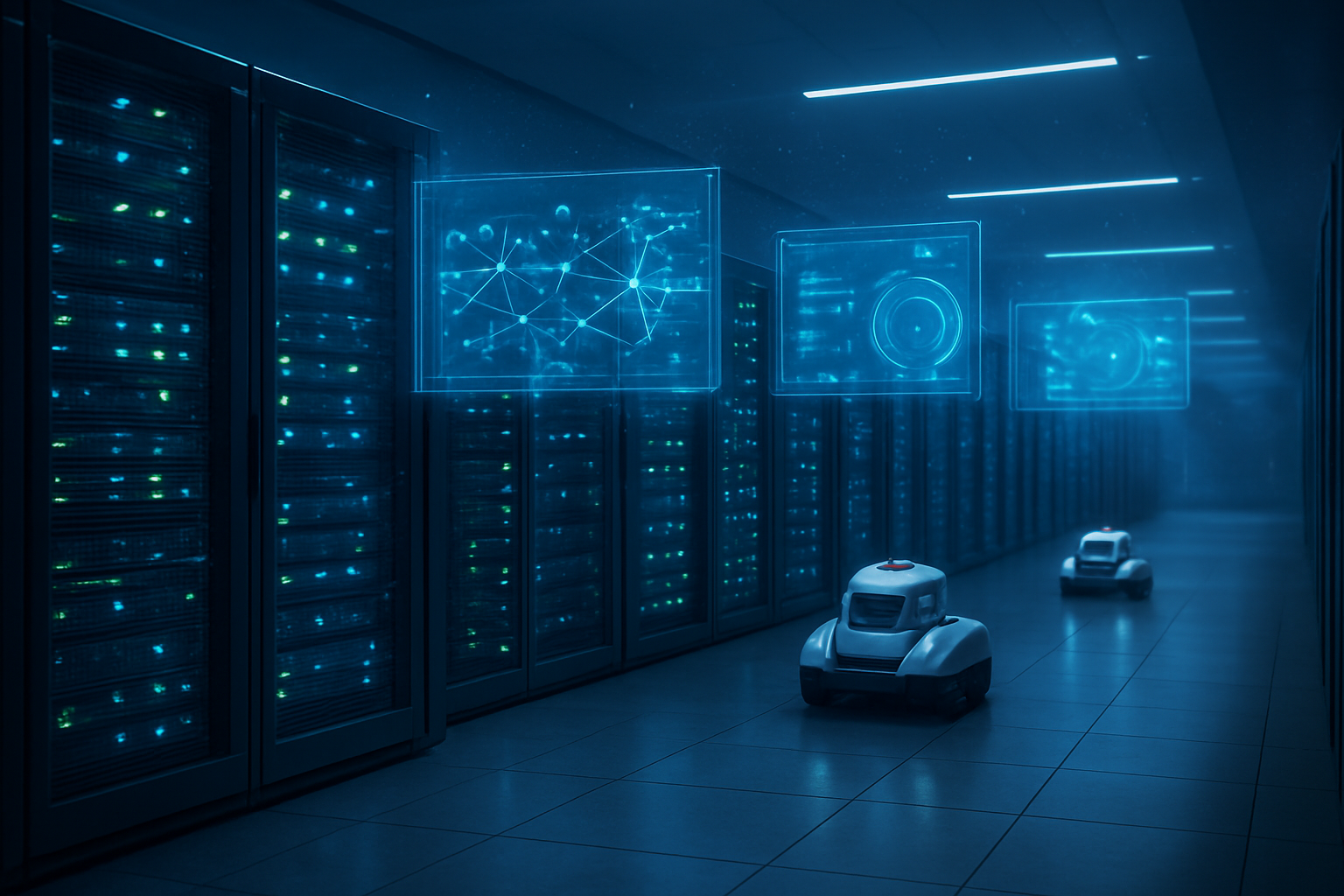
Building a self-healing infrastructure on AWS using AI isn’t just a tech upgrade—it’s a complete shift in how businesses handle IT operations. By combining AWS’s powerful automation tools with smart monitoring, predictive analytics, and automated response systems, companies can dramatically reduce downtime, cut operational costs, and free up their teams to focus on innovation rather than firefighting. The integration of machine learning models for predictive healing and comprehensive observability platforms creates a system that doesn’t just react to problems—it prevents them from happening in the first place.
The real game-changer comes when you layer in robust security practices and compliance automation alongside your healing capabilities. This approach transforms your infrastructure from a constant source of stress into a competitive advantage that scales with your business needs. Start small by implementing automated monitoring and basic self-healing workflows, then gradually expand your AI capabilities as your team becomes more comfortable with the technology. Your future self will thank you for making the investment in infrastructure that takes care of itself.