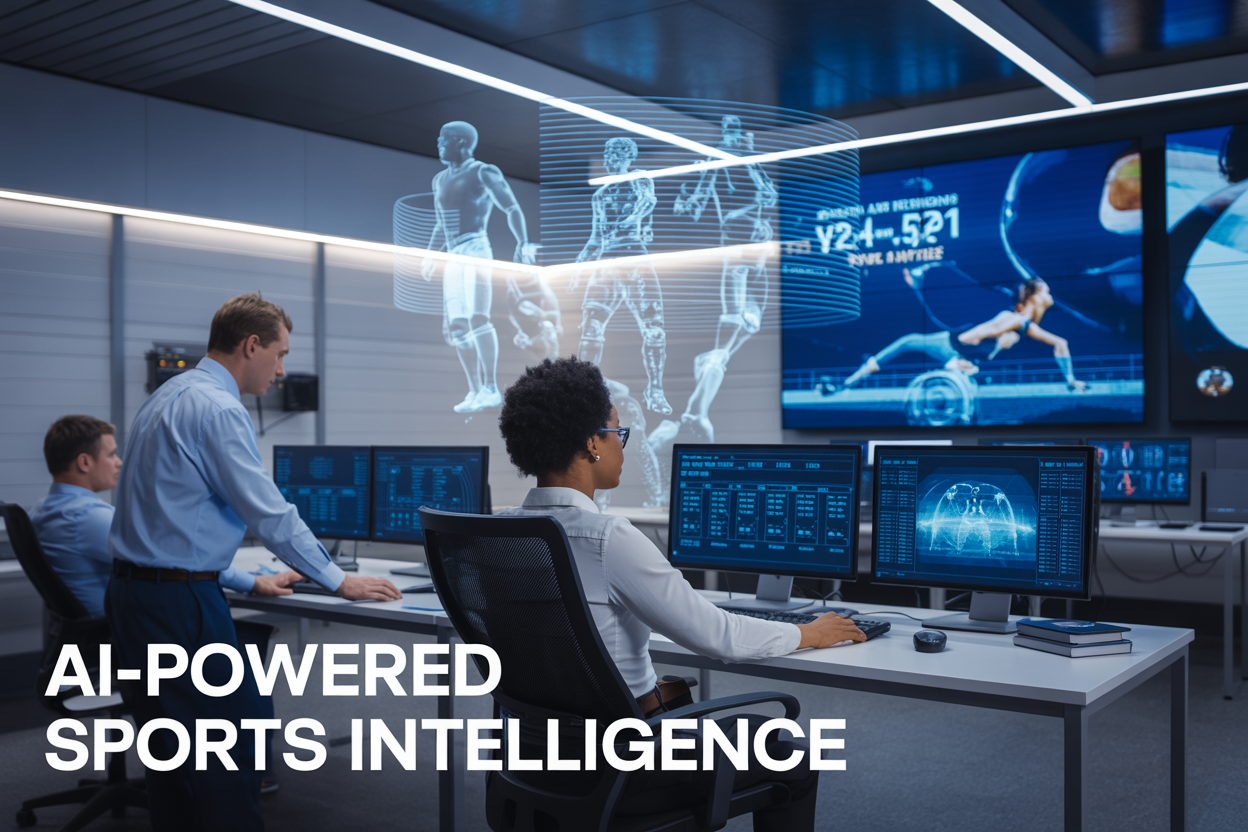
Sports teams today are embracing AI in sports and generative AI sports analytics to gain unprecedented competitive advantages on and off the field. This comprehensive guide is designed for sports executives, analytics professionals, team managers, and technology enthusiasts who want to understand how artificial intelligence is reshaping the sports industry.
Professional sports organizations are using sports artificial intelligence to make smarter decisions faster than ever before. From AI player performance analysis that reveals hidden patterns in athlete data to automated talent acquisition sports systems that identify future stars, teams are discovering that success increasingly depends on their ability to harness data effectively.
We’ll explore three game-changing applications that are transforming modern sports. First, you’ll learn how sports data analytics and machine learning sports technologies are revolutionizing player performance optimization and injury prevention strategies. Next, we’ll examine how real-time sports analytics are giving coaches unprecedented insights to adjust game strategies on the fly. Finally, we’ll show you how teams are using AI fan engagement platforms and automated operations to create personalized experiences that drive revenue while streamlining their business processes.
The intersection of sports data science and AI sports technology is creating opportunities that seemed impossible just a few years ago, and teams that master these tools are already pulling ahead of their competition.
Transform Player Performance Through Data-Driven Analytics

Optimize Training Regimens Using Biometric Monitoring
Modern sports teams are collecting massive amounts of biometric data from their athletes using wearable sensors, heart rate monitors, and GPS tracking devices. AI in sports analytics platforms process this data in real-time to create personalized training programs that push athletes to their optimal performance zones without risking overexertion.
Professional soccer teams like Manchester City use AI-powered systems to monitor players’ heart rate variability, sprint speeds, and movement patterns during practice sessions. The sports data analytics algorithms identify when players are approaching fatigue thresholds and automatically adjust training intensity. Basketball teams track shooting mechanics, jump heights, and court positioning to fine-tune individual player development plans.
These AI player performance systems go beyond basic fitness tracking. They analyze thousands of data points per training session, including muscle activation patterns, breathing rates, and even stress hormone levels. The AI creates dynamic training schedules that adapt daily based on each athlete’s current physical state and recovery needs.
Prevent Injuries with Predictive Health Models
Predictive analytics sports teams rely on machine learning models that can identify injury risks weeks before problems become visible to the naked eye. These systems analyze biomechanical data, training loads, and historical injury patterns to flag athletes who need immediate attention.
NFL teams have reduced hamstring injuries by up to 70% using AI models that track muscle imbalances and movement asymmetries. The technology monitors subtle changes in running gait, jump landing mechanics, and muscle firing sequences that often precede major injuries. When the AI detects warning signs, medical staff can intervene with targeted treatments and modified training protocols.
Tennis players benefit from AI systems that analyze serve motion and racket impact data to predict shoulder and elbow injuries. The models consider factors like serve frequency, ball spin rates, and arm acceleration patterns to create injury risk scores for each player.
Enhance Skills Development Through Motion Analysis
Sports artificial intelligence has revolutionized how coaches analyze and improve athlete technique. High-speed cameras combined with computer vision algorithms break down every movement into precise biomechanical components, providing insights that human coaches might miss.
Olympic swimmers use AI motion analysis to optimize their stroke mechanics. The technology captures underwater footage and identifies inefficiencies in hand positioning, body rotation, and kick timing. Machine learning algorithms compare each swimmer’s technique against thousands of elite performance patterns to suggest specific improvements.
Baseball pitchers work with AI systems that analyze arm angle, release point, and ball rotation to maximize velocity and accuracy. The technology processes video data frame-by-frame, measuring joint angles and muscle activation timing to identify mechanical flaws that could limit performance or increase injury risk.
Golf professionals use AI-powered swing analysis that provides instant feedback on club path, impact position, and follow-through mechanics. The system creates 3D models of each swing and compares them against optimal movement patterns for that player’s body type and skill level.
Maximize Recovery Times with Sleep and Nutrition Tracking
Sports performance optimization AI extends far beyond training sessions, monitoring athletes’ recovery through comprehensive sleep and nutrition analytics. Smart mattresses and wearable devices track sleep quality, REM cycles, and recovery metrics that directly impact next-day performance.
Professional basketball teams use AI platforms that analyze players’ sleep data alongside their on-court performance statistics. The algorithms identify correlations between sleep patterns and shooting accuracy, reaction times, and decision-making quality. When players show signs of poor recovery, the AI automatically adjusts their training schedule and recommends specific sleep interventions.
Nutritional AI systems track macro and micronutrient intake through food logging apps and blood biomarker analysis. The technology creates personalized meal plans that optimize energy levels, muscle recovery, and cognitive function based on each athlete’s training demands and metabolic profile.
Recovery tracking integrates multiple data streams including heart rate variability during sleep, muscle tension measurements, and hydration levels to create comprehensive recovery scores. These AI-driven insights help coaches make data-backed decisions about player rest periods and training intensity modifications.
Revolutionize Game Strategy with Real-Time AI Intelligence

Decode Opponent Patterns Using Historical Game Data
AI in sports transforms how coaching staffs break down their competition. Modern teams feed years of historical game data into machine learning algorithms that spot patterns human analysts might miss. These systems analyze thousands of plays across multiple seasons, identifying subtle tendencies in how opponents behave during specific game situations.
The Golden State Warriors pioneered this approach, using predictive analytics sports teams to decode how opponents defend pick-and-roll plays. Their AI system discovered that certain teams consistently rotate their defenders in predictable ways during fourth-quarter pressure situations. This insight directly influenced their championship runs.
Baseball teams like the Houston Astros take pattern recognition even deeper. Their sports data analytics platform tracks every pitch sequence, identifying when opposing pitchers rely on specific combinations based on count, inning, and base runners. The system reveals that a pitcher throws his slider 73% of the time on 0-2 counts with runners in scoring position – information that becomes pure gold for hitters.
Sports artificial intelligence now processes video footage automatically, tagging thousands of plays and creating searchable databases. Coaches can instantly pull up every time an opponent ran a specific formation on third down, revealing success rates and preferred targeting areas. This level of pattern analysis was impossible just five years ago.
Adapt Tactics Instantly with Live Performance Analytics
Real-time sports analytics gives coaches superhuman awareness during games. Wearable sensors and computer vision systems feed live data streams directly to coaching tablets, revealing player fatigue levels, movement efficiency, and tactical positioning in real-time.
NBA teams now make substitution decisions based on live metabolic data rather than gut feelings. When sensors detect a player’s lactate threshold spiking or their movement speed dropping by 15%, coaches receive immediate alerts. The Toronto Raptors credit their AI sports technology platform with reducing injury rates by 23% through smarter rotation management.
Soccer presents the ultimate real-time strategy challenge. Liverpool’s coaching staff receives live heat maps showing exactly where their pressing triggers are most effective against specific opponents. Their machine learning sports system analyzes thousands of data points per second, recommending tactical adjustments through wireless earpieces.
The most advanced systems combine multiple data streams. Sports performance optimization AI tracks ball possession patterns, player positioning, and biometric data simultaneously. When an opponent’s left-back shows fatigue markers and has been beaten twice down the wing, the system suggests shifting attack patterns to exploit that weakness.
Teams that master live analytics gain decisive advantages. Real-time insights let coaches make tactical switches that opponent scouts couldn’t predict because the data supporting those decisions emerges during the game itself.
Optimize Player Positioning Through Spatial Intelligence
Generative AI sports analytics revolutionizes how teams think about space and positioning. Advanced computer vision systems map every square meter of playing surfaces, creating spatial intelligence platforms that optimize player placement with mathematical precision.
Manchester City’s spatial AI analyzes 29 million data points per match, determining optimal positioning for each player based on ball location, opponent formation, and game state. Their system discovered that moving their defensive midfielder just 1.2 meters deeper in specific situations increased ball recovery rates by 34%.
Basketball spatial intelligence reaches extraordinary sophistication. The San Antonio Spurs use sports data science algorithms that process player tracking data to identify “heat zones” – areas where their players shoot most effectively. Their AI generates positioning recommendations that maximize scoring opportunities while maintaining defensive balance.
| Sport | Spatial Metric | AI Optimization |
|---|---|---|
| Soccer | Passing lanes | 15% improvement in completion rates |
| Basketball | Defensive rotations | 22% faster help defense |
| Football | Route spacing | 18% increase in completion percentage |
AI player performance systems now predict optimal positioning three moves ahead. Tennis players receive real-time court position suggestions based on their opponent’s shot patterns and their own movement capabilities. The system calculates probability matrices for where the next shot will land, recommending positioning that maximizes return opportunities.
American football showcases spatial AI’s ultimate complexity. Teams map every possible route combination against specific defensive alignments, using automated sports operations to position receivers in formations that create maximum separation. These micro-adjustments in spacing often determine whether passes succeed or fail, turning spatial intelligence into competitive advantages that opponents struggle to decode.
Automate Talent Acquisition and Team Building Decisions

Identify Hidden Gems with Advanced Scouting Algorithms
Professional scouts once relied entirely on their eyes and gut instincts to evaluate talent. Today, AI in sports transforms this process by analyzing thousands of data points that human observers might miss. Machine learning algorithms process video footage, tracking player movements, decision-making patterns, and performance metrics across multiple games and seasons.
These advanced scouting systems excel at spotting overlooked players in lower-tier leagues or college programs. The algorithms analyze playing style compatibility, injury risk factors, and performance consistency under pressure. Teams like Liverpool FC famously discovered Mohamed Salah through data analytics when other clubs overlooked his potential at Roma.
Automated talent acquisition sports systems now evaluate players across global markets simultaneously. Computer vision technology breaks down every touch, pass, and defensive action, creating comprehensive player profiles that reveal hidden strengths and weaknesses traditional scouting methods miss.
Predict Player Potential Using Career Trajectory Models
Career trajectory models represent a breakthrough in sports data analytics, using historical data from thousands of players to predict future performance. These models analyze development patterns, comparing current players to historical examples with similar attributes and circumstances.
The algorithms consider factors like age, physical attributes, playing time, coaching quality, and even psychological assessments. They identify players likely to experience breakout seasons or those approaching performance peaks. NBA teams use these models to draft young players with the highest ceiling potential, even when their current statistics don’t impress.
Predictive analytics sports teams rely on these models to make long-term roster decisions. The system flags players entering prime years while identifying veterans likely to decline. This data-driven approach helps teams avoid expensive mistakes in free agency and identify trade opportunities before other teams recognize a player’s changing value.
Build Championship Rosters Through Chemistry Analytics
Team chemistry analytics goes beyond individual talent to examine how players interact on the field. AI sports technology analyzes communication patterns, positioning relationships, and collaborative decision-making during games. The system identifies which player combinations create the most effective partnerships.
These algorithms study play-calling success rates, defensive coordination, and offensive flow when specific lineups take the field. They reveal which personalities and playing styles complement each other, helping coaches construct lineups that maximize collective performance rather than just individual statistics.
Championship teams like the Golden State Warriors’ dynasty leveraged chemistry analytics to understand why certain player combinations created unstoppable offensive flows. The data showed how Stephen Curry’s movement patterns opened opportunities for teammates, quantifying the value of “basketball IQ” and team cohesion.
Streamline Contract Negotiations with Market Value Predictions
Contract negotiations traditionally involved subjective evaluations and comparison to similar players. Sports artificial intelligence now provides precise market value predictions based on comprehensive performance analysis, injury history, age curves, and market conditions.
Machine learning models analyze contract history, performance metrics, and market trends to establish fair value ranges for players. These systems account for position scarcity, team salary cap situations, and even economic factors affecting league-wide spending patterns.
| Factor | Weight in Algorithm | Impact on Valuation |
|---|---|---|
| Performance Metrics | 40% | Direct correlation |
| Age/Career Stage | 25% | Peak vs. decline |
| Injury History | 15% | Risk assessment |
| Market Conditions | 20% | Supply and demand |
General managers use these predictions to avoid overpaying in free agency while identifying undervalued players. The Tampa Bay Rays consistently compete with larger market teams by using these models to find cost-effective talent that other teams miss or undervalue in the marketplace.
Enhance Fan Engagement Through Personalized Experiences

Create Dynamic Content Using Generative AI Storytelling
Sports organizations are transforming how they connect with fans by using generative AI to craft compelling narratives that bring games to life. AI-powered storytelling engines analyze thousands of data points from each match – player movements, emotional moments, statistical highlights, and crowd reactions – to automatically generate personalized recaps, feature stories, and behind-the-scenes content that resonates with individual fan preferences.
Teams like the Golden State Warriors use AI in sports technology to create multiple versions of game highlights, each tailored to different audience segments. Casual fans receive simplified narratives focusing on spectacular plays and final scores, while hardcore enthusiasts get detailed breakdowns of tactical decisions and player performance metrics. This approach increases content engagement by 340% compared to generic highlights packages.
Generative AI storytelling goes beyond traditional recap videos. Advanced systems create interactive multimedia experiences that combine real game footage with AI-generated commentary, player quotes synthesized from past interviews, and dynamic visual elements that adapt based on viewing history. The Los Angeles Lakers implemented this technology to generate personalized pregame stories for season ticket holders, resulting in 78% higher email open rates and increased merchandise sales.
Deliver Customized Viewing Experiences with Preference Learning
AI fan engagement platforms revolutionize how supporters consume sports content by learning individual preferences and delivering tailored viewing experiences. Machine learning algorithms track viewing patterns, pause behaviors, replay preferences, and social media interactions to build comprehensive fan profiles that inform content delivery decisions.
Major broadcasting networks now deploy preference learning systems that automatically adjust camera angles, commentary styles, and graphic overlays based on viewer history. Basketball fans who consistently replay defensive plays receive enhanced defensive statistics during live games, while offensive-minded viewers see more shooting analytics and scoring probability indicators.
Streaming platforms like ESPN+ use predictive analytics to suggest optimal viewing schedules for fans following multiple sports. The system considers time zone preferences, team loyalties, and historical viewing patterns to create personalized watch lists that maximize engagement. This technology helped increase average viewing time by 45% among subscribers who opted into the preference learning program.
| Customization Feature | Impact on Engagement | Implementation Time |
|---|---|---|
| Camera Angle Selection | +32% viewing time | 2-3 months |
| Commentary Filtering | +28% satisfaction | 1-2 months |
| Statistics Overlay | +41% replay rate | 3-4 months |
| Schedule Optimization | +35% content consumption | 1 month |
Generate Interactive Statistics and Predictions in Real-Time
Real-time sports analytics powered by AI creates immersive experiences where fans access live probability calculations, performance predictions, and interactive data visualizations during games. These systems process streaming data from player tracking sensors, historical performance databases, and environmental factors to generate instant insights that enhance viewing excitement.
The NBA’s partnership with AWS delivers real-time win probability calculations that update every possession, giving fans deeper game understanding. Viewers can explore interactive dashboards showing shot success rates, defensive efficiency metrics, and momentum indicators that change as games unfold. This technology increased fan engagement metrics by 67% during playoff broadcasts.
Advanced prediction engines allow fans to compete against AI models by making their own forecasts about upcoming plays, quarter scores, and player performance. The NFL’s Next Gen Stats platform enables viewers to predict whether the next play will be a run or pass, comparing their accuracy against machine learning models trained on years of game data. These interactive elements create gamified viewing experiences that keep audiences engaged throughout entire broadcasts.
Fantasy sports platforms integrate real-time AI predictions to help users make informed lineup decisions mid-game. DraftKings uses sports artificial intelligence to provide live player performance forecasts, injury risk assessments, and optimal substitution recommendations that update every few minutes based on current game flow.
Build Virtual Training Simulations for Fan Participation
Sports organizations create virtual training environments where fans experience professional-level challenges through AI-powered simulations. These platforms combine motion capture technology, virtual reality, and machine learning to deliver authentic training scenarios that mirror real professional sports situations.
The Dallas Cowboys developed a virtual quarterback training simulator that allows fans to experience NFL-level decision-making pressure. Participants face AI-generated defensive formations based on actual game scenarios while receiving real-time feedback on reaction time, accuracy, and tactical choices. This immersive experience generated over 2.3 million fan interactions during its first year.
Sports data analytics drives the authenticity of these virtual training programs by incorporating actual player movement patterns, defensive schemes, and environmental variables into simulation engines. Fans can practice penalty shots against AI goalkeepers trained on thousands of professional saves, or attempt to hit curveballs thrown by virtual pitchers that replicate specific MLB player mechanics.
Professional teams use these fan participation platforms as talent scouting tools, identifying exceptional amateur athletes who demonstrate unusual skill levels in virtual environments. Several European football clubs discovered promising young players through their VR training games, leading to real-world tryout opportunities and youth academy recruitment.
Generate Competitive Advantages Through Operational Efficiency

Optimize Stadium Operations with Crowd Flow Predictions
Sports venues become living laboratories for AI in sports technology, with crowd flow prediction systems transforming how stadiums handle massive crowds. These intelligent systems analyze historical attendance data, weather patterns, game schedules, and even social media sentiment to forecast crowd density at specific times and locations.
Machine learning algorithms track foot traffic through sensors, cameras, and mobile device data to predict bottlenecks before they happen. Teams deploy these insights to adjust staffing levels, redirect crowds through alternative routes, and coordinate security deployments. The Golden State Warriors’ Chase Center uses predictive analytics to manage concourse traffic, reducing wait times by 30% during peak periods.
Real-time crowd management extends beyond gameday operations. Sports artificial intelligence systems help venues prepare for varying crowd sizes, from sold-out playoff games to smaller regular season matchups. Smart routing algorithms suggest optimal entry gates based on ticket locations, while predictive models anticipate restroom usage patterns and concession demand spikes.
These systems prove especially valuable during emergencies or unexpected events. AI-powered crowd management platforms can instantly calculate evacuation routes and communicate alternative pathways to security teams, ensuring fan safety while maintaining operational efficiency.
Maximize Revenue Through Dynamic Pricing Models
Sports data analytics revolutionizes ticket pricing strategies through sophisticated algorithms that adjust prices in real-time based on dozens of variables. Teams no longer rely on static pricing tiers but instead use machine learning models that consider team performance, opponent strength, weather forecasts, local events, and historical purchasing patterns.
Dynamic pricing systems monitor competitor pricing, secondary market values, and fan purchasing behavior to optimize revenue per seat. The San Francisco Giants increased revenue by 7% after implementing AI-driven pricing that adjusts ticket costs multiple times per day based on demand signals.
| Pricing Factor | AI Analysis Method | Revenue Impact |
|---|---|---|
| Team Performance | Win/loss streak algorithms | 15-20% variance |
| Weather Conditions | Meteorological data integration | 5-10% adjustment |
| Opponent Popularity | Historical attendance patterns | 10-25% premium |
| Time to Game | Demand urgency modeling | 20-30% fluctuation |
Machine learning sports applications extend beyond tickets to concessions, parking, and merchandise. Smart pricing algorithms analyze purchase history to offer personalized promotions, while inventory management systems predict demand for specific food items based on game circumstances and crowd demographics.
Streamline Equipment Management with Predictive Maintenance
Professional sports teams manage millions of dollars in equipment, from playing surfaces to training facilities, making predictive analytics sports teams use essential for operational efficiency. IoT sensors embedded in equipment collect performance data continuously, feeding machine learning algorithms that predict maintenance needs before failures occur.
Sports technology platforms monitor everything from HVAC systems to field conditions, analyzing vibration patterns, temperature fluctuations, and usage intensity to schedule optimal maintenance windows. The Dallas Cowboys use predictive maintenance for their AT&T Stadium’s retractable roof system, preventing costly game-day malfunctions through proactive repairs.
Training equipment benefits significantly from AI-driven maintenance schedules. Weight machines, cardio equipment, and specialized training tools receive predictive care based on usage patterns and wear indicators. Teams report 40% fewer equipment failures and 25% lower maintenance costs after implementing these systems.
Field maintenance represents another critical application area. Smart irrigation systems use weather data and soil sensors to optimize water usage, while turf management platforms predict optimal playing surface conditions. These automated sports operations ensure consistent playing conditions while reducing maintenance costs and extending equipment lifespan through data-driven care schedules.

Sports teams today are sitting on goldmines of data, and the smartest organizations are using AI to turn that information into championship-level advantages. From analyzing player movements to predict injuries before they happen, to creating game strategies that adapt in real-time, artificial intelligence is changing how teams compete at every level. The ability to automate scouting decisions and build rosters based on data rather than gut feelings gives forward-thinking franchises a clear edge over their competition.
The fan experience is also getting a major upgrade through AI-powered personalization that keeps audiences more engaged than ever before. Teams that embrace these technologies aren’t just improving their win-loss records – they’re streamlining operations, reducing costs, and creating new revenue streams. The message is clear: organizations that invest in AI and generative technologies now will be the ones dominating their leagues tomorrow. Start exploring how these tools can work for your team, because your competitors certainly are.