Container breakout attacks pose a serious threat to Kubernetes clusters, where attackers escape container boundaries to access the host system or other containers. This guide is designed for DevOps engineers, security professionals, and Kubernetes administrators who need practical strategies to protect their clusters from container escape vulnerabilities.
Kubernetes security requires a multi-layered approach that goes beyond basic container isolation. When containers break out of their boundaries, they can compromise entire nodes, steal sensitive data, or move laterally across your infrastructure. The good news is that proper Kubernetes pod security measures and proactive container runtime security controls can stop most attacks before they cause damage.
We’ll walk through the most effective ways to prevent container breakout attacks. First, you’ll learn how to spot common container escape vulnerabilities and understand what makes containers break out in the first place. Next, we’ll cover how to set up strong container security monitoring systems that catch suspicious activity early. Finally, we’ll show you how to implement robust Kubernetes cluster hardening techniques, including proper Kubernetes RBAC configuration and Kubernetes network policies that create additional barriers against attackers.
Understanding Container Breakout Vulnerabilities in Kubernetes
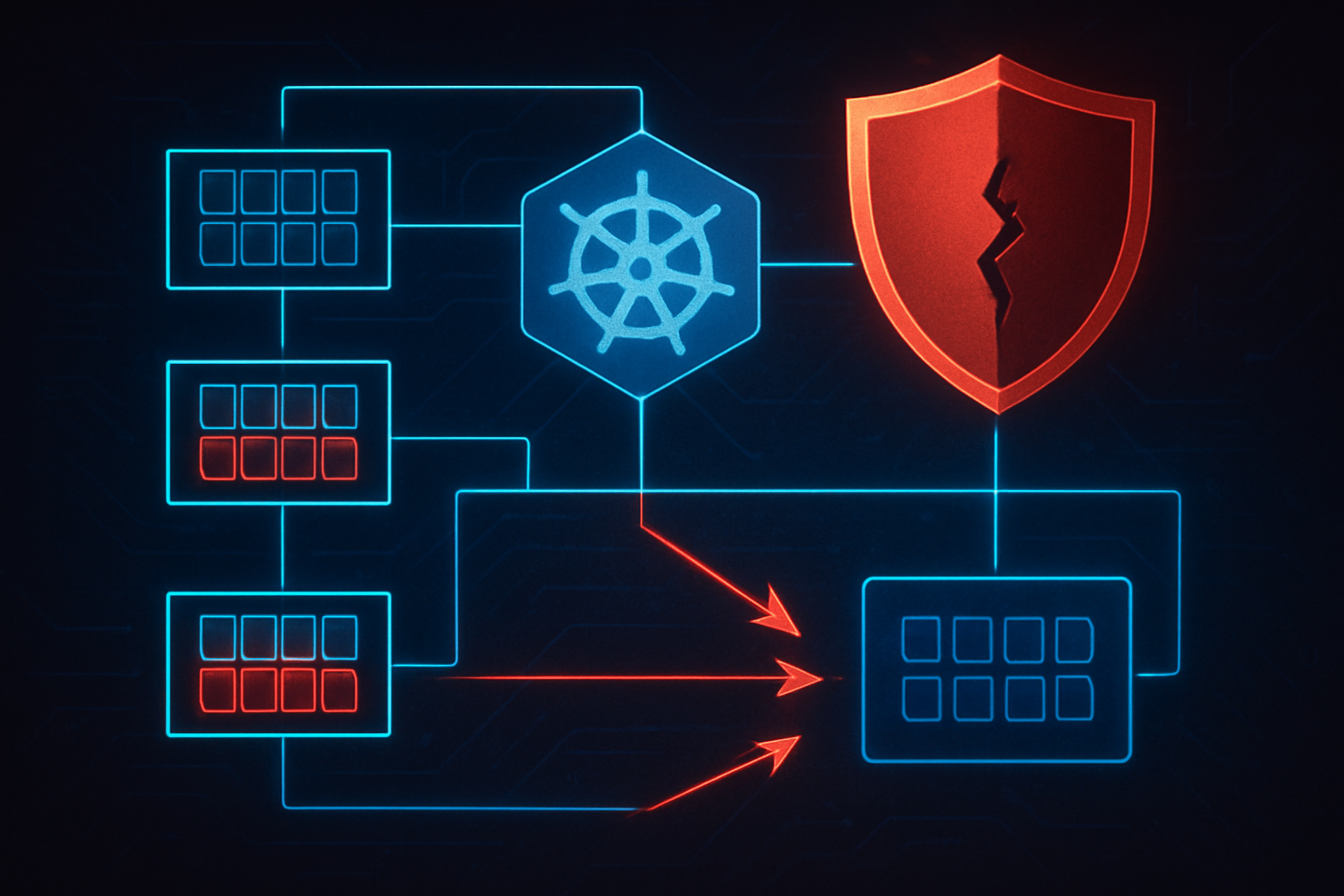
Identifying Common Container Escape Techniques
Container escape vulnerabilities represent some of the most critical Kubernetes security threats that organizations face today. These attacks allow malicious actors to break free from container isolation boundaries and gain unauthorized access to the underlying host system.
Namespace escapes rank among the most prevalent techniques attackers use. Containers rely on Linux namespaces to create isolated environments, but misconfigurations or vulnerabilities can allow processes to escape these boundaries. When namespace isolation fails, attackers can access host processes, network interfaces, and file systems that should remain protected.
Volume mount exploitation presents another significant attack vector. Containers often mount host directories or sensitive system paths like /var/run/docker.sock or /proc. Attackers can abuse these mounted volumes to execute commands on the host system, read sensitive files, or manipulate container orchestration directly.
Syscall abuse represents a more sophisticated escape method. Containers share the host kernel, and certain system calls can be exploited to break containment. Attackers might leverage vulnerable syscalls to manipulate kernel structures or bypass security controls.
Key escape techniques include:
- Exploiting shared kernel vulnerabilities
- Abusing privileged container configurations
- Manipulating cgroup settings
- Leveraging container runtime vulnerabilities
- Exploiting shared network namespaces
Recognizing Privilege Escalation Attack Vectors
Privilege escalation attacks in Kubernetes environments typically follow predictable patterns that security teams must understand to implement effective defenses. These attacks often begin with limited container access and progressively expand permissions until full system compromise occurs.
Service account token abuse represents a primary escalation pathway. Every pod receives a service account token that grants specific permissions within the cluster. Attackers who compromise a container can extract these tokens and use them to interact with the Kubernetes API, potentially escalating their privileges based on the service account’s assigned roles.
RBAC misconfigurations create substantial escalation opportunities. When Role-Based Access Control policies are overly permissive or incorrectly configured, attackers can leverage legitimate permissions to expand their access. Common mistakes include granting cluster-admin privileges unnecessarily or creating roles with excessive resource permissions.
Node-level privilege escalation occurs when attackers gain access to worker nodes and attempt to escalate to root privileges. This can happen through:
- Kernel exploits targeting unpatched vulnerabilities
- Container runtime vulnerabilities
- Shared resource abuse
- Process injection attacks
- File system permission weaknesses
Pod security context manipulation allows attackers to modify container security settings. When pods run with elevated privileges, security contexts, or capabilities, attackers can exploit these permissions to access host resources, manipulate other containers, or execute privileged operations.
Assessing Kernel Exploitation Risks
The shared kernel architecture in containerized environments creates unique security challenges that don’t exist in traditional virtual machine deployments. All containers on a node share the same kernel instance, making kernel vulnerabilities particularly dangerous for Kubernetes clusters.
Kernel vulnerability impact extends across all containers running on affected nodes. A single kernel exploit can potentially compromise every workload on that node, making patch management and vulnerability assessment critical security practices. Organizations must maintain aggressive patching schedules and monitor kernel vulnerability databases continuously.
Container escape through kernel bugs represents a severe threat vector. Attackers can exploit kernel vulnerabilities to break out of container namespaces, bypass security controls, and gain root access to the host system. Recent examples include CVE-2022-0185 and CVE-2019-5736, which allowed complete host compromise through kernel manipulation.
System call filtering gaps create additional risk exposure. While seccomp profiles restrict available system calls, incomplete filtering or profile bypasses can allow attackers to execute dangerous kernel operations. Organizations need comprehensive syscall auditing and restrictive default profiles.
Critical kernel security considerations include:
- Regular kernel updates and security patches
- Implementing kernel runtime security modules
- Monitoring for unusual syscall patterns
- Deploying kernel exploit detection tools
- Using kernel address space layout randomization (KASLR)
Evaluating Host System Access Threats
Host system compromise represents the ultimate goal for most container breakout attacks, providing attackers with complete control over the Kubernetes node and potentially the entire cluster. Understanding these threats helps organizations implement appropriate defensive measures.
Direct host file system access occurs when containers gain unauthorized access to host directories through volume mounts, symlink attacks, or namespace escapes. Attackers can read sensitive configuration files, modify system binaries, or plant persistent backdoors on the host system.
Process manipulation capabilities allow attackers to interact with host processes once they escape container boundaries. This includes killing critical system services, injecting code into running processes, or spawning new processes with elevated privileges.
Network interface compromise enables attackers to monitor network traffic, modify routing tables, or launch network-based attacks against other cluster components. When containers escape network namespace isolation, they gain access to all network interfaces and can potentially intercept sensitive communications.
Container runtime exploitation presents a significant attack surface. Vulnerabilities in Docker, containerd, or other runtime engines can provide direct paths to host system access. Attackers might exploit API endpoints, abuse runtime commands, or leverage privilege escalation bugs within the runtime itself.
Host access threats include:
- SSH key extraction and lateral movement
- Container image tampering and supply chain attacks
- Persistent backdoor installation
- Resource exhaustion attacks
- Cross-container data exfiltration
- Cluster component manipulation
Organizations must implement multiple layers of defense to prevent these host system access scenarios, including runtime security monitoring, network segmentation, and strict access controls.
Implementing Container Runtime Security Controls

Configuring Secure Container Runtime Options
Container runtime security forms the foundation of your Kubernetes security strategy. The runtime configuration directly impacts how containers interact with the underlying host system and determines the potential attack surface for container breakouts.
Start by selecting a security-focused container runtime like containerd with gVisor or Kata Containers for workloads requiring enhanced isolation. These runtimes provide additional security layers through virtualization or kernel sandboxing. For standard containerd or CRI-O deployments, disable privileged containers by default and restrict capabilities using the allowPrivilegeEscalation: false setting in your pod security contexts.
Configure the runtime to use read-only root filesystems whenever possible. This prevents attackers from modifying critical system files even if they achieve container access:
securityContext:
  readOnlyRootFilesystem: true
  runAsNonRoot: true
  runAsUser: 1001
Enable seccomp profiles to limit system calls available to containers. Create custom seccomp profiles that only allow necessary system calls for your specific applications, reducing the attack surface significantly. The default Docker seccomp profile blocks around 44 system calls that could be used for container escape attempts.
Enabling AppArmor and SELinux Protections
AppArmor and SELinux provide mandatory access control (MAC) systems that create additional security boundaries around your containers. These Linux Security Modules (LSMs) enforce policies that restrict what actions containers can perform, even if an attacker gains access.
For AppArmor-enabled systems, create custom profiles tailored to your application’s needs. Start with the default Docker AppArmor profile and refine it based on your container’s specific requirements:
metadata:
  annotations:
    container.apparmor.security.beta.kubernetes.io/app: runtime/default
SELinux offers similar protections through context-based access controls. Configure SELinux to run in enforcing mode and use the container_t type for your containers. Create custom SELinux policies for applications that need specific file system access or network permissions:
securityContext:
  seLinuxOptions:
    level: "s0:c123,c456"
    type: "container_t"
Both AppArmor and SELinux can prevent common container breakout techniques like accessing host files, mounting host directories, or escalating privileges. Regular policy auditing ensures these protections remain effective as your applications evolve.
Establishing Resource Limits and Quotas
Resource limits and quotas prevent containers from consuming excessive system resources, which attackers often exploit during breakout attempts. Properly configured limits also protect against denial-of-service attacks and ensure cluster stability.
Set CPU and memory limits for every container to prevent resource exhaustion:
resources:
  limits:
    cpu: "500m"
    memory: "512Mi"
  requests:
    cpu: "100m"
    memory: "128Mi"
Implement namespace-level ResourceQuotas to control resource consumption across multiple pods. This prevents a compromised container from spawning additional containers or consuming cluster resources:
spec:
  hard:
    requests.cpu: "4"
    requests.memory: "8Gi"
    limits.cpu: "8"
    limits.memory: "16Gi"
    pods: "10"
Configure LimitRanges to enforce default resource constraints and prevent users from creating containers without proper limits. Include process limits (PID limits) to prevent fork bombs and other process-based attacks that could destabilize the host system.
Use PodDisruptionBudgets alongside resource controls to maintain application availability while preventing resource abuse. These policies work together to create a robust defense against both accidental and malicious resource consumption patterns that could facilitate container runtime security breaches.
Strengthening Pod Security Standards and Policies
Deploying Pod Security Standards Enforcement
Pod Security Standards represent the next evolution of Kubernetes pod security, replacing the deprecated Pod Security Policies with a more streamlined approach. These standards operate at three distinct levels: Privileged, Baseline, and Restricted, each offering different security guarantees. The Privileged level allows unrestricted pod creation, while Baseline prevents known privilege escalations, and Restricted implements current pod hardening best practices.
To implement effective Kubernetes pod security enforcement, configure admission controllers to validate pods against these standards. The Pod Security admission controller evaluates pods during creation, enforcing policies through three modes: enforce (rejects non-compliant pods), audit (logs violations), and warn (displays warnings to users).
apiVersion: v1
kind: Namespace
metadata:
  name: production
  labels:
    pod-security.kubernetes.io/enforce: restricted
    pod-security.kubernetes.io/audit: restricted
    pod-security.kubernetes.io/warn: restricted
Start with baseline standards in audit mode across namespaces to understand current compliance levels before enforcing restrictions. This gradual approach prevents disrupting existing workloads while building comprehensive security coverage.
Restricting Privileged Container Execution
Privileged containers pose significant risks by granting nearly unlimited access to host resources, essentially removing container isolation boundaries. These containers can access host devices, modify kernel parameters, and interact directly with the host file system, creating prime opportunities for container breakout prevention failures.
Block privileged container execution through multiple enforcement layers. Configure Pod Security Standards to reject pods with privileged: true in their security context. Additionally, implement admission controllers that specifically validate container privilege settings before pod creation.
Container runtime security controls should complement policy-based restrictions. Configure your container runtime to deny privilege escalation attempts and maintain strict capability boundaries. OCI-compliant runtimes like containerd and CRI-O provide granular controls for privilege management.
Monitor for privilege escalation attempts through runtime security tools that detect when containers attempt to gain elevated permissions. These tools can identify suspicious activities like capability additions, privileged system calls, or attempts to access restricted host resources.
Controlling Host Network and PID Namespace Access
Host network access allows containers to bypass Kubernetes network policies entirely, sharing the host’s network stack and potentially accessing services intended to remain isolated. Similarly, host PID namespace access enables containers to view and interact with all host processes, creating surveillance and manipulation opportunities.
Restrict host namespace access through comprehensive security contexts:
apiVersion: v1
kind: Pod
spec:
  securityContext:
    hostNetwork: false
    hostPID: false
    hostIPC: false
  containers:
  - name: secure-container
    securityContext:
      allowPrivilegeEscalation: false
      runAsNonRoot: true
      capabilities:
        drop:
        - ALL
Network policies should complement namespace restrictions by defining explicit ingress and egress rules. Create default-deny policies for namespaces and selectively allow required communications. This approach ensures that even if containers gain network access, their communication paths remain controlled.
Monitor network traffic patterns to detect anomalous communications that might indicate compromised containers attempting lateral movement. Tools that provide network observability can identify connections to unexpected destinations or unusual traffic volumes.
Managing Volume Mount Permissions
Volume mounts can provide attack vectors for container escape if configured improperly. Host path volumes present particular risks by exposing host file system directories directly to containers. Sensitive paths like /proc, /sys, or /dev can provide kernel interfaces that enable privilege escalation.
Implement strict volume mount policies through admission controllers that evaluate mount requests. Deny host path mounts to sensitive directories and require explicit justification for any host path usage. Consider using read-only mounts wherever possible to limit potential damage from compromised containers.
Kubernetes cluster hardening should include comprehensive volume security policies:
- Restrict host path volume usage to specific, approved directories
- Implement read-only root file systems for containers when possible
- Use projected volumes instead of host paths for configuration data
- Apply proper ownership and permission settings on mounted volumes
Secrets and ConfigMaps should be mounted with restricted permissions to prevent unauthorized access. Use defaultMode settings to control file permissions and ensure secrets remain accessible only to intended processes.
Implementing Security Context Constraints
Security context constraints define comprehensive security policies that govern pod and container execution parameters. These constraints work alongside Pod Security Standards to provide defense-in-depth security controls. Effective constraints should address user privileges, capability management, and resource access patterns.
Configure security contexts to enforce non-root execution across your cluster. Running containers as non-root users significantly reduces the impact of potential security vulnerabilities by limiting the privileges available to compromised processes.
securityContext:
  runAsUser: 10001
  runAsGroup: 10001
  runAsNonRoot: true
  fsGroup: 10001
  seccompProfile:
    type: RuntimeDefault
  seLinuxOptions:
    level: "s0:c123,c456"
Capability dropping represents another critical security measure. Remove all unnecessary capabilities and grant only the minimum required for application functionality. Default capability sets often include powerful permissions like CAP_NET_RAW or CAP_SYS_ADMIN that attackers can exploit.
Seccomp profiles provide system call filtering that can prevent exploitation of kernel vulnerabilities. Enable runtime default seccomp profiles for all containers and consider custom profiles for applications with specific system call requirements. AppArmor or SELinux integration adds additional mandatory access control layers that restrict container behavior beyond standard Unix permissions.
Securing Kubernetes RBAC and Network Policies

Creating Least-Privilege Access Controls
Kubernetes RBAC configuration forms the backbone of cluster security by controlling who can perform specific actions on cluster resources. The principle of least privilege means users and service accounts should only have the minimum permissions necessary to complete their tasks. This approach significantly reduces the attack surface if an attacker gains access to credentials.
Start by conducting a comprehensive audit of existing roles and bindings. Many organizations discover they have overly permissive roles that grant broad access across namespaces. Create granular roles that target specific resources and verbs. For example, instead of granting cluster-admin privileges to application deployments, create custom roles that only allow reading pods and secrets within a designated namespace.
Role-based access control becomes more effective when you implement namespace isolation. Design your cluster architecture with clear boundaries between development, staging, and production environments. Each namespace should have its own set of roles and bindings, preventing accidental or malicious cross-environment access.
Regular role reviews and cleanup sessions help maintain security hygiene. Automated tools can identify unused roles, excessive permissions, and potential privilege escalation paths. Consider implementing role templates for common use cases, making it easier for teams to request appropriate permissions without defaulting to excessive access rights.
Implementing Network Segmentation Rules
Kubernetes network policies provide granular control over pod-to-pod communication, creating micro-segmentation within your cluster. By default, Kubernetes allows all pods to communicate freely, which poses significant security risks if container breakout vulnerabilities are exploited.
Design network policies with a default-deny approach. Start by blocking all traffic and then explicitly allow only necessary communication paths. This strategy ensures that compromised containers cannot easily move laterally through your cluster infrastructure. Create policies that restrict traffic based on namespace labels, pod selectors, and specific ports.
Consider implementing tiered network architecture within your Kubernetes cluster hardening strategy. Front-end pods should only communicate with backend services on specific ports, while database pods should accept connections solely from authorized application layers. Use network policy selectors to enforce these communication patterns automatically.
Ingress and egress rules require careful planning. Ingress policies control incoming traffic to pods, while egress policies manage outbound connections. Pay special attention to egress rules, as they can prevent compromised containers from establishing command-and-control connections with external attackers. Block unnecessary outbound traffic to public internet destinations unless explicitly required for legitimate application functionality.
Monitor network policy effectiveness through regular testing and validation. Tools like network policy simulators can help verify that your rules work as expected before applying them to production environments.
Restricting Service Account Permissions
Service accounts often become overlooked attack vectors in Kubernetes environments. Every pod runs with a service account, and many deployments use the default service account with potentially excessive permissions. Container escape vulnerabilities become more dangerous when the compromised container has access to powerful service account credentials.
Create dedicated service accounts for each application or service rather than relying on defaults. Each service account should have carefully crafted RBAC bindings that grant only the minimum permissions required for the application to function. For example, a web application might need read access to config maps and secrets, but shouldn’t have the ability to create or delete other pods.
Disable automatic mounting of service account tokens when applications don’t need Kubernetes API access. This simple configuration change removes a common attack vector used in container breakout scenarios. Add automountServiceAccountToken: false to pod specifications when the application doesn’t require cluster API interaction.
Implement service account token rotation policies to limit the window of opportunity if tokens become compromised. Short-lived tokens reduce the impact of credential theft and make it harder for attackers to maintain persistent access to cluster resources.
Regular auditing of service account permissions helps identify potential security gaps. Look for service accounts with cluster-level permissions when namespace-level access would suffice. Cross-reference service account usage with actual application requirements to identify opportunities for permission reduction.
Monitoring and Detecting Container Breakout Attempts

Setting Up Runtime Security Monitoring Tools
Kubernetes security monitoring requires specialized tools that can detect container breakout attempts in real-time. Popular solutions like Falco, Sysdig Secure, and Aqua Security provide comprehensive runtime protection by monitoring system calls, network activity, and file system changes within containers.
Falco stands out as an open-source option that uses kernel-level monitoring to detect suspicious behavior. Install Falco as a DaemonSet across all nodes to ensure complete cluster coverage. Configure custom rules to monitor for privileged container launches, unexpected file system modifications, and abnormal network connections that could signal escape attempts.
Commercial platforms like Twistlock (now Prisma Cloud) and StackRox offer advanced behavioral analysis capabilities. These tools create baseline profiles for normal container behavior and alert when processes deviate from expected patterns. Deploy these agents at the container runtime level to capture low-level system interactions that traditional monitoring might miss.
Container security monitoring tools should integrate with your existing SIEM infrastructure through standardized APIs. Set up automated alerting for high-priority events like privilege escalation attempts, suspicious process spawning, or unauthorized access to host resources.
When selecting runtime security tools, prioritize solutions that support your specific container runtime (Docker, containerd, or CRI-O) and can scale with your Kubernetes cluster size without introducing significant performance overhead.
Configuring Anomaly Detection Systems
Effective anomaly detection requires establishing normal behavioral baselines for your containerized applications. Machine learning-based detection systems analyze patterns in process execution, network traffic, and resource utilization to identify deviations that might indicate container breakout attempts.
Start by implementing statistical anomaly detection for resource consumption patterns. Containers attempting to break out often exhibit unusual CPU spikes, memory allocation patterns, or disk I/O behavior as they probe for vulnerabilities or execute malicious payloads.
Network-based anomaly detection proves particularly valuable for catching lateral movement after initial compromise. Monitor for unexpected outbound connections, DNS queries to suspicious domains, or communication patterns between pods that violate your defined security boundaries.
Behavioral analysis engines should track process genealogy within containers. Normal applications follow predictable execution patterns, while malicious activities often involve spawning unusual child processes or executing binaries from unexpected locations. Configure alerts for processes that access sensitive system directories or attempt to modify container runtime configurations.
Time-series analysis helps identify gradual changes in container behavior that might indicate ongoing reconnaissance or slow-burn attack techniques. Set up trending alerts for metrics like failed authentication attempts, unusual file access patterns, or gradual privilege escalation attempts across multiple containers.
Establishing Incident Response Workflows
Container breakout incidents demand rapid response procedures tailored to containerized environments. Create playbooks that address the unique challenges of investigating and containing threats in ephemeral, distributed systems where evidence can disappear when pods restart.
Design automated containment mechanisms that can immediately isolate compromised pods without disrupting legitimate services. Implement network policies that can quarantine suspicious containers while maintaining connectivity for forensic analysis. Use Kubernetes annotations to tag potentially compromised workloads and prevent their scheduling on healthy nodes.
Develop escalation procedures that account for the speed at which container-based attacks can propagate. Unlike traditional infrastructure, container breakouts can affect multiple nodes within minutes. Establish clear decision trees for when to trigger cluster-wide protective measures versus targeted pod isolation.
Your incident response team needs specialized tools for container forensics. Traditional disk imaging doesn’t work with ephemeral containers, so implement persistent logging solutions that capture container state, process trees, and network connections even after pod termination. Tools like Sysdig Inspect or Aqua’s forensic capabilities provide container-specific investigation features.
Create communication protocols that keep relevant teams informed without overwhelming them with false positives. Integrate alerting systems with collaboration platforms like Slack or Microsoft Teams to ensure security events reach the right personnel immediately, especially during off-hours when automated response might not be sufficient.
Creating Audit Log Analysis Procedures
Kubernetes audit logs provide crucial evidence for detecting and investigating container breakout attempts. Configure comprehensive audit logging policies that capture security-relevant events without overwhelming your log storage infrastructure.
Focus audit logging on high-risk API calls that attackers commonly exploit. Monitor requests to create privileged pods, modify security contexts, access secrets, or manipulate RBAC configurations. Set up specific audit rules for operations that could facilitate container escape, such as mounting host directories or accessing privileged service accounts.
Implement log aggregation systems that can handle the volume of data generated by busy Kubernetes clusters. Solutions like Elasticsearch, Splunk, or cloud-native logging services provide the scalability needed for comprehensive audit trail analysis. Structure your log retention policies to balance storage costs with forensic requirements.
Develop automated analysis procedures that can identify suspicious patterns across multiple audit events. Look for sequences like failed privilege escalation attempts followed by successful pod creation, or unusual patterns of secret access preceding network policy modifications. Create correlation rules that connect seemingly unrelated events into coherent attack narratives.
Regular log analysis should include trending reports that highlight changes in user behavior, API usage patterns, or resource access trends. These baseline reports help security teams spot gradual changes that might indicate reconnaissance activities or insider threats preparing for container breakout attempts.
Establish procedures for preserving and analyzing logs during active incidents. Create separate, immutable log storage for forensic analysis that can’t be tampered with by attackers who might have gained cluster access. Document chain-of-custody procedures for log evidence that might be needed for legal or compliance purposes.
Hardening Node-Level Security Configurations
Securing Kubelet Configuration Settings
The kubelet serves as the primary node agent in every Kubernetes cluster and represents a critical attack vector for container breakout attempts. Proper kubelet hardening forms the foundation of node-level security in your Kubernetes cluster hardening strategy.
Start by disabling anonymous authentication on the kubelet by setting --anonymous-auth=false. This prevents unauthorized access to kubelet APIs that attackers could exploit during container escape vulnerabilities. Configure webhook authentication mode using --authentication-token-webhook=true and --authorization-mode=Webhook to ensure all kubelet API requests go through proper authentication and authorization checks.
Restrict kubelet’s read-only port access by setting --read-only-port=0. The read-only port exposes sensitive cluster information without authentication, creating an easy pathway for attackers who achieve initial container access. Enable TLS encryption for kubelet communications using --tls-cert-file and --tls-private-key-file parameters to prevent man-in-the-middle attacks.
Configure resource limits and cgroup settings to prevent resource exhaustion attacks. Set --kube-reserved and --system-reserved to allocate dedicated resources for Kubernetes components and system processes. This prevents containers from consuming all available node resources during breakout attempts.
Disable unnecessary kubelet features like the debugging handlers by setting --enable-debugging-handlers=false. These endpoints can expose sensitive information about running containers and node configuration that attackers can leverage for privilege escalation.
Implementing Host-Based Intrusion Detection
Host-based intrusion detection systems (HIDS) provide real-time monitoring and alerting for suspicious activities at the node level. Deploy agents like Falco, OSSEC, or commercial solutions directly on Kubernetes nodes to detect container security monitoring events and potential breakout attempts.
Falco excels at detecting runtime security violations by monitoring system calls, kernel events, and Kubernetes API calls. Configure custom rules to detect common container breakout techniques such as:
- Attempts to mount sensitive host directories
- Processes trying to escape container namespaces
- Unusual network connections from containers
- Privilege escalation attempts
- Access to sensitive host files like
/proc,/sys, or/dev
Set up behavioral baselines for normal container operations on each node. Monitor for deviations such as unexpected process spawning, unusual file access patterns, or network connections to external systems. Create alerting mechanisms that integrate with your security operations center to enable rapid response to detected threats.
Configure log aggregation to centralize security events from all nodes. Use tools like Elasticsearch, Splunk, or cloud-native logging services to correlate events across your cluster. This helps identify distributed attacks that span multiple nodes or sophisticated attackers who try to blend malicious activities with normal operations.
Managing Container Image Security Scanning
Container image security scanning forms a crucial defense layer against vulnerabilities that attackers could exploit for container breakouts. Implement both static scanning during the CI/CD pipeline and runtime scanning for deployed containers.
Deploy image scanning tools like Trivy, Clair, or Twistlock at multiple stages of your container lifecycle. Scan base images in your registries before deployment and continuously monitor running containers for newly discovered vulnerabilities. Configure scanning policies that automatically block deployment of images containing critical or high-severity vulnerabilities.
Establish image signing and verification workflows using tools like Cosign or Notary. Require cryptographic signatures on all container images to prevent tampering and ensure only trusted images run in your cluster. Configure admission controllers to reject unsigned or improperly signed images during pod creation.
Create vulnerability remediation workflows that prioritize patches based on exploitability and exposure. Focus on vulnerabilities in container runtime components, kernel-level libraries, and network-facing services that could enable privilege escalation. Set up automated image rebuilding and redeployment processes for critical security updates.
Implement runtime vulnerability monitoring to detect when new CVEs affect your running containers. Many vulnerabilities are discovered after deployment, so continuous monitoring ensures you can respond quickly to emerging threats. Configure alerts for vulnerabilities that specifically relate to container escape techniques or kernel exploits that could compromise node security.
Container breakouts represent one of the most serious threats facing Kubernetes environments today. By understanding these vulnerabilities and implementing the security measures we’ve covered—from runtime controls and pod security standards to robust RBAC policies and network segmentation—you can build multiple layers of defense around your clusters. The key is taking a comprehensive approach that addresses security at every level, from the container runtime up to the orchestration layer.
Don’t wait for an incident to happen before taking action. Start by auditing your current security posture, implement proper monitoring to catch breakout attempts early, and make node hardening a priority in your infrastructure. Container security isn’t a one-time setup—it requires ongoing attention and regular updates to stay ahead of evolving threats. The time you invest in securing your Kubernetes clusters now will save you from potentially devastating breaches down the road.