Building Reliable Notification Systems with AWS SNS
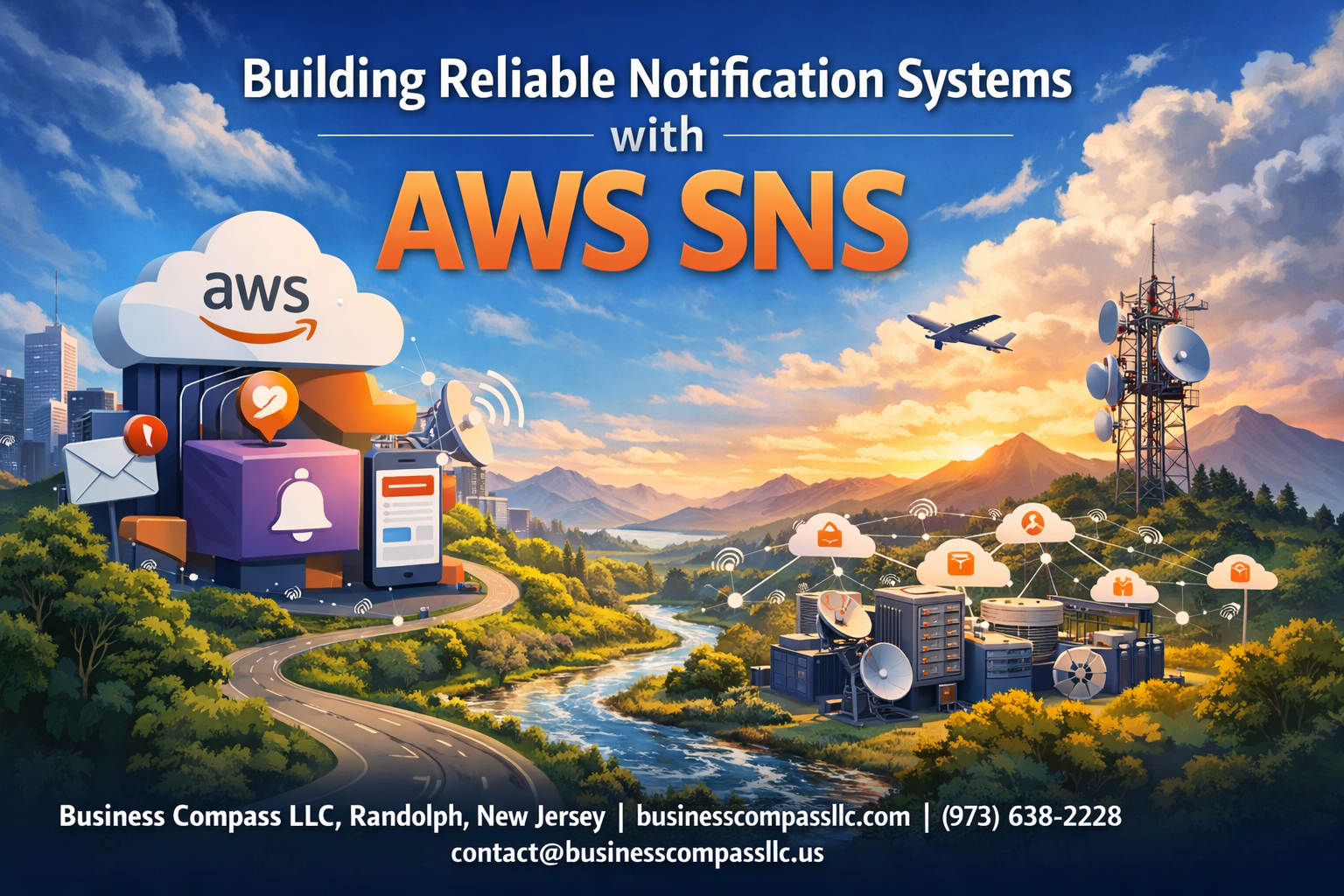
Modern applications need instant communication with users, systems, and services. AWS SNS (Amazon Simple Notification Service) gives developers a powerful platform to send messages across multiple channels without managing complex infrastructure.
This guide is designed for developers, DevOps engineers, and solution architects who want to build robust AWS notification systems that scale. You’ll learn how to create reliable messaging workflows that handle failures gracefully and deliver messages consistently.
We’ll walk through SNS topic setup and core architecture patterns that form the foundation of any solid notification system. You’ll discover how to implement multi-protocol messaging AWS capabilities to reach users through SMS, email, mobile push notifications, and HTTP endpoints from a single service.
We’ll also cover SNS error handling strategies and AWS SNS security best practices to protect your message flows. Finally, you’ll learn practical SNS cost optimization techniques to keep your notification system efficient as it grows.
By the end, you’ll have the knowledge to build AWS push notifications and messaging systems that your users can depend on.
Understanding AWS SNS Core Components and Architecture

Simple Notification Service Fundamentals and Messaging Patterns
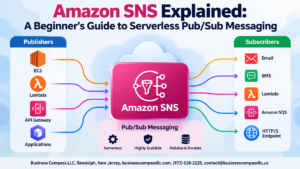
Amazon Simple Notification Service (AWS SNS) operates as a fully managed pub/sub messaging service that enables you to decouple microservices, distributed systems, and serverless applications. The service follows a publish-subscribe pattern where message producers (publishers) send messages to topics without knowing who will receive them. Subscribers then receive these messages through their preferred protocols.
AWS SNS supports multiple messaging patterns that make it versatile for different use cases. The fan-out pattern allows a single message to be delivered to multiple subscribers simultaneously, perfect for broadcasting system alerts or updates. The application-to-application (A2A) messaging pattern enables different services to communicate asynchronously, while application-to-person (A2P) messaging delivers notifications directly to end users through SMS, email, or mobile push notifications.
The service handles message filtering at the subscription level, allowing subscribers to receive only the messages they care about based on message attributes. This filtering capability reduces unnecessary processing and helps maintain clean, focused data streams across your applications.
Topics, Subscriptions, and Message Delivery Protocols
SNS topics serve as communication channels where publishers send messages and subscribers receive them. Each topic acts as an access point that groups together recipients who are interested in receiving notifications about a specific subject. Topics are identified by unique Amazon Resource Names (ARNs) and can handle millions of subscriptions.
Subscriptions define the relationship between topics and endpoints. When you create a subscription, you specify the protocol and endpoint where messages should be delivered. AWS SNS supports multiple delivery protocols:
- HTTP/HTTPS: Delivers messages to web servers as POST requests with JSON payloads
- Email/Email-JSON: Sends messages to email addresses in plain text or JSON format
- SMS: Delivers text messages to mobile phone numbers globally
- SQS: Integrates with Amazon Simple Queue Service for reliable message queuing
- Lambda: Triggers AWS Lambda functions directly with message payloads
- Mobile Push: Sends push notifications to iOS, Android, and other mobile platforms
- Kinesis Data Firehose: Streams messages to data lakes and analytics services
Each protocol offers different delivery characteristics and retry behaviors. HTTP endpoints receive immediate delivery attempts with exponential backoff retry logic, while SQS subscriptions provide additional durability through queue persistence.
Integration Capabilities with Other AWS Services
AWS SNS integrates seamlessly with numerous AWS services, creating powerful workflows and automation patterns. Amazon CloudWatch can trigger SNS notifications based on metric thresholds, system health changes, or custom alarms. This integration enables proactive monitoring and immediate incident response.
AWS Lambda functions can both publish to and subscribe from SNS topics, enabling event-driven architectures where services respond to business events automatically. For example, when a user uploads a file to S3, it can trigger an SNS message that activates multiple Lambda functions for image processing, database updates, and user notifications.
Amazon EventBridge works alongside SNS to create sophisticated event routing patterns. While EventBridge excels at rule-based routing between AWS services, SNS handles the final delivery to endpoints and external systems. This combination provides comprehensive event management across your entire infrastructure.
The service also connects with Amazon Pinpoint for advanced customer engagement campaigns, AWS Config for configuration change notifications, and Amazon RDS for database event notifications. These integrations create a unified notification ecosystem that spans your entire AWS environment.
Scalability and Performance Characteristics
AWS SNS automatically scales to handle varying message volumes without requiring capacity planning or pre-provisioning. The service can process millions of messages per second across multiple regions simultaneously, making it suitable for applications ranging from small startups to large enterprises.
Message delivery typically occurs within seconds of publication, with the exact timing depending on the target protocol and endpoint responsiveness. SNS maintains multiple copies of each message across different availability zones to ensure high durability and fault tolerance.
The service implements intelligent retry mechanisms with exponential backoff for failed deliveries. HTTP and HTTPS subscriptions attempt delivery multiple times over several hours, while mobile push notifications handle token updates and invalid endpoints automatically. Dead letter queues can capture messages that fail all retry attempts for later analysis and reprocessing.
Performance remains consistent even during traffic spikes because SNS uses distributed processing across AWS’s global infrastructure. Regional deployments ensure low latency for local subscribers while cross-region replication provides disaster recovery capabilities for critical notification workflows.
Setting Up Your First SNS Topic for Maximum Reliability

Creating and configuring topics with proper naming conventions
When creating your AWS SNS topic, choosing the right name sets the foundation for a reliable notification system. Your topic names should be descriptive and follow a consistent pattern that makes sense to your team. Consider using prefixes that indicate the environment (prod-, dev-, staging-) followed by the service or feature name, and finally the specific purpose. For example: “prod-user-registration-notifications” or “dev-order-processing-alerts.”
SNS topic configuration goes beyond just naming. You’ll want to configure display names that are human-readable, especially when your notifications will be visible to end users. The display name appears in email subjects and SMS messages, so “Payment Confirmation” works better than “prod-payment-svc-confirm.”
Enable server-side encryption using AWS KMS to protect message content both in transit and at rest. Choose between AWS-managed keys for simplicity or customer-managed keys for enhanced control. Your encryption key selection impacts both security posture and compliance requirements.
Set up appropriate resource-based policies that define who can publish messages to your topic and who can subscribe. Start with restrictive policies and gradually expand access as needed. This approach prevents unauthorized access while maintaining flexibility for legitimate use cases.
Implementing subscription management and filtering rules
Effective subscription management prevents message spam and ensures relevant notifications reach the right recipients. AWS SNS supports multiple subscription protocols including HTTP/HTTPS endpoints, email, SMS, mobile push notifications, and SQS queues. Each protocol serves different use cases – HTTP endpoints work well for webhook integrations, while SQS provides reliable queuing for downstream processing.
Message filtering rules transform SNS into a smart routing system. Instead of sending every message to every subscriber, filtering rules examine message attributes and deliver messages only when specific conditions match. Create filters using JSON-based filter policies that check attributes like event type, severity level, or geographic region.
For example, a filter policy like event_type": ["order_placed", "payment_processed"], "region": ["us-east-1"]} ensures subscribers only receive order and payment events from the specified region. This targeted approach reduces noise and processing overhead for your subscribers.
Subscription confirmation adds an extra layer of reliability. For HTTP/HTTPS and email subscriptions, AWS SNS requires explicit confirmation before message delivery begins. This prevents accidental subscriptions and ensures delivery endpoints are valid and accessible.
Setting up dead letter queues for failed message handling
Dead letter queues (DLQs) catch messages that fail to deliver after all retry attempts are exhausted. Without proper DLQ configuration, failed messages disappear into the void, making troubleshooting nearly impossible and potentially causing data loss.
Configure DLQs at the subscription level rather than the topic level for granular control. Each subscription can have its own DLQ, allowing you to handle different failure scenarios appropriately. HTTP endpoints might need different retry logic compared to mobile push notifications.
SQS serves as the ideal DLQ backend for SNS. Create dedicated SQS queues specifically for handling failed messages, and configure appropriate visibility timeouts and message retention periods. Set retention periods long enough for your team to investigate and resolve issues – typically 14 days provides sufficient time for most scenarios.
Monitor your DLQs actively using CloudWatch alarms. Set up notifications when messages accumulate in your dead letter queues, indicating delivery problems that need attention. Create dashboards showing DLQ depth, message age, and processing rates to spot patterns in delivery failures.
Design a process for replaying messages from your DLQs once you’ve resolved the underlying issues. This might involve Lambda functions that process DLQ messages and republish them to the original topic, or manual processes for critical but infrequent failures.
Implementing Multi-Protocol Message Delivery

Configuring email and SMS notifications effectively
Setting up email notifications through AWS SNS requires careful attention to both deliverability and user experience. When configuring email endpoints, you’ll work with two distinct approaches: direct email subscriptions and SNS integration with Amazon SES for bulk messaging. For individual email subscriptions, subscribers receive a confirmation link that must be clicked before messages start flowing – this opt-in process helps maintain compliance with anti-spam regulations.
SMS notifications demand even more precision due to carrier restrictions and varying international regulations. AWS SNS supports SMS delivery to over 200 countries, but success rates depend heavily on message content, sender reputation, and regional compliance. Short codes and long codes serve different purposes – short codes (5-6 digits) work best for high-volume, time-sensitive alerts, while long codes handle lower-volume, conversational messaging.
Key configuration considerations include:
- Message formatting: Keep SMS under 160 characters to avoid splitting
- Delivery receipts: Enable to track successful delivery
- Sender ID customization: Available in supported regions for brand recognition
- Opt-out compliance: Include STOP instructions for SMS campaigns
Both email and SMS protocols benefit from message templates that maintain consistent formatting while allowing dynamic content insertion. Testing across different devices and carriers reveals potential delivery issues before production deployment.
Setting up HTTP/HTTPS endpoints for webhook delivery
HTTP and HTTPS endpoints transform SNS into a powerful webhook system for real-time application integration. When you subscribe an HTTP endpoint to an SNS topic, Amazon validates the endpoint through a subscription confirmation process. The endpoint must respond to the SubscriptionConfirmation message type by visiting the confirmation URL within three days.
Webhook reliability depends on proper endpoint configuration and response handling. Your endpoint should return HTTP status codes that SNS interprets correctly – 2xx codes signal success, while other codes trigger retry attempts. SNS implements an exponential backoff retry policy, attempting delivery multiple times over several hours before moving messages to a dead letter queue if configured.
Security becomes critical when exposing HTTP endpoints. HTTPS endpoints provide transport-layer security, but you’ll want additional verification mechanisms:
- Message signature validation: Verify SNS message authenticity using provided signatures
- IP address filtering: Restrict access to known SNS IP ranges
- Request headers inspection: Validate User-Agent and other SNS-specific headers
- Message type handling: Process Notification, SubscriptionConfirmation, and UnsubscribeConfirmation appropriately
Endpoint design should account for SNS delivery characteristics. Messages may arrive out of order, and duplicate delivery can occur during network issues. Implementing idempotency keys and message deduplication logic prevents processing the same notification multiple times.
Integrating with SQS queues for decoupled processing
Amazon SQS integration creates robust, decoupled architectures where SNS topics fan out messages to multiple SQS queues for parallel processing. This pattern excels in microservices environments where different services need to process the same event independently. Unlike direct HTTP delivery, SQS queues provide built-in durability and retry mechanisms.
The SNS-to-SQS integration supports both standard and FIFO queues, each serving different use cases. Standard queues offer unlimited throughput with at-least-once delivery, making them ideal for high-volume scenarios where occasional duplicates are acceptable. FIFO queues guarantee exactly-once delivery and preserve message ordering, crucial for workflows requiring strict sequence processing.
Queue configuration impacts overall system reliability:
- Visibility timeout: Set longer than your processing time to prevent duplicate processing
- Message retention: Configure up to 14 days for messages requiring extended processing windows
- Dead letter queues: Capture messages that fail processing after multiple attempts
- Redrive policies: Control how many times messages retry before moving to dead letter queues
Cross-account SNS-to-SQS delivery requires careful IAM policy configuration. The SQS queue policy must grant SNS permission to deliver messages, while the SNS topic policy may need to allow cross-account access. Raw message delivery settings control whether SQS receives the original message content or the SNS message wrapper with metadata.
Mobile push notifications through platform applications
Platform applications enable mobile push notifications through Apple Push Notification service (APNs), Google Firebase Cloud Messaging (FCM), and other mobile platforms. Each platform application represents a connection between SNS and a specific mobile platform, requiring platform-specific credentials and configuration.
Setting up platform applications involves several critical steps. For iOS applications, you’ll need APNs certificates or authentication keys from Apple Developer Portal. Android applications require server keys from the Google Cloud Console. Amazon Device Messaging and Windows Notification Services follow similar credential-gathering processes for their respective platforms.
Device token management becomes crucial as mobile applications scale. Device tokens change when users reinstall applications, update operating systems, or switch devices. Your application must register new tokens with SNS and handle invalid token errors gracefully:
- Token refresh handling: Update SNS endpoints when applications provide new tokens
- Invalid token cleanup: Remove endpoints that return invalid token errors
- Bulk token operations: Use batch APIs for efficient token management at scale
- Platform-specific formatting: Customize message payloads for each platform’s requirements
Push notification reliability depends on understanding platform-specific behaviors. APNs provides feedback on delivery failures, while FCM offers delivery receipts for confirmed message arrival. Both platforms implement their own retry logic, but application-level acknowledgment ensures end-to-end delivery confirmation.
Message payload optimization affects delivery success and user engagement. Each platform has size limitations – APNs allows 4KB for most notifications, while FCM supports up to 4KB. Exceeding these limits results in delivery failures. Custom sound files, badge updates, and rich media attachments require additional payload considerations and testing across device types.
Ensuring Message Reliability and Error Handling

Implementing retry policies and exponential backoff strategies
AWS SNS reliability starts with smart retry mechanisms that handle temporary failures gracefully. When messages fail to deliver, SNS automatically attempts redelivery using exponential backoff – doubling the wait time between each retry attempt. This prevents overwhelming downstream services while maintaining delivery persistence.
Configure retry policies for each subscription type differently. HTTP endpoints benefit from 3-5 retry attempts with initial delays starting at 20 seconds. Email subscriptions need fewer retries since they typically succeed or fail definitively. SMS messages require careful tuning to avoid carrier rate limits – usually 2-3 retries with 30-second intervals work best.
Dead Letter Queues (DLQs) capture messages that exhaust all retry attempts. Set up separate SQS queues as DLQs for different subscription types, allowing targeted recovery strategies. Messages in DLQs preserve original metadata, making debugging easier and enabling manual reprocessing when issues resolve.
Monitoring delivery status and handling failures gracefully
CloudWatch metrics provide real-time visibility into AWS SNS performance. Track key indicators like NumberOfMessagesPublished, NumberOfNotificationsFailed, and NumberOfNotificationsDelivered across all protocols. Set up custom dashboards displaying delivery rates, failure patterns, and latency trends.
Message attributes help identify failure causes. Include correlation IDs, message priorities, and source system identifiers in every notification. When failures occur, these attributes enable quick root cause analysis and targeted remediation efforts.
Implement circuit breaker patterns for frequently failing endpoints. Temporarily suspend notifications to problematic subscribers while logging incidents for later investigation. This prevents cascade failures and maintains overall system stability.
Setting up CloudWatch alarms for proactive issue detection
Create granular CloudWatch alarms targeting specific failure scenarios. Monitor delivery failure rates exceeding 5% over 5-minute periods for immediate alerts. Set up separate alarms for different protocols since email, SMS, and HTTP failures often have distinct causes and urgency levels.
Configure alarm actions to trigger automated responses. Lambda functions can investigate failures, attempt alternative delivery methods, or escalate to on-call engineers. SNS topics can distribute alarm notifications to multiple channels, ensuring critical issues reach responsible teams quickly.
Use composite alarms to reduce alert fatigue. Combine multiple related metrics into single notifications that provide comprehensive context. For example, merge high failure rates with increased latency metrics to paint complete pictures of system health.
Creating backup notification channels for critical messages
Design redundant delivery paths for mission-critical notifications. Configure primary and secondary SNS topics with different subscription sets – if mobile push notifications fail, automatically trigger email backups. Cross-region topic replication ensures geographic failures don’t block essential communications.
Implement notification priority levels using message attributes. High-priority messages trigger multiple delivery channels simultaneously, while standard notifications follow cost-optimized single-channel approaches. This balances reliability needs with operational expenses.
Build fallback mechanisms using Lambda functions that monitor delivery confirmations. When primary channels show consistent failures, automatically activate backup protocols. Store subscriber preferences in DynamoDB to respect communication preferences while maintaining reliability standards.
Security Best Practices for SNS Implementation

Implementing proper IAM roles and access policies
Securing your AWS SNS implementation starts with properly configured IAM roles and policies. Create dedicated service roles with the principle of least privilege, granting only the minimum permissions required for each component of your notification system.
Design IAM policies that specify exact SNS topic ARNs rather than using wildcards. This prevents unauthorized access to topics your applications shouldn’t touch. For applications publishing messages, grant only sns:Publish permissions to specific topics. Subscribers need sns:Subscribe and sns:Receive permissions, but limit these to their designated topics.
Cross-account access requires special attention. Set up resource-based policies on your SNS topics to control which external AWS accounts can interact with your notification system. Use condition statements to restrict access based on IP addresses, time of day, or MFA requirements when dealing with sensitive notifications.
Consider using IAM roles for EC2 instances or Lambda functions instead of embedding access keys in your code. This approach provides automatic credential rotation and eliminates the risk of accidentally exposing static credentials in version control systems.
Regular auditing of your IAM permissions helps maintain security hygiene. AWS CloudTrail logs all SNS API calls, making it easy to identify unused permissions or suspicious access patterns. Remove any permissions that haven’t been used in the past 90 days to reduce your attack surface.
Encrypting messages in transit and at rest
AWS SNS security best practices demand encryption at multiple layers to protect your notification data. SNS automatically encrypts messages in transit using TLS 1.2, but you should also implement server-side encryption for messages at rest using AWS Key Management Service (KMS).
Configure your SNS topics to use customer-managed KMS keys rather than AWS-managed keys. This gives you complete control over key rotation, access policies, and audit trails. Set up separate KMS keys for different environments (development, staging, production) to maintain proper isolation.
When publishing messages to encrypted topics, your applications must have permissions to use the designated KMS key. Add the kms:GenerateDataKey and kms:Decrypt permissions to your IAM policies. Subscribers also need decrypt permissions to process messages successfully.
Client-side encryption adds another security layer for highly sensitive data. Encrypt message payloads before sending them to SNS, ensuring that even AWS cannot access your raw message content. Libraries like the AWS Encryption SDK simplify this process while maintaining performance.
Monitor KMS key usage through CloudWatch metrics to detect unusual encryption or decryption patterns. High volumes of decrypt requests might indicate a security incident or misconfigured application attempting to process messages it shouldn’t access.
Setting up VPC endpoints for private network communication
VPC endpoints keep your SNS traffic within Amazon’s private network backbone, eliminating exposure to the public internet. This configuration significantly reduces your attack surface and meets compliance requirements for organizations that mandate private network communication.
Create a VPC endpoint for SNS in each Availability Zone where your applications run. This ensures high availability and reduces latency by keeping traffic local to each AZ. Configure the endpoint with a restrictive policy that allows access only to your specific SNS topics and required actions.
Route table configuration plays a critical role in VPC endpoint functionality. Update your subnet route tables to direct SNS API calls through the VPC endpoint rather than the internet gateway. Test connectivity from each subnet to verify that your applications can reach SNS through the private endpoint.
Security groups attached to your VPC endpoint should allow HTTPS traffic (port 443) from your application subnets. Avoid using overly permissive rules like 0.0.0.0/0; instead, specify the exact CIDR blocks or security groups that need SNS access.
Monitor VPC endpoint usage through VPC Flow Logs and CloudWatch metrics. Track the number of requests flowing through your endpoints to identify potential issues or optimize performance. Consider enabling DNS resolution and private DNS names to simplify application configuration and avoid hardcoding endpoint URLs in your code.
Network ACLs provide an additional security layer for your VPC endpoints. Configure them to allow only necessary traffic patterns and block any suspicious or unauthorized network activity targeting your SNS infrastructure.
Optimizing Costs and Performance at Scale

Managing subscription costs with efficient filtering strategies
AWS SNS cost optimization starts with smart filtering strategies that reduce unnecessary message deliveries. Message filtering attributes let you send targeted notifications only to subscribers who need specific information, dramatically cutting down your AWS SNS costs while improving system efficiency.
Setting up subscription filters requires defining message attributes when publishing to your SNS topic. You can filter by customer segments, geographic regions, notification types, or priority levels. For example, a retail app might filter promotional messages by user preferences or location-based offers by zip codes.
The key lies in structuring your filter policies correctly. Use numeric range operators for filtering by values like purchase amounts or user ratings. String exact matching works well for categories, while EXISTS operators help target users with specific attributes. Complex filtering with logical operators (AND, OR, NOT) enables sophisticated targeting without creating multiple topics.
Consider implementing hierarchical filtering where broad categories branch into specific subcategories. This approach reduces the total number of filter evaluations and speeds up message processing. Remember that each subscription can have up to 5 different attribute names in its filter policy, so design your attribute structure thoughtfully.
Regular auditing of your filter effectiveness helps identify unused subscriptions or overly broad filters that might be inflating costs. AWS CloudWatch metrics show delivery counts per subscription, making it easy to spot inefficient patterns.
Implementing message batching for high-volume scenarios
Message batching becomes essential when your AWS notification system handles thousands of messages per minute. Instead of sending individual messages, batching groups multiple notifications together, reducing API calls and improving throughput significantly.
SNS supports publish batching through the PublishBatch API, which accepts up to 10 messages per request. Each message in the batch can have different destinations, attributes, and content. This approach reduces latency and increases your message processing capacity from around 300 messages per second to potentially 3,000 messages per second.
Design your batching logic based on time windows or message count thresholds. A hybrid approach works best: collect messages for a specific time period (like 100 milliseconds) or until you reach the batch size limit, whichever comes first. This strategy balances latency with throughput efficiency.
Handle partial batch failures gracefully by implementing retry mechanisms for individual failed messages within a batch. SNS returns detailed success and failure information for each message in the batch response, allowing you to requeue only the failed items without affecting successful deliveries.
Buffer management plays a critical role in effective batching. Use in-memory queues or external systems like Amazon SQS to temporarily store messages before batching. This approach prevents message loss during system restarts and provides better control over batch composition.
Monitoring usage patterns and optimizing delivery methods
Understanding your AWS SNS usage patterns reveals optimization opportunities that can slash costs and boost performance. CloudWatch metrics provide detailed insights into message volumes, delivery success rates, and subscription activity across different time periods.
Track key metrics like NumberOfMessagesPublished, NumberOfNotificationsDelivered, and NumberOfNotificationsFailed to identify peak usage times and delivery bottlenecks. High failure rates might indicate the need to switch protocols or adjust retry policies for specific endpoints.
Analyze delivery patterns by protocol type to optimize your multi-protocol messaging strategy. HTTP/HTTPS endpoints might show better success rates during business hours, while SMS delivery could perform better during off-peak times due to carrier restrictions. Email notifications often have delayed processing, so batch them differently than real-time push notifications.
Cost analysis by delivery method helps identify expensive protocols. SMS notifications typically cost more than email or HTTP endpoints, so reserve them for critical alerts. Push notifications through mobile platforms offer excellent cost-effectiveness for user engagement scenarios.
Set up CloudWatch alarms for unusual spending patterns or delivery failures. Sudden spikes in SMS costs might indicate API abuse or system errors, while dropping HTTP delivery rates could signal endpoint issues requiring immediate attention.
Use AWS Cost Explorer to break down SNS spending by service usage type. This granular view shows exactly where your notification budget goes, whether it’s message publishing, SMS delivery, or data transfer costs. Regular cost reviews help maintain efficient spending as your system scales.

AWS SNS offers a robust foundation for building notification systems that can grow with your business needs. From setting up your first topic to implementing multi-protocol delivery, the service handles the complex infrastructure while you focus on crafting meaningful messages for your users. The built-in reliability features, combined with proper error handling and security practices, create a system you can trust even during high-traffic periods.
Getting your SNS implementation right from the start saves time and headaches down the road. Start small with a single topic, test your delivery mechanisms thoroughly, and gradually expand as your requirements evolve. Don’t forget to monitor your costs and performance metrics regularly – a well-optimized SNS setup delivers better user experiences while keeping your AWS bill in check. Your users will notice the difference when notifications arrive reliably and on time.