Serverless platform engineering transforms how development teams build and manage cloud applications by removing infrastructure complexity while maintaining operational control. This approach combines serverless architecture principles with platform engineering best practices to create scalable, efficient development environments.
This guide serves software engineers, DevOps professionals, and platform teams who want to master serverless development tools and streamline their cloud native platform engineering practices. You’ll learn practical strategies that leading tech companies use to deliver reliable serverless applications faster.
We’ll start by exploring serverless architecture fundamentals and how they integrate with core platform engineering concepts. Then we’ll dive into essential serverless tools and technologies that power modern development workflows. Finally, we’ll cover serverless operations management techniques and advanced serverless deployment strategies that help teams scale their platforms effectively.
By the end, you’ll have actionable insights for implementing serverless workflow automation and building robust serverless infrastructure management systems that support your organization’s growth.
Understanding Serverless Architecture Fundamentals

Eliminate Infrastructure Management Overhead
Serverless architecture removes the burden of server provisioning, patching, and maintenance from development teams. Cloud providers handle all underlying infrastructure concerns, allowing engineers to focus purely on business logic. This shift represents a fundamental change in how we approach serverless platform engineering, eliminating traditional operational overhead while maintaining high availability and security standards.
Achieve Automatic Scaling and Cost Optimization
Built-in auto-scaling capabilities respond instantly to traffic demands without manual intervention. Pay-per-execution pricing models ensure costs align directly with actual usage, eliminating waste from idle resources. Serverless platforms automatically provision additional compute resources during peak loads and scale down to zero during quiet periods, optimizing both performance and expenditure across your application lifecycle.
Leverage Event-Driven Computing Models
Serverless functions respond to specific triggers like HTTP requests, database changes, or file uploads, creating reactive systems that process data as events occur. This event-driven approach enables loose coupling between services, improving system resilience and maintainability. Functions execute independently, allowing for distributed processing patterns that enhance fault tolerance and enable sophisticated serverless workflow automation across complex business processes.
Accelerate Development Velocity
Rapid deployment cycles and simplified testing environments dramatically reduce time-to-market for new features. Developers can iterate quickly without worrying about infrastructure provisioning or configuration management. The streamlined development experience, combined with managed services integration, enables teams to ship production-ready code faster while maintaining quality standards through automated testing and continuous integration practices.
Core Platform Engineering Principles for Serverless

Design Self-Service Developer Platforms
Building effective self-service platforms empowers development teams to deploy and manage serverless applications independently. These platforms should provide intuitive interfaces, standardized templates, and automated provisioning capabilities. Teams need access to pre-configured environments, testing frameworks, and monitoring dashboards without requiring platform engineering intervention. The goal is reducing time-to-deployment while maintaining security and compliance standards across all serverless workloads.
Implement Infrastructure as Code Standards
Infrastructure as Code becomes critical for serverless platform engineering success. Teams must establish consistent patterns using tools like Terraform, AWS CDK, or Serverless Framework. Version-controlled infrastructure definitions ensure reproducible deployments across environments. Standardized IaC templates reduce configuration drift and enable rapid scaling. These practices create predictable infrastructure provisioning while supporting complex serverless architectures with multiple cloud services and dependencies.
Establish Consistent Deployment Pipelines
Serverless deployment pipelines require specialized approaches compared to traditional applications. Automated testing, security scanning, and gradual rollout strategies become essential components. Pipeline templates should handle function packaging, dependency management, and environment-specific configurations. Blue-green deployments and canary releases help minimize risk during serverless updates. Consistent pipeline patterns across teams ensure reliable delivery while supporting rapid iteration cycles typical in serverless development workflows.
Essential Serverless Tools and Technologies

Choose the Right Function-as-a-Service Providers
AWS Lambda dominates the serverless landscape with mature tooling and extensive integrations, making it ideal for enterprise serverless platform engineering initiatives. Azure Functions excels in hybrid cloud scenarios, while Google Cloud Functions offers superior cold start performance. Multi-cloud strategies require careful provider evaluation based on pricing models, runtime support, and regional availability to optimize serverless development tools deployment.
Integrate API Gateway Solutions
Amazon API Gateway provides comprehensive request routing and throttling capabilities essential for serverless architecture management. Kong and Ambassador offer open-source alternatives with advanced traffic management features. Gateway selection impacts latency, security, and cost optimization across your serverless infrastructure management strategy. Consider authentication mechanisms, rate limiting, and monitoring integration when architecting your API layer.
Implement Event Streaming and Messaging Systems
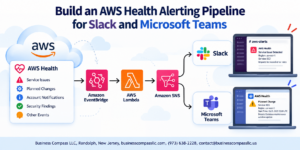
Apache Kafka handles high-throughput event streaming for complex serverless workflows, while AWS EventBridge simplifies event routing between services. Redis Streams offers lightweight messaging for real-time applications. Message queues like Amazon SQS and RabbitMQ decouple services effectively. Event-driven architectures require careful consideration of delivery guarantees, ordering, and error handling patterns for reliable serverless operations management.
Utilize Monitoring and Observability Tools
Distributed tracing with AWS X-Ray or Jaeger reveals performance bottlenecks across serverless functions and dependencies. Prometheus and Grafana provide comprehensive metrics collection and visualization for platform engineering teams. Application Performance Monitoring tools like New Relic and Datadog offer specialized serverless monitoring and observability features. Log aggregation through CloudWatch Logs or ELK stack enables effective debugging and troubleshooting workflows.
Leverage Infrastructure Automation Frameworks
Terraform enables declarative infrastructure as code for consistent serverless deployment strategies across environments. AWS CDK combines programming flexibility with cloud-native constructs for complex serverless platform engineering projects. Serverless Framework simplifies function deployment and configuration management. Pulumi offers multi-language support for infrastructure automation. Choose frameworks that align with your team’s expertise while supporting serverless workflow automation requirements and deployment pipeline integration.
Building Robust Serverless Development Workflows

Create Standardized Development Environments
Consistent development environments form the foundation of successful serverless platform engineering. Container-based solutions like Docker paired with Infrastructure as Code tools ensure every developer works within identical configurations. This eliminates the classic “works on my machine” problem that plagues serverless teams. Version control your environment configurations alongside your application code to maintain synchronization across all team members and deployment stages.
Implement Continuous Integration and Deployment
Serverless deployment strategies require specialized CI/CD pipelines that understand function-based architectures. Your pipeline should automatically validate function dependencies, run security scans, and perform incremental deployments across multiple environments. Tools like AWS SAM, Serverless Framework, or Terraform handle the complexity of managing function versions, aliases, and traffic routing. Set up automated rollback mechanisms that can quickly revert problematic deployments without manual intervention.
Establish Testing Strategies for Serverless Applications
Testing serverless applications demands a multi-layered approach that covers unit, integration, and end-to-end scenarios. Mock external services and cloud resources during unit testing to maintain fast feedback loops. Integration tests should validate function interactions with databases, APIs, and event sources using containerized versions of cloud services. Performance testing becomes critical since cold starts and concurrent execution limits directly impact user experience. Load testing tools specifically designed for serverless workloads help identify bottlenecks before production deployment.
Design Effective Local Development Practices
Local serverless development requires tools that simulate cloud environments without the complexity and cost of actual deployments. Frameworks like LocalStack or AWS SAM Local provide offline testing capabilities for major cloud services. Hot-reload functionality speeds up the development cycle by automatically updating functions when code changes. Debug capabilities should include step-through debugging, logging, and performance profiling to troubleshoot issues quickly. Establish clear guidelines for when to use local development versus cloud-based development environments.
Managing Serverless Operations at Scale

Monitor Performance and Cost Metrics
Serverless operations management demands continuous visibility into function performance, execution duration, memory usage, and concurrent invocations. Cloud-native monitoring tools like AWS CloudWatch, Azure Monitor, and Google Cloud Operations provide real-time insights into function behavior and resource consumption patterns. Cost optimization requires tracking per-invocation expenses, memory allocation efficiency, and request pricing models across different service tiers. Set up automated alerts for performance degradation, cost threshold breaches, and unusual traffic spikes. Implement custom dashboards that correlate business metrics with technical performance indicators, enabling proactive scaling decisions and budget forecasting for serverless infrastructure management.
Implement Security and Compliance Controls
Security in serverless platform engineering involves multiple layers of protection, from function-level access controls to network-level security policies. Identity and Access Management (IAM) roles should follow the principle of least privilege, granting functions only the minimum permissions required for their specific tasks. Environment variable encryption, API Gateway authentication, and VPC configurations create secure boundaries around serverless workloads. Compliance frameworks like SOC 2, GDPR, and HIPAA require automated security scanning, audit logging, and data governance controls. Deploy security monitoring tools that detect anomalous function behavior, unauthorized access attempts, and potential data breaches in real-time.
Handle Error Management and Debugging
Debugging serverless applications requires specialized approaches due to the distributed, ephemeral nature of function executions. Structured logging with correlation IDs helps trace requests across multiple functions and services. Dead letter queues capture failed function invocations for analysis and replay, preventing data loss during processing errors. Distributed tracing tools like AWS X-Ray and Jaeger provide end-to-end visibility into request flows, identifying bottlenecks and failure points. Error handling strategies should include retry mechanisms, circuit breakers, and graceful degradation patterns. Serverless development tools like local emulators and step-through debuggers enable developers to test function behavior before deployment to production environments.
Optimize Cold Start Performance
Cold start latency impacts user experience and operational costs in serverless architecture implementations. Runtime optimization involves choosing appropriate memory allocation, minimizing package sizes, and leveraging connection pooling for database and external service interactions. Provisioned concurrency and container reuse strategies reduce cold start frequency for critical functions. Language-specific optimizations include using compiled languages like Go or Rust for performance-critical workloads, while interpreted languages benefit from reduced dependency loading. Serverless workflow automation can implement warming strategies, pre-loading frequently accessed data, and optimizing deployment packages to minimize initialization overhead during function startup sequences.
Advanced Serverless Platform Strategies

Design Multi-Cloud and Hybrid Architectures
Multi-cloud serverless architectures provide redundancy and vendor flexibility by distributing workloads across AWS Lambda, Azure Functions, and Google Cloud Functions. Hybrid approaches combine on-premises resources with cloud functions, enabling gradual migration strategies. Abstract vendor-specific APIs through unified interfaces and implement cross-cloud data synchronization patterns. Use infrastructure as code tools like Terraform to manage consistent deployments across different cloud providers while maintaining service portability.
Implement Service Mesh for Microservices Integration
Service mesh architectures like Istio and Linkerd enhance serverless microservices communication through traffic management, security policies, and observability features. Implement sidecar proxies to handle service discovery, load balancing, and circuit breaking automatically. Configure mutual TLS encryption between services and apply fine-grained access controls. Monitor inter-service communication patterns and latency metrics through mesh telemetry dashboards, enabling better debugging and performance optimization for complex serverless platform engineering workflows.
Create Reusable Component Libraries
Build standardized serverless components that encapsulate common functionality like authentication, database connections, and API validation. Package these components as npm modules, Python packages, or container images for easy distribution across development teams. Establish versioning strategies and automated testing pipelines for component libraries. Create developer documentation and code examples that accelerate adoption. Implement template repositories with pre-configured serverless deployment strategies, monitoring configurations, and security policies to ensure consistency across projects.

Serverless platform engineering transforms how teams build and deploy applications by removing infrastructure headaches and letting developers focus on what really matters – writing great code. The combination of serverless architecture fundamentals with solid platform engineering principles creates a foundation that scales effortlessly while keeping costs predictable. Getting the right tools in place, from monitoring solutions to deployment pipelines, makes all the difference between a smooth operation and constant firefighting.
The real magic happens when you move beyond basic serverless setups to advanced strategies that handle complex workflows and enterprise-scale demands. Start small with a single service or workflow, nail the basics like proper monitoring and error handling, then gradually expand your serverless footprint. Your future self will thank you for investing time upfront in building robust development practices and operational processes that grow with your needs.