

AWS Lightsail offers an accessible entry point into cloud computing, but many developers and small business owners overlook critical security measures that protect their applications and data. This guide targets developers, startup founders, and IT professionals who want to build a secure Lightsail architecture without getting overwhelmed by complex enterprise solutions.
Security isn’t just about checking boxes – it’s about creating layers of protection that work together to keep your applications running safely. We’ll walk through the essential AWS Lightsail security fundamentals you need to know, from basic firewall rules to advanced encryption practices.
You’ll learn how to implement robust network security controls that shield your instances from unwanted traffic and attacks. We’ll also cover practical data protection and encryption strategies that safeguard your sensitive information both in transit and at rest. Finally, we’ll explore monitoring and logging techniques that help you spot threats early, plus backup strategies that ensure you can recover quickly if something goes wrong.
By the end, you’ll have a clear roadmap for building secure cloud architecture on AWS Lightsail that grows with your needs.
Understanding AWS Lightsail Security Fundamentals
Core Security Principles for Cloud Infrastructure
AWS Lightsail security starts with defense-in-depth layering, where multiple security controls protect your applications at different levels. Every component requires hardening – from the operating system to application code. Network segmentation isolates critical resources, while the principle of least privilege ensures users and services access only necessary resources. Regular security assessments identify vulnerabilities before attackers exploit them.
Built-in Security Features and Limitations
Lightsail provides basic security controls including built-in firewalls, automatic OS patching for managed databases, and SSL certificate integration. The platform includes DDoS protection through AWS Shield Standard and encrypted storage volumes. However, Lightsail lacks advanced security services like AWS WAF, GuardDuty, or detailed CloudTrail logging. You’ll need to implement additional monitoring and threat detection manually or upgrade to full EC2 for comprehensive security tooling.
Shared Responsibility Model Implications
Amazon secures the underlying infrastructure, hypervisor, and physical data centers, while you’re responsible for securing your Lightsail instances, applications, and data. This means AWS handles hardware security, network infrastructure protection, and service availability, but you must manage operating system updates, application security patches, user access controls, and data encryption. Understanding this split prevents security gaps where each party assumes the other handles specific protections.
Common Security Vulnerabilities to Avoid
Open SSH access from anywhere (0.0.0.0/0) tops the list of Lightsail security mistakes. Default passwords, unpatched applications, and overly permissive firewall rules create easy attack vectors. Many users forget to enable automatic snapshots, leaving themselves vulnerable to ransomware without recovery options. Storing sensitive data unencrypted and running services with root privileges amplify security risks significantly. Regular security audits catch these oversights before they become breaches.
Implementing Network Security Controls
Configuring Firewall Rules and Port Restrictions
AWS Lightsail firewall configuration starts with the default networking tab in your instance dashboard. Block unnecessary ports immediately – only open what your application actually needs. Standard web applications typically require ports 22 (SSH), 80 (HTTP), and 443 (HTTPS). Custom applications might need specific ports, but avoid opening wide port ranges. Create rules based on protocols (TCP/UDP) and source IP addresses. Whitelist specific IP ranges rather than allowing traffic from anywhere (0.0.0.0/0) when possible. Review firewall rules monthly and remove unused entries. Lightsail’s simplified firewall interface makes this process straightforward compared to traditional security groups.
Setting up VPC Peering for Secure Connections
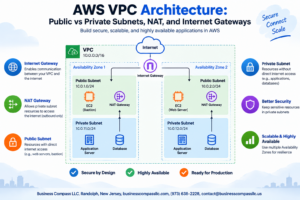
VPC peering connects your Lightsail instances to AWS VPC resources through private networks, eliminating internet exposure for internal communications. Access the networking section and enable VPC peering to establish encrypted connections between Lightsail and your existing AWS infrastructure. This setup allows database connections, file sharing, and API calls without routing traffic through public internet. Configure route tables carefully to ensure traffic flows only where needed. VPC peering supports cross-region connections, enabling distributed architectures while maintaining security. Monitor peering connections regularly and document which resources communicate through these private channels.
Managing Static IP Addresses Securely
Static IP addresses in Lightsail provide consistent endpoints but require careful management to prevent security gaps. Assign static IPs only to instances that need them – temporary development environments can use dynamic addressing. Document which services use each static IP and maintain an inventory spreadsheet. When decommissioning instances, release static IP addresses immediately to prevent unauthorized access attempts. Consider using load balancers instead of multiple static IPs for high-availability applications. Static IPs remain attached to your account even when instances are stopped, so budget accordingly. Change static IP assignments when security incidents occur or when rotating infrastructure components.
Creating Isolated Network Zones
Network isolation in AWS Lightsail security architecture prevents lateral movement during security breaches. Separate production, staging, and development environments using different regions or careful firewall segmentation. Group instances by function – web servers, databases, and application servers should have distinct access patterns. Database instances should never accept direct internet connections; route access through application servers only. Create jump boxes (bastion hosts) for administrative access rather than opening SSH ports on every instance. Use Lightsail’s container services for microservices architectures, as containers provide natural isolation boundaries. Document network zones clearly and train team members on proper access procedures for each zone.
Securing Instance Access and Authentication
Implementing SSH key-based authentication
SSH key-based authentication forms the backbone of secure Lightsail instance security. Replace default password authentication by generating RSA or ED25519 key pairs on your local machine. Upload the public key to your Lightsail instance and configure the SSH daemon to accept only key-based connections. This approach eliminates brute-force password attacks while providing seamless access management across multiple administrators and automated systems.
Disabling root access and creating secure user accounts
Direct root access creates unnecessary security risks in your AWS Lightsail architecture. Create dedicated user accounts with descriptive names that reflect their purpose or owner. Disable root SSH login by modifying /etc/ssh/sshd_config and setting PermitRootLogin no. Grant administrative privileges through sudo access rather than direct root usage, creating an audit trail for all privileged operations while maintaining security boundaries.
Setting up multi-factor authentication
Multi-factor authentication adds critical protection layers to your Lightsail instance security framework. Install Google Authenticator PAM module or similar TOTP solutions to require time-based codes alongside SSH keys. Configure PAM settings to enforce MFA for sudo operations and administrative tasks. This dual-factor approach significantly reduces risks from compromised SSH keys while maintaining operational efficiency for legitimate users accessing your secure cloud architecture AWS environment.
Managing user permissions and sudo privileges
Granular permission management prevents privilege escalation and limits potential damage from compromised accounts. Create custom sudo rules using visudo to grant specific command access rather than blanket administrative rights. Implement group-based permissions for common tasks and use the principle of least privilege across all user accounts. Regular audits of sudo logs help identify unusual activity patterns and maintain compliance with AWS Lightsail best practices for access control.
Data Protection and Encryption Strategies
Enabling encryption at rest for storage volumes
AWS Lightsail provides built-in encryption at rest for your block storage volumes using industry-standard AES-256 encryption. When you create new storage volumes through the Lightsail console, encryption gets automatically enabled without any performance impact on your applications. For existing volumes, you can create encrypted snapshots and restore them as new encrypted volumes. This AWS Lightsail encryption feature protects your data from unauthorized access even if physical storage media gets compromised. The encryption keys are managed seamlessly by AWS, eliminating the complexity of manual key management while maintaining enterprise-grade security standards.
Implementing SSL/TLS certificates for web traffic
Lightsail’s load balancer includes free SSL/TLS certificates through AWS Certificate Manager, providing easy HTTPS implementation for your web applications. You can request certificates directly from the Lightsail console and attach them to your load balancer within minutes. For applications running on individual instances, you can install certificates manually using tools like Certbot for Let’s Encrypt or import your own certificates. The secure Lightsail architecture ensures all web traffic gets encrypted between clients and your servers, protecting sensitive data transmission and improving search engine rankings through HTTPS requirements.
Securing database connections and backups
Database security in your secure cloud architecture AWS setup requires encrypting connections using SSL/TLS protocols and configuring proper authentication mechanisms. For managed databases, enable automated backups with point-in-time recovery capabilities, and create manual snapshots before major changes. Store database credentials securely using environment variables or AWS Systems Manager Parameter Store rather than hardcoding them in application files. Configure database firewall rules to restrict access only from authorized IP ranges or security groups. Regular backup testing ensures your AWS Lightsail backup strategies work correctly when disaster strikes, maintaining business continuity and data integrity.
Monitoring and Logging for Threat Detection
Configuring CloudWatch for Performance Monitoring
Set up Amazon CloudWatch to track your Lightsail instances’ CPU usage, network traffic, and disk I/O metrics. Create custom dashboards displaying real-time performance data and configure metric filters to identify unusual resource consumption patterns. Enable detailed monitoring for granular insights into your AWS Lightsail security posture and system health.
Setting Up Automated Security Alerts
Configure CloudWatch alarms to notify you when suspicious activities occur, such as failed login attempts, unusual network connections, or resource usage spikes. Set up SNS notifications to send immediate alerts via email or SMS when security thresholds are breached. Create multi-layered alert systems that escalate notifications based on threat severity levels.
Implementing Log Analysis for Suspicious Activities
Enable VPC Flow Logs and application-level logging to capture network traffic patterns and user activities across your secure Lightsail architecture. Use CloudWatch Logs Insights to query and analyze log data for indicators of compromise, including repeated authentication failures, privilege escalation attempts, and abnormal data access patterns. Implement automated log parsing to detect known attack signatures.
Creating Incident Response Procedures
Develop standardized incident response workflows that outline immediate containment steps when security threats are detected. Document escalation procedures, communication protocols, and recovery processes specific to your AWS Lightsail monitoring and logging infrastructure. Create playbooks for common security scenarios, including compromised instances, data breaches, and service disruptions to ensure rapid response times.
Backup and Disaster Recovery Planning
Automating Snapshot Schedules for Data Protection
AWS Lightsail backup strategies start with automated snapshots that create consistent recovery points for your instances and databases. Set up daily or weekly snapshot schedules through the Lightsail console or AWS CLI to protect against data loss. Configure retention policies to automatically delete older snapshots, balancing storage costs with recovery needs. Manual snapshots should complement automated schedules before major system changes or deployments.
Testing Backup Restoration Processes
Regular backup testing validates your AWS Lightsail backup strategies and identifies potential recovery issues before disasters strike. Create test instances from snapshots monthly to verify data integrity and application functionality. Document restoration times and any configuration adjustments needed during recovery. Test scenarios should include partial data recovery, complete instance replacement, and cross-region restoration to different availability zones.
Creating Cross-Region Backup Strategies
Cross-region snapshot copying protects against regional outages and provides geographic redundancy for critical workloads. Copy snapshots to secondary regions using AWS CLI scripts or third-party automation tools. Consider data residency requirements and compliance regulations when selecting backup regions. Implement lifecycle policies to manage cross-region storage costs while maintaining adequate protection levels for different data classifications.
Documenting Recovery Time Objectives
Define specific recovery time objectives (RTO) and recovery point objectives (RPO) for each Lightsail instance based on business requirements. Document step-by-step recovery procedures including DNS updates, load balancer configurations, and application dependencies. Create runbooks with contact information, escalation procedures, and decision trees for different disaster scenarios. Regular reviews ensure documentation stays current with infrastructure changes and organizational needs.
Building a secure AWS Lightsail architecture isn’t just about following a checklist—it’s about creating layers of protection that work together to keep your applications and data safe. From setting up proper network controls and managing instance access to encrypting your data and monitoring for threats, each security measure plays a vital role in your overall defense strategy. The key is understanding that security isn’t a one-time setup but an ongoing process that needs regular attention and updates.
Don’t forget that even the best security measures won’t help if you can’t recover from an incident quickly. Having a solid backup and disaster recovery plan gives you peace of mind and ensures your business can bounce back from unexpected events. Start with the basics—secure your network, lock down access, and encrypt your sensitive data—then build from there. Your future self will thank you for taking the time to get security right from the beginning.