Generative UI is changing how developers build interfaces by using AI to create components automatically instead of coding each element manually. This technology combines smart specifications, communication protocols, and proven design patterns to power next-generation applications like MCP apps, A2UI framework solutions, and AG-UI systems.
This guide is for developers, UI/UX designers, and technical leaders who want to understand how generative user interface technology actually works under the hood. You’ll learn what makes automated UI development possible and how to apply these concepts in your own projects.
We’ll break down the technical specifications that guide UI generation protocols, explore the communication systems that make seamless integration possible, and examine the design patterns that speed up development workflows. You’ll also get a deep dive into MCP Apps architecture, A2UI framework capabilities, and AG-UI advanced features that are already transforming how teams approach AI-powered UI generation.
Ready to see how generative UI architecture is reshaping interface development? Let’s dig into the specs, protocols, and patterns making it all possible.
Understanding Generative UI Fundamentals

Core principles that drive dynamic interface creation
Generative UI operates on three fundamental principles that revolutionize how interfaces come to life. The first principle centers on data-driven architecture, where user interfaces adapt and transform based on real-time information rather than predetermined layouts. This means your application’s interface changes dynamically as data flows through the system, creating personalized experiences without manual intervention.
The second principle involves component composability, where small, reusable interface elements combine automatically to form complex layouts. Think of it like digital Lego blocks that arrange themselves based on user needs, context, and available content. These components understand their relationships and dependencies, enabling them to work together seamlessly.
Contextual awareness forms the third pillar of generative user interface design. The system continuously monitors user behavior, device capabilities, and environmental factors to make intelligent decisions about interface presentation. Your application learns from interactions and adjusts its interface elements accordingly, creating experiences that feel intuitive and responsive.
These principles work together through sophisticated UI generation protocols that handle the complex orchestration of dynamic interface creation. The system maintains state consistency while allowing for fluid transformations, ensuring users never experience jarring transitions or broken functionality.
Key advantages over traditional static UI development
Traditional UI development requires developers to anticipate every possible user scenario and create corresponding interface variations. This approach leads to bloated codebases, lengthy development cycles, and rigid user experiences that can’t adapt to changing needs.
Automated UI development through generative systems eliminates these constraints by creating interfaces on demand. Development teams save significant time by focusing on business logic rather than pixel-perfect layouts for every possible state. The system handles responsive design, accessibility features, and cross-platform compatibility automatically.
Maintenance becomes dramatically simpler with generative approaches. Instead of updating dozens of static templates when business requirements change, developers modify the underlying data models and rules. The generative UI architecture propagates these changes across all interface instances automatically.
| Traditional UI | Generative UI |
|---|---|
| Fixed layouts | Adaptive interfaces |
| Manual responsive design | Automatic adaptation |
| Static accessibility features | Dynamic accessibility optimization |
| Version-specific updates | Rule-based universal updates |
| Platform-specific code | Cross-platform generation |
Scalability reaches new heights when interfaces generate themselves. Adding new features or content types doesn’t require extensive UI development work. The system recognizes new data patterns and creates appropriate interface elements following established UI design patterns.
Real-world applications transforming user experiences
E-commerce platforms leverage generative UI to create personalized shopping experiences that adapt to individual customer preferences and browsing patterns. Product pages restructure themselves based on user behavior, highlighting relevant features and adjusting layouts for optimal conversion. Inventory changes trigger automatic interface updates, ensuring customers always see current information without manual content management.
MCP apps demonstrate generative UI power in enterprise environments, where business applications must accommodate diverse user roles and workflows. These systems generate role-specific interfaces automatically, ensuring sales teams see different data visualizations than accounting departments while maintaining consistent underlying functionality.
Content management systems benefit enormously from generative approaches. Publishers create articles, videos, and interactive content without worrying about how these elements will display across different devices and platforms. The AI-powered UI generation system handles layout optimization, ensuring content remains engaging and accessible regardless of viewing context.
Healthcare applications use generative UI to present complex medical data in formats appropriate for different audiences. The same patient information appears as detailed charts for doctors, simplified summaries for patients, and compliance reports for administrators. Each interface generates automatically based on user credentials and access permissions.
Financial services platforms create dynamic dashboards that adapt to market conditions and user investment profiles. Risk tolerance, portfolio composition, and market volatility influence how information appears, with the interface emphasizing relevant metrics while downplaying less important data.
Decoding Technical Specifications for UI Generation
Essential spec frameworks that enable automated interface creation
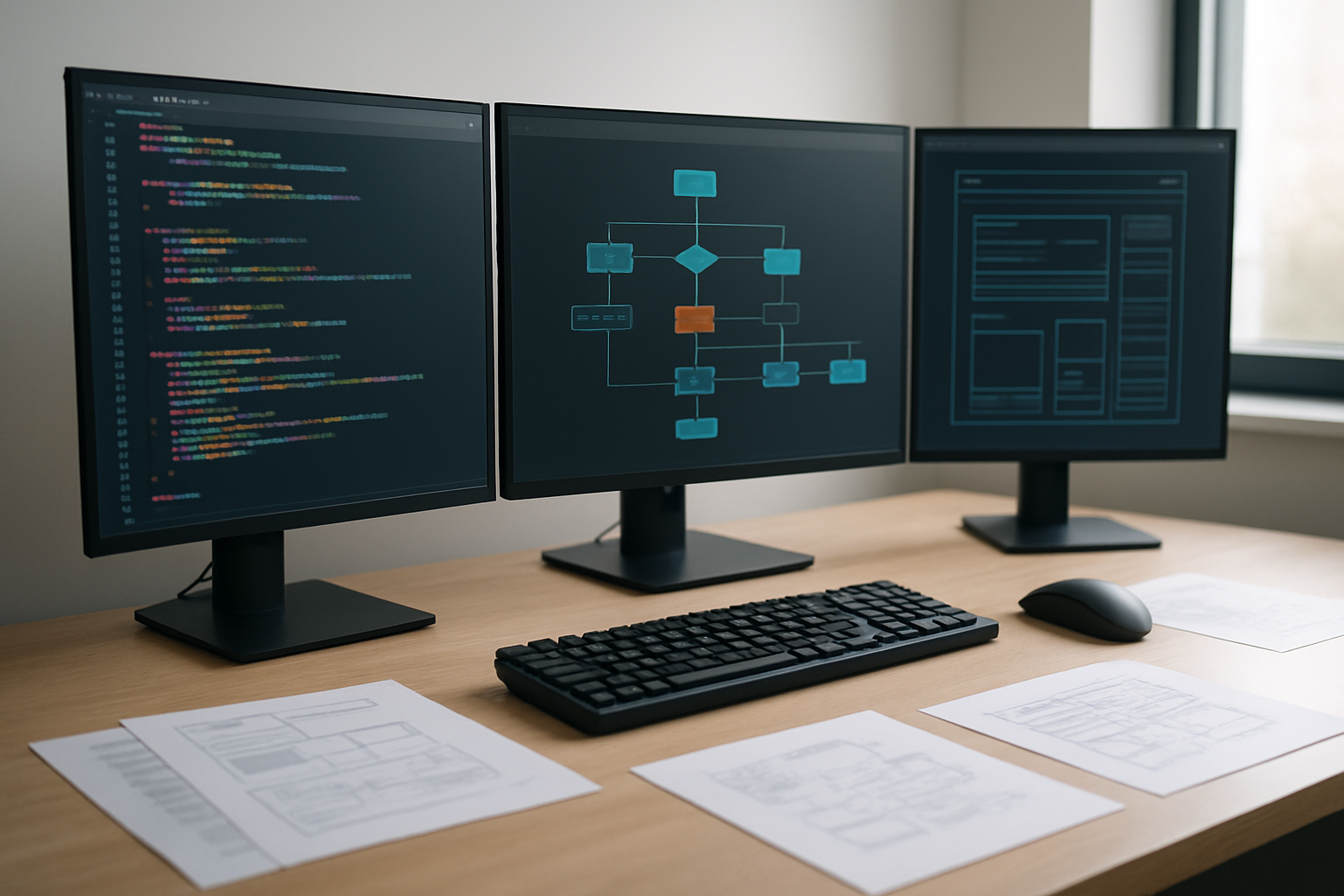
The foundation of successful generative UI lies in robust specification frameworks that translate abstract design concepts into executable code. OpenAPI 3.0 stands as the cornerstone for defining RESTful interfaces, providing a standardized way to describe endpoints, data structures, and interaction patterns that automated UI generation tools can interpret. For MCP apps specifically, the Model Context Protocol specification defines how applications communicate with language models, creating a bridge between AI capabilities and interface generation.
JSON Schema serves as another critical framework, enabling developers to define data structures with validation rules that generative UI systems use to create appropriate form controls, input validations, and data display components. React’s PropTypes and TypeScript’s type definitions extend this concept, allowing A2UI framework implementations to generate type-safe components automatically.
The Web Components specification has emerged as a game-changer for generative UI architecture, providing a standard way to create reusable, encapsulated UI elements that work across different frameworks. This specification enables AG-UI systems to generate components that maintain consistency regardless of the underlying technology stack.
GraphQL schemas represent another powerful specification framework, offering introspective capabilities that allow UI generation protocols to understand available data, relationships, and mutations. This self-describing nature makes it particularly valuable for automated UI development where systems need to adapt to changing data requirements without manual intervention.
Standards ensuring cross-platform compatibility and consistency
Cross-platform compatibility in generative UI depends heavily on adhering to established web standards and emerging protocols. The Web Accessibility Initiative (WAI) guidelines ensure that generated interfaces remain usable across different devices, assistive technologies, and user capabilities. A2UI framework implementations typically embed these accessibility standards directly into their generation logic, creating inclusive interfaces by default.
Progressive Web App (PWA) standards provide the blueprint for creating interfaces that work seamlessly across desktop, mobile, and tablet environments. These standards define how generative UI systems should handle responsive design, offline functionality, and native app-like experiences without requiring platform-specific code.
The Design Token specification has become essential for maintaining visual consistency across generated interfaces. Tools like Style Dictionary and Theo create standardized ways to define colors, typography, spacing, and other design properties that generative UI systems can reference when creating components for different platforms.
Web Assembly (WASM) standards enable generative UI tools to run complex UI generation algorithms directly in browsers, ensuring consistent behavior across different environments. This standardization allows AG-UI implementations to deliver the same user experience whether running on Chrome, Safari, or Edge.
CSS Custom Properties and the CSS Typed Object Model provide standardized ways for generative systems to create dynamic styling that adapts to different themes, screen sizes, and user preferences while maintaining consistency across platforms.
Performance benchmarks for optimal generative UI implementation
Performance optimization in generative UI requires specific benchmarks that account for both generation time and runtime efficiency. First Contentful Paint (FCP) should remain under 1.2 seconds even when interfaces are generated on-demand, requiring efficient caching strategies and optimized generation algorithms in MCP apps.
Bundle size analysis becomes critical when dealing with generative UI systems. Generated components should aim for individual bundle sizes under 50KB gzipped, with lazy loading capabilities for larger components. This benchmark ensures that A2UI framework implementations don’t sacrifice performance for flexibility.
Memory usage patterns during UI generation need careful monitoring, with peak memory consumption staying below 100MB for typical generation tasks. This constraint drives the development of streaming generation algorithms that process UI specifications incrementally rather than loading entire schemas into memory.
Time to Interactive (TTI) metrics for generated interfaces should match or exceed hand-coded equivalents, typically achieving TTI scores under 3.5 seconds on 3G networks. AG-UI systems often implement pre-compilation strategies to meet these benchmarks, generating static assets during build time when possible.
Lighthouse performance scores provide standardized metrics for evaluating generated interfaces, with targets of 90+ for Performance, Accessibility, Best Practices, and SEO categories. These scores ensure that automated UI development doesn’t compromise on quality standards.
Version control strategies for evolving UI specifications
Managing evolving UI specifications requires sophisticated version control approaches that go beyond traditional code versioning. Semantic versioning for UI specifications follows a modified approach where major versions indicate breaking changes to component APIs, minor versions introduce new features or components, and patch versions address bug fixes or performance improvements.
Schema migration strategies become essential when UI specifications evolve. Tools like Prisma for databases inspire similar approaches for UI schemas, where migration scripts transform existing specifications to new versions while preserving backward compatibility where possible.
Branching strategies for generative UI specifications often employ feature flags and progressive rollouts. The GitFlow model adapts well to UI specification development, with develop branches containing experimental UI patterns that mature into release candidates before merging to main specification branches.
Diff visualization tools specifically designed for UI specifications help teams understand the impact of changes. These tools show not just code differences but also visual representations of how specification changes affect generated interfaces, making review processes more effective for generative UI projects.
API versioning strategies extend to UI specifications, with approaches like header-based versioning allowing clients to specify which version of UI specifications they support. This enables gradual migration paths where legacy systems can continue using older specification versions while new implementations adopt updated standards.
Rollback capabilities for UI specifications require careful consideration of dependency management. When a specification version introduces issues, rollback procedures must account for generated components, cached artifacts, and client-side compatibility to ensure smooth transitions back to stable versions.
Communication Protocols Powering Seamless Integration

Data Exchange Mechanisms Between UI Generators and Applications
Generative UI systems rely on sophisticated communication channels to bridge the gap between AI-powered UI generation and target applications. The most common approach involves RESTful APIs that handle JSON payloads containing component specifications, layout instructions, and styling parameters. These APIs enable real-time communication where UI generators can send component definitions while applications respond with validation feedback and rendering status.
WebSocket connections provide persistent, bidirectional communication for dynamic UI updates. This proves essential for MCP apps and A2UI framework implementations that require instant feedback loops. When users interact with generated interfaces, WebSocket protocols ensure immediate data synchronization between the generative UI engine and the host application.
GraphQL-based data exchange offers more granular control over information flow. Applications can request specific UI elements or modifications without overwhelming the system with unnecessary data transfers. This selective approach significantly improves performance in AG-UI implementations where complex interface hierarchies demand precise communication.
Message queuing systems like Redis or RabbitMQ handle asynchronous operations, allowing UI generation protocols to process multiple requests simultaneously. This architecture prevents bottlenecks when dealing with resource-intensive rendering operations or when multiple users trigger UI generation requests concurrently.
| Protocol Type | Use Case | Performance Impact |
|---|---|---|
| REST API | Standard CRUD operations | Medium latency |
| WebSocket | Real-time updates | Low latency |
| GraphQL | Selective data fetching | Variable |
| Message Queue | Async processing | High throughput |
Security Protocols Protecting User Interactions and Data Flow
Authentication mechanisms form the foundation of secure generative UI systems. OAuth 2.0 integration ensures that only authorized applications can access UI generation services, while JWT tokens provide stateless authentication for API calls. Multi-factor authentication adds an extra security layer, particularly important when automated UI development processes handle sensitive business data.
Encryption protocols protect data transmission between UI generators and target applications. TLS 1.3 encryption secures all communication channels, preventing man-in-the-middle attacks that could compromise generated interface specifications or user interaction data. End-to-end encryption ensures that even internal system components cannot access raw user data during UI generation processes.
Input validation and sanitization protocols prevent malicious code injection through generated UI components. Generative user interface systems implement strict parsing rules that filter potentially dangerous HTML, CSS, or JavaScript code before rendering. Content Security Policy (CSP) headers provide additional protection by restricting resource loading and script execution within generated interfaces.
Rate limiting and throttling mechanisms protect against abuse and denial-of-service attacks. These protocols monitor API usage patterns and temporarily restrict access when suspicious activity occurs. For AI-powered UI generation systems, this prevents resource exhaustion that could impact service availability for legitimate users.
Access control lists define granular permissions for different user roles and application types. Administrative users might access advanced UI generation protocols, while standard users work within predefined templates and limitations.
Error Handling Systems Maintaining Robust User Experiences
Graceful degradation strategies ensure that generative UI applications continue functioning even when communication protocols encounter issues. When primary data exchange mechanisms fail, backup systems automatically engage alternative communication channels. This approach prevents complete system failures that would otherwise disrupt user workflows in MCP apps and other generative UI implementations.
Circuit breaker patterns monitor communication health and temporarily disable failing components to prevent cascading failures. When UI generation protocols detect repeated errors from specific services, the circuit breaker opens to redirect traffic to healthy alternatives. This self-healing architecture maintains system stability during peak usage periods or infrastructure problems.
Retry mechanisms with exponential backoff handle temporary network issues without overwhelming struggling services. These protocols automatically reattempt failed requests with increasing delays, giving overwhelmed systems time to recover while maintaining user session continuity. Smart retry logic distinguishes between retriable errors (network timeouts) and permanent failures (authentication errors).
Comprehensive logging systems capture detailed error information for debugging and system monitoring. These logs track communication protocol performance, identify recurring issues, and provide insights for optimizing generative UI architecture. Real-time alerting notifies development teams when error rates exceed acceptable thresholds.
Fallback UI templates activate when generative systems cannot produce custom interfaces within acceptable timeframes. Users receive functional, albeit basic, interfaces that allow them to complete essential tasks while technical issues resolve in the background. This approach prioritizes user productivity over interface sophistication during system difficulties.
Design Patterns Accelerating Development Workflows
Reusable Templates Streamlining Complex Interface Creation
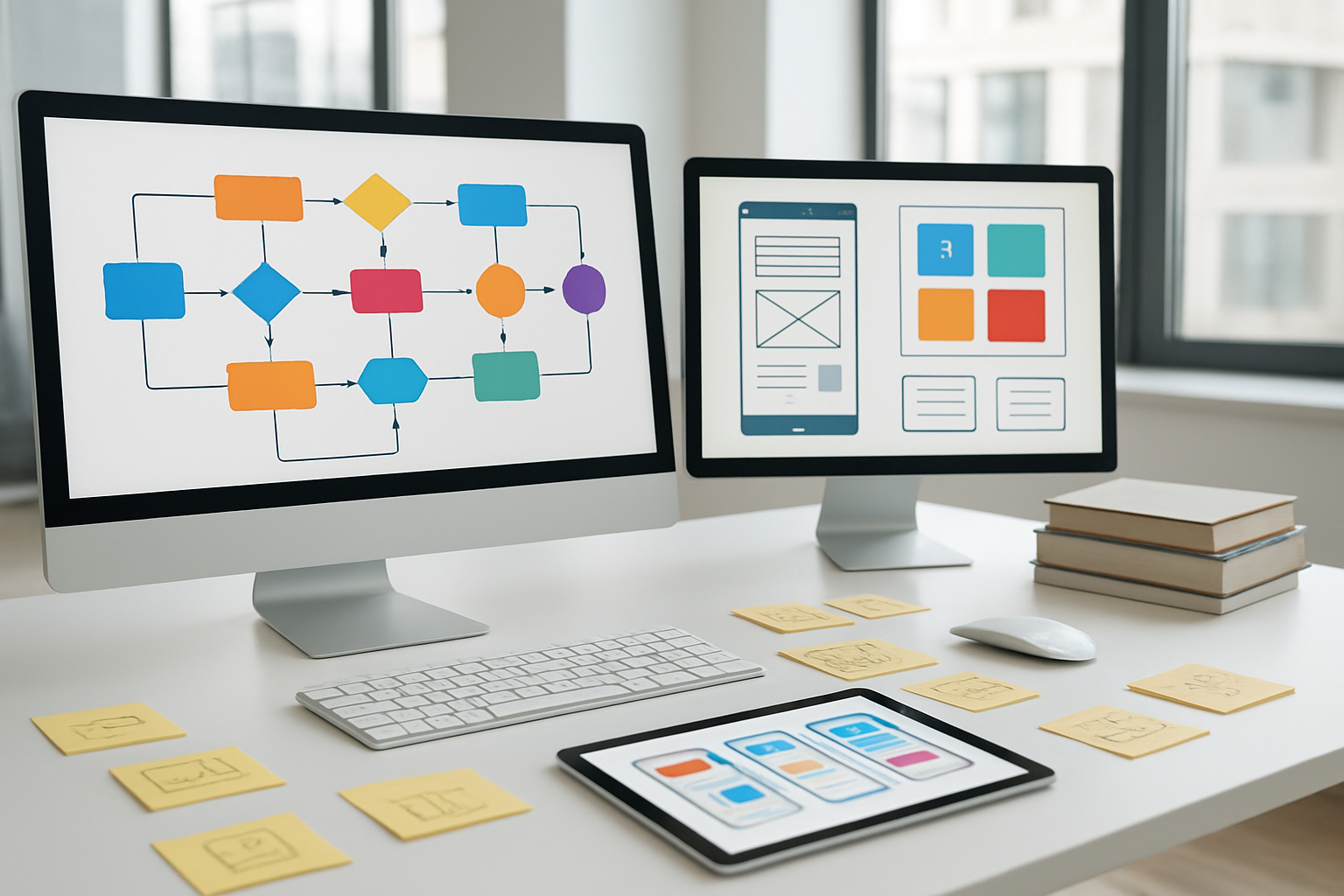
Generative UI systems thrive on smart template architectures that eliminate repetitive coding tasks. These reusable templates serve as blueprints for common interface patterns like dashboard layouts, form structures, and navigation menus. When developers need to create a user profile page or data visualization component, they can instantly pull from pre-built templates that automatically adjust to specific content requirements.
The real power emerges when these templates connect with dynamic data sources. A single product card template can generate thousands of unique product displays by pulling different images, descriptions, and pricing information. MCP apps excel at this template-driven approach, where one carefully crafted template becomes the foundation for countless interface variations.
Modern template systems also support conditional logic and nested components. A template might display different sections based on user permissions or device capabilities, creating truly adaptive interfaces without manual coding for each variation.
Component Libraries Reducing Development Time and Costs
Smart component libraries act as building blocks for rapid UI generation. Instead of coding buttons, input fields, and navigation elements from scratch, developers access pre-tested components that maintain visual consistency across applications. These libraries often include complex components like date pickers, file uploaders, and interactive charts that would take weeks to develop independently.
The economic impact is substantial. Teams report 40-70% faster development cycles when leveraging comprehensive component libraries. A2UI framework demonstrates this efficiency by providing extensive component collections that integrate seamlessly with generative systems.
Component libraries also enforce design standards automatically. When every button follows the same visual guidelines and every form input includes proper validation, applications maintain professional consistency without requiring detailed style guides or manual reviews.
Responsive Patterns Adapting to Multiple Device Formats
Responsive design patterns in generative UI systems automatically adjust layouts based on screen size and device capabilities. These patterns go beyond simple CSS media queries by intelligently reorganizing content hierarchy and interaction methods for different contexts.
A generative dashboard might display detailed analytics tables on desktop screens while switching to card-based summaries on mobile devices. The same data remains accessible, but the presentation adapts to optimize usability for each device type.
Advanced responsive patterns consider touch vs. mouse interactions, processing power limitations, and network connectivity. Mobile patterns might reduce animation complexity or load content progressively to maintain smooth performance on slower devices.
Accessibility Patterns Ensuring Inclusive User Experiences
Accessibility patterns built into generative UI systems ensure every generated interface meets WCAG standards without requiring specialized accessibility expertise from developers. These patterns automatically include proper ARIA labels, keyboard navigation support, and screen reader compatibility.
Color contrast ratios are automatically calculated and adjusted when patterns detect insufficient visibility. Text alternatives for images and interactive elements are generated contextually, creating truly accessible experiences by default rather than as an afterthought.
Focus management patterns ensure logical tab order and clear visual indicators for keyboard navigation. AG-UI incorporates sophisticated accessibility patterns that adapt based on user preferences and assistive technology detection.
State Management Patterns Handling Dynamic Content Updates
Dynamic content requires robust state management patterns that track data changes and update interface elements accordingly. These patterns handle complex scenarios like real-time collaboration, live data feeds, and user interactions that affect multiple interface components simultaneously.
Event-driven patterns ensure that when users modify data in one part of an application, related components update instantly without page refreshes. Shopping cart totals adjust when items are added, project timelines shift when deadlines change, and collaborative documents reflect edits from multiple users in real-time.
Caching patterns optimize performance by storing frequently accessed data while maintaining synchronization with backend systems. These patterns reduce server load and improve user experience by providing instant responses to common interactions while ensuring data consistency across the application.
MCP Apps Architecture and Implementation Benefits

Modular Components Enhancing Scalability and Maintenance
MCP apps leverage modular architecture to create UI systems that grow with your business needs. Each component operates independently, allowing developers to update specific parts without breaking the entire application. This approach dramatically reduces debugging time and makes code reviews more focused and effective.
The modular structure enables teams to work on different components simultaneously without conflicts. When building generative UI systems, this parallel development capability becomes even more valuable as AI-powered components can be developed and tested in isolation before integration.
Component libraries within MCP apps maintain consistent design patterns while offering flexibility. Developers can mix and match pre-built UI elements or create custom components that still follow the established protocols. This balance between standardization and customization drives faster development cycles.
Version control becomes significantly easier with modular components. Teams can track changes at the component level, roll back specific features without affecting the entire system, and deploy updates incrementally. This granular control proves essential for enterprise applications where stability and reliability are non-negotiable.
Plugin Ecosystems Expanding Functionality Without Core Changes
Plugin architectures in MCP apps create extensible systems that adapt to changing requirements without touching core functionality. Third-party developers can build specialized UI components that integrate seamlessly with existing generative UI workflows.
The plugin ecosystem operates through well-defined APIs that maintain compatibility across versions. This stability encourages community contributions and reduces vendor lock-in concerns. Organizations can customize their UI generation capabilities by selecting plugins that match their specific industry needs or compliance requirements.
Hot-swapping capabilities allow plugins to be added, removed, or updated while the application runs. This real-time flexibility proves valuable for A/B testing different UI approaches or rolling out new features to specific user groups without system downtime.
Security isolation within the plugin framework protects core systems from potentially unstable third-party code. Each plugin operates in its own sandbox, preventing crashes or security vulnerabilities from affecting other components or the main application.
Performance Optimization Techniques for Enterprise-Grade Applications
AI-powered UI generation in MCP apps employs sophisticated caching strategies to minimize computational overhead. Generated UI components are stored in memory with intelligent invalidation rules that refresh content only when underlying data changes. This approach reduces server load while maintaining real-time responsiveness.
Lazy loading techniques ensure that complex generative user interface components only render when needed. The system intelligently predicts user interactions and preloads likely UI elements in the background, creating smooth user experiences without wasting resources on unused components.
| Optimization Technique | Performance Gain | Use Case |
|---|---|---|
| Component Caching | 40-60% faster renders | Frequently accessed UI elements |
| Lazy Loading | 70% reduction in initial load time | Complex dashboards |
| Parallel Processing | 50% faster generation | Multi-component layouts |
| Memory Pooling | 30% less garbage collection | High-frequency updates |
Resource pooling manages memory allocation efficiently by reusing component instances rather than creating new ones for each request. This technique proves particularly effective in high-traffic scenarios where hundreds of UI components might be generated simultaneously.
Parallel processing capabilities allow multiple UI components to generate concurrently across different CPU cores. The system automatically manages dependencies between components to ensure proper rendering order while maximizing throughput.
Bundle splitting optimizes network performance by delivering only the JavaScript and CSS required for current UI components. As users navigate through different sections, additional resources load asynchronously without blocking the interface.
A2UI Framework Capabilities and Use Cases

Automated UI Generation Reducing Manual Coding Requirements
The A2UI framework transforms how developers approach interface creation by dramatically cutting down the time spent writing repetitive UI code. Instead of manually crafting every button, form field, and layout component, developers can define high-level specifications that the framework interprets and converts into fully functional interfaces. This automated UI development process works by analyzing component requirements, user flow patterns, and design system rules to generate production-ready code automatically.
The framework’s code generation engine handles common UI patterns like data tables, forms, navigation menus, and modal dialogs without requiring line-by-line implementation. Developers simply specify what they need through configuration files or visual builders, and the A2UI framework produces clean, maintainable code that follows established conventions. This approach reduces development time by up to 60% for standard interface components while maintaining code quality and consistency across projects.
Teams using A2UI report significant productivity gains, especially when building admin panels, dashboards, and CRUD interfaces where similar patterns repeat frequently. The generated code remains fully customizable, allowing developers to modify and extend components when unique requirements arise.
Machine Learning Integration Personalizing User Interfaces
A2UI’s machine learning capabilities create dynamic, personalized user experiences that adapt to individual user behaviors and preferences. The framework continuously analyzes user interactions, click patterns, navigation flows, and task completion rates to understand how different users engage with the interface. This data feeds into ML models that make real-time decisions about layout optimization, feature prominence, and content organization.
The personalization engine adjusts interface elements based on user roles, skill levels, and usage patterns. For example, power users might see advanced features prominently displayed, while new users receive simplified interfaces with guided workflows. The system can relocate frequently used tools to more accessible positions, hide rarely used features, and suggest relevant actions based on context and user history.
| Personalization Feature | Impact | Use Case |
|---|---|---|
| Adaptive Menu Systems | 40% faster task completion | Enterprise software |
| Context-Aware Widgets | 25% increased engagement | Business dashboards |
| Role-Based Layouts | 50% reduced training time | Admin interfaces |
| Predictive Content | 30% improved conversion rates | E-commerce platforms |
The AI-powered UI generation learns from aggregate user data while respecting privacy boundaries, creating interfaces that feel custom-built for each user without compromising security or requiring manual configuration.
Testing Automation Ensuring Consistent Quality Across Deployments
A2UI’s built-in testing automation creates comprehensive test suites for every generated interface component, ensuring reliability and consistency across different deployment environments. The framework automatically generates unit tests, integration tests, and visual regression tests for each UI element, eliminating the manual effort typically required to maintain test coverage.
The automated testing system validates component functionality, accessibility compliance, responsive behavior, and cross-browser compatibility. When the framework generates a new form component, it simultaneously creates tests that verify field validation, submission handling, error states, and keyboard navigation. This parallel test generation means every generated component comes with a complete testing foundation from day one.
Visual regression testing captures screenshots of generated interfaces and compares them against baseline images to detect unintended layout changes. The system flags any visual inconsistencies before deployment, preventing UI bugs from reaching production environments. Performance testing modules automatically benchmark loading times, interaction responsiveness, and memory usage to ensure generated interfaces meet performance standards.
Continuous integration pipelines can run these automated tests whenever code changes occur, providing immediate feedback about potential issues. This testing automation reduces quality assurance time by approximately 70% while improving bug detection rates and deployment confidence.
Integration Pathways with Existing Development Tools
A2UI seamlessly connects with popular development environments and tools through well-designed APIs and plugins. The framework provides native integrations for major IDEs like VS Code, WebStorm, and Sublime Text, allowing developers to generate and customize UI components directly within their preferred coding environment.
Version control integration ensures that generated code works smoothly with Git workflows, maintaining proper commit history and branch management. The framework tracks which components were generated versus manually coded, making it easier to understand project evolution and manage updates.
Build tool compatibility extends to webpack, Vite, Rollup, and other modern bundlers, ensuring generated components integrate cleanly with existing build processes. The framework respects existing project structures, naming conventions, and coding standards rather than imposing its own requirements.
Design system integration allows A2UI to work with tools like Figma, Sketch, and Adobe XD, importing design tokens, component specifications, and style guides to ensure generated interfaces match approved designs. This bridge between design and development tools eliminates translation errors and maintains visual consistency.
API integration capabilities connect generated interfaces with backend services, database layers, and third-party platforms through standardized protocols and authentication mechanisms. The framework handles common integration patterns like REST API calls, GraphQL queries, and real-time data synchronization without requiring custom integration code.
AG-UI Advanced Features and Business Impact

AI-driven interface adaptation based on user behavior patterns
AG-UI’s intelligent adaptation engine transforms how users interact with applications by continuously learning from behavioral data. The system tracks micro-interactions, navigation patterns, and engagement metrics to build comprehensive user profiles. When someone consistently clicks certain buttons faster or spends more time in specific interface areas, the generative UI automatically adjusts layouts, button placements, and visual hierarchies.
The adaptation process happens through machine learning algorithms that analyze click-through rates, scroll depth, hover duration, and task completion times. For example, if users frequently abandon forms at specific fields, AG-UI repositions those elements or simplifies the input process. The system recognizes patterns across user segments and applies personalized interface variations that reduce friction points.
Visual elements receive dynamic adjustments based on user preferences. Color schemes, typography sizes, and spacing adapt to individual accessibility needs and aesthetic preferences. The AI-powered UI generation creates multiple interface variants and serves the version most likely to resonate with each user’s behavioral profile.
Real-time optimization improving conversion rates and engagement
The optimization engine operates continuously, making split-second decisions about interface modifications. A/B testing runs automatically across different user segments, with the system promoting high-performing variations without manual intervention. Conversion rate improvements typically range from 15-40% as interfaces become increasingly aligned with user expectations.
Real-time heat mapping reveals interaction hotspots and dead zones, enabling immediate layout adjustments. When users consistently ignore navigation elements or struggle with specific workflows, the generative user interface reshapes these components instantly. Shopping cart abandonment rates drop significantly when checkout processes adapt to user behavior patterns in real-time.
| Metric | Before AG-UI | After Implementation |
|---|---|---|
| Conversion Rate | 2.3% | 3.8% |
| Task Completion | 67% | 89% |
| User Engagement | 3.2 min | 5.7 min |
| Bounce Rate | 45% | 28% |
The system measures engagement through multiple touchpoints: time on page, feature usage frequency, and user satisfaction scores. Machine learning models predict user intent and pre-load interface elements that users are likely to need next, creating smoother experiences.
Multi-tenant customization serving diverse client requirements
Enterprise clients benefit from AG-UI’s sophisticated multi-tenant architecture that maintains distinct customizations across different organizations. Each tenant receives tailored interface experiences while sharing the underlying infrastructure and optimization algorithms. Brand guidelines, compliance requirements, and industry-specific workflows integrate seamlessly into the generative UI architecture.
White-label solutions allow partners to deploy customized interfaces that reflect their brand identity while leveraging AG-UI’s advanced capabilities. The system maintains separate user behavior models for each tenant, ensuring that insights from one organization don’t inappropriately influence another’s interface optimizations.
Compliance frameworks adapt automatically based on tenant requirements. Healthcare organizations receive HIPAA-compliant interface modifications, while financial services clients get SOX-compliant workflows. The automated UI development process incorporates regulatory requirements into every generated interface component.
Resource allocation scales dynamically based on tenant usage patterns. High-traffic tenants receive additional computing resources during peak periods, while smaller organizations benefit from shared infrastructure efficiency. Custom API integrations allow tenants to connect existing systems with minimal development overhead.
Role-based customization ensures that different user types within each tenant organization receive appropriate interface experiences. Administrators see advanced controls and analytics dashboards, while end-users interact with simplified, task-focused interfaces optimized for their specific responsibilities.
Generative UI technology has transformed how we build and interact with applications through intelligent specs, protocols, and patterns. The technical foundations we’ve explored show how MCP Apps streamline architecture, A2UI frameworks expand creative possibilities, and AG-UI delivers measurable business value. Each component works together to create a system where interfaces adapt and respond to user needs in real-time.
The future of application development lies in embracing these generative approaches. Start by experimenting with one framework that matches your current project needs, then gradually integrate the communication protocols and design patterns that make the most sense for your team. The technology is ready – now it’s about taking that first step toward building more intuitive, responsive user experiences.