Manufacturing teams and IT professionals struggle to connect factory equipment to the cloud while keeping data secure and actionable. AWS Industrial IoT solutions solve this challenge by providing a complete platform that bridges the gap between shop floor operations and enterprise systems.
This guide is designed for manufacturing engineers, plant managers, and IT teams responsible for digital transformation initiatives in industrial environments. Whether you’re managing a single production line or coordinating multiple facilities, you’ll learn practical approaches to modernize your operations using AWS IoT services.
We’ll walk through how AWS IoT Core connects your factory equipment to create seamless data flows from sensors and machines to the cloud. You’ll discover proven IoT security best practices that protect your industrial systems without slowing down production. Finally, we’ll show you how to build powerful industrial data analytics pipelines that turn raw machine data into insights that drive better decisions and boost efficiency across your manufacturing operations.
Understanding Industrial IoT Architecture on AWS
Core AWS IoT services for manufacturing environments
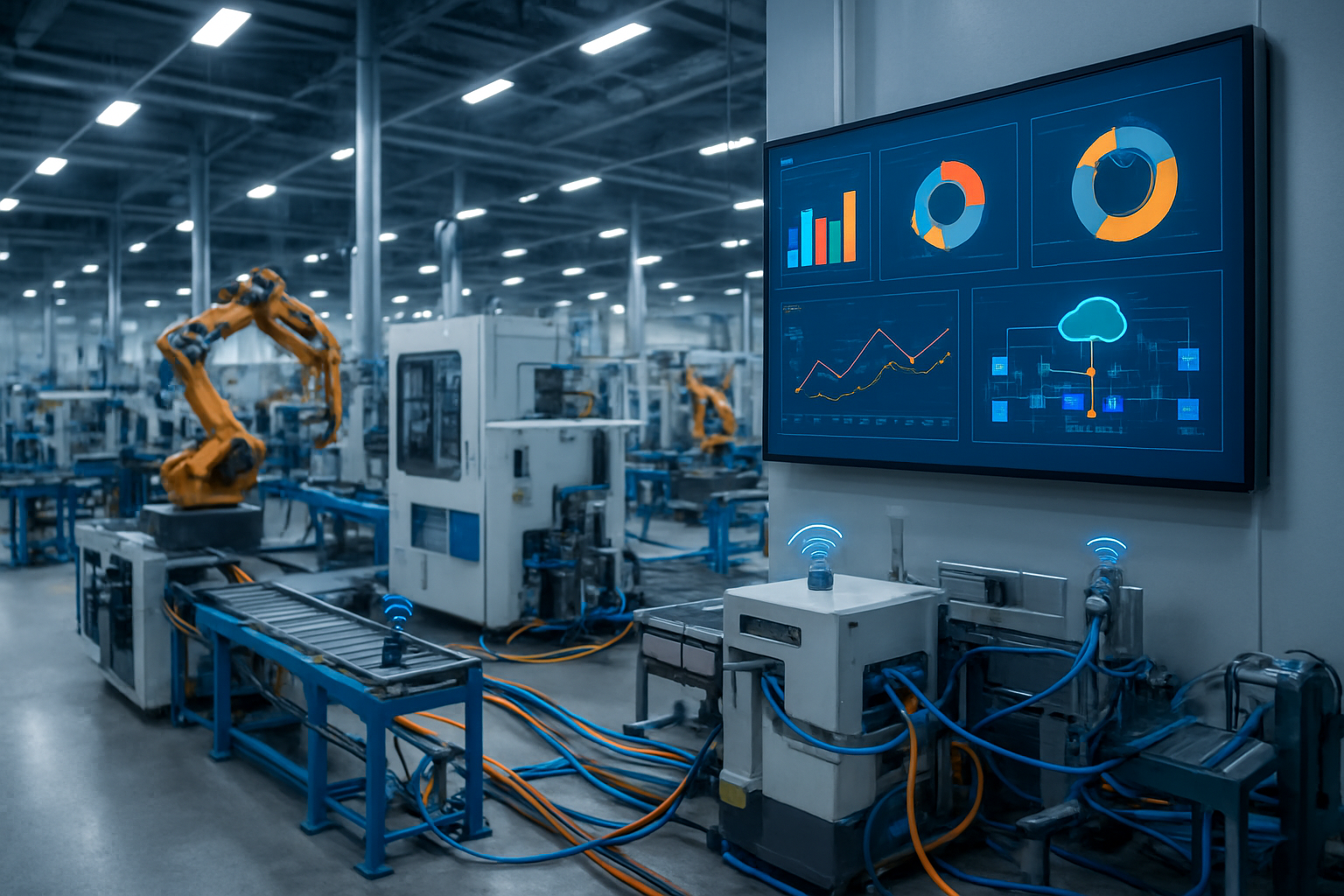
AWS IoT Core serves as the backbone for connecting millions of industrial devices to the cloud. This managed service handles message routing, device authentication, and secure communication between factory equipment and AWS services. For manufacturing environments, IoT Core provides the scalability needed to manage everything from simple sensors to complex production line machinery.
AWS IoT Device Management simplifies the deployment and maintenance of thousands of connected devices across factory floors. The service handles device registration, organization, monitoring, and remote troubleshooting – critical capabilities when dealing with geographically distributed manufacturing facilities.
The AWS IoT Analytics service transforms raw sensor data into actionable insights. Manufacturing teams can create custom dashboards, run SQL queries on time-series data, and build machine learning models to predict equipment failures or optimize production schedules.
AWS IoT Events monitors data streams for specific patterns and automatically triggers responses. In manufacturing contexts, this means immediate alerts when temperature sensors exceed thresholds or automated shutdowns when safety conditions are breached.
Device connectivity options and protocols
Manufacturing environments require flexible connectivity options to accommodate diverse equipment types. AWS IoT supports MQTT, HTTPS, and WebSockets protocols, allowing legacy machinery and modern sensors to connect seamlessly.
MQTT proves particularly valuable for industrial applications due to its lightweight design and reliable message delivery. Factory equipment with limited bandwidth or intermittent connectivity benefits from MQTT’s efficient data transmission and built-in quality of service levels.
For devices requiring HTTP-based communication, AWS IoT’s REST API provides straightforward integration paths. This approach works well for equipment that already uses web-based interfaces or when implementing custom applications.
The AWS IoT Device SDK supports multiple programming languages including C, JavaScript, Python, and Java. This flexibility allows manufacturers to choose development tools that align with their existing technical expertise and infrastructure.
Edge computing capabilities with AWS IoT Greengrass
AWS IoT Greengrass extends cloud capabilities directly to factory floors, enabling local data processing and real-time decision making. This edge computing approach reduces latency for time-critical manufacturing processes while maintaining connectivity to cloud analytics.
Greengrass Core devices can run AWS Lambda functions locally, allowing complex business logic to execute without round-trip delays to the cloud. Manufacturing systems can process sensor data, trigger immediate responses, and cache critical operations even during network outages.
The service includes ML inference capabilities, enabling predictive maintenance models to run directly on edge devices. Production lines can detect anomalies and predict equipment failures in real-time without relying on cloud connectivity.
Local messaging between devices creates robust communication networks within manufacturing facilities. Equipment can coordinate operations, share sensor data, and maintain production workflows even when internet connectivity becomes unreliable.
Integration with existing factory systems
Modern manufacturing environments often include established SCADA systems, PLCs, and MES platforms. AWS IoT provides multiple integration pathways that preserve existing investments while adding cloud capabilities.
OPC-UA connectivity allows direct integration with industrial automation systems. The AWS IoT SiteWise service specifically targets this integration challenge, providing specialized connectors for common industrial protocols and equipment brands.
API Gateway integration enables custom applications to bridge proprietary systems with AWS services. Manufacturing teams can build lightweight middleware that translates between existing protocols and AWS IoT Core messaging formats.
Database integration options include Amazon RDS, DynamoDB, and Timestream for different data storage requirements. Historical production data, real-time sensor readings, and configuration information can each use appropriate storage solutions while maintaining unified access patterns.
AWS Lambda functions provide serverless integration logic that scales automatically with production demands. Custom business rules, data transformations, and third-party system integrations can execute without managing dedicated server infrastructure.
Connecting Factory Equipment to AWS IoT
Device Onboarding and Registration Processes
Getting your factory equipment connected to AWS IoT Core starts with a streamlined device onboarding process. AWS provides multiple pathways for device registration, from automated bulk registration to individual device provisioning. The AWS IoT Device Management service acts as your central hub for managing the entire device lifecycle.
For manufacturing environments, the most effective approach often involves fleet provisioning templates. These templates define device policies, certificates, and configurations that can be applied across multiple devices simultaneously. You can create templates that automatically assign devices to thing groups based on their location, equipment type, or production line.
The registration process typically involves three key steps: device identity creation, policy attachment, and initial configuration sync. AWS IoT Core generates unique device certificates during registration, establishing a secure foundation for all future communications. Your devices can use these certificates to authenticate and connect to the AWS cloud infrastructure.
Protocol Translation for Legacy Machinery
Most factory floors contain a mix of modern IoT-enabled equipment and legacy machinery that speaks older industrial protocols. AWS IoT device gateway supports standard IoT protocols like MQTT, but legacy systems often use Modbus, OPC-UA, or proprietary communication standards.
Protocol translation bridges this gap through edge computing solutions. AWS IoT Greengrass runs locally on industrial gateways, converting legacy protocols to MQTT messages that can flow seamlessly into AWS IoT Core. This approach means you don’t need to replace existing equipment to start collecting valuable data.
Popular protocol translation patterns include:
- Modbus to MQTT: Converting register reads from PLCs and sensors
- OPC-UA to MQTT: Translating structured industrial data
- Serial to MQTT: Handling RS-485 and RS-232 communications
- Proprietary to MQTT: Custom protocol handlers for specialized equipment
Edge-based translation also provides local processing capabilities, allowing you to filter, aggregate, or analyze data before sending it to the cloud. This reduces bandwidth costs and improves response times for critical operations.
Real-time Data Streaming from Sensors and PLCs
AWS Industrial IoT excels at handling high-frequency data streams from manufacturing equipment. Sensors measuring temperature, pressure, vibration, and other parameters can generate thousands of data points per second. AWS IoT Core’s message routing capabilities ensure this data reaches the right destinations without overwhelming your systems.
The key to effective real-time streaming lies in proper message structuring and routing rules. IoT rules engine allows you to filter incoming messages based on content, device attributes, or timestamps. You can route critical alerts directly to AWS SNS for immediate notification, while storing historical data in Amazon S3 for long-term analysis.
For high-volume scenarios, AWS IoT Device Defender helps monitor data patterns and identify anomalies that might indicate equipment issues or security concerns. The service can detect unusual communication patterns, unexpected data volumes, or deviations from normal operational parameters.
Managing Device Certificates and Authentication
Security starts with proper certificate management, and AWS provides robust tools for handling industrial device authentication. Each connected device receives a unique X.509 certificate that serves as its digital identity within your AWS environment.
AWS IoT Device Management handles certificate lifecycle tasks including issuance, rotation, and revocation. You can set up automated certificate rotation schedules to maintain security without disrupting production operations. For manufacturing environments with hundreds or thousands of devices, bulk certificate operations save significant administrative overhead.
Certificate authorities (CAs) can be configured to match your organization’s security policies. AWS supports both AWS-generated CAs and customer-managed certificate authorities. This flexibility allows you to integrate with existing enterprise security infrastructure while maintaining the security benefits of AWS IoT Core.
Just-in-time provisioning (JITP) streamlines the deployment process for new devices. When a device attempts to connect for the first time with a valid certificate, AWS automatically creates the device record and applies predefined policies. This eliminates manual provisioning steps while maintaining security controls.
Scaling Connectivity Across Multiple Production Lines
Manufacturing operations rarely involve a single production line, and AWS IoT device management scales effortlessly across multiple facilities, production lines, and equipment types. Thing groups provide logical organization for devices, allowing you to apply policies, configurations, and updates to entire groups simultaneously.
Dynamic thing groups automatically organize devices based on attributes like location, equipment type, or operational status. For example, you might create groups for “Production Line A Temperature Sensors” or “Building 2 Conveyor Systems.” These groups update automatically as device attributes change.
AWS IoT Jobs service coordinates software updates and configuration changes across your device fleet. You can schedule maintenance updates during planned downtime, roll out changes gradually to minimize risk, or push urgent security patches immediately. The service tracks job progress and provides detailed reporting on completion status.
For global manufacturing operations, AWS IoT Device Management works seamlessly with multiple AWS regions. You can replicate device configurations and policies across regions while maintaining local data processing capabilities. This geographic distribution improves response times and provides redundancy for critical manufacturing systems.
Connection scaling also involves monitoring and alerting capabilities. AWS CloudWatch provides detailed metrics on device connectivity, message volumes, and error rates. You can set up alarms to notify operations teams when devices go offline or when message patterns indicate potential issues with production equipment.
Implementing Robust Security Measures

Device-level encryption and secure communication
Starting with the foundation of secure industrial IoT, device-level encryption protects data from the moment it leaves your factory equipment. AWS IoT Core provides built-in support for TLS 1.2 encryption, ensuring all communication between your machines and the cloud remains protected during transit. Manufacturing environments require X.509 certificates for device authentication, creating a unique digital identity for each piece of equipment.
Device provisioning becomes streamlined through AWS IoT Device Management, which automates certificate rotation and manages device credentials at scale. For factories with hundreds or thousands of sensors, this automated approach prevents security gaps that manual certificate management often creates. Hardware security modules (HSMs) can store private keys directly on industrial devices, making credential theft nearly impossible even if physical access occurs.
Secure communication protocols like MQTT over TLS work perfectly for industrial environments where bandwidth might be limited but security cannot be compromised. AWS IoT supports mutual TLS authentication, meaning both the device and the cloud service verify each other’s identity before establishing connections.
Identity and access management for industrial systems
Industrial IAM requires a different approach than typical enterprise systems because factory equipment often runs continuously for months without human intervention. AWS IAM policies for industrial IoT should follow the principle of least privilege, granting devices only the specific permissions needed for their operational functions.
Role-based access control becomes essential when managing different types of factory equipment. A temperature sensor needs different permissions than a robotic arm controller. Creating specific IAM roles for device categories simplifies management while maintaining security boundaries.
Service accounts for automated systems need careful consideration in manufacturing environments. Unlike user accounts that might change regularly, service accounts for industrial equipment often remain stable for years. AWS IAM supports long-term credentials with automatic rotation capabilities, perfect for industrial scenarios where equipment downtime for credential updates is costly.
| Device Type | Required Permissions | Recommended IAM Policy |
|---|---|---|
| Sensors | IoT publish, CloudWatch metrics | Read-only with specific topic access |
| Actuators | IoT publish/subscribe | Limited control commands |
| Gateways | Full device management | Administrative with network restrictions |
Network segmentation and VPC security
Factory networks benefit significantly from AWS VPC segmentation strategies that mirror physical production line boundaries. Creating separate subnets for different production areas allows granular control over data flows while maintaining operational efficiency. Private subnets keep sensitive industrial control systems completely isolated from public internet access.
Security groups act as virtual firewalls for industrial IoT devices, controlling traffic at the instance level. Manufacturing environments often require custom port configurations for proprietary industrial protocols. AWS security groups can accommodate these requirements while maintaining strict access controls.
VPC endpoints enable secure connections to AWS services without routing traffic through the public internet. For industrial applications handling sensitive production data, this direct connection path reduces exposure to potential threats. AWS PrivateLink extends this security model to third-party services that might be part of your industrial ecosystem.
Network ACLs provide subnet-level protection, creating an additional security layer beyond security groups. Industrial networks often have predictable traffic patterns, making ACL rules straightforward to configure and maintain.
Monitoring and threat detection capabilities
AWS CloudTrail becomes your industrial security audit trail, logging every API call and configuration change across your manufacturing infrastructure. This detailed logging helps identify unauthorized access attempts and tracks changes to critical industrial systems. Integration with CloudWatch creates automated alerts when suspicious activities occur.
AWS GuardDuty analyzes network traffic patterns and identifies anomalous behavior that might indicate security threats. Manufacturing environments have predictable data patterns, making it easier to spot unusual activities that could signal cyberattacks or equipment malfunctions.
IoT Device Defender continuously monitors device behavior and identifies deviations from normal operational patterns. For factory equipment, this service can detect compromised devices before they impact production processes. Custom metrics allow monitoring of industry-specific security indicators.
Real-time monitoring dashboards provide operations teams with immediate visibility into security status across all connected factory equipment. CloudWatch dashboards can display security metrics alongside operational data, helping teams understand the relationship between security events and production performance.
Automated incident response through AWS Lambda functions can isolate compromised devices or trigger emergency shutdowns when security threats are detected. This automation proves critical in manufacturing environments where human response time might be too slow to prevent production disruptions.
Building Data Analytics Pipelines

Real-time data processing with AWS IoT Analytics
AWS IoT Analytics transforms raw sensor data from factory equipment into actionable insights without requiring deep data engineering expertise. The service automatically ingests streaming data from AWS IoT Core, cleanses it, and applies transformations to make it analysis-ready. You can set up data channels that continuously collect telemetry from production lines, temperature sensors, vibration monitors, and other critical equipment.
The platform handles schema evolution gracefully, adapting to changes in your data structure as you add new sensors or modify existing ones. Built-in SQL queries let you filter, aggregate, and enrich data streams in real-time, while the serverless architecture scales automatically based on your factory’s data volume. For complex processing scenarios, you can integrate custom Lambda functions to perform specialized calculations or apply business logic specific to your manufacturing processes.
Creating operational dashboards and visualizations
Amazon QuickSight serves as the primary visualization layer for your factory data pipeline, connecting directly to AWS IoT Analytics datasets. The dashboards update automatically as new data arrives, giving operators immediate visibility into production metrics, equipment status, and quality indicators.
Key dashboard components include:
- Production KPIs: Real-time throughput, efficiency rates, and downtime tracking
- Equipment health: Temperature trends, pressure readings, and performance indicators
- Quality metrics: Defect rates, specification compliance, and batch quality scores
- Energy consumption: Power usage patterns and optimization opportunities
Interactive filters allow users to drill down by production line, time period, or specific equipment. Mobile-responsive designs ensure supervisors can monitor operations from anywhere on the factory floor. Alert integration sends notifications when metrics exceed predefined thresholds, enabling rapid response to production issues.
Predictive maintenance using machine learning
Amazon SageMaker integrates seamlessly with your IoT analytics pipeline to build predictive maintenance models. Historical sensor data from pumps, motors, conveyors, and other equipment trains algorithms to recognize patterns that precede failures. The platform supports various machine learning approaches, from simple anomaly detection to complex deep learning models.
Common predictive maintenance use cases include:
| Equipment Type | Monitored Parameters | Predicted Failures |
|---|---|---|
| Motors | Vibration, temperature, current | Bearing wear, winding issues |
| Pumps | Flow rate, pressure, temperature | Seal failure, impeller damage |
| Conveyor Systems | Belt tension, speed variation | Belt misalignment, drive failure |
| Compressors | Pressure ratios, temperature | Valve problems, efficiency loss |
SageMaker Autopilot can automatically build and train models if you lack data science expertise. Once deployed, models continuously score incoming sensor data and generate maintenance recommendations. Integration with work order systems automates the scheduling of preventive maintenance tasks based on predicted failure probabilities.
Quality control analytics and anomaly detection
AWS IoT Analytics combined with machine learning services enables sophisticated quality control systems that detect defects and deviations in real-time. Vision-based inspection systems using Amazon Rekognition Custom Labels can identify surface defects, dimensional variations, and assembly errors with high accuracy.
Statistical process control charts automatically flag when manufacturing parameters drift outside acceptable ranges. The system learns normal operating patterns and establishes dynamic control limits that adapt to different product types or seasonal variations. Multi-variate analysis considers relationships between different quality parameters, catching subtle issues that single-parameter monitoring might miss.
Anomaly detection models running on Amazon Lookout for Equipment identify unusual patterns in production data that might indicate quality problems before defective products reach customers. These systems integrate with manufacturing execution systems to automatically quarantine suspect batches or trigger additional inspection procedures.
Historical data storage and retrieval strategies
Long-term storage of industrial IoT data requires a multi-tiered approach balancing cost, performance, and accessibility. Amazon S3 serves as the primary data lake, storing raw sensor data in compressed formats like Parquet for optimal query performance. Intelligent tiering automatically moves older data to lower-cost storage classes while maintaining immediate access when needed.
Data lifecycle policies automatically archive data based on age and access patterns:
- Hot storage (S3 Standard): Recent 30-90 days for operational analytics
- Warm storage (S3 Infrequent Access): 3-12 months for trend analysis
- Cold storage (S3 Glacier): 1+ years for compliance and historical research
- Deep archive (S3 Glacier Deep Archive): Long-term regulatory retention
Amazon Athena enables SQL queries across years of historical data without managing infrastructure. Partitioning strategies by date, production line, or equipment type optimize query performance and cost. Pre-computed aggregations in AWS Glue reduce query times for common reporting scenarios.
Data cataloging through AWS Glue automatically discovers and maintains metadata about your industrial datasets, making historical information easily searchable by plant engineers and data analysts. Version control tracks changes in data schemas and processing logic over time.
Optimizing Operations Through AWS Integration
Automated Alerting and Notification Systems
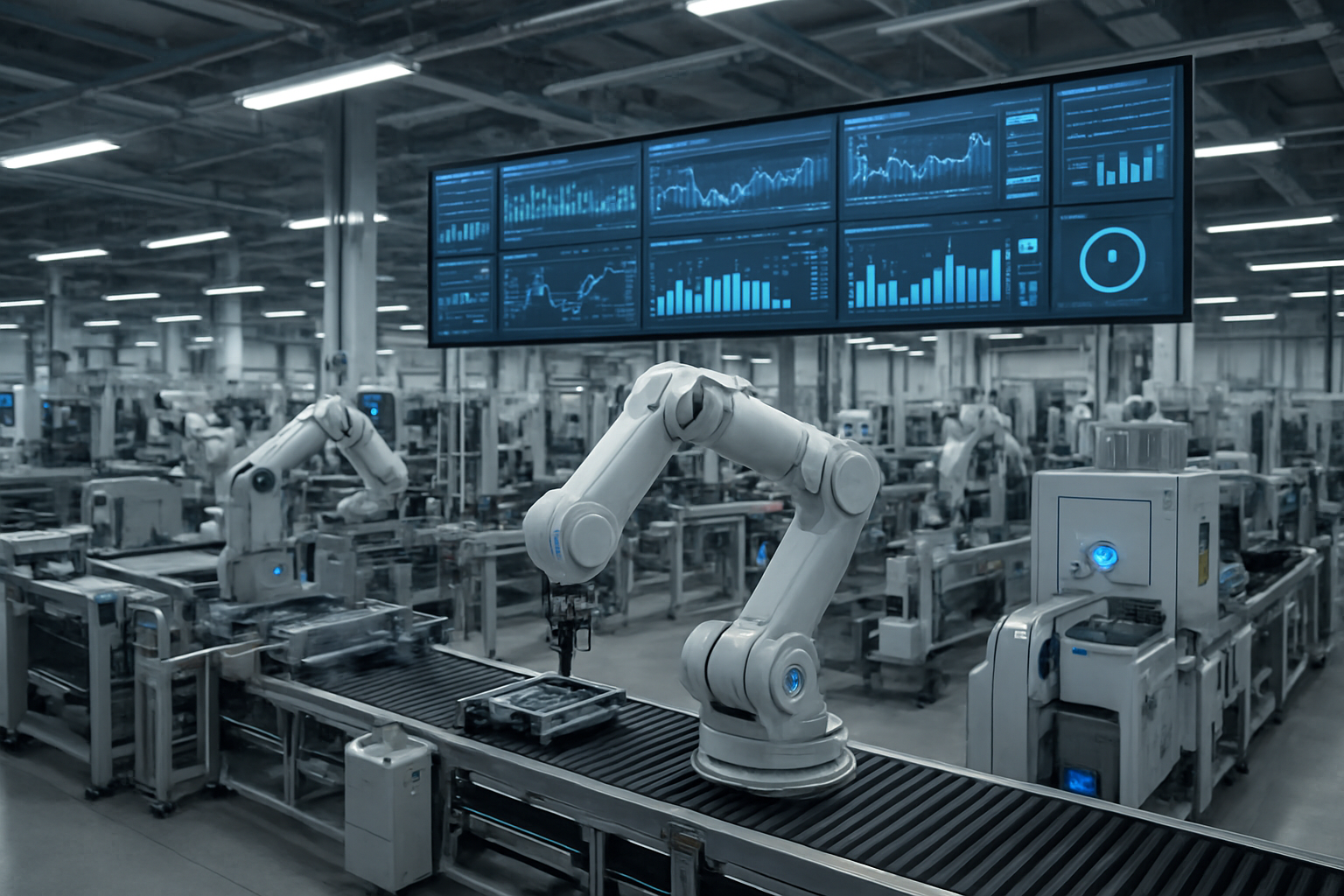
Real-time monitoring capabilities become game-changers when you connect your factory equipment to AWS Industrial IoT platforms. Amazon CloudWatch works seamlessly with AWS IoT Core to create intelligent alerting systems that watch your machinery 24/7. You can set up custom metrics that trigger alerts when temperature sensors exceed safe operating ranges, vibration levels indicate potential equipment failure, or production rates fall below targets.
The beauty of AWS IoT Events lies in its ability to detect complex patterns across multiple data streams. Picture this: your packaging line shows slight speed variations while pressure sensors indicate minor fluctuations. Individually, these might seem insignificant, but together they could signal an impending breakdown. The system automatically correlates these events and sends notifications through Amazon SNS to maintenance teams via SMS, email, or mobile push notifications.
Lambda functions add another layer of intelligence by processing incoming sensor data and applying machine learning models to predict equipment failures before they happen. You can integrate with Amazon Chime or Slack for instant team collaboration when critical alerts fire. The notification system scales effortlessly – whether you’re monitoring ten machines or ten thousand across multiple facilities.
Integration with Enterprise Resource Planning Systems
Bridging your factory data with existing ERP systems creates a unified view of operations that drives smarter business decisions. AWS manufacturing solutions excel at connecting IoT data streams with SAP, Oracle, or Microsoft Dynamics through secure APIs and data transformation services.
Amazon EventBridge serves as the central nervous system, routing production data to your ERP while maintaining data integrity and format compatibility. Real-time inventory tracking becomes possible when RFID readers and weight sensors feed directly into your supply chain management system. Production schedules automatically adjust based on actual machine performance rather than theoretical capacity.
AWS AppFlow simplifies the integration process by providing pre-built connectors for popular ERP platforms. Your production data flows seamlessly into financial forecasting models, enabling accurate cost accounting and resource planning. Quality control metrics from the factory floor instantly update customer satisfaction dashboards and warranty tracking systems.
The integration extends beyond simple data transfer. AWS Step Functions orchestrate complex workflows where IoT events trigger procurement processes, maintenance scheduling, and even customer notifications about delivery timelines.
Cost Optimization Strategies for IoT Workloads
Managing costs across thousands of connected devices requires strategic thinking about data flow, storage, and processing. AWS IoT Core charges per message, so optimizing your data transmission frequency and payload size directly impacts your monthly bill. Batch processing sensor readings instead of sending individual measurements can reduce costs by up to 70%.
Amazon S3 Intelligent-Tiering automatically moves historical IoT data to more cost-effective storage classes as it ages. Production logs from last month move to Infrequent Access storage, while year-old maintenance records shift to Glacier for long-term archival. This automated lifecycle management keeps compliance requirements satisfied without breaking the budget.
Edge computing with AWS IoT Greengrass reduces bandwidth costs by processing data locally and sending only actionable insights to the cloud. Your edge devices can run machine learning inference locally, filtering out normal operating conditions and transmitting only anomalies or summary statistics.
Reserved capacity for Amazon Kinesis Data Streams and DynamoDB provides significant discounts for predictable workloads. Spot instances work well for batch analytics jobs that process historical factory data during off-peak hours. Auto Scaling groups ensure you’re not paying for idle compute resources during planned maintenance windows or production downtime.
Monitoring tools like AWS Cost Explorer help identify optimization opportunities across your IoT analytics on AWS infrastructure, revealing which services drive the highest costs and where efficiency improvements deliver the biggest savings.
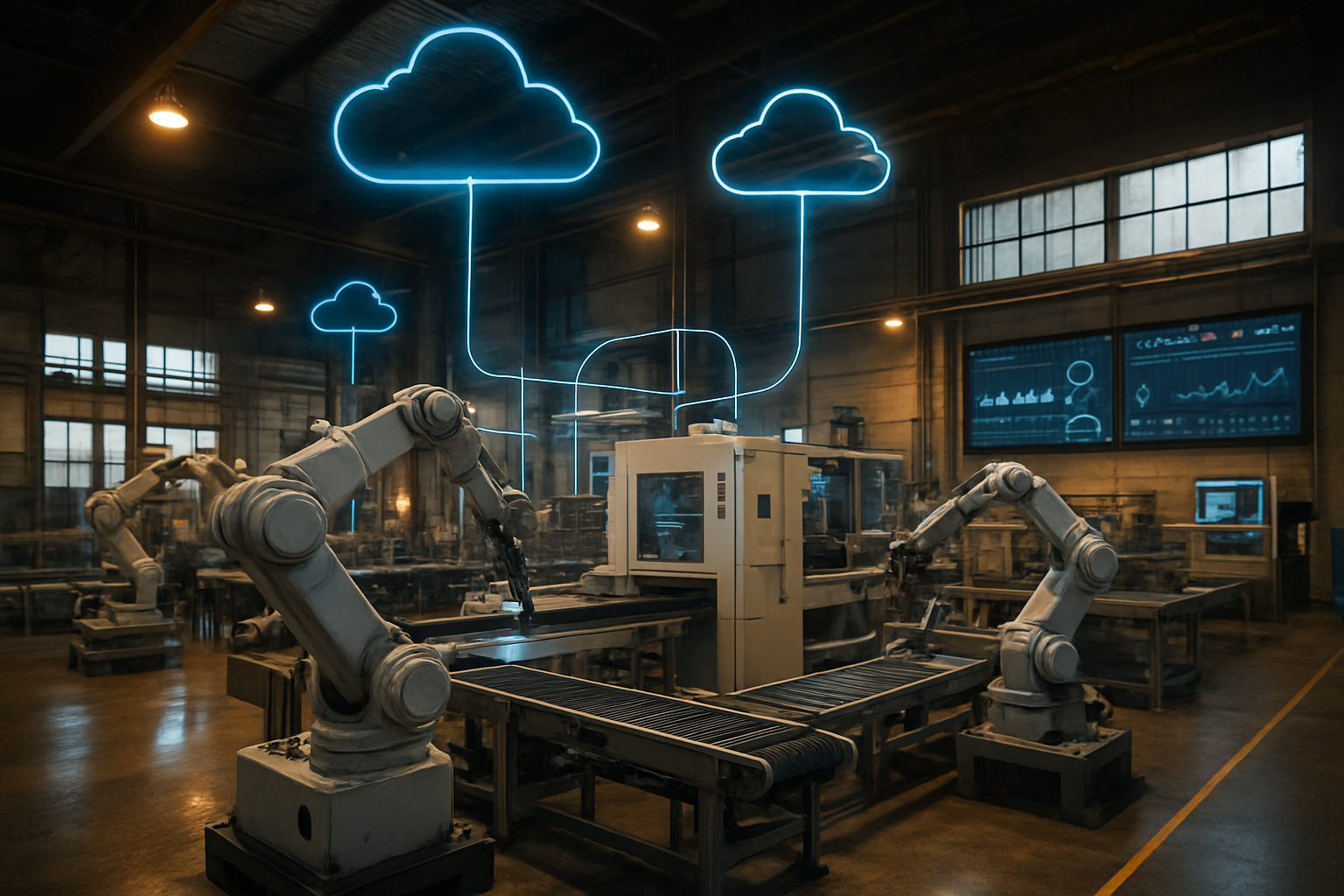
AWS has transformed how manufacturers connect their factory floors to the cloud, making it easier than ever to gather insights from industrial equipment. From setting up secure device connections through AWS IoT Core to building powerful analytics pipelines with services like Kinesis and Lambda, the platform offers everything you need to modernize your operations. The security features built into AWS ensure your sensitive manufacturing data stays protected while still allowing you to unlock valuable insights about equipment performance, predictive maintenance, and operational efficiency.
Ready to take your factory into the digital age? Start small by connecting a few key pieces of equipment to AWS IoT, establish your security protocols, and gradually expand your system as you see results. The combination of real-time monitoring, robust data analytics, and seamless cloud integration will help you reduce downtime, cut costs, and make smarter decisions about your manufacturing processes. Your competition is already moving toward Industry 4.0 – don’t get left behind.