

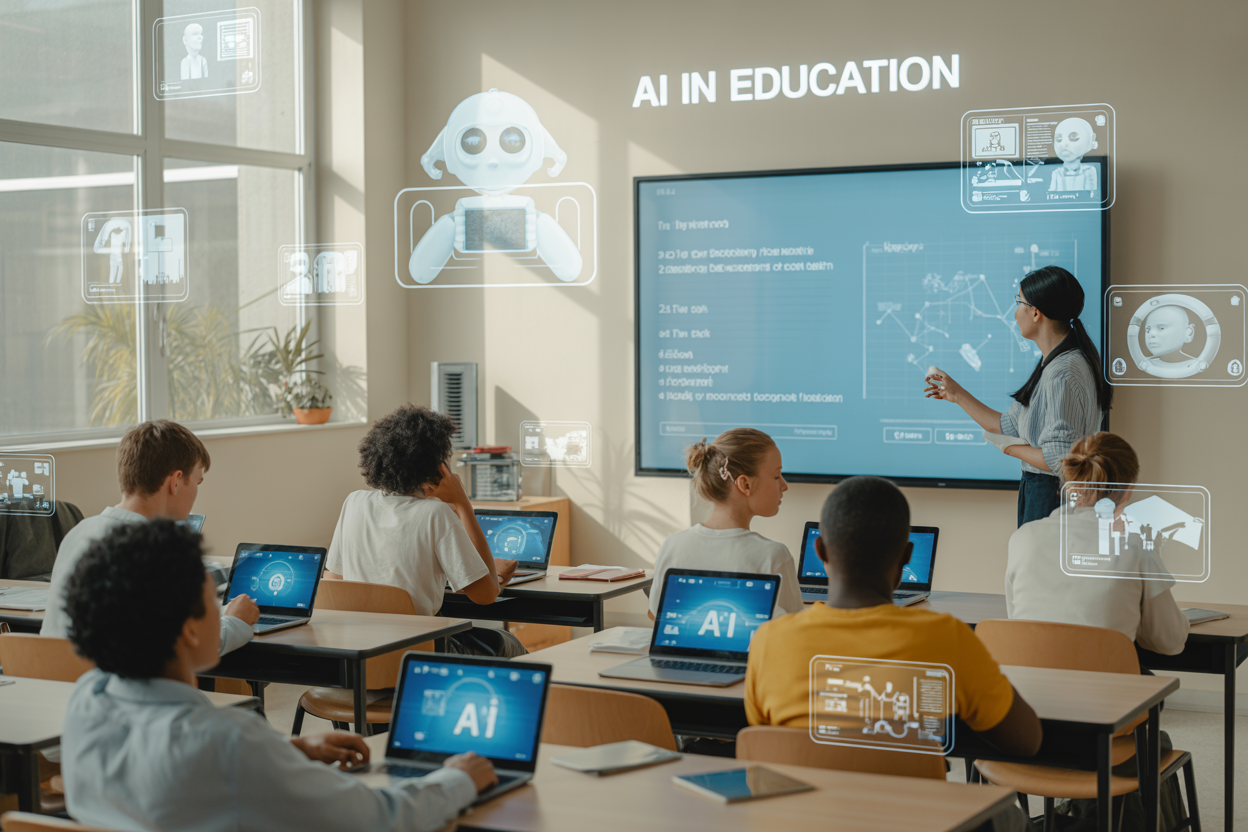
AI is changing how we teach, assess, and tutor students, and educators need practical guidance to harness these powerful tools effectively. This comprehensive guide is designed for teachers, administrators, curriculum designers, and educational technology coordinators who want to integrate AI in education without getting lost in the technical complexity.
AI-powered assessment systems can grade assignments in seconds, provide detailed feedback, and identify learning gaps before students fall behind. Generative AI for educators opens new possibilities for creating personalized lesson plans, interactive content, and adaptive learning experiences. Meanwhile, AI tutoring solutions offer 24/7 support that adapts to each student’s pace and learning style.
We’ll explore how to transform your teaching methods using artificial intelligence teaching tools that make lessons more engaging and personalized. You’ll discover how intelligent tutoring systems can supplement classroom instruction and provide targeted support where students need it most. Finally, we’ll cover essential best practices for AI classroom integration, including safety guidelines, privacy considerations, and strategies to maintain the human connection that makes great teaching possible.
The goal isn’t to replace teachers with machines—it’s to give educators superpowers that make their jobs easier and their students more successful.
Transform Traditional Teaching Methods with AI-Powered Tools
Create Interactive Lesson Plans Using AI Content Generators
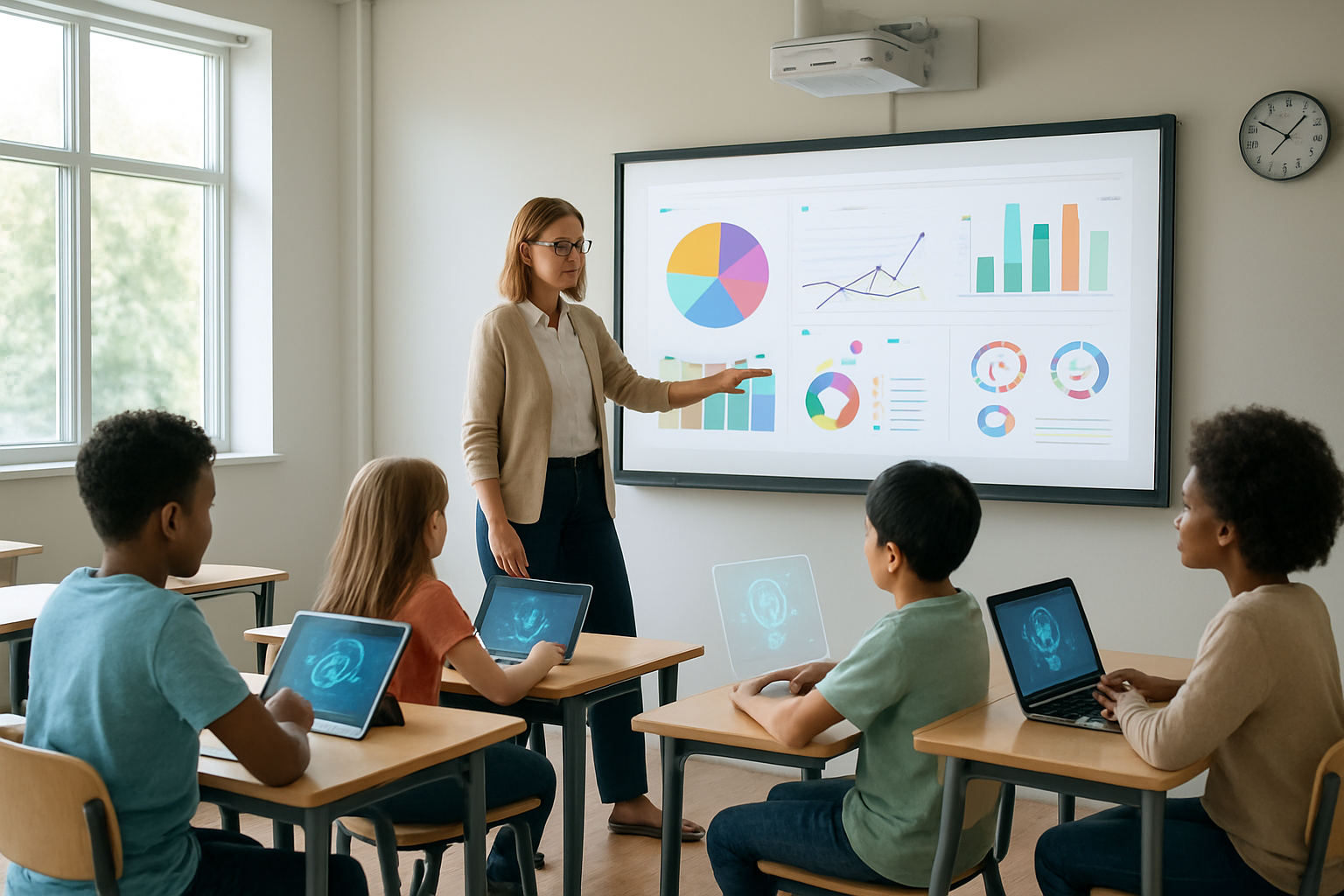
AI content generators have completely changed how teachers approach lesson planning. These tools can create engaging activities, discussion questions, and project ideas in minutes rather than hours. Teachers simply input their learning objectives, grade level, and subject area, and the AI generates customized content that aligns with educational standards.
Popular platforms like ChatGPT, Claude, and specialized educational AI tools can develop everything from creative writing prompts to science experiment procedures. Teachers can ask the AI to create lesson plans that incorporate different learning styles – visual, auditory, and kinesthetic – ensuring every student can engage with the material effectively.
The real magic happens when teachers use AI to generate scenario-based learning activities. For example, a history teacher can ask the AI to create a role-playing exercise where students debate as historical figures, complete with character backgrounds and talking points. Math teachers can generate real-world problem-solving scenarios that make abstract concepts tangible and relevant.
Develop Multimedia Learning Materials with Automated Design Tools
Creating visually appealing educational materials no longer requires advanced design skills. AI-powered design tools like Canva’s Magic Design, Adobe’s Creative Suite with AI features, and specialized educational platforms can generate professional-quality presentations, infographics, and interactive worksheets.
These tools analyze content and automatically suggest layouts, color schemes, and visual elements that enhance learning. Teachers can input text about photosynthesis, for instance, and receive a complete infographic with diagrams, flowcharts, and visual explanations that make complex processes easier to understand.
Video creation has also become accessible through AI tools like Loom, Synthesia, and educational platforms that can transform written content into engaging video lessons. Teachers can create animated explanations, virtual field trips, and interactive tutorials without technical expertise.
| AI Design Tool | Best For | Key Features |
|---|---|---|
| Canva Magic Design | Presentations & Posters | Auto-layout, educational templates |
| Adobe Express | Interactive content | Animation, video editing |
| Gamma | Slide presentations | AI-powered storytelling |
Personalize Curriculum Based on Student Learning Patterns
Artificial intelligence teaching tools excel at analyzing student performance data to identify individual learning patterns and preferences. These systems track how students interact with content, which topics they struggle with, and their preferred learning pace.
Learning management systems equipped with AI can automatically adjust content difficulty based on student responses. If a student consistently excels in reading comprehension but struggles with vocabulary, the system can provide additional vocabulary exercises while maintaining challenging reading materials.
Adaptive learning platforms like DreamBox for math or Reading Plus for literacy create personalized learning paths for each student. These systems continuously assess student progress and modify the curriculum in real-time, ensuring students remain challenged but not overwhelmed.
Teachers can also use AI analytics to group students effectively for collaborative projects or targeted instruction. The technology identifies students with complementary strengths and learning styles, creating balanced teams that promote peer learning and support.
Streamline Lesson Planning Through Intelligent Resource Recommendations
AI educational technology has revolutionized resource discovery for teachers. Instead of spending hours searching for appropriate materials, teachers can rely on intelligent recommendation systems that suggest relevant resources based on their curriculum needs and teaching style.
These systems analyze vast databases of educational content – from videos and articles to interactive simulations and assessment tools – and match them to specific lesson objectives. Teachers input their topic and grade level, and the AI curates a selection of high-quality, standards-aligned resources.
Many platforms now offer cross-curricular connections through AI analysis. A science teacher exploring ecosystems might receive suggestions for related math activities involving population data, language arts assignments about environmental writing, and social studies connections to conservation efforts.
The recommendation engines also learn from teacher preferences over time. As educators rate and use different resources, the AI refines its suggestions, becoming more accurate at predicting what will work best for each teacher’s unique classroom environment and teaching philosophy.
Smart scheduling features in AI-powered planning tools can even suggest optimal timing for introducing concepts based on student attention patterns and learning research, helping teachers maximize the impact of their instruction throughout the school day.
Revolutionize Student Assessment Through Intelligent Evaluation Systems

Implement Automated Grading for Objective and Subjective Assignments
AI-powered assessment systems are changing how educators evaluate student work, making the grading process faster and more consistent. These intelligent evaluation tools can handle both multiple-choice questions and complex essay assignments with remarkable accuracy.
For objective assessments, AI grading systems excel at processing standardized tests, math problems, and science questions. These tools can grade thousands of submissions in minutes while providing instant feedback to students. Popular platforms like Gradescope and Turnitin use machine learning algorithms to recognize correct answers and common error patterns.
Subjective assignment grading presents a bigger challenge, but modern AI has made significant strides. Natural language processing can now evaluate essays, creative writing, and open-ended responses by analyzing content quality, grammar, structure, and argumentation. Tools like EssayGrader and Grammarly for Education help teachers assess written work more efficiently.
Key benefits of automated grading include:
- Time savings: Teachers can focus on instruction rather than repetitive grading tasks
- Consistency: AI eliminates human bias and fatigue in evaluation
- Immediate feedback: Students receive instant results and suggestions for improvement
- Detailed analytics: Systems track common mistakes and learning gaps
When implementing automated grading, start with straightforward assignments and gradually introduce more complex evaluations. Always review AI assessments for accuracy and maintain human oversight for high-stakes evaluations.
Generate Real-Time Performance Analytics and Progress Reports
Real-time analytics transform raw assessment data into actionable insights that help both teachers and students track academic progress. These AI-driven systems continuously monitor student performance across different subjects, assignments, and learning activities.
Modern educational AI applications can identify learning patterns, predict potential struggles, and highlight areas where students excel. Teachers receive comprehensive dashboards showing class-wide trends, individual student progress, and curriculum effectiveness metrics.
Essential analytics features include:
- Progress tracking: Visual charts showing improvement over time
- Skill gap identification: Pinpointing specific concepts that need reinforcement
- Engagement metrics: Measuring time spent on tasks and participation levels
- Predictive insights: Early warning systems for students at risk of falling behind
Platforms like Khan Academy and DreamBox use sophisticated algorithms to generate personalized progress reports. These reports help parents understand their child’s academic journey and enable teachers to make data-driven instructional decisions.
The power of real-time analytics lies in their ability to provide immediate course corrections. Instead of waiting for quarterly report cards, educators can adjust teaching strategies based on current performance data. This responsive approach helps prevent small learning gaps from becoming major obstacles.
Design Adaptive Testing That Adjusts to Student Ability Levels
Adaptive testing represents a major breakthrough in educational assessment, using AI to create personalized evaluation experiences that match each student’s ability level. These intelligent systems adjust question difficulty in real-time based on student responses, providing more accurate measurements of knowledge and skills.
Computer Adaptive Testing (CAT) algorithms start with medium-difficulty questions and then increase or decrease complexity based on correct or incorrect answers. This approach reduces test anxiety for struggling students while challenging advanced learners appropriately.
Adaptive testing advantages:
- Personalized difficulty: Questions match individual skill levels
- Reduced testing time: More efficient assessment requires fewer questions
- Improved accuracy: Better measurement of true ability levels
- Enhanced engagement: Students stay motivated with appropriately challenging content
| Traditional Testing | Adaptive Testing |
|---|---|
| Fixed question set | Dynamic question selection |
| Same difficulty for all | Personalized difficulty levels |
| Longer test duration | Shorter, more efficient tests |
| Limited accuracy | Higher precision in ability measurement |
Educational platforms like ALEKS and MAP Growth have pioneered adaptive testing in mathematics and reading. These systems create unique test experiences for each student while maintaining statistical reliability and validity.
When designing adaptive assessments, consider your learning objectives, available question banks, and technical infrastructure. Start with pilot programs to test effectiveness before full implementation across your educational programs.
Enhance Student Learning with AI-Driven Tutoring Solutions
Provide 24/7 Virtual Tutoring Support for Struggling Students
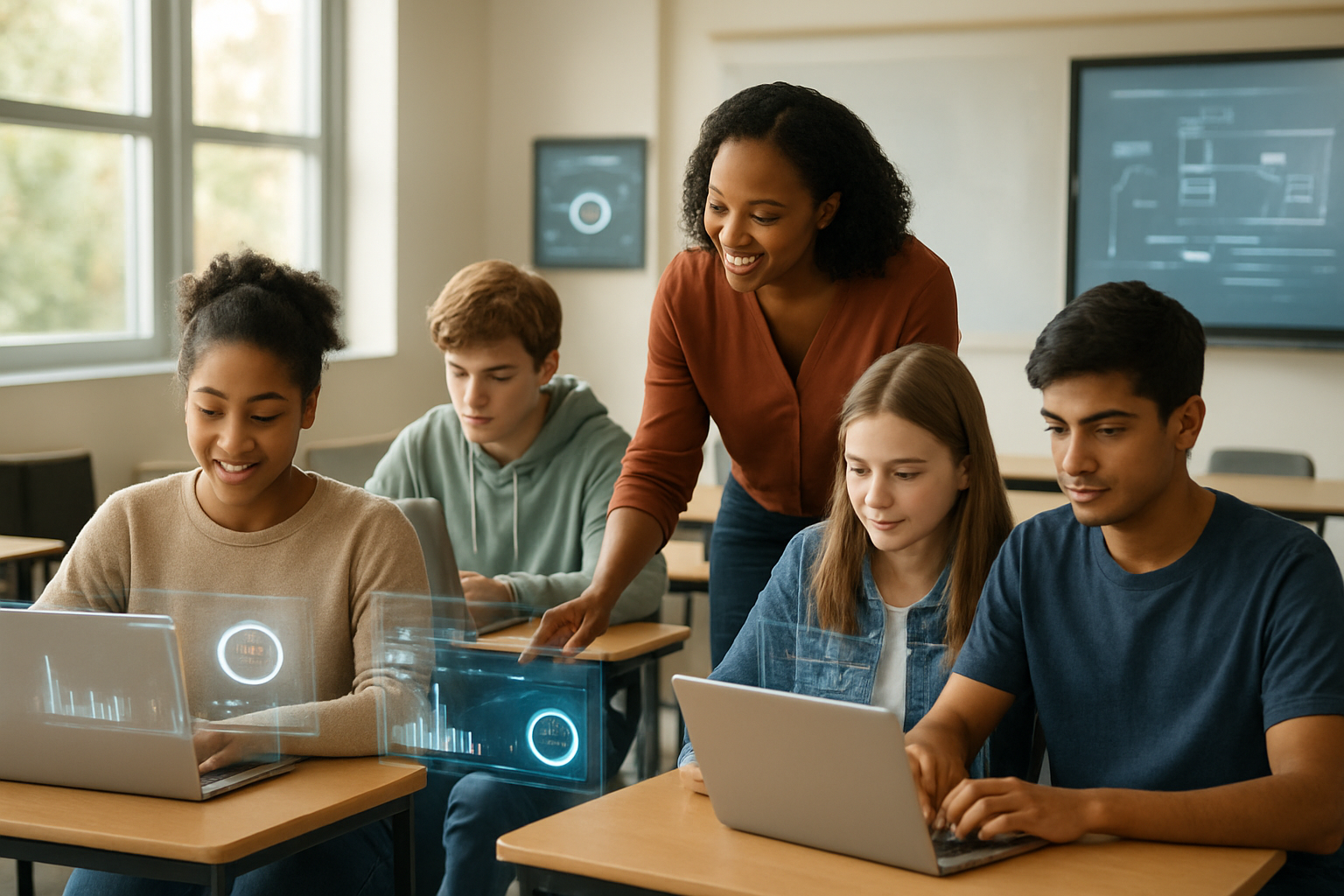
AI tutoring solutions transform how struggling students receive help by offering round-the-clock support that never sleeps. Unlike traditional tutoring that’s limited by scheduling conflicts and availability, AI educational technology provides immediate assistance whenever students hit roadblocks. When a student struggles with algebra at 11 PM or needs help understanding Shakespeare during weekend study sessions, intelligent tutoring systems are ready to guide them through complex concepts step by step.
These AI-powered systems recognize learning gaps in real-time and adjust their teaching approach accordingly. If a student consistently makes the same type of error in fractions, the AI tutor identifies this pattern and provides targeted exercises to address the specific weakness. The system can break down complex problems into smaller, manageable chunks, offer multiple explanation styles, and provide unlimited patience as students work through challenging material.
Virtual AI tutors also maintain detailed records of each student’s progress, allowing teachers to understand exactly where students need additional support during regular class time. This continuous monitoring ensures no student falls through the cracks, especially those who might hesitate to ask for help during traditional classroom settings.
Deliver Customized Learning Paths Based on Individual Needs
Personalized learning reaches new heights with AI tutoring solutions that create unique educational journeys for each student. These systems analyze learning styles, pace preferences, strengths, and areas for improvement to design custom curriculum paths that adapt in real-time.
Rather than forcing all students through identical lessons, AI educational technology recognizes that some learners excel with visual demonstrations while others prefer hands-on problem-solving. The system automatically adjusts content delivery methods, difficulty levels, and practice frequency based on individual performance data.
| Learning Style | AI Adaptation Strategy |
|---|---|
| Visual Learners | Incorporates diagrams, charts, and video content |
| Auditory Learners | Provides spoken explanations and audio feedback |
| Kinesthetic Learners | Offers interactive simulations and hands-on activities |
| Reading/Writing Learners | Emphasizes text-based materials and written exercises |
Students who master concepts quickly receive advanced challenges to prevent boredom, while those needing more time get additional practice opportunities without feeling rushed. This personalized approach ensures every student progresses at their optimal pace while building confidence through achievable goals.
Create Interactive Practice Sessions with Instant Feedback
Interactive AI tutoring solutions transform passive studying into engaging, dynamic learning experiences. Students participate in gamified practice sessions where they solve problems, complete challenges, and receive immediate feedback on their performance.
The instant feedback mechanism is game-changing for student learning. Instead of waiting days for graded assignments, students discover mistakes immediately and understand the correct approach while the problem is fresh in their minds. AI tutoring systems provide detailed explanations for wrong answers, highlight correct reasoning for successful attempts, and offer hints when students get stuck.
These practice sessions adapt to student energy levels and attention spans. If a student shows signs of fatigue or frustration, the AI tutor might suggest a break or switch to a different type of activity to maintain engagement. Some systems even incorporate elements like progress bars, achievement badges, and friendly competition to make practice sessions more enjoyable.
Students can repeat difficult concepts as many times as needed without judgment, building mastery through deliberate practice with immediate course correction.
Offer Multi-Language Support for Diverse Student Populations
Modern classrooms serve increasingly diverse student populations, and AI tutoring solutions bridge language barriers that traditionally hindered academic success. These intelligent systems support multiple languages, allowing students to learn in their native language while gradually building English proficiency.
AI educational technology can instantly translate complex academic concepts between languages, ensuring that language barriers don’t become learning barriers. Students can ask questions in their preferred language and receive explanations that make sense within their cultural and linguistic context.
The systems also adapt to different cultural learning preferences and communication styles. Some cultures emphasize collaborative learning, while others focus on individual achievement. AI tutors recognize these differences and adjust their interaction styles accordingly.
For English language learners, these systems provide scaffolded support by:
- Offering vocabulary assistance during lessons
- Providing pronunciation guides for difficult terms
- Explaining idioms and cultural references
- Gradually increasing English complexity as proficiency improves
This inclusive approach ensures that every student, regardless of their linguistic background, can access high-quality tutoring support that meets them exactly where they are in their learning journey.
Boost Teacher Productivity and Administrative Efficiency
Automate Routine Administrative Tasks and Record Keeping
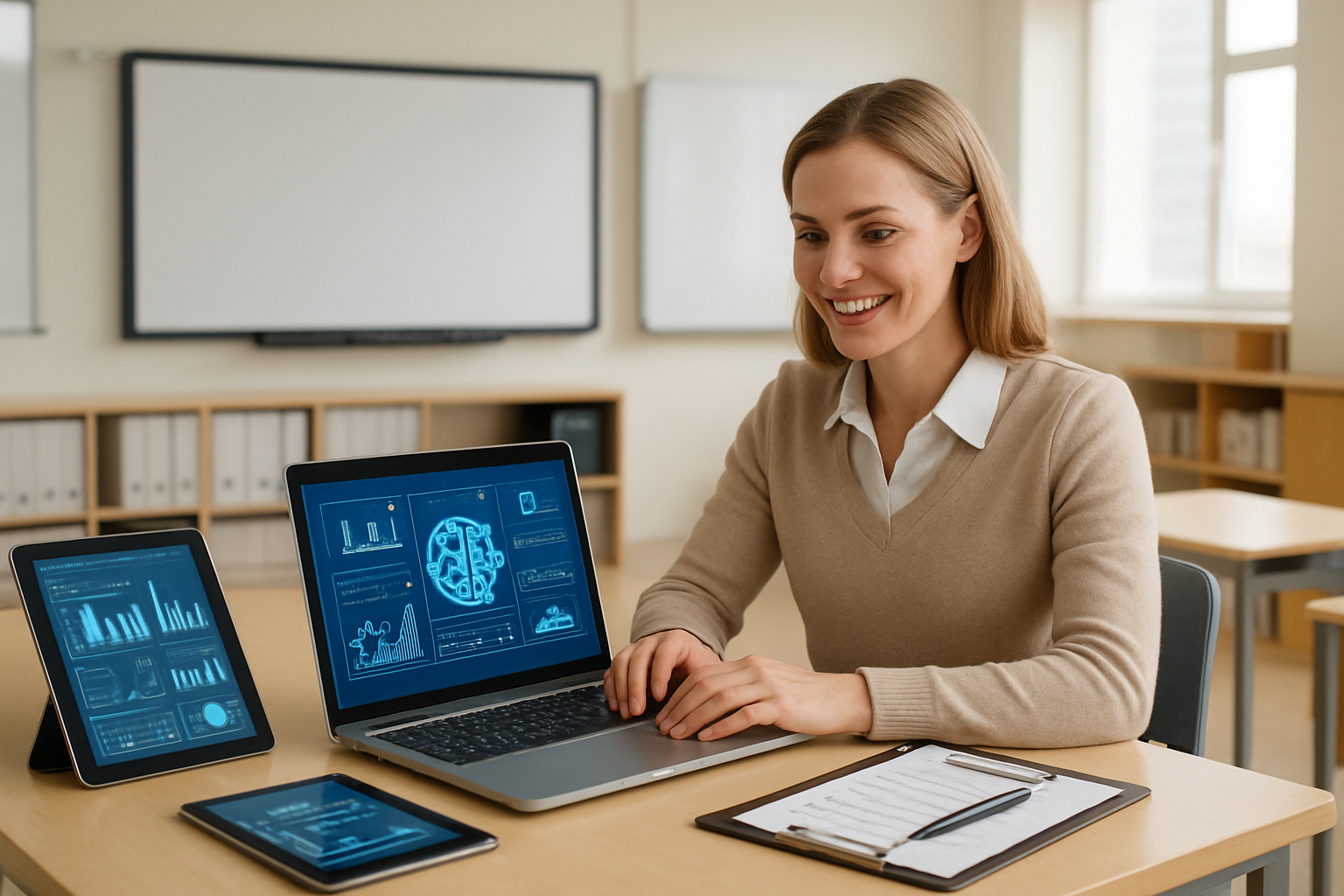
AI educational technology transforms the most time-consuming aspects of teaching by handling paperwork, scheduling, and data entry automatically. Smart systems can process attendance records, grade calculations, and progress reports without manual intervention, freeing up hours each week for actual teaching.
Automated grading systems work beyond simple multiple-choice tests. Advanced AI can evaluate written responses, provide feedback on essays, and even assess creative projects using rubrics. These systems maintain consistency across all student work while identifying patterns that might indicate learning gaps or exceptional performance.
Student information management becomes seamless with AI-powered platforms that track everything from behavioral incidents to parent communication logs. The technology can flag important deadlines, remind teachers about IEP meetings, and automatically generate required documentation for special education services.
Communication with parents gets streamlined through AI assistants that can draft personalized updates about student progress, translate messages into multiple languages, and schedule conferences based on availability. These tools maintain professional tone while saving teachers from spending evenings writing individual emails.
Budget tracking and resource allocation benefit from AI systems that monitor classroom supplies, predict future needs, and suggest cost-effective purchasing decisions. Teachers can focus on lesson planning instead of inventory management, while administrators gain clear visibility into spending patterns across departments.
Generate Professional Development Recommendations for Educators
Artificial intelligence teaching tools analyze individual teaching patterns to create customized professional development paths. The system observes classroom interactions, lesson delivery methods, and student engagement levels to identify specific areas where each educator could strengthen their practice.
AI-powered assessment systems examine how teachers use different instructional strategies and match this data with student learning outcomes. When certain approaches consistently produce better results, the system recommends targeted training opportunities that align with each teacher’s current skill level and teaching style.
Personalized learning modules adapt to educators’ busy schedules by breaking professional development into micro-learning sessions. Teachers can complete training during prep periods or after school, with AI tracking progress and adjusting difficulty based on comprehension and application in real classroom settings.
Peer collaboration gets enhanced through AI matching systems that connect teachers with complementary strengths. The technology identifies educators who excel in areas where others struggle, facilitating mentorship relationships and collaborative planning sessions that benefit entire teaching teams.
Conference and workshop recommendations become highly targeted when AI analyzes teaching data alongside upcoming professional learning opportunities. The system considers geographic proximity, cost constraints, and curriculum needs to suggest events that offer maximum value for each educator’s specific professional growth goals.
Create Data-Driven Insights for Curriculum Improvement
AI classroom integration generates comprehensive analytics about curriculum effectiveness by tracking student performance across different topics, teaching methods, and time periods. These insights reveal which concepts consistently challenge students and which instructional approaches yield the strongest learning outcomes.
Learning analytics platforms identify gaps in curriculum alignment by comparing student performance data with state standards and assessment requirements. Teachers can see exactly where their curriculum needs adjustment to better prepare students for standardized tests and real-world applications.
Predictive modeling helps educators anticipate which students might struggle with upcoming concepts based on their performance patterns. This early warning system allows teachers to provide additional support before students fall behind, rather than waiting for failure to occur.
Cross-curricular connections become visible through AI analysis of student work across different subjects. The technology identifies opportunities to integrate science concepts into math lessons or incorporate historical contexts into literature studies, creating more meaningful learning experiences.
Real-time feedback about lesson effectiveness comes from AI systems that monitor student engagement, comprehension indicators, and assessment results. Teachers can adjust their instructional strategies mid-lesson based on data showing whether students are grasping key concepts or need additional explanation.
Resource optimization improves when AI tracks which materials, activities, and assignments produce the best learning outcomes. Schools can make informed decisions about textbook adoptions, technology purchases, and curriculum updates based on concrete evidence rather than guesswork.
Implement Best Practices for Safe and Effective AI Integration
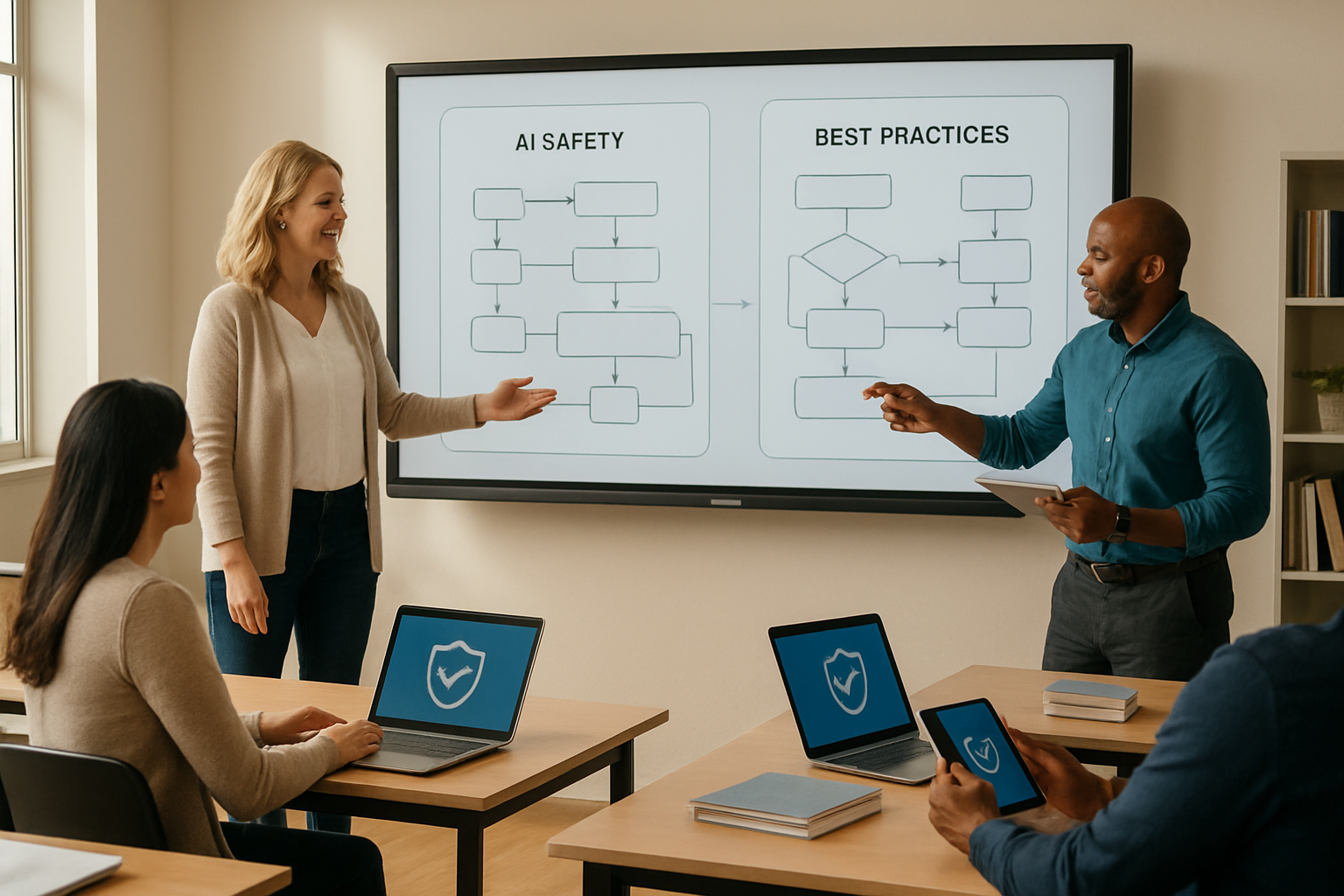
Establish Clear Guidelines for Student Data Privacy and Security
Protecting student information stands as the foundation of responsible AI in education implementation. Educational institutions must create comprehensive data governance frameworks that address how AI systems collect, store, and process student data. These frameworks should comply with FERPA, COPPA, and other relevant privacy regulations while establishing clear boundaries for AI educational technology usage.
Schools need written policies that specify which student data AI tools can access, how long this information remains stored, and who has permission to view it. Parents and students deserve transparency about data collection practices, with easy-to-understand explanations of how artificial intelligence teaching tools use their information. Regular audits of AI systems help ensure compliance and identify potential security vulnerabilities before they become serious problems.
Data minimization principles should guide AI classroom integration decisions. AI systems should only collect information directly relevant to educational goals, avoiding unnecessary personal details. Strong encryption, secure authentication, and regular security updates create additional layers of protection for sensitive student information.
Train Faculty on Ethical AI Usage and Bias Prevention
Teachers need comprehensive training to recognize and address potential bias in AI-powered assessment systems and other educational AI applications. Professional development programs should cover how algorithmic bias can perpetuate educational inequalities and provide practical strategies for identifying these issues in real classroom situations.
Training should include hands-on experience with AI teaching methods, allowing educators to understand both the capabilities and limitations of these tools. Faculty members learn to evaluate AI-generated content for accuracy, cultural sensitivity, and appropriateness for their specific student populations. This knowledge helps teachers make informed decisions about when to rely on AI recommendations and when human judgment should take precedence.
Regular workshops on emerging AI trends keep faculty updated on new developments and potential ethical challenges. Teachers should understand how different AI tools work, enabling them to explain these systems to students and address concerns from parents or administrators.
Monitor AI Tool Performance and Educational Outcomes
Continuous monitoring ensures AI tutoring solutions and other educational technologies actually improve learning outcomes rather than simply adding technological complexity. Schools should establish baseline measurements before implementing AI systems, then track student performance, engagement levels, and learning satisfaction over time.
Performance metrics should include both quantitative data like test scores and qualitative feedback from students and teachers. Regular surveys help identify which AI tools provide genuine value and which may need adjustments or replacement. This ongoing evaluation process prevents institutions from continuing ineffective AI implementations simply because they represent new technology.
Data analysis should examine whether AI tools work equally well for all student populations. If certain groups show different outcomes when using intelligent tutoring systems, schools must investigate potential causes and make necessary adjustments to ensure equitable access to AI benefits.
Balance Technology with Human Connection in Learning Environments
While generative AI for educators offers powerful capabilities, maintaining meaningful human relationships remains essential for effective education. AI classroom integration should enhance rather than replace the personal connections between teachers and students that drive educational success.
Teachers need guidance on when to use AI assistance and when direct human interaction provides better learning outcomes. Complex emotional support, creative problem-solving, and nuanced communication often require human insight that current AI systems cannot replicate. Successful integration means using AI to handle routine tasks while freeing teachers to focus on relationship-building and personalized instruction.
Students benefit from understanding AI’s role as a learning tool rather than a replacement for human guidance. Clear communication about AI capabilities helps students develop appropriate expectations and maintain engagement with their teachers and peers. Regular face-to-face discussions, collaborative projects, and human-led activities ensure technology serves educational goals rather than dominating the learning experience.
AI is reshaping education in ways we couldn’t have imagined just a few years ago. From transforming how teachers deliver lessons to creating smarter assessment tools and personalized tutoring experiences, artificial intelligence offers incredible opportunities to make learning more engaging and effective. Teachers can now focus on what they do best – connecting with students and inspiring creativity – while AI handles time-consuming tasks like grading and administrative work.
The key to success lies in thoughtful implementation. Start small with one AI tool that addresses your biggest challenge, whether that’s creating engaging lesson content or providing extra support to struggling students. Remember that AI works best when it complements human teaching, not replaces it. As you explore these technologies, prioritize student privacy and always maintain that personal connection that makes great education possible. The future of learning is here, and it’s exciting to see how AI can help every student reach their full potential.