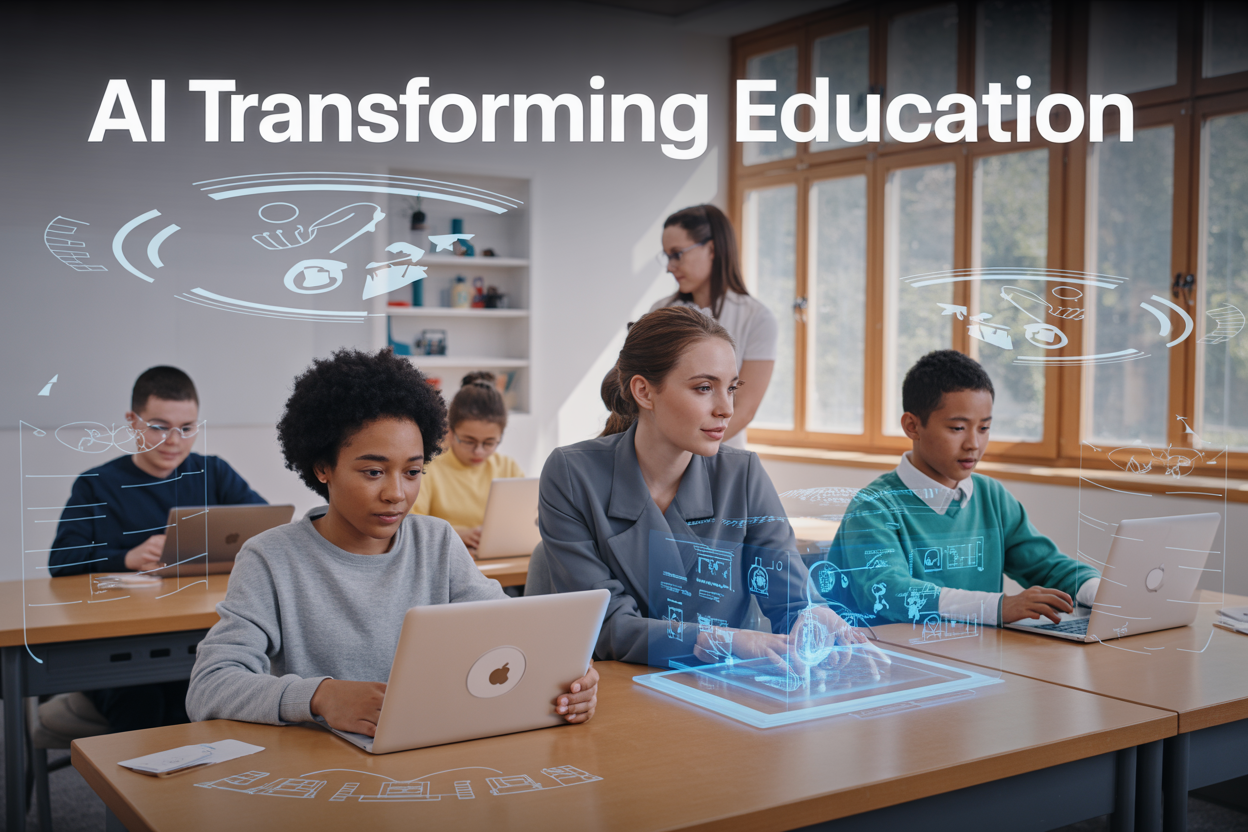
AI in education is reshaping how students learn and teachers teach, moving beyond one-size-fits-all approaches to create truly personalized learning experiences. This transformation affects educators at all levels, administrators looking to modernize their institutions, and parents seeking better outcomes for their children.
Generative AI education tools now create custom learning materials in real-time, while adaptive learning systems adjust to each student’s pace and learning style. Educational AI transformation is happening fast, with schools worldwide seeing improved engagement and better academic results.
We’ll explore how personalized learning technology works behind the scenes, examining the data and algorithms that power these smart systems. You’ll discover how generative AI content creation education is producing everything from practice problems to interactive lessons tailored to individual students. Finally, we’ll look at the real-world benefits schools are seeing and address common concerns about implementing these AI education benefits in your own learning environment.
Understanding AI and Generative AI in Educational Contexts
Defining artificial intelligence capabilities for learning environments
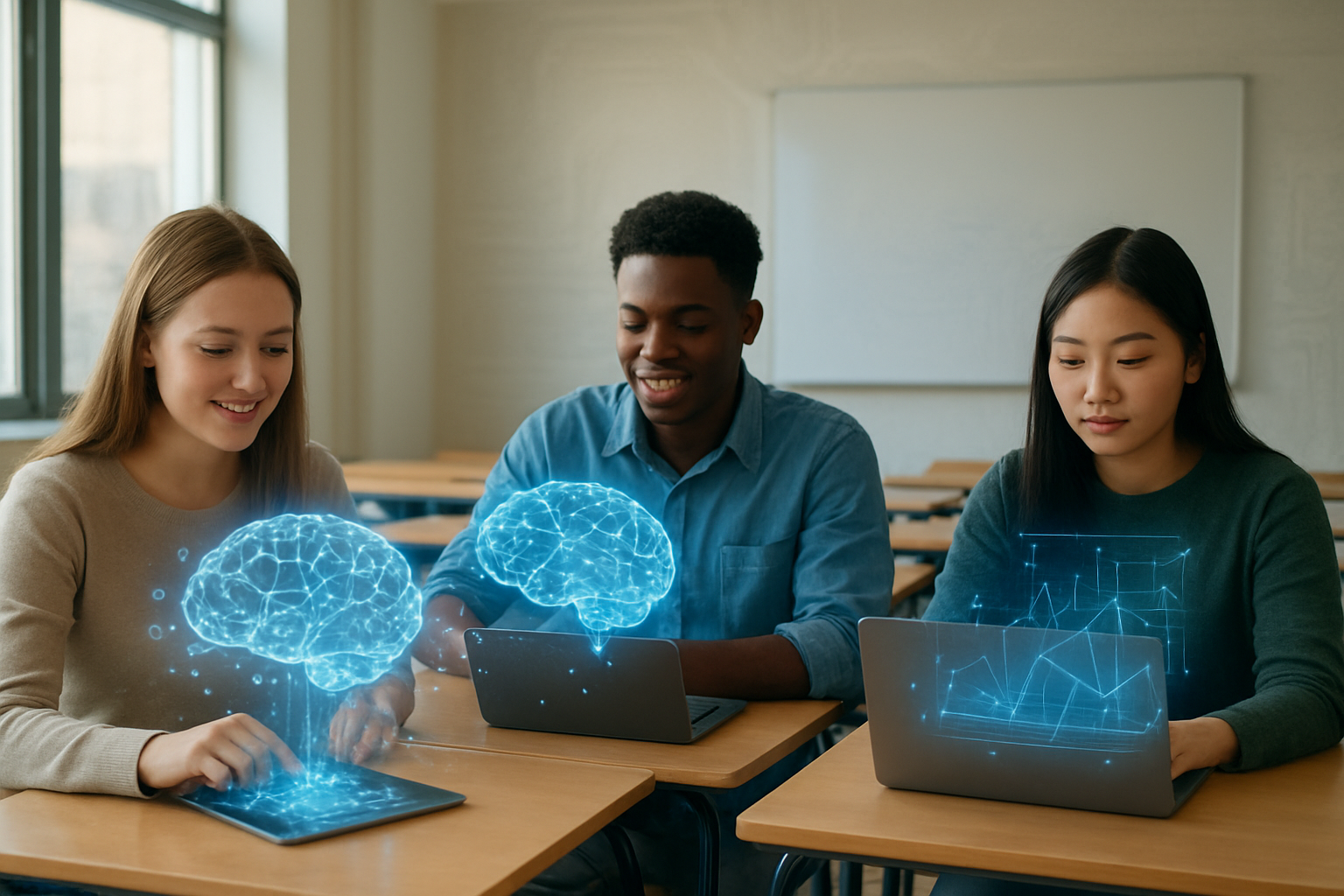
Artificial intelligence in education goes way beyond simple automation or basic computer programs. Modern AI in education systems can analyze vast amounts of student data in real-time, identifying patterns in learning behaviors that would be impossible for human educators to spot across hundreds or thousands of students. These systems process everything from how long a student spends on specific problems to their emotional responses during learning sessions.
Machine learning algorithms power recommendation engines that suggest personalized study materials, much like how Netflix recommends movies. The difference? Educational AI considers cognitive load, learning preferences, and knowledge gaps rather than entertainment preferences. Natural language processing enables AI tutors to understand and respond to student questions in conversational language, while computer vision can analyze handwritten work or track eye movements during reading exercises.
AI-driven educational analytics transform raw interaction data into actionable insights. These systems can predict when a student might struggle with upcoming concepts, recommend intervention strategies, and even identify optimal times for learning based on individual attention patterns. The technology adapts continuously, becoming more accurate as it gathers more data about each learner’s unique journey.
Exploring generative AI tools revolutionizing content creation
Generative AI education tools are reshaping how educational content gets created and delivered. ChatGPT, Claude, and specialized educational AI platforms can generate practice problems, explanations, and even entire lesson plans tailored to specific learning objectives. Teachers can input a concept and receive multiple explanation approaches, accommodating different learning styles without spending hours developing materials.
Generative AI content creation education extends to interactive elements like simulated conversations with historical figures, personalized story problems that incorporate student interests, and adaptive quizzes that modify difficulty based on performance. These tools create virtually unlimited practice opportunities, ensuring students never run out of appropriately challenging material.
Visual AI generators produce custom diagrams, infographics, and educational illustrations that match specific curriculum needs. Language models can translate complex academic papers into age-appropriate explanations or generate scaffolded reading materials that gradually increase in complexity. The technology democratizes content creation, allowing educators with limited design or technical skills to produce professional-quality resources.
Distinguishing between traditional educational technology and AI-powered solutions
Traditional educational technology typically follows predetermined pathways and rule-based logic. Learning management systems store and deliver content, but they can’t adapt the material itself. Digital textbooks might include interactive elements, but they present the same experience to every student regardless of individual needs or progress.
AI personalized learning systems fundamentally differ by continuously adapting to each learner. Where traditional software follows “if-then” programming, AI systems use complex algorithms to make nuanced decisions based on multiple variables simultaneously. Traditional tools might track completion rates, but AI analyzes engagement patterns, error types, emotional responses, and learning velocity to make sophisticated adjustments.
| Feature | Traditional EdTech | AI-Powered Solutions |
|---|---|---|
| Content Delivery | Static, predetermined paths | Dynamic, adaptive experiences |
| Assessment | Fixed quizzes and tests | Continuous, formative evaluation |
| Feedback | Generic responses | Personalized, contextual guidance |
| Content Creation | Manual development | Automated, personalized generation |
| Data Analysis | Basic reporting | Predictive analytics and insights |
Adaptive learning systems represent the pinnacle of this evolution, creating unique educational experiences for each student while maintaining learning objectives and standards. These systems don’t just present different content; they modify teaching strategies, adjust pacing, and even change presentation formats based on real-time analysis of student performance and engagement.
Personalized Learning Through AI-Driven Analytics
Real-time Assessment of Individual Student Learning Patterns
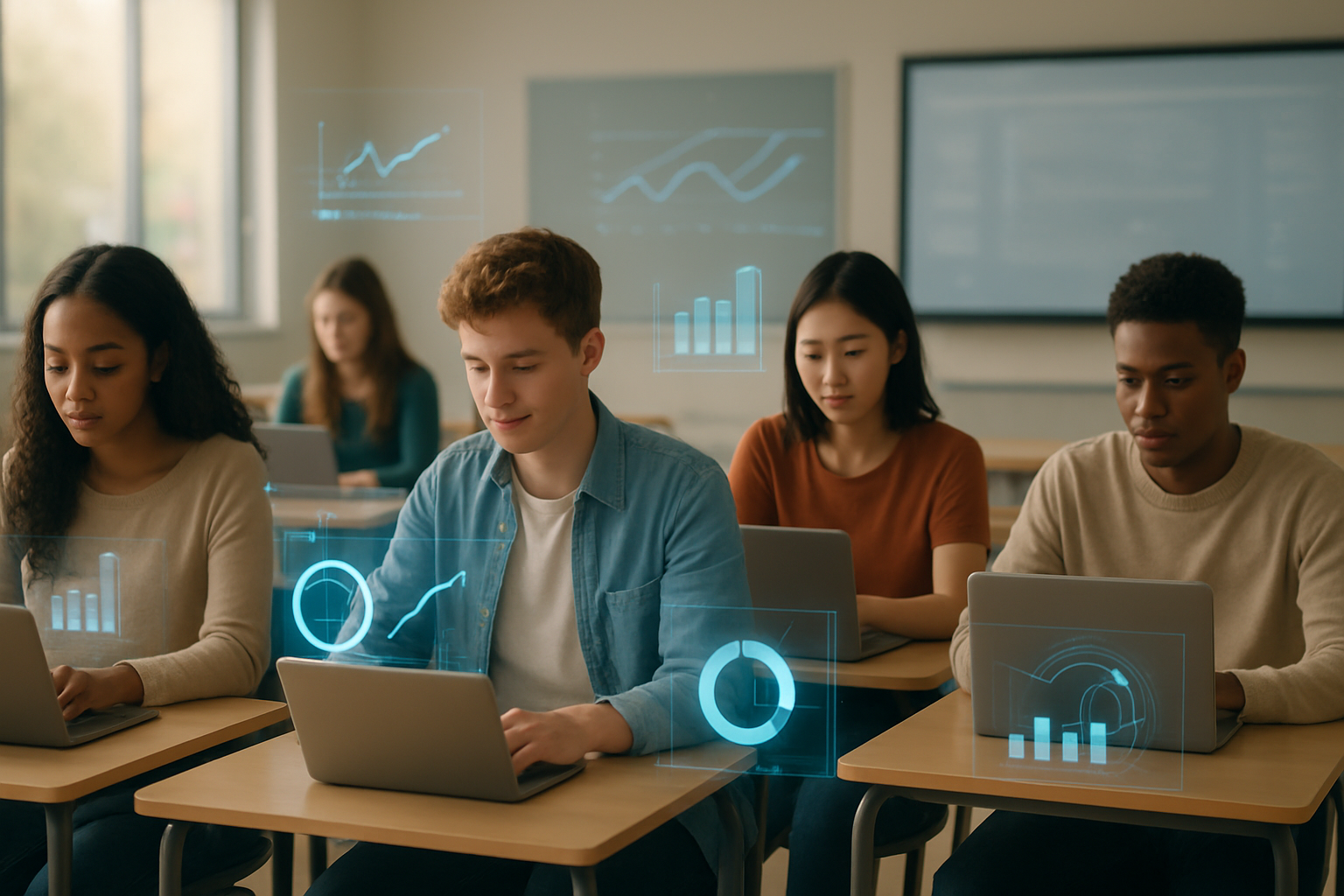
AI-driven educational analytics have revolutionized how educators understand student learning behaviors. Modern platforms continuously monitor student interactions, tracking everything from how long students spend on specific problems to their error patterns and preferred learning modalities. These systems capture micro-level data points that reveal insights invisible to traditional assessment methods.
Machine learning algorithms analyze mouse movements, keystroke patterns, and response times to identify when students struggle or excel. For example, if a student consistently hesitates before answering geometry questions but quickly responds to algebra problems, the system flags potential areas needing support. This granular analysis helps teachers spot learning gaps before they become significant obstacles.
The data collection extends beyond academic performance to include emotional engagement indicators. AI systems can detect frustration through interaction patterns, allowing for timely interventions. When students repeatedly click through content without engaging or show declining response quality, the system alerts educators to provide additional support or modify the learning approach.
Customized Curriculum Paths Based on Cognitive Abilities
Personalized learning technology creates unique educational journeys for each student by mapping their cognitive strengths and learning preferences. AI systems evaluate multiple intelligence types, processing speeds, and conceptual understanding levels to design individualized curriculum sequences.
Students with strong visual processing abilities receive more diagram-based explanations, while those who excel at logical reasoning encounter problem-solving challenges earlier in their learning path. The AI continuously adjusts these paths based on ongoing performance data, ensuring optimal cognitive load management.
These customized routes eliminate the one-size-fits-all approach that often leaves some students behind while boring others. Advanced learners can accelerate through mastered concepts and dive deeper into complex applications, while students needing additional support receive targeted reinforcement and alternative explanations.
Adaptive Content Difficulty Matching Student Comprehension Levels
AI-powered platforms dynamically adjust content complexity in real-time based on student performance indicators. When a student demonstrates mastery of basic concepts, the system automatically introduces more challenging materials. Conversely, when comprehension issues arise, the platform provides additional scaffolding and breaks complex concepts into smaller, manageable chunks.
This adaptive difficulty matching prevents both frustration and boredom by maintaining an optimal challenge level. The system considers factors like recent performance trends, time spent on tasks, and help-seeking behaviors to calibrate appropriate difficulty levels. Students experience continuous growth without overwhelming cognitive demands.
The technology goes beyond simple right-or-wrong assessments, analyzing the quality of student responses and reasoning processes. This nuanced understanding allows for precise difficulty adjustments that support sustained engagement and learning momentum.
Intelligent Tutoring Systems Providing Instant Feedback
AI tutoring systems deliver immediate, personalized feedback that mimics one-on-one instruction with human tutors. These systems recognize common misconceptions and provide targeted explanations that address specific student errors. Rather than generic “incorrect” messages, students receive detailed guidance on why their approach didn’t work and suggestions for improvement.
The feedback mechanism adapts to individual learning styles, offering visual explanations for some students while providing step-by-step verbal instructions for others. AI tutoring systems can generate unlimited practice problems at appropriate difficulty levels, ensuring students receive adequate practice opportunities.
These intelligent systems also track progress over time, celebrating improvements and identifying persistent challenges. Students receive encouragement when they overcome difficult concepts and additional support when they encounter recurring difficulties. The instant nature of this feedback accelerates learning by preventing the reinforcement of incorrect understanding patterns.
Generative AI Creating Dynamic Educational Content

Automated lesson plan generation tailored to learning objectives
AI-powered lesson planning tools are revolutionizing how educators create curriculum content by automatically generating comprehensive lesson plans that align perfectly with specific learning objectives. These generative AI education platforms analyze curriculum standards, student performance data, and pedagogical best practices to create detailed lesson structures complete with activities, timelines, and assessment checkpoints.
Teachers can input their desired learning outcomes, grade level, and subject matter, and the AI generates multiple lesson plan variations that cater to different teaching styles and classroom environments. The technology goes beyond simple template filling by suggesting creative activities, real-world applications, and cross-curricular connections that make learning more engaging and meaningful.
What makes this particularly powerful is the AI’s ability to incorporate differentiation strategies automatically. The system identifies various learning needs within a classroom and suggests modifications, extensions, and support strategies for different student groups. This saves educators countless hours while ensuring every student has access to appropriately challenging content.
Interactive multimedia content creation for diverse learning styles
Generative AI content creation education tools are transforming static educational materials into dynamic, interactive experiences that accommodate visual, auditory, and kinesthetic learners. These platforms can automatically convert text-based content into infographics, interactive simulations, video explanations, and hands-on digital activities.
For visual learners, AI creates detailed diagrams, mind maps, and animated explanations that break down complex concepts into digestible visual components. Audio learners benefit from AI-generated podcasts, narrated presentations, and interactive discussions that explain topics through sound and speech patterns.
Kinesthetic learners engage with AI-created virtual labs, interactive simulations, and gamified learning experiences that require active participation. The technology analyzes learning preferences and automatically adjusts content presentation to match individual student needs, creating a truly personalized learning technology experience.
| Learning Style | AI-Generated Content Types | Benefits |
|---|---|---|
| Visual | Infographics, diagrams, videos | Enhanced comprehension through imagery |
| Auditory | Podcasts, narrated content, discussions | Improved retention through listening |
| Kinesthetic | Simulations, interactive labs, games | Active engagement and hands-on learning |
Customized practice problems and assessment materials
AI-driven educational analytics enable the creation of practice problems and assessments that adapt to individual student skill levels and learning gaps. Rather than relying on standardized worksheets, these systems generate unique problems that target specific areas where each student needs improvement.
The AI analyzes past performance, identifies knowledge gaps, and creates practice sets that gradually increase in complexity as students demonstrate mastery. This approach ensures students are neither overwhelmed by content too difficult nor bored by material they’ve already mastered.
Assessment materials become more sophisticated with AI generation, incorporating various question types, real-world scenarios, and multimedia elements. The system can create formative assessments that provide immediate feedback and adjust difficulty in real-time based on student responses.
Language translation enabling global educational accessibility
AI translation capabilities are breaking down language barriers in education, making quality content accessible to students regardless of their native language. Modern educational AI transformation includes real-time translation of textbooks, lectures, and instructional materials while preserving context and educational nuance.
These systems go beyond simple word-for-word translation by understanding educational terminology and cultural contexts. They maintain the pedagogical intent of the original content while making it comprehensible in multiple languages. This enables schools to serve diverse student populations without requiring separate curriculum development for each language group.
The technology also supports multilingual classrooms by providing instant translation during live instruction, allowing teachers to communicate effectively with all students regardless of language proficiency. Students can access materials in their preferred language while gradually building skills in the primary classroom language.
Virtual teaching assistants providing 24/7 student support
AI tutoring systems powered by generative AI are creating virtual teaching assistants that provide round-the-clock support to students outside traditional classroom hours. These digital assistants understand curriculum content, can explain concepts in multiple ways, and adapt their teaching style to match individual student preferences.
Students can ask questions, request clarification on assignments, or seek help with specific problems at any time. The AI assistant provides patient, personalized responses that guide students toward understanding rather than simply providing answers. This constant availability ensures learning doesn’t stop when school hours end.
These virtual assistants also track student interactions, identifying common areas of confusion and alerting teachers to topics that may need additional classroom attention. They can provide practice problems, study guides, and review materials tailored to upcoming assessments, creating a comprehensive support system that complements traditional instruction.
The adaptive learning systems integrate seamlessly with classroom instruction, maintaining consistency in teaching approach while providing the individualized attention that every student deserves.
Adaptive Learning Systems Enhancing Student Engagement
Gamification elements responding to individual motivation triggers
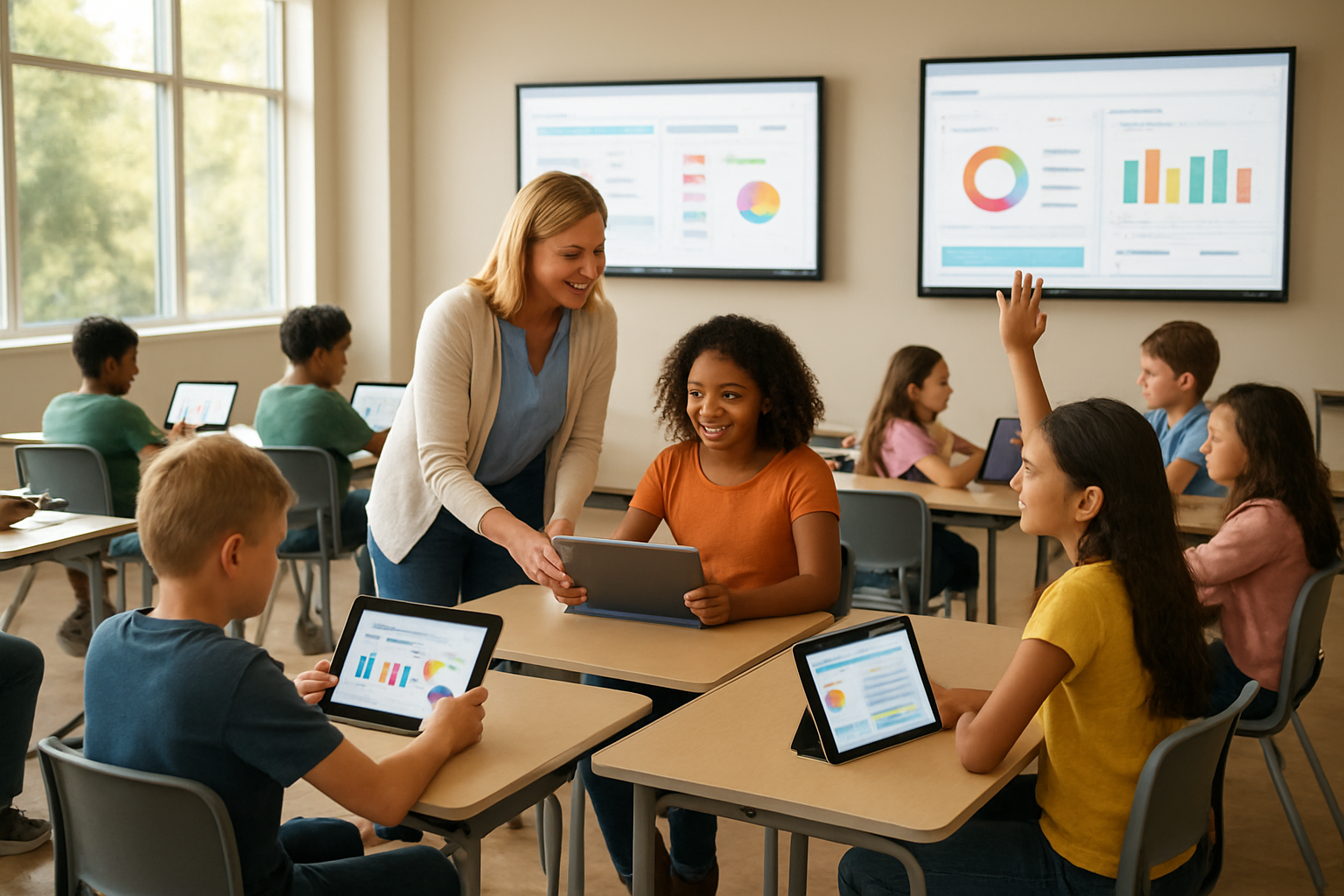
Adaptive learning systems are revolutionizing how students connect with educational content through sophisticated gamification strategies. These platforms analyze each student’s behavioral patterns, learning preferences, and motivational triggers to create personalized gaming elements that keep them engaged. When a student demonstrates competitive tendencies, the system might introduce leaderboards and achievement badges. For students motivated by collaboration, team challenges and group quests become prominent features.
Smart algorithms track which rewards resonate most with individual learners – some students thrive on immediate feedback through points and progress bars, while others prefer unlocking new content areas or earning virtual certificates. The beauty lies in how these systems adapt in real-time, adjusting the gamification approach based on student responses and engagement levels.
AI-driven educational analytics power these personalized motivation strategies by continuously monitoring student interactions, time spent on tasks, and completion rates. When engagement drops, the system automatically introduces new gaming elements or modifies existing ones to re-energize the learning experience.
Flexible pacing allowing students to progress at optimal speeds
Traditional classroom settings often force students into rigid timelines that don’t match their natural learning rhythms. Adaptive learning platforms eliminate this constraint by creating individualized pacing schedules that respond to each student’s mastery level and learning velocity.
Advanced algorithms assess how quickly students grasp new concepts, identify knowledge gaps, and predict optimal progression speeds. Fast learners can accelerate through material they understand quickly, while students who need more time receive additional practice opportunities without feeling rushed or left behind.
This personalized pacing extends beyond simple speed adjustments. The system recognizes when students need breaks, when they’re most alert and productive, and even seasonal patterns that affect learning capacity. Students struggling with complex topics receive extended practice sessions with varied approaches, while those showing mastery move forward to more challenging content.
Machine learning education technologies continuously refine these pacing algorithms by analyzing vast amounts of student performance data across different subjects, times of day, and learning contexts. This data-driven approach ensures that pacing recommendations become increasingly accurate and effective over time.
Multi-modal learning experiences accommodating different preferences
Modern adaptive learning systems recognize that students absorb information through various channels – visual, auditory, kinesthetic, and reading-based approaches. These platforms dynamically present content in multiple formats based on individual learning style assessments and real-time performance feedback.
Visual learners receive rich infographics, interactive diagrams, and video demonstrations, while auditory learners access podcasts, narrated lessons, and discussion-based activities. Kinesthetic learners engage with virtual labs, simulations, and hands-on digital manipulatives that allow them to explore concepts through interaction.
Generative AI content creation education tools play a crucial role here, automatically producing varied content formats from a single source. An AI system might transform a text-based lesson about photosynthesis into an animated sequence, an interactive simulation, and an audio explanation – all tailored to different learning preferences within the same classroom.
The sophistication extends to blended approaches where students who learn best through combination methods receive carefully orchestrated multi-sensory experiences. These might include synchronized visual and auditory elements, or text-based information paired with interactive exercises that reinforce key concepts through multiple channels simultaneously.
Measurable Benefits and Student Outcomes

Improved Academic Performance Through Targeted Interventions
AI-driven educational analytics identifies struggling students before they fall behind, enabling timely interventions that dramatically improve outcomes. Machine learning algorithms analyze patterns in student submissions, quiz responses, and engagement metrics to pinpoint specific knowledge gaps. When a student shows signs of difficulty with quadratic equations, for example, the AI tutoring systems immediately recommend targeted practice problems and alternative explanations.
Research from Carnegie Mellon University shows students using AI-powered math tutoring platforms score 15-20% higher on standardized tests compared to traditional instruction methods. The key lies in AI’s ability to catch misconceptions early and address them with precision. Rather than waiting for a failed exam, these systems provide real-time feedback and customized learning paths that adapt to each student’s pace and learning style.
Teachers receive detailed dashboards showing which concepts need reinforcement for individual students or entire classes. This data-driven approach eliminates guesswork and allows educators to focus their energy where it matters most.
Increased Student Retention and Course Completion Rates
Educational institutions implementing adaptive learning systems report significant improvements in student persistence. Arizona State University saw course completion rates jump from 64% to 85% after introducing AI-powered support systems in their online programs.
The technology works by identifying early warning signs of student disengagement:
- Decreased login frequency
- Incomplete assignments
- Lower quiz scores
- Reduced participation in discussion forums
When these patterns emerge, automated interventions kick in. Students receive personalized check-ins, additional resources, and connections to support services. Some platforms even adjust course difficulty in real-time to maintain optimal challenge levels that keep students motivated without overwhelming them.
Community colleges have particularly benefited from these systems. Many of their students juggle work and family responsibilities, making traditional support structures less accessible. AI-driven outreach and flexible learning paths help these students stay on track toward graduation.
Enhanced Critical Thinking Skills Through AI-Assisted Problem Solving
Generative AI education tools don’t just provide answers—they guide students through complex reasoning processes. Instead of simply showing the solution to a physics problem, AI tutoring systems break down the thinking process step by step. Students learn to identify relevant principles, make connections between concepts, and evaluate their own reasoning.
Socratic questioning techniques built into AI systems challenge students to defend their answers and consider alternative approaches. When a student claims that increasing temperature always increases pressure, the AI might ask: “What assumptions are you making about the system? Can you think of a scenario where this might not be true?”
Writing assistance tools help students develop stronger analytical skills by suggesting improvements in argument structure and evidence presentation. Rather than correcting grammar mistakes, these systems ask probing questions about claim support and logical flow.
Programming education has seen remarkable improvements through AI-assisted debugging and code review. Students learn not just what went wrong, but why their approach led to errors and how to think through similar problems in the future.
Reduced Learning Gaps Between Different Student Populations
Personalized learning technology addresses educational inequities by providing every student with customized support regardless of their background or prior knowledge. Students from under-resourced schools often arrive at college with gaps in foundational skills. AI systems identify these gaps without stigmatization and create individualized remediation plans.
Language barriers dissolve with real-time translation and culturally responsive content generation. International students can access explanations in their native language while gradually building English proficiency. The AI adapts its communication style to match different cultural learning preferences and prior educational experiences.
Students with learning disabilities benefit enormously from AI’s adaptability. The technology adjusts presentation formats, pacing, and assessment methods to accommodate diverse needs. Visual learners receive more diagrams and infographics, while auditory learners get podcast-style explanations.
Data from schools using comprehensive AI education platforms shows achievement gaps narrowing significantly:
| Student Population | Traditional Gap | With AI Support | Improvement |
|---|---|---|---|
| Low-income students | 25 points | 12 points | 52% reduction |
| English language learners | 30 points | 15 points | 50% reduction |
| Students with disabilities | 22 points | 11 points | 50% reduction |
These improvements stem from AI’s ability to provide unlimited patience, consistent support, and judgment-free learning environments where every student can progress at their own pace.
Overcoming Implementation Challenges and Concerns

Addressing data privacy and student information security
Schools collect massive amounts of student data when implementing AI in education systems, and protecting this information requires robust security measures. Educational institutions must establish comprehensive data governance frameworks that clearly define what information gets collected, how it’s stored, and who can access it. Students’ learning patterns, assessment scores, behavioral data, and personal information all need encryption both in transit and at rest.
Many schools partner with third-party AI vendors, which creates additional privacy concerns since student data often moves between multiple systems. Educational leaders should demand transparency from vendors about their data handling practices and require detailed privacy impact assessments before signing contracts. Regular security audits and penetration testing help identify vulnerabilities before they become serious breaches.
Parents and students deserve clear explanations about how their data gets used in personalized learning technology. Schools should create easy-to-understand privacy policies that explain the benefits of data collection while respecting family concerns about digital surveillance. Some districts have implemented opt-out policies that let families choose whether their children participate in AI-driven educational analytics programs.
Compliance with regulations like FERPA, COPPA, and state-level student privacy laws adds complexity but remains non-negotiable. Schools need dedicated staff members who understand these requirements and can monitor vendor compliance. Regular staff training about data handling best practices helps prevent accidental breaches that could compromise student privacy.
Managing teacher training and technology adoption resistance
Teachers often feel overwhelmed when schools introduce new AI education tools without adequate preparation or support. Successful implementation requires comprehensive professional development that goes beyond basic technical training to help educators understand how AI tutoring systems and adaptive learning platforms can enhance their teaching methods rather than replace them.
Many experienced teachers worry that AI personalized learning will diminish their role in the classroom. School administrators need to address these concerns directly by showing how AI tools can handle routine tasks like grading and progress tracking, freeing teachers to focus on relationship building, creative lesson planning, and providing emotional support to students. Demonstration sessions where teachers see AI tools in action often reduce anxiety and build enthusiasm.
Peer mentoring programs work well for technology adoption because teachers trust colleagues more than outside trainers. Schools can identify early adopters who become AI champions and help train their peers. These teacher leaders can share practical tips about integrating generative AI content creation education into daily lessons and troubleshoot common problems.
Gradual rollouts prevent overwhelm and allow teachers to master one tool before learning another. Starting with simple applications like AI-powered quiz generators before moving to more complex adaptive learning systems helps build confidence. Regular check-ins and feedback sessions let administrators adjust training based on real classroom experiences.
Ensuring equitable access across diverse socioeconomic backgrounds
The digital divide affects how students from different economic backgrounds can benefit from AI-driven educational analytics and personalized learning technology. Students without reliable internet access or modern devices at home miss out on AI tutoring systems and homework assistance that could help them succeed academically.
Many schools have implemented device lending programs and mobile hotspot initiatives to address connectivity gaps, but these solutions require significant funding and ongoing technical support. Some districts partner with internet service providers to offer discounted broadband access to low-income families, though bureaucratic hurdles often slow these programs.
Teacher bias can affect how AI recommendations get implemented in classrooms serving diverse populations. If educators have lower expectations for certain student groups, they might not push students to engage with challenging AI-generated content or advanced adaptive learning platforms. Professional development must address these unconscious biases and teach teachers how to advocate for all students’ access to advanced AI education tools.
Rural schools face particular challenges because limited bandwidth makes it difficult to run sophisticated machine learning education programs that require constant data processing. These schools need different implementation strategies, possibly focusing on offline-capable AI tools or partnering with urban districts to share resources and expertise.
Community partnerships help level the playing field by providing students with access to AI education technology outside school hours. Public libraries, community centers, and after-school programs can offer supervised access to educational technology trends and help students who lack resources at home.
AI and generative AI are reshaping classrooms by making learning more personal and flexible than ever before. These technologies analyze how students learn best, create custom content on demand, and adjust teaching methods in real time to match each student’s pace and style. The results speak for themselves – better engagement, improved outcomes, and learning experiences that actually fit how different students think and process information.
Getting these tools up and running isn’t always smooth sailing, and schools need to tackle concerns about privacy and teacher training head-on. But the potential rewards make it worth the effort. If you’re an educator or administrator, start small with pilot programs and focus on areas where AI can have the biggest impact. The future of education is already here – it’s time to embrace these powerful tools that can help every student reach their full potential.