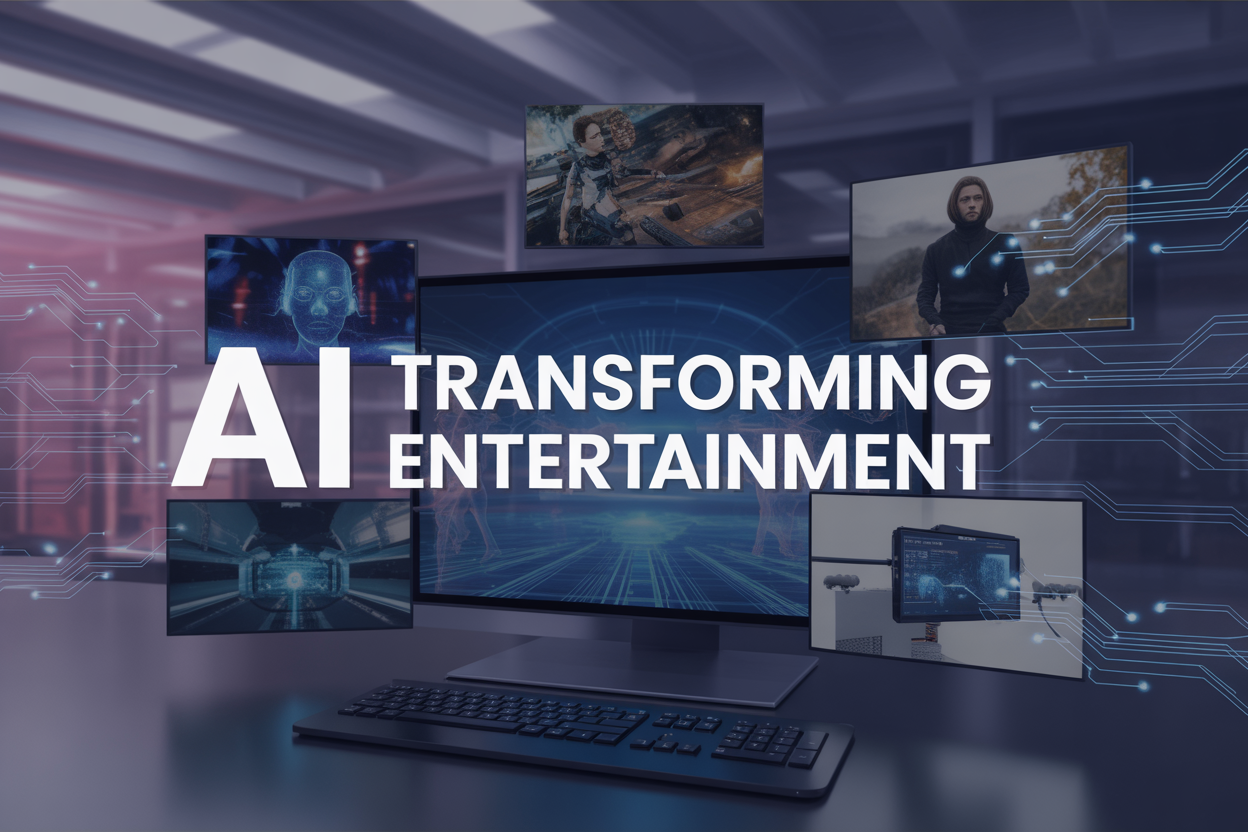
AI in entertainment is reshaping how we create, consume, and interact with media content across every platform. This transformation affects content creators, entertainment executives, game developers, and tech professionals who need to understand how artificial intelligence is changing their industries.
Generative AI gaming and AI content creation are no longer futuristic concepts—they’re driving real changes in studios, streaming platforms, and gaming companies today. Machine learning personalization is helping platforms deliver exactly what audiences want to watch, play, and experience.
We’ll explore how AI media transformation is revolutionizing content production workflows, from script writing to visual effects. You’ll discover how personalized gaming experiences and AI entertainment industry innovations are creating deeper audience connections. Finally, we’ll examine how these immersive AI technologies are opening new revenue streams and completely changing business models across media and entertainment.
AI Revolution in Content Creation and Production

Automated Script Writing and Storyline Generation
Writers and screenwriters now have AI-powered tools that can craft compelling narratives from simple prompts. AI content creation platforms like ChatGPT and specialized software can generate dialogue, plot structures, and character arcs in minutes rather than months. Major studios are using these tools to overcome writer’s block and explore creative directions they might never have considered.
Netflix has experimented with AI-generated storylines for certain interactive content, while independent filmmakers are leveraging artificial intelligence media production to create full scripts for low-budget projects. The technology doesn’t replace human creativity but amplifies it, offering writers thousands of variations on themes, helping them break through creative barriers, and providing fresh perspectives on traditional storytelling approaches.
Enhanced Visual Effects and CGI Rendering
Generative AI content has revolutionized visual effects workflows, cutting rendering times from weeks to hours. NVIDIA’s AI-powered tools can generate photorealistic environments, while machine learning algorithms predict and fill in missing frames for smoother animation sequences.
Companies like Industrial Light & Magic now use AI to create digital doubles of actors, generate crowd scenes with thousands of unique characters, and build entire worlds that would be impossible to construct physically. The technology has made high-quality VFX accessible to smaller production houses, democratizing visual storytelling.
| Traditional VFX | AI-Enhanced VFX |
|---|---|
| 8-12 weeks rendering | 2-4 days rendering |
| $500K+ budget requirement | $50K+ budget requirement |
| 20+ artist team | 5-10 artist team |
| Limited iterations | Unlimited variations |
Real-time Video Editing and Post-production Acceleration
AI algorithms now automatically sync audio, color-correct footage, and even suggest optimal cut points based on emotional peaks in the content. Adobe’s Sensei technology and similar platforms can analyze hours of raw footage and create rough cuts that previously required days of manual work.
Real-time collaboration tools powered by machine learning allow editors across different time zones to work simultaneously on the same project, with AI managing version control and conflict resolution. This has become particularly valuable for streaming platforms that need to push content to market quickly.
Voice Synthesis and Character Animation Breakthroughs
Voice cloning technology has reached near-perfect quality, allowing studios to recreate actors’ voices for dubbing, posthumous performances, or language localization without expensive recording sessions. AI entertainment industry leaders are using this technology to maintain character consistency across different media formats.
Character animation has seen similar breakthroughs, with AI systems that can animate facial expressions based on audio input alone. This technology has reduced animation costs by up to 70% while maintaining professional quality standards. Gaming companies are particularly benefiting from these advances, creating more lifelike NPCs and reducing development timeframes significantly.
The combination of voice synthesis and animation AI is creating new possibilities for interactive entertainment, where characters can respond naturally to user input in real-time conversations.
Personalized Entertainment Experiences Through Machine Learning
Dynamic Content Recommendation Systems
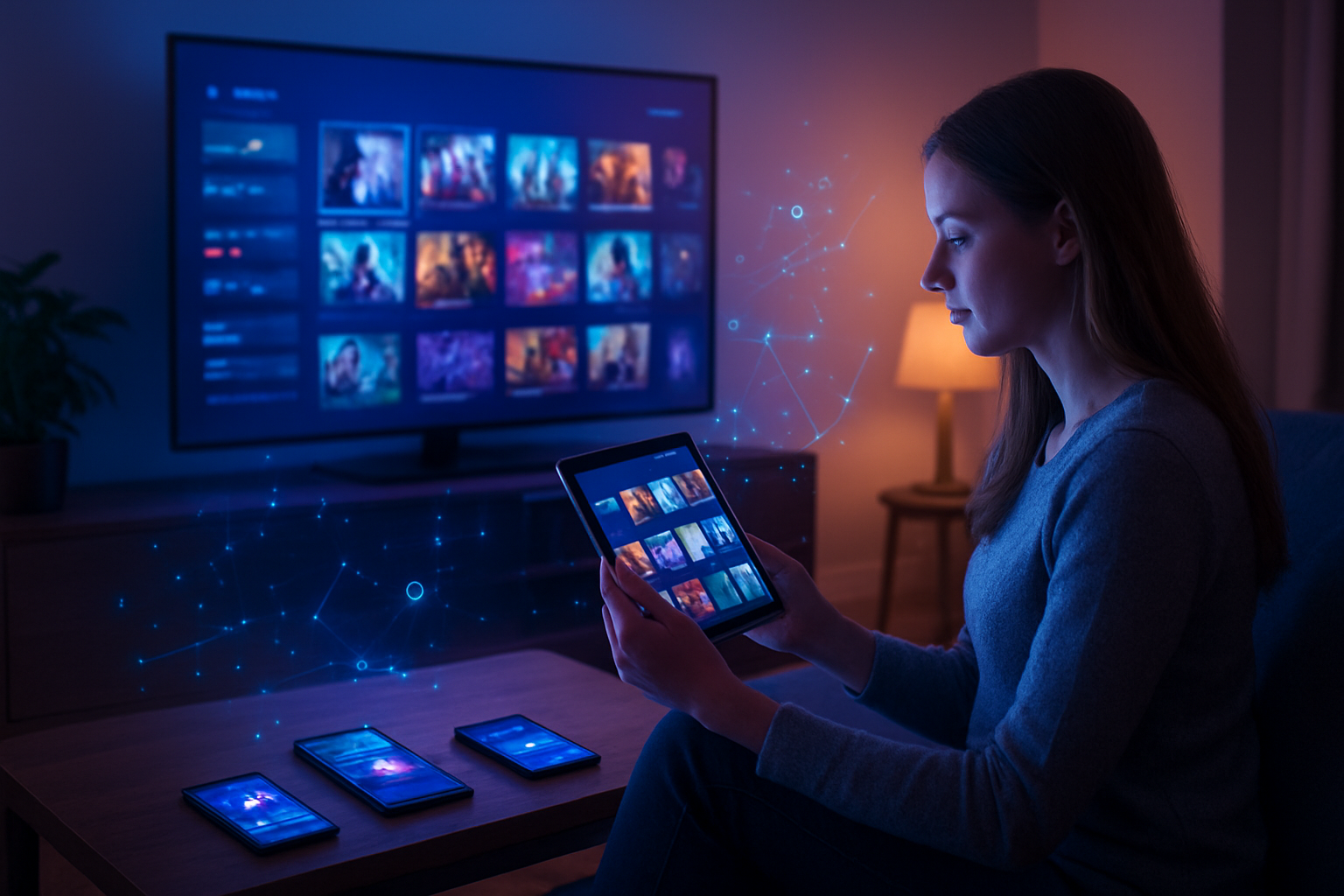
Machine learning personalization has become the backbone of modern entertainment platforms, revolutionizing how audiences discover and consume content. Streaming giants like Netflix, Spotify, and YouTube now rely on sophisticated AI algorithms that analyze viewing patterns, user behavior, and even the time of day to serve up precisely what viewers want to watch next.
These recommendation engines process massive datasets including watch history, search queries, device preferences, and social interactions to create unique content profiles for each user. The algorithms continuously learn from user interactions – tracking which shows get binged, which movies get paused halfway through, and which genres dominate weekend viewing sessions.
What makes these systems particularly powerful is their ability to identify subtle patterns that human curators might miss. AI can detect that users who enjoy certain indie films also gravitate toward specific documentary series, or that fans of particular gaming streamers prefer certain types of music content during their viewing sessions.
Modern recommendation systems also incorporate collaborative filtering, comparing user preferences with similar audience segments to suggest content that resonates with specific demographic groups. This approach has proven especially effective in the gaming industry, where AI in entertainment platforms recommend new games based on playing styles, completion rates, and in-game purchasing behaviors.
Adaptive Streaming Quality and User Interface Customization
Artificial intelligence streaming technology now automatically adjusts video quality, interface layouts, and feature accessibility based on individual user preferences and technical constraints. These smart systems monitor internet bandwidth, device capabilities, and user behavior to optimize the viewing experience in real-time.
AI algorithms analyze network conditions and automatically switch between different video resolutions to prevent buffering while maintaining the highest possible quality. The technology goes beyond simple bandwidth detection – it learns user tolerance levels for quality drops and predicts network congestion patterns during peak usage hours.
Interface customization powered by machine learning creates personalized dashboards that highlight relevant features for each user. Casual viewers might see simplified navigation with prominent “Continue Watching” sections, while power users get advanced filtering options and detailed content metadata. The AI tracks how users interact with different interface elements and gradually removes or emphasizes features based on usage patterns.
Gaming platforms have taken this concept even further, with AI systems that adjust in-game difficulty levels, modify control schemes for accessibility, and customize menu layouts based on player preferences. These systems can detect when players struggle with certain mechanics and automatically suggest control modifications or difficulty adjustments.
Interactive Storytelling Based on Viewer Preferences
Generative AI content creation is transforming storytelling from a linear experience into dynamic, personalized narratives that adapt to individual viewer choices and preferences. This technology enables creators to develop branching storylines that respond to audience engagement patterns and demographic insights.
Interactive entertainment platforms now use AI to analyze viewer decisions in real-time, creating unique story paths that align with individual personality types and viewing habits. The technology tracks emotional responses through engagement metrics, pause patterns, and replay behaviors to understand which narrative elements resonate most strongly with different audience segments.
Gaming has embraced this concept extensively, with AI-driven narrative systems that generate personalized dialogue, adjust character interactions, and modify story outcomes based on player choices and gaming history. These systems create millions of possible story variations while maintaining narrative coherence and emotional impact.
Streaming platforms are experimenting with AI-powered interactive content that lets viewers influence plot directions through simple interface interactions. The technology analyzes collective viewer choices to identify popular story branches while also creating personalized variants for individual users based on their content consumption patterns and stated preferences.
This approach extends to character development, where AI algorithms generate personalized character arcs that reflect viewer values and interests, creating deeper emotional connections between audiences and the content they consume.
Generative AI Transforming Game Development
Procedural World and Level Generation
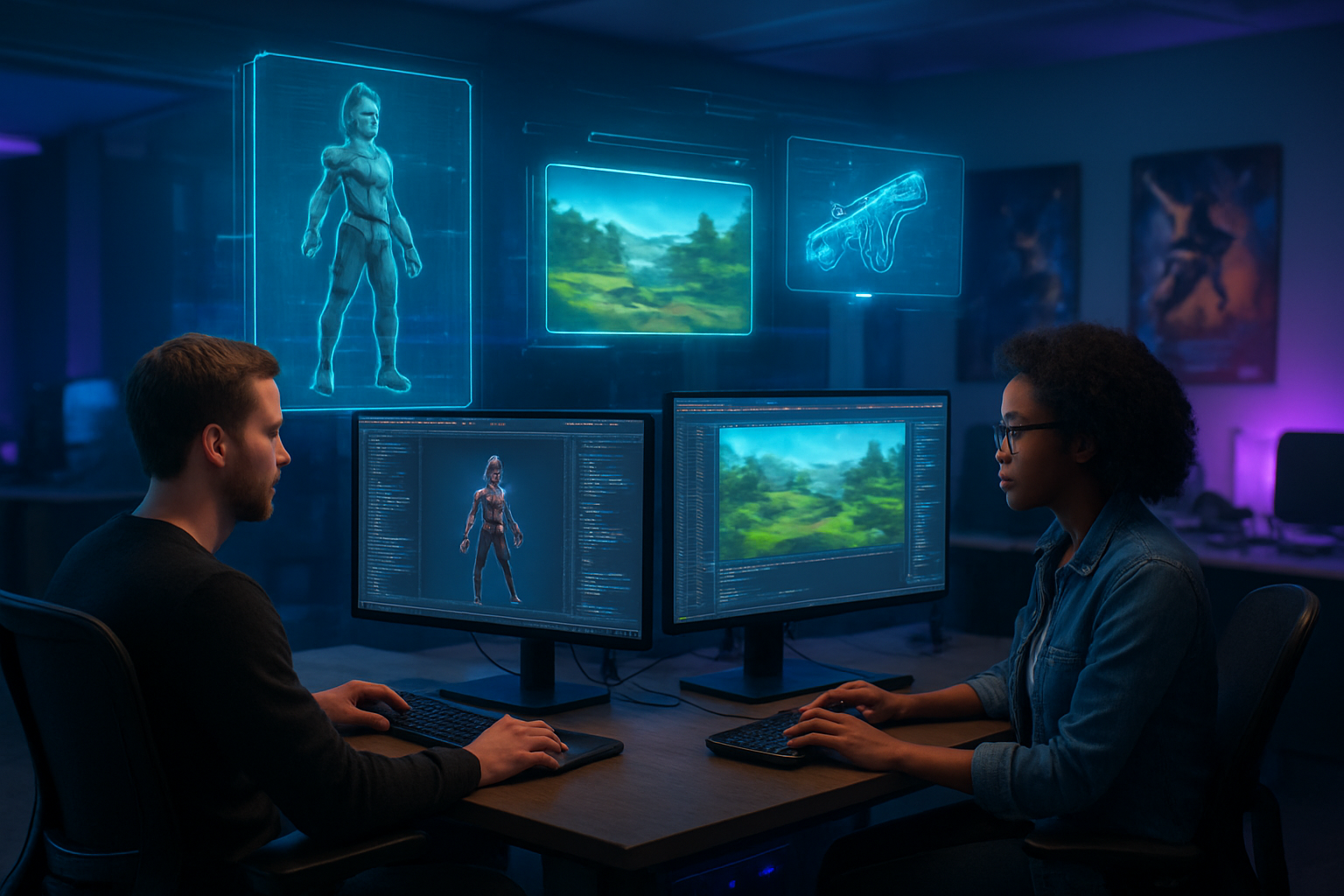
AI game development has revolutionized how developers create expansive gaming environments. Procedural generation powered by generative AI creates infinite possibilities for world-building, eliminating the need for artists to manually design every terrain feature, building, or landscape element. Games like No Man’s Sky showcase this technology’s potential, generating entire planets with unique ecosystems, weather patterns, and geological features.
Modern generative AI gaming systems analyze player behavior patterns to create levels that match specific difficulty curves and engagement preferences. These algorithms consider factors like player skill progression, time spent in different areas, and completion rates to generate content that keeps players challenged but not frustrated. The technology goes beyond simple random generation – it understands game design principles and applies them to create meaningful, coherent environments.
Level designers now work as curators rather than creators of every single element. They define parameters, themes, and constraints while AI handles the heavy lifting of populating worlds with detailed content. This approach dramatically reduces development time and costs while increasing the replay value of games through virtually unlimited content variation.
Intelligent NPC Behavior and Dialogue Systems
Non-player characters have evolved from following basic scripted patterns to exhibiting sophisticated, contextual behavior through artificial intelligence media production techniques. Modern NPCs use machine learning to adapt their responses based on player actions, creating more believable and engaging interactions.
Advanced dialogue systems now generate contextually appropriate conversations in real-time. Instead of relying on pre-written dialogue trees, these systems understand narrative context, character personalities, and player history to create unique exchanges. NPCs remember past interactions, react to player choices across multiple gameplay sessions, and develop relationships that feel authentic.
Behavioral AI allows NPCs to pursue their own goals and agendas within the game world. They form opinions about players based on actions, make decisions that affect the game world even when players aren’t directly interacting with them, and create emergent storytelling opportunities. This technology transforms NPCs from simple quest dispensers into dynamic characters that contribute to living, breathing game worlds.
Asset Creation and Texture Generation Automation
Generative AI content creation has streamlined asset production pipelines across the gaming industry. AI tools now generate high-quality textures, 3D models, and environmental assets in minutes rather than hours or days. Artists input basic parameters like material type, wear patterns, or color schemes, and AI produces multiple variations for selection and refinement.
Texture generation specifically benefits from this automation. AI creates realistic surfaces for wood, metal, fabric, and organic materials by understanding how these materials behave under different lighting conditions and weathering effects. The technology can produce seamless textures that tile perfectly across large surfaces while maintaining visual variety and detail.
Asset creation workflows now incorporate AI at multiple stages. Concept artists use AI to rapidly prototype ideas, 3D artists leverage AI for initial modeling and UV mapping, and texture artists employ generative tools for creating material libraries. This collaborative approach between human creativity and AI efficiency accelerates production timelines while maintaining artistic quality standards.
Balancing and Testing Optimization
Game balancing traditionally required extensive playtesting and manual adjustments across multiple iterations. AI entertainment industry tools now analyze gameplay data in real-time to identify balance issues before they affect player experience. These systems track weapon effectiveness, character abilities, economic systems, and difficulty progression to recommend precise adjustments.
AI testing bots simulate thousands of gameplay scenarios simultaneously, exploring edge cases and exploit possibilities that human testers might miss. They play games 24/7, testing different strategies and approaches while collecting performance data. This automated testing identifies bugs, balance issues, and potential exploits much faster than traditional quality assurance methods.
Machine learning algorithms analyze player behavior patterns to predict how balance changes will affect different player segments. They model how adjustments to one game element might create unexpected consequences in other areas, helping developers make informed decisions about game tuning. This data-driven approach to balancing creates more stable, enjoyable gaming experiences while reducing post-launch patches and updates.
Enhanced User Engagement and Immersive Technologies

AI-powered virtual and augmented reality experiences
Immersive AI technologies are revolutionizing how we experience virtual and augmented reality in entertainment and gaming. Modern VR and AR platforms now use sophisticated machine learning algorithms to create adaptive environments that respond to user behavior in real-time. These systems track eye movements, head positioning, and even biometric data to adjust lighting, sound, and visual elements dynamically.
Gaming companies like Meta and Sony are integrating AI-driven procedural generation into their VR experiences, creating infinite worlds that evolve based on player preferences. The AI analyzes playing patterns and automatically generates new content, ensuring that virtual environments never feel repetitive. This technology extends beyond gaming into virtual concerts, museum tours, and interactive storytelling experiences where the narrative adapts to viewer reactions.
AI virtual reality systems also enhance social interactions in virtual spaces. Advanced algorithms power realistic avatars that mimic facial expressions and body language, making virtual meetings and social gatherings feel more authentic. These systems use computer vision and natural language processing to create seamless interactions between users and AI-powered non-player characters.
Real-time language translation for global audiences
Breaking down language barriers has become a game-changer for global entertainment consumption. Streaming platforms now deploy AI-powered translation systems that provide instant subtitles and dubbing in multiple languages simultaneously. Netflix and Disney+ use neural machine translation models that understand context, cultural nuances, and industry-specific terminology to deliver accurate translations.
Live streaming events benefit enormously from real-time translation capabilities. Gaming tournaments, music concerts, and interactive shows can now reach international audiences without the traditional delays associated with human translation. These systems process audio streams in milliseconds, converting speech to text, translating it, and generating natural-sounding voice synthesis in the target language.
The technology goes beyond simple word-for-word translation. Modern AI systems understand cultural references, slang, and emotional undertones, adapting content to resonate with local audiences. This capability has opened new revenue streams for content creators who can now monetize their work across global markets without significant additional production costs.
Emotion recognition for responsive entertainment
Entertainment platforms are becoming emotionally intelligent through advanced computer vision and sentiment analysis. These systems monitor facial expressions, voice patterns, and physiological responses to gauge viewer emotions and adjust content accordingly. Streaming services use this data to recommend content that matches current mood states or deliberately contrasts them for emotional balance.
Gaming applications of emotion recognition create truly responsive experiences. Horror games can detect fear levels and adjust scare tactics accordingly, while puzzle games modify difficulty based on frustration indicators. Racing games read excitement levels to calibrate the intensity of action sequences, creating personalized thrill curves for each player.
Interactive entertainment experiences now respond to collective audience emotions during live events. Concert lighting systems adjust to crowd energy levels, while interactive theater productions modify storylines based on audience engagement patterns. This bidirectional relationship between content and consumer creates unprecedented levels of immersion and personal connection.
The technology raises interesting possibilities for therapeutic entertainment applications, where content adapts to support emotional well-being goals. Meditation apps adjust guidance based on stress indicators, while educational games modify pacing to maintain optimal learning states.
Revenue Growth and Business Model Innovation

Targeted Advertising and Monetization Strategies
AI in entertainment has completely changed how companies reach their audiences and generate revenue. Machine learning algorithms analyze viewer behavior, preferences, and demographics to create laser-focused advertising campaigns that deliver significantly higher conversion rates than traditional methods. Netflix uses sophisticated AI systems to determine which promotional content to show each user, resulting in engagement rates that are 30% higher than generic campaigns.
Streaming platforms now employ real-time bidding systems powered by artificial intelligence to optimize ad placements automatically. These systems consider factors like viewing history, time of day, device type, and even emotional state indicators to determine the perfect moment and format for advertisements. Disney+ leverages this technology to increase ad revenue by matching family-friendly content with appropriate brand partnerships during peak viewing hours.
Gaming companies are seeing remarkable success with AI-driven in-game monetization. Generative AI creates personalized offers for virtual items, analyzing player behavior patterns to predict which purchases are most likely to convert. Mobile game publishers report revenue increases of up to 40% when implementing AI-powered monetization strategies compared to static pricing models.
Predictive Analytics for Content Investment Decisions
Entertainment companies are saving millions by using AI to predict content success before production begins. Machine learning models analyze script elements, cast popularity, genre trends, and market conditions to forecast box office performance and streaming viewership with impressive accuracy.
Warner Bros uses predictive analytics to evaluate potential film projects, examining factors like:
- Historical performance of similar genres and themes
- Social media sentiment around attached talent
- Global market trends and cultural preferences
- Seasonal viewing patterns and competition analysis
These insights help executives make smarter investment decisions, reducing the risk of expensive flops. Amazon Prime Video’s algorithm successfully predicted the success of “The Boys” by analyzing superhero genre fatigue and audience appetite for darker, satirical content.
AI entertainment industry analytics now extend beyond traditional metrics. Platforms track micro-engagement signals like pause patterns, rewind frequency, and second-screen activity to understand viewer satisfaction at granular levels. This data informs decisions about series renewals, spin-offs, and content acquisition strategies.
Automated Customer Service and Support Systems
Customer support in media and entertainment has been revolutionized through intelligent automation. AI-powered chatbots handle millions of customer inquiries daily, resolving common issues like password resets, billing questions, and content recommendations without human intervention.
Spotify’s virtual assistant can troubleshoot playback issues, suggest playlist modifications, and even help users discover new music based on conversational inputs. The system handles 80% of support tickets automatically, allowing human agents to focus on complex problems that require empathy and creative problem-solving.
Gaming companies deploy AI customer service for more specialized needs:
- Account recovery and security verification
- In-game purchase disputes and refunds
- Technical troubleshooting for hardware compatibility
- Community moderation and player behavior management
These automated systems learn from each interaction, continuously improving their ability to understand context and provide accurate solutions. The result is faster resolution times, reduced operational costs, and improved customer satisfaction scores across the board.
Dynamic Pricing Models Based on Demand Patterns
AI revenue models are transforming how entertainment companies price their products and services. Dynamic pricing algorithms adjust costs in real-time based on demand fluctuations, competitor analysis, and market conditions.
Movie theaters now use AI to optimize ticket prices throughout the day, considering factors like show popularity, seat availability, and local events. AMC Theatres reports revenue increases of 15% since implementing dynamic pricing for premium formats and popular showtimes.
Streaming services experiment with personalized subscription tiers, where machine learning algorithms determine optimal pricing for individual users based on usage patterns and willingness to pay indicators. This approach maximizes revenue while maintaining subscriber satisfaction.
Gaming platforms showcase the most sophisticated dynamic pricing models:
| Pricing Factor | AI Application | Revenue Impact |
|---|---|---|
| Player Engagement | Adjust DLC prices based on play time | +25% conversion |
| Seasonal Trends | Modify cosmetic item costs during events | +40% sales volume |
| Competitive Analysis | Real-time price matching for popular titles | +20% market share |
| User Demographics | Personalized bundle offerings | +35% average order value |
These intelligent pricing strategies create win-win scenarios where companies maximize revenue while customers receive value-aligned pricing that feels fair and personalized.
AI has completely changed how we create, consume, and interact with entertainment. From helping studios produce content faster and cheaper to giving us personalized movie recommendations that actually make sense, machine learning is making entertainment smarter and more engaging. Game developers are using generative AI to build massive worlds and create characters that feel real, while new technologies are making experiences more immersive than ever before.
The bottom line is simple: companies that embrace these AI tools are seeing real results in both user engagement and revenue growth. If you’re working in media, entertainment, or gaming, now’s the time to explore how AI can enhance your projects and connect with audiences in new ways. The technology is here, it’s accessible, and it’s already reshaping the industry – so jump in and see what AI can do for your creative vision.