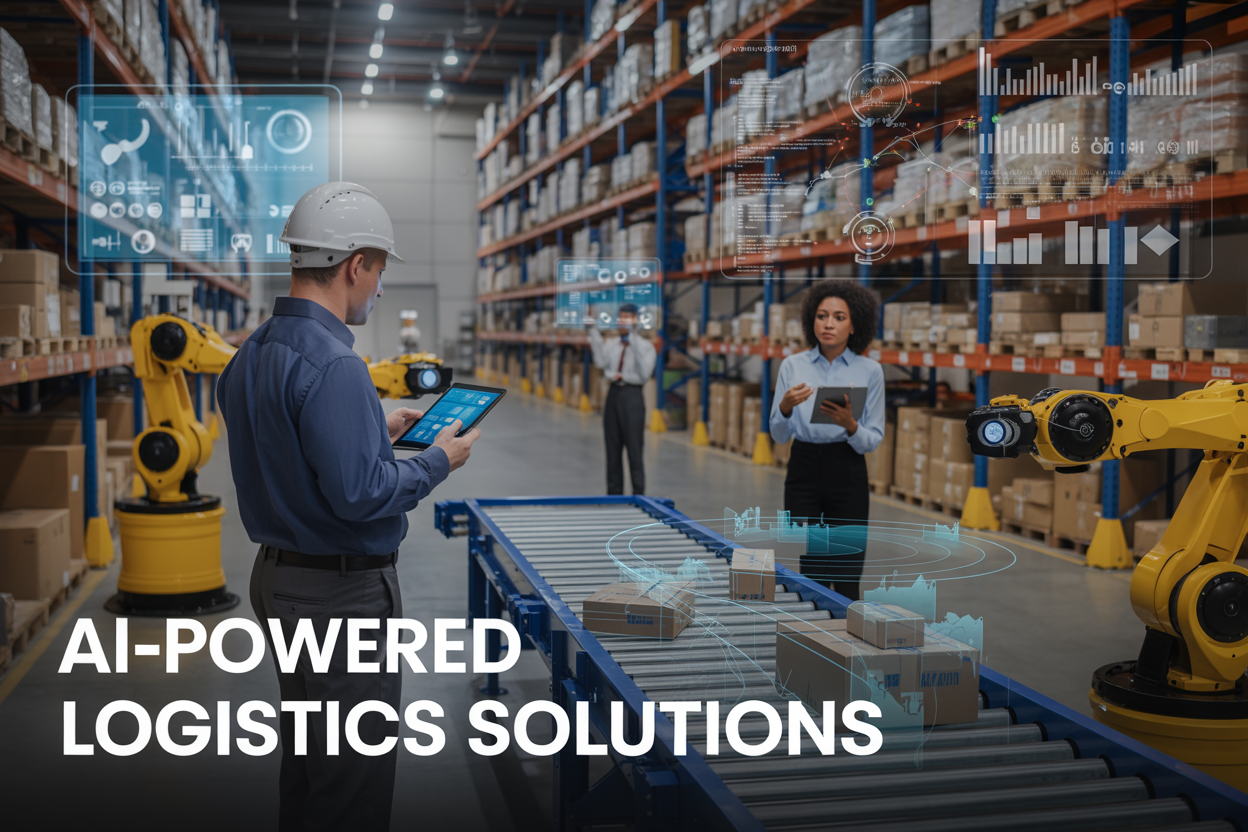
AI in logistics is transforming how companies move products, manage warehouses, and plan operations. If you’re a logistics manager, supply chain professional, or business owner looking to modernize your operations, artificial intelligence and GenAI logistics solutions offer powerful tools to cut costs and boost efficiency.
This guide is designed for logistics teams ready to explore AI warehouse management, transportation professionals seeking intelligent transportation systems, and decision-makers planning digital upgrades. You’ll discover practical ways to use AI whether you’re running a small distribution center or managing complex supply networks.
We’ll explore how AI-powered warehouse management systems can automate inventory tracking and optimize picking routes, saving time and reducing errors. You’ll also learn how intelligent transportation systems use predictive analytics logistics to plan better routes, predict maintenance needs, and respond to disruptions in real-time. Finally, we’ll cover strategic planning tools that help you forecast demand, allocate resources, and make smarter decisions using AI supply chain optimization technology.
Understanding AI and GenAI Technologies for Modern Logistics
Differentiating Between Traditional AI and Generative AI Applications
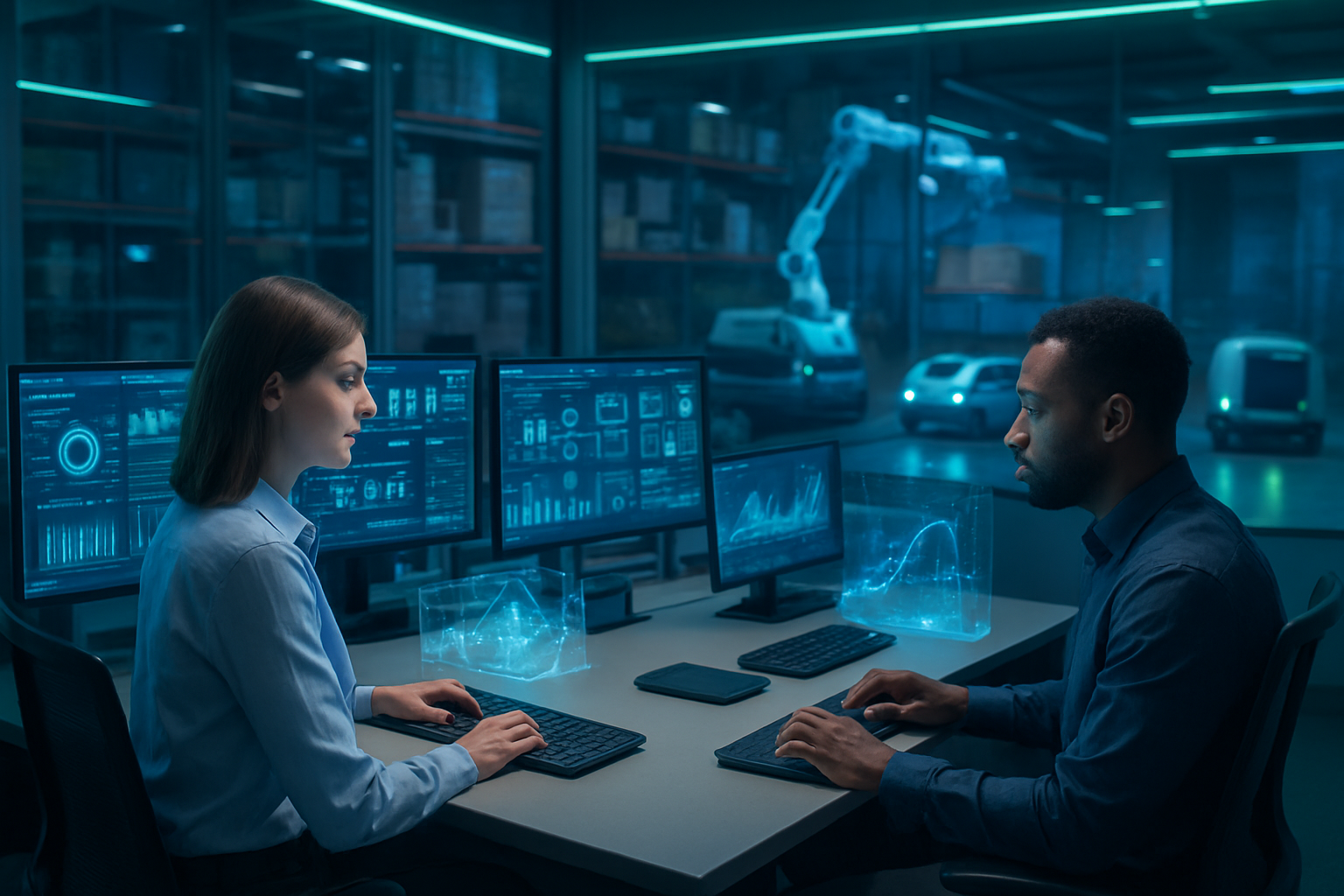
Traditional AI in logistics focuses on analyzing data patterns and making predictions based on historical information. These systems excel at tasks like demand forecasting, route optimization, and inventory management by processing structured data through machine learning algorithms. They work with predefined parameters and deliver specific, measurable outcomes.
GenAI logistics solutions take a completely different approach. Instead of just analyzing existing data, generative AI creates new content, scenarios, and solutions. In logistics, GenAI can generate optimized delivery routes that haven’t been tried before, create synthetic data to test new warehouse layouts, or produce natural language reports that explain complex supply chain disruptions in plain English.
The real power emerges when both technologies work together. Traditional AI provides the analytical foundation while GenAI adds creative problem-solving capabilities. For example, traditional AI might identify delivery delays, while GenAI could generate multiple alternative solutions and explain each option’s pros and cons to logistics managers.
Key Machine Learning Algorithms Transforming Supply Chain Operations
Several machine learning algorithms are reshaping how logistics companies operate. Clustering algorithms group similar products, customers, or routes together, making warehouse organization and delivery planning more efficient. These algorithms help identify patterns that humans might miss, like discovering that certain product combinations frequently ship together.
Regression algorithms predict future demand, shipping costs, and delivery times with remarkable accuracy. They analyze historical data, seasonal trends, and external factors to forecast what will happen next. This predictive power helps companies stock the right products at the right locations.
Neural networks handle complex pattern recognition tasks, especially useful for analyzing transportation networks and identifying optimal paths through multiple variables simultaneously. They can process massive amounts of real-time data from GPS tracking, weather systems, and traffic reports to make split-second routing decisions.
Reinforcement learning algorithms continuously improve logistics processes by learning from outcomes. These systems experiment with different approaches, measure results, and refine strategies over time. They’re particularly effective for dynamic problems like real-time warehouse robot coordination and adaptive inventory management.
Natural Language Processing Benefits for Logistics Communication
Natural language processing transforms how logistics teams handle communication and documentation. Instead of manually processing thousands of shipping requests, damage reports, and customer inquiries, NLP systems can automatically categorize, prioritize, and route these communications to the right departments.
Voice-activated warehouse systems let workers use natural speech to update inventory counts, report issues, or request assistance without stopping to use handheld devices. This hands-free approach increases productivity and reduces errors during picking and packing operations.
AI supply chain optimization benefits greatly from NLP’s ability to process unstructured data from emails, social media, news reports, and supplier communications. These systems can detect potential disruptions by analyzing supplier announcements, weather reports, and geopolitical news that might affect shipping routes or product availability.
Automated translation capabilities break down language barriers in global logistics operations, enabling seamless communication between international partners, suppliers, and customers without human translators.
Computer Vision Applications for Inventory and Quality Control
Computer vision revolutionizes inventory management by enabling automated counting and tracking without human intervention. Cameras equipped with AI can scan warehouse shelves, identify products, and update inventory systems in real-time. This technology reduces counting errors and provides instant visibility into stock levels.
Quality control processes become faster and more consistent through visual inspection systems. These AI-powered cameras can detect damaged packaging, incorrect labeling, or product defects much faster than human inspectors. They work continuously without fatigue and maintain consistent quality standards.
Package sorting operations benefit enormously from computer vision systems that read addresses, barcodes, and shipping labels regardless of orientation or print quality. These systems can process thousands of packages per hour while routing them to correct destinations.
Warehouse AI implementation often includes computer vision for safety monitoring. Cameras can detect when workers enter dangerous areas, identify potential hazards like spills or obstructions, and ensure proper safety equipment usage throughout facilities.
Loading dock operations use computer vision to verify shipment contents, confirm truck positioning, and guide automated loading equipment. These systems reduce loading errors and speed up the entire shipping process while maintaining detailed records of all activities.
Revolutionizing Warehouse Operations with AI-Powered Solutions
Automated Inventory Management and Real-Time Stock Optimization
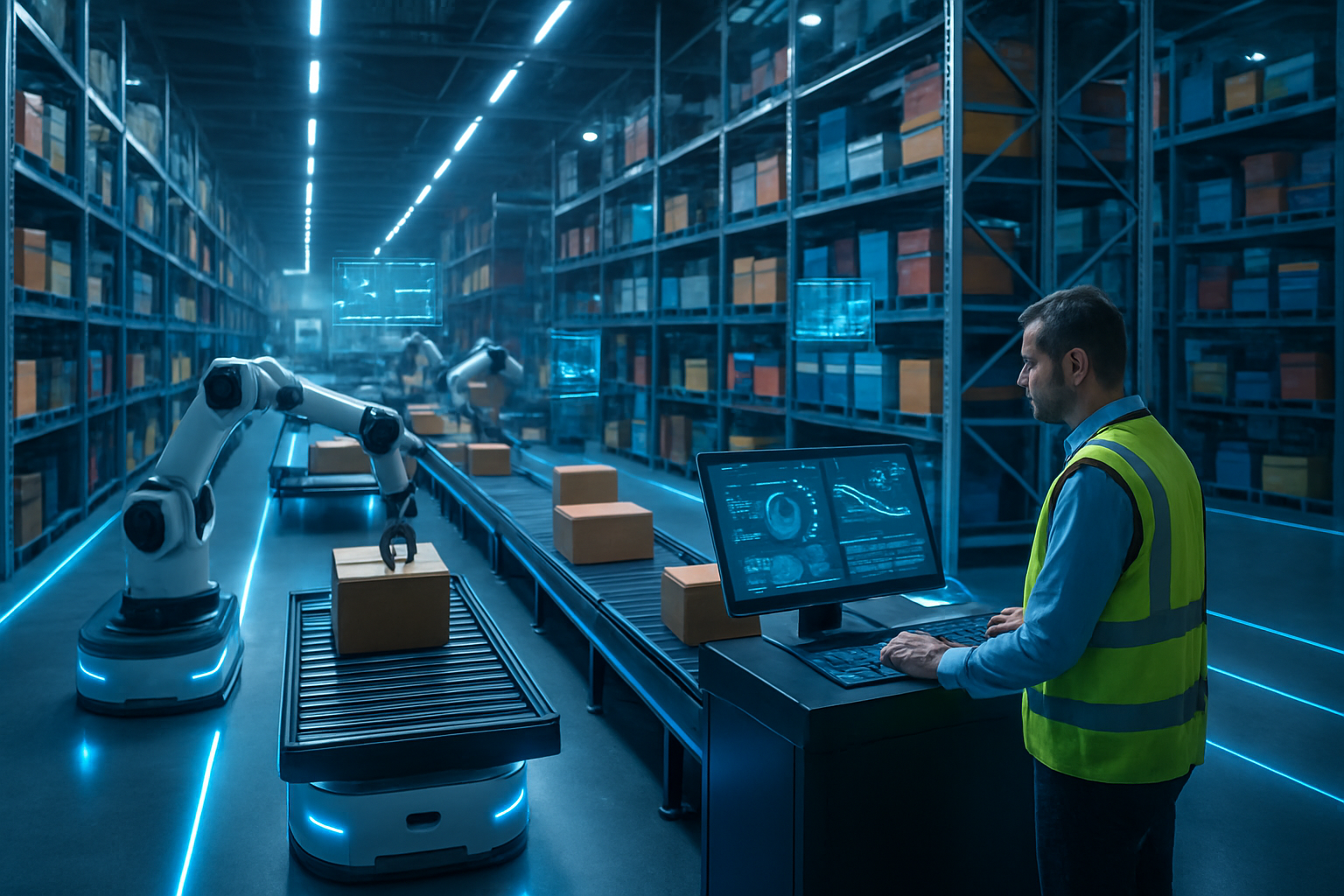
AI warehouse management systems are completely changing how companies track and manage their inventory. Machine learning algorithms analyze purchasing patterns, seasonal trends, and demand fluctuations to predict exactly when stock levels need replenishing. These systems automatically trigger reorders, adjust safety stock levels, and even suggest optimal inventory layouts based on product velocity.
Real-time tracking using IoT sensors and computer vision eliminates manual counting errors and provides instant visibility into stock movements. Smart shelves equipped with weight sensors detect when products are removed or restocked, while RFID and barcode scanning robots conduct autonomous inventory audits throughout the day.
The result? Companies see inventory accuracy rates jump from 85% to over 99%, while reducing carrying costs by 15-30%. Stockouts drop dramatically because the AI spots trends human planners might miss, like subtle shifts in customer preferences or supply chain disruptions affecting specific products.
Predictive Maintenance for Warehouse Equipment and Robotics
Smart sensors embedded in forklifts, conveyor systems, and automated storage equipment continuously monitor performance metrics like vibration patterns, temperature fluctuations, and operational speeds. Machine learning models analyze this data stream to identify early warning signs of potential failures.
Logistics automation systems can predict when a conveyor belt motor will fail weeks before it actually breaks down. This advance warning lets maintenance teams schedule repairs during planned downtime rather than dealing with emergency shutdowns that halt operations.
Key benefits include:
- 40-60% reduction in unplanned downtime
- 25-35% lower maintenance costs
- Extended equipment lifespan by 20-30%
- Improved worker safety through early hazard detection
Robotic systems equipped with self-diagnostic capabilities report their own health status and automatically schedule maintenance appointments. Some advanced systems even order replacement parts autonomously when wear patterns indicate upcoming component failures.
AI-Driven Pick Path Optimization and Labor Efficiency
Warehouse picking represents 50-60% of total fulfillment costs, making optimization here incredibly valuable. AI algorithms analyze order patterns, product locations, and picker behavior to create the most efficient routes through the warehouse.
Dynamic routing systems adapt in real-time as new orders arrive or inventory locations change. The AI considers factors like product weight, fragility, temperature requirements, and picker experience levels when assigning tasks and routes.
Advanced systems use heat mapping to identify bottlenecks and suggest layout improvements. They track individual picker performance without being intrusive, identifying training opportunities and recognizing top performers.
Warehouse AI implementation typically delivers:
- 30-50% improvement in picking speed
- 80% reduction in travel time within facilities
- 15-25% increase in order accuracy
- Better worker satisfaction through optimized workloads
Voice-directed picking systems powered by natural language processing guide workers through complex pick sequences using simple, conversational instructions. Workers can ask questions and receive clarification without breaking their workflow.
Smart Storage Solutions Using Machine Learning Algorithms
Machine learning transforms static warehouse layouts into dynamic, self-optimizing storage systems. Algorithms analyze product characteristics, demand patterns, and handling requirements to determine optimal placement strategies.
Fast-moving items automatically migrate closer to shipping areas, while seasonal products relocate based on demand forecasting. The system balances storage density with accessibility, ensuring high-velocity products remain easily reachable while maximizing cube utilization for slower-moving inventory.
Smart slotting algorithms consider multiple variables:
| Factor | AI Optimization Approach |
|---|---|
| Product velocity | Dynamic ABC classification with real-time updates |
| Size and weight | Automated dimensional analysis and placement rules |
| Picking frequency | Heat map analysis for optimal zone placement |
| Storage compatibility | Machine learning for co-location strategies |
Automated storage and retrieval systems (AS/RS) use AI to optimize retrieval sequences and storage locations. The systems learn from historical data to predict future storage needs and pre-position inventory for maximum efficiency.
Vertical lift modules and carousel systems powered by AI can increase storage density by 85% while reducing retrieval times by 70%. These systems automatically reorganize themselves during off-peak hours to maintain optimal configurations.
Transforming Transportation Networks Through Intelligent Automation
Dynamic Route Optimization for Cost Reduction and Fuel Efficiency
AI-powered route optimization systems are completely changing how logistics companies plan their delivery routes. These intelligent systems analyze thousands of variables in real-time, including traffic patterns, weather conditions, vehicle capacity, and delivery windows to create the most efficient routes possible.
Machine learning algorithms continuously learn from historical data and real-time feedback, adapting routes based on seasonal trends, customer preferences, and operational constraints. Companies using these systems report fuel savings of 15-20% and delivery time reductions of up to 25%.
The technology goes beyond simple shortest-path calculations. Advanced algorithms consider driver breaks, vehicle maintenance schedules, and even customer availability windows. Some systems integrate with GPS tracking and telematics data to make micro-adjustments throughout the day, rerouting drivers around unexpected traffic jams or road closures.
Modern route optimization platforms also factor in environmental considerations, helping companies reduce their carbon footprint while cutting costs. These systems can prioritize electric vehicle routes, minimize idling time, and group deliveries by geographic proximity to maximize efficiency.
Predictive Analytics for Delivery Time Accuracy and Customer Satisfaction
Predictive analytics transforms delivery time estimates from educated guesses into precise forecasts. AI logistics solutions analyze historical delivery data, weather patterns, traffic conditions, and seasonal variations to predict exact arrival times with remarkable accuracy.
These systems track multiple data points including package weight, destination distance, driver performance history, and local traffic patterns. Machine learning models identify subtle patterns that human planners might miss, such as how rain affects delivery times in specific neighborhoods or how construction projects impact routes during certain hours.
The impact on customer satisfaction is dramatic. When customers receive accurate delivery windows, they can plan accordingly, reducing failed delivery attempts and improving overall experience. Some companies achieve delivery time accuracy rates exceeding 95% using these advanced analytics tools.
Real-time updates keep customers informed throughout the delivery process. If a delay occurs, the system automatically recalculates arrival times and sends notifications, maintaining transparency and trust. This proactive communication approach significantly reduces customer service calls and complaints.
Fleet Management Enhancement Using IoT and AI Integration
IoT sensors combined with AI create powerful fleet management capabilities that go far beyond simple vehicle tracking. These systems monitor engine performance, fuel consumption, tire pressure, brake wear, and driver behavior in real-time, creating a comprehensive picture of fleet health and efficiency.
Predictive maintenance becomes possible when AI analyzes sensor data to identify potential mechanical issues before they cause breakdowns. The system can predict when a vehicle needs service based on driving patterns, load weights, and environmental conditions, preventing costly roadside failures and extending vehicle lifespan.
Driver safety improves through AI-powered monitoring systems that detect harsh braking, rapid acceleration, and other risky behaviors. These systems provide immediate feedback to drivers and generate reports for fleet managers to address training needs or recognize safe driving practices.
Fuel efficiency optimization happens automatically as AI systems learn each vehicle’s optimal performance parameters and provide real-time recommendations to drivers. Some advanced systems can even adjust engine parameters remotely to maximize fuel economy based on route conditions and cargo weight.
Real-Time Traffic Analysis for Adaptive Logistics Planning
Intelligent transportation systems leverage real-time traffic data to make split-second routing decisions that keep deliveries on schedule. These systems process data from traffic cameras, road sensors, GPS devices, and mobile applications to create detailed traffic flow maps updated every few minutes.
AI algorithms analyze this constant stream of information to predict traffic congestion before it happens. By identifying patterns in traffic flow, the system can anticipate rush hour bottlenecks, accident-prone areas, and weather-related delays, allowing logistics planners to adjust routes proactively.
Dynamic rerouting capabilities mean delivery vehicles can avoid problems automatically. When traffic incidents occur, the system immediately calculates alternative routes and pushes updates to drivers’ navigation systems. This real-time adaptation minimizes delays and keeps delivery schedules intact.
The technology also enables better resource allocation. Fleet managers can see real-time conditions across their entire service area and redistribute vehicles as needed. If one area experiences heavy traffic, nearby vehicles can be redirected to handle deliveries in that zone, maintaining service levels across the network.
Autonomous Vehicle Integration Strategies for Last-Mile Delivery
Autonomous vehicles represent the future of last-mile delivery, and smart logistics companies are already testing integration strategies. AI warehouse management systems coordinate with autonomous delivery vehicles to optimize loading sequences and delivery routes, creating seamless handoffs between human workers and automated systems.
Current implementations focus on controlled environments like university campuses, corporate complexes, and residential communities with predictable traffic patterns. These pilot programs help companies understand operational challenges and refine their autonomous delivery processes before broader deployment.
The integration requires sophisticated coordination between warehouse operations, route planning, and vehicle management systems. AI orchestrates the entire process, from determining which packages are suitable for autonomous delivery to scheduling vehicle maintenance and charging cycles for electric autonomous fleets.
Safety protocols built into these systems include redundant sensors, emergency stop mechanisms, and remote monitoring capabilities. Human oversight remains essential, with operations centers monitoring autonomous vehicles and intervening when necessary. As technology advances and regulations evolve, these systems will become more capable and widespread, transforming logistics automation across the industry.
Logistics digital transformation through autonomous vehicles also requires new infrastructure, including dedicated pickup points, secure package compartments, and communication networks that connect vehicles to central dispatch systems. Companies investing in these technologies now position themselves for significant competitive advantages as autonomous delivery becomes mainstream.
Strategic Planning Enhancement with GenAI and Predictive Analytics

Demand Forecasting Accuracy Using Advanced Machine Learning Models
Machine learning algorithms have transformed how logistics companies predict future demand, moving far beyond traditional statistical methods. These advanced models analyze vast datasets including historical sales patterns, seasonal trends, economic indicators, and even social media sentiment to generate highly accurate forecasts. Predictive analytics logistics systems can process millions of data points in real-time, identifying subtle patterns that human analysts might miss.
The most effective demand forecasting models combine multiple algorithms:
- Neural Networks: Excel at recognizing complex, non-linear relationships in data
- Random Forest Models: Handle missing data well and provide feature importance rankings
- LSTM Networks: Specialized for time-series data with long-term dependencies
- Ensemble Methods: Combine multiple models for enhanced accuracy
Companies implementing these AI-driven forecasting systems report accuracy improvements of 15-25% compared to traditional methods. This enhanced precision directly translates to reduced stockouts, lower inventory holding costs, and improved customer satisfaction. AI supply chain optimization becomes possible when demand signals are this accurate, allowing for dynamic adjustment of procurement schedules and inventory levels across the entire network.
Supply Chain Risk Assessment and Mitigation Strategies
AI-powered risk assessment tools continuously monitor thousands of potential disruption sources across global supply networks. These systems track weather patterns, geopolitical events, supplier financial health, transportation delays, and market volatility to create comprehensive risk profiles. Real-time data feeds from news sources, government databases, and IoT sensors enable immediate threat identification.
Key risk categories monitored by AI in logistics systems include:
| Risk Category | AI Monitoring Methods | Mitigation Actions |
|---|---|---|
| Supplier Disruption | Financial health analysis, production capacity monitoring | Alternative supplier activation, inventory buffering |
| Transportation Issues | Route optimization, carrier performance tracking | Dynamic rerouting, mode switching |
| Demand Volatility | Market trend analysis, customer behavior patterns | Flexible capacity planning, safety stock adjustment |
| Natural Disasters | Weather forecasting, geological monitoring | Emergency response protocols, backup facilities |
Smart risk mitigation involves creating automated response protocols that trigger when specific risk thresholds are reached. For example, if a supplier’s delivery performance drops below 95%, the system can automatically source materials from backup suppliers while maintaining cost optimization. This proactive approach prevents small issues from cascading into major disruptions.
GenAI-Powered Scenario Planning for Business Continuity
Generative AI has revolutionized scenario planning by creating thousands of potential future scenarios based on current market conditions and historical patterns. Unlike traditional planning methods that examine a handful of predetermined scenarios, GenAI logistics solutions generate dynamic, contextually relevant situations that help logistics managers prepare for unexpected challenges.
These AI systems simulate complex interactions between multiple variables:
- Market demand fluctuations across different regions
- Supplier capacity changes due to various factors
- Transportation network disruptions and alternatives
- Economic shifts affecting costs and pricing
- Regulatory changes impacting operations
The power of GenAI scenario planning lies in its ability to generate “what-if” analyses instantly. Logistics planners can input specific parameters like “30% increase in demand for Product A in Q3” or “major port closure for two weeks” and receive comprehensive impact assessments within minutes. The system evaluates how these changes would ripple through the entire network, identifying bottlenecks, cost implications, and optimal response strategies.
Business continuity planning becomes more robust when teams can explore hundreds of potential disruption scenarios and develop response playbooks for each. Logistics automation systems can then execute these pre-approved response plans automatically when similar real-world conditions are detected, dramatically reducing response time and minimizing operational impact.
Implementation Strategies for Successful AI Adoption in Logistics

Step-by-Step Technology Integration Roadmap
Starting your AI logistics automation journey requires a structured approach that prevents overwhelming your existing operations. Begin with a comprehensive audit of your current logistics processes, identifying pain points where AI can deliver immediate value. Focus on one operational area first—whether that’s warehouse management, route optimization, or demand forecasting.
Create a phased rollout plan spanning 12-18 months. Phase one should target quick wins with proven AI warehouse management solutions like inventory tracking or automated sorting systems. Phase two expands into more complex applications such as predictive maintenance and demand planning. The final phase integrates advanced GenAI logistics solutions for strategic decision-making and cross-functional optimization.
Your technology stack needs careful consideration. Cloud-based platforms offer scalability and reduced infrastructure costs, while edge computing handles real-time decision-making at warehouses and distribution centers. Establish clear integration points with existing ERP and WMS systems to maintain operational continuity during the transition.
Data Quality Requirements and Infrastructure Preparation
Clean, standardized data forms the foundation of successful AI in logistics implementations. Your data preparation should start months before deploying any AI systems. Inventory records, shipment histories, customer information, and operational metrics must meet specific quality standards—accuracy rates above 95%, consistent formatting, and real-time updates.
Infrastructure preparation involves both hardware and software components. Edge devices for IoT sensors, robust network connectivity for real-time data transmission, and sufficient cloud storage capacity for historical data analysis are non-negotiable requirements. Consider bandwidth requirements for video analytics in warehouses and GPS tracking for transportation fleets.
Data governance policies need establishment before AI deployment. Define data ownership, access controls, privacy compliance measures, and backup procedures. Your logistics digital transformation depends on maintaining data integrity throughout the entire supply chain ecosystem.
Change Management and Employee Training Programs
Employee resistance often derails AI supply chain optimization initiatives more than technical challenges. Start by communicating the benefits clearly—AI augments human capabilities rather than replacing workers entirely. Warehouse staff can focus on complex problem-solving while AI handles repetitive tasks like inventory counts and route planning.
Design training programs that match different skill levels and job functions. Warehouse operators need hands-on training with AI-powered picking systems and automated equipment interfaces. Transportation managers require education on transportation planning AI tools for route optimization and fleet management. Supply chain planners need deep dives into predictive analytics and demand forecasting algorithms.
Create internal AI champions within each department. These employees become go-to resources for troubleshooting and best practices, reducing dependence on external consultants. Regular feedback sessions help identify adoption barriers and refine training approaches based on real-world usage patterns.
ROI Measurement and Performance Tracking Metrics
Measuring AI implementation success requires both quantitative and qualitative metrics. Track direct cost savings from reduced labor hours, fuel consumption, and inventory carrying costs. Measure efficiency improvements through metrics like order fulfillment speed, delivery accuracy rates, and warehouse throughput increases.
| Metric Category | Key Performance Indicators | Target Improvement |
|---|---|---|
| Cost Reduction | Labor costs, fuel expenses, inventory holding costs | 15-25% decrease |
| Efficiency Gains | Order processing time, delivery speed, picking accuracy | 20-40% improvement |
| Customer Satisfaction | On-time delivery, order accuracy, response time | 10-20% increase |
| Operational Excellence | Equipment uptime, forecast accuracy, error rates | 30-50% enhancement |
Predictive analytics logistics implementations should demonstrate improved forecast accuracy within 6 months. Transportation AI systems typically show route optimization benefits within 90 days. Warehouse automation delivers immediate productivity gains, often within weeks of deployment.
Establish baseline measurements before AI deployment and track progress monthly. Compare your results against industry benchmarks to validate investment decisions. Document lessons learned and share success stories across your organization to build momentum for future AI initiatives.

AI and GenAI are reshaping how logistics companies handle everything from warehouse management to transportation planning. These technologies offer real solutions for reducing costs, speeding up deliveries, and making smarter decisions based on data rather than guesswork. Smart warehouse systems can predict inventory needs, automated transportation networks can find the best routes in real-time, and AI-powered planning tools help companies stay ahead of demand changes.
The logistics industry stands at a turning point where companies that embrace these technologies will have a clear advantage over those that don’t. Start small with one area like inventory forecasting or route optimization, then expand as you see results. The key is choosing the right technology partner and training your team properly. Companies that take action now will be the ones setting the pace for the entire industry tomorrow.