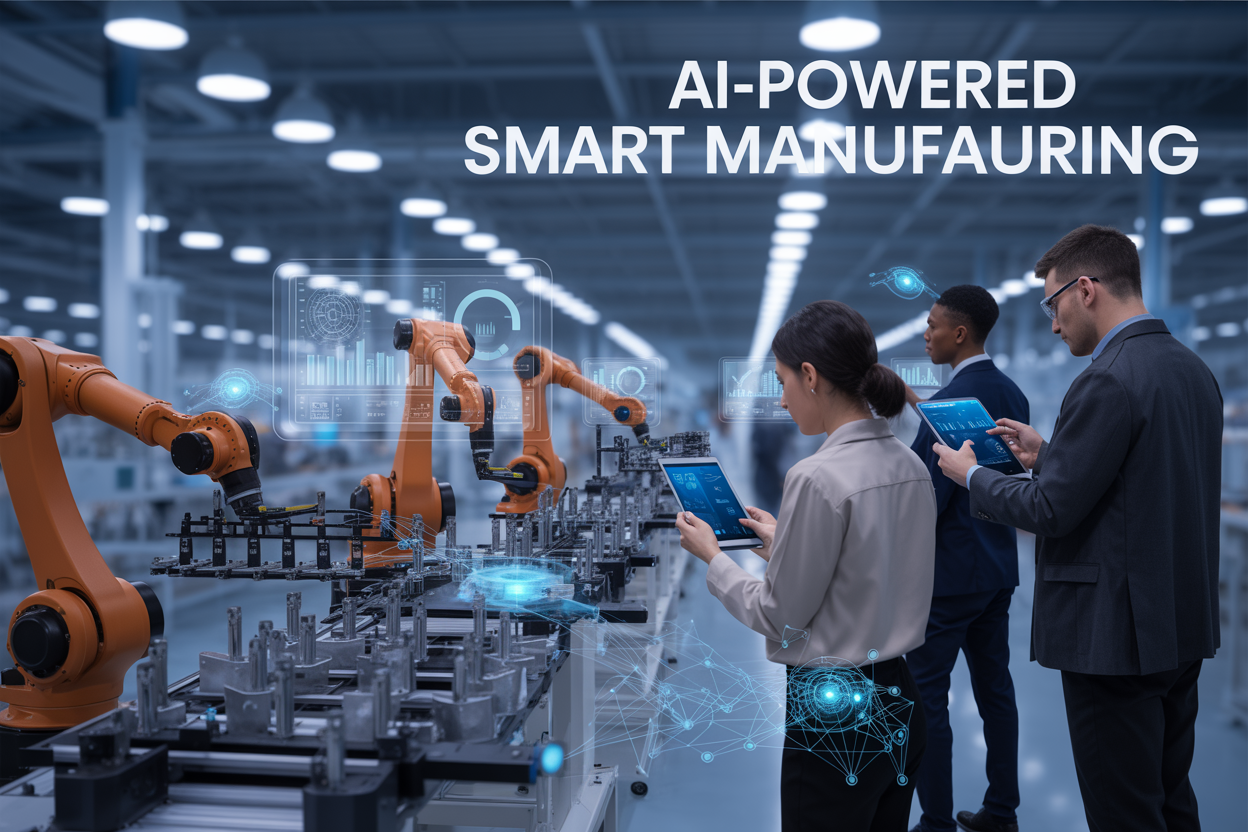
AI in manufacturing is revolutionizing how products get made, moving factories from reactive troubleshooting to proactive problem-solving. Manufacturing leaders, plant managers, and operations teams now have access to generative AI manufacturing tools that can predict equipment failures, run production lines autonomously, and create truly smart factory environments.
This guide breaks down how AI manufacturing transformation is happening right now across three key areas. You’ll learn how predictive manufacturing uses data to spot problems weeks before they shut down your line. We’ll explore autonomous manufacturing systems that adjust production in real-time without human intervention. Finally, you’ll discover how smart manufacturing connects every piece of equipment into one intelligent network that responds instantly to changes in demand or supply chain disruptions.
Whether you’re running a small production facility or managing multiple plants, understanding these Industry 4.0 AI applications will help you make smarter decisions about where to invest in manufacturing automation and how to measure real ROI from your technology investments.
Understanding AI and Generative AI Technologies in Manufacturing
Core AI Technologies Revolutionizing Factory Operations
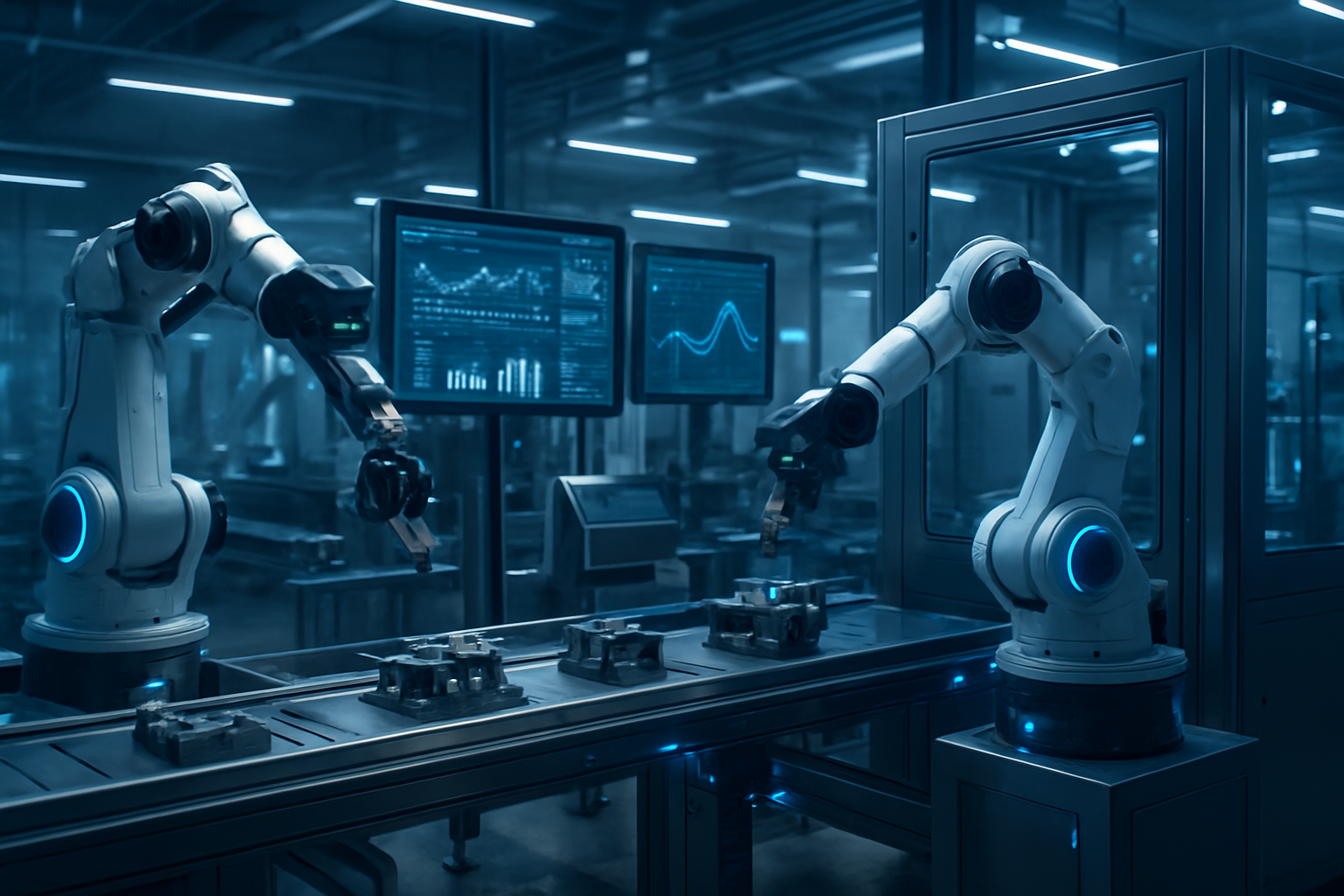
AI in manufacturing has moved beyond science fiction into everyday reality. Computer vision systems now inspect products with superhuman accuracy, catching defects that human eyes might miss. These smart cameras can analyze thousands of items per minute, identifying microscopic flaws, color variations, and dimensional inconsistencies that would normally require multiple quality control specialists.
Robotic process automation has transformed repetitive tasks across production lines. Unlike traditional robots that follow pre-programmed sequences, AI manufacturing transformation enables machines to adapt to changing conditions in real-time. They can adjust welding temperatures based on material thickness, modify assembly sequences when parts arrive out of order, or switch between product variants without manual reprogramming.
Predictive analytics engines continuously monitor equipment health through sensors embedded throughout machinery. These systems analyze vibration patterns, temperature fluctuations, and energy consumption to predict failures weeks before they occur. This shift from reactive to proactive maintenance dramatically reduces unexpected downtime and extends equipment lifespan.
Digital twins represent another breakthrough in intelligent manufacturing. These virtual replicas of physical systems allow manufacturers to test process changes, simulate equipment failures, and optimize workflows without disrupting actual production. Engineers can experiment with new configurations in the digital realm before implementing changes on the factory floor.
Generative AI Applications for Design and Process Optimization
Generative AI manufacturing applications are reshaping how products are conceived and manufactured. Design optimization algorithms can generate thousands of product variations, each optimized for specific criteria like weight reduction, material efficiency, or manufacturing cost. These AI systems explore design possibilities that human engineers might never consider, often creating solutions that appear unconventional but deliver superior performance.
Manufacturing process optimization through generative AI analyzes historical production data to identify inefficiencies and suggest improvements. These systems can recommend optimal machine settings, suggest alternative production sequences, or propose layout modifications that improve workflow. The AI continuously learns from each production run, refining its recommendations based on actual outcomes.
Quality control protocols benefit significantly from generative AI’s pattern recognition capabilities. The technology can generate synthetic defect data to train inspection systems more effectively, especially for rare but critical defects that don’t occur frequently enough to build robust training datasets. This approach dramatically improves defect detection rates while reducing false positives.
Supply chain optimization represents another powerful application. Generative AI models can simulate millions of scenarios involving supplier disruptions, demand fluctuations, and transportation delays. These simulations help manufacturers develop more resilient supply strategies and identify potential bottlenecks before they impact production.
Machine Learning Algorithms Driving Manufacturing Intelligence
Manufacturing automation powered by machine learning operates on multiple algorithmic approaches, each serving specific purposes. Supervised learning algorithms excel at quality prediction tasks, where historical data links process parameters to final product quality. These models can predict defect rates, dimensional accuracy, and performance characteristics based on real-time manufacturing conditions.
Unsupervised learning algorithms discover hidden patterns in production data without requiring labeled examples. They identify unusual operating conditions, detect emerging equipment problems, and group similar production scenarios for more targeted optimization. These algorithms often reveal correlations that weren’t obvious to human operators.
Reinforcement learning represents the cutting edge of smart factory intelligence. These algorithms learn optimal control strategies through trial and error, similar to how humans learn new skills. In manufacturing, reinforcement learning optimizes complex processes like chemical reactions, multi-stage assembly operations, and energy management across entire facilities.
Deep learning neural networks process complex sensor data streams in real-time. They can analyze acoustic signatures from machinery, interpret thermal imaging data, and process high-resolution visual inspections simultaneously. These networks continuously improve their accuracy as they process more data, becoming increasingly sophisticated in their analysis capabilities.
Time series forecasting algorithms predict equipment performance, demand patterns, and resource requirements. These models analyze cyclical patterns, seasonal trends, and external factors that influence manufacturing operations. Accurate forecasting enables better resource allocation, inventory management, and production scheduling.
Natural Language Processing for Enhanced Human-Machine Communication
Natural language processing transforms how operators interact with manufacturing systems. Voice-activated controls allow hands-free operation of machinery, enabling workers to adjust settings, request status updates, or report issues without interrupting their workflow. This technology proves especially valuable in environments where workers wear protective equipment that makes traditional interfaces difficult to use.
Conversational AI interfaces help operators troubleshoot problems by providing step-by-step guidance through complex procedures. These systems can interpret spoken descriptions of problems and suggest appropriate solutions, drawing from vast databases of technical documentation and historical repair records. The AI can even schedule maintenance appointments or order replacement parts based on voice commands.
Industry 4.0 AI incorporates natural language processing into documentation and training systems. Technical manuals become interactive, responding to specific questions about procedures, safety requirements, or equipment specifications. New employees can ask questions in plain language and receive immediate, accurate answers tailored to their specific role and experience level.
Real-time translation capabilities break down language barriers in global manufacturing operations. Teams spread across different countries can communicate effectively, with AI providing instant translation of technical conversations, safety instructions, and operational procedures. This capability becomes increasingly important as manufacturing operations become more globally distributed.
Sentiment analysis of operator feedback helps identify training needs, safety concerns, and process improvements. The AI analyzes written reports, verbal feedback, and even social media posts to understand worker satisfaction and identify potential issues before they escalate into larger problems.
Predictive Manufacturing: Anticipating Problems Before They Occur
Predictive Maintenance Reducing Equipment Downtime by 50%
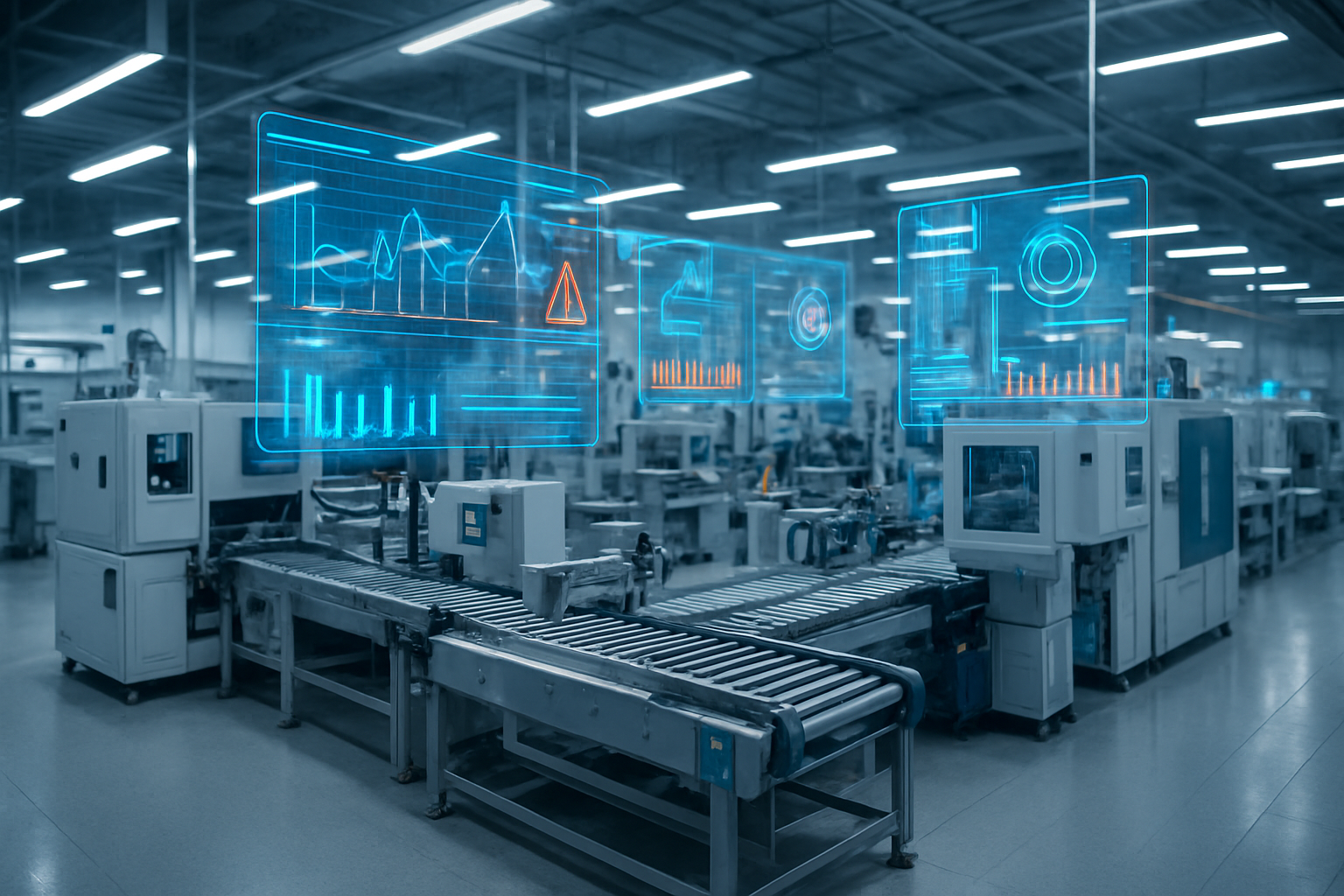
Machine breakdowns are expensive surprises that manufacturers can no longer afford. Predictive manufacturing transforms how companies maintain their equipment by using AI algorithms to monitor thousands of data points from sensors, vibration patterns, temperature readings, and operational metrics in real-time.
Unlike traditional scheduled maintenance that follows fixed timelines regardless of actual equipment condition, AI-powered predictive systems analyze historical failure patterns and current performance indicators to determine the optimal maintenance window. This approach has proven to reduce unplanned downtime by up to 50% across various manufacturing environments.
Key predictive maintenance capabilities include:
- Real-time monitoring of bearing temperatures, vibration frequencies, and motor performance
- Pattern recognition algorithms that identify subtle changes indicating potential failures
- Automated work order generation with precise timing recommendations
- Integration with inventory systems to ensure replacement parts availability
- Mobile alerts and dashboards for maintenance teams
Companies like Siemens and General Electric have deployed these systems across their manufacturing facilities, reporting significant cost savings and improved equipment reliability. The AI learns from each maintenance event, continuously refining its predictions and extending equipment lifespan while optimizing maintenance schedules.
Demand Forecasting Optimizing Inventory and Production Planning
Accurate demand prediction has become a competitive advantage in today’s volatile market conditions. AI in manufacturing revolutionizes forecasting by processing massive datasets that human analysts simply cannot handle effectively.
Modern demand forecasting systems analyze historical sales data, seasonal patterns, economic indicators, weather conditions, social media trends, and even global supply chain disruptions to predict future product demand with remarkable accuracy. Machine learning algorithms identify complex relationships between seemingly unrelated factors that traditional forecasting methods often miss.
Advanced forecasting capabilities include:
| Forecasting Element | Traditional Method | AI-Enhanced Method |
|---|---|---|
| Data Sources | Historical sales, basic seasonality | Multi-source real-time data |
| Accuracy Range | 60-75% | 85-95% |
| Update Frequency | Weekly/Monthly | Continuous real-time |
| External Factors | Limited consideration | Comprehensive analysis |
Companies using AI-driven demand forecasting report 20-30% reduction in inventory carrying costs while maintaining 99%+ product availability. The system automatically adjusts production schedules, raw material orders, and workforce allocation based on updated predictions, creating a responsive manufacturing ecosystem.
Quality Control Preventing Defects Through Early Detection Systems
Quality issues caught after production completion cost significantly more than problems identified during manufacturing. Smart factory technologies deploy computer vision and machine learning to inspect products at every stage of production, identifying defects that human inspectors might miss.
AI-powered quality control systems use high-resolution cameras, thermal imaging, and acoustic sensors to detect microscopic flaws, dimensional variations, surface imperfections, and assembly errors in real-time. These systems learn from each inspection, continuously improving their detection accuracy and reducing false positives.
Intelligent quality control features:
- Computer vision systems that inspect thousands of parts per minute
- Multi-spectral imaging for detecting internal defects and material inconsistencies
- Automatic rejection and sorting of defective products
- Root cause analysis linking defects to specific production parameters
- Continuous feedback loops to upstream processes for immediate corrections
Automotive manufacturers using these systems report defect rates dropping from industry averages of 3-5% to less than 0.1%. The AI doesn’t just identify problems – it traces defects back to their source, whether it’s a specific machine setting, material batch, or environmental condition, enabling immediate corrective action and preventing future occurrences.
Autonomous Manufacturing Systems: Self-Operating Smart Factories
Robotic Process Automation Eliminating Manual Repetitive Tasks
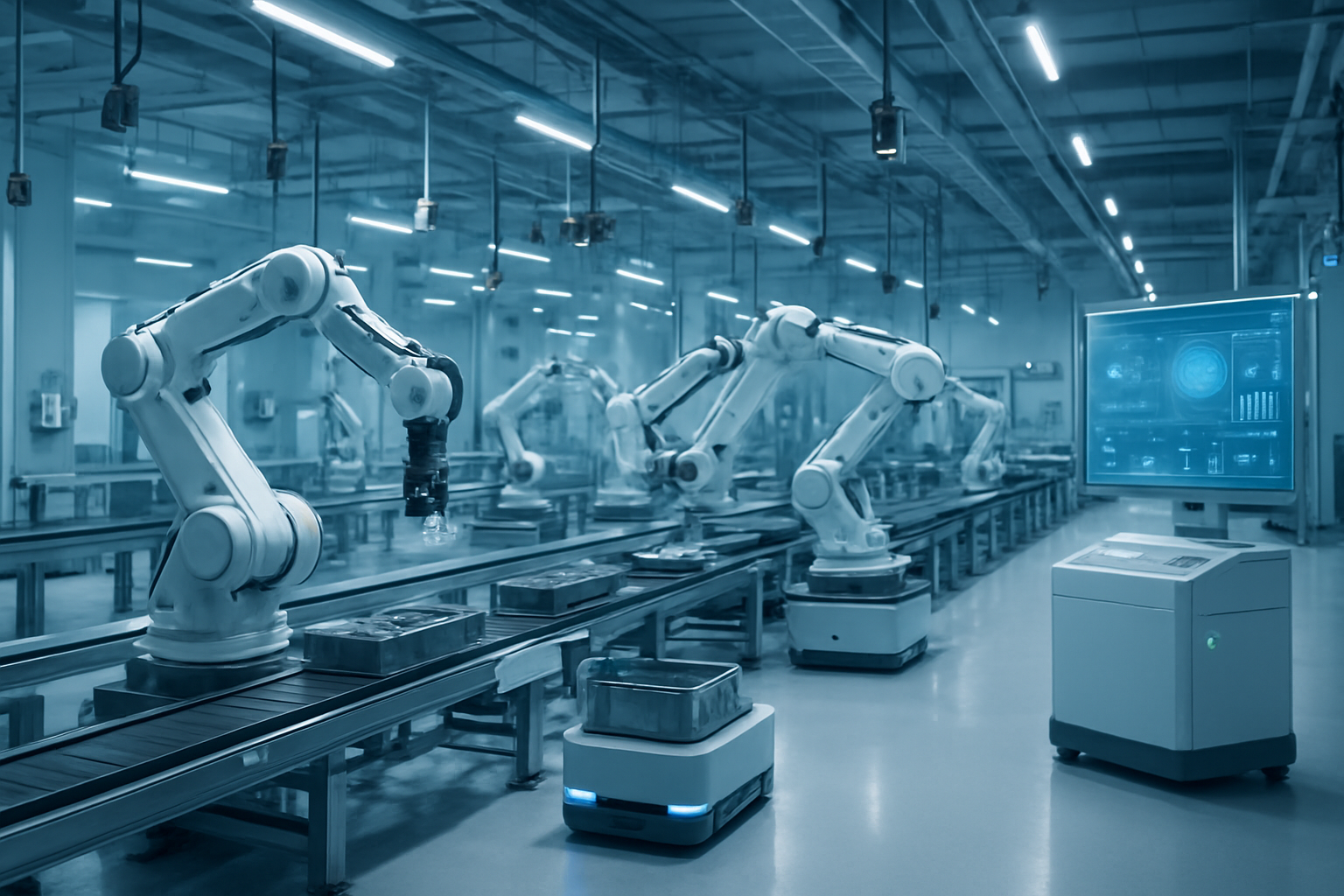
Autonomous manufacturing systems have revolutionized how factories operate by deploying sophisticated robotic process automation that handles mundane, repetitive tasks without human oversight. These AI-powered robots don’t just follow pre-programmed instructions – they adapt and learn from their environment in real-time. Modern robotic systems can perform complex assembly operations, material handling, and packaging processes while continuously optimizing their performance based on production data.
The beauty of these systems lies in their ability to work around the clock without fatigue, dramatically reducing production bottlenecks and human error rates. Advanced computer vision enables robots to identify defects, sort materials by quality grades, and even perform intricate welding operations with precision that surpasses human capabilities. Machine learning algorithms allow these robots to improve their efficiency over time, learning from millions of production cycles to perfect their movements and timing.
Self-Adjusting Production Lines Responding to Real-Time Conditions
Smart factory production lines equipped with AI manufacturing transformation technology can instantly reconfigure themselves based on changing production demands, material availability, or equipment performance. These intelligent systems monitor thousands of data points every second, from temperature and humidity to machine vibration patterns and energy consumption levels.
When demand spikes for a particular product variant, the production line automatically adjusts its settings, reallocating resources and modifying assembly sequences without stopping operations. If a sensor detects potential equipment failure, the system reroutes production through alternative pathways, maintaining output while scheduling predictive maintenance. This level of autonomous decision-making eliminates the delays traditionally associated with manual adjustments and production changeovers.
The integration of generative AI manufacturing capabilities enables these systems to simulate countless production scenarios and select optimal configurations in milliseconds. Digital twins of production equipment provide real-time modeling that predicts how adjustments will impact overall efficiency, quality, and throughput before implementing changes.
Autonomous Quality Inspection Ensuring Consistent Product Standards
AI-powered quality inspection systems have transformed manufacturing quality control from reactive to proactive monitoring. Advanced computer vision and machine learning algorithms can detect microscopic defects that human inspectors might miss, analyzing products at speeds impossible for manual inspection processes.
These autonomous systems use multiple inspection techniques simultaneously – thermal imaging, ultrasonic testing, dimensional analysis, and surface quality assessment – creating comprehensive quality profiles for every product. Machine learning models trained on millions of product images can identify patterns that indicate potential quality issues before they become visible defects.
Real-time quality data feeds directly into production control systems, enabling immediate adjustments to prevent defective products from continuing through the manufacturing process. When quality trends indicate potential issues, the system automatically fine-tunes machine parameters, adjusts material feed rates, or alerts maintenance teams to address root causes.
Intelligent Supply Chain Management Operating Without Human Intervention
Autonomous manufacturing extends beyond the factory floor into intelligent supply chain management systems that operate with minimal human oversight. These AI-driven systems continuously monitor inventory levels, supplier performance, and demand forecasting to maintain optimal material flow without stockouts or excess inventory.
Smart algorithms automatically generate purchase orders, schedule deliveries, and even negotiate contract terms with approved suppliers based on predefined parameters and real-time market conditions. The system can instantly switch between suppliers when quality issues arise or delivery delays threaten production schedules.
Integration with IoT sensors throughout the supply chain provides complete visibility into material location, condition, and estimated arrival times. Machine learning models analyze historical data, seasonal trends, and external factors like weather patterns or geopolitical events to predict supply chain disruptions before they impact production, automatically implementing contingency plans to maintain operations.
Smart Manufacturing: Connected and Responsive Production Environments
IoT Sensors Creating Real-Time Visibility Across Operations
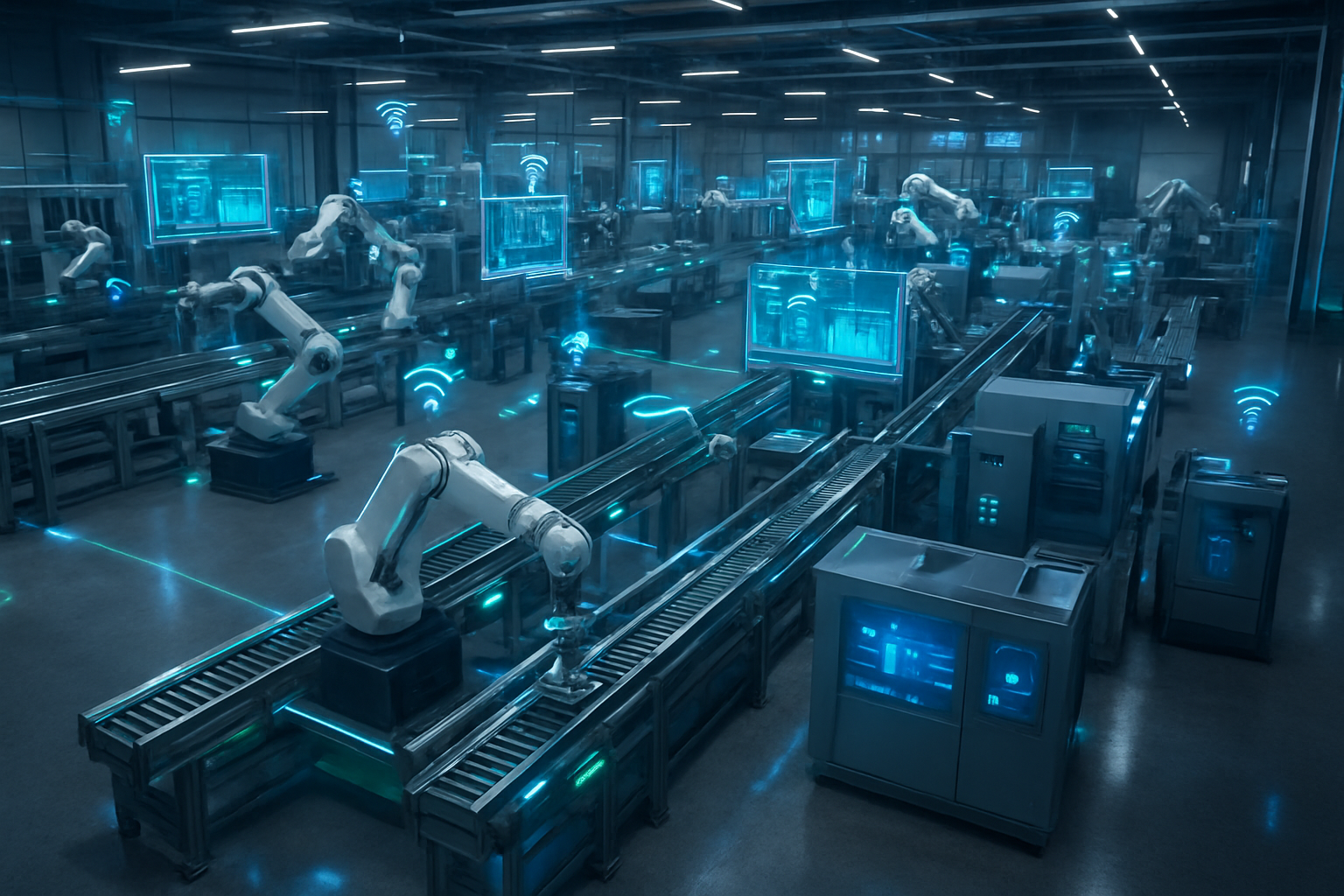
Modern manufacturing floors are becoming increasingly connected through networks of IoT sensors that capture data from every corner of production. These sensors monitor everything from machine vibrations and temperature fluctuations to production speeds and quality metrics, creating an unprecedented level of visibility into operations.
Smart factories deploy thousands of sensors across production lines, warehouse systems, and equipment to track performance in real-time. Temperature sensors ensure optimal conditions for sensitive processes, while vibration monitors detect early signs of equipment wear. Flow sensors track material movement, and quality sensors identify defects as they occur, not hours or days later.
The real power comes from connecting these sensors to centralized AI in manufacturing systems that can process massive amounts of data instantly. When a conveyor belt starts showing unusual vibration patterns, the system alerts maintenance teams before a breakdown occurs. If product quality drifts outside specifications, adjustments happen automatically without human intervention.
This level of connectivity transforms manufacturing automation from reactive to proactive. Production managers can see bottlenecks forming, predict when machines need maintenance, and optimize workflows based on real-time conditions. The result is dramatically reduced downtime, improved quality control, and more efficient resource allocation.
Digital Twins Enabling Virtual Testing and Optimization
Digital twins represent one of the most powerful applications of smart factory technology, creating virtual replicas of physical manufacturing systems. These sophisticated models mirror real-world operations with remarkable accuracy, allowing manufacturers to test changes, optimize processes, and troubleshoot problems in a virtual environment before implementing them on the factory floor.
Manufacturing companies use digital twins to simulate everything from individual machine operations to entire production lines. When engineers want to test a new production sequence or evaluate equipment modifications, they run scenarios in the digital environment first. This approach eliminates costly trial-and-error approaches and reduces the risk of production disruptions.
The technology becomes even more powerful when combined with AI manufacturing transformation capabilities. Machine learning algorithms analyze data from both the physical system and its digital twin to identify optimization opportunities. For example, if the digital twin shows that adjusting conveyor speeds could improve throughput by 15%, engineers can validate this change virtually before implementing it.
Real-time synchronization between physical and digital systems means the twin continuously learns and adapts. As conditions change on the factory floor, the digital model updates to reflect new realities. This dynamic relationship enables continuous improvement and helps manufacturers stay ahead of potential issues.
Smart Energy Management Reducing Operational Costs
Energy consumption represents a significant portion of manufacturing costs, making smart energy management a critical component of intelligent manufacturing strategies. AI-powered systems now monitor and optimize energy usage across entire facilities, identifying inefficiencies and automatically adjusting consumption patterns to reduce costs.
Smart energy systems track power usage at the machine level, identifying which equipment consumes the most energy and when. This granular visibility reveals opportunities for optimization that weren’t previously visible. Peak demand charges can be reduced by shifting non-critical operations to off-peak hours, while equipment scheduling algorithms ensure maximum efficiency.
Predictive algorithms analyze production schedules alongside energy pricing data to optimize when different processes run. If energy costs spike during certain hours, the system can automatically reschedule non-urgent operations to cheaper time periods. Some manufacturers have reduced energy costs by 20-30% through these intelligent scheduling approaches.
The integration extends beyond individual machines to include building systems like HVAC, lighting, and compressed air. When production areas are idle, energy systems automatically reduce heating, cooling, and lighting levels. Smart sensors detect occupancy and adjust environmental controls accordingly, ensuring comfort when needed while eliminating waste when areas are empty.
| Energy Management Feature | Typical Cost Reduction | Implementation Complexity |
|---|---|---|
| Peak demand optimization | 15-25% | Medium |
| Automated scheduling | 10-20% | Low |
| Equipment efficiency monitoring | 8-15% | Medium |
| Building system integration | 12-18% | High |
Measurable Business Benefits and ROI of AI Implementation
Cost Reduction Through Operational Efficiency Gains
Manufacturing companies implementing AI in manufacturing see immediate cost reductions through smarter operations. Predictive maintenance alone cuts equipment downtime by up to 50%, saving millions in lost production. AI-powered systems monitor machine performance continuously, catching potential failures weeks before they happen. This beats the old reactive approach where companies waited for breakdowns to fix problems.
Energy consumption drops significantly when AI optimizes production schedules and equipment usage. Smart algorithms adjust machinery speed, temperature, and power consumption based on real-time demand, reducing energy costs by 20-30%. Inventory management becomes razor-sharp with AI predicting exact material needs, eliminating excess stock and storage costs.
Waste reduction represents another major savings area. AI manufacturing transformation enables precise quality control that spots defects early in production, preventing entire batches from becoming scrap. Companies report waste reduction of 35-40% after implementing intelligent manufacturing systems.
Revenue Growth via Enhanced Product Quality and Speed
AI implementation manufacturing directly boosts revenue through faster production cycles and superior product quality. Generative AI manufacturing helps design teams create new products 60% faster than traditional methods, getting innovations to market ahead of competitors.
Quality improvements translate to higher customer satisfaction and premium pricing opportunities. AI-powered inspection systems catch defects human eyes miss, achieving near-zero defect rates. This quality leap allows manufacturers to enter high-end market segments and command better prices.
Production speed increases dramatically with autonomous manufacturing systems coordinating complex workflows without human intervention. Companies report 25-40% faster production times while maintaining quality standards. Smart factory implementations enable mass customization at scale, opening new revenue streams from personalized products.
Competitive Advantage Through Data-Driven Decision Making
Data becomes a strategic weapon when AI transforms raw information into actionable insights. Manufacturing leaders make faster, more accurate decisions using real-time analytics from connected production systems. This agility helps companies respond quickly to market changes and customer demands.
Supply chain optimization through AI provides competitive advantages in cost and delivery speed. Predictive manufacturing helps anticipate material shortages and adjust sourcing strategies before competitors recognize problems. Companies gain market share by consistently meeting delivery promises while others struggle with disruptions.
Customer relationships strengthen when manufacturers can predict and prevent quality issues before products reach the market. This proactive approach builds trust and reduces warranty costs, creating long-term competitive positioning.
Workforce Transformation and Skill Development Opportunities
AI creates opportunities for workforce advancement rather than replacement. Workers transition from routine tasks to higher-value roles managing AI systems and analyzing data insights. This shift increases job satisfaction and employee retention while building future-ready skills.
Training programs for Industry 4.0 AI skills become investments in competitive advantage. Employees learn to work alongside intelligent systems, becoming more productive and valuable to the organization. Companies that invest in workforce development attract top talent and reduce recruitment costs.
New job categories emerge around AI system management, data analysis, and human-machine collaboration. These roles typically offer higher compensation and career growth opportunities, improving employee satisfaction and company culture.
Implementation Strategies for Successful AI Adoption

Assessing Current Manufacturing Readiness for AI Integration
Before jumping into AI implementation manufacturing, manufacturers need to honestly evaluate their current technological foundation. This readiness assessment serves as the roadmap for successful AI manufacturing transformation.
Start by auditing your existing data infrastructure. Smart factory initiatives require clean, organized data flowing from sensors, production equipment, and quality systems. Many manufacturers discover their data sits in isolated silos across different departments. Production data might live in one system while quality metrics exist in another, making AI integration challenging.
Evaluate your workforce’s technical capabilities. AI in manufacturing demands employees who can interpret AI insights and make data-driven decisions. Identify skill gaps early and plan training programs that bridge technical knowledge with practical manufacturing experience. Your maintenance team, for example, needs to understand predictive manufacturing alerts and know how to act on AI recommendations.
Review your current automation level. Facilities with existing programmable logic controllers (PLCs) and manufacturing execution systems (MES) typically have smoother AI adoption paths. Legacy equipment without digital interfaces may require additional investment in sensors and connectivity before AI implementation becomes viable.
Network infrastructure deserves special attention. Real-time AI applications need robust, low-latency connections throughout the production floor. Wireless dead zones or bandwidth limitations can undermine even the best-planned AI initiatives.
Selecting the Right AI Technologies for Your Production Goals
The AI landscape offers numerous options, making technology selection critical for manufacturing automation success. Match AI capabilities with specific production challenges rather than chasing the latest trends.
Predictive maintenance represents an excellent starting point for most manufacturers. Machine learning algorithms excel at detecting equipment anomalies using vibration sensors, temperature readings, and operational data. This approach delivers measurable ROI through reduced downtime and optimized maintenance schedules.
Consider computer vision systems for quality control applications. These systems can identify product defects faster and more consistently than human inspectors, especially for high-volume production lines. Computer vision integrates well with existing quality management systems and provides immediate feedback for process adjustments.
For complex scheduling and optimization challenges, explore advanced analytics platforms. These systems help balance production demands, material availability, and resource constraints. They work particularly well in facilities with multiple product lines or frequent changeovers.
Generative AI manufacturing applications are emerging for design optimization and process improvement. These tools can suggest equipment configurations or identify process variations that improve efficiency. However, generative AI requires significant computational resources and data science expertise.
| AI Technology | Best Use Case | Implementation Complexity | Typical ROI Timeline |
|---|---|---|---|
| Predictive Maintenance | Equipment monitoring | Medium | 6-12 months |
| Computer Vision | Quality inspection | Low | 3-6 months |
| Process Optimization | Production scheduling | High | 12-18 months |
| Generative Design | Product development | Very High | 18-24 months |
Change Management Best Practices for Smooth Technology Transition
Successful AI adoption depends as much on people as technology. Change management determines whether AI initiatives deliver promised benefits or become expensive failed experiments.
Engage frontline workers from the project’s beginning. Production operators, quality technicians, and maintenance staff possess deep knowledge about equipment behavior and process variations. Their insights improve AI model accuracy while building buy-in for new technologies. Create feedback loops where workers can report AI system performance and suggest improvements.
Develop clear communication about AI’s role in daily operations. Many employees fear AI will replace their jobs, creating resistance that undermines implementation efforts. Emphasize how AI enhances human capabilities rather than replacing workers. Show how predictive manufacturing alerts help maintenance teams work more efficiently or how quality AI helps operators catch problems earlier.
Implement AI systems gradually through pilot programs. Start with non-critical applications where failures won’t disrupt production. Success stories from pilot projects build confidence and momentum for larger implementations. Document lessons learned and share them across the organization.
Provide comprehensive training that goes beyond technical features. Workers need to understand why AI recommendations make sense and when to override system suggestions. This contextual knowledge prevents blind reliance on AI while building trust in the technology.
Establish clear governance policies for AI decision-making. Define when human operators should intervene and create escalation procedures for unusual situations. These policies prevent confusion during critical moments while maintaining operational safety standards.
Monitor adoption metrics beyond technical performance. Track user engagement, feedback sentiment, and process compliance to identify areas needing additional support. Regular check-ins with affected teams help address concerns before they become major obstacles.
AI and generative AI are reshaping manufacturing in ways that seemed impossible just a few years ago. From predicting equipment failures before they happen to creating fully autonomous production lines, these technologies offer manufacturers the chance to boost efficiency, cut costs, and stay competitive. Smart factories that adapt in real-time and connected systems that respond instantly to changes are no longer futuristic concepts—they’re happening right now.
The business case for AI adoption is clear, with companies seeing significant returns on investment through reduced downtime, improved quality, and streamlined operations. Success comes down to having the right implementation strategy and taking a thoughtful approach to integration. Start small, focus on areas where AI can make the biggest impact, and build from there. The manufacturers who embrace these technologies today will be the ones setting the pace tomorrow.