AWS Transform Explained: The Agentic AI Service Modernizing Windows, Mainframe & VMware Workloads
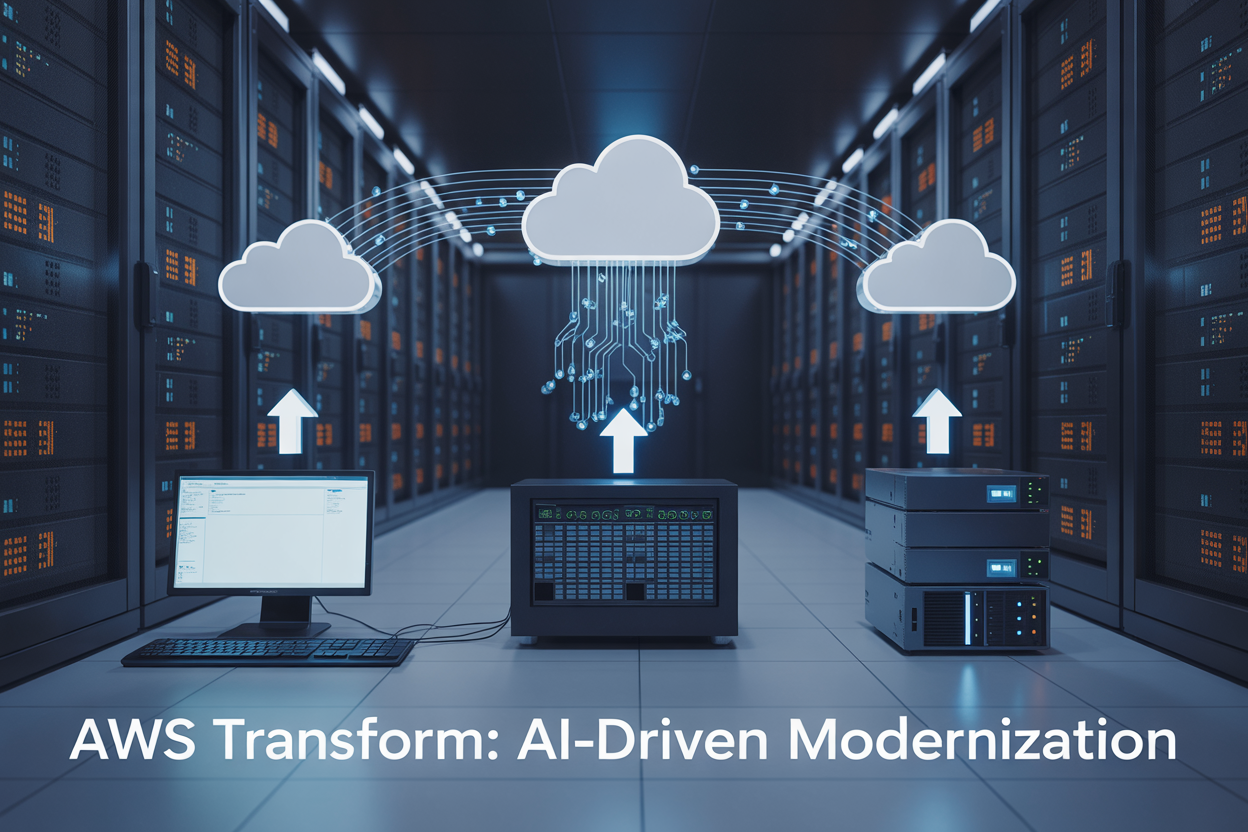
AWS Transform represents a game-changing approach to legacy system migration, using agentic AI transformation to automate and accelerate the modernization of your most critical business applications. This AI-driven infrastructure modernization service tackles the complex challenge of moving Windows workloads, mainframe systems, and VMware environments to the cloud without the traditional headaches and massive resource requirements.
Who This Guide Is For:
IT leaders, cloud architects, and enterprise decision-makers planning large-scale legacy application modernization projects who need to understand how AWS Transform can streamline their cloud-native transformation journey.
We’ll explore how agentic AI revolutionizes the entire modernization process by automatically analyzing, planning, and executing migrations with minimal human intervention. You’ll discover the specific benefits of Windows workload modernization and mainframe migration AWS capabilities, including real-world use cases and implementation strategies. Finally, we’ll break down the cost savings and ROI potential of VMware cloud migration through this intelligent automation platform.
Ready to see how AWS Application Modernization through Transform can cut your migration timeline from years to months while reducing risk and complexity? Let’s dive into the technical details and business impact of this revolutionary service.
Understanding AWS Application Modernization and Transformation Service
Core Capabilities and AI-Powered Automation Features
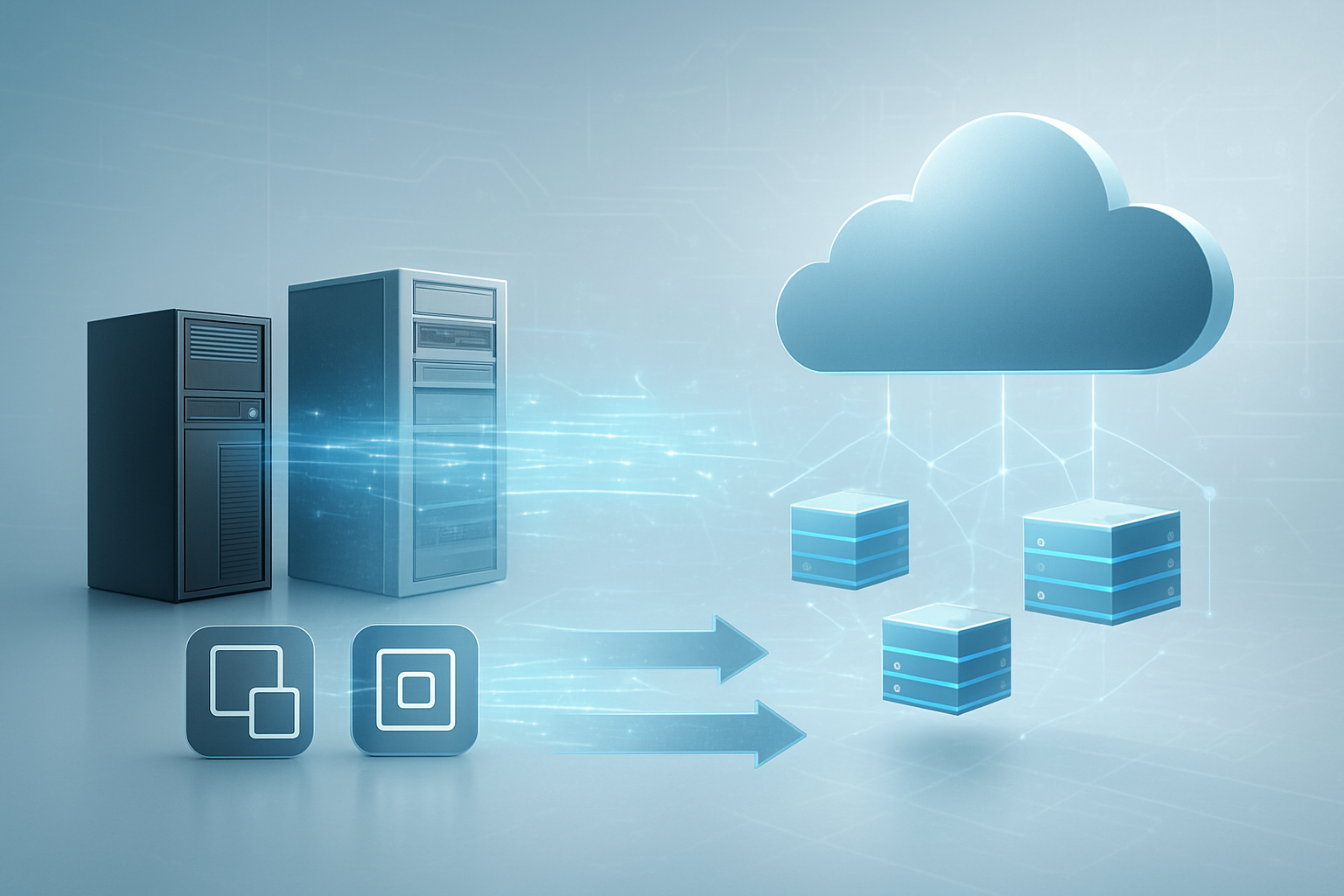
AWS Application Modernization brings together cutting-edge Agentic AI transformation with practical enterprise migration tools to tackle the most complex legacy system challenges. The service combines machine learning algorithms with automated assessment capabilities that can scan, analyze, and understand legacy codebases in ways that traditional migration tools simply can’t match.
The AI-powered automation features work like having a team of senior architects and developers analyzing your systems 24/7. These intelligent agents can identify code patterns, dependencies, and business logic buried deep within decades-old applications. They automatically generate modernization recommendations, suggest cloud-native alternatives, and even create migration blueprints that would typically take human experts months to develop.
What sets this service apart is its ability to learn from each migration project, continuously improving its recommendations and automation capabilities. The AI agents can handle complex scenarios like understanding COBOL business logic in mainframe applications or identifying Windows-specific dependencies that could break during cloud migration.
The automation extends beyond just assessment – it includes code transformation, infrastructure provisioning, and even testing automation. This means organizations can reduce their migration timelines from years to months while maintaining confidence in the modernization outcomes.
Target Workload Types: Windows Servers, Mainframe Systems, and VMware Environments
Windows workload modernization represents one of the most common use cases, particularly for organizations running legacy .NET Framework applications, SQL Server databases, and Active Directory-dependent systems. The service can automatically assess Windows Server environments, identify modernization opportunities, and suggest paths to cloud-native architectures using containers or serverless technologies.
Mainframe migration AWS capabilities focus on the most challenging enterprise transformations. These systems often contain critical business logic written in COBOL, PL/I, or Assembler that’s been running unchanged for decades. The AI agents can parse these legacy languages, understand business rules, and suggest modern equivalents using managed AWS services like Lambda, RDS, or even recommend complete re-platforming strategies.
VMware cloud migration scenarios benefit from the service’s ability to understand virtualized workloads and their interdependencies. The AI can map VMware vSphere environments, identify right-sizing opportunities, and recommend whether workloads should move to EC2, containers, or serverless architectures based on actual usage patterns and performance characteristics.
The service handles mixed environments particularly well, recognizing that most enterprises don’t have just one type of legacy system. It can coordinate migrations across multiple platforms while maintaining business continuity and data consistency.
Key Differentiators from Traditional Migration Approaches
Traditional migration approaches rely heavily on manual assessment, extensive planning phases, and custom scripting that takes months to develop and test. AWS Transform service flips this model by using AI-driven infrastructure modernization to automate the heavy lifting while keeping humans in control of strategic decisions.
The speed difference is dramatic. Where traditional approaches might require 6-12 months just for assessment and planning, the AI agents can complete comprehensive analysis in weeks. They don’t just create inventory spreadsheets – they provide actionable insights about modernization paths, cost implications, and risk factors.
Risk reduction comes through continuous validation and testing. The AI agents can simulate migration scenarios, predict potential issues, and even suggest rollback strategies before any actual migration begins. This predictive capability helps organizations avoid the costly surprises that often derail traditional migration projects.
Cost optimization happens throughout the process rather than as an afterthought. The AI continuously analyzes resource usage patterns, suggests right-sizing opportunities, and identifies services that could benefit from reserved instances or spot pricing. This ongoing optimization can result in significantly better ROI compared to lift-and-shift approaches that simply move existing architectures to the cloud without optimization.
How Agentic AI Revolutionizes Legacy System Modernization
Intelligent Assessment and Dependency Mapping Capabilities
Agentic AI transformation brings a game-changing approach to understanding complex legacy infrastructures. Traditional assessment methods often miss critical dependencies between applications, databases, and network components. AWS’s AI-driven assessment capabilities automatically scan entire environments, creating detailed visual maps that show how different systems connect and communicate.
The AI analyzes application code, database schemas, network traffic patterns, and configuration files to build comprehensive dependency graphs. This intelligent discovery process identifies hidden relationships that manual assessments typically overlook. For example, when modernizing a mainframe system, the AI can detect obscure batch job dependencies or shared data pools that could break during migration if not properly addressed.
Real-time monitoring during the assessment phase captures dynamic interactions between systems. The AI observes actual workload behavior, performance patterns, and resource consumption over time. This behavioral analysis helps predict how applications will perform in cloud environments and identifies potential bottlenecks before they become migration roadblocks.
Automated Code Conversion and Application Refactoring
Legacy application modernization gets dramatically simplified through AI-powered code transformation. Instead of manual rewriting, agentic AI analyzes existing codebases and automatically converts them to cloud-native architectures. This includes transforming monolithic applications into microservices, updating deprecated APIs, and optimizing code for containerized environments.
The AI understands multiple programming languages and frameworks, making it capable of handling diverse legacy environments. COBOL mainframe applications can be converted to Java or Python, while older .NET Framework applications get upgraded to .NET Core for better cloud compatibility. The system preserves business logic while modernizing the underlying technical implementation.
Smart refactoring goes beyond simple code conversion. The AI optimizes application architecture for cloud deployment, introducing patterns like circuit breakers, retry mechanisms, and auto-scaling capabilities. Database interactions get modernized from traditional SQL queries to cloud-native database services, improving performance and reducing operational overhead.
Reduced Manual Effort and Accelerated Migration Timelines
AI-driven infrastructure modernization cuts migration timelines by 60-80% compared to traditional approaches. Manual tasks that typically take weeks or months get completed in hours or days. This acceleration comes from automating repetitive processes like code analysis, testing, and validation across thousands of application components.
The reduction in manual effort extends beyond speed improvements. Human errors that commonly plague large-scale migrations get virtually eliminated through AI validation. The system continuously checks configurations, validates data integrity, and ensures security policies remain intact throughout the transformation process.
Resource allocation becomes more efficient when AI handles routine migration tasks. Technical teams can focus on strategic decisions and complex problem-solving rather than spending time on mechanical conversion work. This shift allows organizations to complete multiple modernization projects simultaneously without proportionally increasing staffing requirements.
Enhanced Accuracy in Complex Workload Transformations
Complex legacy workloads often contain intricate business rules and specialized configurations that are difficult to replicate in modern environments. Agentic AI excels at preserving these nuances while adapting them for cloud deployment. The AI maintains semantic equivalence between original and transformed systems, ensuring business functionality remains unchanged.
Multi-layer validation processes verify transformation accuracy at every step. The AI compares output behaviors between legacy and modernized systems, running parallel tests to catch any discrepancies. This continuous validation approach identifies issues early in the migration process when they’re easier and cheaper to fix.
Performance optimization happens automatically during transformation. The AI analyzes workload patterns and applies cloud-specific optimizations like auto-scaling policies, load balancing configurations, and resource rightsizing. These optimizations often result in better performance in the cloud environment compared to the original legacy setup.
| Traditional Migration | AI-Driven Transformation |
|---|---|
| 6-12 month timelines | 2-4 month completion |
| 70% manual effort | 90% automated processes |
| 15-25% error rates | <5% error occurrence |
| Limited scalability testing | Comprehensive performance validation |
Windows Workload Modernization Benefits and Use Cases
Seamless transition from on-premises Windows servers to AWS
Moving Windows workloads to AWS has never been more straightforward, thanks to AWS Application Modernization services powered by Agentic AI transformation capabilities. Organizations can migrate their entire Windows server infrastructure without the typical headaches that come with traditional migration approaches.
The process starts with intelligent discovery and assessment tools that automatically catalog your existing Windows environments. These tools identify dependencies, performance patterns, and optimization opportunities across your server landscape. Unlike manual migration planning that takes months, AI-driven assessment completes comprehensive analysis in days.
AWS provides multiple migration paths for Windows workloads, including lift-and-shift operations and modernization approaches. The Agentic AI system recommends the best strategy based on your specific applications and business requirements. For instance, older Windows Server 2008 R2 systems might benefit from immediate modernization to Windows Server 2022 on AWS, while newer systems could simply migrate with minimal changes.
The migration timeline shrinks dramatically compared to traditional methods. What used to take 12-18 months now completes in 3-6 months for most organizations. Real-world examples show companies migrating hundreds of Windows servers with zero downtime during business hours, thanks to intelligent scheduling and automated rollback capabilities.
Application compatibility preservation during migration
Legacy application modernization becomes less risky when AWS Transform service maintains application functionality throughout the migration process. The system creates detailed compatibility matrices that predict potential issues before they occur, allowing teams to address problems proactively.
Windows-specific applications often rely on particular registry settings, COM objects, or specific file system behaviors. The Agentic AI transformation engine maps these dependencies and ensures they remain functional in the AWS environment. This includes preserving Active Directory integrations, maintaining group policies, and keeping application-specific configurations intact.
Testing automation plays a crucial role in compatibility assurance. The system automatically generates test cases based on application behavior patterns observed during the discovery phase. These tests run continuously throughout migration, catching compatibility issues immediately rather than after deployment.
| Compatibility Challenge | Traditional Approach | AI-Driven Solution |
|---|---|---|
| Registry Dependencies | Manual documentation | Automatic mapping and recreation |
| COM Object Registration | Manual scripting | Intelligent automation |
| File System Permissions | Time-intensive testing | Real-time validation |
| Service Dependencies | Trial-and-error fixes | Predictive resolution |
Cost optimization through rightsizing and resource efficiency
Windows workload modernization delivers substantial cost savings through intelligent resource optimization. AWS Transform service analyzes actual resource utilization patterns rather than relying on peak capacity planning that often leads to overprovisioning.
Most organizations discover they’ve been running Windows servers at 15-25% average CPU utilization. The AI system identifies these inefficiencies and recommends appropriate instance types that match actual usage patterns. This rightsizing typically reduces compute costs by 40-60% without impacting performance.
Storage optimization provides additional savings opportunities. The system identifies duplicate data, unused storage allocations, and opportunities to leverage different storage tiers. Legacy Windows environments often accumulate years of unnecessary data that consumes expensive storage resources.
Memory optimization targets another significant cost area. Many Windows applications reserve more RAM than they actually use, leading to expensive instance selections. The AI analysis reveals true memory requirements and suggests more cost-effective configurations.
Resource scheduling adds another layer of optimization. Development and testing Windows workloads don’t need 24/7 availability. Automated scheduling can reduce costs by 70% for non-production environments while maintaining full functionality during business hours.
The combined effect of these optimizations often results in total Windows infrastructure costs dropping by 50-70% while improving performance and reliability. Organizations typically recover their migration investment within 8-12 months through these ongoing operational savings.
Mainframe Migration Advantages and Implementation Strategy

Breaking down monolithic mainframe applications into microservices
Traditional mainframe systems operate as massive, interconnected monoliths where business logic, data access, and user interfaces are tightly coupled. AWS Application Modernization services address this challenge by implementing intelligent decomposition strategies that identify natural boundaries within legacy applications.
The transformation process begins with comprehensive application mapping, where AI algorithms analyze code dependencies, transaction flows, and data relationships. This automated analysis reveals logical separation points where monolithic functions can be cleanly extracted into independent microservices. Each identified service maintains specific business capabilities while communicating through well-defined APIs.
Agentic AI transformation tools excel at recognizing patterns in decades-old code that human analysts might miss. They identify shared data structures, common business rules, and transactional boundaries that serve as natural microservice boundaries. This approach preserves business logic integrity while enabling modern architectural patterns.
The resulting microservices architecture offers significant advantages: individual services can be updated independently, scaled based on demand, and deployed using modern DevOps practices. Teams can work on different services simultaneously without affecting the entire system, dramatically improving development velocity and reducing deployment risks.
COBOL and legacy language transformation capabilities
Legacy system migration faces a critical challenge: millions of lines of COBOL code powering essential business operations. AWS Transform service addresses this through advanced language transformation engines that convert COBOL applications into modern programming languages like Java or Python.
The conversion process goes beyond simple syntax translation. AI-powered engines understand COBOL’s unique characteristics, including its record structures, file handling mechanisms, and computational logic. They maintain semantic equivalence while adapting code to object-oriented paradigms and modern development frameworks.
| Legacy Language | Target Language | Transformation Features |
|---|---|---|
| COBOL | Java/Python | Business logic preservation |
| PL/I | C#/.NET | Data structure mapping |
| Assembler | Modern equivalents | Performance optimization |
| JCL | Container orchestration | Batch job modernization |
The transformation maintains business logic accuracy while introducing modern programming constructs. Error handling patterns are updated to use exception-based approaches, while data validation rules are converted to contemporary frameworks. Code documentation is automatically generated, making the transformed applications maintainable by modern development teams.
Data migration and database modernization support
Mainframe migration AWS services provide comprehensive data transformation capabilities that address both structural and operational aspects of legacy databases. The process begins with detailed schema analysis, identifying relationships, constraints, and business rules embedded within mainframe data structures.
Data migration tools handle complex transformations between mainframe file systems (like VSAM) and modern relational or NoSQL databases. They preserve data integrity while optimizing storage patterns for cloud environments. Hierarchical data structures are flattened appropriately, while maintaining referential relationships essential for business operations.
Real-time synchronization capabilities ensure zero-downtime migrations for critical systems. Data validation engines compare source and target systems continuously, identifying and resolving discrepancies automatically. This approach allows organizations to maintain parallel systems during transition periods, reducing migration risks significantly.
Database modernization extends beyond simple data movement. Legacy batch processing jobs are converted to real-time or near-real-time operations using modern data streaming technologies. Reporting systems are upgraded to support interactive analytics and business intelligence platforms, providing enhanced decision-making capabilities.
Risk mitigation through automated testing and validation
AI-driven infrastructure modernization incorporates sophisticated testing frameworks that validate functional equivalence between legacy and modernized systems. Automated test generation analyzes existing mainframe applications to create comprehensive test suites covering business scenarios, edge cases, and error conditions.
Regression testing becomes particularly crucial during legacy application modernization. AI-powered testing tools simulate production workloads against transformed applications, comparing outputs with original mainframe systems. Any discrepancies trigger detailed analysis and correction processes, ensuring business continuity throughout the migration.
Performance validation ensures modernized applications meet or exceed mainframe performance characteristics. Load testing tools simulate peak transaction volumes, validating that cloud-native architectures can handle production demands. Response time analysis identifies potential bottlenecks before they impact business operations.
Rollback capabilities provide additional safety nets during migration phases. Automated monitoring detects anomalies in real-time, triggering failover mechanisms that redirect traffic back to stable mainframe systems if needed. This approach allows organizations to proceed with confidence, knowing they can quickly recover from unexpected issues during the transformation process.
VMware Infrastructure Transformation and Cloud-Native Adoption
Simplified migration from VMware vSphere to AWS native services
Moving from VMware vSphere to AWS doesn’t have to feel like rebuilding everything from scratch. AWS Transform service makes this transition smoother by automatically analyzing your existing VMware infrastructure and mapping it to equivalent AWS services. The AI-powered assessment identifies which workloads can move to EC2 instances, which ones benefit from containerization, and which applications need serverless architectures like Lambda.
The migration process starts with AWS Application Discovery Service scanning your VMware environment to create a detailed inventory of virtual machines, dependencies, and performance patterns. This data feeds into the transformation recommendations, where agentic AI suggests the most cost-effective AWS services for each workload.
For compute-heavy applications, the service maps VMware VMs to appropriately sized EC2 instances, often recommending newer instance types that offer better price-performance ratios. Storage migrations typically involve transitioning from VMware datastores to Amazon EBS or S3, depending on access patterns and performance requirements.
Network configurations get translated from VMware’s virtual networking to Amazon VPC setups, maintaining security groups and traffic flows while optimizing for cloud-native patterns. The automated approach reduces manual configuration errors and speeds up the overall migration timeline.
Container orchestration and Kubernetes integration options
VMware cloud migration opens doors to modern container orchestration that wasn’t practical in traditional virtualized environments. AWS Transform identifies applications suitable for containerization and provides migration paths to Amazon EKS (Elastic Kubernetes Service) or Amazon ECS (Elastic Container Service).
Applications running on VMware often benefit from containerization because it removes the overhead of maintaining full operating systems for each workload. The transformation process can package existing applications into Docker containers and deploy them on Kubernetes clusters, creating more efficient resource usage.
EKS integration brings enterprise-grade Kubernetes management without the complexity of maintaining control planes. Your development teams can focus on application logic while AWS handles cluster upgrades, security patches, and infrastructure scaling. The service also supports hybrid deployments where some workloads remain on-premises while others move to managed Kubernetes.
For simpler containerized applications, Amazon ECS offers a lighter-weight alternative to full Kubernetes orchestration. The choice between EKS and ECS depends on your team’s Kubernetes expertise and the complexity of your application architecture.
Container registries through Amazon ECR store your application images securely, with vulnerability scanning and lifecycle policies that automatically clean up old images to control storage costs.
Performance optimization and scalability improvements
Cloud-native transformation delivers performance gains that traditional VMware environments struggle to match. Auto-scaling capabilities automatically adjust compute resources based on actual demand, eliminating the overprovisioning common in virtualized data centers.
Amazon CloudWatch provides granular monitoring that wasn’t available in VMware environments, tracking everything from CPU utilization to custom application metrics. This visibility enables fine-tuning that improves both performance and cost efficiency.
Load balancing through Application Load Balancer or Network Load Balancer distributes traffic more intelligently than traditional VMware load balancing solutions. These services handle SSL termination, health checks, and automatic failover without manual intervention.
Storage performance improvements come from migrating to Amazon EBS with provisioned IOPS or transitioning frequently accessed data to high-performance storage tiers. The elastic nature of cloud storage means you can adjust performance characteristics without hardware purchases or downtime.
Database workloads often see dramatic improvements when migrating from VMware-hosted databases to managed services like Amazon RDS or Aurora. These services provide automated backups, read replicas, and multi-AZ deployments that enhance both performance and reliability compared to traditional VM-based database deployments.
Cost Savings and ROI Maximization Through AI-Driven Migration

Reduced Infrastructure Maintenance and Licensing Costs
Organizations embarking on AWS Application Modernization journeys typically see dramatic reductions in their total cost of ownership within the first year. Legacy systems demand expensive hardware maintenance contracts, often running tens of thousands of dollars annually per server. Mainframe environments can cost upwards of $1 million yearly just in licensing fees alone.
When businesses migrate Windows workloads and mainframe systems to AWS cloud-native architectures, they eliminate these hefty maintenance contracts. The shift from capital expenditure to operational expenditure creates immediate budget flexibility. Companies no longer need to purchase expensive hardware every three to five years or maintain costly on-premises data centers.
Agentic AI transformation tools automatically identify optimization opportunities during migration, ensuring workloads run on right-sized instances. This intelligent resource allocation prevents over-provisioning that typically inflates cloud bills by 20-30% in manual migrations.
| Cost Category | Before Migration | After AI-Driven Migration | Savings |
|---|---|---|---|
| Hardware Maintenance | $50,000/year | $0 | 100% |
| Software Licensing | $200,000/year | $80,000/year | 60% |
| Data Center Operations | $100,000/year | $0 | 100% |
Faster Time-to-Market for Modernized Applications
AI-driven infrastructure modernization accelerates application delivery cycles from months to weeks. Traditional manual migration approaches often take 12-18 months for complex legacy application modernization projects. AWS Transform service reduces this timeline to 3-6 months through automated code analysis and intelligent refactoring recommendations.
Development teams gain immediate access to cloud-native services like containers, microservices, and serverless computing. These modern architectures enable continuous integration and deployment pipelines that weren’t possible with legacy systems. Applications can now deploy multiple times per day instead of quarterly releases.
VMware cloud migration projects benefit particularly from this acceleration. Virtual machine workloads transition seamlessly to AWS containers, maintaining application functionality while gaining cloud elasticity. Teams can focus on feature development rather than infrastructure management.
The speed advantage compounds over time. Each subsequent application modernization project becomes faster as teams develop expertise with cloud-native transformation patterns identified by agentic AI systems.
Operational Efficiency Gains Through Automation
Legacy system migration powered by AI eliminates countless manual tasks that consume IT resources. System administrators spend less time on routine maintenance and more time on strategic initiatives that drive business value.
Automated scaling replaces manual capacity planning. Applications automatically adjust resources based on demand, eliminating the need for midnight deployments and weekend maintenance windows. This automation reduces operational staff requirements by 30-40% while improving system reliability.
Monitoring and alerting become proactive rather than reactive. AI systems detect performance anomalies before they impact users, triggering automatic remediation actions. The result is 99.9% uptime compared to 95-98% typical of legacy environments.
Key operational improvements include:
- Automated backup and disaster recovery – eliminates manual tape rotations and off-site storage
- Self-healing infrastructure – automatically replaces failed components without human intervention
- Intelligent resource optimization – continuously adjusts compute and storage allocation
- Predictive maintenance – prevents outages through early problem detection
Long-term Strategic Value of Cloud-Native Architectures
Cloud-native transformation delivers compounding returns that extend far beyond initial cost savings. Organizations position themselves for emerging technologies like artificial intelligence, machine learning, and Internet of Things integration.
Modern architectures support global expansion without massive infrastructure investments. Applications automatically scale across AWS regions to serve customers worldwide. This geographic flexibility opens new market opportunities that were cost-prohibitive with legacy systems.
Data analytics capabilities transform from afterthoughts to core business differentiators. Cloud-native applications generate rich telemetry data that feeds business intelligence systems. Companies gain real-time insights into customer behavior, operational performance, and market trends.
The strategic value becomes most apparent during market disruptions. Organizations with cloud-native architectures pivot quickly to changing business requirements. They launch new products in weeks rather than quarters, adapting to competitive pressures with agility impossible in legacy environments.
Investment in AWS Application Modernization pays dividends for decades. The foundation supports future innovation cycles without requiring fundamental infrastructure overhauls. Companies that complete this transformation today position themselves as market leaders for the next generation of digital business models.
AWS Transform is changing the game for organizations stuck with outdated systems that drain resources and limit growth. The service combines agentic AI with proven migration strategies to tackle Windows workloads, mainframe systems, and VMware infrastructure challenges that have plagued IT teams for years. By automating complex modernization tasks, businesses can cut costs significantly while moving to cloud-native solutions that actually scale with their needs.
The real magic happens when you look at the numbers – companies using AWS Transform see massive ROI improvements through reduced operational overhead and faster deployment cycles. Your legacy systems don’t have to be millstones around your organization’s neck anymore. Start by identifying your most critical workloads and explore how AWS Transform’s AI-driven approach can turn your modernization headaches into competitive advantages that drive your business forward.