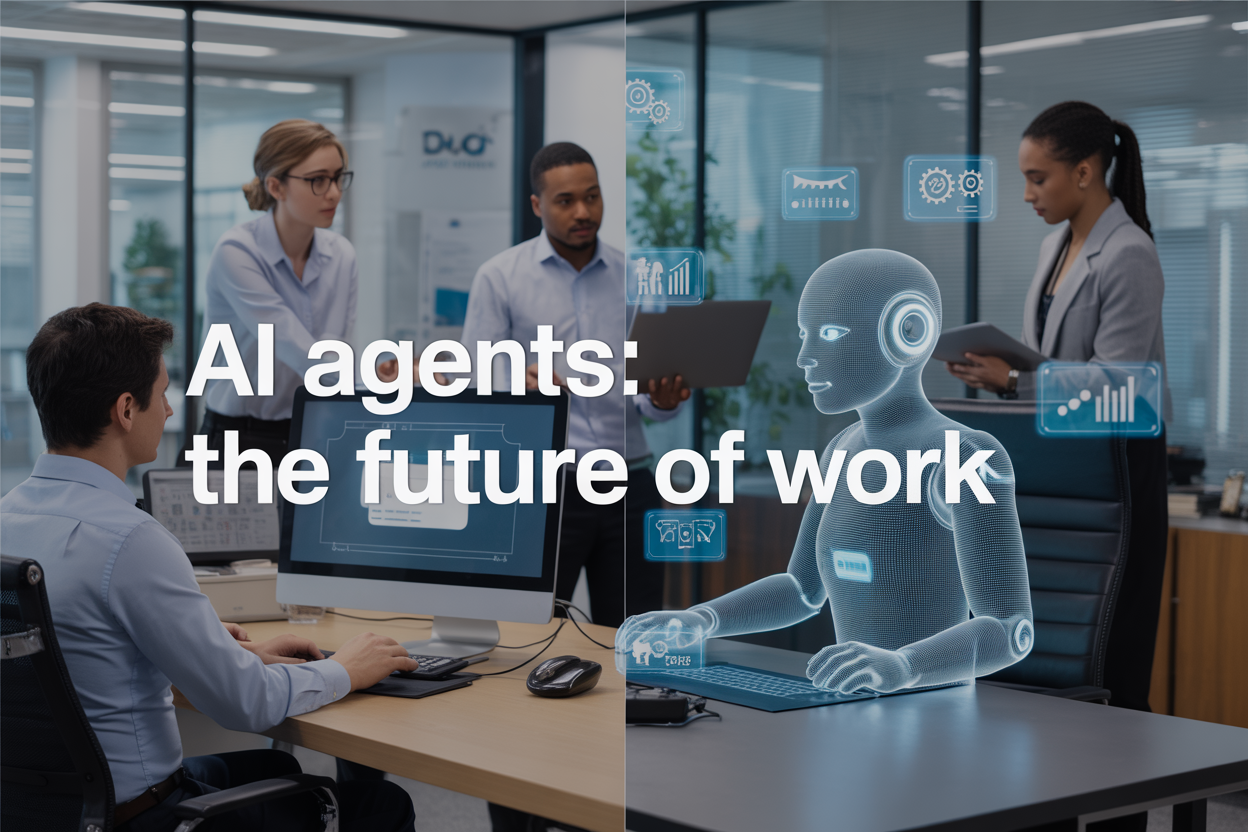
Enterprise automation is getting a major upgrade. Simple AI chatbots that could barely answer basic questions are evolving into sophisticated AI agents that work alongside your team like digital employees.
This guide is for business leaders, IT decision-makers, and operations managers who want to understand how intelligent automation is transforming the workplace. You’ll see how AI co-workers are changing everything from customer service to complex business processes.
We’ll explore how these digital workers differ from traditional chatbots and what makes them genuinely useful team members. You’ll also discover real-world applications across different industries and learn practical strategies for AI agent implementation in your organization. Finally, we’ll look at workforce automation 2025 trends and what enterprise AI transformation means for the future of work.
The shift from basic automation tools to intelligent AI agents represents one of the biggest changes in how businesses operate. These aren’t just fancy chatbots anymore—they’re becoming essential parts of modern teams.
The Evolution from Simple Chatbots to Intelligent AI Agents
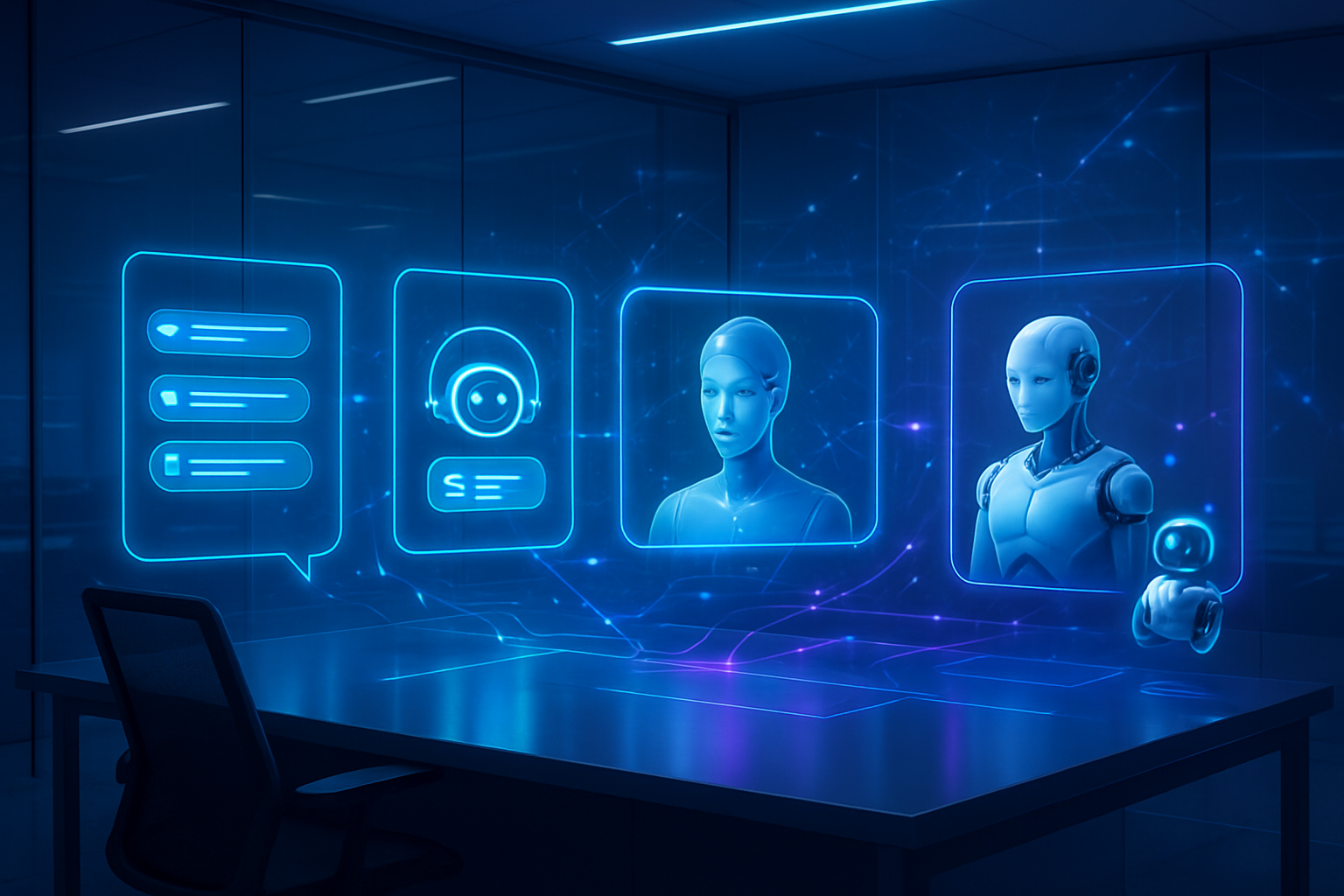
Breaking free from scripted responses to dynamic problem-solving
Traditional chatbots operated like digital vending machines – customers pressed buttons, and pre-programmed responses tumbled out. These early systems could handle basic FAQs and route tickets, but they crumbled when faced with complex, multi-layered business challenges. AI agents represent a complete departure from this rigid approach.
Modern enterprise automation solutions now feature AI agents capable of understanding context, reasoning through problems, and making decisions based on available data. Instead of following if-then scripts, these digital workers analyze situations dynamically. When a customer reports a billing discrepancy, an AI agent doesn’t just search a database – it examines payment history, cross-references account changes, identifies patterns, and proposes specific solutions.
This shift from reactive to proactive problem-solving transforms how businesses handle customer service, technical support, and internal operations. AI agents can now anticipate issues before they escalate, suggest preventive measures, and adapt their responses based on individual user preferences and historical interactions.
Advanced natural language processing capabilities transforming user interactions
The leap in natural language processing has turned stilted, robotic exchanges into fluid conversations. Early AI chatbots evolution was marked by frustrating keyword matching that often missed user intent completely. Today’s AI agents understand nuance, context, and even emotional undertones in communication.
These systems process multiple languages simultaneously, handle industry-specific jargon, and maintain conversation context across extended interactions. A procurement AI agent can discuss vendor contracts in technical detail, then seamlessly switch to budget analysis without losing track of the conversation thread.
The transformation extends beyond text processing. Modern AI agents integrate voice recognition, sentiment analysis, and even visual cues from video interactions. They recognize when users are frustrated and adjust their communication style accordingly, making interactions feel genuinely human-like.
Machine learning integration enabling continuous improvement and adaptation
Machine learning transforms AI agents from static tools into evolving intelligent automation partners. Every interaction becomes a learning opportunity, allowing these systems to refine their responses and expand their capabilities without human intervention.
Workforce automation 2025 relies heavily on this self-improving capability. AI agents analyze successful problem resolutions, identify patterns in user behavior, and continuously optimize their decision-making processes. They learn which communication styles work best with different user types, which solutions prove most effective for specific problems, and how to prioritize tasks based on business impact.
This continuous adaptation means AI agents become more valuable over time. Unlike traditional software that requires manual updates, these systems evolve alongside changing business needs, market conditions, and user expectations. They develop specialized knowledge in their assigned domains while maintaining the flexibility to handle unexpected scenarios that fall outside their initial training parameters.
Key Features That Make AI Agents True Digital Co-Workers

Autonomous Decision-Making Capabilities Reducing Human Intervention
Modern AI agents have moved beyond simple rule-based responses to sophisticated autonomous decision-making that mirrors human cognitive processes. These digital workers analyze complex data patterns, evaluate multiple variables, and execute decisions without constant human oversight. Unlike traditional automation systems that require pre-programmed responses for every scenario, today’s AI agents adapt their decision-making frameworks based on contextual understanding and learned experiences.
The autonomous capabilities extend across various enterprise automation functions, from routing customer inquiries to the most qualified team members to automatically adjusting inventory levels based on market fluctuations. These agents can prioritize tasks, escalate critical issues, and even negotiate simple contracts within predefined parameters. This level of autonomy dramatically reduces the bottlenecks that occur when human approval is required for routine decisions, allowing organizations to maintain 24/7 operational efficiency.
What sets these AI co-workers apart is their ability to explain their decision-making process, providing transparency that builds trust with human colleagues. They maintain audit trails and can justify their choices using data-driven reasoning, making them valuable partners in regulated industries where accountability is paramount.
Multi-Platform Integration Connecting Disparate Enterprise Systems
Enterprise AI transformation requires seamless connectivity across diverse technology ecosystems, and modern AI agents excel at bridging these gaps. These intelligent automation systems act as universal translators, connecting legacy systems with cloud-based applications, CRM platforms with accounting software, and communication tools with project management systems.
The integration capabilities go beyond simple data transfer. AI agents understand the nuances of different platforms, adapting their communication protocols and data formats automatically. They can pull customer information from a CRM system, cross-reference it with inventory data from an ERP platform, and update project timelines in collaboration tools—all within a single workflow.
This multi-platform proficiency eliminates the traditional silos that plague enterprise operations. Rather than forcing organizations to completely overhaul their technology stack, AI agents work with existing infrastructure while gradually modernizing processes. They serve as the connective tissue that transforms fragmented systems into cohesive, intelligent networks.
| Integration Type | Traditional Approach | AI Agent Approach |
|---|---|---|
| Data Transfer | Manual exports/imports | Real-time synchronization |
| System Communication | Custom APIs for each connection | Universal protocol adaptation |
| Error Handling | Manual intervention required | Automated error detection and resolution |
| Workflow Coordination | Separate processes per platform | Unified cross-platform workflows |
Real-Time Learning and Adaptation to Changing Business Environments
The learning capabilities of AI agents represent a fundamental shift from static automation to dynamic workforce automation. These systems continuously analyze performance metrics, user interactions, and environmental changes to refine their approaches in real-time. Unlike traditional software that requires manual updates and reprogramming, AI agents evolve their capabilities through experience.
This adaptive learning manifests in multiple ways across business process automation. Customer service agents learn from successful resolution patterns and adjust their communication styles for different customer personalities. Sales support agents identify which product recommendations lead to higher conversion rates and modify their suggestions accordingly. Operations agents detect seasonal patterns in resource usage and proactively adjust capacity planning.
The learning process extends beyond individual interactions to organizational patterns. AI agents recognize when certain processes become inefficient due to business growth or market changes, automatically proposing and implementing optimizations. They identify emerging trends in customer behavior, supply chain disruptions, or competitive pressures, alerting human teams to strategic opportunities or threats.
Collaborative Workflows Enhancing Human-AI Team Productivity
Modern AI co-workers excel at creating collaborative environments where human creativity and artificial intelligence complement each other. These agents don’t replace human judgment but amplify human capabilities by handling routine tasks, providing data-driven insights, and managing administrative overhead.
The collaboration model focuses on task specialization where AI agents handle data processing, pattern recognition, and repetitive workflows while humans focus on strategic thinking, relationship building, and creative problem-solving. AI agents can prepare detailed briefings for human colleagues, schedule optimized meeting times across multiple time zones, and provide real-time research support during client calls.
Communication between human and AI team members has become increasingly natural through advanced natural language processing. Team members can assign tasks to AI agents using conversational language, receive status updates in familiar formats, and collaborate on complex projects through shared digital workspaces. The agents understand context, urgency levels, and team dynamics, adjusting their support accordingly.
Intelligent automation in collaborative workflows also includes predictive assistance. AI agents anticipate team needs based on project timelines, automatically preparing resources before they’re requested and identifying potential roadblocks before they impact productivity. This proactive support creates a seamless working relationship where human team members feel genuinely supported rather than monitored or replaced.
Transformative Impact on Enterprise Automation Processes

Streamlined Operations Reducing Manual Task Completion Time
AI agents are revolutionizing how enterprises handle routine tasks, cutting completion times from hours to minutes. Unlike traditional automation tools that follow rigid scripts, these digital workers adapt to variations in data formats, handle exceptions, and learn from patterns to optimize their performance continuously.
Take invoice processing as an example. Where human workers might spend 15-20 minutes per invoice manually entering data and cross-referencing systems, AI agents complete the same task in under two minutes while simultaneously validating information across multiple databases. They extract data from various document formats, convert currencies, apply business rules, and route approvals without human intervention.
The speed gains become even more impressive in complex workflows. Document review processes that previously took legal teams weeks now happen in days, with AI agents pre-screening contracts, flagging potential issues, and preparing summary reports. Customer service operations see response times drop from hours to seconds as intelligent automation handles routine inquiries while seamlessly escalating complex issues to human experts.
Enhanced Accuracy Eliminating Human Error in Repetitive Processes
Human error in repetitive tasks costs enterprises millions annually through data entry mistakes, compliance oversights, and processing delays. AI agents bring consistency that human workers struggle to maintain across thousands of similar tasks daily.
These digital workers don’t experience fatigue, distraction, or the natural variation that affects human performance throughout the day. When processing financial transactions, AI agents maintain the same level of precision whether handling the first transaction at 9 AM or the thousandth at 5 PM. They cross-reference data against multiple sources, validate formats, and apply business rules with unwavering consistency.
The accuracy improvements are particularly striking in data-heavy operations. Payroll processing, which traditionally carried error rates of 1-3%, now achieves near-perfect accuracy with AI agents validating employee information, calculating complex deductions, and ensuring regulatory compliance. Customer data management sees similar improvements, with AI agents maintaining clean, standardized records across all touchpoints.
24/7 Availability Ensuring Continuous Business Operations
Global enterprises operate across time zones, but human workforces have natural limitations. AI agents bridge this gap by maintaining operations around the clock, ensuring business processes never sleep even when employees do.
This continuous availability transforms customer service delivery. While traditional call centers struggled with overnight coverage and weekend staffing, AI agents handle customer inquiries, process orders, and resolve technical issues at any hour. They maintain consistent service quality whether a customer contacts the company at 3 AM or during peak business hours.
Back-office operations benefit equally from this 24/7 capability. Financial reconciliation processes that once waited for the next business day now happen in real-time. Supply chain monitoring continues overnight, with AI agents tracking shipments, updating inventory levels, and triggering reorder points before stockouts occur. This constant vigilance prevents the accumulation of work backlogs that traditionally created Monday morning bottlenecks.
Scalable Solutions Adapting to Growing Enterprise Demands
Traditional workforce scaling presents significant challenges – recruitment time, training costs, and the difficulty of rapidly adjusting team sizes based on fluctuating demand. AI agents eliminate these constraints by scaling instantly to match business needs.
During peak seasons or sudden demand spikes, enterprises can deploy additional AI agent instances within minutes rather than weeks. E-commerce companies that previously hired temporary staff for holiday seasons now scale their AI workforce seamlessly, handling increased order volumes, customer inquiries, and return processes without the complexity of temporary hiring.
The scalability extends beyond simple volume increases. As businesses expand into new markets or add product lines, AI agents adapt to new requirements through updated training rather than lengthy onboarding processes. They learn new languages, understand regional regulations, and adjust to local business practices faster than traditional workforce expansion allows.
This flexibility proves especially valuable for project-based work where resource needs fluctuate dramatically. Construction companies deploy AI agents for document management during project kickoff phases, scale back during execution, then ramp up again for close-out activities, paying only for the capacity they actually use.
Industry-Specific Applications Driving Business Value

Customer Service Revolutionizing Support Ticket Resolution
AI agents have completely transformed how businesses handle customer support, moving beyond basic chatbots to sophisticated digital workers that can resolve complex issues independently. These intelligent systems now handle everything from password resets to billing disputes, processing thousands of tickets simultaneously while maintaining consistent quality standards.
Modern customer service AI agents integrate with existing CRM systems, accessing customer history, purchase records, and previous interactions to provide personalized solutions. They can escalate issues to human agents when needed, but studies show that 70% of routine support tickets are now resolved entirely by AI agents without human intervention.
Major retail companies report reducing average response times from 24 hours to under 5 minutes, while maintaining customer satisfaction scores above 85%. These digital workers operate 24/7, handling peak volumes during holidays and special events without additional staffing costs.
Financial Operations Automating Complex Data Analysis and Reporting
Financial institutions leverage AI agents to process massive datasets, identify patterns, and generate regulatory reports that previously required teams of analysts. These digital co-workers excel at fraud detection, risk assessment, and compliance monitoring, analyzing thousands of transactions per second with unprecedented accuracy.
Investment banks now deploy AI agents for portfolio analysis, market research, and automated trading decisions. These systems process real-time market data, news feeds, and economic indicators to make split-second investment recommendations. One global bank reduced fraud detection time from days to minutes while improving accuracy rates by 40%.
Accounting departments benefit from AI agents that handle invoice processing, expense management, and financial reconciliation. These digital workers cross-reference multiple data sources, flag discrepancies, and prepare detailed reports for human review, streamlining month-end closing processes from weeks to days.
Human Resources Transforming Recruitment and Employee Onboarding
HR departments have embraced AI agents as recruitment partners that screen resumes, conduct initial interviews, and match candidates to job requirements. These intelligent systems analyze thousands of applications, identifying top candidates based on skills, experience, and cultural fit indicators.
During onboarding, AI agents guide new employees through paperwork, system access requests, and training modules. They answer questions about benefits, company policies, and procedures while tracking completion rates and identifying areas where new hires need additional support.
Performance management benefits from AI agents that monitor employee engagement, track goal progress, and provide personalized development recommendations. These systems analyze communication patterns, project contributions, and peer feedback to help managers make informed decisions about promotions and career development.
Supply Chain Management Optimizing Logistics and Inventory Control
Supply chain AI agents revolutionize logistics by predicting demand fluctuations, optimizing shipping routes, and managing inventory levels across multiple warehouses. These digital workers process weather data, traffic patterns, and historical sales information to make real-time adjustments that reduce costs and improve delivery times.
Manufacturing companies deploy AI agents for predictive maintenance, quality control, and production scheduling. These systems monitor equipment performance, predict failures before they occur, and automatically order replacement parts. One automotive manufacturer reduced unplanned downtime by 35% while extending equipment lifespan through AI-driven maintenance strategies.
Procurement processes benefit from AI agents that negotiate with suppliers, compare pricing across vendors, and manage contract renewals. These digital workers analyze market trends, supplier performance metrics, and risk factors to ensure optimal purchasing decisions while maintaining quality standards and delivery schedules.
Implementation Strategies for Successful AI Agent Integration

Identifying high-impact automation opportunities within existing workflows
Start by mapping your current business processes to pinpoint where AI agent implementation creates the most value. Look for repetitive tasks that eat up significant employee time—data entry, customer inquiries, document processing, and scheduling are prime candidates. These workflows often involve multiple handoffs between departments, creating perfect opportunities for digital workers to streamline operations.
Conduct time audits to quantify exactly how much effort goes into each process. Document the pain points where human workers get bogged down or where errors frequently occur. Enterprise automation thrives when you target processes with high volume, clear rules, and measurable outcomes.
| Process Type | Automation Potential | Expected ROI Timeline |
|---|---|---|
| Customer Support | High | 3-6 months |
| Invoice Processing | Very High | 2-4 months |
| Employee Onboarding | Medium | 6-12 months |
| Compliance Reporting | High | 4-8 months |
Focus on processes that directly impact customer experience or operational costs. AI agents excel at handling routine inquiries, freeing up human workers to tackle complex problem-solving. Don’t forget to evaluate cross-departmental workflows where information traditionally gets stuck in silos.
Building cross-functional teams to ensure seamless technology adoption
Successful AI agent implementation requires bringing together diverse expertise from the start. Create project teams that include IT professionals, business process owners, HR representatives, and end users who will work alongside these digital co-workers daily.
Assign clear roles to team members:
- Business Champions: Department heads who understand workflow nuances and can identify integration points
- Technical Leads: IT specialists who handle system integration and security requirements
- Change Management Experts: HR professionals who guide employee adaptation and training
- End User Representatives: Front-line workers who provide real-world feedback on AI agent interactions
Schedule regular cross-functional meetings to address concerns before they become roadblocks. Workforce automation 2025 success depends on early buy-in from all stakeholders. Create feedback loops where employees can report issues or suggest improvements as AI agents begin handling their routine tasks.
Establish pilot programs with small, willing teams before rolling out enterprise AI transformation company-wide. This approach helps you identify unexpected challenges and refine processes based on actual usage patterns rather than theoretical assumptions.
Establishing governance frameworks for responsible AI deployment
Create clear guidelines that address data privacy, decision-making authority, and performance monitoring for your AI agents. Establish protocols for when human oversight is required and define escalation paths for complex situations that exceed AI capabilities.
Develop a governance committee with representatives from legal, compliance, IT security, and business operations. This team should regularly review AI agent performance and ensure intelligent automation aligns with company values and regulatory requirements.
Key governance elements include:
- Data Access Controls: Define which information AI agents can access and process
- Performance Metrics: Set measurable goals for accuracy, efficiency, and customer satisfaction
- Audit Trails: Maintain logs of AI agent decisions and actions for accountability
- Update Protocols: Establish processes for training improvements and capability expansions
- Risk Assessment: Regular evaluation of potential biases or unintended consequences
Document clear boundaries for AI agent authority. Specify which decisions they can make independently versus situations requiring human approval. Business process automation works best when everyone understands exactly what these digital workers can and cannot do.
Regular governance reviews help you adapt policies as AI capabilities evolve and your organization gains experience with AI co-workers. Schedule quarterly assessments to evaluate effectiveness and adjust frameworks based on real performance data.
Future Trends Shaping AI Agent Development Beyond 2025
Hyper-personalization creating tailored enterprise experiences
AI agents are moving beyond one-size-fits-all solutions to deliver deeply personalized experiences for every user within an enterprise. These digital workers will analyze individual work patterns, communication styles, and project preferences to adapt their interactions automatically. Think of an AI agent that knows you prefer morning meetings, understands your reporting style, and proactively prepares documents in your preferred format before you even ask.
The next generation of AI agents will create unique user profiles by combining behavioral data, role requirements, and historical interactions. This means a sales manager will receive completely different insights and automation support compared to a finance analyst, even when using the same underlying AI platform. Enterprise AI transformation is heading toward systems that understand context at a granular level, personalizing everything from dashboard layouts to communication tone.
Businesses implementing these hyper-personalized AI co-workers report significant improvements in user adoption and satisfaction. The technology learns from micro-interactions, adjusting responses and recommendations based on success patterns. This creates a feedback loop where the AI agent becomes more valuable to each individual user over time.
Advanced predictive analytics enabling proactive business strategies
Predictive capabilities in AI agents are evolving from simple trend analysis to sophisticated scenario modeling that anticipates business needs weeks or months in advance. These systems will process vast amounts of operational data, market signals, and internal metrics to identify opportunities and risks before they become obvious to human decision-makers.
Smart enterprise automation systems will monitor patterns across departments, predicting when specific resources will be needed, which processes might face bottlenecks, and where intervention could prevent problems. For example, an AI agent might detect subtle changes in customer behavior patterns and automatically adjust inventory levels, modify marketing campaigns, or alert sales teams to emerging opportunities.
The most advanced AI agents will run continuous simulations, testing thousands of potential scenarios to recommend optimal strategies. This goes far beyond traditional business intelligence, creating digital workers that actively participate in strategic planning and risk management.
Ethical AI frameworks ensuring transparent and fair automation
The future of enterprise AI hinges on building trust through transparency and fairness. Organizations are developing comprehensive frameworks that ensure AI agents operate within clearly defined ethical boundaries while maintaining their effectiveness in business process automation.
These frameworks address key concerns including:
- Decision transparency: AI agents will provide clear explanations for their recommendations and actions
- Bias detection: Continuous monitoring systems that identify and correct discriminatory patterns
- Human oversight: Structured checkpoints where human judgment remains paramount
- Data privacy: Advanced encryption and anonymization techniques protecting sensitive information
Companies are investing heavily in explainable AI technologies that make intelligent automation decisions understandable to non-technical stakeholders. This transparency builds confidence in workforce automation 2025 initiatives while ensuring compliance with evolving regulations.
Ethical AI frameworks also include regular auditing processes where AI agent behavior is reviewed for fairness and accuracy. These systems create accountability measures that protect both businesses and individuals from unintended consequences of automated decision-making.
Integration with emerging technologies like quantum computing and IoT
AI agents are preparing to leverage quantum computing power for solving complex optimization problems that current systems cannot handle efficiently. This integration will enable real-time processing of massive datasets, allowing digital workers to analyze entire enterprise ecosystems simultaneously and identify optimization opportunities across all business functions.
The convergence of AI agents with Internet of Things (IoT) devices creates unprecedented automation possibilities. Smart sensors throughout facilities will feed real-time data directly to AI co-workers, enabling immediate responses to environmental changes, equipment performance issues, or security concerns. This creates truly responsive enterprise environments where AI agents coordinate with physical infrastructure to maintain optimal operations.
Edge computing integration allows AI agents to process IoT data locally, reducing latency and improving response times. Manufacturing facilities, retail locations, and office buildings will host AI agents that manage everything from climate control to security systems, creating seamless operational experiences.
Blockchain technology integration ensures secure, verifiable interactions between AI agents and other systems. This creates trusted automation networks where AI co-workers can safely exchange information and coordinate activities across organizational boundaries, opening possibilities for inter-company AI collaboration and automated business relationships.

AI agents have come a long way from the simple chatbots we knew just a few years ago. Today’s intelligent systems can handle complex tasks, make decisions, and work alongside human teams like genuine digital colleagues. They’re transforming how businesses automate everything from customer service to supply chain management, delivering real value across industries like healthcare, finance, and manufacturing.
The shift toward AI agents as co-workers isn’t just a tech trend—it’s becoming essential for companies that want to stay competitive. Start by identifying the right processes for automation, choose agents that fit your specific industry needs, and focus on smooth integration with your existing workflows. The future promises even smarter agents that can adapt and learn continuously, making this the perfect time to explore how these digital teammates can boost your business operations.