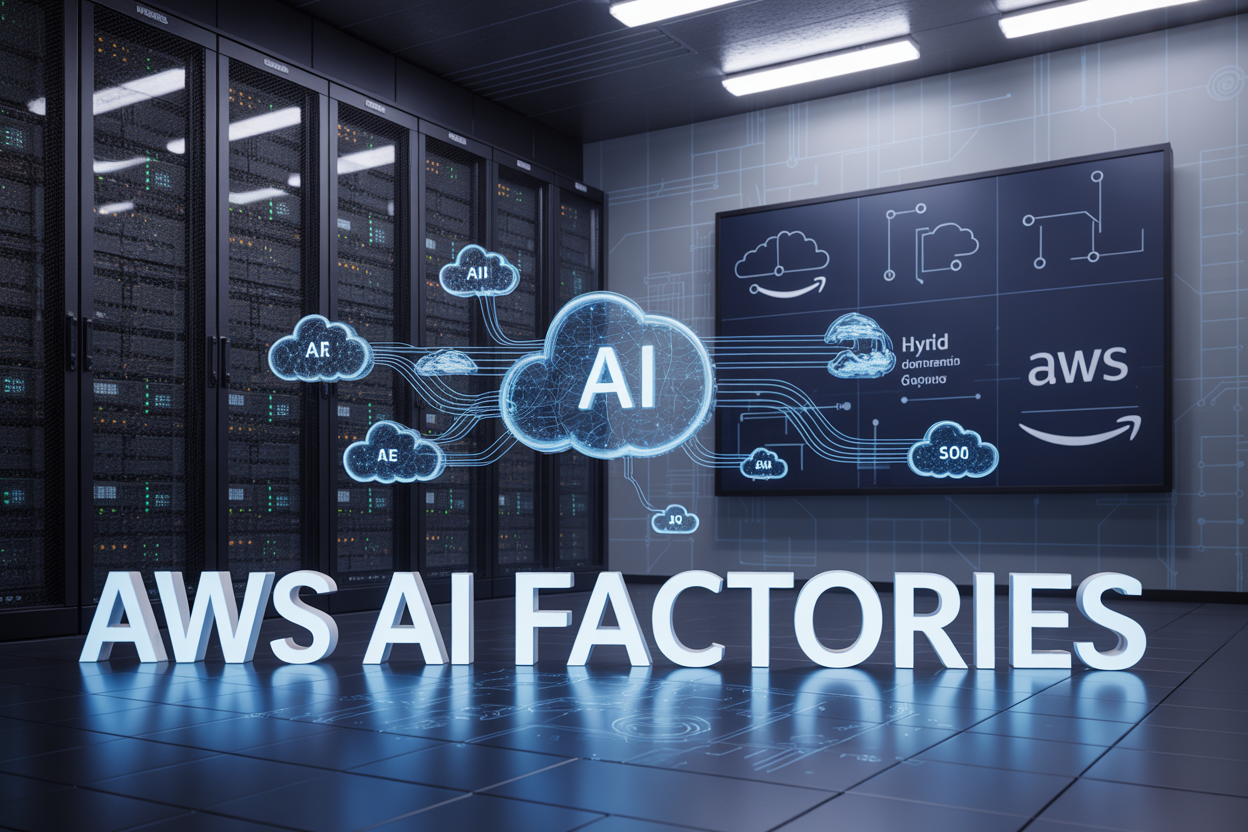
AWS AI Factories represent Amazon’s game-changing approach to enterprise AI deployment, combining cloud-based machine learning infrastructure with hybrid AI architecture to deliver scalable, cost-effective solutions. This comprehensive guide is designed for IT leaders, data scientists, and enterprise decision-makers who need to understand how AWS AI services integration can transform their organization’s artificial intelligence capabilities.
Modern businesses struggle with fragmented AI initiatives that drain resources without delivering measurable results. AWS AI Factories solve this problem by providing a unified framework that streamlines AI factory implementation while maximizing enterprise AI deployment efficiency. The hybrid cloud AI solutions offered through this approach allow companies to maintain data sovereignty while leveraging AWS’s powerful machine learning infrastructure.
We’ll explore the core benefits of hybrid AI architecture and how it creates competitive advantages for forward-thinking organizations. You’ll also discover the technical framework that powers these AI factory benefits, including detailed insights into the step-by-step deployment process that ensures successful implementation. Finally, we’ll cover proven strategies for AI factory ROI optimization that help organizations achieve long-term success with their AWS AI deployment initiatives.
Understanding AWS AI Factories and Their Core Purpose

Definition of AWS AI Factories as Comprehensive AI Development Platforms
AWS AI Factories represent a revolutionary approach to enterprise artificial intelligence development, serving as comprehensive platforms that streamline the entire AI lifecycle from conception to production deployment. These sophisticated environments combine AWS’s robust cloud infrastructure with integrated machine learning services, creating a unified ecosystem where organizations can build, train, deploy, and manage AI applications at scale.
Think of AWS AI Factories as specialized manufacturing plants for artificial intelligence. Just as traditional factories have assembly lines, quality control systems, and standardized processes, AI Factories provide structured workflows for data processing, model development, testing, and deployment. They eliminate the complexity of managing disparate AI tools and services by offering a cohesive platform where data scientists, engineers, and business stakeholders can collaborate seamlessly.
The factory model addresses the notorious challenges of AI development, including data silos, inconsistent model performance, and deployment bottlenecks. By centralizing AI operations within a standardized framework, organizations can achieve repeatable processes, maintain consistent quality standards, and accelerate time-to-market for AI-driven solutions.
Key Components That Make Up an AI Factory Infrastructure
The AWS AI Factories infrastructure consists of several interconnected components that work together to create a comprehensive AI development environment. The foundation starts with robust data management systems, including Amazon S3 for data lakes, AWS Glue for data preparation and ETL processes, and Amazon Redshift for data warehousing. These services ensure that data flows efficiently through the AI pipeline while maintaining security and compliance standards.
Machine learning infrastructure forms the core of the AI Factory, featuring Amazon SageMaker as the primary development environment. SageMaker provides integrated Jupyter notebooks for experimentation, built-in algorithms for common use cases, and scalable training infrastructure that can handle everything from small proof-of-concepts to large-scale enterprise models. The platform includes automated model tuning capabilities and A/B testing frameworks that help optimize model performance.
The deployment and monitoring layer includes Amazon SageMaker Endpoints for real-time inference, AWS Lambda for serverless compute, and Amazon CloudWatch for comprehensive monitoring and logging. These components ensure that AI models perform reliably in production environments while providing visibility into their behavior and performance metrics.
Additional components include:
- Security and governance tools like AWS IAM for access control and AWS CloudTrail for audit logging
- Integration services such as Amazon API Gateway for exposing AI models as APIs
- Container orchestration through Amazon ECS and EKS for scalable deployments
- Development tools including AWS CodePipeline for CI/CD workflows
Primary Business Problems AI Factories Solve for Organizations
AWS AI Factories tackle several critical business challenges that have historically prevented organizations from successfully implementing AI at scale. The most significant problem they address is the fragmented nature of traditional AI development, where teams often work in isolation using different tools, data sources, and deployment methods. This fragmentation leads to inconsistent results, duplicated efforts, and difficulty scaling successful pilots into production systems.
Data accessibility and quality represent another major challenge that AI Factories solve. Many organizations struggle with data scattered across multiple systems, inconsistent formats, and poor data governance. AI Factories establish standardized data pipelines that automatically clean, transform, and catalog data, making it readily available for AI model development while maintaining lineage and quality standards.
The skills gap in AI development poses a significant barrier for many organizations. AI Factories democratize AI development by providing pre-built templates, automated workflows, and no-code/low-code options that enable business users and domain experts to participate in AI development without deep technical expertise. This approach reduces dependency on scarce data science talent while enabling faster iteration and innovation.
Cost management and resource optimization present ongoing challenges in AI initiatives. Organizations often struggle with unpredictable costs, inefficient resource utilization, and difficulty measuring ROI on AI investments. AI Factories provide built-in cost monitoring, automatic scaling capabilities, and standardized deployment patterns that help organizations optimize their AI spending while delivering measurable business value.
Compliance and governance requirements create additional complexity in regulated industries. AI Factories address these challenges by providing built-in security controls, audit trails, and compliance frameworks that ensure AI systems meet regulatory requirements while maintaining operational efficiency. This comprehensive approach enables organizations to confidently deploy AI solutions in production environments without compromising on security or compliance standards.
Hybrid AI Architecture Benefits and Competitive Advantages

Enhanced Data Security Through On-Premises and Cloud Integration
Hybrid AI architecture gives businesses the best of both worlds when it comes to protecting sensitive data. By keeping critical information on-premises while using AWS AI services for processing power, companies maintain strict control over their most valuable assets. This approach works especially well for industries like healthcare, finance, and government sectors where regulatory compliance is non-negotiable.
The integration allows organizations to process sensitive data locally while still accessing AWS AI Factories’ advanced machine learning capabilities. Personal customer information, proprietary algorithms, and confidential business data stay behind corporate firewalls, while anonymized or aggregated datasets can safely leverage cloud-based AI services. This dual-layer approach significantly reduces the risk of data breaches while maintaining full compliance with regulations like GDPR, HIPAA, and SOX.
Companies also benefit from granular access controls across their hybrid infrastructure. AWS Identity and Access Management (IAM) integrates seamlessly with on-premises security systems, creating unified authentication and authorization protocols. This means security teams can monitor and control AI workloads across both environments from a single dashboard.
Improved Performance and Reduced Latency for Real-Time Applications
Real-time AI applications demand lightning-fast response times that traditional cloud-only solutions often can’t deliver. Hybrid AI deployment addresses this challenge by positioning compute resources closer to where data is generated and decisions need to be made.
Manufacturing companies using predictive maintenance AI can process sensor data locally for immediate equipment adjustments while sending historical patterns to AWS AI services for long-term trend analysis. This setup reduces latency from hundreds of milliseconds to just a few, preventing costly equipment failures and production downtime.
Financial institutions running fraud detection algorithms benefit enormously from this architecture. Transaction data processes locally for instant approval or rejection decisions, while broader pattern analysis happens in the cloud to improve detection algorithms. The result is seamless customer experiences with robust security measures running in the background.
Edge computing integration amplifies these benefits even more. AWS Wavelength and Local Zones bring cloud services directly to the network edge, cutting latency to single-digit milliseconds. This makes real-time AI applications like autonomous vehicles, smart city infrastructure, and industrial automation truly viable at scale.
Cost Optimization Through Flexible Resource Allocation
Smart resource allocation across hybrid environments helps companies slash their AI infrastructure costs while maintaining peak performance. Instead of over-provisioning expensive cloud resources or investing heavily in on-premises hardware that sits idle, businesses can dynamically shift workloads based on cost and performance requirements.
AWS AI Factories enable organizations to run baseline AI workloads on cost-effective on-premises infrastructure while bursting to the cloud during peak demand periods. Machine learning training jobs that don’t require immediate results can run on cheaper spot instances, while inference workloads stay local for consistent performance.
The pay-as-you-use model becomes even more powerful in hybrid setups. Companies only pay for cloud resources when they actually need the extra capacity, while their on-premises infrastructure handles steady-state operations. This approach typically reduces total AI infrastructure costs by 30-50% compared to pure cloud or on-premises deployments.
Automated workload scheduling adds another layer of optimization. AI factory orchestration tools can automatically move computational tasks between environments based on current pricing, resource availability, and performance requirements. This hands-off approach maximizes cost efficiency without sacrificing application performance.
Seamless Scalability During Peak Demand Periods
Peak demand periods used to mean either expensive over-provisioning or degraded performance during traffic spikes. Hybrid AI architecture eliminates this trade-off by providing elastic scalability that responds instantly to changing demands.
Retail companies experience this benefit during major shopping events like Black Friday. Their recommendation engines and fraud detection systems run smoothly on local infrastructure during normal periods, then seamlessly scale to AWS AI services when traffic multiplies overnight. Customers get the same fast, personalized experiences regardless of demand levels.
The auto-scaling capabilities extend across multiple AWS AI services simultaneously. When demand increases, the system can spin up additional Amazon SageMaker instances, expand Amazon Bedrock capacity, and increase Amazon Rekognition throughput – all while maintaining data flow between on-premises and cloud components.
Cloud bursting happens transparently to end users and applications. The hybrid orchestration layer manages resource allocation, load balancing, and data synchronization automatically. This means development teams can focus on improving AI models instead of managing infrastructure scaling during critical business periods.
Geographic expansion also becomes much simpler with hybrid AI deployment. Companies can establish local presence quickly by deploying edge infrastructure in new markets while leveraging their existing AWS AI Factory setup for heavy computational workloads. This approach reduces time-to-market from months to weeks while maintaining consistent AI performance across all locations.
Technical Architecture and Operational Framework
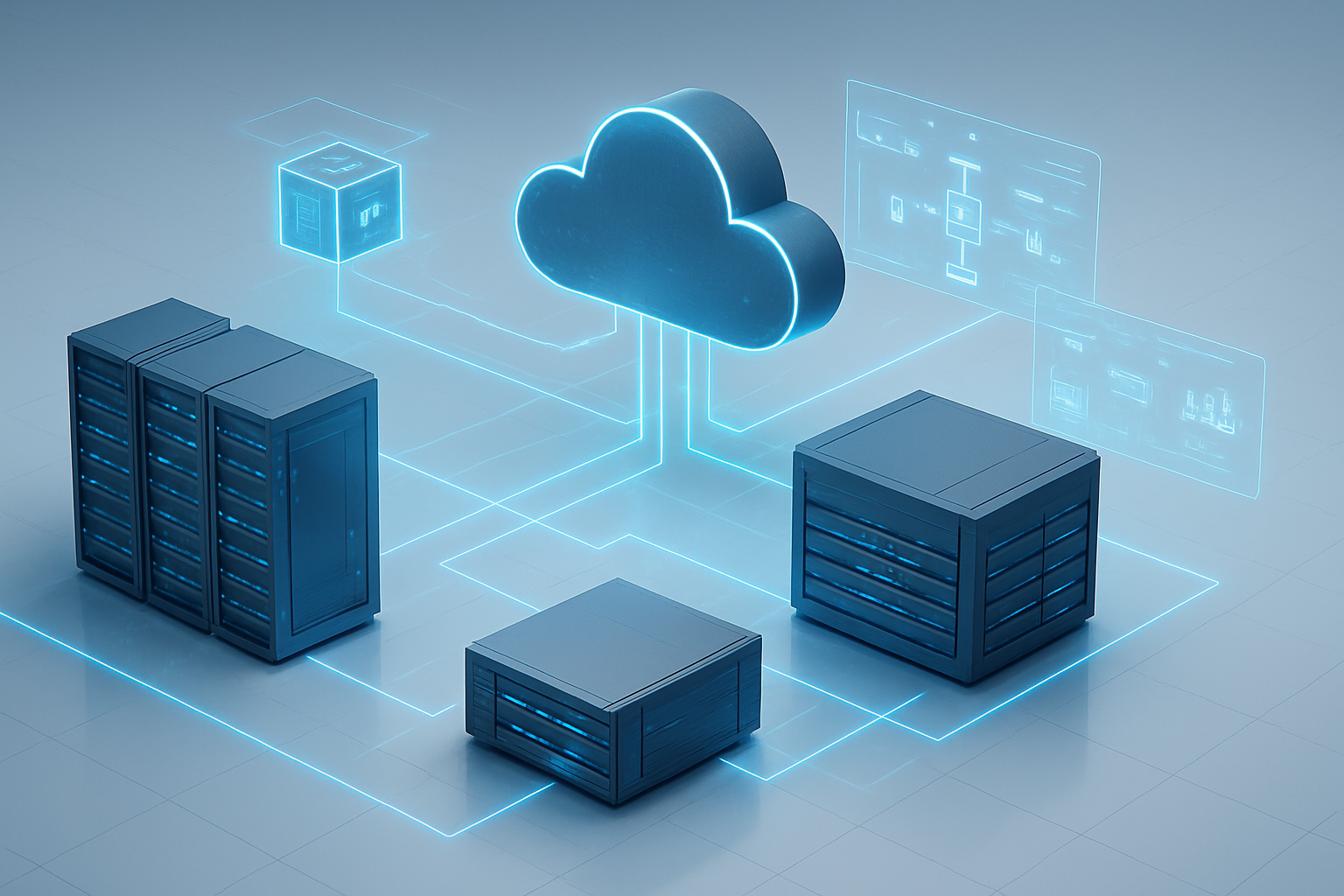
Core AWS Services That Power AI Factory Operations
Amazon SageMaker sits at the heart of AWS AI Factories, providing the complete machine learning platform that handles everything from data preparation to model deployment. This service streamlines the entire ML workflow, letting teams build, train, and deploy models without getting bogged down in infrastructure management.
AWS Lambda powers the serverless computing layer, automatically scaling based on demand while keeping costs under control. When your AI factory needs to process thousands of inference requests or trigger model retraining workflows, Lambda handles the computational load seamlessly.
Amazon S3 serves as the primary data lake, storing massive datasets, trained models, and processing results. Its virtually unlimited storage capacity and multiple storage classes help optimize costs while maintaining quick access to frequently used data.
Amazon ECS and EKS manage containerized AI workloads, providing the orchestration needed for complex model serving architectures. These services handle scaling, load balancing, and health monitoring for your AI applications.
AWS Batch processes large-scale training jobs and batch inference tasks. When you need to train models on massive datasets or run inference across millions of data points, Batch manages the compute resources automatically.
Amazon CloudWatch monitors the entire AI factory ecosystem, tracking performance metrics, resource usage, and model drift. Real-time dashboards help teams spot issues before they impact production systems.
Data Pipeline Management and Processing Workflows
Data ingestion workflows start with Amazon Kinesis for real-time streaming data and AWS DataSync for batch transfers. These services handle data from various sources – databases, applications, IoT devices, and external APIs – ensuring consistent flow into your AI factory.
AWS Glue transforms raw data into ML-ready formats through its serverless ETL capabilities. The service automatically discovers data schemas, handles format conversions, and manages data quality checks. Custom transformation scripts run on-demand, processing only the data you need when you need it.
Data cataloging happens through AWS Glue Data Catalog, which creates a centralized metadata repository. Data scientists can quickly discover relevant datasets, understand their structure, and track lineage across the entire pipeline.
Quality control gates use Amazon SageMaker Data Wrangler to identify and fix data quality issues. Built-in visualizations highlight anomalies, missing values, and distribution shifts that could impact model performance.
Workflow orchestration relies on AWS Step Functions to coordinate complex data processing chains. Visual workflows show exactly how data moves through ingestion, validation, transformation, and feature engineering stages.
Storage optimization leverages S3 Intelligent Tiering to automatically move data between storage classes based on access patterns. Frequently accessed training data stays in standard storage, while archived datasets move to cheaper tiers.
Model Training and Deployment Automation Systems
Automated training pipelines use SageMaker Pipelines to standardize the machine learning workflow. These pipelines handle data preprocessing, feature engineering, model training, and evaluation in repeatable, version-controlled processes.
Distributed training capabilities leverage SageMaker’s built-in support for multi-GPU and multi-instance training. Large language models and deep learning networks train faster across multiple machines, reducing time-to-market for AI applications.
Hyperparameter optimization runs automatically through SageMaker’s built-in tuning jobs. The system tests different parameter combinations, finds optimal settings, and delivers the best-performing model without manual intervention.
Model registry and versioning tracks every trained model through SageMaker Model Registry. Teams can compare model performance across versions, promote models through development stages, and roll back to previous versions when needed.
Automated deployment strategies support blue-green deployments, canary releases, and A/B testing through SageMaker endpoints. Traffic gradually shifts to new models while monitoring key metrics, ensuring smooth rollouts.
MLOps integration connects with CI/CD pipelines through AWS CodePipeline and CodeBuild. Code changes trigger automated retraining, testing, and deployment workflows, keeping models current without manual oversight.
Real-time inference serves predictions through SageMaker real-time endpoints with auto-scaling capabilities. The system handles traffic spikes automatically while maintaining low latency for user-facing applications.
Integration Points with Existing Enterprise Infrastructure
Hybrid cloud connectivity uses AWS Direct Connect and VPN connections to link on-premises systems with cloud-based AI factories. Dedicated network connections ensure consistent performance and security for data transfers.
Identity and access management integrates with existing Active Directory systems through AWS SSO and IAM roles. Security teams maintain centralized control over user permissions while enabling seamless access to AI factory resources.
Database integration connects to existing enterprise databases through AWS Database Migration Service and native connectors. Whether your data lives in Oracle, SQL Server, or legacy mainframe systems, AI factories can access it without complex data migration projects.
API gateway integration exposes AI factory capabilities through Amazon API Gateway, creating standardized interfaces for existing applications. Legacy systems can consume AI predictions through REST APIs without major code changes.
Monitoring and logging extends existing SIEM and monitoring tools through CloudWatch integration. Security teams can track AI factory activities alongside other enterprise systems, maintaining unified visibility across the entire infrastructure.
Compliance frameworks align with existing governance policies through AWS Config and CloudTrail. Audit trails track every action within the AI factory, supporting compliance with industry regulations and internal policies.
Container orchestration connects with existing Kubernetes clusters through Amazon EKS. DevOps teams can manage AI workloads using familiar tools and processes, reducing operational complexity.
Backup and disaster recovery leverages existing enterprise backup strategies through AWS Backup and cross-region replication. AI factories inherit the same protection levels as other critical business systems.
Step-by-Step Deployment Process and Best Practices

Pre-Deployment Planning and Infrastructure Assessment
Before jumping into AWS AI deployment, you need a solid foundation. Start by mapping your current infrastructure and identifying gaps that could derail your AI factory implementation. Check your existing AWS services integration capabilities and evaluate whether your network can handle the increased data traffic that comes with hybrid AI architecture.
Create an inventory of your data sources, computing resources, and security protocols. Document your current machine learning workflows and pinpoint bottlenecks that AWS AI Factories can address. This assessment should include bandwidth analysis, storage requirements, and compliance needs specific to your industry.
Your planning phase must also account for team readiness. Identify who will manage the AWS AI services integration and ensure they have the necessary permissions and training. Consider creating a dedicated project timeline that includes buffer time for unexpected challenges during the AWS AI deployment process.
Configuration of AWS Services and Resource Allocation
Setting up your AWS AI services requires careful orchestration of multiple components. Begin with Amazon SageMaker for your machine learning infrastructure, ensuring proper instance sizing based on your workload predictions. Configure AWS Lambda functions for serverless computing tasks and set up Amazon S3 buckets with appropriate access controls for your data pipeline.
Resource allocation demands strategic thinking about cost optimization. Use AWS Cost Explorer to project expenses and implement auto-scaling policies that match your actual usage patterns. Configure Amazon CloudWatch for comprehensive monitoring and set up AWS IAM roles with least-privilege access principles.
Your hybrid cloud AI solutions will need seamless connectivity between on-premises systems and AWS services. Configure AWS Direct Connect or VPN connections to ensure reliable, high-speed data transfer. Set up Amazon ECS or EKS for containerized workloads if your AI factory implementation requires microservices architecture.
Data Migration Strategies and Security Implementation
Data migration represents the most critical phase of your enterprise AI deployment. Design a phased approach that minimizes business disruption while ensuring data integrity. Use AWS DataSync or AWS Database Migration Service for structured data transfers, and consider AWS Snowball family for large-scale data movement.
Implement encryption at rest and in transit using AWS Key Management Service. Configure Amazon VPC with proper subnet design and security groups that restrict access to your AI factory benefits without compromising functionality. Set up AWS CloudTrail for comprehensive audit logging and AWS Config for compliance monitoring.
Your security implementation should include multi-factor authentication, regular access reviews, and automated threat detection using Amazon GuardDuty. Create backup and disaster recovery procedures using AWS Backup and cross-region replication for business continuity.
Testing Protocols and Performance Optimization Techniques
Comprehensive testing ensures your AWS machine learning infrastructure performs reliably under production conditions. Develop test cases that simulate real-world scenarios, including peak load conditions and edge cases specific to your AI models. Use Amazon SageMaker’s built-in testing features and A/B testing capabilities to validate model performance.
Performance optimization starts with proper instance selection and scaling configurations. Monitor key metrics like inference latency, throughput, and resource utilization using CloudWatch dashboards. Implement caching strategies with Amazon ElastiCache where appropriate and optimize your data pipeline for efficiency.
Load testing should include both your AI models and supporting infrastructure. Use tools like AWS Load Testing Solution to simulate concurrent users and validate your system’s ability to handle expected traffic patterns. Document performance baselines and establish thresholds for automated alerts.
Go-Live Procedures and Monitoring Setup
Your go-live strategy should include gradual rollout procedures that minimize risk. Start with a small subset of users or use cases, then gradually expand based on performance metrics and user feedback. Create rollback procedures that allow quick reversion to previous systems if issues arise.
Set up comprehensive monitoring using CloudWatch, AWS X-Ray for distributed tracing, and custom metrics specific to your AI factory ROI optimization goals. Configure alerts for critical thresholds and establish escalation procedures for different severity levels.
Post-deployment monitoring should track both technical metrics and business KPIs. Monitor model drift, prediction accuracy, and user satisfaction alongside traditional infrastructure metrics. Create regular reporting schedules that keep stakeholders informed about system performance and return on investment.
Establish ongoing maintenance procedures including regular security updates, model retraining schedules, and capacity planning reviews. Your monitoring setup should provide insights that drive continuous improvement of your hybrid AI architecture deployment.
Maximizing ROI and Long-Term Success Strategies

Performance Monitoring and Continuous Improvement Methods
Setting up robust monitoring for your AWS AI Factories isn’t just about keeping the lights on – it’s about unlocking actionable insights that drive real business value. Start with Amazon CloudWatch to track core metrics like model accuracy drift, inference latency, and throughput rates. These baseline measurements help you catch performance degradation before it impacts users.
Build comprehensive dashboards that combine technical metrics with business KPIs. Track model prediction accuracy against actual outcomes, monitor data pipeline health, and measure the time from model training to deployment. AWS X-Ray provides detailed tracing capabilities, showing exactly where bottlenecks occur in your AI factory implementation.
Create automated alerts for critical thresholds. When model performance drops below acceptable levels, your team needs immediate notification. Set up gradual escalation procedures – start with automated retraining triggers, then escalate to human intervention if needed.
Regular model retraining schedules prevent accuracy drift. Use Amazon SageMaker’s automatic model tuning to continuously optimize hyperparameters. Implement A/B testing frameworks to compare new model versions against existing ones, ensuring each update actually improves performance.
Document everything. Track which models perform best under different conditions, note configuration changes that improved results, and maintain a knowledge base of troubleshooting solutions. This documentation becomes invaluable when scaling operations or onboarding new team members.
Scaling Strategies for Growing AI Workloads
Your AWS AI factory’s ability to handle increasing workloads determines its long-term success. Design your architecture with elastic scaling from day one. Use Amazon ECS or EKS to automatically scale compute resources based on demand patterns. This approach ensures you’re not overpaying during quiet periods while maintaining performance during peak usage.
Implement tiered storage strategies to manage growing data volumes efficiently. Hot data goes on high-performance SSDs for active training and inference, warm data moves to standard storage for occasional access, and cold data archives to Amazon Glacier for compliance requirements. This multi-tier approach dramatically reduces storage costs as your datasets grow.
Consider geographic distribution early in your scaling planning. Deploy inference endpoints closer to users with Amazon CloudFront and edge locations. This reduces latency and improves user experience while distributing load across multiple regions. AWS AI services integration becomes crucial here – use Amazon Bedrock for foundation models and SageMaker for custom models across different regions.
Plan for batch versus real-time processing needs. Not every AI workload requires instant responses. Use Amazon Batch for large-scale data processing jobs and reserve real-time inference for user-facing applications. This hybrid approach optimizes both performance and costs.
Cost Management and Resource Optimization Techniques
Managing costs in your hybrid AI architecture requires strategic thinking about resource allocation. Start with rightsizing – many organizations overprovision compute resources “just in case.” Use AWS Cost Explorer to analyze usage patterns and identify underutilized resources. Spot instances can reduce training costs by up to 90% for non-urgent workloads.
Implement intelligent data lifecycle policies. Raw training data doesn’t need to live on expensive storage indefinitely. Set up automated policies that move older datasets to cheaper storage tiers or delete temporary files after processing. This simple step often cuts storage costs by 40-60%.
Take advantage of Reserved Instances and Savings Plans for predictable workloads. If you’re running inference servers 24/7, committing to reserved capacity saves significant money compared to on-demand pricing. For AI factory ROI optimization, these savings directly improve your bottom line.
Monitor and optimize data transfer costs. Moving large datasets between regions or services adds up quickly. Keep training data and compute resources in the same availability zone when possible. Use VPC endpoints to avoid internet gateway charges for AWS service communications.
Set up cost allocation tags to track spending by project, team, or business unit. This visibility helps identify which AI initiatives generate the best returns and where cost optimization efforts should focus. Regular cost reviews with automated alerts prevent surprise bills and keep your AI factory operations financially sustainable.
Leverage AWS’s AI-specific cost optimization tools like SageMaker’s automatic model scaling and Lambda’s pay-per-request pricing for intermittent inference workloads. These managed services often cost less than maintaining dedicated infrastructure while providing better reliability and performance.

AWS AI Factories represent a game-changing approach to enterprise AI deployment that combines the best of cloud and on-premises infrastructure. By leveraging hybrid AI architectures, businesses can enjoy enhanced security, reduced latency, and greater control over their data while still tapping into AWS’s powerful machine learning capabilities. The technical framework provides a solid foundation for scalable AI operations, while the structured deployment process ensures smooth implementation with minimal disruption to existing workflows.
The real value of AI Factories lies in their ability to deliver measurable ROI through strategic implementation and long-term optimization. Companies that follow deployment best practices and focus on continuous improvement will see significant returns on their AI investments. If you’re considering an AI Factory for your organization, start by assessing your current infrastructure and identifying specific use cases where hybrid AI can make the biggest impact. The time to act is now – AI Factories aren’t just a trend, they’re the future of enterprise artificial intelligence.