AWS route tables control how traffic moves through your cloud infrastructure, making them the backbone of AWS networking. This guide helps AWS engineers, cloud architects, and DevOps professionals who need to build reliable, secure networks that scale with their business needs.
Route tables work like GPS systems for your data packets. They contain routing rules that tell AWS where to send traffic between subnets, internet gateways, and other network resources. Getting VPC routing right means your applications run smoothly and your network stays secure.
We’ll walk through route table configuration from the ground up, starting with the basics of how subnet routing configuration works in practice. You’ll learn to build secure network paths that protect your resources while keeping traffic flowing efficiently. We’ll also cover AWS route table troubleshooting techniques that help you spot and fix routing issues before they impact your users.
By the end, you’ll know how to optimize route tables for better performance and implement network routing rules that grow with your infrastructure needs.
Master Route Table Fundamentals for Better Network Control
Define route tables and their critical role in AWS networking
Route tables act as traffic directors in your AWS VPC, controlling where network traffic flows between subnets and external destinations. Think of them as GPS systems for your cloud infrastructure – they contain rules that determine the next hop for packets traveling through your network. Every subnet must associate with a route table, making them fundamental building blocks for AWS networking architecture.
Understand how route tables direct traffic between subnets and destinations
AWS route tables work by matching destination IP addresses against routing rules, selecting the most specific match to forward traffic. Each route consists of a destination CIDR block and a target, such as an internet gateway, NAT gateway, or VPC peering connection. When instances communicate, the route table evaluates the destination address and directs packets through the appropriate network component, enabling seamless connectivity across your VPC infrastructure.
Learn the difference between main and custom route tables
Every VPC automatically receives a main route table that handles routing for subnets without explicit route table associations. The main route table typically contains basic local routing rules for intra-VPC communication. Custom route tables offer granular control over traffic flow, allowing you to create specific routing policies for different subnet groups. You can associate multiple subnets with custom route tables while maintaining the main route table as a fallback option.
Create and Configure Route Tables for Optimal Performance
Set up custom route tables for specific subnet requirements
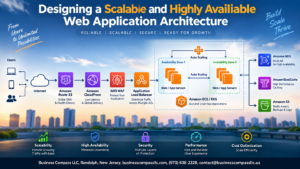
Custom route tables give you granular control over traffic flow within your AWS VPC. Start by creating dedicated route tables for different subnet types – public subnets need internet gateway routes, while private subnets require NAT gateway or VPC endpoint configurations. Consider your security requirements when designing these custom routing paths, as each subnet type serves distinct purposes in your network architecture.
Associate route tables with subnets effectively
Route table association determines which routing rules apply to specific subnets. Each subnet can only associate with one route table at a time, making this relationship critical for proper traffic direction. Use explicit associations rather than relying on the main route table for production environments. This approach prevents accidental routing changes and provides clearer network visibility across your infrastructure.
Configure route priorities and preferences
AWS route tables follow a specific priority order when multiple routes exist for the same destination. Local routes always take precedence, followed by the most specific route (longest prefix match). Static routes override propagated routes from virtual private gateways. Understanding this hierarchy helps you design predictable routing behavior and avoid conflicts between different route sources in complex network topologies.
Implement route table naming conventions for easy management
Consistent naming conventions streamline AWS route table management across large environments. Include environment indicators (prod, dev, test), subnet types (public, private, database), and regional identifiers in your naming scheme. Examples like “prod-public-rt-us-east-1a” or “dev-private-db-rt-us-west-2b” provide immediate context about the route table’s purpose and location, reducing configuration errors and simplifying troubleshooting efforts.
Build Secure Network Paths with Strategic Routing Rules
Create routes for internet gateway connectivity
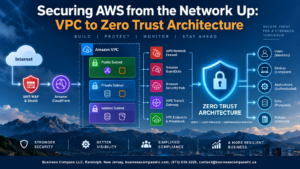
Internet gateway routes form the backbone of public subnet connectivity in AWS VPC routing. Create a default route (0.0.0.0/0) pointing to your internet gateway to enable direct internet access. This route table configuration allows EC2 instances in public subnets to communicate bidirectionally with the internet, making it essential for web servers, load balancers, and any resources requiring public accessibility.
Establish NAT gateway routes for private subnet access
NAT gateway routing enables secure outbound internet connectivity for private subnets while blocking inbound traffic. Configure your private subnet route tables with a default route (0.0.0.0/0) targeting the NAT gateway instance. This AWS networking setup allows database servers, application instances, and internal services to download updates and access external APIs without exposing them to direct internet threats through strategic network routing rules.
Configure VPC peering routes for cross-VPC communication
VPC peering routes enable seamless communication between different VPCs across regions or accounts. Add specific CIDR block routes in each VPC’s route table pointing to the peering connection. These subnet routing configuration entries create secure, private pathways for multi-tier applications, disaster recovery setups, and shared services architectures. Remember to configure routes bidirectionally and ensure CIDR blocks don’t overlap between connected VPCs.
Set up VPN and Direct Connect routing for hybrid connectivity
Hybrid connectivity routes bridge on-premises networks with AWS infrastructure through VPN or Direct Connect gateways. Configure route propagation to automatically learn routes from your corporate network, or manually add specific routes for internal subnets. This AWS route table optimization ensures reliable connectivity for enterprise workloads, enabling seamless migration strategies and maintaining existing network policies while leveraging cloud resources for enhanced AWS network security.
Troubleshoot Common Route Table Issues Like a Pro
Diagnose traffic flow problems using route analysis
Start by examining your VPC route tables to identify where traffic gets stuck. Use VPC Flow Logs to trace packet paths and spot routing bottlenecks. The AWS VPC Reachability Analyzer pinpoints exactly where connections fail, showing you which routes aren’t working as expected. Check your route table entries against your intended traffic flow – mismatched destination CIDR blocks often cause packets to take wrong paths or drop entirely.
Resolve conflicting routes and priority issues
AWS route tables follow specific precedence rules that can trip up even experienced administrators. Local VPC routes always win over propagated routes, while more specific CIDR blocks take priority over broader ones. When you see unexpected routing behavior, list all routes by specificity and check for overlapping destination ranges. Remove duplicate or conflicting entries that compete for the same traffic. Pay special attention to default routes (0.0.0.0/0) that might override your custom routing rules.
Fix subnet association misconfigurations
Double-check which route table each subnet uses – subnets automatically associate with the main route table unless explicitly changed. Common mistakes include leaving public subnets attached to the main route table or mixing public and private subnet associations. Use the AWS console or CLI to verify subnet-to-route-table mappings match your network design. Remember that each subnet can only associate with one route table, but multiple subnets can share the same route table for consistent routing behavior across your AWS networking infrastructure.
Optimize Route Table Performance for Enterprise Scalability
Implement route aggregation for reduced table size
Route aggregation combines multiple smaller subnets into larger CIDR blocks, dramatically reducing AWS route table entries and improving lookup performance. This technique proves essential when managing hundreds of subnets across multiple VPCs. Instead of maintaining individual routes for /24 networks, aggregate them into /16 or /8 blocks where possible. AWS route tables support up to 200 routes per table, making aggregation critical for large enterprise deployments. Proper aggregation reduces memory consumption, speeds up route lookups, and simplifies network management while maintaining connectivity between resources.
Design hierarchical routing structures for complex networks
Hierarchical routing creates layered network architectures that scale efficiently across enterprise environments. Start with core transit gateways connecting regional hubs, then branch into spoke VPCs for specific workloads. This design separates traffic flows logically – east-west traffic stays within regions while north-south traffic routes through centralized security inspection points. Each layer handles specific routing responsibilities: core routers manage inter-region connectivity, distribution routers handle departmental traffic, and access routers serve individual application subnets. This structure reduces routing complexity and enables granular traffic control policies.
Monitor route table metrics and performance indicators
CloudWatch metrics provide deep visibility into AWS route table performance through key indicators like route propagation delays, traffic volumes, and lookup latencies. Track metrics such as PacketsDropped, NetworkLatency, and RouteTableChanges to identify performance bottlenecks before they impact applications. Set up automated alerts when route table modifications exceed baseline thresholds or when unusual traffic patterns emerge. VPC Flow Logs capture detailed routing decisions, helping identify inefficient paths or security issues. Regular monitoring of these metrics enables proactive optimization and ensures network performance meets enterprise SLA requirements.
Scale routing architecture for multi-region deployments
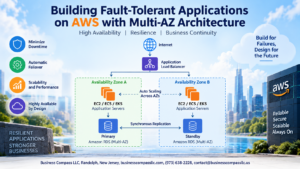
Multi-region AWS deployments require carefully orchestrated route table strategies that balance performance, redundancy, and cost. Deploy Transit Gateways in each region as routing hubs, then establish inter-region peering connections for cross-regional communication. Use route table propagation to automatically distribute routes across regions while maintaining strict control over traffic flows. Implement region-specific route preferences to keep traffic local when possible, reducing latency and data transfer costs. Design failover routing that automatically redirects traffic during regional outages, ensuring business continuity across your global AWS infrastructure.
Route tables are the backbone of AWS networking, and getting them right makes all the difference between a smoothly running infrastructure and constant headaches. We’ve covered how to master the basics, set up configurations that actually work for your needs, and create secure pathways that keep your data flowing safely. Plus, you now have the troubleshooting skills to tackle those frustrating connectivity issues that pop up when you least expect them.
The real power comes from thinking strategically about your routing decisions from day one. Start with simple, clean configurations and build complexity only when you need it. Keep your route tables organized, document your rules clearly, and always test changes in a safe environment first. Your future self will thank you when you’re scaling up and everything just works without breaking a sweat.