Serverless Application Deployment on AWS Using SAM and CI/CD simplifies how you build and deploy cloud applications without managing servers. This guide is for developers and DevOps engineers who want to automate their serverless workflows and scale applications efficiently.
AWS SAM serverless deployment lets you define your infrastructure as code while AWS Lambda deployment automation handles the heavy lifting. You’ll learn how to create robust serverless CI/CD pipelines that deploy your applications consistently across development, staging, and production environments.
We’ll start by exploring the AWS SAM framework tutorial basics and show you how to set up your serverless development environment. Then we’ll dive into building SAM template serverless architecture that defines your application structure. Finally, you’ll discover how to implement continuous deployment serverless applications using automated pipelines that handle testing, building, and deploying your code with minimal manual intervention.
By the end, you’ll have a complete serverless application management AWS workflow that saves time and reduces deployment errors.
Understanding Serverless Architecture and AWS SAM Framework
Core benefits of serverless computing for modern applications
Serverless computing transforms application development by eliminating server management overhead and enabling automatic scaling. Developers focus purely on code while AWS handles infrastructure provisioning, scaling, and maintenance. This approach reduces operational costs since you only pay for actual compute time used, not idle server capacity. Serverless applications scale instantly to handle traffic spikes and scale down to zero during low usage periods. The event-driven nature of serverless architecture perfectly suits microservices patterns, API backends, and data processing workflows. Teams achieve faster time-to-market with reduced DevOps complexity and improved development velocity.
Key components of AWS Serverless Application Model
AWS SAM framework provides essential building blocks for serverless application deployment AWS through its comprehensive template specification. The framework centers around SAM templates written in YAML or JSON, defining Lambda functions, API Gateway endpoints, DynamoDB tables, and IAM roles. SAM CLI serves as the primary development tool, offering local testing capabilities and deployment automation. Built-in transforms automatically generate CloudFormation resources from simplified SAM syntax. The framework includes pre-configured policy templates for common security patterns, reducing boilerplate code. SAM supports nested applications and shared components through application repositories, promoting code reuse across projects.
How SAM simplifies Lambda function development and deployment
AWS SAM framework tutorial demonstrates how SAM dramatically reduces complexity in Lambda development workflows. Traditional CloudFormation templates require hundreds of lines for basic Lambda configurations, while SAM accomplishes the same with minimal YAML syntax. The framework automatically configures API Gateway integrations, IAM permissions, and event triggers based on simple declarations. Local development becomes seamless with sam local commands that simulate AWS services on your machine. Hot reloading capabilities enable real-time code testing without repeated deployments. SAM templates support environment-specific configurations and parameter overrides, streamlining multi-stage deployments. The build process handles dependency management and packaging automatically, eliminating manual zip file creation and upload procedures.
Setting Up Your AWS Development Environment for Serverless Projects
Installing and configuring AWS CLI and SAM CLI tools
Getting your AWS development environment ready starts with installing the essential command-line tools. Download and install the AWS CLI from Amazon’s official documentation, then verify your installation by running aws --version in your terminal. Next, install the AWS SAM CLI using pip with pip install aws-sam-cli or download the installer for your operating system. Configure your AWS credentials using aws configure and provide your access key ID, secret access key, default region, and output format. Test both installations by running sam --version and aws sts get-caller-identity to confirm everything works properly.
Creating IAM roles and permissions for serverless deployments
Proper IAM configuration is critical for secure serverless application deployment AWS operations. Create a dedicated IAM user for your serverless projects with programmatic access enabled. Attach the AWSLambdaFullAccess, IAMFullAccess, AmazonS3FullAccess, and CloudFormationFullAccess policies to handle deployment requirements. For production environments, create more restrictive custom policies that follow the principle of least privilege. Set up an execution role for your Lambda functions with the AWSLambdaBasicExecutionRole managed policy as a starting point. Store your credentials securely using AWS CLI profiles or environment variables, avoiding hardcoded keys in your codebase.
Establishing local development workspace structure
Organize your AWS serverless development environment with a consistent project structure that scales across multiple applications. Create a root directory for your serverless projects, then establish subdirectories for each application containing template.yaml, src/, tests/, and events/ folders. The SAM template file defines your serverless architecture, while the source directory houses your function code organized by service or feature. Include a .gitignore file to exclude build artifacts and sensitive configuration files. Set up local environment configuration files for different stages like development, staging, and production to manage environment-specific variables and settings.
Connecting to AWS services and validating access
Validate your AWS SAM framework tutorial setup by testing connectivity to essential AWS services. Run aws sts get-caller-identity to verify your credentials and check which IAM user or role you’re authenticated as. Test S3 access by listing buckets with aws s3 ls and CloudFormation permissions using aws cloudformation list-stacks. Create a simple “Hello World” SAM application using sam init to validate your complete toolchain. Deploy this test application with sam build followed by sam deploy --guided to confirm your environment can successfully create and manage AWS resources. Monitor the deployment in the AWS console to verify all services are accessible and properly configured.
Building Your First Serverless Application with SAM Templates
Creating YAML template files for infrastructure as code
AWS SAM templates use YAML syntax to define your serverless infrastructure declaratively. The template.yaml file serves as the blueprint for your entire application, specifying resources, dependencies, and configurations. Start with the required Transform declaration AWS::Serverless-2016-10-31 to enable SAM-specific resource types. Define global parameters like runtime environments, memory allocations, and timeout values to maintain consistency across functions. SAM templates support intrinsic functions and pseudo parameters for dynamic resource naming and cross-stack references. Version control your templates alongside application code to track infrastructure changes and enable rollback capabilities when deployments fail.
Defining Lambda functions and event triggers
Lambda function definitions within SAM templates require the AWS::Serverless::Function resource type with essential properties like CodeUri, Handler, and Runtime. Specify event sources directly within the Events section to automatically create triggers from API Gateway, S3 buckets, DynamoDB streams, or CloudWatch Events. Configure environment variables, IAM roles, and VPC settings through the function’s Properties section. Dead letter queues and retry policies help handle failed executions gracefully. Use layers for shared dependencies across multiple functions to reduce deployment package sizes and improve cold start performance. Reserved concurrency settings prevent functions from consuming all available execution capacity.
Configuring API Gateway endpoints and routing
SAM automatically creates API Gateway resources when you define API events in Lambda functions. Use the AWS::Serverless::Api resource for explicit API definitions with custom domain names, request validation, and CORS configuration. Define HTTP methods, path parameters, and query string mappings within the Events section of your Lambda functions. Enable request/response transformations using mapping templates for data format conversions. Configure authorizers for authentication and authorization using Cognito User Pools, Lambda authorizers, or API keys. Stage variables allow environment-specific configurations without modifying the underlying template structure.
Setting up DynamoDB tables and other AWS resources
DynamoDB tables use the AWS::Serverless::SimpleTable resource type for basic configurations or AWS::DynamoDB::Table for advanced features like global secondary indexes and streams. Define partition keys, sort keys, and billing modes within the table properties. Enable point-in-time recovery and encryption at rest for production environments. Create IAM roles with least-privilege access patterns using SAM policy templates like DynamoDBCrudPolicy. Connect Lambda functions to DynamoDB through environment variables containing table names and ARNs. Additional resources like S3 buckets, SNS topics, and SQS queues integrate seamlessly with Lambda functions through event mappings and IAM permissions defined in your SAM template.
Implementing Continuous Integration and Continuous Deployment Pipelines
Designing automated build processes with AWS CodeBuild
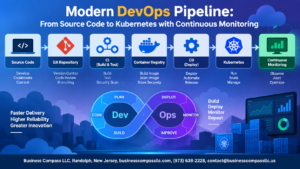
AWS CodeBuild acts as the engine for your serverless CI/CD pipeline, automatically compiling and packaging your SAM applications whenever code changes occur. Configure your buildspec.yml file to define build commands, install dependencies, run unit tests, and package SAM templates using the sam build command. CodeBuild environments support multiple runtime versions for Python, Node.js, and other languages, ensuring compatibility with your Lambda functions. Set up environment variables for different deployment stages and configure artifact storage in S3 buckets. The service scales automatically based on build requirements, eliminating the need to manage build servers while providing detailed logs for troubleshooting failed builds.
Creating deployment pipelines using AWS CodePipeline
CodePipeline orchestrates your entire serverless application deployment workflow, connecting source control to production environments through automated stages. Create pipeline stages that trigger on source code changes, invoke CodeBuild for packaging, and deploy using SAM CLI commands across multiple environments. Configure approval actions for production deployments and set up rollback mechanisms using CloudFormation stack policies. Pipeline artifacts flow seamlessly between stages, carrying built applications and deployment templates. Integration with CloudWatch Events enables real-time monitoring of pipeline executions, while SNS notifications keep teams informed about deployment status and failures.
Integrating GitHub or CodeCommit for source control management
Source control integration triggers your CI/CD AWS SAM pipeline automatically when developers push code changes to designated branches. GitHub integration uses webhooks to notify CodePipeline of repository updates, while CodeCommit provides native AWS integration with IAM-based access control. Configure branch-specific triggers to deploy feature branches to development environments and main branches to staging or production. Set up pull request validation workflows that run automated tests before merging code. Both platforms support fine-grained permissions, allowing teams to control access to sensitive deployment configurations and production branches while maintaining audit trails for compliance requirements.
Setting up automated testing and validation stages
Automated testing stages ensure your serverless applications meet quality standards before reaching production environments. Implement unit tests for Lambda function logic, integration tests for API Gateway endpoints, and end-to-end tests for complete user workflows. Configure CodeBuild to run pytest or Jest test suites during build phases, failing deployments when tests don’t pass. Add CloudFormation template validation using cfn-lint and SAM template validation to catch configuration errors early. Set up smoke tests that validate deployed resources using AWS CLI commands or custom scripts. Include security scanning with tools like Bandit for Python or ESLint for JavaScript, ensuring code quality and vulnerability detection in your continuous deployment serverless applications workflow.
Deploying and Managing Serverless Applications Across Multiple Environments
Configuring staging and production environment parameters
Environment-specific configuration management forms the backbone of reliable serverless application deployment AWS. SAM templates support parameter files and environment variables to customize Lambda functions, API Gateway endpoints, and DynamoDB tables across different stages. Create separate parameter files for staging and production environments, defining resource names, memory allocations, timeout values, and security group configurations. Use AWS Systems Manager Parameter Store or AWS Secrets Manager to store sensitive configuration data like database connection strings and API keys. Implement environment-specific IAM roles and policies to maintain proper access controls. Configure different CloudFormation stack names and S3 bucket prefixes to prevent resource conflicts between environments.
Implementing blue-green deployment strategies for zero downtime
Blue-green deployments eliminate service interruptions during serverless application management AWS by running two identical production environments simultaneously. AWS SAM framework tutorial implementations leverage Lambda aliases and weighted routing to gradually shift traffic from the blue (current) version to the green (new) version. CodeDeploy automates the traffic shifting process, monitoring application health metrics and automatically rolling back if errors occur. Configure CloudWatch alarms to track error rates, latency, and throughput during deployments. Set up pre-traffic and post-traffic hooks using Lambda functions to perform validation tests before completing the deployment. Use API Gateway stage variables to route requests between different Lambda versions seamlessly.
Monitoring application performance and error tracking
Comprehensive monitoring ensures optimal serverless CI/CD pipeline performance and quick issue resolution. CloudWatch Logs automatically capture Lambda function execution logs, while CloudWatch Metrics track invocation counts, duration, and error rates. Implement distributed tracing using AWS X-Ray to visualize request flows across microservices and identify performance bottlenecks. Set up custom CloudWatch dashboards displaying key performance indicators like cold start frequency, memory utilization, and concurrent executions. Configure SNS notifications for critical alerts and integrate with third-party monitoring tools like Datadog or New Relic for advanced analytics. Use structured logging within Lambda functions to enable efficient log parsing and correlation across services.
Managing costs and optimizing resource allocation
Cost optimization requires continuous monitoring and right-sizing of serverless resources based on actual usage patterns. Analyze CloudWatch metrics to identify over-provisioned Lambda functions and adjust memory allocations accordingly. Implement reserved capacity for predictable workloads and use provisioned concurrency sparingly for latency-sensitive applications. Set up billing alerts and budget controls to prevent unexpected charges. Use AWS Cost Explorer to identify cost trends and optimize resource allocation across environments. Consider implementing auto-scaling policies for DynamoDB tables and using S3 intelligent tiering for storage optimization. Regular performance testing helps determine optimal timeout values and prevents unnecessary charges from long-running functions.
Deploying serverless applications on AWS doesn’t have to be complicated when you have the right tools and approach. We’ve walked through everything from understanding serverless architecture and setting up your development environment to building applications with SAM templates and creating robust CI/CD pipelines. These components work together to create a smooth deployment process that saves time and reduces errors.
The real power comes from combining SAM’s infrastructure-as-code capabilities with automated deployment pipelines. This setup lets you manage multiple environments effortlessly while keeping your code organized and your deployments consistent. Start small with a basic serverless function, get comfortable with the SAM CLI, and gradually build up your CI/CD pipeline. Once you have this foundation in place, you’ll find that scaling your serverless applications becomes much more manageable and your development workflow becomes significantly more efficient.