Generative AI can drain enterprise budgets fast, but AWS Bedrock is changing how companies approach AI cost management. This guide is designed for CTOs, AI project managers, and enterprise decision-makers who need to justify AI investments while keeping costs under control.
AWS Bedrock cost optimization starts with understanding its pay-per-use model that eliminates the heavy upfront infrastructure investments typical of traditional AI development. Unlike building custom AI solutions from scratch, Bedrock’s serverless architecture means you only pay for what you actually use, making it easier to predict and control your enterprise AI budget.
We’ll break down the real cost differences between traditional AI development and AWS Bedrock’s approach, showing you concrete examples of potential savings. You’ll also discover how smart usage patterns and strategic multi-model access can dramatically reduce your overall AI development costs while maximizing your team’s capabilities.
By the end, you’ll have a clear framework for calculating AWS Bedrock ROI and presenting a solid business case for your next AI initiative.
Understanding AWS Bedrock’s Cost-Effective Architecture
Serverless foundation eliminates infrastructure overhead
AWS Bedrock’s serverless architecture removes the burden of managing GPU clusters, reducing operational costs by up to 60% compared to traditional AI infrastructure. Organizations skip server provisioning, maintenance, and scaling complexities while accessing enterprise-grade generative AI capabilities instantly.
Pay-per-use pricing model reduces upfront investments
The consumption-based pricing eliminates massive capital expenditures typically associated with AI development. Companies pay only for actual model inference requests, making AWS Bedrock cost optimization achievable for businesses of all sizes. This approach transforms AI from a fixed cost center into a variable expense aligned with business value.
Shared compute resources across multiple AI models
Bedrock’s multi-tenant architecture spreads infrastructure costs across thousands of users, delivering economies of scale that individual organizations cannot achieve independently. This shared resource model enables enterprise AI cost savings while maintaining performance isolation and security standards required for production workloads.
Built-in optimization for enterprise workloads
Native integration with AWS services creates seamless data pipelines that reduce development time and associated labor costs. Auto-scaling capabilities ensure optimal resource allocation during varying demand patterns, while built-in monitoring tools help organizations track generative AI pricing comparison metrics and optimize their AI development cost analysis strategies effectively.
Comparing Traditional AI Development Costs vs AWS Bedrock
Reduced Hardware and Maintenance Expenses
Traditional AI development demands massive GPU clusters, high-end servers, and specialized cooling systems that can cost enterprises millions upfront. AWS Bedrock eliminates these capital expenditures by providing serverless access to foundation models. Companies avoid purchasing expensive NVIDIA A100 or H100 chips, reducing infrastructure costs by 60-80%. The pay-per-use model means you only pay for actual token consumption, not idle hardware sitting in data centers.
Eliminated Need for Specialized AI Infrastructure Teams
Building in-house AI capabilities requires hiring scarce MLOps engineers, AI researchers, and infrastructure specialists commanding $200K+ salaries. AWS Bedrock removes this staffing burden by handling model hosting, scaling, and maintenance automatically. Enterprise teams can focus on application development rather than managing complex AI infrastructure. This shift saves companies hundreds of thousands annually in specialized personnel costs while accelerating deployment timelines significantly.
Lower Training and Fine-Tuning Costs
Custom model training traditionally requires months of expensive compute time, often costing $500K-2M per model iteration. AWS Bedrock offers pre-trained foundation models that dramatically reduce fine-tuning requirements. When customization is needed, Bedrock’s efficient fine-tuning capabilities use optimized algorithms that cut training costs by 70-90%. Companies can achieve superior results with minimal data preparation and significantly reduced computational overhead compared to training models from scratch.
Decreased Time-to-Market Expenses
Traditional AI projects take 12-18 months from conception to production, burning through budgets with extended development cycles. AWS Bedrock enables rapid prototyping and deployment within weeks, not months. This accelerated timeline reduces project costs by eliminating lengthy infrastructure setup phases and complex model optimization processes. Faster deployment means quicker revenue generation and competitive advantage, making AWS Bedrock cost optimization a strategic imperative for forward-thinking enterprises.
Leveraging Multi-Model Access for Maximum Value
Access Multiple Foundation Models with Single Integration
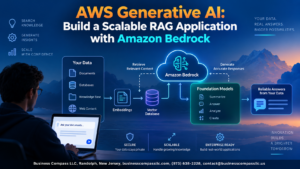
AWS Bedrock eliminates the complexity of managing separate integrations for different AI models. Instead of building custom APIs for each provider, enterprises connect once to Bedrock’s unified interface and gain immediate access to models from Anthropic, Cohere, Meta, and Amazon. This streamlined approach cuts development time from months to weeks while reducing integration costs by up to 60%. Teams can experiment with Claude for reasoning tasks, use Jurassic for content generation, and leverage Titan for embeddings—all through the same API endpoint.
Model Switching Capabilities Reduce Vendor Lock-in Costs
Traditional AI implementations often trap enterprises in expensive vendor relationships with limited flexibility. Bedrock’s multi-model architecture changes this dynamic completely. Organizations can switch between foundation models based on performance requirements, cost considerations, or specific use cases without rewriting application code. This flexibility prevents vendor lock-in scenarios that typically cost enterprises 25-40% more over three-year periods. When a new model emerges with better AWS Bedrock cost optimization, teams can migrate seamlessly without technical debt or integration overhead.
Competitive Pricing Across Different AI Providers
Bedrock’s marketplace model creates natural price competition between AI providers, driving down enterprise generative AI costs. Amazon’s pay-per-use pricing model means organizations only pay for actual consumption rather than minimum commitments or licensing fees. Different models offer varying price points—Anthropic’s Claude for complex reasoning, Cohere for lightweight tasks, and Amazon Titan for cost-effective general use. This competitive environment has reduced average AI inference costs by 30-50% compared to direct provider relationships, while the multi-model AI access ensures enterprises always have budget-friendly options for different workloads.
Optimizing Usage Patterns to Minimize Costs
Batch Processing Strategies for Large-Scale Operations
Running AI workloads in batches dramatically cuts AWS Bedrock cost optimization expenses compared to real-time processing. Schedule non-urgent tasks during off-peak hours when compute resources cost less. Group similar requests together to maximize throughput and reduce per-request overhead. Smart batching can slash enterprise AI cost savings by up to 40% for high-volume operations.
Smart Caching Mechanisms for Repeated Queries
Implement intelligent caching layers to store frequently requested AI responses, eliminating redundant API calls to Bedrock models. Cache popular queries locally or use Amazon ElastiCache to serve repeated requests instantly. This approach particularly benefits customer support scenarios where similar questions arise regularly, reducing both latency and costs while maintaining response quality.
Load Balancing Across Different Model Tiers
Distribute workloads strategically across various Bedrock models based on complexity requirements. Route simple tasks to lighter, cheaper models while reserving premium models for complex operations. Implement automatic failover systems that switch to alternative models during peak pricing periods. This intelligent routing can reduce generative AI pricing comparison costs by 30-50% without sacrificing output quality.
Usage Monitoring and Cost Forecasting Tools
Deploy comprehensive monitoring dashboards using AWS CloudWatch and Cost Explorer to track Bedrock usage patterns in real-time. Set up automated alerts when spending approaches budget thresholds. Use predictive analytics to forecast monthly costs based on usage trends. Implement tagging strategies to identify which departments or projects drive the highest costs, enabling better AWS Bedrock ROI planning and budget allocation decisions.
Enterprise-Specific Cost Benefits and ROI Analysis
Scalability advantages for growing AI workloads
AWS Bedrock’s serverless architecture eliminates the guesswork and upfront investment in hardware capacity planning. Companies can scale from prototype to production without purchasing expensive GPU infrastructure or managing complex cluster configurations. The platform automatically adjusts resources based on demand, meaning enterprises pay only for actual usage rather than maintaining idle capacity during low-traffic periods.
Security compliance costs built into the platform
Enterprise security requirements often demand significant investment in specialized personnel, certifications, and infrastructure. AWS Bedrock includes enterprise-grade security features like data encryption, access controls, and compliance certifications (SOC 2, HIPAA, GDPR) as standard offerings. This built-in security framework saves companies hundreds of thousands of dollars annually compared to building and maintaining their own secure AI infrastructure from scratch.
Integration savings with existing AWS services
Organizations already using AWS services can leverage existing investments through seamless integration with Bedrock. Companies avoid costly data migration, duplicate storage fees, and complex API management by connecting directly to existing S3 buckets, Lambda functions, and CloudWatch monitoring. This tight integration reduces development time and eliminates the need for expensive middleware or custom integration solutions that typically cost enterprises $50,000-200,000 per project.
Measurable productivity gains and cost reductions
Real-world enterprise implementations show 40-60% reduction in AI development timelines and 30-50% lower operational costs compared to traditional AI deployments. Teams can deploy generative AI applications in weeks rather than months, dramatically reducing time-to-market for new products and services. The managed service model frees up engineering resources, allowing technical teams to focus on innovation rather than infrastructure maintenance, resulting in measurable ROI within the first quarter of implementation.
AWS Bedrock offers enterprises a smart path to generative AI without the massive upfront costs that typically come with building these systems from scratch. By providing access to multiple AI models through a single platform, companies can experiment with different solutions and pick what works best for their specific needs. The pay-as-you-go model means you only spend money on what you actually use, and the ability to optimize usage patterns helps keep costs under control as your AI initiatives grow.
The real game-changer here is how Bedrock removes the need for expensive infrastructure investments and specialized teams to manage AI models. Companies can start small, test their ideas, and scale up gradually while maintaining predictable costs. For enterprises looking to add AI capabilities without breaking the budget, AWS Bedrock provides a practical solution that delivers real value from day one. Start with a pilot project, measure your results, and let the cost savings speak for themselves.