Managing AWS credentials securely within GitHub Codespaces is critical for development teams who need reliable cloud access without compromising security. This guide targets DevOps engineers, security architects, and development teams working with AWS Codespaces who want to implement robust credential governance while maintaining smooth development workflows.
GitHub Codespaces AWS integration offers powerful development capabilities, but proper AWS credential management GitHub requires careful planning and implementation. Many teams struggle with balancing developer productivity against security requirements, often leading to overprivileged access or cumbersome authentication processes.
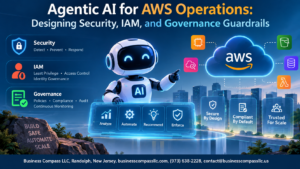
We’ll explore how AWS IAM policies Codespaces can be configured to provide least-privilege access while supporting your team’s development needs. You’ll learn practical approaches for implementing AWS roles GitHub development that streamline authentication and reduce security risks. We’ll also cover essential Codespaces security best practices for establishing comprehensive GitHub Codespaces auditing systems that help you track credential usage and maintain compliance across your secure AWS development workflow.
Understanding AWS Credential Governance in GitHub Codespaces
Security risks of unmanaged credentials in development environments
Hardcoded AWS access keys in development environments create massive security vulnerabilities that expose entire cloud infrastructures to potential breaches. When developers store credentials directly in code repositories, configuration files, or local environments, these sensitive tokens can leak through version control systems, shared development instances, or compromised developer machines. GitHub Codespaces environments without proper AWS credential management often become attack vectors where malicious actors can access production resources, steal sensitive data, or incur substantial cloud costs through resource abuse. The distributed nature of cloud development environments amplifies these risks exponentially.
Benefits of implementing governed credential access
Governed credential access transforms GitHub Codespaces AWS integration into a secure, scalable development platform that eliminates credential exposure risks while streamlining developer workflows. Organizations implementing proper AWS IAM policies for Codespaces gain centralized control over resource access, automated credential rotation, and granular permission management that adapts to specific development needs. This approach enables developers to focus on building applications rather than managing security credentials, while security teams maintain comprehensive visibility and control over cloud resource usage. Codespaces security best practices with governed credentials reduce operational overhead, improve compliance posture, and accelerate development cycles through seamless authentication mechanisms.
Integration architecture between AWS IAM and GitHub Codespaces
The integration architecture between AWS IAM and GitHub Codespaces leverages GitHub’s OpenID Connect (OIDC) provider to establish secure, temporary credential access without storing long-term secrets. This architecture enables GitHub Codespaces to assume AWS roles dynamically based on repository context, user permissions, and organizational policies. The secure AWS development workflow begins when developers launch Codespaces, triggering automatic role assumption through OIDC tokens that authenticate against specific AWS IAM roles configured for development environments. This DevOps AWS authentication model supports multiple deployment strategies, including cross-account access patterns, environment-specific role separation, and just-in-time permission elevation for sensitive operations.
Implementing AWS IAM Policies for Codespaces Access
Designing principle of least privilege policies
AWS IAM policies for GitHub Codespaces require careful scoping to match specific development tasks. Developers should receive only the minimum permissions needed for their role – data scientists get S3 read access to training datasets, while DevOps engineers obtain deployment rights to staging environments. Start with baseline policies that grant access to commonly used services like CloudWatch logs and Parameter Store, then layer additional permissions based on project requirements. Use condition blocks to restrict access by time, IP ranges, or MFA status. Regular policy reviews help identify permission creep and unused access rights that accumulate over development cycles.
Creating environment-specific permission boundaries
Permission boundaries act as guardrails that prevent developers from exceeding their intended access scope, even when policies grant broader permissions. Create separate boundaries for development, staging, and production environments with progressively restrictive controls. Development boundaries might allow EC2 instance creation in specific regions, while production boundaries completely block resource deletion or configuration changes. Tag-based access controls enable automatic environment detection – developers working in staging Codespaces automatically inherit staging-specific limitations. Implement resource quotas within boundaries to prevent accidental cost spikes from runaway development processes.
Managing cross-account access patterns
Multi-account AWS setups require sophisticated role assumption patterns for Codespaces users accessing resources across organizational boundaries. Configure AssumeRole policies that allow developers to temporarily access production accounts for troubleshooting while maintaining audit trails. External ID requirements add extra security layers when assuming roles across different AWS organizations or partner accounts. Session duration limits prevent long-lived cross-account access that could pose security risks. Use AWS Organizations SCPs to enforce company-wide restrictions that override individual account policies, ensuring consistent security posture across all development environments.
Preventing credential escalation vulnerabilities
Credential escalation happens when developers gain more permissions than intended through policy misconfigurations or service assumptions. Block dangerous actions like IAM policy modification, role creation, or privilege escalation paths through services like Lambda or EC2 user data. Implement explicit deny statements for high-risk operations that could compromise account security. Monitor for unusual API calls that suggest credential misuse – developers suddenly accessing KMS keys or attempting to modify security groups outside their normal patterns. Regular penetration testing specifically targeting Codespaces credential flows helps identify potential escalation vectors before attackers exploit them.
Configuring IAM Roles for Seamless Development Workflows
Setting up assume role mechanisms for developers
Cross-account role assumption enables developers to securely access AWS resources from GitHub Codespaces without storing long-term credentials. Configure trust relationships between your development AWS account and production accounts, allowing temporary credential exchange. Set up OIDC providers that map GitHub repository contexts to specific IAM roles, creating a seamless authentication bridge. This approach eliminates credential sprawl while maintaining strict access boundaries for different environments and projects.
Implementing time-based session management
Session duration controls prevent credential misuse and reduce security exposure in cloud development environments. Configure STS assume role policies with maximum session lengths ranging from 15 minutes for highly sensitive operations to 12 hours for extended development work. Implement automatic token refresh mechanisms within Codespaces that request new temporary credentials before expiration. Build session monitoring that tracks active developer sessions and automatically revokes credentials when Codespaces instances terminate or become inactive.
Creating role hierarchies for different team levels
Structured role hierarchies align AWS permissions with organizational responsibilities and development team structures. Create base developer roles with read-only access to shared resources, then build specialized roles for senior developers, team leads, and DevOps engineers with progressively expanded permissions. Design role inheritance patterns where higher-level roles can assume lower-level roles, enabling flexible permission escalation when needed. Map these hierarchies to GitHub team memberships, automatically granting appropriate AWS access based on repository collaboration levels and team assignments.
Automating role assignment based on repository access
Repository-driven role assignment streamlines AWS credential management by automatically matching GitHub access patterns with appropriate IAM roles. Configure GitHub Actions workflows that detect repository membership changes and update corresponding AWS role assignments through API calls. Implement tagging strategies that link GitHub repositories to specific AWS environments, automatically granting developers access to matching infrastructure resources. Build automated cleanup processes that revoke AWS permissions when developers lose repository access, maintaining tight security boundaries across your development workflow.
Establishing Comprehensive Auditing and Monitoring Systems
Tracking credential usage across development sessions
Monitor AWS credential activity across GitHub Codespaces sessions by implementing CloudTrail logging with detailed API call tracking. Set up session-based tagging to identify which developer accessed specific resources during each Codespaces session. Create custom dashboards showing credential usage patterns, failed authentication attempts, and resource access frequency. Track session duration, geographic locations, and unusual access patterns to maintain visibility into your team’s AWS credential management GitHub workflows.
Setting up real-time alerts for suspicious activities
Configure CloudWatch alarms to trigger instant notifications when detecting anomalous credential behavior in your GitHub Codespaces AWS integration. Set thresholds for failed login attempts, unusual geographic access, and off-hours activity patterns. Implement SNS topics connected to Slack or email for immediate security team alerts. Create custom metrics tracking privilege escalation attempts, resource creation spikes, and cross-account access requests to catch potential security threats before they escalate.
Generating compliance reports for security reviews
Build automated reporting systems that compile credential usage data into comprehensive security audit documents. Schedule weekly reports showing developer access patterns, policy violations, and resource consumption across all Codespaces environments. Include sections covering IAM policy effectiveness, role assumption frequency, and compliance with organizational security standards. Export reports in multiple formats for stakeholder reviews, incorporating visual charts showing trend analysis and security posture improvements over time.
Best Practices for Maintaining Secure Development Operations
Regular policy review and rotation procedures
Schedule monthly AWS IAM policy audits to identify overprivileged permissions and unused roles in your GitHub Codespaces environment. Establish automated rotation cycles for AWS credentials every 90 days, implementing temporary access tokens for development tasks. Create policy templates that enforce least-privilege access while maintaining developer productivity. Document all changes in version control systems and maintain approval workflows for policy modifications. Use AWS CloudTrail and GitHub audit logs to track policy effectiveness and identify areas requiring immediate attention during your review cycles.
Developer training on secure credential handling
Train your development teams on AWS credential management best practices specific to GitHub Codespaces environments. Cover topics like avoiding hardcoded secrets, using environment variables properly, and recognizing credential exposure risks. Implement hands-on workshops demonstrating secure AWS authentication flows and proper IAM role assumption techniques. Create quick-reference guides for common scenarios like accessing AWS services from Codespaces without embedding permanent credentials. Regular training sessions keep teams updated on evolving Codespaces security best practices and emerging threats.
Incident response planning for credential compromises
Develop clear procedures for responding to AWS credential compromises in GitHub Codespaces. Create automated alerts that trigger when suspicious API calls or unusual access patterns occur. Establish emergency credential revocation processes that can be executed within minutes of detecting unauthorized access. Document step-by-step response protocols including team notifications, affected service isolation, and forensic data collection. Test your incident response plan quarterly through simulated compromise scenarios to ensure your team can respond effectively under pressure.
Performance optimization without sacrificing security
Balance security controls with developer velocity by implementing smart caching mechanisms for AWS credential validation. Use short-lived tokens and role chaining to reduce authentication overhead while maintaining strong security postures. Optimize your AWS IAM policies to minimize API calls required for permission checks during development workflows. Deploy regional credential endpoints closer to your GitHub Codespaces instances to reduce latency. Monitor performance metrics to identify security controls that create bottlenecks and adjust configurations to maintain both speed and protection.
Setting up proper AWS credential governance in GitHub Codespaces isn’t just about security—it’s about creating a development environment where your team can work confidently without worrying about accidental breaches or unauthorized access. By implementing well-crafted IAM policies, configuring appropriate roles, and establishing solid auditing systems, you’re building a foundation that supports both innovation and compliance. The combination of least-privilege access, automated monitoring, and clear role definitions creates a workspace where developers can focus on what they do best while maintaining the security standards your organization demands.
The key to success lies in treating credential governance as an ongoing process rather than a one-time setup. Regular policy reviews, continuous monitoring of access patterns, and staying updated with AWS and GitHub’s latest security features will keep your Codespaces environment both secure and productive. Start with the basics—define your IAM roles clearly, implement comprehensive logging, and establish regular audit schedules. Your future self (and your security team) will thank you for taking the time to get this right from the beginning.