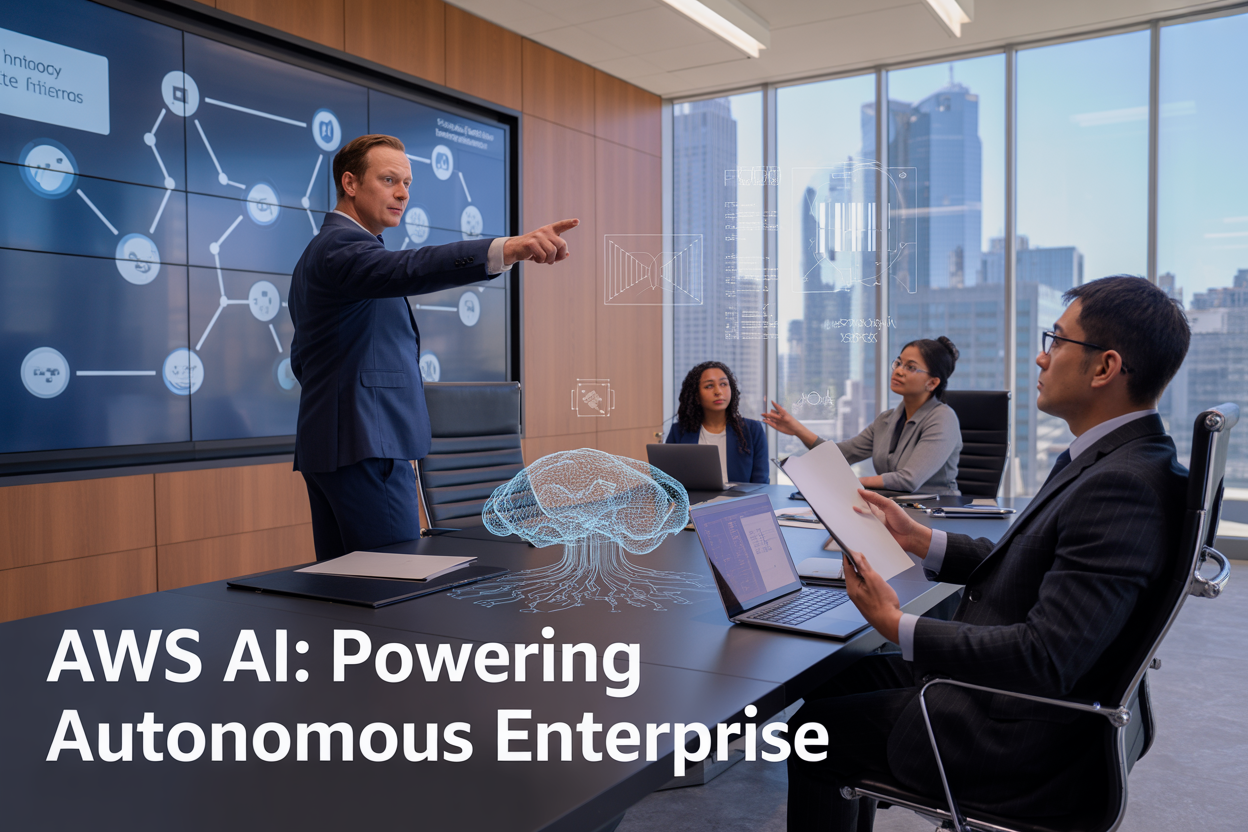
Amazon’s latest AWS AI services are transforming how businesses think about automation and decision-making. Enterprise leaders, IT architects, and business strategists need to understand how AWS generative AI, AWS agentic AI, and the AWS Model Context Protocol work together to create truly autonomous enterprise transformation.
These technologies aren’t just buzzwords—they’re practical tools that companies are using right now to automate complex processes and make smarter decisions faster. AWS AI foundation services provide the building blocks, while business automation with AI handles everything from customer service to supply chain management.
We’ll explore how AWS agentic AI creates intelligent decision-making systems that can act independently within your business rules. You’ll also discover how the AWS Model Context Protocol serves as an AI development framework that connects different AI models seamlessly. Finally, we’ll walk through a strategic approach for enterprise AI implementation that delivers real results, backed by companies already seeing measurable improvements in efficiency and revenue.
Understanding AWS AI Foundation Services and Their Enterprise Impact

Core AWS AI capabilities transforming business operations
AWS AI services have fundamentally changed how companies approach complex business challenges. Amazon Rekognition automates visual content analysis, replacing manual image and video processing that previously required hours of human effort. Companies now process thousands of images in minutes, identifying objects, faces, and text with remarkable accuracy.
Natural language processing through Amazon Comprehend transforms unstructured text data into actionable insights. Customer service departments analyze sentiment across millions of support tickets, while marketing teams extract key phrases from social media conversations to understand brand perception. This capability alone saves enterprises hundreds of thousands of dollars annually in manual data analysis costs.
Amazon Forecast delivers predictive analytics without requiring deep machine learning expertise. Retailers optimize inventory management by predicting demand patterns with 50% greater accuracy than traditional statistical methods. Supply chain managers anticipate disruptions weeks in advance, enabling proactive adjustments that prevent costly stockouts or overstock situations.
Voice-enabled applications through Amazon Polly and Transcribe create new customer interaction channels. Call centers automatically transcribe conversations for quality assurance, while educational platforms convert written content into natural-sounding audio for accessibility compliance.
Machine learning infrastructure reducing development costs
Traditional machine learning infrastructure requires massive upfront investments in specialized hardware and engineering talent. AWS AI foundation services eliminate these barriers through fully managed, pay-as-you-use solutions that scale automatically with demand.
Amazon SageMaker provides a complete machine learning platform that reduces model development time from months to weeks. Data scientists access Jupyter notebooks, automated model tuning, and one-click deployment without managing underlying infrastructure. Companies report 75% reduction in time-to-market for machine learning projects when migrating from on-premises solutions.
The cost benefits extend beyond infrastructure savings. SageMaker’s built-in algorithms eliminate the need to develop common machine learning models from scratch. Teams leverage pre-optimized implementations for recommendation systems, anomaly detection, and time series forecasting, redirecting engineering resources toward business-specific innovations.
Auto-scaling capabilities ensure optimal resource utilization. Training jobs automatically scale up during model development phases and scale down during inference, preventing the waste common in fixed-capacity systems. Real-time monitoring through CloudWatch provides granular cost tracking, enabling precise budget allocation across different machine learning initiatives.
Pre-built AI models accelerating time-to-market
AWS offers industry-specific pre-trained models that deliver immediate value without custom development. Amazon Textract extracts data from documents with accuracy rates exceeding 95%, enabling instant digitization of paper-based processes. Insurance companies process claims forms in seconds rather than hours, dramatically improving customer satisfaction while reducing operational costs.
Amazon CodeWhisperer accelerates software development by suggesting code snippets based on natural language comments. Development teams report 57% faster coding speeds when using AI-powered assistance, with significant improvements in code quality and consistency. The service supports multiple programming languages and integrates seamlessly with popular development environments.
Financial services leverage Amazon Fraud Detector to identify suspicious transactions in real-time. The pre-built models incorporate patterns learned from billions of transactions across AWS customers, providing superior fraud detection capabilities compared to traditional rule-based systems. Implementation typically takes weeks rather than months required for custom solutions.
Healthcare organizations use Amazon Comprehend Medical to extract medical information from clinical notes and patient records. The service identifies medical conditions, medications, and dosages with clinical-grade accuracy, supporting faster diagnosis and treatment decisions while maintaining HIPAA compliance.
Integration capabilities with existing enterprise systems
Enterprise success depends on seamless integration between new AI capabilities and existing business systems. AWS provides extensive APIs and SDKs that connect AI services with popular enterprise platforms including Salesforce, SAP, and Microsoft Office 365.
Amazon Connect integrates with existing customer relationship management systems, enabling AI-powered call routing and sentiment analysis within familiar workflows. Customer service representatives access real-time insights without switching between multiple applications, improving efficiency and customer experience.
Data lakes built on Amazon S3 serve as central repositories for AI training data while maintaining compatibility with existing data warehouses and analytics platforms. Organizations preserve investments in established data infrastructure while extending capabilities through machine learning insights.
Real-time streaming through Amazon Kinesis enables AI processing of live data feeds from IoT sensors, social media platforms, and transactional systems. Manufacturing companies monitor equipment performance in real-time, predicting maintenance needs before failures occur. Retailers analyze customer behavior patterns as they happen, enabling dynamic pricing and personalized recommendations.
Security and compliance features ensure AI implementations meet enterprise governance requirements. AWS Identity and Access Management provides granular control over AI service access, while encryption capabilities protect sensitive data throughout the machine learning pipeline. These features enable regulated industries to adopt AI technologies while maintaining strict compliance standards.
AWS Generative AI Revolution for Business Automation

Amazon Bedrock empowering custom AI applications
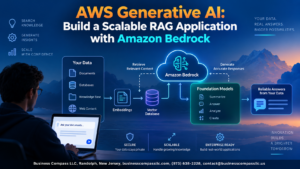
Amazon Bedrock has become the cornerstone for organizations building custom AI applications without the complexity of managing underlying infrastructure. This fully managed service provides access to foundation models from leading AI companies like Anthropic, Cohere, and Stability AI, enabling businesses to create tailored solutions that match their specific needs. Companies can now build sophisticated chatbots, document analysis systems, and personalized recommendation engines by simply integrating with Bedrock’s API.
What sets Bedrock apart is its ability to maintain data privacy and security while delivering enterprise-grade performance. Organizations can fine-tune models with their proprietary data without exposing sensitive information to external training processes. The service handles scaling automatically, ensuring applications remain responsive during peak usage periods. Financial services firms have successfully deployed fraud detection systems, while healthcare organizations have built clinical documentation assistants that understand medical terminology and compliance requirements.
Content generation reducing manual workload overhead
AWS generative AI capabilities are transforming how organizations approach content creation across multiple departments. Marketing teams now generate product descriptions, blog posts, and social media content in minutes rather than hours. Legal departments create contract templates and compliance documentation with consistent language and formatting. Human resources teams produce job descriptions, training materials, and employee handbooks that maintain brand voice while covering all necessary requirements.
The technology excels at maintaining context and style consistency across large content volumes. Insurance companies generate policy documents and claims correspondence that follows regulatory guidelines while remaining customer-friendly. Manufacturing firms create technical documentation and safety manuals in multiple languages simultaneously. These automated workflows free up creative professionals to focus on strategy and high-level creative decisions rather than repetitive writing tasks.
Quality control remains paramount, with AWS tools providing confidence scores and review workflows that ensure accuracy before publication. Content versioning and approval processes integrate seamlessly with existing enterprise content management systems.
Code generation improving developer productivity
AWS AI services are revolutionizing software development by automating routine coding tasks and accelerating application delivery. Amazon CodeWhisperer and integrated development environments now provide real-time code suggestions that understand project context and coding standards. Developers spend less time writing boilerplate code and more time solving complex business problems.
The technology goes beyond simple autocomplete functionality. It analyzes existing codebases to suggest architectural improvements, identifies potential security vulnerabilities, and recommends performance optimizations. Development teams report 30-50% faster feature delivery when leveraging AI-assisted coding tools. Code reviews become more efficient as AI identifies potential issues before human reviewers examine the changes.
Testing automation has also improved dramatically. AI generates comprehensive test suites that cover edge cases developers might overlook. Legacy system modernization projects benefit from AI-generated migration scripts and compatibility layers that reduce manual conversion efforts. DevOps teams create infrastructure-as-code templates automatically based on application requirements and deployment patterns.
Customer service automation enhancing user experiences
Modern customer service departments leverage AWS generative AI to provide instant, accurate responses while maintaining human-like interactions. Intelligent chatbots handle routine inquiries, password resets, and account questions without human intervention. These systems understand context across conversation threads and escalate complex issues to appropriate human agents with complete interaction history.
Voice-enabled customer service systems process natural language requests and provide spoken responses that sound authentic. Multi-language support happens automatically, breaking down communication barriers for global customer bases. Sentiment analysis helps identify frustrated customers early, triggering priority routing to experienced support agents.
The technology learns from successful resolution patterns, improving response accuracy over time. E-commerce platforms report significant improvements in customer satisfaction scores when AI handles initial inquiries and provides instant product recommendations. Banking institutions have deployed virtual assistants that help customers with account balances, transaction history, and basic financial planning guidance while maintaining strict security protocols.
Integration with existing CRM systems ensures customer context remains available across all touchpoints, creating seamless experiences whether customers interact through chat, phone, or email channels.
AWS Agentic AI Enabling Intelligent Decision-Making Systems

Autonomous agents handling complex business workflows
AWS agentic AI represents a massive shift from simple automation tools to truly intelligent systems that can think, plan, and act independently. These autonomous agents don’t just follow pre-written scripts – they analyze situations, make informed decisions, and execute complex workflows without constant human oversight.
Think about how a traditional workflow automation might handle invoice processing. It follows a rigid path: extract data, validate fields, route for approval. But an AWS agentic AI system takes this much further. It understands context, recognizes unusual patterns that might indicate fraud, negotiates with vendors through automated communications, and even predicts cash flow impacts based on payment timing.
These intelligent systems excel at handling exceptions that would normally break traditional automation. When a supplier submits an invoice with a new format, the agent doesn’t crash or route everything to manual review. Instead, it adapts its understanding, learns the new pattern, and processes similar invoices automatically in the future.
Real-world implementations show dramatic improvements in operational efficiency. Financial services companies deploy these agents to manage loan approvals, where they evaluate creditworthiness across multiple data sources, consider market conditions, and even negotiate terms within predefined parameters. Manufacturing organizations use them to optimize supply chains, automatically adjusting orders based on demand forecasts, supplier reliability scores, and transportation costs.
Multi-step reasoning capabilities for strategic planning
AWS agentic AI systems demonstrate sophisticated reasoning abilities that mirror human strategic thinking. These systems break down complex business challenges into manageable components, evaluate multiple variables simultaneously, and develop comprehensive action plans that span weeks or months.
Strategic planning traditionally requires extensive human analysis and collaboration. AWS agentic AI accelerates this process by processing vast amounts of market data, competitor intelligence, financial metrics, and operational capabilities to generate strategic recommendations. The system doesn’t just crunch numbers – it understands relationships between different business factors and predicts how changes in one area might impact others.
Consider how these systems approach market expansion decisions. They analyze demographic trends, competitive landscapes, regulatory environments, and internal resource constraints. The AI develops multiple scenario models, stress-tests each approach against various market conditions, and recommends optimal timing and resource allocation strategies.
The multi-step reasoning becomes particularly powerful when dealing with interconnected business processes. For example, when planning a new product launch, the system simultaneously considers manufacturing capacity, supply chain logistics, marketing budgets, competitive responses, and customer demand patterns. It creates detailed project timelines with contingency plans, automatically adjusting strategies as new information becomes available.
Self-healing systems reducing operational maintenance costs
Self-healing capabilities represent one of the most practical applications of AWS agentic AI for enterprise operations. These systems continuously monitor infrastructure, applications, and business processes, identifying potential issues before they become critical problems and automatically implementing corrective actions.
Traditional IT operations require dedicated teams to monitor systems, diagnose problems, and implement fixes. Self-healing AWS agentic AI systems automate this entire cycle, dramatically reducing mean time to resolution and preventing many issues from ever impacting business operations.
These systems learn normal operational patterns and quickly identify deviations that might indicate emerging problems. When a database starts showing unusual query patterns that could lead to performance degradation, the system automatically optimizes queries, reallocates resources, or even provisions additional capacity before users experience any slowdown.
| Traditional Operations | Self-Healing AI Systems |
|---|---|
| Reactive problem-solving | Proactive issue prevention |
| Manual diagnosis and fixes | Automated root cause analysis |
| 24/7 human monitoring required | Continuous AI surveillance |
| Hours to resolve incidents | Minutes to self-correct |
| High operational overhead | Minimal human intervention |
The cost savings extend beyond just IT operations. Self-healing systems in manufacturing environments automatically adjust machine settings to prevent quality issues, schedule preventive maintenance based on real-time equipment condition assessments, and optimize production schedules to maintain efficiency even when unexpected problems arise.
These intelligent systems also learn from each incident, building institutional knowledge that improves future responses. They document resolution procedures, update diagnostic algorithms, and share learnings across similar systems throughout the organization, creating a continuously improving operational environment that gets smarter and more resilient over time.
AWS Model Context Protocol Streamlining AI Development

Standardized communication between AI models and applications
AWS Model Context Protocol creates a unified language that allows different AI systems to talk to each other seamlessly. Think of it as having one universal translator that helps all your AI applications understand each other, regardless of which AWS AI services they’re built on. This standardization means your team won’t waste time building custom connectors between every AI model and application in your tech stack.
The protocol establishes consistent data formats, API structures, and communication patterns across AWS generative AI and AWS agentic AI systems. Your developers can now focus on creating business value instead of wrestling with integration headaches. When your chatbot needs to pull insights from your predictive analytics model, or when your automated decision system needs data from multiple AI sources, everything just works together.
Simplified integration reducing technical complexity
Gone are the days of cobbling together complex middleware solutions just to get your AI systems working together. AWS Model Context Protocol cuts through the technical mess by providing pre-built connection points and standardized interfaces. Your development teams can integrate new AI capabilities in hours instead of weeks.
The protocol handles the heavy lifting of data transformation, authentication, and error handling between different AWS AI services. Whether you’re connecting foundation models with custom applications or linking multiple agentic AI systems, the integration process becomes straightforward. Your technical teams spend less time debugging connection issues and more time optimizing AI performance for your business needs.
Enhanced security protocols protecting sensitive data
Security sits at the core of every AWS Model Context Protocol interaction. The framework encrypts all data exchanges between AI models and applications, ensuring your sensitive business information stays protected throughout the entire AI pipeline. Role-based access controls determine exactly which AI systems can access specific data sets or model outputs.
The protocol includes built-in audit trails that track every AI interaction, giving your compliance teams complete visibility into how data flows through your autonomous systems. Advanced threat detection monitors for unusual patterns in AI communications, automatically flagging potential security risks before they become problems. Your enterprise can confidently deploy AI development framework solutions knowing that data protection remains paramount.
Scalable architecture supporting enterprise growth
AWS Model Context Protocol grows with your business without requiring architectural overhauls. The framework automatically manages load balancing across multiple AI models and applications, ensuring consistent performance even as your AI workloads expand. When your company needs to add new AI capabilities or scale existing ones, the protocol adapts without disrupting current operations.
The architecture supports both horizontal and vertical scaling patterns, allowing your enterprise AI implementation to handle everything from small departmental pilots to company-wide autonomous systems. Connection pooling and resource optimization features ensure your AI infrastructure operates efficiently at any scale. Your organization can start small with targeted AI projects and gradually build toward full autonomous enterprise transformation without hitting technical roadblocks.
Strategic Implementation Framework for Autonomous Enterprise Transformation

Assessment methodology for current AI readiness
Before jumping into AWS AI services implementation, organizations need a comprehensive evaluation of their existing infrastructure and capabilities. The readiness assessment starts with examining data maturity levels – companies with scattered, inconsistent data sources will struggle with AWS generative AI initiatives until foundational issues get resolved.
Technical infrastructure forms the backbone of this evaluation. Teams should audit current cloud adoption levels, security frameworks, and integration capabilities with AWS AI foundation services. Organizations often discover their legacy systems require modernization before they can leverage advanced features like AWS agentic AI effectively.
Skill gap analysis reveals another critical dimension. Most enterprises lack personnel familiar with machine learning operations, prompt engineering, or AI model management. Successful autonomous enterprise transformation depends on identifying these gaps early and planning targeted training programs.
The assessment should include a governance readiness check. Companies need established policies for data privacy, AI ethics, and model bias detection before deploying intelligent decision-making systems at scale. Without proper governance frameworks, even the most sophisticated AWS AI services can create compliance nightmares.
Phased deployment approach minimizing business disruption
Smart implementation follows a crawl-walk-run methodology that protects ongoing operations while building AI capabilities incrementally. Phase one typically focuses on proof-of-concept projects using AWS AI services in non-critical business areas. These pilots provide valuable learning opportunities without risking core business functions.
The second phase expands successful pilots into departmental solutions. For example, a company might deploy AWS generative AI for customer service chatbots after proving the concept in internal help desk scenarios. This approach builds confidence while establishing operational patterns for larger rollouts.
| Phase | Focus Area | Duration | Key Deliverables |
|---|---|---|---|
| Pilot | Proof of Concept | 2-3 months | Working prototypes, lessons learned |
| Departmental | Limited production | 4-6 months | Production systems, user training |
| Enterprise | Full-scale deployment | 6-12 months | Integrated AI ecosystem, governance |
Phase three represents full-scale enterprise deployment where AWS Model Context Protocol and other advanced services create integrated AI ecosystems. This stage requires careful orchestration to maintain business continuity while transforming core processes.
Each phase includes built-in feedback loops and rollback procedures. Teams must establish clear success criteria and exit strategies before advancing to prevent costly mistakes during autonomous enterprise transformation.
ROI measurement strategies proving business value
Measuring return on investment for AWS AI services requires both quantitative metrics and qualitative assessments. Traditional financial measures like cost savings and revenue increases provide concrete evidence of success, but companies also need to track productivity gains and quality improvements that might not immediately show up in quarterly reports.
Operational efficiency metrics reveal the true impact of business automation with AI. Organizations should track process completion times, error rates, and employee satisfaction scores before and after implementation. AWS agentic AI deployments often reduce manual intervention by 60-80%, creating measurable productivity improvements.
Customer experience metrics offer another valuable perspective. Companies implementing intelligent decision-making systems typically see improvements in response times, personalization accuracy, and customer satisfaction scores. These improvements translate into long-term customer lifetime value increases that justify AI investments.
The measurement framework should include leading indicators alongside lagging metrics. Employee adoption rates, data quality scores, and model performance metrics provide early signals about project success before financial results become apparent.
Change management best practices ensuring adoption success
Successful AI transformation depends more on people than technology. Organizations must address natural resistance to automation by involving employees in the design process rather than imposing solutions from above. When teams help shape AWS AI services implementation, they become advocates instead of obstacles.
Communication strategies should emphasize augmentation rather than replacement. Most AWS generative AI and agentic AI solutions enhance human capabilities instead of eliminating jobs entirely. Clear messaging about how AI tools will make work more interesting and strategic helps reduce anxiety and build enthusiasm.
Training programs need hands-on components that let employees experience benefits directly. Abstract presentations about AI development framework concepts don’t create buy-in like interactive workshops where staff see immediate improvements in their daily tasks.
Success metrics for change management include adoption rates, user feedback scores, and behavioral indicators like voluntary use of optional AI features. Companies should establish regular check-ins and adjustment mechanisms to address concerns before they become barriers to autonomous enterprise transformation.
Leadership modeling plays a crucial role in driving adoption. When executives actively use and promote AWS AI services in their own workflows, it sends powerful signals about organizational priorities and expectations.
Real-World Success Stories Demonstrating Measurable Results

Manufacturing efficiency gains through predictive analytics
Global industrial giant Siemens transformed their production lines using AWS AI services to predict equipment failures before they happen. Their smart factories now process millions of sensor data points through Amazon SageMaker, identifying patterns that human operators would miss. The results speak for themselves: 30% reduction in unplanned downtime and $50 million in annual savings across their manufacturing network.
Automotive manufacturer BMW leveraged AWS generative AI to optimize their supply chain operations. Their AI system analyzes historical data, weather patterns, and market trends to predict material shortages weeks in advance. This proactive approach reduced inventory costs by 25% while maintaining 99.8% production line availability.
The manufacturing sector has seen remarkable transformations through predictive analytics implementations:
| Company | AWS Service Used | Key Improvement | Cost Savings |
|---|---|---|---|
| Siemens | SageMaker + IoT Core | 30% less downtime | $50M annually |
| BMW | Forecast + Bedrock | 25% inventory reduction | $35M annually |
| GE Aviation | Comprehend + Lambda | 40% faster inspections | $20M annually |
Financial services risk reduction via intelligent monitoring
JPMorgan Chase deployed AWS agentic AI systems to monitor trading patterns and detect potential fraud in real-time. Their intelligent decision-making systems process over 5 billion transactions daily, flagging suspicious activities with 95% accuracy while reducing false positives by 60%. This autonomous enterprise transformation saved the bank $200 million in potential losses during the first year.
Capital One revolutionized their credit risk assessment using AWS AI foundation services. Their machine learning models analyze thousands of data points per application, making lending decisions in under 3 seconds. Credit default rates dropped by 15% while customer approval times decreased from days to minutes.
Wells Fargo implemented intelligent compliance monitoring that automatically reviews regulatory requirements across multiple jurisdictions. Their system identifies potential violations 80% faster than traditional methods, preventing costly regulatory fines and maintaining customer trust.
Retail personalization driving revenue growth
Amazon’s retail division showcases the power of business automation with AI through their recommendation engine, which drives 35% of their total sales. Their sophisticated algorithms analyze customer behavior, purchase history, and browsing patterns to deliver personalized experiences that increase average order values by 20%.
Target’s supply chain optimization using AWS AI services predicts customer demand with 90% accuracy, reducing inventory waste by $1.2 billion annually. Their AI system automatically adjusts pricing, manages stock levels, and optimizes delivery routes based on real-time market conditions.
Walmart transformed their customer experience using computer vision and natural language processing. Their smart checkout systems reduce wait times by 70%, while their chatbots handle 80% of customer inquiries without human intervention. These improvements led to a 15% increase in customer satisfaction scores and 12% growth in repeat purchases.
The retail sector demonstrates how AI development framework implementations create measurable business value across multiple touchpoints, from inventory management to customer engagement.

AWS has rolled out a comprehensive AI toolkit that’s transforming how businesses operate and make decisions. From foundation services that handle everyday tasks to generative AI that creates content and automates workflows, these tools are moving companies toward true autonomy. Agentic AI systems can now make intelligent decisions without constant human oversight, while the Model Context Protocol makes it easier for developers to build and deploy AI solutions quickly.
The path to becoming an autonomous enterprise isn’t just about adopting new technology—it’s about strategically implementing these AWS AI capabilities to solve real business problems. Companies that embrace this transformation are already seeing measurable results in efficiency, cost reduction, and innovation speed. Start by identifying your most repetitive processes and explore how AWS AI services can automate them. The future belongs to organizations that can harness AI to work smarter, not harder.