GitOps implementation in government agencies demands a practical approach that balances security with operational efficiency. This hands-on guide walks government IT teams, DevOps engineers, and digital transformation leaders through a complete HumanGov GitHub POC that demonstrates real-world GitOps workflow automation.
You’ll discover how to set up a secure GitOps environment that meets government compliance requirements while enabling GitHub continuous deployment. We’ll show you how to master GitOps commit operations and Git push operations that streamline your development pipeline without sacrificing oversight.
The guide also covers essential GitOps revert strategies for government DevOps practices, ensuring your team can quickly roll back changes when issues arise. By the end, you’ll have a working understanding of GitOps risk mitigation techniques and the metrics needed to measure your implementation’s success.
Understanding GitOps Fundamentals for Government Operations
Core GitOps Principles and Their Alignment with Government Compliance Requirements
GitOps implementation transforms government operations by establishing version-controlled infrastructure management that naturally aligns with compliance mandates. Every change gets tracked, audited, and approved through Git workflows, creating an immutable record that satisfies regulatory requirements. Government agencies benefit from declarative configurations that ensure consistent environments across development, testing, and production systems. The pull-based deployment model reduces security risks while maintaining the transparency and accountability that public sector organizations demand.
Benefits of Declarative Infrastructure Management in Public Sector Environments
Declarative infrastructure management revolutionizes how government DevOps practices operate by defining desired system states rather than procedural steps. Teams specify what they want the infrastructure to look like, and automated processes handle the implementation details. This approach eliminates configuration drift, reduces human error, and ensures reproducible deployments across multiple environments. Government agencies gain predictable outcomes, faster recovery times, and simplified disaster recovery procedures through consistent infrastructure definitions.
Security Advantages of Git-Based Deployment Workflows
Git-based deployment workflows strengthen government security postures through built-in access controls, encrypted communications, and comprehensive audit trails. Every deployment originates from reviewed code changes, preventing unauthorized modifications to production systems. Role-based access management ensures only authorized personnel can approve and merge critical infrastructure changes. The distributed nature of Git repositories provides natural backup mechanisms while signed commits verify the integrity and authenticity of all modifications throughout the deployment pipeline.
Comparison with Traditional Deployment Methodologies
Traditional deployment methodologies rely on manual processes, shared credentials, and direct server access that create security vulnerabilities and compliance gaps. GitOps government implementations eliminate these risks by centralizing all changes through version control systems. While conventional approaches require extensive documentation and manual verification steps, GitOps workflow automation provides automatic compliance checking and rollback capabilities. The shift from push-based to pull-based deployments reduces attack surfaces and ensures that production systems remain isolated from external access points.
Setting Up the HumanGov GitOps Environment
GitHub repository structure and organization best practices
Creating a solid foundation for your HumanGov GitOps implementation starts with smart repository organization. Your main infrastructure repository should follow a clear directory structure: separate folders for environments (dev, staging, production), application manifests, and shared configurations. Use dedicated repositories for different services to maintain clear ownership boundaries and reduce blast radius during changes. Implement a monorepo approach for shared libraries and common configurations while keeping application-specific deployments in their own repos.
Branch protection rules become critical in government environments where compliance matters. Set up your main branch with required status checks, mandatory code reviews, and restrict direct pushes. Create environment-specific branches that mirror your deployment pipeline – this gives you clear visibility into what’s running where. Tag your releases consistently using semantic versioning, and maintain detailed commit messages that reference issue numbers for audit trails.
Consider implementing a GitOps-specific folder structure with clear separation between declarative configurations and operational scripts. Your repository should include documentation folders, policy definitions, and security scanning configurations right alongside your deployment manifests. This approach supports the government’s need for transparency and audit compliance while making your GitOps workflow automation more predictable.
Essential tooling and integrations for government-grade GitOps
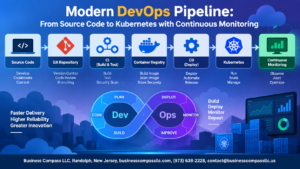
Government GitOps demands robust tooling that meets security and compliance standards. ArgoCD or Flux CD serve as your GitOps operators, continuously monitoring your repositories and applying changes to your Kubernetes clusters. Integrate these with GitHub Actions for your continuous deployment pipeline, ensuring every change goes through proper validation before reaching production environments.
Security scanning tools like Snyk or Trivy should run automatically on every commit, checking for vulnerabilities in both your container images and infrastructure code. Policy engines such as Open Policy Agent (OPA) enforce compliance rules at the cluster level, while tools like Falco monitor runtime security. These integrations transform your GitHub POC into a comprehensive security-first deployment system.
Monitoring and observability tools become essential for government operations where downtime has serious consequences. Prometheus and Grafana provide metrics and visualization, while tools like Jaeger handle distributed tracing. Connect these to your GitOps pipeline so you can track deployment success rates, rollback frequencies, and system performance metrics. This data becomes invaluable for demonstrating compliance with service level agreements and government performance standards.
Access controls and permission management configuration
Government environments require strict access controls that balance security with operational efficiency. GitHub’s team-based permission model works well for HumanGov scenarios – create teams that mirror your organizational structure and assign repository permissions accordingly. Developers get write access to feature branches, while production deployments require approvals from senior team members or automated systems.
Implement branch protection rules that enforce your security policies. Require signed commits from verified users, mandate two-person approval for critical changes, and block force pushes that could bypass your audit trail. Use GitHub’s environment protection rules to add extra gates for production deployments – these can include manual approvals, deployment windows, or integration with external approval systems commonly used in government workflows.
Service accounts and machine users need careful management in GitOps implementations. Create dedicated service accounts for your CI/CD pipelines with minimal necessary permissions. Rotate these credentials regularly and store them securely using GitHub Secrets or external secret management systems. Your GitOps risk mitigation strategy should include regular access reviews and automated detection of unusual access patterns that might indicate security issues.
Implementing Commit Operations in the HumanGov Workflow
Creating standardized commit message conventions for policy compliance
Government environments require strict adherence to regulatory standards and audit trails. Implementing GitOps commit operations in HumanGov demands structured message formats that capture essential metadata for compliance tracking. Commit messages should include policy reference numbers, impact assessments, and change classification levels. This standardization ensures every code change maintains proper documentation for regulatory audits and enables automated compliance checking throughout the GitOps workflow automation process.
Automated validation and pre-commit hooks setup
Pre-commit hooks serve as gatekeepers for code quality and security standards in government GitOps implementations. These automated checks validate commit messages against established conventions, scan for sensitive information, and verify code quality metrics before changes enter the repository. HumanGov GitHub POC environments benefit from hooks that check policy compliance, security vulnerabilities, and coding standards. Automated validation reduces manual oversight burden while maintaining the high security standards required for government DevOps practices.
Branch protection rules and approval processes
Branch protection mechanisms prevent unauthorized changes to critical government systems while enabling collaborative development. Protection rules require specific approval workflows based on change impact levels and affected systems. Senior developers or security officers must review changes affecting production environments or sensitive data systems. These approval processes integrate seamlessly with existing government change management protocols, ensuring GitOps government operations maintain proper oversight without sacrificing development velocity or innovation.
Integration with existing government change management systems
Successful GitOps implementation requires seamless integration with established government change advisory boards and approval workflows. API connections between GitHub and existing ITSM platforms automate ticket creation, status updates, and approval routing based on commit metadata. This integration bridges the gap between traditional government change management and modern GitOps workflow automation. Change requests automatically generate from commit operations, maintaining audit trails while reducing administrative overhead and accelerating deployment cycles for critical government services.
Streamlining Push Operations for Continuous Deployment
Automated testing pipelines triggered by push events
Push events activate comprehensive testing pipelines that validate code changes before deployment to HumanGov environments. GitHub Actions workflows automatically execute unit tests, integration tests, and security scans, ensuring government compliance standards are met. These GitOps workflow automation processes catch issues early, reducing deployment risks and maintaining system reliability across all government operations.
Environment-specific deployment strategies and approvals
Different deployment strategies apply to development, staging, and production environments within the HumanGov GitHub POC. Development environments receive automatic deployments, while staging requires automated approval gates. Production deployments demand manual reviews from designated government stakeholders, creating multiple checkpoints that align with GitOps government security protocols and change management requirements.
Monitoring and alerting configuration for deployment visibility
Real-time monitoring tracks GitHub continuous deployment activities across all HumanGov environments, providing instant feedback on deployment status and system health. Alert configurations notify administrators about failed deployments, performance degradation, or security anomalies through integrated dashboards. This GitOps implementation ensures complete visibility into government DevOps practices, enabling rapid response to issues and maintaining operational transparency throughout the deployment pipeline.
Mastering Revert Operations for Risk Mitigation
Quick rollback procedures for critical system failures
Quick rollback procedures form the backbone of effective GitOps risk mitigation in government operations. When critical system failures occur in the HumanGov environment, teams need instant access to reliable revert strategies that restore service availability within minutes. The GitHub POC demonstrates automated rollback triggers that activate when monitoring systems detect anomalies, automatically reverting to the last known stable commit without human intervention. Emergency procedures include pre-configured revert commands, automated health checks post-rollback, and immediate notification systems that alert stakeholders about the rollback action and current system status.
Audit trail maintenance and compliance documentation
Government GitOps implementations require comprehensive audit trails that document every revert operation for compliance purposes. The HumanGov GitHub POC maintains detailed logs capturing the original commit hash, revert timestamp, authorized personnel, and justification for the rollback action. These records integrate with existing government compliance frameworks, providing auditors with clear visibility into change management processes. Documentation includes before-and-after system states, impact assessments, and approval workflows that demonstrate proper authorization channels were followed during emergency revert operations.
Testing revert scenarios in staging environments
Staging environment testing validates revert operations before they’re needed in production emergencies. The HumanGov GitOps workflow includes scheduled revert drills that simulate various failure scenarios, testing both automated and manual rollback procedures. Teams practice reverting different types of changes including configuration updates, application deployments, and infrastructure modifications. Testing scenarios cover partial rollbacks, cascading failures, and dependency conflicts that might complicate standard revert operations. Regular practice sessions ensure team readiness and identify potential issues before they impact live government services.
Communication protocols for emergency rollbacks
Emergency rollback communication protocols coordinate stakeholder notification and status updates during critical incidents. The HumanGov GitOps implementation includes automated messaging systems that instantly notify relevant teams, management, and affected user groups when revert operations begin. Communication templates provide consistent messaging across different incident types, while escalation procedures ensure appropriate leadership involvement based on impact severity. Real-time status dashboards display rollback progress, estimated completion times, and service restoration updates, keeping all stakeholders informed without overwhelming communication channels during high-stress situations.
Post-incident analysis and improvement processes
Post-incident analysis transforms revert operations into learning opportunities that strengthen future GitOps risk mitigation capabilities. The HumanGov workflow includes structured review processes that examine root causes, revert effectiveness, and team response times following each rollback incident. Analysis sessions identify gaps in monitoring, documentation, or procedures that contributed to the need for emergency action. Teams document lessons learned, update runbooks with improved procedures, and implement preventive measures that reduce the likelihood of similar incidents requiring revert operations in government systems.
Measuring Success and Performance Optimization
Key performance indicators for GitOps adoption in government
Tracking meaningful metrics drives successful GitOps implementation in government environments. Focus on deployment frequency, which should increase from monthly releases to daily or weekly deployments as automation matures. Monitor mean time to recovery (MTTR) – GitOps revert strategies should reduce incident resolution from hours to minutes. Change failure rate becomes critical, with well-designed GitOps workflows achieving less than 5% failed deployments. Lead time for changes measures developer productivity improvements, showing how quickly code moves from commit to production deployment.
Security audit results and compliance validation
GitOps implementation creates an auditable trail that satisfies government compliance requirements. Every change gets recorded in Git history, providing complete traceability for security reviews. Automated security scanning integrates into the GitOps workflow automation, catching vulnerabilities before deployment. Compliance validation happens continuously through policy-as-code implementation, ensuring configurations meet regulatory standards. Access controls enforce separation of duties, with multi-approval processes for sensitive changes. Regular penetration testing validates the security posture of the GitOps government infrastructure.
Developer productivity improvements and time-to-deployment metrics
Developer experience transforms dramatically with proper GitOps workflow automation implementation. Code review cycles accelerate through automated testing and validation pipelines built into the HumanGov GitHub POC. Time-to-deployment shrinks from weeks to hours as manual processes disappear. Developer cognitive load decreases when standardized GitOps commit operations eliminate configuration drift concerns. Team velocity metrics show consistent improvement as developers spend more time coding and less time managing deployments. Error rates drop significantly when automated rollback procedures handle issues faster than manual intervention.
GitOps brings a game-changing approach to government operations by treating infrastructure and applications like code. Through our HumanGov proof of concept, we’ve seen how commit, push, and revert operations can transform traditional deployment processes into automated, auditable workflows. The setup process might seem complex at first, but the long-term benefits of version control, automated deployments, and rollback capabilities make it worth the initial investment.
Government agencies looking to modernize their IT operations should start small with a pilot project like the one we’ve outlined. Focus on getting your team comfortable with Git workflows, establish clear branching strategies, and make sure your monitoring systems are in place before scaling up. The ability to quickly revert changes when issues arise gives you the confidence to move faster while maintaining the reliability that government services demand.