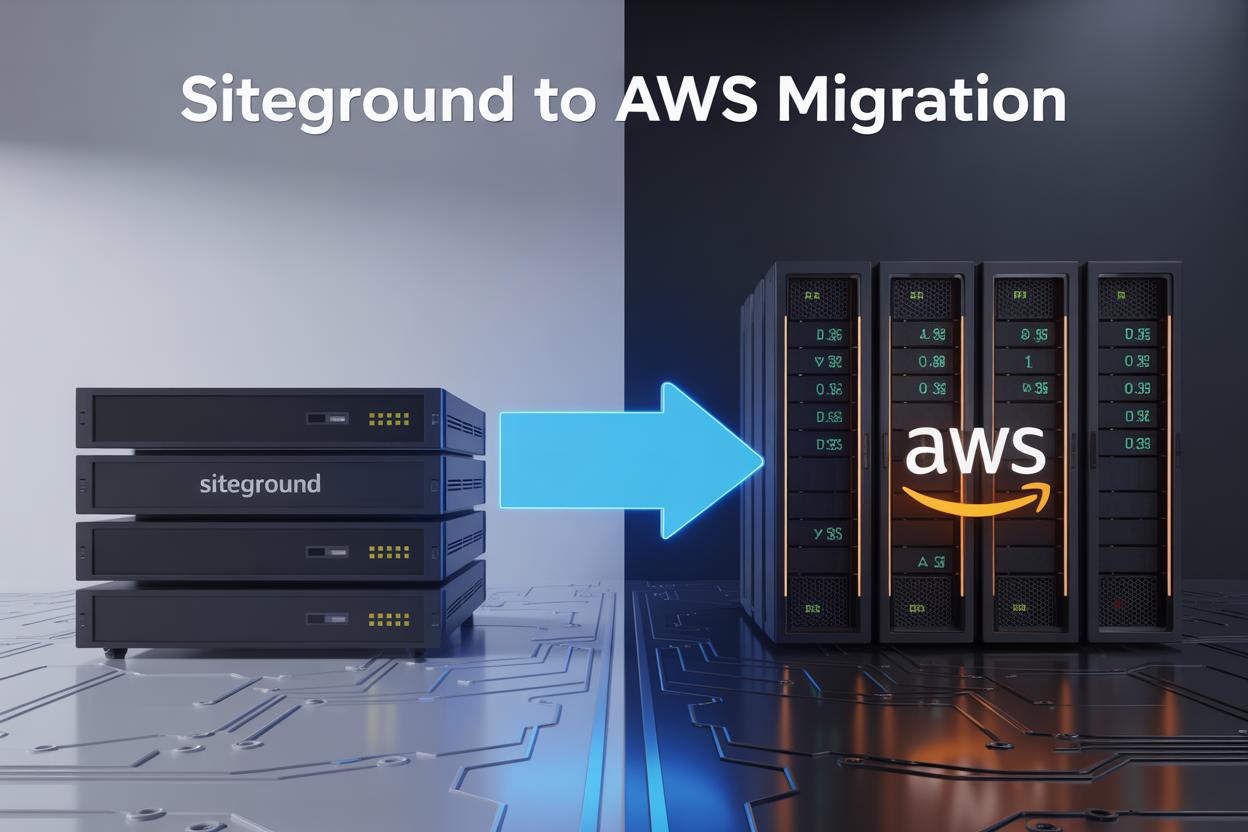
Your SiteGround hosting might be holding your website back from reaching its full potential. If you’re a business owner, developer, or website manager experiencing slow load times, security concerns, or frequent downtime, a SiteGround to AWS migration could be the game-changer you need.
AWS hosting benefits go far beyond what traditional shared hosting can offer. While SiteGround serves millions of websites, AWS provides enterprise-level infrastructure that scales with your business and delivers consistently faster performance.
This guide walks you through the complete migration process, from understanding AWS infrastructure advantages to calculating your long-term ROI. We’ll also dive into the enhanced security features that make AWS a top choice for businesses serious about protecting their digital assets. By the end, you’ll know exactly how to make the switch and why so many SiteGround users are choosing cloud hosting for better speed, security, and reliability.
Why SiteGround Users Are Making the Switch to AWS

Performance Limitations of Shared Hosting Environments
SiteGround’s shared hosting model puts your website on servers with hundreds of other sites competing for the same resources. When traffic spikes hit neighboring websites, your site’s performance takes a direct hit. CPU throttling kicks in during peak usage periods, causing slow loading times that frustrate visitors and hurt search rankings.
The resource allocation system on shared servers creates unpredictable performance patterns. Your website might load quickly at 3 AM but crawl during business hours when other sites demand more server resources. This inconsistency becomes a major problem for businesses trying to provide reliable user experiences.
AWS infrastructure eliminates these bottlenecks by providing dedicated compute resources that scale automatically based on your actual needs. Instead of fighting for shared CPU cycles, your applications get guaranteed processing power that responds instantly to traffic demands.
Scalability Constraints That Restrict Business Growth
Traditional hosting plans force you into rigid resource boxes that rarely match real-world usage patterns. SiteGround’s tier system means you’re either paying for resources you don’t use or hitting artificial limits during growth periods. Upgrading typically involves downtime and manual migrations between different hosting environments.
Traffic spikes from successful marketing campaigns or viral content often crash websites on shared hosting because the infrastructure can’t handle sudden demand increases. These missed opportunities cost businesses revenue and damage brand reputation when potential customers encounter error pages instead of working websites.
AWS auto-scaling responds to traffic changes in real-time, spinning up additional server capacity within minutes. Your website handles traffic surges smoothly while only paying for the extra resources during actual usage periods. This flexibility supports business growth without the constant worry about hitting hosting limits.
Rising Costs Versus Diminishing Value Proposition
SiteGround’s pricing increases significantly as you move up hosting tiers, yet you’re still sharing server resources with other websites. Premium plans often cost more than equivalent AWS configurations while providing less control and fewer features. The value gap widens when you factor in the superior performance and reliability available through cloud infrastructure.
Hidden costs emerge as websites grow on traditional hosting platforms. Database limitations, storage restrictions, and bandwidth caps all trigger additional fees that weren’t obvious in initial pricing comparisons. SiteGround migration to AWS eliminates many of these surprise charges through transparent, usage-based billing.
| Hosting Aspect | SiteGround Shared | AWS Infrastructure |
|---|---|---|
| Monthly Cost (Mid-tier) | $12-25/month | $8-20/month |
| Resource Sharing | Yes | Dedicated |
| Scalability | Manual upgrades | Automatic |
| Hidden Fees | Storage, bandwidth overages | Pay-as-you-use |
Limited Control Over Server Configurations and Resources
SiteGround’s managed hosting approach restricts access to server-level configurations that could optimize your specific applications. You can’t install custom software, modify server settings, or implement specialized security measures that your business might require. These limitations become more frustrating as technical needs evolve.
PHP version updates, server software choices, and security configurations all happen on SiteGround’s timeline, not yours. Critical updates for your applications might be delayed because they don’t align with the hosting provider’s rollout schedule. This lack of control creates dependencies that can slow down development and deployment cycles.
AWS hosting provides root-level access to virtual servers, allowing complete customization of the hosting environment. You can install any software, configure security settings, and optimize server performance for your specific use cases. This control becomes essential as businesses develop more sophisticated web applications and require specialized hosting configurations.
AWS Infrastructure Advantages Over Traditional Web Hosting

Global content delivery network for faster page loads
AWS CloudFront’s massive global network spans over 400 edge locations worldwide, dramatically reducing page load times compared to SiteGround’s limited server locations. When visitors access your website, CloudFront serves content from the nearest edge location rather than forcing requests to travel thousands of miles to your origin server.
This geographic proximity translates to real performance gains. Static assets like images, CSS files, and JavaScript load instantly from cached versions stored across AWS’s global infrastructure. Your SiteGround-hosted site might take 3-4 seconds to load for international visitors, but AWS hosting benefits include sub-second response times regardless of user location.
The CloudFront CDN also provides intelligent caching rules that automatically optimize content delivery based on file types and user behavior patterns. Dynamic content gets cached at strategic locations while maintaining freshness, creating a seamless experience that traditional web hosting simply can’t match.
Auto-scaling capabilities that handle traffic spikes effortlessly
Traditional hosting plans force you to estimate traffic needs months in advance, often resulting in overpaying for unused resources or experiencing crashes during unexpected spikes. AWS infrastructure advantages include elastic scaling that automatically adjusts server capacity based on real-time demand.
When your website experiences sudden traffic surges – perhaps from viral content or seasonal sales – AWS Auto Scaling groups instantly spin up additional server instances. These new resources come online within minutes, handling thousands of concurrent users without manual intervention or service disruption.
The beauty of this system lies in its bidirectional nature. During low-traffic periods, AWS automatically scales down resources, reducing costs while maintaining optimal performance. This intelligent resource management eliminates the guesswork and financial waste associated with fixed hosting plans.
Enterprise-grade security features and compliance certifications
AWS operates under a shared responsibility model that provides multiple layers of protection far exceeding typical shared hosting security. The platform maintains SOC 1, SOC 2, ISO 27001, PCI DSS, and dozens of other compliance certifications that validate its security infrastructure.
Built-in security features include AWS WAF (Web Application Firewall) that filters malicious traffic before it reaches your servers, protecting against SQL injection, cross-site scripting, and DDoS attacks. AWS Shield provides automatic DDoS protection at the network and transport layers, defending against attacks that would overwhelm traditional hosting providers.
Identity and Access Management (IAM) gives you granular control over who can access specific resources, with multi-factor authentication and encryption at rest and in transit as standard features. These AWS security features operate at an enterprise level that individual hosting companies simply cannot replicate.
99.99% uptime guarantee with redundant data centers
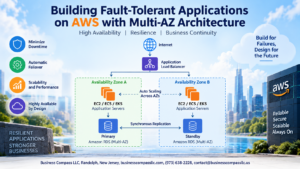
AWS maintains an impressive track record with its 99.99% uptime SLA backed by multiple availability zones within each region. Each availability zone operates as an independent data center with separate power grids, cooling systems, and network connections, creating redundancy that shared hosting environments lack.
If one data center experiences issues, your application automatically fails over to healthy zones without user-visible downtime. This geographic distribution across multiple facilities provides protection against natural disasters, power outages, and equipment failures that could take entire hosting companies offline.
AWS’s global infrastructure includes 31 launched regions with 99 availability zones, offering reliability guarantees that come with financial credits if uptime falls below promised levels. This level of redundancy and accountability represents a fundamental shift from hoping your hosting provider stays online to having contractual guarantees backed by one of the world’s largest technology companies.
Speed Improvements You’ll Experience After Migration

Reduced page load times through optimized server locations
When you migrate from SiteGround to AWS, you gain access to a global network of data centers spanning multiple regions and availability zones. This geographic distribution means your website can be hosted closer to your actual visitors, dramatically cutting down the time it takes for your pages to load.
AWS offers over 30 regions worldwide, compared to SiteGround’s limited data center locations. You can deploy your website across multiple regions or choose specific locations based on your audience demographics. A user in Tokyo accessing a website hosted on AWS’s Asia Pacific region will experience significantly faster load times than if that same site were hosted on a single server in the United States.
The Content Delivery Network (CDN) integration with Amazon CloudFront takes this speed advantage even further. Your static assets like images, CSS files, and JavaScript get cached at edge locations around the world, reducing the physical distance data needs to travel to reach your visitors.
Enhanced database performance with managed MySQL services
Database queries often create the biggest bottlenecks in website performance. AWS RDS (Relational Database Service) provides managed MySQL instances that outperform traditional shared hosting database setups by substantial margins.
With AWS RDS, your database runs on dedicated resources instead of competing with hundreds of other websites for processing power. You get features like automated backups, point-in-time recovery, and the ability to scale database performance up or down based on demand.
Read replicas can be set up across different regions, allowing read-heavy operations to be distributed and reducing the load on your primary database. This setup is particularly beneficial for content-heavy websites or e-commerce platforms that handle multiple simultaneous user sessions.
Improved caching mechanisms and content optimization
AWS provides multiple layers of caching that work together to serve your content faster than traditional hosting environments. ElastiCache offers in-memory caching with Redis or Memcached, storing frequently accessed data in RAM for instant retrieval.
Application-level caching becomes more sophisticated with AWS services like Lambda@Edge, which allows you to run custom code at CloudFront edge locations. This means you can implement dynamic caching strategies that adapt to user behavior and content types.
The combination of browser caching, CDN caching, database query caching, and application caching creates a multi-tiered system that can reduce server response times from seconds to milliseconds for returning visitors.
Faster file transfers and reduced latency for global visitors
File upload and download speeds see dramatic improvements when moving from shared hosting to AWS infrastructure. Amazon S3 provides virtually unlimited storage with transfer rates that scale automatically based on demand.
Global visitors experience consistent performance regardless of their location, thanks to AWS’s backbone network infrastructure. The network is designed for high throughput and low latency, with direct connections between data centers that bypass public internet routes.
For websites serving large media files, video content, or downloadable resources, the difference becomes immediately apparent. Users report download speeds that are often 3-5 times faster compared to their previous SiteGround hosting experience.
Enhanced Security Features That Protect Your Website

Advanced DDoS Protection and Threat Detection Systems
When you migrate from SiteGround to AWS, you instantly upgrade to enterprise-grade security that traditional web hosting simply can’t match. AWS Shield Standard comes free with all AWS services and automatically protects against the most common DDoS attacks that could take your website offline. The system monitors traffic patterns 24/7, detecting and mitigating attacks before they impact your visitors.
For websites handling sensitive data or high traffic volumes, AWS Shield Advanced takes protection to the next level. This premium service offers near real-time visibility into attacks and provides access to the AWS DDoS Response Team. The system can handle massive volumetric attacks that would overwhelm traditional hosting infrastructures, keeping your site running smoothly even during sustained assault attempts.
AWS GuardDuty adds another layer of intelligent threat detection using machine learning to analyze your network traffic, DNS logs, and API calls. This service identifies suspicious activities like cryptocurrency mining, reconnaissance attacks, or data exfiltration attempts that might slip past traditional security measures. The beauty of this system lies in its ability to learn your normal traffic patterns and flag anomalies automatically.
Automated Security Patches and Vulnerability Management
One major headache with traditional hosting disappears completely with AWS migration: manual security updates. AWS Systems Manager automates the entire patch management process, ensuring your infrastructure stays current with critical security updates without requiring downtime or manual intervention.
The service scans your instances regularly, identifies missing patches, and can automatically install them during your designated maintenance windows. You can customize patch baselines to meet your specific compliance requirements and exclude patches that might conflict with your applications. This automated approach eliminates the human error factor that often leaves traditional hosting environments vulnerable.
AWS Inspector takes vulnerability management even deeper by performing automatic security assessments of your applications. The service analyzes your running applications for security vulnerabilities and provides detailed findings with remediation guidance. Unlike static security scans, Inspector monitors your applications continuously, catching new vulnerabilities as they’re discovered.
The Config service tracks configuration changes across your AWS resources, ensuring your security settings remain compliant with your organization’s policies. When unauthorized changes occur, Config automatically triggers alerts and can even revert configurations to approved states.
SSL Certificate Management and Encryption Protocols
Managing SSL certificates becomes effortless with AWS Certificate Manager (ACM), which handles the entire lifecycle of your certificates automatically. The service provisions, manages, and deploys SSL/TLS certificates for your AWS services without any manual intervention. Your certificates auto-renew before expiration, eliminating the security gaps that occur when certificates expire unexpectedly.
ACM integrates seamlessly with CloudFront, Application Load Balancer, and API Gateway, ensuring your entire application stack uses strong encryption. The service supports both domain-validated and extended validation certificates, giving you flexibility based on your security requirements.
AWS Key Management Service (KMS) provides centralized control over encryption keys used throughout your infrastructure. You can create, rotate, disable, and audit encryption keys with fine-grained access controls. The service integrates with over 100 AWS services, automatically encrypting data at rest and in transit.
| Security Feature | SiteGround | AWS |
|---|---|---|
| DDoS Protection | Basic | Enterprise-grade with Shield |
| Automated Patching | Manual updates required | Fully automated with Systems Manager |
| SSL Management | Manual renewal | Automatic with ACM |
| Vulnerability Scanning | Limited | Comprehensive with Inspector |
| Encryption Key Management | Basic | Advanced with KMS |
For data in transit, AWS supports the latest TLS protocols and cipher suites, ensuring your visitor data stays protected during transmission. The platform automatically negotiates the strongest available encryption between clients and your applications, adapting to different security capabilities without compromising compatibility.
Migration Process and Best Practices for Success

Pre-migration planning and website backup strategies
Before diving into your SiteGround to AWS migration, you need a solid backup strategy and detailed planning roadmap. Start by creating comprehensive backups of your entire website, including all files, databases, email accounts, and configuration settings. Most successful migrations begin with at least three separate backup copies stored in different locations.
Document your current SiteGround setup thoroughly. Note down your PHP version, installed extensions, cron jobs, email configurations, and any custom server settings. This inventory becomes your blueprint for recreating the environment on AWS. Create a migration timeline that accounts for potential downtime and peak traffic periods – avoid migrating during your busiest hours.
Test your backups before proceeding. Download and verify that you can restore files locally or on a staging environment. Many migration failures happen because backups were corrupted or incomplete. Export your databases using phpMyAdmin or command-line tools, ensuring you capture all table structures and data integrity.
DNS configuration and domain transfer procedures
DNS management during AWS hosting migration requires careful coordination to minimize downtime. Lower your DNS TTL (Time To Live) values to 300-600 seconds at least 24-48 hours before migration. This change allows faster DNS propagation when you switch to AWS.
Document all existing DNS records from your SiteGround cPanel or domain registrar. You’ll need A records, CNAME records, MX records for email, and any custom subdomains. Create these records in AWS Route 53 or your preferred DNS service before the actual migration.
The domain transfer process varies depending on whether you’re moving just hosting or the entire domain registration. If keeping your current domain registrar, simply update the nameservers to point to AWS. For complete transfers, initiate the domain transfer process with AWS Route 53, which typically takes 5-7 days to complete.
Plan your cutover carefully. Update DNS records in phases – start with less critical subdomains, then move your main domain once you’ve verified everything works correctly on AWS.
Database migration techniques and data integrity checks
Database migration represents the most critical aspect of your SiteGround to AWS migration process. Start by identifying your database type and version on SiteGround. MySQL and MariaDB databases are most common and transfer smoothly to AWS RDS or EC2 instances.
Export your databases using mysqldump for the most reliable results:
mysqldump -u username -p database_name > backup_file.sql
For larger databases, consider using AWS Database Migration Service (DMS) for minimal downtime transfers. DMS supports live migration with continuous data replication, perfect for high-traffic websites that can’t afford extended downtime.
Verify data integrity after each transfer. Compare row counts, table structures, and run sample queries on both source and destination databases. Check for character encoding issues, especially with international content or special characters. Many migrations fail because of UTF-8 encoding mismatches between SiteGround and AWS.
Test database connections thoroughly. Update your application configuration files with new AWS database credentials and connection strings. WordPress users should update wp-config.php with the new database host, username, and password.
Testing protocols to ensure seamless transition
Comprehensive testing prevents migration disasters and ensures your website functions perfectly on AWS infrastructure. Set up a staging environment on AWS that mirrors your production setup. Upload your website files and database to this staging environment for thorough testing.
Perform functional testing on every critical website feature. Test contact forms, shopping carts, user registration, payment processing, and any custom applications. Check that all internal links work correctly and that images and media files load properly.
Load testing reveals how your new AWS setup handles traffic spikes. Use tools like Apache Bench or LoadRunner to simulate your typical traffic patterns. This testing helps you optimize your AWS instance sizes and scaling configurations before going live.
Cross-browser testing ensures compatibility across different devices and browsers. Check your website on Chrome, Firefox, Safari, and mobile devices. Pay special attention to SSL certificate installation and HTTPS redirects.
Create a rollback plan before switching DNS. Keep your SiteGround hosting active for at least a week after migration. If issues arise, you can quickly revert DNS settings to restore service while troubleshooting AWS problems.
Monitor your website closely for the first 48 hours after migration. Watch for broken links, database connection errors, email delivery issues, and performance problems. Having monitoring tools like AWS CloudWatch configured before migration helps identify and resolve issues quickly.
Cost Analysis and Long-Term ROI Benefits

Transparent pricing model versus hidden hosting fees
Traditional hosting providers like SiteGround often surprise customers with unexpected charges that weren’t clearly outlined during signup. You might find yourself paying extra for SSL certificates, daily backups, CDN services, or premium support – features that should be standard. These hidden fees can quickly double your monthly hosting costs.
AWS operates on a completely transparent pricing structure where you know exactly what you’re paying for. Every service has clear, published rates with detailed pricing calculators available online. You can estimate costs before migration and track spending in real-time through the AWS billing dashboard. This transparency eliminates budget surprises and helps you make informed decisions about resource allocation.
The AWS pricing model breaks down costs by individual services – compute time, storage space, data transfer, and additional features. You’ll never encounter surprise renewal fees or sudden price hikes that many traditional hosting companies implement. This predictable cost structure makes financial planning significantly easier for businesses of all sizes.
Pay-as-you-scale approach that grows with your business
SiteGround’s fixed hosting plans force you to pay for resources you might not need or upgrade to expensive tiers when you exceed limits. This rigid structure often results in overpaying during low-traffic periods or experiencing performance issues during traffic spikes.
AWS hosting cost analysis reveals a fundamentally different approach. You pay only for the resources you actually consume. During quiet periods, your costs naturally decrease. When traffic increases, AWS automatically scales resources and you pay proportionally for the additional capacity you use.
This scalability proves especially valuable for seasonal businesses or websites with variable traffic patterns. An e-commerce site might experience heavy traffic during holidays while running minimal resources during off-peak months. With AWS, your hosting costs align perfectly with your actual usage and revenue patterns.
The pay-as-you-scale model also eliminates the need for costly overprovisioning. Instead of purchasing a high-tier plan to handle occasional traffic spikes, you can run on smaller instances most of the time and let AWS handle scaling automatically when needed.
Reduced downtime costs and improved revenue potential
Website downtime directly impacts revenue, especially for e-commerce businesses. Studies show that even one hour of downtime can cost businesses thousands of dollars in lost sales, damaged reputation, and customer trust. SiteGround’s shared hosting environment makes sites vulnerable to downtime from server overload, hardware failures, or maintenance windows.
AWS infrastructure advantages include built-in redundancy across multiple data centers, automatic failover capabilities, and 99.99% uptime guarantees backed by service level agreements. This reliability translates into measurable financial benefits through reduced downtime costs and improved revenue potential.
The improved performance and reliability of AWS hosting often leads to better search engine rankings, increased conversion rates, and enhanced customer satisfaction. These improvements compound over time, creating significant long-term ROI benefits that far exceed the initial migration investment.

Making the jump from SiteGround to AWS isn’t just about following the latest trend – it’s about giving your website the performance boost it deserves. The speed improvements alone can transform your user experience, while AWS’s robust security features and reliable infrastructure mean you’ll spend less time worrying about downtime and more time focusing on growing your business. Sure, the migration process requires some planning, but the long-term benefits of better performance, enhanced security, and scalable resources make it a smart investment.
The numbers don’t lie when it comes to ROI either. While AWS might seem more complex at first glance, the combination of improved site performance, reduced maintenance headaches, and the ability to scale seamlessly as you grow makes it worth every penny. If you’re ready to take your website to the next level and stop settling for “good enough” hosting, it’s time to start planning your AWS migration. Your visitors will notice the difference, and your bottom line will thank you for it.