Building intelligent AI automation on AWS doesn’t have to be complicated. AWS Bedrock makes it possible to create powerful AI agents that run completely serverless, handling everything from customer support to data analysis without managing infrastructure.
This guide is designed for cloud engineers, DevOps professionals, and developers who want to build scalable AI solutions using AWS serverless computing. You’ll learn how to move beyond basic chatbots and create sophisticated Bedrock agents that can reason, make decisions, and integrate with your existing AWS services.
We’ll walk through the essential Bedrock agent architecture patterns that work in real production environments. You’ll discover the step-by-step deployment process that gets your AI agent running reliably, including the specific configurations that prevent common deployment headaches. Finally, we’ll cover testing and validation strategies that ensure your serverless machine learning solution performs consistently before you release it to users.
By the end, you’ll have the practical knowledge to design and deploy your own Bedrock agent deployment using AWS AI services, complete with monitoring and optimization techniques that keep your automation running smoothly at scale.
Understanding AWS Bedrock and AI Agent Fundamentals
Core concepts of AWS Bedrock platform
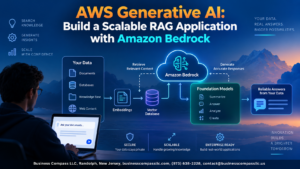
AWS Bedrock serves as Amazon’s fully managed foundation model service, providing access to high-performing AI models from leading providers like Anthropic, Cohere, and Stability AI. The platform eliminates infrastructure complexity by offering pre-trained models through simple API calls. Bedrock handles model hosting, scaling, and security automatically, letting developers focus on building applications rather than managing ML infrastructure. Key features include fine-tuning capabilities, knowledge bases for retrieval-augmented generation, and seamless integration with other AWS services.
Benefits of serverless AI automation
Serverless AI automation through AWS Bedrock delivers significant cost advantages by charging only for actual API usage rather than idle compute resources. This pay-per-request model makes AI accessible to startups and enterprises alike. Automatic scaling handles traffic spikes without manual intervention, while AWS manages all underlying infrastructure updates and maintenance. Development teams can deploy AI features faster since there’s no need to provision servers, configure environments, or worry about capacity planning. The serverless approach also reduces operational overhead and enables rapid experimentation with different AI models.
Key components of Bedrock agents
Bedrock agents consist of several interconnected components that work together to create intelligent automation workflows. The foundation model serves as the brain, processing natural language inputs and generating responses. Action groups define specific tasks the agent can perform, such as querying databases or calling external APIs. Knowledge bases provide contextual information through document retrieval and vector search capabilities. Instructions guide agent behavior and define conversational patterns. Guardrails ensure responsible AI usage by filtering harmful content and enforcing safety policies. These components combine to create sophisticated AI assistants that can handle complex multi-step workflows.
Use cases for automated AI workflows
Automated AI workflows powered by Bedrock agents excel in customer service scenarios, handling inquiries, processing orders, and providing personalized recommendations around the clock. Content management becomes streamlined through automated document summarization, translation, and quality analysis. E-commerce platforms benefit from intelligent product recommendations and dynamic pricing strategies. Healthcare organizations use agents for patient intake, appointment scheduling, and medical record processing while maintaining HIPAA compliance. Financial services leverage automation for fraud detection, loan processing, and personalized financial advice. These use cases demonstrate how Bedrock agent deployment transforms traditional business processes into intelligent, responsive systems.
Pre-Deployment Planning and Requirements
Essential AWS services and permissions setup
Setting up your AWS environment for Bedrock agent deployment requires careful attention to IAM permissions and service configurations. Start by creating a dedicated IAM role with bedrock:* permissions, along with access to Lambda, API Gateway, and CloudWatch services. Enable AWS Bedrock in your target region and verify model access permissions for your chosen foundation models. Configure CloudWatch logging to capture agent interactions and performance metrics. Set up VPC endpoints if your architecture requires private connectivity, and establish proper security groups to control network access to your serverless AI automation components.
Choosing the right foundation models
Model selection directly impacts your Bedrock agent’s performance and cost efficiency. Claude models excel at complex reasoning and code generation, while Titan models offer cost-effective solutions for general conversations and text processing. Consider your specific use case requirements: Claude Sonnet for balanced performance, Claude Haiku for speed, or specialized models like Cohere Command for multilingual capabilities. Evaluate token limits, response times, and pricing structures. Test multiple models with your expected workload patterns before committing to production deployment, as switching models later requires significant architectural changes.
Defining agent capabilities and limitations
Clear capability boundaries ensure your AWS Bedrock agent operates within safe, predictable parameters while meeting business requirements. Define specific tasks your agent can perform, such as document analysis, customer support responses, or data retrieval operations. Establish strict guardrails around sensitive information handling, API call limits, and response filtering mechanisms. Document maximum token consumption per interaction, supported file formats, and integration touchpoints with existing systems. Create fallback procedures for scenarios beyond the agent’s scope, including human handoff triggers. This planning phase prevents scope creep and ensures your serverless machine learning solution delivers consistent, reliable results across all user interactions.
Designing Your Serverless Bedrock Agent Architecture
Creating Efficient Agent Workflows and Decision Trees
Building effective Bedrock agent workflows requires mapping out clear decision paths that handle user inputs intelligently. Design your workflow with branching logic that routes requests to appropriate knowledge bases or external APIs based on context. Create fallback mechanisms for ambiguous queries and implement memory management to maintain conversation state across multiple interactions.
Integrating with AWS Lambda and Other Serverless Services
Your Bedrock agent architecture seamlessly connects with AWS Lambda functions to execute custom business logic and data processing tasks. Configure Lambda triggers to handle specific agent actions, integrate with Amazon DynamoDB for session storage, and use Amazon S3 for document retrieval. Set up API Gateway endpoints to enable webhook integrations and establish EventBridge rules for cross-service communication patterns.
Implementing Secure Data Handling and Storage Patterns
Security forms the backbone of your serverless AI automation strategy. Implement IAM roles with least-privilege access, encrypt data in transit using TLS 1.3, and store sensitive information in AWS Secrets Manager. Configure VPC endpoints for private connectivity, enable CloudTrail logging for audit trails, and use AWS KMS for encryption key management. Design your data flow to minimize exposure and implement proper input validation.
Optimizing for Cost and Performance
Cost-effective Bedrock agent design focuses on right-sizing compute resources and optimizing API calls. Use provisioned concurrency for predictable workloads and on-demand scaling for variable traffic patterns. Implement caching strategies with ElastiCache to reduce model inference costs, batch similar requests together, and set appropriate timeout values to prevent runaway processes from consuming unnecessary resources.
Building Scalable Event-Driven Triggers
Event-driven architecture enables your Bedrock agent to respond automatically to business events across your AWS environment. Configure CloudWatch Events to trigger agent actions based on system metrics, integrate with SQS queues for reliable message processing, and use Step Functions to orchestrate complex multi-step workflows. Design your trigger system to handle peak loads gracefully while maintaining low latency response times.
Step-by-Step Deployment Process
Configuring AWS Bedrock agent settings
Start by accessing the AWS Bedrock console and creating a new agent. Define your agent’s name, description, and foundation model selection – Claude 3 Haiku works well for most automation tasks. Configure the instruction set that guides your agent’s behavior, including specific prompts and response patterns. Set up action groups that define the functions your agent can perform, linking them to Lambda functions or API endpoints. Enable knowledge bases if your agent needs access to custom data sources, and configure the embedding model for document retrieval.
Setting up IAM roles and security policies
Create a service role for your Bedrock agent with the necessary permissions to access foundation models and invoke actions. The role needs bedrock:InvokeModel permissions for the selected foundation model and lambda:InvokeFunction rights for any connected Lambda functions. Add resource-based policies to restrict access to specific models and data sources. Configure cross-account access carefully if your agent spans multiple AWS accounts. Implement least-privilege principles by granting only the minimum permissions required for your agent’s functionality. Set up resource tags for better governance and cost tracking across your serverless AI automation infrastructure.
Implementing monitoring and logging solutions
Enable CloudWatch logging for your Bedrock agent to capture invocation details, response times, and error messages. Configure custom metrics to track agent performance, including successful interactions, failed requests, and token usage. Set up CloudWatch alarms for critical thresholds like high error rates or unusual activity patterns. Implement AWS X-Ray tracing to monitor the complete request flow through your serverless architecture. Create dashboards that visualize agent performance metrics and usage trends. Consider using AWS Config for compliance monitoring and CloudTrail for detailed API call auditing across your AI automation deployment.
Testing and Validation Strategies
Unit testing your agent responses
Start by creating automated test suites that validate your Bedrock agent’s responses against expected outputs. Mock different input scenarios, edge cases, and error conditions to verify your agent handles requests correctly. Use AWS Lambda test events to simulate real user interactions and validate response accuracy, latency, and format consistency across different conversation flows.
Load testing for production readiness
Stress-test your serverless Bedrock agent using tools like AWS Load Testing Solution or Artillery.js to simulate concurrent users and high-volume requests. Monitor CloudWatch metrics for invocation errors, duration spikes, and throttling events. Test auto-scaling behavior by gradually increasing load and verify that Lambda cold starts don’t impact user experience during peak traffic periods.
Validating security and compliance requirements
Implement comprehensive security testing by validating IAM role permissions, API Gateway authentication mechanisms, and data encryption in transit and at rest. Run penetration tests against your agent endpoints and verify that sensitive data isn’t leaked in responses. Ensure compliance with regulations like GDPR or HIPAA by testing data handling, retention policies, and audit logging capabilities built into your AWS Bedrock deployment.
Performance benchmarking and optimization
Establish baseline performance metrics for response time, token consumption, and cost per interaction using CloudWatch dashboards and AWS Cost Explorer. Compare different Bedrock models for your specific use case and optimize Lambda memory allocation and timeout settings. Implement caching strategies using ElastiCache or DynamoDB to reduce redundant model calls and improve response times for frequently asked questions.
Production Management and Optimization
Monitoring Agent Performance and Costs
Effective monitoring of your AWS Bedrock agent requires tracking key metrics like token consumption, response latency, and error rates through CloudWatch. Set up custom dashboards to visualize cost patterns and usage spikes across different agent functions. Monitor foundation model invocations and establish alerts for unexpected cost increases. Track performance metrics including successful task completion rates, average processing time per request, and concurrent execution limits. Use AWS Cost Explorer to analyze spending trends and identify optimization opportunities for your serverless AI automation workloads.
Implementing Automated Scaling Strategies
Your Bedrock agent deployment benefits from Lambda’s automatic scaling capabilities, but you can optimize performance by configuring reserved concurrency limits and provisioned concurrency for predictable workloads. Implement intelligent routing using Step Functions to distribute complex tasks across multiple Lambda functions. Design your agent architecture to handle varying request volumes by breaking down large operations into smaller, parallelizable tasks. Use Amazon SQS for buffering requests during traffic spikes and implement exponential backoff strategies for API rate limiting scenarios.
Troubleshooting Common Deployment Issues
Common Bedrock agent deployment problems include IAM permission misconfigurations, timeout errors during model invocations, and memory allocation issues in Lambda functions. Debug permission problems by checking CloudTrail logs for access denied errors and verify your execution role has necessary Bedrock policies attached. Address timeout issues by optimizing prompt engineering, increasing Lambda timeout settings, or implementing asynchronous processing patterns. Memory errors often occur when processing large context windows – monitor Lambda memory usage and adjust allocation accordingly. Network connectivity issues between services require VPC configuration review and security group validation.
AWS Bedrock agents represent a powerful shift in how we approach AI automation, offering developers a way to build intelligent systems without the overhead of traditional server management. The serverless approach we’ve covered means your AI agent can scale automatically while you only pay for what you use. From understanding the core concepts to deploying your first agent, each step builds toward creating robust automation that can handle real-world business challenges.
Getting your Bedrock agent from concept to production requires careful planning, thoughtful architecture design, and thorough testing. The deployment process might seem complex at first, but following the structured approach we’ve outlined will help you avoid common pitfalls. Once your agent is live, ongoing optimization and monitoring ensure it continues performing at its best. Start small with a simple use case, validate your approach, then expand your AI automation capabilities as you gain confidence with the platform.