Your company runs on AWS, but how dependent are you really? Many engineering teams and CTOs discover their AWS dependency runs deeper than expected when they try to optimize costs or consider alternatives. This creates serious risks for your business continuity and budget flexibility.
This guide is for engineering leaders, architects, and executives who need to understand their true level of cloud vendor lock-in and want actionable strategies to reduce it. You’ll learn how to assess your current AWS dependency level and identify where your architecture creates the biggest vulnerabilities. We’ll also walk through proven multi-cloud strategy approaches that help you build flexibility without sacrificing performance.
Most organizations find they’re more locked in than they realized. The good news? You can take specific steps to reduce AWS migration risks while building a more resilient cloud architecture that gives you real options for the future.
Understanding Your Current AWS Dependency Level
Identifying Core Services Your Business Relies On
Start by cataloging every AWS service running in production. Document compute instances, databases, storage buckets, and serverless functions that directly impact customer experience. Create a dependency matrix ranking each service by business criticality and replacement difficulty. Focus on services handling authentication, payment processing, and core application logic – these represent your highest-risk AWS dependencies that could halt operations if disrupted.
Mapping Critical Infrastructure Components
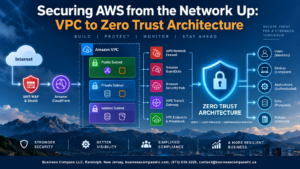
Build a comprehensive architecture diagram showing data flow between AWS services and external systems. Highlight single points of failure where one AWS service controls multiple business functions. Pay special attention to networking components like VPCs, load balancers, and DNS services that connect your infrastructure. Document API gateways, CDNs, and monitoring tools that form the backbone of your cloud architecture and would require significant effort to replicate elsewhere.
Calculating Service Utilization Percentages
Track monthly usage metrics for each AWS service to understand consumption patterns. Calculate what percentage of your total infrastructure relies on proprietary AWS features versus standard cloud capabilities. Measure data transfer volumes, compute hours, and storage capacity across regions. These metrics reveal your true AWS dependency level and help prioritize which services to evaluate for potential migration or multi-cloud distribution.
Assessing Data Storage and Processing Dependencies
Examine where your business data lives and how it moves through AWS ecosystems. Inventory RDS databases, S3 buckets, and data warehouses that store customer information, analytics, and operational data. Review data processing workflows using Lambda, EMR, or Kinesis that transform and analyze business intelligence. Consider data gravity effects – the tendency for applications to stick close to large datasets – which creates natural vendor lock-in scenarios requiring careful planning to address.
Analyzing Production Architecture Vulnerabilities
Single Points of Failure in Your AWS Setup
Your production environment likely contains critical single points of failure that could bring down your entire system. Load balancers, database instances, and API gateways often exist as single resources without proper redundancy. When these components fail, cascading outages affect dependent services. Identifying these vulnerabilities requires mapping your architecture’s dependency chain and understanding which AWS services lack backup alternatives in your current setup.
Service Interconnection Risk Assessment
AWS services create complex webs of dependencies that amplify cloud architecture risks during outages. Your Lambda functions might depend on RDS databases, which rely on VPC configurations, which connect to CloudFront distributions. When one service fails, the ripple effect can disable seemingly unrelated components. Document these interconnections to understand how AWS dependency creates vulnerability chains throughout your infrastructure and plan mitigation strategies accordingly.
Regional Availability Zone Dependencies
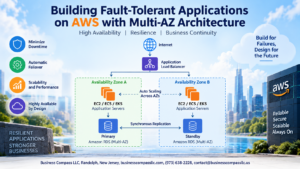
Many organizations unknowingly concentrate their infrastructure within single regions or availability zones, creating dangerous vendor lock-in scenarios. While AWS promises high availability, regional outages still occur and can cripple businesses that haven’t properly distributed their workloads. Evaluate your current geographic distribution, identify services tied to specific zones, and assess whether your disaster recovery plans account for regional failures that could expose your AWS migration risks.
Financial Impact of AWS Vendor Lock-In
Hidden Costs of Deep AWS Integration
Deep AWS integration creates financial traps that catch organizations off guard. Custom IAM policies, specialized security configurations, and service-specific logging systems require expensive consultants to replicate elsewhere. Lambda functions tied to proprietary AWS services demand complete rewrites when migrating. The deeper your AWS dependency, the higher your exit costs become, creating an invisible financial moat around your infrastructure.
Data Transfer and Egress Fee Analysis
AWS egress fees become significant cost drivers as your infrastructure matures. Moving data between regions costs $0.09 per GB, while transferring to external services reaches $0.12 per GB. Organizations processing terabytes monthly face thousands in unexpected charges. Multi-cloud strategies amplify these costs, as data synchronization between AWS and competitors triggers egress fees that can exceed compute costs for data-heavy applications.
Service-Specific Pricing Escalation Risks
AWS pricing models shift without warning, leaving customers vulnerable to sudden cost increases. Recent Lambda pricing changes affected millions of small functions, while RDS storage costs rose 15% in certain regions. Managed services like Elasticsearch and OpenSearch follow independent pricing trajectories that diverge from open-source alternatives. Cloud vendor lock-in intensifies when specialized services become cost-prohibitive, forcing expensive migrations or budget overruns.
Budget Forecasting for Multi-Year Commitments
Reserved instances and savings plans lock organizations into AWS pricing structures for up to three years. Business growth patterns rarely match initial capacity planning, leading to underutilized commitments or expensive on-demand overage. AWS alternatives often offer better pricing flexibility, but switching costs negate potential savings. Multi-cloud strategy planning requires complex financial modeling to account for cross-platform data movement and service integration expenses that compound over time.
Technical Risks of Over-Reliance on AWS
Service Discontinuation and Deprecation Threats
AWS regularly retires services and features, leaving organizations scrambling to rebuild critical infrastructure. When CodeCommit was deprecated in 2024, thousands of development teams faced forced migrations. Amazon SimpleDB, AWS Data Pipeline, and EC2-Classic all became casualties of strategic shifts. These discontinuations create immediate technical debt, requiring emergency refactoring and potentially exposing your business to downtime. Companies with deep AWS dependency find themselves at the mercy of Amazon’s roadmap decisions, often with minimal migration timelines that strain engineering resources.
API Changes and Backward Compatibility Issues
AWS frequently introduces breaking API changes that can destabilize production systems without warning. Version updates to Lambda runtimes, RDS engine modifications, and S3 API revisions have historically caused unexpected failures. Even minor changes to CloudFormation templates or IAM policy structures can break automation pipelines. Organizations heavily invested in AWS-specific implementations often discover their applications fail after routine service updates. The absence of guaranteed backward compatibility means continuous monitoring and rapid response capabilities become essential for maintaining system stability in AWS-dependent architectures.
Performance Degradation During Peak Demand
AWS experiences regional capacity constraints and performance bottlenecks during high-traffic periods, directly impacting customer applications. Black Friday, Prime Day, and unexpected viral events can overwhelm AWS infrastructure, causing latency spikes and service throttling. Single-region deployments become particularly vulnerable when availability zones reach capacity limits. Organizations with AWS dependency face reduced control over performance optimization since they cannot access underlying hardware or network infrastructure. This creates unpredictable user experiences and potential revenue loss during critical business moments.
Security Vulnerabilities in Shared Infrastructure
Multi-tenancy in AWS creates inherent security risks through shared physical resources and hypervisor vulnerabilities. Spectre and Meltdown attacks demonstrated how shared infrastructure could expose sensitive data across tenant boundaries. Side-channel attacks, CPU cache timing vulnerabilities, and memory bus exploitations become possible attack vectors. Organizations with strict security requirements face challenges when they cannot control the physical security perimeter. Compliance frameworks often require additional compensating controls when using shared cloud infrastructure, increasing complexity and operational overhead for security teams.
Compliance Challenges Across Different Regulations
AWS’s global infrastructure creates compliance complexities when data residency requirements conflict with service availability. GDPR, HIPAA, SOX, and industry-specific regulations each impose unique constraints that AWS configurations might not naturally satisfy. Data sovereignty requirements in certain countries restrict which AWS regions can legally host specific workloads. Organizations must navigate conflicting compliance frameworks while maintaining operational efficiency, often requiring custom implementations that increase AWS dependency. Audit requirements become more complex when relying on AWS’s shared responsibility model for compliance demonstrations.
Strategic Alternatives to Reduce AWS Dependency
Multi-Cloud Architecture Implementation
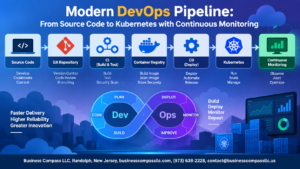
Multi-cloud strategies spread workloads across AWS, Microsoft Azure, and Google Cloud Platform to prevent vendor lock-in. Organizations deploy containerized applications using Kubernetes orchestration, enabling seamless migration between cloud providers. This approach maintains service availability during outages while leveraging competitive pricing. Critical applications run on multiple clouds simultaneously, with automated failover mechanisms ensuring business continuity. Container registries and CI/CD pipelines support cross-cloud deployments, reducing AWS dependency through strategic diversification.
Hybrid Cloud Solutions for Critical Workloads
Hybrid cloud architectures combine on-premises infrastructure with selective cloud services, maintaining control over sensitive data while accessing cloud scalability. Organizations keep core databases and security-critical applications in private data centers, using AWS for burst capacity and development environments. This balanced approach reduces cloud costs by 30-40% while meeting compliance requirements. Edge computing deployments bring processing closer to users, decreasing latency and AWS bandwidth costs. Private cloud solutions using OpenStack or VMware provide AWS-compatible APIs without vendor lock-in risks.
Open Source Technology Stack Migration
Open source alternatives replace proprietary AWS services, creating portable architectures that work across any infrastructure. PostgreSQL and MySQL databases substitute RDS, while Kubernetes replaces ECS for container orchestration. Apache Kafka handles message queuing instead of SQS, and MinIO provides S3-compatible object storage. Prometheus and Grafana deliver comprehensive monitoring without CloudWatch dependencies. These technologies run on bare metal, public clouds, or hybrid environments, giving organizations complete control over their technology stack and eliminating AWS migration risks through standardized, vendor-neutral solutions.
Building a Balanced Cloud Strategy
Creating Vendor-Neutral Infrastructure Standards
Establishing vendor-neutral infrastructure standards forms the backbone of any effective multi-cloud strategy. Start by adopting containerization technologies like Docker and Kubernetes, which run consistently across different cloud platforms. Define infrastructure as code using tools like Terraform or Pulumi that support multiple providers. Create abstraction layers for common services like databases, message queues, and storage systems. Document API specifications that don’t tie your applications to AWS-specific services. Build configuration management that separates environment-specific settings from application logic. These standards prevent your team from accidentally creating new dependencies while maintaining operational flexibility across different cloud environments.
Implementing Gradual Migration Pathways
Breaking free from AWS dependency requires careful planning and incremental steps rather than wholesale migration. Begin by identifying stateless applications and microservices that can move easily between platforms. Create proof-of-concept deployments on alternative providers like Google Cloud or Azure to test compatibility. Establish data replication strategies that keep information synchronized across multiple environments during transition periods. Design feature flags and traffic routing mechanisms that allow gradual user migration without service disruption. Set up monitoring and rollback procedures for each migration phase. This approach minimizes business risk while building confidence in your multi-cloud capabilities through real-world testing and validation.
Establishing Cost-Benefit Analysis Frameworks
Smart cloud dependency assessment demands robust financial modeling that goes beyond simple price comparisons. Calculate total cost of ownership including data transfer fees, training expenses, and potential downtime during migrations. Factor in the hidden costs of vendor lock-in such as limited negotiating power and forced upgrades. Measure the business value of flexibility against the operational overhead of managing multiple platforms. Create decision matrices that weigh technical capabilities, support quality, and long-term strategic alignment. Include risk premiums for single-vendor scenarios in your calculations. Regular cost analysis helps justify multi-cloud investments to stakeholders while ensuring your strategy delivers measurable business benefits rather than just technical satisfaction.
Developing Internal Cloud Expertise
Building internal cloud expertise across multiple platforms strengthens your organization’s independence from any single vendor. Cross-train your engineering teams on at least two major cloud providers to reduce knowledge concentration risks. Establish certification programs that reward employees for gaining multi-cloud competencies. Create internal documentation and runbooks that capture platform-specific knowledge and best practices. Develop relationships with multiple vendor support teams and system integrators. Encourage participation in cloud community events and open-source projects that span different ecosystems. Invest in training programs that focus on cloud-native architectures rather than vendor-specific implementations. Strong internal expertise enables confident decision-making and reduces reliance on vendor professional services.
Running your business heavily on AWS might feel safe and convenient, but it comes with real risks that can hit both your wallet and your operations. When you put all your eggs in one cloud basket, you’re setting yourself up for potential pricing surprises, limited negotiating power, and the scary possibility of being stuck when you want to make changes. The technical risks are just as serious – outages can shut down your entire operation, and being too dependent on AWS-specific services makes it incredibly hard to switch gears when needed.
The smart move isn’t to abandon AWS completely, but to build a strategy that gives you options. Mix in other cloud providers, keep some critical systems on-premises, or use tools that work across different platforms. This approach protects you from sudden price hikes, gives you backup options when things go wrong, and puts you back in control of your technology decisions. Take a honest look at where AWS has become too central to your operations, then start building bridges to other solutions – your future self will thank you for the flexibility.