Machine learning workloads on AWS face unique security challenges that traditional application security doesn’t address. Your ML models, training data, and inference APIs need specialized protection against threats like model theft, data poisoning, and adversarial attacks.
This guide is for ML engineers, data scientists, and DevOps teams running machine learning workloads on AWS who need practical security strategies without sacrificing model performance or development speed.
We’ll walk through AWS machine learning security best practices, starting with how to set up secure ML workloads using AWS’s native security tools and IAM policies. You’ll learn to protect your ML model protection AWS infrastructure during both training and inference phases, including secure ML training environments and proper access controls.
We’ll also cover API security for machine learning services, showing you how to secure your model endpoints and prevent unauthorized access to your inference APIs. Finally, we’ll explore machine learning dataset protection techniques and ML infrastructure security monitoring to help you detect threats early and respond quickly to potential breaches.
Understanding AWS Security Framework for Machine Learning
Core AWS Security Principles for ML Environments
AWS machine learning security operates on a shared responsibility model where AWS manages infrastructure security while customers handle data protection, access controls, and application-level security. The framework emphasizes defense-in-depth strategies, implementing multiple security layers across compute, storage, and networking components. Key principles include least privilege access, data encryption at rest and in transit, network isolation through VPCs, and continuous monitoring of ML workloads. Organizations must configure security groups, NACLs, and IAM policies specific to their machine learning pipelines while leveraging AWS native security services like GuardDuty and CloudTrail for threat detection.
Identity and Access Management Best Practices
Effective IAM configuration for secure ML workloads requires granular permission policies that restrict access to specific SageMaker resources, S3 buckets containing training data, and model artifacts. Create dedicated service roles for ML training jobs, inference endpoints, and data processing tasks rather than using broad administrative permissions. Implement cross-account access patterns for multi-environment ML pipelines, enable MFA for human users accessing sensitive datasets, and use temporary credentials through AWS STS for programmatic access. Regular access reviews and automated policy validation help maintain security posture as ML teams scale.
Encryption Standards and Implementation
Machine learning dataset protection demands comprehensive encryption strategies covering data at rest in S3, EBS volumes, and managed databases, plus data in transit between services. AWS KMS provides centralized key management for ML workloads, supporting customer-managed keys for sensitive training datasets and model artifacts. SageMaker automatically encrypts inter-container traffic during distributed training and enables encryption for notebook instances and processing jobs. Implement envelope encryption for large datasets, rotate encryption keys regularly, and ensure ML model serving endpoints use HTTPS with TLS 1.2 or higher for API communications.
Compliance Requirements and Certifications
AWS ML infrastructure security meets major compliance frameworks including SOC 2, ISO 27001, HIPAA, and PCI DSS, enabling organizations to build compliant machine learning systems. Industry-specific regulations like GDPR for data privacy, FDA guidelines for healthcare ML models, and financial services requirements demand additional controls around data lineage, model explainability, and audit trails. Leverage AWS Config rules for compliance monitoring, implement data retention policies aligned with regulatory requirements, and maintain detailed logs of model training, deployment, and inference activities for audit purposes.
Securing Machine Learning Model Development and Training
Protecting Training Data During Ingestion and Processing
Securing AWS machine learning workloads starts with protecting your training data from the moment it enters your environment. Use AWS KMS to encrypt data at rest and in transit, ensuring sensitive datasets remain protected during S3 uploads and processing workflows. Implement VPC endpoints for private connectivity between your ML services, preventing data exposure to public networks. AWS PrivateLink creates secure tunnels for data movement between services like SageMaker and your data sources. Configure IAM roles with least-privilege access, restricting which team members can view or modify training datasets. Set up CloudTrail logging to track all data access attempts and create audit trails for compliance requirements.
Implementing Secure ML Training Environments
Creating secure ML training environments on AWS requires multiple layers of protection. Deploy SageMaker training jobs within private VPC subnets, isolating compute resources from public internet access. Enable network isolation mode to prevent training containers from making outbound network calls, reducing attack surface area. Use dedicated tenancy instances for highly sensitive workloads that require physical hardware isolation. Implement security groups with restrictive rules, allowing only necessary traffic between training instances and data sources. Configure VPC Flow Logs to monitor network traffic patterns and detect anomalous behavior during training runs.
Version Control and Model Artifact Protection
Protecting model artifacts requires robust version control and access management strategies. Store trained models in encrypted S3 buckets with versioning enabled, creating immutable snapshots of each model iteration. Use SageMaker Model Registry to track model lineage and approval workflows, ensuring only validated models reach production environments. Implement cross-region replication for critical model artifacts, providing disaster recovery capabilities. Apply bucket policies that restrict access based on IP addresses and require MFA for sensitive operations. Tag model artifacts with metadata for automated governance policies and compliance tracking across your ML pipeline.
API Security for Machine Learning Services
Authentication and Authorization Mechanisms
Robust authentication forms the backbone of AWS ML API security. Implement AWS IAM roles with fine-grained permissions, ensuring only authorized users access specific ML endpoints. Use API keys, OAuth 2.0 tokens, and multi-factor authentication to create layered security. Set up resource-based policies that restrict access based on user roles, IP addresses, and time-based conditions. AWS Cognito provides additional identity management capabilities for user authentication across ML applications.
Rate Limiting and DDoS Protection Strategies
API rate limiting prevents abuse and ensures consistent performance for legitimate ML workloads. AWS API Gateway offers built-in throttling controls that set request limits per client or API key. Configure burst limits and steady-state request rates based on your model’s capacity. AWS WAF provides additional DDoS protection by filtering malicious traffic patterns. CloudFront distribution adds another layer of protection, absorbing traffic spikes and reducing load on backend ML services.
Input Validation and Sanitization Techniques
ML APIs face unique risks from malicious input designed to exploit model vulnerabilities. Implement strict input validation that checks data types, ranges, and formats before processing. Use schema validation to ensure incoming requests match expected structures. Sanitize text inputs to prevent injection attacks and adversarial examples that could manipulate model outputs. AWS Lambda functions can perform pre-processing validation, while AWS WAF rules filter suspicious payloads at the edge.
Monitoring API Usage and Detecting Anomalies
Comprehensive monitoring reveals unusual patterns that signal security threats or system issues. CloudWatch tracks API call volumes, response times, and error rates across ML endpoints. Set up automated alerts for sudden traffic spikes, authentication failures, or unusual geographic access patterns. AWS X-Ray provides detailed request tracing to identify bottlenecks and suspicious behavior. Use machine learning-based anomaly detection through Amazon CloudWatch Anomaly Detection to automatically identify deviations from normal API usage patterns.
Dataset Protection and Privacy Controls
Data Classification and Labeling Systems
Data classification systems help identify sensitive information within machine learning datasets. AWS provides automated classification tools that scan data for personally identifiable information (PII), financial records, and health data. Organizations can create custom classification rules based on their specific industry requirements. Proper labeling ensures that sensitive data receives appropriate protection levels throughout the ML pipeline. Data discovery tools automatically tag datasets with sensitivity levels, making it easier to apply security controls consistently.
Encryption at Rest and in Transit
AWS machine learning dataset protection requires encryption at multiple layers to safeguard sensitive training data. Amazon S3 provides server-side encryption options including SSE-S3, SSE-KMS, and SSE-C for data at rest. ML workloads benefit from AWS KMS integration, which offers granular key management and rotation policies. Data in transit between services uses TLS encryption automatically. SageMaker encrypts training jobs and model artifacts using customer-managed keys. Organizations can implement envelope encryption for additional security layers when handling highly sensitive datasets.
Data Masking and Anonymization Techniques
Machine learning privacy controls include dynamic data masking and anonymization to protect sensitive information during model training. AWS Glue DataBrew offers built-in data transformation capabilities that can remove or obfuscate PII while preserving statistical properties for ML training. Differential privacy techniques add controlled noise to datasets, preventing individual identification while maintaining data utility. Format-preserving encryption maintains data structure while protecting sensitive values. Synthetic data generation creates realistic datasets without exposing actual customer information, enabling secure ML development and testing environments.
Access Controls and Audit Logging
Role-based access controls limit dataset access to authorized personnel only. AWS IAM policies define granular permissions for specific S3 buckets, database tables, and ML resources. Resource-based policies add another security layer by restricting access at the data source level. Multi-factor authentication requirements enhance account security for sensitive ML workloads. VPC endpoints provide private connectivity to AWS services without internet exposure. CloudTrail logs all data access attempts, creating comprehensive audit trails for compliance reporting and security monitoring.
GDPR and Privacy Compliance Implementation
GDPR compliance for machine learning requires implementing data subject rights including access, rectification, and erasure. AWS Config rules monitor compliance with data retention policies automatically. Data lineage tracking shows how personal data flows through ML pipelines, supporting impact assessments and deletion requests. Privacy by design principles guide ML architecture decisions from the initial development stage. Organizations must document lawful bases for processing personal data in ML models. Regular privacy impact assessments evaluate risks associated with new ML use cases and datasets.
Infrastructure Security and Network Protection
VPC Configuration and Network Segmentation
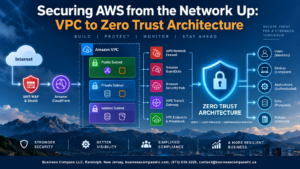
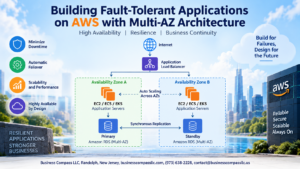
Proper VPC configuration creates the foundation for AWS ML infrastructure security by establishing isolated network environments. Configure dedicated subnets for different ML workload tiers – separate development, staging, and production environments to prevent cross-contamination. Implement network segmentation using multiple Availability Zones to ensure high availability while maintaining security boundaries. Private subnets should host sensitive ML training instances and model artifacts, while public subnets handle external API endpoints through carefully configured load balancers. Use VPC endpoints for AWS services like S3 and SageMaker to keep traffic within your private network, avoiding internet routing for sensitive data transfers.
Security Groups and Network ACL Management
Security groups act as virtual firewalls controlling inbound and outbound traffic at the instance level for your secure ML workloads. Create restrictive security group rules that only allow necessary ports and protocols – typically HTTPS (443) for API access and SSH (22) for administrative purposes. Implement least privilege access by specifying exact IP ranges or security group references rather than allowing broad access. Network ACLs provide an additional subnet-level security layer, offering stateless filtering that complements security group rules. Configure custom ACLs for ML subnets to block unnecessary protocols and create defense-in-depth protection for your machine learning infrastructure.
Container Security for ML Workloads
Container security requires multi-layered protection when deploying ML models using Amazon ECS, EKS, or AWS Fargate. Scan container images regularly using Amazon ECR image scanning to detect vulnerabilities in base images and dependencies before deployment. Implement pod security policies in Kubernetes environments to enforce security contexts, preventing containers from running with elevated privileges. Use AWS Secrets Manager or Parameter Store to inject sensitive configuration data rather than embedding credentials in container images. Configure resource limits and network policies to prevent container sprawl and unauthorized communication between ML services running in your containerized infrastructure.
Monitoring and Incident Response for ML Systems
Real-time Threat Detection and Alerting
AWS CloudWatch and CloudTrail form the backbone of real-time monitoring for ML workloads. Configure custom metrics to track unusual API calls, model inference patterns, and data access behaviors. Amazon GuardDuty automatically detects threats like compromised ML endpoints or unauthorized model downloads. Set up SNS notifications for immediate alerts when anomalous activities occur, such as excessive prediction requests or unexpected model parameter changes. AWS Config rules help monitor compliance violations in real-time across your ML infrastructure.
Log Analysis and Security Event Correlation
AWS ML monitoring requires comprehensive log aggregation across multiple services. CloudTrail logs capture all API activities while VPC Flow Logs track network traffic patterns. Use Amazon OpenSearch to centralize and analyze logs from SageMaker, Lambda functions, and API Gateway. AWS Security Hub correlates security findings across services, providing unified visibility into potential threats. Custom correlation rules can identify patterns like simultaneous access to training data and model artifacts, indicating possible data exfiltration attempts.
Automated Response and Remediation Strategies
Deploy AWS Lambda functions triggered by CloudWatch alarms to automatically isolate compromised resources. AWS Systems Manager automation documents can revoke IAM permissions, terminate suspicious instances, or rotate API keys when threats are detected. Amazon EventBridge orchestrates complex response workflows, such as automatically retraining models if data poisoning is suspected. Implement circuit breakers using API Gateway throttling to prevent abuse of ML endpoints during security incidents.
Regular Security Assessments and Penetration Testing
Schedule monthly AWS Inspector scans for ML infrastructure vulnerabilities and container image assessments. Conduct quarterly penetration testing specifically targeting ML endpoints, focusing on model inversion attacks and adversarial inputs. Use AWS Well-Architected Framework security pillar reviews to evaluate ML architecture. AWS Trusted Advisor provides ongoing security recommendations for ML workloads. Regular red team exercises should simulate attacks on model training pipelines, data stores, and inference endpoints to validate AWS ML incident response procedures and improve overall security posture.
Machine learning security on AWS isn’t just about checking boxes – it’s about building a defense system that grows with your models and data. From securing your development pipeline to protecting sensitive datasets and monitoring your APIs, every layer matters. The AWS security framework gives you the tools, but success comes down to implementing comprehensive protection across your infrastructure, networks, and access controls.
Start with the basics: secure your training data, lock down your APIs, and set up proper monitoring before you deploy anything to production. Your ML workloads are only as strong as your weakest security link, so take time to review each component regularly. The investment you make in security today will save you from costly breaches and compliance headaches tomorrow.