Ready to transform your development and operations workflow? This AWS DevOps bootcamp breaks down everything you need to build a complete automation system using Amazon Web Services.
This guide targets software developers, system administrators, and IT professionals who want to master DevOps culture and implement real-world AWS DevOps tools. You’ll learn to streamline deployments, reduce manual errors, and create reliable systems that scale with your business needs.
We’ll start by exploring DevOps culture fundamentals and how they drive business success through faster delivery and improved collaboration. You’ll discover the essential AWS DevOps tools that power modern development teams and learn to design robust AWS CI/CD pipeline architectures from scratch.
The bootcamp dives deep into Infrastructure as Code CloudFormation practices, showing you how to manage your entire AWS infrastructure through code. We’ll also cover DevOps monitoring optimization strategies that keep your systems running smoothly and help you spot issues before they impact users.
By the end, you’ll have a complete DevOps automation workflow that handles everything from code commits to production deployments, plus the skills to continuously improve your processes.
Understanding DevOps Culture and Its Business Impact
Breaking Down Traditional Development and Operations Silos
Traditional software organizations operate with development and operations teams working in separate worlds. Developers focus on building features and pushing code, while operations teams prioritize system stability and uptime. This separation creates bottlenecks where handoffs become friction points, blame games emerge when issues arise, and deployment cycles stretch for weeks or months. Breaking these silos requires establishing shared goals, creating cross-functional teams, and implementing collaborative tools that give both sides visibility into the entire software lifecycle. Successful DevOps culture transformation starts with leadership commitment to dismantling these artificial barriers and fostering genuine partnership between previously isolated teams.
Key Principles That Drive Successful DevOps Transformation
DevOps culture thrives on five core principles that reshape how teams approach software delivery. Collaboration replaces competition by encouraging developers and operations to work toward common objectives rather than protecting individual territories. Automation eliminates manual, error-prone processes while freeing teams to focus on higher-value activities. Continuous improvement creates a mindset where failures become learning opportunities and feedback loops drive rapid iteration. Shared responsibility means everyone owns the entire application lifecycle, from code commit to production monitoring. Customer focus ensures technical decisions align with business value and user needs. Organizations implementing these principles see faster deployment cycles, reduced downtime, and improved team satisfaction across their AWS DevOps bootcamp initiatives.
Measuring Cultural Change Through Collaboration Metrics
Cultural transformation requires measurable indicators that demonstrate progress beyond simple deployment frequency. Cross-functional meeting attendance shows whether teams actively participate in shared planning sessions. Mean time to resolution for incidents reveals how effectively teams collaborate during crisis situations. Code review participation rates indicate knowledge sharing between development and operations engineers. Shared tooling adoption measures willingness to embrace common platforms and processes. Employee satisfaction surveys capture team morale and identify remaining cultural friction points. Leading organizations track these collaboration metrics alongside technical KPIs to ensure their DevOps culture evolution supports both human and technological advancement throughout their transformation journey.
Building Trust Between Development and Operations Teams
Trust forms the foundation of successful DevOps implementation, yet building it requires intentional strategies that address decades of organizational division. Joint problem-solving sessions where both teams tackle production issues together create mutual understanding of each other’s challenges and constraints. Shared on-call responsibilities give developers direct exposure to operational realities while showing operations teams that development cares about system reliability. Cross-training programs help team members understand different perspectives and build empathy for varying priorities. Transparent communication channels, including regular retrospectives and open post-mortems, create safe spaces for honest feedback without blame. Recognition programs that celebrate collaborative achievements rather than individual heroics reinforce the cultural shift toward collective success.
Essential AWS Tools for DevOps Implementation
AWS CodeCommit for Secure Source Code Management
AWS CodeCommit provides a fully managed Git repository service that keeps your source code secure and highly available. This AWS DevOps tool integrates seamlessly with existing Git workflows while offering enterprise-grade security features like encryption at rest and in transit. Teams can collaborate efficiently with unlimited repositories and users, eliminating the overhead of managing Git infrastructure while maintaining complete control over access permissions and branch policies.
AWS CodeBuild for Scalable Continuous Integration
CodeBuild transforms your CI/CD pipeline by providing a fully managed build service that compiles source code, runs tests, and produces deployment artifacts. This powerful AWS DevOps tool automatically scales up and down based on your build requirements, so you only pay for the compute resources you use. With support for popular programming languages and build tools, CodeBuild integrates directly with CodeCommit and other AWS services to create a streamlined DevOps automation workflow.
AWS CodeDeploy for Automated Application Deployment
CodeDeploy automates application deployments across various compute platforms including EC2 instances, Lambda functions, and on-premises servers. This service minimizes downtime through rolling deployments and blue/green deployment strategies, giving you the confidence to deploy frequently without service interruptions. The tool provides detailed deployment monitoring and automatic rollback capabilities, ensuring your applications maintain high availability throughout the deployment process while supporting complex deployment scenarios.
AWS CodePipeline for End-to-End Workflow Orchestration
CodePipeline orchestrates your entire release process by connecting all stages of your AWS CI/CD pipeline into a unified workflow. This visual pipeline builder allows you to define custom stages that trigger automatically when code changes are detected in your repository. The service integrates with third-party tools and AWS services, providing real-time status updates and detailed pipeline execution history that helps teams identify bottlenecks and optimize their DevOps implementation guide strategies.
CloudFormation for Infrastructure as Code Management
AWS CloudFormation revolutionizes infrastructure management by treating your entire AWS environment as code, enabling repeatable and version-controlled deployments. This Infrastructure as Code CloudFormation approach allows teams to define AWS resources using JSON or YAML templates, ensuring consistent environments across development, testing, and production. CloudFormation automatically handles resource dependencies and provides rollback capabilities, making it the foundation for reliable DevOps automation workflows that scale with your organization’s needs.
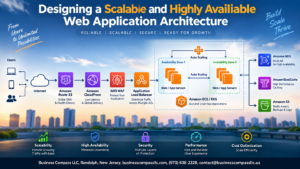
Designing Your Complete CI/CD Pipeline Architecture
Setting Up Automated Code Integration Workflows
Modern AWS CI/CD pipeline architectures start with robust code integration workflows using AWS CodeCommit for source control and AWS CodeBuild for automated builds. Configure webhooks to trigger builds automatically when developers push code, ensuring every commit passes through standardized build processes. Set up branch protection rules and require pull request approvals to maintain code quality. Integration with AWS CodePipeline creates seamless automation that transforms code commits into deployable artifacts within minutes, establishing the foundation for rapid, reliable software delivery.
Implementing Comprehensive Testing Strategies
Effective testing strategies in AWS DevOps pipelines incorporate multiple layers including unit tests, integration tests, and end-to-end validation. AWS CodeBuild supports parallel test execution across different environments, while AWS Device Farm enables mobile application testing at scale. Configure automated security scanning using AWS CodeGuru and third-party tools to catch vulnerabilities early. Implement performance testing using AWS Load Testing solution to validate application behavior under stress. This comprehensive approach catches issues before production deployment, reducing risks and ensuring high-quality releases.
Configuring Deployment Stages for Multiple Environments
Structure your AWS CI/CD pipeline with distinct stages for development, staging, and production environments using AWS CodeDeploy and AWS CloudFormation. Each environment should mirror production infrastructure while maintaining appropriate resource sizing and security configurations. Implement blue-green deployments for zero-downtime releases and canary deployments for gradual rollouts. Use AWS Systems Manager Parameter Store to manage environment-specific configurations securely. This staged approach allows teams to validate changes progressively, catching environment-specific issues before they impact end users.
Establishing Rollback Mechanisms for Risk Mitigation
Build robust rollback capabilities into your AWS DevOps automation workflow using AWS CodeDeploy’s automatic rollback features and CloudFormation stack updates. Configure health checks and CloudWatch alarms to trigger automatic rollbacks when deployment metrics indicate problems. Maintain versioned artifacts in AWS S3 and use immutable infrastructure patterns to enable quick recovery. Create runbooks for manual rollback procedures when automatic mechanisms aren’t sufficient. These safety nets provide confidence to deploy frequently while minimizing the blast radius of potential issues, supporting the DevOps culture of rapid iteration with controlled risk.
Infrastructure as Code Mastery with AWS CloudFormation
Creating Reusable Templates for Consistent Deployments
Building reusable CloudFormation templates transforms your AWS DevOps automation workflow by eliminating configuration drift and ensuring identical environments across development, staging, and production. Start by creating modular templates with parameterized values for instance types, VPC configurations, and security groups. Use template functions like Ref and GetAtt to make your infrastructure components dynamic and adaptable to different environments.
Break complex architectures into smaller, focused templates that handle specific components like networking, databases, or application tiers. This approach makes templates easier to maintain and debug while promoting reusability across multiple projects. Include default values for common parameters and use constraint properties to validate inputs, preventing deployment errors before they happen.
Your Infrastructure as Code CloudFormation templates should follow consistent naming conventions and include comprehensive descriptions for each resource. Tag all resources systematically to track costs and ownership, making resource management seamless across your organization.
Managing Stack Updates and Version Control
Version control your CloudFormation templates using Git repositories with proper branching strategies that align with your AWS CI/CD pipeline. Store templates alongside application code to maintain tight coupling between infrastructure and application changes. Use semantic versioning for template releases and maintain detailed changelogs documenting modifications and their impacts.
CloudFormation change sets provide safe preview functionality before applying updates to production stacks. Always review change sets carefully, paying attention to resources marked for replacement or deletion. Implement automated testing for your templates using tools like cfn-lint and taskcat to catch syntax errors and validate template functionality across multiple regions.
Establish rollback procedures for failed deployments and maintain backup copies of working configurations. Use CloudFormation drift detection regularly to identify manual changes that might cause inconsistencies in your infrastructure state.
Implementing Cross-Stack References and Dependencies
Cross-stack references enable modular infrastructure design by allowing templates to share outputs between different stacks. Export values from foundation stacks containing VPCs, subnets, and security groups, then import these values into application-specific stacks. This pattern creates clean separation of concerns while maintaining dependencies between infrastructure layers.
Use CloudFormation exports and imports instead of hardcoding resource identifiers, making your templates portable and environment-agnostic. Design your stack hierarchy thoughtfully, with foundational networking stacks at the bottom and application stacks depending on them. This layered approach supports independent updates while maintaining proper dependency relationships.
Implement stack policies to protect critical resources from accidental deletion during updates. Document your cross-stack dependencies clearly and consider using AWS Systems Manager Parameter Store for complex configuration sharing between stacks that need dynamic updates outside of CloudFormation deployment cycles.
Monitoring and Optimization for Continuous Improvement
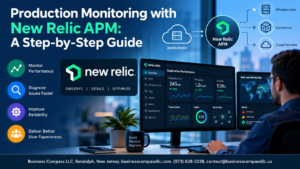
Setting Up CloudWatch for Real-Time Performance Tracking
CloudWatch transforms raw application data into actionable insights for your AWS DevOps automation workflow. Configure custom metrics to track deployment success rates, application response times, and resource utilization across your CI/CD pipeline. Set up detailed dashboards that display key performance indicators like CPU usage, memory consumption, and network throughput. Enable detailed monitoring for EC2 instances and configure log groups for application logs. Create custom CloudWatch agents to collect system-level metrics and application-specific data points that matter most to your DevOps implementation guide.
Implementing Automated Alerting for Proactive Issue Resolution
Smart alerting prevents small issues from becoming major outages in your continuous integration AWS environment. Configure CloudWatch alarms with appropriate thresholds for CPU utilization, disk space, and application error rates. Set up SNS topics to route notifications to email, SMS, or Slack channels based on severity levels. Create composite alarms that combine multiple metrics to reduce false positives and alert fatigue. Implement escalation policies that automatically trigger Lambda functions for self-healing actions like restarting services or scaling resources when specific conditions are met.
Analyzing Pipeline Metrics for Efficiency Gains
Data-driven optimization accelerates your DevOps monitoring optimization efforts significantly. Track deployment frequency, lead time, mean time to recovery, and change failure rate to identify bottlenecks in your AWS CI/CD pipeline. Use CloudWatch Insights to query logs and identify patterns in build failures or deployment delays. Monitor code quality metrics alongside performance data to correlate code changes with system behavior. Generate weekly reports showing pipeline performance trends and share insights with development teams to drive continuous improvement in your AWS DevOps bootcamp practices.
Establishing Feedback Loops for Iterative Enhancement
Continuous feedback cycles create a culture of constant improvement within your DevOps automation workflow. Implement automated testing that provides immediate feedback on code quality and functionality after each commit. Set up post-deployment monitoring that captures user experience metrics and system performance data. Create regular retrospective meetings where teams review pipeline metrics and identify areas for improvement. Use tools like AWS X-Ray to trace requests through distributed systems and identify performance bottlenecks that impact user experience and system reliability.
DevOps has completely changed how teams build and deploy software, and AWS gives you all the tools you need to make it happen. From understanding the culture shift that brings development and operations together, to mastering essential services like CodePipeline, CodeBuild, and CloudFormation, you now have a roadmap for creating automated workflows that actually work. The key is starting with a solid CI/CD pipeline and then building your infrastructure as code so everything can be version-controlled and repeatable.
Don’t try to automate everything at once – pick one small project and build your DevOps muscles there first. Set up monitoring from day one because you can’t improve what you can’t measure, and remember that the real magic happens when your team starts thinking differently about collaboration and shared responsibility. Start experimenting with these AWS tools today, even if it’s just spinning up a simple pipeline in your personal account. The sooner you get hands-on experience, the faster you’ll see why so many companies are making this shift to automated, reliable software delivery.